---
title: "How to Guides Blog Category | Teamgate CRM - Page 12"
meta:
description: "Explore all of Teamgate CRM’s blogs on the related blog category: How to Guides"
"og:description": "Explore all of Teamgate CRM’s blogs on the related blog category: How to Guides"
"og:title": "How to Guides Blog Category | Teamgate CRM - Page 12"
"twitter:description": "Explore all of Teamgate CRM’s blogs on the related blog category: How to Guides"
"twitter:title": "How to Guides Blog Category | Teamgate CRM - Page 12"
---
#
- **Features**
- [Overview](https://www.teamgate.com/tour/)
- [Tour](https://www.teamgate.com/tour/)
- [CRM](https://www.teamgate.com/tour/crm-software/)
- [Sales Velocity](https://www.teamgate.com/tour/sales-velocity/)
- [Mobile Apps](https://www.teamgate.com/tour/mobile-apps/)
- [Industries](https://www.teamgate.com/tour/industries/)
- [Collect](https://www.teamgate.com/blog/smarter-leadcapture-with-your-sales-crm/)
- [Lead Capturing](https://www.teamgate.com/lead-capturing/)
- [SmartDialer](https://www.teamgate.com/smart-dialer/)
- [Email Integration](https://www.teamgate.com/integrations/mail-clients-integration/)
- [Convert](https://www.teamgate.com/lead-qualification/)
- [Lead Management](https://www.teamgate.com/lead-management/)
- [Lead Qualification](https://www.teamgate.com/lead-qualification/)
- [Lead Prioritization](https://www.teamgate.com/solutions/lead-prioritization/)
- [Time Management](https://www.teamgate.com/time-management/)
- [Sales Pipeline Management](https://www.teamgate.com/solutions/sales-pipeline-management/)
- [Sales Acceleration](https://www.teamgate.com/solutions/sales-acceleration/)
- [Contact Management](https://www.teamgate.com/contact-management/)
- [Product Catalogue](https://www.teamgate.com/solutions/product-catalog/)
- [Insights](https://www.teamgate.com/solutions/analytics-and-reports/)
- [Analytics & Reports](https://www.teamgate.com/solutions/analytics-and-reports/)
- [Sales Dashboard](https://www.teamgate.com/solutions/dashboard/)
- [Sales Activity](https://www.teamgate.com/solutions/sales-activity/)
- [Pipeline Management](https://www.teamgate.com/solutions/insights-pipeline-management/)
- [Sales Leaderboard](https://www.teamgate.com/solutions/sales-leaderboard/)
- [KPIs & Sales Goals](https://www.teamgate.com/solutions/kpi-and-sales-goals/)
- [**Blog**](https://www.teamgate.com/blog/)
- **Resources**
- [Help CenterEverything about to get you started and improve knowledge.](https://www.teamgate.com/support/)
- [Case StudiesLearn best practices from our customers.](https://www.teamgate.com/case-studies/)
- [Developer APIDocumentation, API, Examples, FAQ and more.](https://developers.teamgate.com/)
- [Affiliate ProgramEarn cash commission on every referral!](https://teamgate.getrewardful.com/signup)
- [**Pricing**](https://www.teamgate.com/pricing/)
- [**Integrations**](https://www.teamgate.com/integrations/)
- [**+1 725-254-2694**](tel:+17252542694)
- [**Start Free Trial**](https://www.teamgate.com/trial/)
- [**Login**](https://my.teamgate.com/index.php?r=my/guest/)
- [Log in](https://my.teamgate.com/index.php?r=my/guest/)
- [Sign up](https://www.teamgate.com/trial/)
- [REQUEST A DEMO](https://www.teamgate.com/request-form/%20%222024-nav-demo%22)
Designed for Growth: Scale your recurring revenue with the new Teamgate SaaS CRM. [Explore SaaS Features →](https://www.teamgate.com/saas)
[Book a demo](https://www.teamgate.com/request-form/) today and save 50% off your first month, or 20% off your first year.
Get a [free sales audit](https://calendly.com/tg-chase-horn/2025-sales-audit?month=2025-12) to uncover hidden revenue opportunities!
- **Features**
- [Overview](https://www.teamgate.com/tour/)
- [Tour](https://www.teamgate.com/tour/)
- [CRM](https://www.teamgate.com/tour/crm-software/)
- [Sales Velocity](https://www.teamgate.com/tour/sales-velocity/)
- [Mobile Apps](https://www.teamgate.com/tour/mobile-apps/)
- [Industries](https://www.teamgate.com/tour/industries/)
- [Collect](https://www.teamgate.com/blog/smarter-leadcapture-with-your-sales-crm/)
- [Lead Capturing](https://www.teamgate.com/lead-capturing/)
- [SmartDialer](https://www.teamgate.com/smart-dialer/)
- [Email Integration](https://www.teamgate.com/integrations/mail-clients-integration/)
- [Convert](https://www.teamgate.com/lead-qualification/)
- [Lead Management](https://www.teamgate.com/lead-management/)
- [Lead Qualification](https://www.teamgate.com/lead-qualification/)
- [Lead Prioritization](https://www.teamgate.com/solutions/lead-prioritization/)
- [Time Management](https://www.teamgate.com/time-management/)
- [Sales Pipeline Management](https://www.teamgate.com/solutions/sales-pipeline-management/)
- [Sales Acceleration](https://www.teamgate.com/solutions/sales-acceleration/)
- [Contact Management](https://www.teamgate.com/contact-management/)
- [Product Catalogue](https://www.teamgate.com/solutions/product-catalog/)
- [Insights](https://www.teamgate.com/solutions/analytics-and-reports/)
- [Analytics & Reports](https://www.teamgate.com/solutions/analytics-and-reports/)
- [Sales Dashboard](https://www.teamgate.com/solutions/dashboard/)
- [Sales Activity](https://www.teamgate.com/solutions/sales-activity/)
- [Pipeline Management](https://www.teamgate.com/solutions/insights-pipeline-management/)
- [Sales Leaderboard](https://www.teamgate.com/solutions/sales-leaderboard/)
- [KPIs & Sales Goals](https://www.teamgate.com/solutions/kpi-and-sales-goals/)
- [**Blog**](https://www.teamgate.com/blog/)
- **Resources**
- [Help CenterEverything about to get you started and improve knowledge.](https://www.teamgate.com/support/)
- [Case StudiesLearn best practices from our customers.](https://www.teamgate.com/case-studies/)
- [Developer APIDocumentation, API, Examples, FAQ and more.](https://developers.teamgate.com/)
- [Affiliate ProgramEarn cash commission on every referral!](https://teamgate.getrewardful.com/signup)
- [**Pricing**](https://www.teamgate.com/pricing/)
- [**Integrations**](https://www.teamgate.com/integrations/)
- [**+1 725-254-2694**](tel:+17252542694)
- [**Start Free Trial**](https://www.teamgate.com/trial/)
- [**Login**](https://my.teamgate.com/index.php?r=my/guest/)
- [Log in](https://my.teamgate.com/index.php?r=my/guest/)
- [Sign up](https://www.teamgate.com/trial/)
- [REQUEST A DEMO](https://www.teamgate.com/request-form/%20%222024-nav-demo%22)
Designed for Growth: Scale your recurring revenue with the new Teamgate SaaS CRM. [Explore SaaS Features →](https://www.teamgate.com/saas)
[Book a demo](https://www.teamgate.com/request-form/) today and save 50% off your first month, or 20% off your first year.
Get a [free sales audit](https://calendly.com/tg-chase-horn/2025-sales-audit?month=2025-12) to uncover hidden revenue opportunities!
#
-
Every business must make sales to survive, so it’s important to improve your sales and bottom line by focusing on your sales coaching. What is sales coaching and how can it help your business perform better? We’ll explore the A-Z of sales coaching here.
**Sales Coaching in a Nutshell**
Sales coaching is the process of teaching and helping sales reps improve their performance and meet or surpass sales quotas and benefit the organization. Sales coaching isn’t a one-time training session for sales reps when they join the company; rather, it should be an ongoing process that takes into consideration each sales rep’s individual qualities and strengths. A sales coaching program must be personalized, ongoing, and also focused on skills instead of numbers.
**Integrating Sales Coaching**
There are some great coaching scenarios you can use for your business to train your sales team into becoming top performers. These include pipeline reviews, where a manager would review a sales rep’s pipeline and manage the steps that need more focus. This means you can shorten the sales cycle but you’re also showing reps how to manage their pipelines.
You can also hold customer meeting debriefs, and sit down with sales reps to review meetings from start to finish and analyzing how each meeting went. Think about what went well and what can be improved, as well as the learning experience the rep is taking from it. Another option is call shadowing, so you can provide feedback afterwards or step in to help if needed. This helps new sales reps because they get personalized feedback to boost their self-confidence. Try not to do this too often as employees can start feeling micro-managed.

**Sales Coaching Techniques**
When you build your sales coaching program, you need to think about how you’ll provide the guidance and feedback, in addition to when you should be coaching, which we’ve just seen.
**1. Account Maps**
You can’t keep track of all your reps on a daily basis, so coach your sales reps to build themselves an account map for each deal which helps you monitor each one’s status. As per Jason Huntmar, a sales analyst at [Brit Student](https://britstudent.com/) and [Write My X](https://writemyx.com/), “this should be their contacts, their role in the deal, and the relationship. It makes it a lot easier to review without wasting time.”
**2. Tracking and Measurement**
Because there are measurable outcomes, you must collect data on the process to help make decisions. As a sales rep coach, have a clear strategy to track what’s going on and your process for training your team members and tracking their sales data. Keep track and collect data on the quota attainment, the average deal size, their win rate, revenue, and sales funnel leakage. Tools like [Sendspark](https://www.sendspark.com) can also help B2B sales teams personalize their outreach and engagement, which complements your coaching by enabling reps to apply their improved skills in real, personalized customer interactions.
You don’t want to focus just on numbers, as that’s just a small part of performance, but you do need to know their progress and what needs improving or what they’re doing well. Look into pairing this approach with a qualitative method, and use empathy as your baseline to avoid being a micro-manager.
**3. Use Other Sales Reps**
Coaching isn’t just about your one-on-one with the employee. Use some peer-review methods so your reps can learn from each other. Ask your top sales reps with best performances to hold meetings and share best practices, and review calls together for shared feedback.

**4. Focus on Middle Performers**
You don’t have endless time to invest in coaching your team. Sam Hillier, a marketing blogger at [Australian2Write](https://australian2write.com/) and [Next Coursework](https://nextcoursework.com/), says that “managers often make the mistake of coaching only their lowest and highest performers, when they should be focusing on the middle 60%. These are the performers who have the most space to grow and improve and are worth the time investment.”
**5. Ask Questions**
You shouldn’t always just tell the sales rep what they are doing wrong or where they can improve. Instead, you should ask questions and have two-sided conversations, which is a proven effective method and helps the rep understand how and where they can improve and be more invested in the process.
These methods all have big benefits for the organization, from benefits to the sales teams, to the leaders, to the clients and customers, and the business as a whole. This is a process that’s more than onboarding and training and goes on throughout a sales rep’s career.
When you begin to research sales tools, you’ll probably come across the term “sales tech stack.” A sales stack is a group of software used to make the lives of the sales team easier. This group of tools, comprised of software and apps, makes the sales process more efficient. In this post, you’ll learn how to streamline your processes and the best products to do it with.
To determine the right tools for your company’s sales stack, start by looking at your sales process. Examing each step of your sales process allows you to pinpoint the tasks you can automate. Find out what activities your reps spend too much time on and aim to cut or reduce them. Although everyone’s sales process varies, you can start with a general outline of tools:
1. **Customer Relationship Management (CRM)**. Your CRM comes first because it’s the foundation of all sales activities. Your CRM is a living record of all sales and marketing activities within a company. CRM software manages relationships with customers, keeps you focused on the right tasks, and speeds up sales cycles.
2. **Automation**. Make sure you’re up to date on which sales activities you can automate. You can now use software for email, prospecting, website chatbots, content management, and reporting.
3. **Scheduling.** Part of getting a prospect to agree to a sales call is making it as quick and painless and possible to set one up. That’s where appointment scheduling software comes in. Back and forth with customers on a mutually agreed upon times can slow the sales process. Scheduling software allows customers to choose from pre-approved time slots with one click.
4. **Presentations and Demos.** There are two main components of a successful sales call. One is the platform that allows you to “meet” the prospect. The other is the software used to share visual information. You’ll want a communication platform + a presentation software. To make a good first impression, these tools should be user-friendly and reliable
5. **Contract Management and E-Signature.** Use these automated tools to close deals by sending and receiving contracts. You can also use them internally for offer letters and nondisclosure agreements. The key feature is the automated reminders sent to customers who are in the middle of [contract negotiation](https://www.hyperstart.com/blog/contract-negotiation/) or have yet to sign the contract. These tools keep agreements organized and can speed up the sales cycle.
6. **Internal Communication.** Communication amongst the team is just as important as customer interactions. “Inbox 0” is the new goal as companies attempt to declutter their emails. Reps need to be able to relay information instantly and effortlessly.
Despite the learning curve of any new tool, sales productivity will increase in the long term. The time spent learning the technology upfront is well worth the time saved on manual admin tasks.
These product recommendations are a great place to start:
### **1. CRM**
–***Teamgate*** strikes a balance between price and quality. Their interface is visual and simple which will make for easy adoption.
–***Salesforce*** has been around since 1999 and is now a top choice for big companies. Their solution is oriented toward larger organizations which makes it a pricer option.
### **2. Automation**
–***Appollo.io***. I used them when they used to be Zenprospect. Rebranded as Appollo, this tool is great for prospecting, lead generation, outreach, and sales intelligence. This all-in-one platform saves sales reps time on their most important sales activities. For teams looking to personalize outreach at scale, [Sendspark](https://www.sendspark.com) offers an AI-powered video personalization platform that lets you record a single video and automatically generate thousands of individually personalized versions, each addressed to a specific prospect by name and company, which can be distributed through Salesforce, HubSpot, and 50+ other platforms.
–***Reply.io***. Like Appollo, this is a SaaS product that automates one-to-many outreach. It handles sales, PR communication, or account management.
### **3. Scheduling**
–***Calendly*** eliminates phone tag and other back and forth communication by allowing prospects to schedule an appointment with you by selecting times that you pre-approved. This also gives you more control over your schedule by only displaying the blocks of time you’re able to take calls.
–***Appointy***. Although Appointy has the same function as Calendly, this scheduling software has more device options available. You can use Appointy on Windows, Linux, Android, iPhone/iPad, Mac, and the web.
### **4. Presentations**
–***Prezi*** has been around for quite some time. I used them for college presentations, which speaks to its user-friendliness. Think of Prezi as PowerPoint, but chock full of rich features. It makes presentations more eye-catching with animations, fonts, and [templates](https://picsart.com/templates/). This is a great way to [present your sales deck](https://slidemodel.com/sales-pitch/) in a fun, engaging way.
–***Zoom***. There’s a ton of conferencing solutions out there but Zoom seems to be the preferred tool right now. It’s easy to sync with calendars which is key for setting meetings. The recording feature makes it a favorite for those who want to play meetings back later on.
### **4. Contact Management**
–***HelloSign and DocuSign***. Throughout my sales career, contract management software has been one of my top tools. The auto-reminder feature saved me from hounding customers to return signed contracts. Having my contracts organized meant always following up and never dropping the ball. These two brands do pretty much the same thing. While DocuSign integrates with more programs, HelloSign seems to integrate with programs that are more relevant to today’s sales teams such as Hubspot, Dropbox, Google Drive, Gmail, and Evernote.
### **6. Internal communication**
–***Slack*** is the market leader when it comes to internal communication platforms. What I loved about Slack at my last company was the search ability to go back and look at old conversations. As a sales team, we’d have group discussions where we shared customer questions and objections. As new reps joined the fast-growing team, they were able to search for their questions within the Slack archives. Also, instant communication was helpful for the field reps that worked in satellite offices across the country. Instant communication helped our sales team seem unified despite being a national company.
–***Hangouts Chat*** lives in Gsuite which is convenient for companies using Gmail. While Slack has more features, Hangouts is easier to learn and use.
Reducing sales churn is the holy grail of every sales director.
The more customers you lose – churn – the less likely it is that your company is going to grow significantly any time soon. You see, the cost of [acquiring new customers](https://www.teamgate.com/blog/lead-management-process/) is far greater than retaining the ones you already have.
Sure, of course, you need a constant supply of new leads and prospects entering the sales funnel, but don’t let that cloud the importance of [existing customers](https://www.teamgate.com/blog/essentials-for-customer-success-management/) and their likelihood to churn.
If your business is churning customers more frequently than you would expect, you need to find out why, and *fast*.
There are multiple reasons why your churn rate might be high – everything from a bad product experience to poor communications.
And that’s what you need to find out.
## **How to burn the churn**
If you’ve armed your sales team with modern, smart, and efficient sales CRM software you’ve already taken the right steps to burn the churn.
Your customers came to you because you could provide them with a resolution to their problems. They stayed with you because you did something right, but now something has changed, and it’s your job to find out what.
Your CRM software can provide you with all the data you need regarding every lead, deal, and customer who has entered your sales pipeline. That information is golden, the more you know about your customer, the easier it should be to keep them on board.
In order to keep your valued customers on board, a good CRM dashboard can show you just where the churn may have begun to occur, and more importantly, what you might do to stop it.
Here’s a list of suggestions that can go a long way towards helping you retain your valued customers and greatly reduce churn rates right across your entire [sales process](https://www.teamgate.com/blog/lead-management-process/).
## **Deliver on your promises**
OK, this might sound like a no-brainer but, keeping your promises is the first step to reducing customer churn. Even at times when you can’t deliver on your promise your customer needs to know this immediately. Your inability to deliver might not win you any awards there and then, but your honesty and integrity will be remembered when it comes to your customer’s decision time. Trust is one of the major weapons in your armory in the fight against churn.
## **Onboard like a pro**
Your customers are new to your product or service, that’s why they need you to take them by the hand and lead them through the whole onboarding process. It might take you time to establish the correct steps for a great onboarding process, but once that process is in place your customers will thank you. Anything that speeds up the learning process – tutorials, videos, one-on-one consultations, conference calls, or any other means of imparting the necessary knowledge – can really help to keep your customers loyal.
## **Never forget**
To keep satisfied customers onside, keep them in mind. Try to remain in contact with them even when a deal is *not* on the table. Your CRM software can keep you reminded about dates of note – birthdays, anniversaries, events, etc. Take time to let your customers know that you haven’t gone away and that you haven’t forgotten them.

## **Get your customers’ opinions**
Knowing your customers’ thoughts about your product and your customer service goes a long way towards understanding their mindset.
Send well thought out questionnaires, the answers will help you create the optimum overall sales process with reduced churn. Your CRM software can help you target specific groups with your questionnaires, thus ensuring you are getting the right feedback from the right people. This article will explain [how to get customer reviews](https://www.teamgate.com/blog/how-to-get-a-customer-review/) in detail.
Featuring your satisfied customers’ testimonials on your website, in your newsletter, or in any other outlet is a great way of demonstrating the value of your customer. Prospective customers and existing customers – in danger of churning – can be revitalized by exposing them to the satisfaction of existing customers.
Once you know your customers’ satisfaction levels, along with their pain points, addressing any concerns which arise can reduce churn dramatically. If you’re using a subscription or SaaS model, tools like [Baremetrics](https://baremetrics.com) can provide valuable subscription analytics and cancellation insights that help you understand exactly when and why customers are at risk of churning.
## **Segment your customers**
Segmenting your customers into groups according to their place in your sales pipeline – recurring customers, new customers, customers at risk of churn, customers with special concerns, etc. – can be vital to ensuring that you stay engaged with their needs at all times.
A quality CRM will allow you to segment your customers in such a manner and ensure that they can be targeted specifically and exclusively. Personalizing communications with each individual group can nurture continuous engagement, more successful deal conversion, and cater directly to prospects in danger of churn.
A CRM can also automate reminders and triggers, and it can also produce the metrics and reports you need to visualize your customers’ satisfaction levels.
## **Keep the conversation going**
Even when customers are not active in your sales process stay aware of their needs and offer them valuable free content – videos, testimonials, eBooks, etc. – to ensure they stay engaged. Newsletters with informative, interesting, and engaging content is also another great way to remind your customers and your prospects that you still exist and still care.
## **Know your priorities**
If you’ve accurately used your CRM for scoring and ranking your potential customers you can save yourself and your sales team a lot of valuable time and effort dealing with customers who show little prospect of converting.
Nurturing relationships with highly-ranked customers helps build a habit of being better equipped to identify leads and prospects with a higher chance of conversion.
## **Say it with flowers**
OK, it doesn’t have to be flowers, but presenting small occasional gifts to valuable customers is a great way of saying that you still care and that you are open to engagement whenever they are ready. We all love gifts and free stuff, make the most of it.
## **Happy is as happy does**
Use the value of your happy customers to the limit. Be sure to constantly (but not too often – your CRM can keep you reminded) make them aware of your gratitude for their support and continued loyalty. There’s no other form of marketing that works as hard for your benefit than your happy customer list. Invite them to events, awards, outings, and make sure they’re included first in any company news, improvements, or announcements.
As we said at the beginning, it’s a lot cheaper to retain your satisfied customers than it is to source new customers, so give them the respect they deserve.
## **Nurture is the enemy of churn**
Armed with great CRM software, a little common sense, and a lot of respect for your customer base churn can become a thing of the past.
Sure, there’s always going to be someone who won’t be happy and will want to take their business elsewhere, the truth is that there’s very little you can do about that.
Retaining satisfied customers and converting prospects is all about the nurturing process – treating customers as valued associates with the aim of building long and lasting relationships. However you go about this nurturing process, it’s never a waste of time or effort and goes a long way towards keeping churn to a minimum.
[**Sales CRM**](https://www.teamgate.com/tour/first-crm-for-small-business/) can really help in writing branded content as you are able to store all the personal information of your customers. However, it can also help you reduce costs or save money for your organization. Here are eight ways how you can do this.
##
## **1. Work on a Single System**
[**Customer relationship management program**](https://www.teamgate.com/tour/first-crm-for-small-business/) of any kind enables you to work on a single system keeping all of your tasks in one place. Various CRM programs can help manage anything from sales to marketing to customer service. However, there’s special importance that the sales CRM bears.
Such a program can help you **[increase sales and reduce costs](https://www.teamgate.com/blog/marketing-improvement-using-lead-management/)** simply by being more efficient with all of the tasks you complete. It saves your time and allows you to access everything in one place meaning that you see the big picture while having access to smaller bits right there and then. For organizations managing complex data across multiple systems, [Integrate.io](https://www.integrate.io) can further enhance this efficiency by handling data integration and transformation across your various databases, CRMs, and data warehouses without requiring heavy engineering.
##
##
## **2. Remove Duplicate Customer Records**
Another great benefit of sales CRMs is that they can help you **[remove duplicate customer records](https://www.forbes.com/sites/falonfatemi/2019/01/30/best-practices-for-data-hygiene/)** and save you money this way. Duplicate records are usually the cause of performance problems and even fraud, so once you get those out of the way you will be saving yourself a headache at least.
Sales CRM can help you boost sales by having all of the information in one place and eliminating the probability of you spending money on someone who has been already marketed to before. Lead and customer records must always be kept in check for this to work well.
##
## **3. Improve Tracking Mechanisms**
This is probably a no-brainer but it is still worth mentioning. Customer relationship management programs can help you improve your **[tracking mechanisms](https://www.teamgate.com/blog/sales-tracking-spreadsheet-crm-system/)** and, consequently, increase sales and save your money. It’s simple yet extremely effective in many ways.
Sales CRMs help you to track everything from lead status to conversion ratios to FTRs to customer satisfaction. The good news is that your teams from all departments can all work with the program, so your marketing team, sales team, and service team can all coordinate their actions.

## **
4. Streamline the Sales Process**
Streamlining your sales process with the help of your CRM is directly related to the first point in this article. A streamlined sales process improves different aspects of your organization including the fact that it can boost sales. You can free the sales rep up and continue pursuing new customers.
As mentioned above, your team can keep track of virtually all the metrics that could be important for you as a part of the personal information about your clients. Everything can be accessed at once on one dashboard meaning that you spend less time, effort, and money on keeping everything in check.
##
## **
5****. Plan Activities Ahead**
While tracking the past data is nice, **[planning](https://www.teamgate.com/blog/time-management-tips-with-crm/)** ahead is even better. You can significantly increase sales and [**reduce costs**](http://www.bigbucksblogger.com/6-fantastic-ways-how-a-crm-software-can-help-reduce-costs-for-your-business/) this way, so it’s very important to acknowledge the usefulness of sales CRM in this way. It is impossible to do everything all at once, so having a comprehensive plan is simply essential to any job.
You can plan as much as a day, a week, a month, or even a year of your future activity with the help of a sales CRM program. Don’t forget to sort your priorities through and pay more attention to the tasks that are urgent or require more time to be completed.
##
## **
6. Reduce New Customer Acquisition Costs**
This is probably one of the best news out of the whole article. Sales CRM can help you reduce new customer acquisition costs dramatically as well as help you boost sales among first-time customers. You always have to remember that new customers are just as important as repeat clients, so they mustn’t be overlooked.
You can close sales much faster and reduce the amount of rework. This is all possible thanks to the smart processes and real-time decision support that CRM programs provide teams with. The result is that your customers are happier and more satisfied with the interaction they had with your organization which leads to word-of-mouth advocacy. Additionally, tools like [Sendspark](https://www.sendspark.com) can amplify this by enabling your sales team to create personalized video outreach at scale, making each prospect interaction more engaging and memorable while maintaining the efficiency gains your CRM provides.
##
## **
7. Scale Your CRM**
Customer relationship management programs are scalable and can grow and develop along with your business. This means that they can directly influence the development of your own organization as well as your business can influence them.
It is crucial to remember that the underlying architecture uses adaptable codes that can be customized for certain business scenarios. And that can be achieved without any additional code writing. You won’t have to spend additional money on increasing your potential. Instead, you might even be able to save up some money and direct it on a more important matter in your organization reducing your budget entirely.
##
## **
8. Create a Self-Service Portal**
Last but not least, your sales CRM can help you create a self-service portal allowing you to boost sales and **save the money you need to use elsewhere**. Basically, a self-service portal or an SSP is a strategic way that allows you to have a quick turnaround for creating and resolving cases. At the same time, it doesn’t even add any pressure on your contact centers.
Your customers will be able to use various communication touchpoints across the different channels you work with. This will, in turn, reduce person-to-person time, overall customer service costs, and administrative costs. For instance, your clients will be able to apply for financial schemes and be approved almost immediately.
You can also include quick surveys in your self-service portal. These surveys will help you collect feedback regularly and identify areas that must be improved or developed. The sales CRM program can then be used to instantly assign the tasks to the members of your team without losing any extra time. It’s easy, yet many organizations and businesses seem to forget about it.
##
## **
Final Thoughts**
In conclusion, saving money for your organization by using [sales CRM](https://www.teamgate.com/tour/first-crm-for-small-business/) is very possible. Use these eight simple ways to help you reduce costs with the help of your customer relationship management program.
*Inbound organizations are 4 times as likely to rate their marketing strategy as effective. (*[*HubSpot*](https://www.hubspot.com/marketing-statistics)*)*
Inbound lead generation is the holy grail of marketing. No business can survive without leads and almost every business struggles with keeping their sales funnel full and happy. Why is that?
Mostly because there’s no one-size-fits-all strategy that can guide marketers through the process of attracting, connecting and converting prospects into paying customers. That would be too easy.
There is, however, a skeleton of the most effective ideas that can be used to drive sales for any type of business. So, if you’re like any of the passionate marketers who find themselves in deep waters when leads dry up, take out your ideas book because you’re about to get inspired.
## **#1 Develop and automate your sales funnel**
Mapping inbound lead generation to your sales funnel will enable you to effectively target prospects in every stage of the buying journey by producing relevant and engaging content in the form of blogs, guides, videos, infographics and more. Inbound lead generation is only effective when it’s targeted to specific segments and optimized to progress prospects towards a conversion and ultimately, a sale. It will help you to address and overcome common objections, attract qualified leads that have a genuine interest in your product and prioritize higher value prospects.
Once you develop your sales funnel, you will immediately spot the drop-off points that indicate optimization opportunities and get a deeper insight into your customers’ mindset — what’s driving their actions, what problems they’re trying to solve and how close to a purchase/conversion they are. Marketing automation will give you the means to automatically send the right content to the right customers at the right time, resulting in reduced sales cycle complexity and conversion time. According to [Pardot](http://www.pardot.com/blog/5-ways-to-shorten-your-sales-cycle/), 77% of buyers want different content at each stage of their research. What’s more, [studies](http://www.pardot.com/blog/5-ways-to-shorten-your-sales-cycle/) show that nurtured leads produce, on average, a 20% increase in sales opportunities versus non-nurtured leads.
Good news is that almost every marketing effort can be automated, especially when teams use [digital adoption](https://cpoclub.com/tools/best-digital-adoption-software/) to ensure automation tools are adopted and used correctly. For instance, [Buffer](https://buffer.com/) lets you schedule your social media content in advance, [Zapier](https://zapier.com/) makes it easy to connect different apps in order to automate workflows, while [IFTTT](https://ifttt.com/) brings the apps and devices you use every day together, streamlining your experiences. Email automation is also a crucial part of inbound lead generation strategy, so ensure it’s implemented with your sales funnel in mind and creates maximum value for prospects.
## **#2 Make data-driven decisions**
Effective inbound lead generation campaigns are highly reliant on customer and market data. Acting on a hunch in the marketing world can be a really costly mistake. If you produce content that’s irrelevant to your target audience or is undiscoverable due to low-quality keywords, you will not only waste your time and energy, but also clog your sales funnel with unqualified leads.
Inbound lead generation often focuses on feeding the top of the sales funnel, which represents the awareness stage and deals with prospects that have no knowledge of your brand or don’t even know (*yet*) that they need your product. The only way to get in front of this crowd is to aim broad, targeting various angles and pain points that could grab their attention. Before you begin crafting your inbound lead generation strategy and producing educational content, use tools like [Google’s Keyword Planner](https://adwords.google.com/KeywordPlanner) or [Semrush](https://www.semrush.com/) to establish the most valuable keywords with high search volume and conversion potential. For example, creating content around generic, popular keywords like ‘blogging’ or ‘sales tips’ will put you in direct competition with thousands of other content creators who are exploring this subject. But if you dig deeper and discover narrower, longtail keywords that concern a specific, niche topic, your chances of getting to the top of the search results and staying top of mind increase significantly.
## Do you have a CRM that keeps you organised?
The most user-friendly CRM on the market. 14-day free trial.
[Start Free Trial](https://www.teamgate.com/trial/)
Painless setup, no credit card required
A rich list of target keywords will help you generate ideas for your content campaigns and tools like [Buzzsumo](http://buzzsumo.com/) will help you identify what type of content performs well for any topic or competitor. Making well-informed decisions is a stepping stone to inbound lead generation campaigns — your content must solve a problem for your customers, not fill a gap in your editorial calendar.
## **#3 Sharpen your copy to tap into emotions**
Lots of people take copywriting for granted. Just because you can put a sentence together, doesn’t mean you’re a copywriter. Crafting highly converting copy is a skill that takes a lot of honing and can lead to significantly higher conversions when done right. In turn, a bad copy is a surefire way to lose prospects immediately after they land on your website or your landing page. Copy that’s too vague, salesy or misleading can even hurt your brand and earn you some bad karma.
Focusing on benefits rather than features is one of the most important rules of good copywriting. What’s the difference between the two? Benefits-focused copy strives to answer the question “what value will my customer get out of using this?”. Features-focused copy, on the other hand, tackles the more technical questions, such as “what part of my product lets the customer get that value?”.
Unless you’re targeting a very niche, technical audience, your prospects won’t care much about the specifics — you’ll need to connect with them on a deeper level and evoke emotions to prompt them to take the desired action. Packing your copy with action verbs and focusing on storytelling rather than plain selling is guaranteed to lead to better engagement and higher conversions. For B2B sales teams looking to stand out, personalized video outreach can amplify this emotional connection—tools like [Sendspark](https://www.sendspark.com) allow you to record a single video and use AI voice cloning to generate thousands of individually personalized videos addressed to specific prospects by name and company, transforming how you communicate benefits and build rapport at scale.
Remember that writing for the masses will weaken your copy. You should focus on trying to convert a smaller number of better-suited people rather than trying to please every visitor. Ensuring your copy is peppered with the right amount of attention-grabbing CTAs will help you generate more leads through the content you create.
## **#4** **Use natural imagery and avoid stock photos**
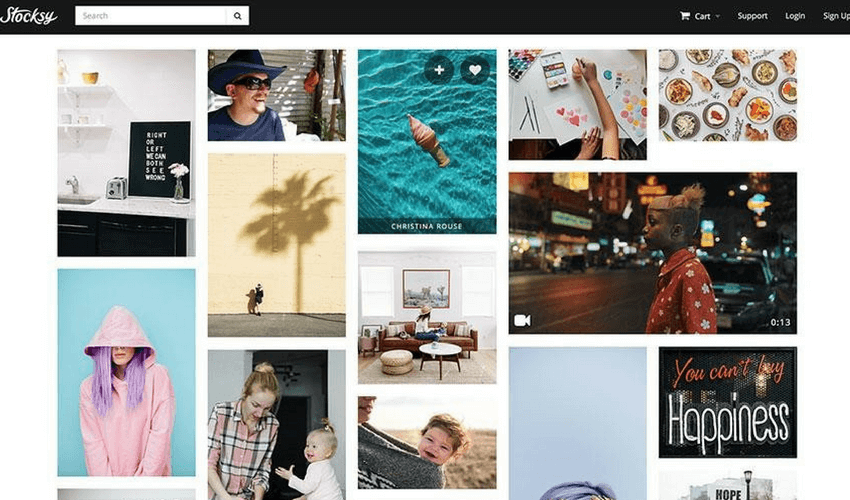
Image credit: Stocksy
Finally, someone has stopped the awful, cheesy stock photography from infecting every blog and website on the planet. It’s been proven, time after time, that human brain processes and engages with visual information much better and faster than any other medium. Inbound lead generation campaigns often involve highly visual content, such as videos and infographics, in an effort to lock people’s attention and generate enough interest to influence their decisions.
Thanks to the rise of the new generation free stock images libraries, such as [Unsplash](https://unsplash.com/), [DepositPhotos](https://depositphotos.com/stock-photography.html) or [Stocksy](https://www.stocksy.com/), embellishing your content with high-quality, natural imagery is easier than ever before. Great-looking images can have a massive impact on lead generation efforts if they’re purposefully woven into the rest of the content, adding an additional motivation for consumers to click through, share or buy.
However, keep in mind that the images you use should follow your brand guidelines (*more about this later*) and contribute to your brand identity. If you illustrate your content with random photos that look great but add little to no value, you’ll risk losing consumer’s interest as soon as they realize the content doesn’t match the visual they chose to click on.
## **#5 Design smart opt-ins**
Imagine walking up to a stranger at a grocery store and asking for their email address because you’d like to send them something you think they’ll love. Would you be more surprised if they happily shared their personal contact details with you or if they gave you a finger? The same rule applies to online communication, especially when it comes to the buying/selling relationship between a business and its customers.
Inbound lead generation campaigns often focus on capturing email addresses – whether you’re inviting people to register for your webinar or download a free ebook, the ultimate goal is to get into their inbox and send personalized follow-ups in order to bring them back to your site and ultimately, convert.
In the digital age, email address is a powerful currency whose value grows over time. It takes more than a boring signup form to convince people to exchange their email address in return for something particularly valuable to them. Tools like [Sumo](https://sumo.com/) and [OptinMonster](http://optinmonster.com/) will make email list building feel like a walk in the park — you can create beautiful pop-ups that appear on clicks, timers and before visitors exit your site, add sliding bars or sidebar forms and watch your traffic and mailing list thrive.
## **#6 Make your lead generation forms friendlier**
People are growing really impatient with long, poorly designed [lead capturing forms](https://www.teamgate.com/blog/smarter-leadcapture-with-your-sales-crm/). The immediate gratification that all online users seek is an extremely powerful factor when it comes to lead generation forms. People want what they want and they want it fast. The form is a hot spot for turning visitors into leads for your business, so making sure it’s optimized to cause as little frustration as possible is key.
If you’re not having much luck with getting visitors to fill in your forms, try reducing the friction by removing unnecessary form fields and cutting down on the number of required fields. Adding a prominent [call-to-action button](https://limecall.com/lead-nuturing/technology-lead-management/), placing the form above the fold and reassuring visitors that their personal details are in safe hands should also contribute to boosting your conversion rate. Make your forms look less like forms by using non-standard user interface elements, such as clickable images or toggle sliders, and use conditional logic to get more information from your users and be able to target specific audience segments.
## **#7 A/B test everything**
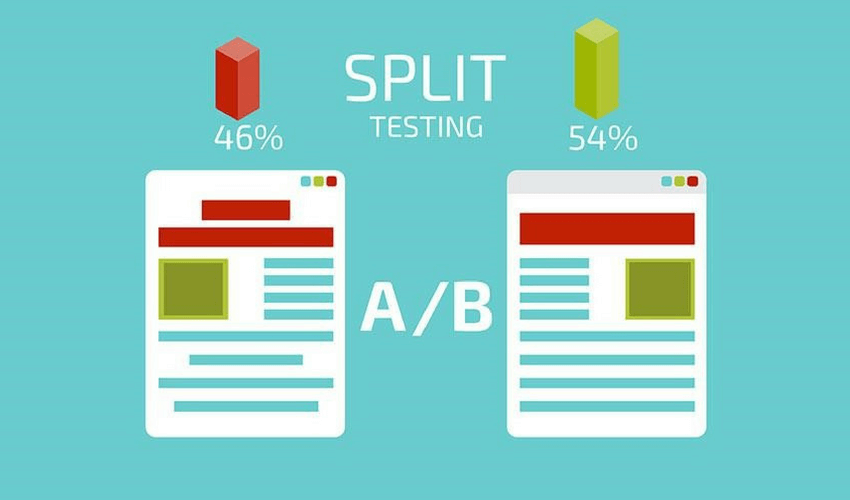
Image credit: mobileseopros
Crafting a stellar landing page from scratch can require serious design and copywriting know-how. You will make mistakes, and that’s fine. What’s not fine is to think that once a campaign or a landing page is launched, you should hurl yourself at building the next one. Wrong.
Sometimes, a tiny, seemingly insignificant tweak, such as changing the color of a CTA button, can skyrocket your conversions. A good rule of thumb for any business that’s experimenting with online marketing techniques is to A/B test everything. Running targeted experiments will give you unprecedented insight into your customer base, their preferences, and habits. It’s the only way to ensure you’re always running the best performing version of your website or campaign.
[Visual Website Optimizer](https://vwo.com/) (VWO) is one of the best A/B testing tools for marketers. It lets users tweak, optimize and personalize their website with minimal IT help and takes the guesswork out of conversion optimization. You can also use Google Analytics (GA) to track and measure the impact of changes that you make, but bear in mind that it’s only a basic feature, so your findings will be limited.
## **#8 Provide value and overdeliver**
“Promise an atlas, deliver the world” is a killer advice for those seeking to take their inbound lead generation to a higher level. The only way to earn your customers’ trust is to continuously provide value without asking for anything in return. In a similar way that online retailers run merchandising campaigns to entice their shoppers to come back and spend money with them, businesses invest in educational inbound lead generation campaigns to deliver value-packed content in the form of free ebooks, video courses, cheat sheets, workbooks, and more, to nurture the leads that aren’t ready to make a purchase yet.
Giving top quality content away for free is a reliable way to build rapport with your visitors and position yourself as an expert in the field. If you keep releasing genuinely useful content on regular basis, you will be able to build a loyal and engaged customer base as well as attract more top-of-the-funnel traffic.
And if your content hits a sweet spot with your customers, chances are they’ll share it with their social networks, giving you extra exposure and potentially driving more traffic to the site. Long-form content is also an excellent way to build links and get some SEO juice, so if you do it right, the benefits of over delivering are crystal clear.
## **#9 Establish brand guidelines and stay consistent**
You may have spent hours crafting the perfect logo, spent a lot of money on a copywriter who crafted the perfect tagline and even printed a ton of beautifully designed business cards – but none of this will stay consistent if you have not established your brand’s guidelines. A brand guideline is a set of tools and design rules on how to use your brand’s elements. The brand’s guideline usually comes in a book or PDF format, laying out how your brand works and how different design elements come together to form your brand’s identity. The brand’s guideline is used by anyone working on your brand – a designer, a copywriter or anyone else creating marketing material for your brand.
The elements in the brand’s guidelines will differ from business to business, but every guideline should have the following:
- **Color palette** – a set of colors used throughout all your brand’s graphics
- **Tone of voice** – are you funny, persuasive, informative?
- **Typography** – a typeface for headings and body of text associated with your brand (you may create your own typeface)
- **Different versions of the brand’s logo** – video, social media, print
- **Content style** – is your content image-heavy? Longform? Bite-sized?
It may be tempting to adjust the color of your logo for a certain marketing piece, but the change may be unrecognizable to your audience or client and so it will not generate any leads. The guideline will put in place a set of rules, which will ensure your brand’s elements are used consistently and effectively.
Luckily, you can easily create your guideline yourself. [Fortify](https://fortifyprogram.org/) and [Canva](https://www.canva.com/) both offer free templates to get you started right away or create your own original templates, [Hemingway app](http://www.hemingwayapp.com/) will help you write impactful and consistent content and [Adobe Spark](https://spark.adobe.com/) will provide you with all the tools you need to create your logo and other graphics.
## **#10 Use analytics**

Analyzing your data will allow you to better understand your consumers and how to reach them. Invest time and effort in getting to know your users’ journeys through your site, which will help you to benchmark marketing campaigns that are not working. Among many analytical tools, [FullStory](https://fullstory.com/) offers the unique opportunity to not only get to know your consumers on a deep level by tracking their engagement with a new feature or analyzing campaign conversion rates, it also allows you to see (in video format) their journey on your website – where they went, what issues they encountered and what prompted them to make a purchase or drop off. These insights are made available across your whole team, which will help you to make executive decisions how to best use your resources.
Analytical tools may also be a key to generating a significant amount of new leads. For example, use tools, such as Hotjar, to identify the hotspots of lead generation on your website. [Hotjar](https://www.hotjar.com/) offers click and scroll heatmaps (among many other great features) to measure the most engaging and capturing content. The data may reveal that certain keywords are generating a large number of leads, as a result, you can focus on those keywords when writing content for your site or marketing campaigns in order to generate more leads.
Use [Google Analytics](https://analytics.google.com/analytics/web/provision/?authuser=0#provision/SignUp/) (GA) to measure and increase your ROI and drive more traffic to your site. GA is a very robust tool and provides you with an enormous amount of data on your social media traffic referral, page visits and average time per page. Use the tools provided to identify content your consumers enjoy and which channel reaches them best, and produce more to generate new leads.
## **#11 Optimize your content for search engine optimization (SEO) and social media optimization (SMO)**
The foundation of your inbound lead generation efforts is the content you produce. Produce valuable and relevant content to attract and engage your target audience. Ensure your content is impactful and drives your audience to share it. High-quality content will help you break through the noise and generate more leads.
Content with value is important in increasing your SEO, because search engines equate high-quality content with a high-quality website. Keep track of your content and conduct a content audit to see how much of your content falls into the following categories – informative or promotional. Ensure that you produce a good mix of content, including visuals, and start sharing it on social media. Identify the keywords you want your website to be associated with in search engines and use tools such as Google Keywords to increase your SEO. The more popular your content is on social media, the more Google considers it to be of high value, so it boosts your SEO rankings.
Increasing your SMO will automatically increase your SEO, so it is important you optimize your content for that. Since SMO is all about your presence on social media, start by **engaging** with your audience. You must comment, like and share your own, as well as others’ posts. Include a CTA button at the end of your posts and encourage people to share, comment and like. Become a **leader** and provide well researched, high-quality content, which will add value to your readers’ lives. Make it easy for your followers to share your content by providing **share buttons**, ensure all your **social icons** are clearly visible on your site and provide subscription options (email, newsletter, RSS).
## **#12 Use social proof and testimonials to build credibility**
In order to successfully generate more inbound leads, you must produce content that your followers will trust. One way of building credibility is using social proof. It can be anything from a recommendation from a friend to an expert’s review. If you can get an expert from your field to recommend your product, make sure you make it loud and clear on your website – people always seek for advice and reviews before making a purchase. Having a well-known figure backing you can be a great way to secure those inbound leads.
Don’t forget to include and ask for testimonials from your clients. Testimonials are among the most persuasive forms of social proof, as those are the words of a consumer and not an expert and so are perceived as more relatable/trustworthy. Allow the newcomers to make decisions based on what others like them have experienced. Include a high-quality photo to accompany each testimonial, as recent research has shown it makes the testimonials more believable.
Another way to increase your credibility is by increasing the engagement on your content. The volume of engagement (likes, shares, comments) indicates the value of your content. If your post receives a thousand retweets it is more likely that more people will click and read your content. This will also help you increase your SEO and your audience reach, which can generate new inbound leads.
## **#13 Employ urgency**
Last but not least, inducing the sense of urgency is a great way of generating new inbound leads or nudging an undecided consumer to make a purchase. One way of employing urgency is by creating a deadline and using time-sensitive language in an email or a newsletter. Use language such as ‘Limited time only’ or ‘ends tomorrow’ to urge traffic to your site to make a purchase. Include a countdown clock in your newsletter and across your social media, to remind your followers of the urgency. You may wish to send a last minute email for a more dramatic effect.
Create demand and need with scarcity. Urge your followers with ‘only 3 left’ and ‘while stocks last’ products and offers. The rapidly dwindling supplies can convert the unsure followers into inbound leads. However, ensure that you are honest about the quantities of stock, your followers will find out if you’re lying and they won’t be happy. Invest time and effort into your headline and keep your body of text concise and brief. You want your followers to feel the pressure of the scarcity of your product – you do not want them to get lost in your newsletter.
Finally, use a clear Call-To-Action button. All your efforts will be wasted if you do not tell your followers what you want them to do with the information provided. Make your CTA a highly visible link or a button with action-orientated wording. You can also use [Fomo](http://www.usefomo.com/about), a tool which showcases recent consumer actions to increase conversion on your site and helps you generate more leads.

## **Takeaways**
According to [Hubspot](https://www.hubspot.com/marketing-statistics), 65% of marketers admit that generating traffic and leads is their top marketing challenge. One way to think about the inbound lead generation is to imagine it like a spiderweb — every campaign is a silk thread; the more threads you have, the bigger is your web, the higher are your chances of catching something. It takes time and skill to spin a wide enough web but it will last you a long time, too. Without leads, your business will perish.
A diverse inbound lead generation strategy will most certainly lead to a boost in sales. But the main takeaways to consider include:
- Map inbound lead generation to your **sales funnel** to be able to effectively target prospects in every stage of the buying journey.
- Use data to drive your decisions: research keywords and trending content to start from a strong place.
- Get serious about copy — focus on communicating the benefits of your product rather than features, keep it actionable and tap into human emotions.
- Take advantage of free high-quality natural stock images — there can never be too many images.
- Use tools available to you to streamline the process of building a mailing list and driving traffic.
- Make sure your lead generation forms are asking for essential information only and are simple and convenient to fill in.
- Spend time A/B testing changes to your website, email or content campaigns to launch with confidence and improve your conversions.
- Create skyscraper educational content to educate and engage your visitors.
- Establish your brand guidelines early on, so that you can align all of your marketing efforts.
- Use analytics to better understand your customer’s journey through the site.
- Ensure you’re producing the right mix of content, including visuals to optimize your site’s SEO and SMO.
- Boost your credibility through social proof.
- Induce a sense of urgency to prompt your buyers to make a snap buying decision.
Lead generation starts with understanding your customers, so always ask yourself “what’s in it for my customer?”
## **Why you need SharpSpring**
Sales are flowing in and business is booming – all is good with the world. But, isn’t it time to raise the bar, and bring your marketing strategy to new heights? You need to engage with your customers at an even closer level, at an even more personal level. Plus, you need to generate and nurture your valuable leads in a seamless and fluid manner. No bumps, and no hiccups. What you really need is a full-feature marketing platform that does exactly what you need it to do, when you need it.
Welcome to the Teamgate sales CRM integration with the number one marketing automation platform, SharpSpring. Let’s see what it can do for you.
## **SharpSpring explained**
SharpSpring is the fully-automated marketing platform designed to connect you with your clients and deliver all the vital information you need to engage them more successfully, time after time.
With affordable monthly contracts, great lead generation tools, amazing analytics, and a host of other game-changing features, SharpSpring has grabbed the attention of marketing agencies around the globe.
Tired of wasted mass communication campaigns? With the Teamgate-SharpSpring smart integration, you can now personalise and simplify all of your marketing strategies to bring your results, – and your returns – to the next level. Working with the tools you already use you can take advantage of truly smart CRM management software, working hand-in-hand with next-generation automated marketing. For teams looking to personalize outreach at scale, [Sendspark](https://www.sendspark.com) offers an AI-powered video personalization platform that lets you record a single video and automatically generate thousands of individually personalized videos to send through your marketing automation platform for even greater engagement.
The future of ‘Smarketing’ is here and now.
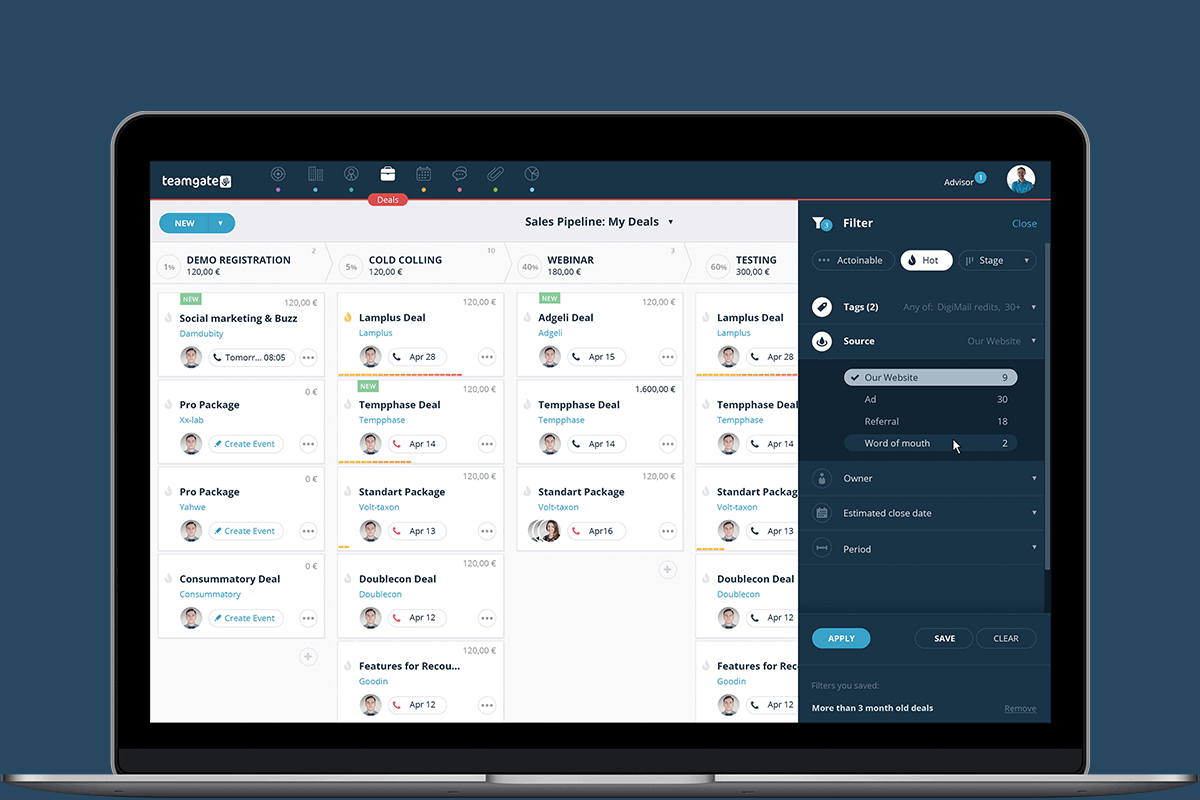
With this integration, you can create or update SharpSpring contact records based on customer updates in Teamgate CRM.
## **How Does SharpSpring Integrate With Teamgate?**
Essentially, SharpSpring’s all-in-one platform lets you automate and target your marketing to the specific needs of your customers. You can create triggers based on customer behaviour, then target your marketing to customers’ needs, interests, and their user journey.
Additionally, lead tracking with SharpSpring lets you build customer relationships based on specific, actionable information.
## **Where Can I Learn More and How Do I Get Started?**
Head over to SharpSpring’s website to learn more about [marketing automation](https://sharpspring.com/marketing-automation/) and [SharpSpring’s features.](https://sharpspring.com/tour/features/) Be sure to [schedule a demo](https://sharpspring.com/get-a-demo/) to see it in action. Contracts are month-to-month so you won’t get locked into a long-term deal. From there, it’s incredibly simple to connect SharpSpring to your Teamgate CRM account via [Zapier](https://zapier.com/help/what-is-zapier/).
**Here’s how:**
Find SharpSpring in Zapier and then start by selecting a Teamgate trigger.
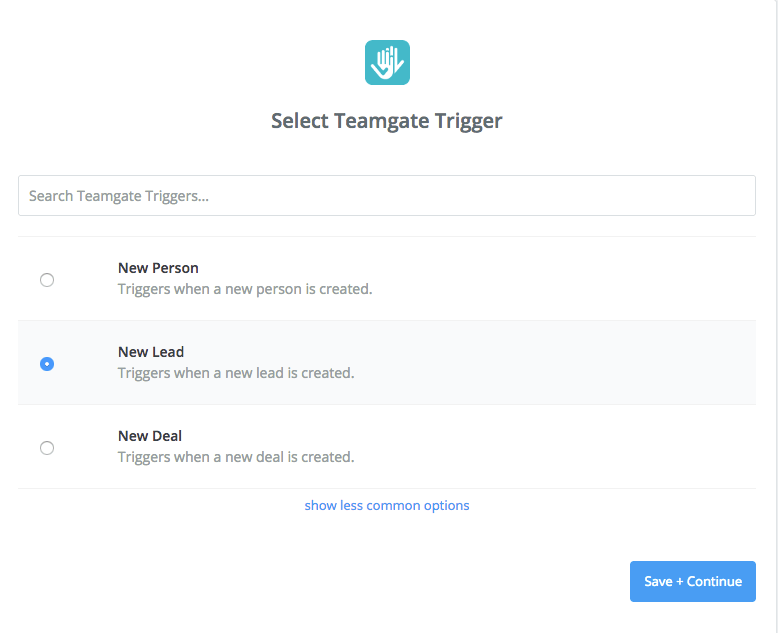
Then select your Teamgate account to connect.
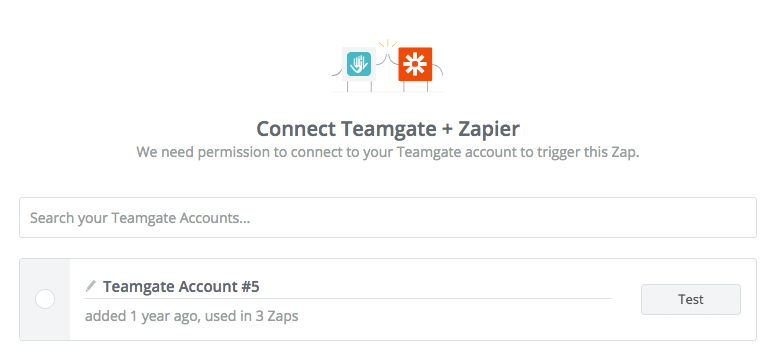
You need to add an authentication key from your Teamgate profile.
Now, you need to decide what will trigger an action – whether it’s a New Lead, New Deal or another specific event connected to the Teamgate user journey.
Now, you’ll need to choose a SharpSpring action.
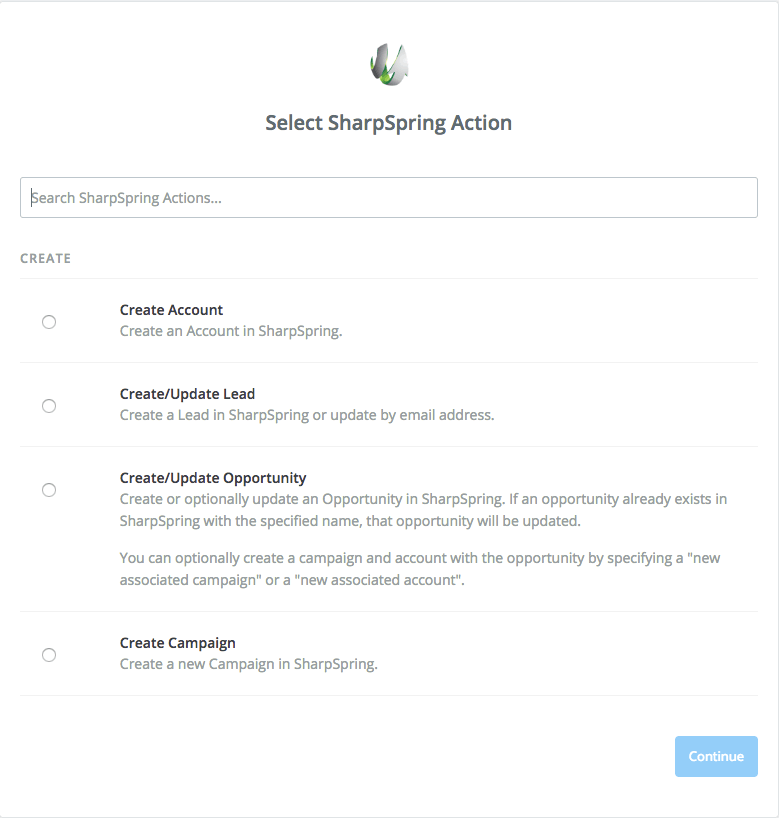
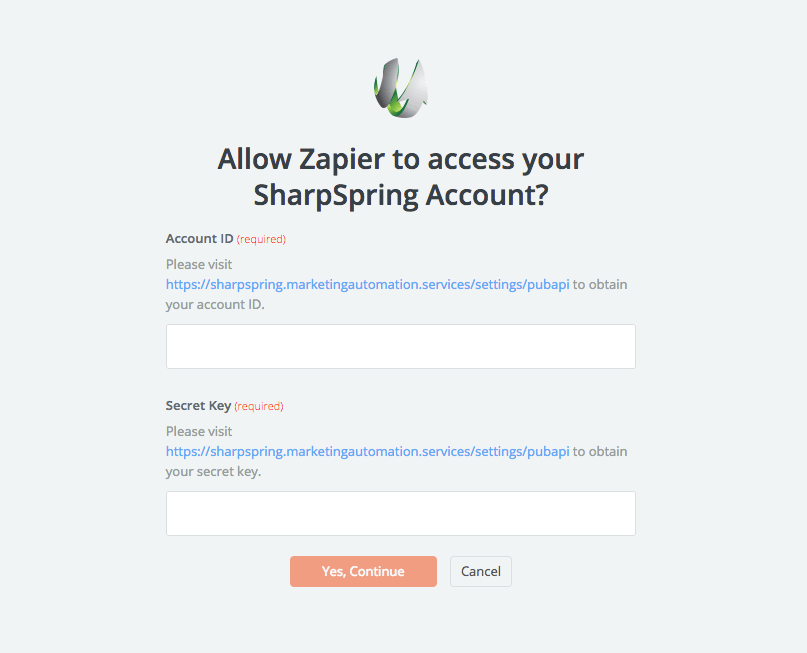
Connect your SharpSpring account to Zapier and fill in your credentials in the pop-up window.
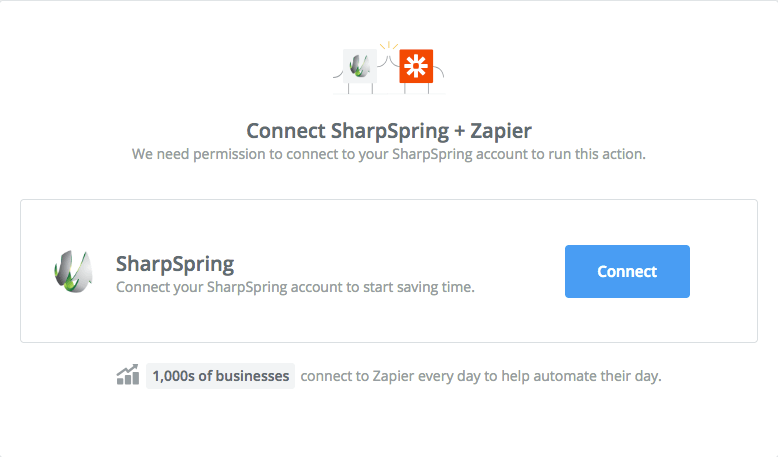
And from there you can follow the on-screen prompts to start supercharging your marketing with SharpSpring! Happy selling!
Now you are ready to use all the benefits of marketing automation and CRM in one place.
- [**Teamgate**](https://www.teamgate.com/)
- [About Us](https://www.teamgate.com/about-us/)
- [Contacts](https://www.teamgate.com/contacts/)
- [Pricing](https://www.teamgate.com/pricing/)
- [Terms of service](https://www.teamgate.com/terms-of-service/)
- [Privacy policy](https://www.teamgate.com/privacy-policy/)
- [Security measures](https://www.teamgate.com/teamgate-applies-organizational-and-technical-security-measures/)
- [GDPR](https://www.teamgate.com/gdpr/)
- [Site map](https://www.teamgate.com/manualsitemap/)
- **Solutions**
- [Sales Dashboard](https://www.teamgate.com/solutions/dashboard/)
- [Lead Management](https://www.teamgate.com/lead-management/)
- [Contact Management](https://www.teamgate.com/contact-management/)
- [Sales Pipeline Management](https://www.teamgate.com/solutions/sales-pipeline-management/)
- [Time Management](https://www.teamgate.com/time-management/)
- [CRM](https://www.teamgate.com/tour/crm-software/)
- [SmartDialer](https://www.teamgate.com/smart-dialer/)
- [Analytics & Reports](https://www.teamgate.com/solutions/analytics-and-reports/)
- [Sales Velocity](https://www.teamgate.com/tour/sales-velocity/)
- **Resources**
- [Whitepaper: Sales process flowchart](https://www.teamgate.com/whitepaper/sales-process-flowchart/)
- [Whitepaper: Practical sales tips](https://www.teamgate.com/whitepaper/practical-sales-tips/)
- [Whitepaper: Choosing A CRM](https://www.teamgate.com/whitepaper/how-to-choose-crm/)
- [Whitepaper: Sales Dev Playbook](https://www.teamgate.com/Whitepaper/sales-development-playbook/)
- [Support Center](https://www.teamgate.com/support/)
- [Feature Request](https://docs.google.com/forms/d/e/1FAIpQLSfAmbKIQDuF-x2uURVK6byKHd4tlWmWfD9a3tEh8EURmT4uHA/viewform?usp=sf_link)
- [Logo Kit](https://www.teamgate.com/logo-kit/)
- [API](https://developers.teamgate.com/)
- [Roles](https://www.teamgate.com/tour/roles/)
- [Affiliate Program](https://teamgate.getrewardful.com/signup)
- [**Contacts**](https://www.teamgate.com/contacts/)
- [Call Sales](tel:+17252542694)
- [Sales Inquiries](mailto:sales@teamgate.com)
- [Request a demo](https://www.teamgate.com/request-form/)
- [Book Support Session](https://calendly.com/eividas/30min/)
- [Support Inquiries](mailto:support@teamgate.com)
- [Marketing Inquiries](mailto:marketing@teamgate.com)
- [General Inquiries](mailto:hello@teamgate.com)
- [Invoice Inquiries](mailto:office@teamgate.com)
### Mobile applications
- [CRM app for Android and iOS](https://www.teamgate.com/features/mobile-apps/%20%22CRM%20app%20for%20Android%20and%20iOS%22)
### Safe payments
### Language
[LTU](https://www.teamgate.lt/) [ENG](https://www.teamgate.com/)
[Home](https://www.teamgate.com "Go to Home.")
© 2026 Teamgate.com All rights reserved.
Follow us:
We use cookies to provide a personalised experience for our users. Read more from our [Cookie Policy](https://www.teamgate.com/privacy-policy/#cookies).
Got it
- Features
- [Overview](https://www.teamgate.com/tour/)
- [Tour](https://www.teamgate.com/tour/)
- [CRM](https://www.teamgate.com/tour/crm-software/)
- [Sales Velocity](https://www.teamgate.com/tour/sales-velocity/)
- [Mobile Apps](https://www.teamgate.com/tour/mobile-apps/)
- [Industries](https://www.teamgate.com/tour/industries/)
- [Collect](https://www.teamgate.com/blog/smarter-leadcapture-with-your-sales-crm/)
- [Lead Capturing](https://www.teamgate.com/lead-capturing/)
- [SmartDialer](https://www.teamgate.com/smart-dialer/)
- [Email Integration](https://www.teamgate.com/integrations/mail-clients-integration/)
- [Convert](https://www.teamgate.com/lead-qualification/)
- [Lead Management](https://www.teamgate.com/lead-management/)
- [Lead Qualification](https://www.teamgate.com/lead-qualification/)
- [Lead Prioritization](https://www.teamgate.com/solutions/lead-prioritization/)
- [Time Management](https://www.teamgate.com/time-management/)
- [Sales Pipeline Management](https://www.teamgate.com/solutions/sales-pipeline-management/)
- [Sales Acceleration](https://www.teamgate.com/solutions/sales-acceleration/)
- [Contact Management](https://www.teamgate.com/contact-management/)
- [Product Catalogue](https://www.teamgate.com/solutions/product-catalog/)
- [Insights](https://www.teamgate.com/solutions/analytics-and-reports/)
- [Analytics & Reports](https://www.teamgate.com/solutions/analytics-and-reports/)
- [Sales Dashboard](https://www.teamgate.com/solutions/dashboard/)
- [Sales Activity](https://www.teamgate.com/solutions/sales-activity/)
- [Pipeline Management](https://www.teamgate.com/solutions/insights-pipeline-management/)
- [Sales Leaderboard](https://www.teamgate.com/solutions/sales-leaderboard/)
- [KPIs & Sales Goals](https://www.teamgate.com/solutions/kpi-and-sales-goals/)
- [Blog](https://www.teamgate.com/blog/)
- Resources
- [Help Center](https://www.teamgate.com/support/)
- [Case Studies](https://www.teamgate.com/case-studies/)
- [Developer API](https://developers.teamgate.com/)
- [Affiliate Program](https://teamgate.getrewardful.com/signup)
- [Pricing](https://www.teamgate.com/pricing/)
- [Integrations](https://www.teamgate.com/integrations/)
- [+1 725-254-2694](tel:+17252542694)
- [Start Free Trial](https://www.teamgate.com/trial/)
- [Login](https://my.teamgate.com/index.php?r=my/guest/)