Get a free sales audit to uncover hidden revenue opportunities!

It doesn’t matter how many leads you can generate if you can’t close a deal. Effective lead follow up is vital to make the most of the leads you attract, and ensure your lead generation efforts are not wasted by low conversion rates.

These 5 tips will help you find and convert your most valuable leads:

1.   Get More Info from Lead Generation

Ensuring your follow up messages are relevant and focused on your lead’s needs right from the first contact gives you the best chance of getting a response. This means you need ways to collect information about your leads before sending the first message:

●     Lead Capture Forms

More than 49% of marketers say that online forms generate the most leads, so it makes sense to avoid wasting these leads by knowing nothing about them.

Give your leads the opportunity to explain their needs and interests when completing your lead capture forms. Making contact forms too long or asking for irrelevant information can reduce their conversion rate, so identify a few key data points that will enable you to make informed decisions about how to follow up with a lead. For example, including checkboxes that can be ticked to indicate areas of interest, or drop-down lists to select their industry and the size of your organization.

For example, Bounce Exchange keeps the information it asks for to a minimum by simply requesting a company URL.
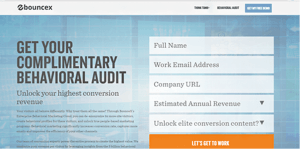
a screenshot of a behavior audit

This ensures little effort is needed from the lead at this stage, but Bounce Exchange will be able to thoroughly research their business anyway. While this approach is more labor-intensive, the form also asks for the lead’s annual revenue so that Bounce Exchange can make an immediate assessment of whether leads are worth the work.

A text box to describe their needs in detail is great for high-value customers interested in premium products and services, but can be too much effort for the average lead, depending on your target audience. They also take more time to process and segment leads using this data without a text analysis app, especially when handling large volumes of leads.

●     Surveys and Questionnaires

Text surveys and questionnaires let you get into a lot more detail about your lead’s needs, enabling highly focused lead follow up later down the line. These can be incorporated into lead generation by offering to help a visitor identify their needs through a survey on your site, and presenting a contact form along with the results.

Boutique productivity consultancy Building 20 uses this technique with their Remote Workspace Assessment tool, which helps leads self-identify issues holding their team back before offering to arrange a follow up.

black image with text and a laptop

This serves the dual purpose of showing leads the problem they need to fix, and ensuring the conversation can begin with a good idea of how Building 20 can help.

Besides giving you a lot of useful information about a lead, providing this help upfront boosts leads’ confidence in your subject area. As a result, providing information and advice to leads makes them almost 3 times more likely to see buying your product as an easy decision.

●     Browsing Behaviour

Analyzing each site visitor’s behavior on your website can tell you a lot about what they need from you. By tracking this data from their first visit, when they decide to get in touch you can base your approach on the content they viewed and the parts of your store they visited, enabling you to open by addressing what they are looking for. Understanding consumer behavior is critical to following up effectively with leads.

2.   Time Your Contacts

The frequency of your lead follow up messages requires a careful balance. Follow up too often and you will annoy your lead, too little and you might lose their interest. This typically takes a lot of optimization based on past performance to get right, as the ideal frequency is different for every audience and also for each contact method. Using a sales CRM to track past performance and automate future follow ups can increase sales by 65%.

Creating SMS and email triggers based on site visitor actions give you the best chance of getting in touch at the right moment. These enable you to send follow up messages based on what your customer is thinking right now. For example, sending a follow up email after a visitor reads a number of blog posts on the same topic, or immediately after they view specific products or services.

Doing this means you will send highly relevant messages at a time you know your customer is online and thinking about your business, increasing the chance they will check out your message.

3.   Continue the Marketing Funnel

A content marketing funnel ensures that you are sending the right information to leads at the right time for it to have an impact. Following a marketing funnel ensures that you don’t overwhelm new leads with too much detail before they are certain what they need from you. At the same time, it also ensures you won’t lose the interest of engaged and educated leads by sending entry-level information they already know.
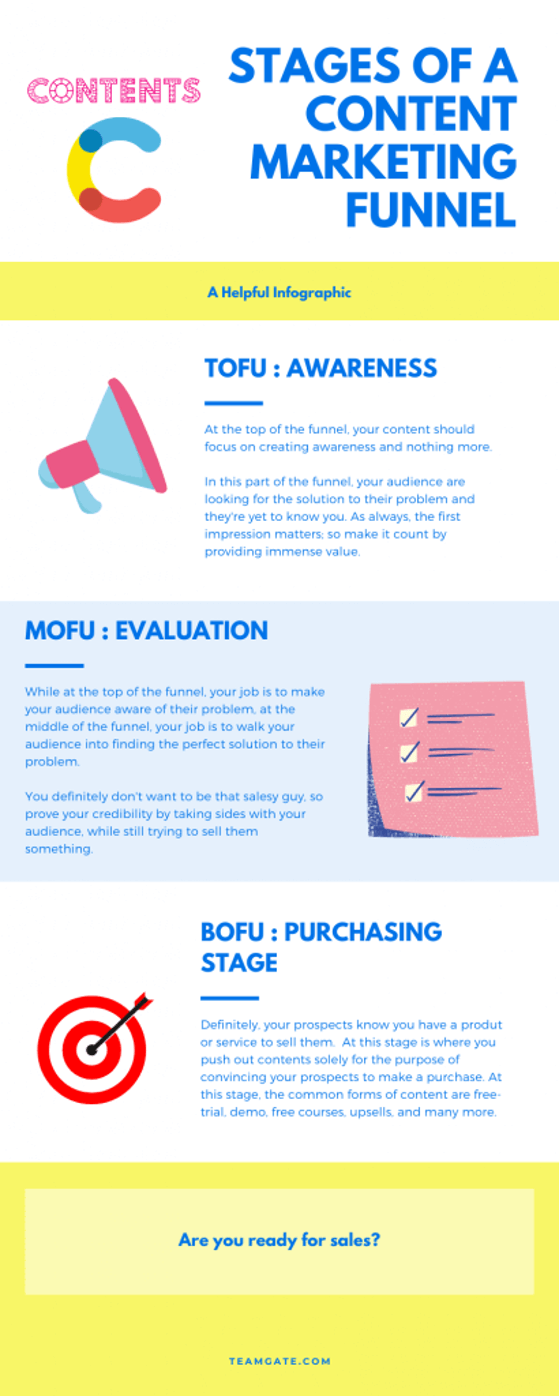
a large screenshot of the stages of a content marketing funnel

Marketing funnels can be separated into 3 distinct phases:

  • At the top of the funnel, your follow up messages should help leads identify their problem or need. They can’t decide if they want your product without a clear idea of what they want to do with it.
  • In the middle of the funnel leads are evaluating solutions to this problem. This is the time to discuss solutions to their specific problem, explain how your business would fit into the picture and compare competitors.
  • At the end of the funnel is the purchasing decision (hopefully!). Leads who get this far know they have a problem to solve, and they know you have an ideal solution. Focus on the specific features that can help them, and provide extra incentives to take the final step such as free trials, discounted pricing and onboarding content.

Most leads will independently research your business to some extent before providing their contact details. As a result, not all of your leads will arrive at the same stage of the marketing funnel. In order to immediately engage each contact, you need lead follow up plans that can pick up from every stage of the funnel instead of starting again or skipping straight to the sale. In essence, using the marketing funnel to inform your follow up strategy keeps the conversation focused on what is most important to your lead at each stage of their journey, nurturing your leads instead of pushing them to buy before they are ready.

4.   Score Your Leads

Scoring leads by adding or removing points to their user profile according to their interactions with your business and website helps identify the most important leads to focus on. Scoring leads separately for their interest in each product or service will give you a deeper understanding of the problem they are trying to solve, instead of simply gauging their interest in your business as a whole.

On average, lead scoring leads to a 77% boost to your lead generation ROI.
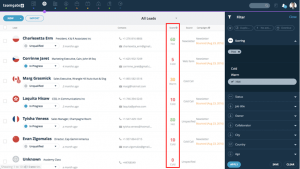
screenshot of teamgate lead section

Negative scoring is just as useful as positive scoring. Removing points for actions that indicate a visitor is unlikely to buy avoids wasting time on follow up conversations that won’t go anywhere. For example, you can use negative scoring to predict if your business is out of a particular user’s budget, or if they are trying to solve a problem your product doesn’t fix.

5.   Share Content Marketing

Including your content marketing in lead follow up lets you show leads your expertise without the pressure of a sales pitch.

  • Content explaining how your product works or giving industry insights they can benefit from, raising their confidence in the subject. Demonstrating relevant use cases can show leads how your business can help them in a way they immediately understand.
  • A picture paints a thousand words, or so the saying goes. Infographics, videos and other visual content can convey how leads can make use of your business faster and with greater impact than a text-only email or SMS.
  • Automated marketing reporting can tell you exactly what kind of content your audience is looking for online. This enables you to easily identify past content that will be useful to a particular lead, as well as spotting opportunities to tweak old content to appeal to a new audience. As a result, content discovery and using automated marketing reporting lets you create follow up campaigns with an immediate impact instead of relying on trial and error to find the content your leads want.

Conclusion

Effective lead follow up focuses on what your lead needs, not what you want to sell. This starts with understanding their current situation and how they found you in the first place.

You also need to get across what they need to know about your product and business. Without this, it is difficult to have a productive conversation about what you can do for them. From here, you can ensure that you follow up leads by providing them with the help and information they need to feel confident about buying from you.


The world of sales can sometimes feel like a frenzied quest for the new, and not just from the standpoint of the shopper. Merchants are always eager for fresh customers, after all. Their eyes are fixed on uncapped future growth, and it all stems (in principle) from the rising domination of target markets and eventual expansion into new territories.

While this isn’t inherently unreasonable, it often leads to existing customers being overlooked. They’re erroneously viewed as safe assets with fixed value. Consequently, brands ignore them and put all their energy into impressing strangers. What they should be doing is spreading their efforts, also making a priority of retaining those existing customers and increasing their value.

There are many ways to encourage customers to stick around, but in this piece we’re going to look at the smart use of UGC (user-generated content). It involves interacting with existing customers to make them happier and help keep other customers. Here are 6 useful tactics:

Record customer testimonials

For obvious reasons, companies invariably rate their own products and services very highly, so glowing on-site copy must always be taken with a heap of salt. This is why there’s so much value in recording testimonials from happy customers. People unfamiliar with your brand will see compelling social proof that you really do have something great to offer.

That’s not all, though. It’s also great for retention for one simple reason: when you feature someone’s testimonial, it will make them feel appreciated and solidify their positivity towards you. Whenever they see their video on your site, it will reinforce their brand loyalty — even if they’ve soured on you somewhat, they’ll be reminded of their old affection.

Run UGC competitions

Through social media, it’s extremely easy to run competitions involving your customers, and by tying the results to UGC you can get great results. You could, for example, invite each customer to write a poem about one of your products or services, and offer some kind of prize for the winner — probably something from your range.

This is great for general content marketing because it sparks a lot of activity surrounding your brand and expands your reach (particularly if your competition manages to trend), but it’s notably useful for raising customer value. Not only will existing customers be reminded of your brand through being notified of the competition, but they’ll also be pushed to view the prize as valuable, meaning that they might come to want it so much that they buy it when they don’t win.

Highlight user-created media

Whether generated through competitions, offered unprompted, or only tangentially related to your brand, you can do more with the UGC created by your customers. By highlighting it (particularly creative media) on your website, you can show appreciation for the effort behind it and build a reputation as a company that’s willing to share its platform.

One of the most common ways to do this is to add a grid to your homepage (e.g. Curator) and populate it using content from relevant social media sites. Be mindful that you don’t allow it to be fully automatic, though, as inappropriate content might filter through. Instead, go through and accept things manually. Over time, you can build up a visually-arresting collection.

Ask for detailed feedback

Customers like to feel that they have some say over the direction of a business — that their opinions are consequential — so it’s a good idea to get into the habit of asking them for meaningful feedback. How can you improve your products or services? How could your customer support be better? What else could you bring to the table?

You don’t need to action every piece of feedback, but there will surely be some significant room for improvement, so you should make a real effort to put some of it to use. When you do so, your long-term customers will be happier with your business, and they’ll feel reassured that they should stick with you because you’ll keep listening to them.

Some of the strongest business models are built on appeasing the consumer. Ecommerce and dropshipping stores (if you’re unfamiliar with the dropshipping model here is a helpful beginner’s guide) can benefit from us dropshipping suppliers to streamline operations. It drives the direction of their product line, helps them refine the useability of their store and, in the case of social proof, indicates to other consumers the worth of the store — all essential factors in keeping customers engaged.

Host some kind of event

As a brand, it can be nice to run real-world events from time to time. It’s a good excuse to network with people, collaborate with compatible brands from throughout your industry, and get some valuable PR in the process. That said, it can also be fantastic for generating UGC if you invite some or all of your loyal customers to attend.

You could specifically ask them to post on social media about the event, but they’re likely to do so even if you don’t (provided the event is suitably interesting, which it should be). This will return value to you through promoting your brand to their followers, and it will make them appreciate your willingness to engage with your customers. Some companies may also consider hiring event staffing companies to make sure of a smooth flow.

Reward brand ambassadors

Not all UGC needs to be cajoled. If you really do offer something special, then your happy customers will take their own initiative and recommend you to others. This is extremely useful, of course, but that doesn’t mean you should leave it there: instead, you should incentivize such actions (most likely through a customer loyalty program).

This will largely mean that more happy customers will think about recommending you. Knowing that they can save 5% on their next order doesn’t need to convince anyone — it only needs to serve as a catalyst. There are plenty of brands I’d be willing to recommend if asked, but I’m simply never asked. If I were tempted with some minor reward, I might make a concerted effort.

Whether you want to grow your company or just bolster your success, raising your rate of customer retention will make a big difference. By using these 6 tactics, you can turn UGC to your advantage in a major way.

How much you sell can have a monumental impact on your career and profitability. Poor negotiation skills can lead to economic loss and missed opportunities. 

Whether in discussions with buyers, suppliers, or investors, most negotiations follow the same fundamental rules. To clinch lucrative deals, here are the best negotiation training tips for sellers. 

Negotiate with Real Decision Makers

In the year 193 AD, the emperor’s guards killed the emperor and offered to sell the Roman Empire to the highest bidder. Julianus’ bid was the highest. Yet after paying 250 gold pieces per guard (total around $1B in today’s currency), he was swiftly deposed. No one recognized Julianus as the new ruler. 

If you’re aiming at making a legitimate deal, make sure you’re negotiating with the real decision makers. In large organizations, the decision-making unit may include different personnel from various departments. A contract with anyone else may not hold.

Set Clear Goals

If you don’t set clear goals, you’re unlikely to reach an agreement that’s favorable to your business. In his book Authentic Negotiating, author Corey Kupfer says the best negotiation training reinforces three qualities – clarity, detachment, and equilibrium. The best way to meet the three conditions is to go into talks with clear goals. 

Set SMART goals – Specific, Measurable, Attainable, Relevant, and Time-bound. Prioritize your objectives, so you know what’s non-negotiable and what you can concede on. Determine the other side’s goals. Knowing what the other side wants can make it easier to find common ground and forge win-win agreements

Knowing your goals can take the emotion out of your problem-solving and decision-making. By controlling emotions, you experience detachment, often resulting in more rational thinking.     

Sell Value Before Negotiating

It’s common for buyers to want to jump right into bargaining price. As a seller, you want first to determine that there’s a business case for the deal to go through. Only then should you haggle on price and terms. 

Focus on developing a compelling value proposition that aligns with your client’s priorities. Answer the question, “Does my offer fulfill my client’s requirements?” The better you position your solution, and the more you can match your products and services to your client’s wants, the more likely you’ll clinch the deal. 

If you dive right into negotiations, you risk getting stuck on discussions about discounts and concessions. Taking a value-driven approach ensures your offer meets the needs of your client. Focusing on value can later on smoothen negotiations. In turn, this makes it easier to close the deal at a favorable price point.  

Focus on Mutual Gains

Negotiations are the means to arriving at an agreement that satisfies all sides. A strategy aimed at mutual gains usually results in better deals. You also stand to build stronger relationships and reputations. The Mutual Gains Approach, developed by the Consensus Building Institute, occurs in four distinct stages:

Preparation

Understand your interests and those of the other side. Also, estimate each side’s best alternative to a negotiated agreement (BATNA). With a viable option, you’re less susceptible to pressure to make unfavorable concessions.

Value Creation 

Based on shared interests, find ways to create extra value. In most deals, it is possible to generate extra chances for joint gain. For example, adding the warranty period reduces the buyer’s risk, increasing the price the buyer is willing to pay while boosting the seller’s reputation.

Value Distribution

Identify the rules for sharing value. An equitable share of benefits supports the agreement’s stability. By sharing value, you strengthen relationships while increasing the chances of the deal’s success. 

Follow Through

Train to strengthen the agreement by protecting each side against future challenges. You can protect the deal by including provisions on handling future uncertainties and conflicts.

Make Each Trade-Off Count

In most negotiations, both sides make adjustments to their original position to accommodate the other side’s needs. It is through such value exchange that trained dealmakers arrive at win-win solutions. Yet, in an eagerness to please, some people may give in to too many concessions too early. 

Negotiation training experts advise getting something of equal or higher value in return for each concession. To ensure you clinch the deal on favorable terms, create a concession strategy. Begin by creating your bargaining mix, which is a list of all areas of potential conflict. Your bargaining mix should include financial and nonfinancial issues. Rank the potential conflicts from the highest priority to the lowest. 

With your ranked list, create possible solutions to please both sides. With proper preparation, you can reduce the chances of making surprise concessions. During training, attendees can practice these four concession rules:

  • Never concede without asking for something of equal or higher value in return.
  • Never concede too much, too early, or too fast. 
  • Keep score of all trade-offs. 
  • Offer your trade-offs in bundles, such as offering different packages. 

Be Willing to Walk Away

Finally, there comes a point where you have to accept that a particular deal isn’t for you. Instead of wasting more of your time, sometimes it is better to walk away. Yet walking away can be painful and difficult. This is especially true when you had high expectations and have invested lots of time and resources. 

The best time to think of walking away from a deal is before you begin negotiations. List all the possible reasons that would make you walk away. Price is often the easiest, where you can say, “I will walk away if the prospect offers less than…” Other terms and conditions may be more challenging to define, but are just as important. 

Define early on what outcomes you will accept and which ones you will reject. By knowing your limits, it will be easier to walk away from unfavorable deals. Prepare alternative options, so you know you have other viable choices. Remember your values, vision, and mission. Don’t compromise who you are for one sale. With a strong reputation, you can attract more and better deals as clients see you as reliable.   

Every successful campaign is supported by effective marketing strategies. Before the popularity of the Internet, businesses and salespeople promoted through print media, paid for TV and radio advertising, and participated in trade fairs. Marketing strategies to increase customer base used to be costly, that only medium and large businesses were able to afford them.

Thanks to the Internet and social networks, small enterprises, even home-based businesses, can now reach their target audiences without breaking the bank. The playing field has been leveled.

Just because more businesses are opting for digital marketing does not mean that traditional marketing strategies, at least their concepts, are no longer relevant. Digital marketing is the use of the Internet and online-based technologies to promote products and services.

The medium and distribution channel may have changed, but the practices remain the same. For instance, the concept of cold calling is still being practiced through e-mail marketing. The best practices for TV advertising are applied in the creation of short-form videos for social media.

Digital marketing strategies are influenced by traditional marketing practices that focus on customers. Capture and hold their attention. Know their pain points and create content that solves these.

As a small business owner, you should capitalize on the many benefits of the Internet and digital technologies. Here is a guide on digital marketing techniques that incorporate timeless marketing strategies.

Build an Idea Pool based on the pain points of your audience

Photo courtesy of Andrea Piacquadio via Pexels

A shampoo brand, through a TV ad, shows a man in distress because of itchy dandruff (pain point). It then enumerates the solutions it offers to address the pain point. Customers, customers, customers.

Digital marketing is all about creating and distributing relevant and helpful content. The volume of website traffic is meaningless if it does not translate to a high volume of conversions. A content that focused on the pain points of the target audience ranked #10 for traffic but #1 for conversions and converted 4% higher than any other post.

Identify the pain points of your target audience, and ultimately expand your loyal customer base by:
● Interviewing a selected member of your target audience
● Browsing through online communities, forums, and message boards where the audience frequently hang out, and take note of the issues they discuss
● Sending out survey forms to your email subscribers

What are the key points to note?

● What are the problems your audience is trying to solve?
● What are the challenges they face when seeking solutions?
● What factors influence them to choose a certain brand or company?

Analyze your findings and write down relevant topics. This pool of topics will provide you ideas on the content to create and distribute.

You should also explore predictive analytics which can give you in-depth knowledge about your audiences’ personalities and preferences. Predictive analytics is “the practice of extracting information from existing data sets in order to determine patterns and predict future outcomes and trends.” (Webopedia)

Create relevant and useful content that will capture and hold your audience’s attention

Photo courtesy of Burst via Pexels

One of the basic principles of “quality content,” according to Google, is to not deceive your audience. This is applied to any form of marketing, whether digital or traditional. If you promote a webinar that promises useful tips, you should strive to deliver accordingly. Never do clickbait tactics.

When writing a piece of article or creating a script for a short-form video, ask yourself these questions:
● Does this help my audience?
● Would I do this if search engines did not exist?

Focus on the core problem your business solves and put out lots of content and enthusiasm and ideas about how to solve that problem.” — Laura Fitton, INBOUND & Influencer Relations, HubSpot

Produce content relevant to the audience at every stage of the sales cycle

Photo courtesy of Andrea Piacquadio via Pexels

Producing quality content is not only to acquire new customers. It is also one of the most effective customer retention strategies.

The message you deliver to prospects is different from existing customers. Set clear goals for each sales cycle. Here are examples:

Awareness – This prospecting stage involves strategies that will introduce your brand, products, and services. The goal is to capture the attention of the target audience.

Discovery – This stage focuses on those who have expressed interest in your brand and offerings. You can use analytics to find out the geographical location of those who visited your web pages. You may check social media analytics for data on those who interacted with your content. You can then create content to further stimulate their interest.

Evaluation – Keep those who have interacted with your content interested by inviting them to sign up to email newsletters and updates. Blast interesting and useful newsletters with powerful calls-to-action. Make your pitch. Provide an easy-to-follow guide on how to make a purchase, share your content or any other conversion goal you may have.

Purchase – This is the stage where the conversion occurs. It may be a purchase, a sign-up or a share. Thank your new customer. Send a personalized message that gives helpful after-sales information such as customer support hotlines.

Loyalty – Your existing customer base is a rich source of new business. Send them updates on new offerings, promos, and any referral programs. Consider integrating a random code generator  to create personalized rewards, enhancing their engagement and loyalty further. Building customer loyalty is key in expanding your audience and getting new customers. A study suggests that 83% of satisfied customers would be happy to provide a referral. Also, 92% of buyers trust referrals from people they trust.

Many pre-Internet customer acquisition strategies remain applicable today. Know your audience — their pains, motivations, and desires — and offer solutions that your products and services provide.

There is no one-fits-all content. A prospect may find an article introducing your brand helpful, but this does not offer much value to an existing customer. Understand the needs of your audience at every stage of the sales cycle to guide you in creating relevant content.

Through digital marketing, you create relevant and useful content and distribute it via the most effective platforms. The best part is that you do not have to worry about breaking the bank. Publish articles and white papers on your blog, post high-quality photos on Facebook and Instagram, and distribute informational videos on Youtube.

Make the most of the wonders of the Internet and online-based digital technologies.

With a global pandemic transforming the way companies operate, fear of slow growth and rising churn rates are valid concerns. And if you think SaaS companies are exempt from experiencing high churn rates in this uncertain business environment, think again. Data claims that around “Two-thirds of companies have experienced churn rates of 5% or more” – with over 30% reporting an increase in churn rates over the past year. 

To put things in perspective, a Report by SaaS Capital claims that a mere “1 percent difference in churn can have a 12 percent impact on company valuation in 5 years.”

So how can companies reduce their churn rate and prevent losing even a single customer? You need to start at the very beginning. We have three words for you: Seamless Customer Onboarding.

Top-4 Ways in which Companies can Lower Churn Rates

  1. Make your Customers your Priority with Live Chat

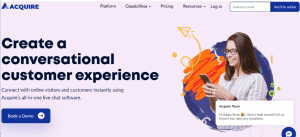
If experience is anything to go by, the secret recipe to establishing a successful business requires companies to convert new sign-ups into active users on an ongoing basis. Undoubtedly, one of the best ways to achieve this is by putting your customers at the core of your offering by using live chat services such as the one Acquire offers:


Image Source

First off, you’ll notice that the moment one lands on their website, the visitor is greeted by a live chat window that actively asks the user if they have any queries. There are two big learnings here:

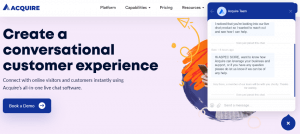
One, it offers customers the chance to connect with the brand instantly, should they have any queries. Conversely, this platform also allows companies to educate customers about new offerings, perceived value for users, and deals that may be of interest to the latter. Let’s take another look at Acquire’s live chat tool which asks the user if they have any queries, without being annoying:

Image Source

Two, using a round-the-clock platform like live chat encourages customers to air their concerns over recurring plans they may have subscribed to. As long as the queries get addressed in real-time and as effectively as possible, you can rest assured that your customers are not going anywhere. All thanks to greater convenience and a friction-free experience, courtesy live chat.

  1. Enhance your Customer Experience with Co-Browsing

“9 in 10 customers abandon a business because of poor a experience.” – Oracle Study

Apart from offering true value to your customers, there’s another element in the mix that can lower your churn rates: building quality-driven relationships with users. Say a first-time user is having trouble navigating your website. Wouldn’t it be wonderful if you could be their eyes, hands, and ears, guiding them visually in the right direction?

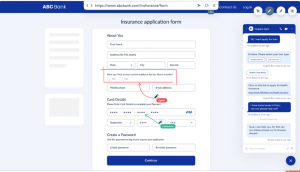
That’s literally how the co-browsing feature works. It simple words, you can troubleshoot collaboratively on-screen, anywhere. Plus, by communicating with your users on a more personalized and interactive level, you can start developing real bonds with them so that they turn into loyal customers- and even voluntary brand advocates! Here’s a snapshot of what co-browse feature looks like:

Image Source

  1. Focus on Rolling Out Research-Led Content & Test Key Elements in your Brand Mix

Sure, images and graphics have a big role to play in garnering human attention, but where the image is queen, content is king. Whether it’s an in-app experience or your website, your customers need to be greeted and treated right.

Historically, customers have been known to stop renewing subscriptions because they start viewing their subscriptions as pointless. In such a scenario, it becomes imperative to gather insight into what is driving customer behavior and what their primary pain-points look like. Here are a few ways in which you can get a better pulse of your customer’s likes, dislikes, and problem areas:

      • Roll out surveys and polls to understand what customers need or what’s lacking in your offering so that adjustments can be made based on actionable and authentic feedback.
      • Work on creating a brand personality: It could be more humane, witty, smart, funny, whatever fits with your brand’s overall character and tone. The idea is to create a compelling story with slice-of-life segments so that it resonates with users, and they connect better with your brand.
      • A/B Test different aspects of your communication/platform/offering to see what’s working and what’s not. Do customers prefer live demos over email support? How overwhelming is your onboarding process? Do you have too many notifications, freebies, and webinars on offer that will ultimately drive your customer away? These are just some of the questions you can ask yourself at this point.
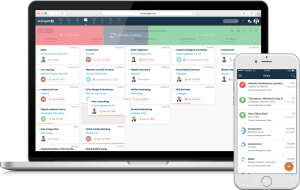
      • Integrate your sales management initiatives effortlessly into your existing CRM with Teamgate’s 360-degree inbound sales CRM software. Using this capability, you can get your hands on critical insights, reports, and forecasts required to keep your pipeline flowing smoothly. Additionally, generating leads and closing deals becomes a smooth process. Here’s a snapshot of the various advantages the software provides:

Image Source

  1. Create a Holistic Onboarding Experience for Enhanced User Satisfaction

Onboarding isn’t about sharing everything. It’s about taking the user through the first critical steps to success.

Think of onboarding as a first (blind) date between you and your customer. It can either become a memorable experience or a horrifying one depending on your customer experiences the brand.

Whether you call it the stepping stone to success or the foundation upon which a satisfactory user experience lies, ensuring a seamless, interactive, and engaging onboarding process is key.  How can you achieve this? Follow these simple steps:

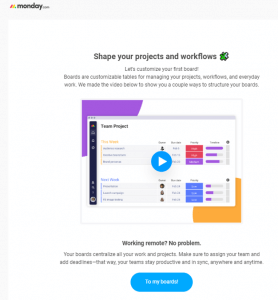
  • Streamline your onboarding process: You could pepper your website, social media platforms, etc. with useful and informative “How-to” videos and tutorials so that customers can immediately understand the core benefits they can leverage from your product/service. As mentioned earlier, Monday.com’s onboarding process is quick and effortless. Once the user signs up, they get an educative email explaining various features of the offering:

The Email Clearly Spells Out the Product’s Various Benefits – Image Source

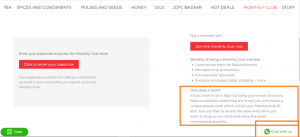
  • Highlight your offering’s value upfront, set the right expectations, and integrate convenient Call-To-Action opportunities by using proactive tools such as live chat. Let’s take a look at how JustGoodFoodBazaar’s integrates all the three elements in a collaborative manner, ensuring the new user feels comfortable using the new platform:

Image Source

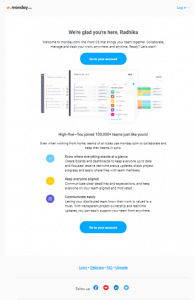
Plus, you can also establish a strategic email onboarding campaign like Monday.com does (as shown below) so that the users feel informed, inspired, and motivated to try the product or even renew their subscription:


Closing Thoughts

“The total size of the public SaaS market in 2020 is projected to reach $157 billion.” – 99Firms

All things said and done, getting your customers to simply “Sign Up” for your products/services isn’t going to make the cut for creating a loyal and long-term customer base. The trick lies in demonstrating when and how your customers will achieve their first big-win and onboarding users in an effective, effortless, and agile manner. If you achieve both, retaining customers will be a cake-walk. Try these handy tips and optimize your churn journey, the true SaaS way.

“The customer is always right” is an ancient business motto, but it’s been getting increasingly important in the last few years. How come? Well, studies reveal that customer experience will overtake price and product as the key brand differentiator by 2020.

A business cannot afford to be passive and inert anymore because other players in the same niche are more than willing to step in and impress the target audience with outstanding services. To put it simply, you have to do all it takes to win over consumers or let someone else do it instead.

But how exactly do you build a standout customer service strategy? There is no only one simple trick here, so keep reading our post to learn six tips that will “wow” your customers. Let’s begin!

Customer Service: Definition, Stats, and Benefits

Before we begin discussing the basic principles of customer service, we need to analyze the phenomenon from all points of view and explain what makes it such an important business concept.

By definition, customer service is the act of taking care of the customer’s needs by providing and delivering professional, helpful, high-quality service and assistance before, during, and after the customer’s requirements are met.

To put it simply, customer service is everything you do to make a client satisfied and willing to come back and do business with your company. The concept relies on the famous 4Ps:

  • Promptness: A customer has to be served as quickly as possible.
  • Politeness: You need to treat prospects and purchasers with all due attention and appreciation.
  • Personalization: Get to know your customers and try to make the relationship personal.
  • Professionalism: Use professional skills and prowess to impress the audience.

Although it seems fairly simple, customer service is actually a complex process that requires a careful approach and delicate actions. But if you do it properly, you can expect a wide range of benefits for your business.

First of all, a good customer service strategy will help you to boost sales in the long-term perspective. The company will be more profitable and able to invest in additional marketing and customer service mechanisms.

Secondly, your clients will be satisfied and ready to keep doing business with you. Besides that, it will improve your public image and make you a more desirable employee.

At the same time, your employees will become more productive. How come? Well, they don’t have to work in an atmosphere of constant pressure because the company is doing well and earning a lot of money. In such circumstances, they can relax and give their best to make the organization even more profitable.

If you still don’t believe that customer service is such a powerful business tool, the following stats might as well change your mind:

The Top 6 Principles of Quality Customer Service

Now that you know the most important features of customer service, it is time to discuss six ways to make the process function flawlessly. Let’s take a look:

  1. Always Deliver As Promised

The number one rule of customer service is to always deliver as promised. It is the sacred business principle that you must follow regardless of the circumstances. After all, people want to get what they paid for as it’s the only natural way to do business.

For example, students who read online analyses will notice that the two companies earn very modest reviews due to the fact that they overpromise but fail to deliver.

Your job is to do exactly the opposite – deliver as promised and sometimes even surprise customers by giving them more than expected. You don’t have to do it every time, but an occasional surprise will make your business look more professional and highly memorable.

  1. Ask for Customer Feedback

This tip is one of the best customer service mechanisms, but a surprisingly small portion of companies take advantage of it on a regular basis. Namely, you should feel free to ask consumers to give you service-related feedback.

You want to learn as much as possible about buyers’ experiences because it helps you to identify and eliminate weaknesses. At the same time, this practice shouldn’t bother customers because they realize your intentions and expect even better service next time.

It’s always a good idea to do this face-to-face because it allows you to follow both verbal and non-verbal reactions. That way, a customer can explain everything precisely and there probably won’t be any misunderstandings. But there are other options to consider here as well.

First of all, you can send a questionnaire via email. Almost four billion people use email as a means of personal and professional communication, so feel free to take advantage of it and ask for feedback from your clients.

Secondly, you can conduct a short online survey. A tool like Survey Monkey enables you to create and launch online opinion polls very quickly, so you might as well use it to analyze customers’ impressions about your business.

Survey Monkey offers you a wide range of templates that you can use to create simple but visually appealing opinion polls. Besides that, each template is customizable. It means you can tailor surveys using so as to fit the style of your business.

  1. Reward Loyal Clients

Recurring customers are the foundation of any business. Business analysts often claim that 80% of revenue comes from only 20% of loyal consumers, but there is also a study revealing that it costs between six and seven times more to attract a new buyer than to retain an existing customer.

How can you encourage customer loyalty? There are many mechanisms you can test here, but the usual suspects include the following:

  • Make exclusive offers for recurring consumers
  • Offer incentives such as free trials or “buy first” opportunities
  • Mention loyal customers on social media
  • Create membership plans for loyal clients
  • Give discounts to regular purchasers

Bear in mind that rewards and public appraisals are not only a good tactic if you want to boost customer loyalty. Namely, it is also a mechanism many businesses use to turn customers into full-time brand advocates.

This is particularly important for brands that maintain a strong social media presence because the likes of Facebook and Instagram are perfect places to keep your audience engaged. You should invite them to say a word or two about your business and also ask them to create brand-related content.

User-generated content (UGC) will help you to win over additional customers. It’s a well-known fact in the marketing universe as almost 50% of customers say that UGC is a great way to discover new products online.

  1. Deploy Chatbot Technology for Uninterrupted Availability

Can you identify what brings together some of the best agencies such as assignment help? If you pay close attention, you will realize that each of these agencies relies on chatbot technologies to ensure continuous availability.

A chatbot is an AI-powered platform designed to communicate with human users online. The benefit of the new technology is the around the clock availability – prospects can get in touch with your business 24/7.

Besides that, the technology is getting better and more efficient. According to the report, more than 80% of customer chat sessions can be resolved by chatbots, while the program redirects about 20% of the customers to human agents in case the problem is too hard to resolve automatically.

If you are interested in adding this feature to your customer service strategy, you should know that there are two basic ways to deploy chatbot technology:

  • Build a chatbot agent from scratch: If you happen to be an expert programmer, then you can try and build a chatbot agent from scratch. If not, the second option is the right choice for your business.
  • Use a chatbot program: You can find tons of interesting chatbot platforms The list of possible solutions is almost endless, but some of the best options include Zendesk, Bot Framework, IBM Watson, Mobile Monkey, etc. All of these platforms are highly efficient, but you need to explore each one separately to find the most suitable solution for your customer service team.
  1. Show Appreciation and Thank Your Customers

One thing many sales agents tend to forget is to show appreciation in the post-purchase period. It doesn’t cost you a dime, but it can do miracles for the future of your relationship with the consumer. All it takes is to say something like:

  • Thank you for being a loyal customer!
  • Thanks for doing business with us!

This is more than enough to impress the client and prove that you really appreciate their time, money, and loyalty. And don’t forget that the business is not all about the growth and revenue – it is also about being polite and expressing gratitude for having a partner on the opposite side of the sales axis.

If you are looking for alternative ways to thank customers, then you could test a different approach and send your precious clients a personalized letter. The idea is to address a customer by his/her name and craft a handwritten message to show that you really dedicated some time to your beloved client.

This tactic can have a major effect on many businesses because customization is the core of modern customer service. A study reveals that 80% of consumers say they appreciate receiving thank you notes from brands, while 72% of respondents think that paper thank you notes are more meaningful than electronic ones.

  1. Follow Trends and Anticipate New Needs

Fulfilling the existing customer service norms is a must, but we strongly encourage you to take the extra step and try to anticipate the new needs of your consumers. For example, top resume writing services follow the latest trends by customizing professional biographies and quantifying the achievements of their clients.

You can do it using the website and social media analytics. Keep an eye on user reviews, comments, questions, and inquiries because it will give you precious information about their needs and expectations. That way, you can behave proactively and craft offers that perfectly fit consumers’ wishes before they even ask for it.

However, you can exploit many other channels to try and predict the future needs of your target audience. One of the popular tools is Google Trends, a platform that enables you to monitor any subject in any given region and timeframe. All you have to do is enter a given keyword and you will see how the search phrase ranks among users and does it have the growth potential.

If you think one or more concepts promise to be popular in the months to come, you can follow them via Google Alerts. That way, you will be receiving notifications about these topics. It can serve you as a reminder to react on time and serve your customers with the right products or offers before your competitors.

Conclusion

Too many businesses are still focusing their efforts on prices and products primarily, but the truth is that customer service is now by far the shortest path towards winning over your prospects. If you want to keep the company stable and profitable in the long run, you need to consistently use state of the art customer service mechanisms.

In this post, we showed you six customer service tricks that would make your customers say “wow” and turn them into loyal consumers. Keep these tactics in mind and don’t hesitate to exploit them – it could help your business to flourish long-term!