Get a free sales audit to uncover hidden revenue opportunities!

CRM systems have been around for several decades, but they have gained momentum over the past few years. The reason for their popularity has a lot to do with tech-savvy customers’ needs and expectations. They communicate with brands via multiple channels, including phone calls, emails, social networks, and live chat. No matter which medium they use, they expect businesses to provide relevant and highly personalized user experiences. They are even ready to pay more for individualized offers and services.
Here is how using CRM can help you align your teams and drive sales.

1. Understanding Customers

No matter if you are running a B2B or B2C business, understanding customers is critical for your sales. Today, customers want you to provide highly personalized experiences at every stage of their buyer journey. However, no matter how big your business is, staying on top of customer data can be challenging. 

Fortunately, your sales agents can use a CRM system to record customer data. That way, they can pick up exactly where they left off with the conversation. When a lead visits your website page, downloads an eBook or attends an event, your CRM will automatically capture this information. Your sales reps will also have quick access to customer profiles, knowing what they have purchased, how satisfied they are, what issues they have reported so far, etc. 

2. Lead Prospecting and Generation
5 Ways CRM Creates Alignment and Drives Sales

Source: Ironpaper

Spending time and resources attracting and generating new leads is not always enough. Once they make a list of potential leads, your sales reps need to cherry-pick the hottest opportunities. That is where your CRM system helps. 

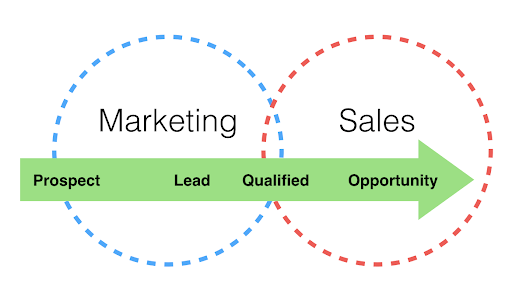
By connecting your lead prospecting tools with your CRM platform, your teams will have a 360-degree insight into their leads. Both sales and marketing departments will have access to the same data so they can create individualized and engaging customer experiences. That could serve as an effective icebreaker and help you convert prospects into qualified leads faster.

3. Offer Better Customer Service

We mentioned that customers would pay more for better customer experiences. Precisely because of that, you need to align your sales and customer service departments and focus on increasing customer satisfaction. Sure, this does not mean you should overwhelm customers by sending numerous marketing promotions. That would only annoy them. Instead, follow up strategically to determine whether there is a chance to deepen the relationship.

5 Ways CRM Creates Alignment and Drives Sales

When your entire customer service team has immediate access to a customer’s data, they can quickly provide personalized tips and solutions and point them to the right resources. Let’s take the example of your call center. Most call centers today use VoIP solutions for small businesses that integrate with their CRM tools. 

Once you integrate your business VoIP system with CRM, your sales and customer support team will be able to deliver highly personalized user experiences. Every phone call will be logged into your CRM for future reference, along with call details. A CRM tool creates detailed profiles for each customer and populates it with relevant data. Therefore, when a customer calls, the VoIP tool will pull their data from your CRM system and display it on an agent’s screen. That way, your sales and customer service reps will provide personalized service, build trust, and encourage repeat business.

4. Retaining Existing Customers 

Statistics say that the likelihood of selling to a new prospect is 5-20%. On the other hand, the probability of converting an existing customer is 60-70%. While new customers are critical for growing your customer base and expanding your business, they are neither easy nor cheap to generate. Precisely because of that, you need to focus on retaining your existing customers. To do that, your sales and marketing teams need to have unlimited access to customer data and identify upsell, cross-sell, and renewal opportunities.

Your CRM system can improve your customer retention strategy in multiple ways:

  • It improves the efficiency of the sales process by identifying leads that are more likely to convert. 
  • CRM enhances the effectiveness of your sales processes. It informs your agents which customers are engaged and tell you when the right time is to reach out and deliver personalized offers. 
  • It increases upsell and cross-sell opportunities. CRM allows you to identify customers that are willing to spend more if they receive relevant offers and deals.
  • It minimizes time to close. You will convert leads to customers faster by providing them with personalized offers. CRM provides you with a 360-degree view of their previous touchpoints with your brand.

5.Enhancing your Sales Team’s Productivity 

Your sales team’s satisfaction is crucial for driving sales. Investing in the right CRM technologies frees up your sales agents from manual and process-heavy tasks. Instead of scrolling down Excel sheets to find contact information or manually entering data, your sales agents will use a CRM system to automate these activities. That way, they will spend more time on the creative aspects of their jobs. They will use CRM as a tool that helps them connect with prospective customers and strengthen relationships with existing ones.

Ready to Use your CRM to Align your Teams and Increase Sales?

There is no one-size-fits-all rule for choosing a CRM platform. You need to pick the one that meets your company’s needs. 

For starters, look closely at the disadvantages of your current sales tools. Does the tool help you meet the goals you have set? Are you able to map out customer journeys and personalize customer experiences? Can you identify the buying phases of all your leads? How confident are your teams when interacting with customers? 

If your current tool cannot help you meet these objectives, it is time to invest in a CRM system. It is a powerful addition to any sales team, allowing you to automate a wide range of repetitive tasks and improve customer relationships. 
Don’t underestimate the power of social media. The right choice of a social media strategy can help you increase sales. Substantially. 

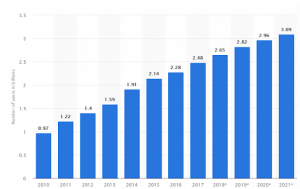
The influence of social media marketing continues to spread. You can see, how much the landscape of social media marketing has changed over the past decade:

How to Use Social Data to Increase Sales

Image credit: Statista

Social media platforms have tremendous outreach and are very user-friendly for businesses who want to grow their audience and increase their online presence. And, with the help of selling tools, you can actually have your customers shop without leaving a social media platform. 

However, the part of social media that brings the most value is social data. Mined with the help of the built-in Analytics tools, which every social media platform provides, businesses can get up-to-date information on their social media performance. 

More on Social Data

So what is social data?

This data includes public information that users share on social media, including shares, likes, as well as demographical and biographical data, etc. 

Social data is generated through social networks in real-time and is used to determine:

  • reach
  • influence
  • relevance
  • brand exposure, etc. 

Social data not only helps brands measure their online presence but also helps customer acquisition and retention, which is crucial for sales. 

Is Social Data a Cure for All Issues?

It may seem that social data can provide answers to all the questions. 

In reality, however, social data has limitations:

  • Users don’t always share all the information. So, you should be prepared that social data that you mine from social media will not be 100% accurate. 
  • It is hard to confirm the identity of many users on social media. Some of them can have fake accounts, and other accounts are used by bots and robots. This may undermine the credibility of social data. 
  • Because many comments, received from the users, are neutral, it’s quite hard to do sentiment analysis and estimate the real influence of the brand. 

Despite all the limitations, however, social data still provides information necessary to identify and implement the strategies that will help your brand increase sales. It helps brands answer the most important questions regarding the effective use of social media to increase sales. 

What are these questions?

Let’s take a look. 

  1. Who Are You Selling To?

Just as with a marketing campaign, knowing your audience will help you develop a more elaborate strategy to increase sales. Social data provides brands with extensive information on their audience, which they can use to develop a further sales strategy. 

In particular, social data can help you determine, which social channel is the best one to use in order to increase sales. For this, you need to compare your target buyer persona with your general audience on a certain social media platform. 

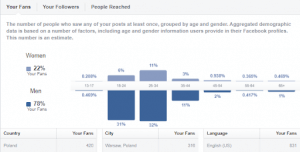
Let’s say, your target buyer persona is an English-speaking male aged 25-34, working in manufacturing and located somewhere in Europe. 

Once you determine your target buyer persona, check your Analytics tabs on social media platforms that you’re interested in using to increase sales. For instance, on Facebook your target audience may look like this:

How to Use Social Data to Increase Sales

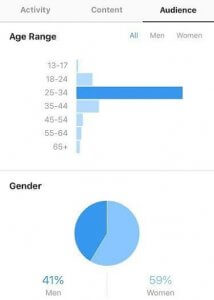
And let’s take Instagram for comparison:

How to Use Social Data to Increase Sales

While both social platforms work in terms of age, they are drastically different in terms of gender. Thus, between these two platforms, the best choice would be Facebook. 

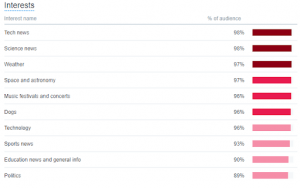
You can also check the interests of your audience to match more points that you’re looking for in a target buyer persona. For instance, on Twitter, social data provides you with extensive information on what your followers are interested in:

How can it help increase sales?

Choosing the right platform to target a buyer persona will increase your outreach and the chances that your brand will stand out more. Audiences on social media platforms are different, so social channels are not universal in terms of outreach. Tools like SocialBoosting can help brands tailor their strategy to match the engagement patterns of their target audience, ensuring more effective reach.

Social data, however, can help you find the right social platform to reach the audience you’re looking for. 

  1. What Content Are You Selling With?

Many brands post regularly on social media and expect their sales to go up, but it doesn’t happen that way. 

Indeed, content can help bridge the gap between marketing and sales. However, the success of your sales through social media depends on content rather than on regular updates. 

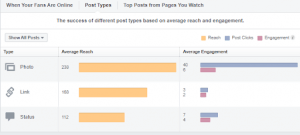
Social platforms provide up-to-date social data on the content preferences of your audience, helping you choose the best content type in terms of sales. On Facebook, for instance, you can see the statistics on the best-performing post types as well the how each post performed individually in terms of reach and engagement:

How to Use Social Data to Increase Sales

This social data can help find the answer to the question, which content to use to boost engagement and drive sales. Content is one of the main driving forces for customer acquisition and retention through social media, thus, the choice of the right content type has a significant impact on sales. 

  1. How Can You Increase Your Outreach?

Outreach and sales go hand-in-hand. The higher is the outreach, the better are the sales. The outreach depends on how well your brand is in-line with the current social media trends and tools, and how well you can use them. 

One of the tools that have a substantial effect on outreach is hashtag. The right choice of a hashtag determines the visibility of your brand, consequently influencing the outreach. 

Companies employ hashtags to create hashtag campaigns that go viral. For instance, Flatfy, an international real estate company, did a hashtag campaign with #bootstrap when they were a startup. After several months, they were able to extend to the international market, spreading across Europe, Asia, and Latin America. 

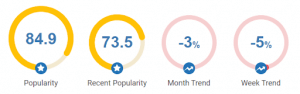
Of course, the choice of a hashtag depends on its performance. The performance of a hashtag is measured with social data that’s updated in real-time. For instance, if you take #tbt, you can see its performance and popularity growth within the period of one week and one month:

How to Use Social Data to Increase Sales

Image credit: Hashtagify.me

You can also get on board with current hashtag trends by adding some of the most popular hashtags to your hashtag campaign. Of course, the choice of the hashtags will also depend on how relevant they are to your brand and your product.

Ultimately, hashtags will help make your brand more traceable, visible, and more relevant, helping more people find you and learn about your product. 

Wrapping Up

Social data doesn’t have a direct impact on sales, but it can help you determine targeting strategies that will help you reach out to the right audience through the right platform with the right content. 

Hopefully, our tips will help you better understand the role of social data in increasing sales and to use it to grow your brand.