Designed for Growth: Scale your recurring revenue with the new Teamgate SaaS CRM. Explore SaaS Features →

Book a demo today and save 50% off your first month, or 20% off your first year.

Get a free sales audit to uncover hidden revenue opportunities!

It is necessary for every business to develop a sales pipeline because the contribution of an efficient sales pipeline towards the revenue is undeniable. Developing a good sales pipeline holds importance, but managing the performance of that sales pipeline is a whole new challenge. The performance management of a sales pipeline gives insights of its productivity, and it also tells whether the sales pipeline is feasible for a given business or not.

There are different steps of a sales pipeline. Whether it is an initial step of prospecting or the finalization of a deal in the closure, you can track sales with a critical point of view and suggest the changes that can result in a noticeable improvement in the sales pipeline process. While we have discussed the importance of performance management so far, the question that arises is that how the performance of a sales process can be analyzed?

Let’s look into a few key performance indicators of a sales pipeline and see how different factors affect a sales process;

Average Transaction Value

One of the important key performance indicators by which you can track sales is the observation of the average transaction value. The average dollar that a customer spends on your product/service in one transaction makes up an average transaction value. The average transaction value can be calculated by dividing the value of each transaction to the overall number of transactions that a business has processed in a given time frame.

If the average transaction value of business is gradually increasing, it suggests that the sales pipeline is performing fairly well. On the other hand, if it is not fluctuating much or decreasing, then a business must focus on the strategies that will help it in increasing its ATV.

Related: Sourcing Data from All Angles for Valuable Market Insight

Win-Rate

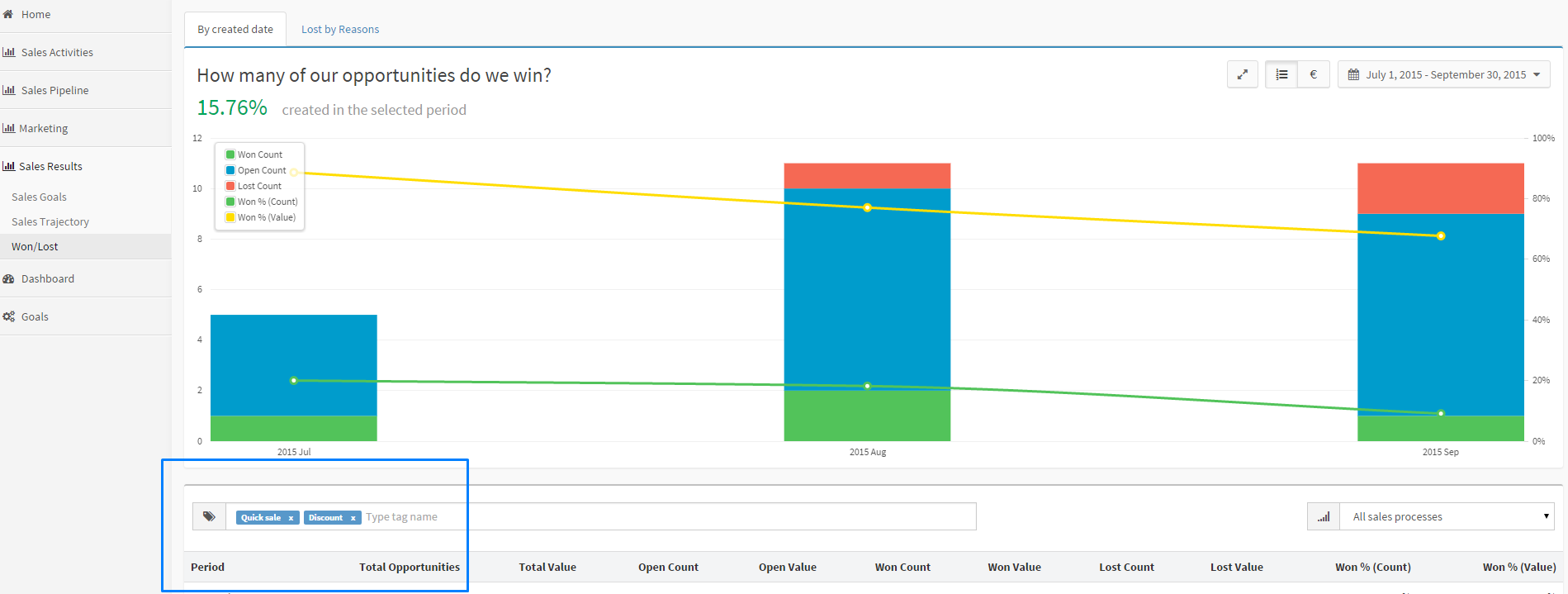
The effectiveness of a sales process can also be assessed by finding out the precise number of opportunities that a business successfully availed out of all the opportunities that have been available all the way. Win rate can be calculated by dividing the number of opportunities won to the total number of opportunities that were available in the first place.

A high win-rate suggests that your sales process is efficient enough to drive the sales by constantly converting the prospects into paying customers. Contrarily, low win rates reflect there are loopholes in the sales process that must be removed to achieve the desired goals. Tools like Sendspark, an AI-powered video personalization platform for B2B sales, can help increase conversion rates by enabling personalized outreach at scale.

Sales Cycle

Analyzing sales through sales cycle can be a bit difficult to find out since it is not always possible to know exactly when the opportunity has been created, but this issue can be resolved by closely observing the process in addition to the creation of monthly segments to get a clear idea on this.

The timeline and duration of the sales process are quite impactful. The time that sales process takes to approach a prospect and convince him to pay for your product determines the efficiency of a sales process.

If a sales process is efficient enough, then it will not take up much time to find out the potential customers and to turn them into paying ones. The sense of sorting out just the right prospects helps to know whether it will be beneficial to invest your time upon them or not.

Related: Insights You Gain by Integrating Social Media Management with Your CRM

Do you have a CRM that keeps you organised?

The most user-friendly CRM on the market. 14-day free trial.

Start Free Trial

Painless setup, no credit card required

Weighted Pipeline

The value of opportunities that are present in a pipeline at a given time makes up the weighted pipeline. It can be calculated by multiplying monthly win-rate with sales cycles in that month. A weighted pipeline takes into account some key determinants of a successful sales process such as percentages of prospecting, closing deals, etc.

Devising a weighted pipeline can prove to be a good performance indicator not just for the current sales scenario of that business, but also for assessing productivity of a sales process in the future.

To sum it up, all these key performance indicators need to be evaluated to determine the health of a sales process. Another more sophisticated way of analyzing these KPIs turns out to be the integration of CRM that facilitates the performance management of a sales process. The performance management tools can help greatly in this regard.

Article Summary

There are certain key performance indicators as far as the effectiveness of a sales process is concerned. The tools for business growth, such as the incorporation of a good CRM or Sales Stack platform in your business set-up can help you assess the situation in a productive manner.

Back in the 90s, Enterprise-to-Enterprise business solutions were pretty much the only way for large businesses to get things done. It was a zero-sum game whose players were known to a T-Sun Microsystems, Oracle, SAP and the likes. These corporate juggernauts had an oligarchy, and they knew it. Costs of “custom” solutions were regularly upwards of millions of dollars. We use quotes because countless SaaS companies at the time were infamous for recycling vast chunks of code between solutions and billing clients for thousands of hours of development time that simply never happened.

The recent VW software scandal involving thousands of lines of illicitly-used Bosch software code to “fix” the emission levels of their diesel vehicles, shows us that old habits really do die hard. It appears that Enterprise level SaaS is going the way of the dinosaurs – flamboyantly large and majestic in their time, but quickly going extinct. It’s anything but a graceful death though, as more enterprises find themselves out of their depth both in giving and receiving solutions to rapidly emerging problems in resource management and big data analysis.

Upper Echelon Inertia

Most Sales Stacks and CRM systems on the market today are far past their prime-clunky unintuitive interfaces that have made little if any progress with regards to usability and interface design since their inception. The culprit? Upper echelon enterprise management who learned one solution way back when in, say, ’95, who are either unaware or indifferent to other solutions that make have come out since then. The central premise of upper echelons theory is that top executives view their situations – opportunities, threats, alternatives and likelihoods of various outcomes – through their own highly personalized lenses. These individualized construals of strategic situations arise because of executives’ experiences, values, personalities and other human factors. Thus, according to the theory, organizations become reflections of their top executives.

In many corporations, this culture of “if it’s not broke, don’t fix it” is so rampant that employees are left having to work with DOS command line to carry out the simplest of functions even in this day and age.

No Backwards Compatibility

Many enterprise solutions for Sales Stacks and CRM were invented in a day and age where software wasn’t designed to age gracefully or hand off to other solutions. These archaic throwbacks to earlier times are often riddled with huge chunks of code without a single line of commentary. The only person who knew what all of this does is probably long gone and likely even dead. The high-stakes of enterprise level business further reinforce the notion of needing to keep this information safe, leading to stagnancy. Nowadays, software is designed to be as dynamic as its users, with incremental updates being formulated and deployed within hours, something that enterprise solutions sorely lack.

Corporate Favoritism

Most enterprise partnerships are grandfathered from decades back. The top-level management in the respective organizations oftentimes have vested personal interests in continuing their current business arrangements. The end result is a culture of favoritism where solutions are chosen not based on their merits, but based on who’s offering them, further contributing to their stagnancy and lack of innovation.

corporate-business (1)

Over-Generalization

Enterprise-to-Enterprise business models hail back from a simpler time where problems were simple and solutions were straightforward. The modern Sales Stacks or CRM could afford to be slow and clunky because they were literally the only contenders around- it was that or physical filing. Solutions were afforded the minimum level of functionality needed to get the job done, so enterprises could move on to offering other solutions to other clients. It was a quantity over quality approach, a buyer’s market. These days, targeted, custom-tailored, and in-house solutions are all available to get the job done cheaper and more efficiently, but many enterprises are reluctant to take this inevitable next step forward. Modern platforms like DreamFactory exemplify how enterprises can gain governed API access to any data source, enabling better integration and data accessibility without the burden of legacy system constraints.

Do you have a CRM that keeps you organised?

The most user-friendly CRM on the market. 14-day free trial.

Start Free Trial

Painless setup, no credit card required

In Summary

The sad truth of this all is that Enterprise level CRM and Sales Stacks are stuck in a rut. Things have gotten dark and musty being shut in this long. Peering into a corporate terminal at a large enterprise-level businesses is oftentimes like peering into the past.

There’s a false dichotomy at play between narrow-scoped custom applications that perform a few functions exceptionally, and the enterprise model where CRM and Sales Stacks are expected digitize as many of an organization’s functions as possible.

The Way Out?

Disentangling “complex” from “complicated,” with innovative, visual-based CRMs and Sales Stacks. Just because a CRM’s functions need must cover a host of complex scenarios in an Enterprise setting doesn’t necessitate that they themselves be complex. Much as with end-user applications that put user experience as the foremost design concern, so too, should enterprise solutions focus on providing maximal functionality at minimal complexity.

Movers and shakers have already begun to appear, from Zendesk, to Box, to our very own Teamgate, these solutions all aim to provide a simple but not simplistic means of carrying out their intended functions, combining all of the robustness of an enterprise level solution with the usability of an end-user application.

Remember when developers started to be called “Hackers”? Or how many marketers now call themselves “Growth Hackers”?

No one will blame you if you believe Customer Success is just a rebranding of Customer Support or Account Management.

chart crm

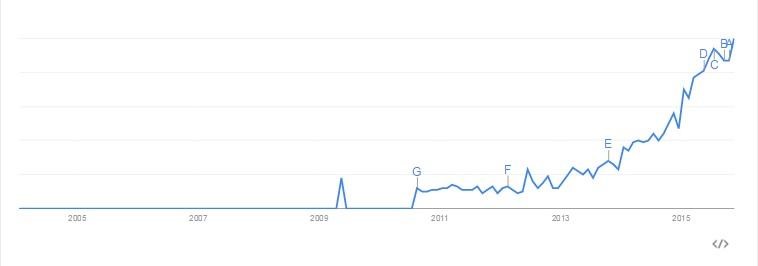
A Google Trends search of the phrase “Customer Success” shows how the phrase quickly rose to popularity in the past 2 years. in 2014 alone, the number of Customer Success job listings on Linkedin has increased by 300% according to Gainsight research. So what’s going on exactly?

What we are witnessing is the SaaS industry’s impact on the sales and delivery models of products. Welcome to the “Subscription Economy”.

Traditionally, businesses derived most of their revenue from one-time purchases or long-term contracts. But now, with cloud advancements, the rise of Software As A Service, and a bustling B2B economy, the sales model has shifted to renewal sales in the form of pay-as-you-go and subscription plans.

Delivery-wise, businesses can now quickly deploy a Minimum Viable Product and acquire customers as they test and improve the product. The data gathered from customers’ interactions with the product (surveys, support tickets, etc.) is key to how every business evolves.

Customer Success is the SaaS answer to some of the challenges that the subscription model presents. Can non-SaaS businesses benefit from Customer Success strategies as well? Before we answer the question, we need to define Customer Success.

Related: Customer Success Strategies for Non-SaaS Businesses

When most people think of the average Customer Support experience, something like this comes to mind:

service (2)

Well, a bad experience at least. Whereas we tend to think of account managers as usually distant people whose only care is to close deals or satisfy high-profile clients


As opposed to Customer Support and Account Management, Customer Success is a proactive approach to customer relationship management. Instead of waiting to respond to customer problems—in the case of customer support, or waiting to solve client’s conflicts—as account managers do, customer success is about anticipating the customer’s current and future needs.

Lincoln Murphy, SaaS expert, of sixteenventures.com defines Customer Success as:

Customer Success is when your customers achieve their Desired Outcome through their interactions with your company.”

By making sure that customers reach whatever outcome they desire from your products or services, you:

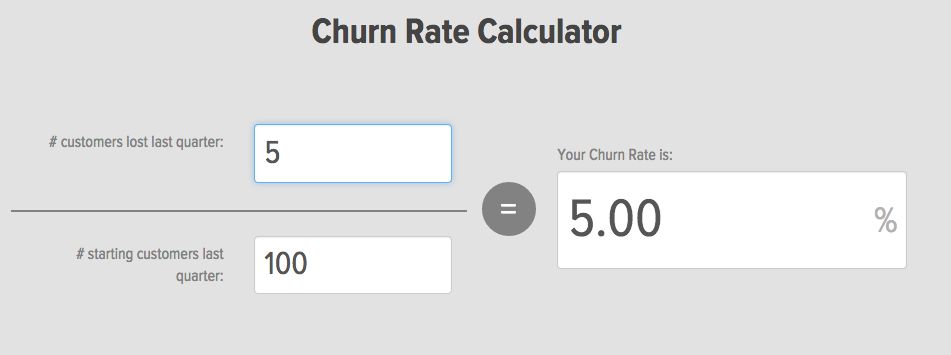
  • Lower Churn. Understanding and reducing churn is critical for subscription businesses, and tools like Baremetrics help SaaS companies analyze churn patterns and implement revenue recovery strategies to keep customers engaged.

Churn-Rate-Calculator-Kompyte

  • Increase Upsells.

upsell

  • Increase Customer Retention.
  • Increase Customer advocacy.

Since most of the revenue in the SaaS model flows in after the sale, a customer success department has to ensure the following:

  • Customers are successfully in implementing the product.
  • Customers understand how to use the product.
  • Customers receive excellent support.
  • Customers are engaged to share their feedback.
  • Customers are interested in the continued use of the product.
  • Customers are interested in acquiring new product features.

Do you have a CRM that keeps you organised?

The most user-friendly CRM on the market. 14-day free trial.

Start Free Trial

Painless setup, no credit card required

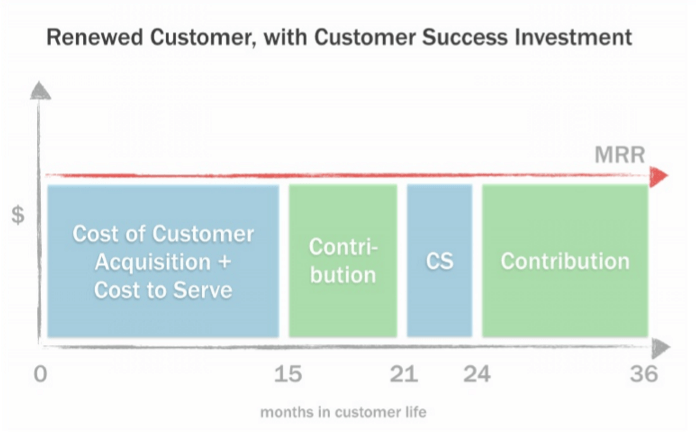
Depending on the product or service that your business offers, your customer success manager might have to focus on some responsibilities more than others. In fact, the agility of your processes will prove invaluable in making the customer success role effective. Customer success teams can actually generate as much more or more revenue than sales teams over the life of a customer.

custommer success (1)

If the churn rates at the onboarding stage (Trial-to-Paid customers conversion for example) prove problematic, an agile customer success department should adjust its focus accordingly instead of sticking to one-size-fits-all approaches.

Is it relevant for non-SaaS businesses?

Your service/product does not need to be on the cloud for you to incorporate Customer Success into your business. Non-SaaS B2B companies, gyms, art workshops, and other businesses can benefit from customer success processes as well.

In the subscription model, the need to keep customers successful and happy throughout every single interaction with the company is urgent. In addition, there is a high focus on using customer data to implement key metrics in order to improve the product and customer experience. How does this translate for non-SaaS?

Customer Success, after all, remains about knowing your customers (segmentation article) and earning their trust.

Would you like to know your Customers better? Start your Teamgate Free Trial today!

One of the major news stories in 2015 was the visits of Chinese and Indian prime ministers to the US, and specifically, to Silicon Valley. What was all the fuss about?
Last September, Chinese President Xi Jinping’s short stay in Seattle– China is Washington’s state biggest export market – concluded with the eight annual US-China Internet Industry Forum. Some of tech industry’s most powerful names like Facebook’s Mark Zuckerberg, Amazon’s Jeff Bezos, Apple’s Tim Cook, Microsoft’s Satya were present at the forum and took the opportunity to evangelize their best products to their Chinese counterparts.

us-china-internet-industry-forum

China’s E-commerce market alone was worth $2 Trillion in 2014 while the Indian one is projected to reach a $20 billion evaluation by the beginning of this year. Reaching out to an international audience is now more important than ever. And while international reach is usually associated with big businesses and corporations, small businesses as well should look into exploring international markets when struggling with local demand.

Teamgate, as a European CRM with an expanding list of worldwide clients, knows first-hand the journey it takes to go global.
How do you make sure your online business can well-accommodate these potential customers? Here are few tips:

Clear Language

It’s important that the language you use for website or email marketing copy is clear and straightforward; this is a good practice not just for the sake of an international audience but for English native speakers as well. Tools like Sendspark can help personalize your outreach across different markets by allowing you to create targeted campaigns that resonate with specific audiences.

Supportive Design and Code

Supportive website design serves to ensure that your website can support text in any writing system without any glitches or glaring faults. Make sure to also verify that your website’s forms or those of third parties (like Wufoo and Google Docs) can support text inputs of all languages and check whether things like address forms can accommodate foreign ones.
There is nothing more frustrating for international customers than not being able to sign up or finish an order simply because web forms do not recognize non-USA based addresses.

Language Localization

Dialects_of_the_french_language

Your international audience will likely be familiar with English but some customers will rather read your website in their native language. Although machine translation is undergoing some transformative advances, it remains incomparable to the quality provided by good human localization/translation.
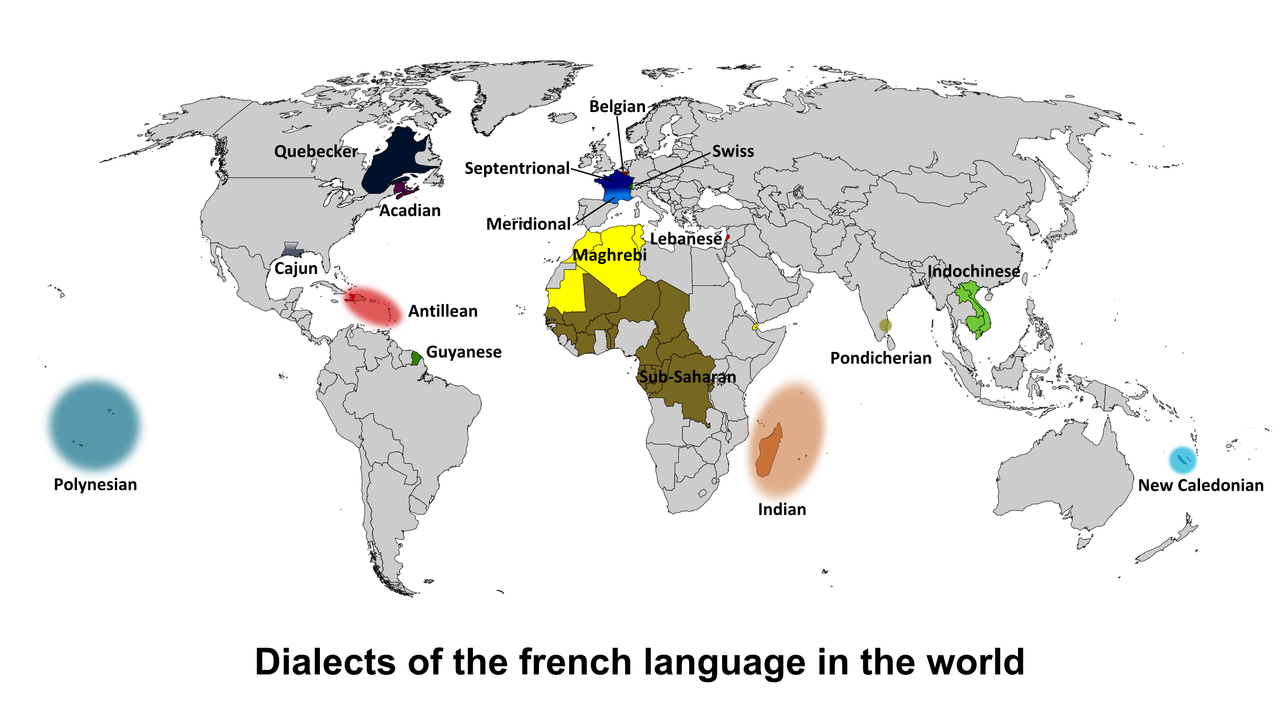
Make sure to pick a good company or contractor who’s familiar with the linguistic nuances of a language if your aim is to target specific countries rather than speakers of a particular tongue. Not all French speakers, for example, are expected to be fluent with Quebecois, Cameroonian French etc.

Knowing Your Audience

localglobal
When thinking internationally, remember to act locally as well. Countries like China, India and Nigeria have an incredible linguistic, ethnic and socio-economic diversity that can make any attempt to approach them in a monolithic way ineffective.

For example, if your services target 20 year old developers in China, a campaign more specific to this audience would prove more effective than one casting the net on 667 million Chinese Internet users.

Remember, foreign cyberspaces can be as foreign as the countries. Websites like Reddit and Facebook are popular worldwide but make sure to look for their country-specific equivalent for any targeted marketing campaign.

Do you have a CRM that keeps you organised?

The most user-friendly CRM on the market. 14-day free trial.

Start Free Trial

Painless setup, no credit card required

Being Aware of the Cultural Nuances and Sensibilities

Blizzard and their flagship online multiplayer game World Of Warcraft found this out the hard way. The game was taken down for few weeks in 2009 due to its depiction of human bones –traditionally sacred in Chinese culture– until the local authorities edited what was conceived as inappropriate content.

A little bit of research or consulting with those familiar with the culture can save you the hassle of dealing with “bureaucratic” downtimes and even potential censorship. Remember, countries have their own country-specific internet regulations.

Working With Natives

A person native to your target country can help you either establish a physical presence or consult with you on good business practices you might not be aware of. They can take care of localized social media and content, customer support and even assist you in other business processes.

How Teamgate can help:

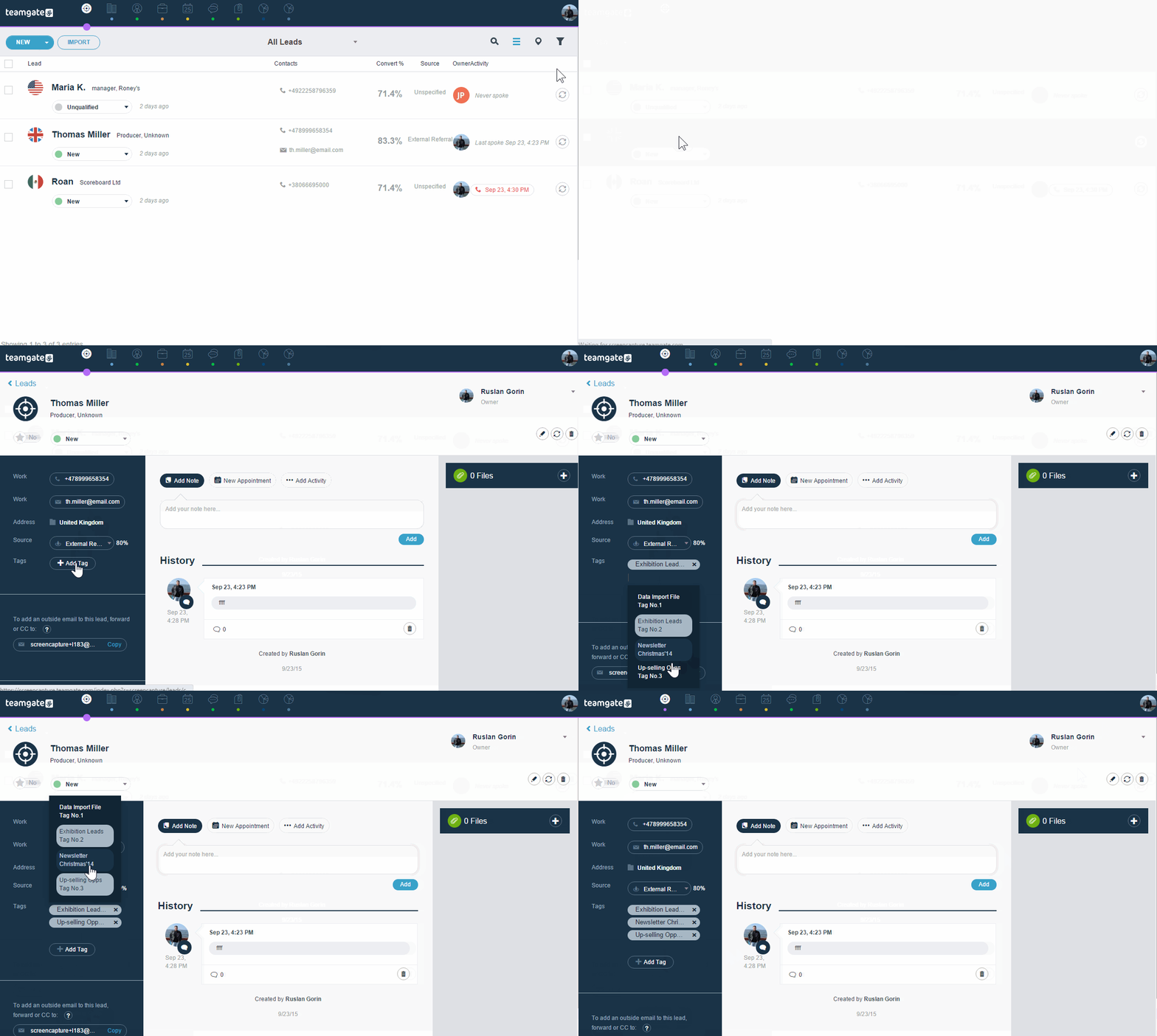
Take advantage of Teamgate’s segmentation to organize customers based on their preferred language their countries of residence or even time-zones. Adding customer tags is a matter of few clicks only:


Segmenting your international customers will help you:

  • Find the most optimal time to send emails or schedule phone calls. Time-zones can be pretty disorienting.
  • Target customers during events specific to their countries (similar to Google’s popular Doodles).
  • Sprinkle your emails with greetings in their language of preference to show them you care.
  • Why not have Email copy completely written in their language.
  • Adjust pricing model to fit with the countries’ economic situations.

Start your Teamgate Free Trial today and find out for yourself!

2016 is right around the corner. And with each New Year, people are on the lookout for new emerging trends to watch out for. Since the nature of today’s markets and industries is to move forward at incredible speeds, missing out on new trends can significantly put you behind.

Think about how the popularity of mobile technology, social media, and the wearable tech was unforeseeable a few years back. Exploring new trends is not just about jumping on the next “cool idea” but rather about you exploring new spaces where competition is less fierce. Identifying the next trend can be the right step your business needs to gain a competitive edge.

Let’s take a look at what everyone will be talking about in 2016:

Mobile Payments

Payment card industry has some serious competition to worry about. Products like Android Pay, Apple Pay, and Samsung Pay are securing more partnerships with retailers and banks in addition to garnering Point-Of-Sale Terminals support. A recent Gartner study reports that “by 2018, 50 percent of consumers in mature markets will use smartphones or wearables for mobile payments“.

Buy Buttons such as the ones adopted by Instagram, Twitter and Pinterest have proved to be doing well in 2015.

What it Means For you:

“Buy Buttons” are very well received by businesses and it’s is highly likely that more social platforms will adopt similar features. In addition to E-Wallets, this shift to quick “button selling” is shedding layers between salesperson and customer which will put more emphasis on social selling.

If “Buy Buttons” and E-Wallets are to be more prevalent, social media will become a platform where customers can both learn and buy your product in a matter of a few minutes -if not seconds. As a result, generalist approaches to prospecting and lead nurturing will have to give way to more authentic relationship management. It also entails that salespeople will have to collaborate closely with marketers, which brings us to our next point.

Convergence of Sales and Marketing

convergence

Traditionally, we think of marketing and Sales as insular if not competing departments where miscommunication between the two is commonplace.
However, “The Age of The Customer” –triggered by a shift from transactional to customer-centric approaches—has managed to open up a space where sales and management can finally align. Companies’ increasing adoption of CRMs and team communication tools to encourage cross-departmental collaboration provides ample evidence for this trend. For personalized B2B outreach at scale, tools like Sendspark enable sales and marketing teams to work together by generating personalized AI videos for prospecting campaigns, while it is no coincidence that Slack –originally a tool for organizational communication—was lauded as one the best apps of 2015.

Collaboration between sales and Marketing yields great results. A study conducted by Aberdeen Group on sales effectiveness with more than 200 executives from the executive, sales, marketing, and IT management functions found that companies that had strong collaboration between these two functions achieve higher sales effectiveness.

What it means for you:

We’ve talked before about how the traditional salesperson’s role is on the decline with “1 million US B2B salespeople projected to lose their jobs to self-service E-Commerce by the year 2020”. Will automation and Marketing-Sales convergence force salespeople to switch professions? Not yet.

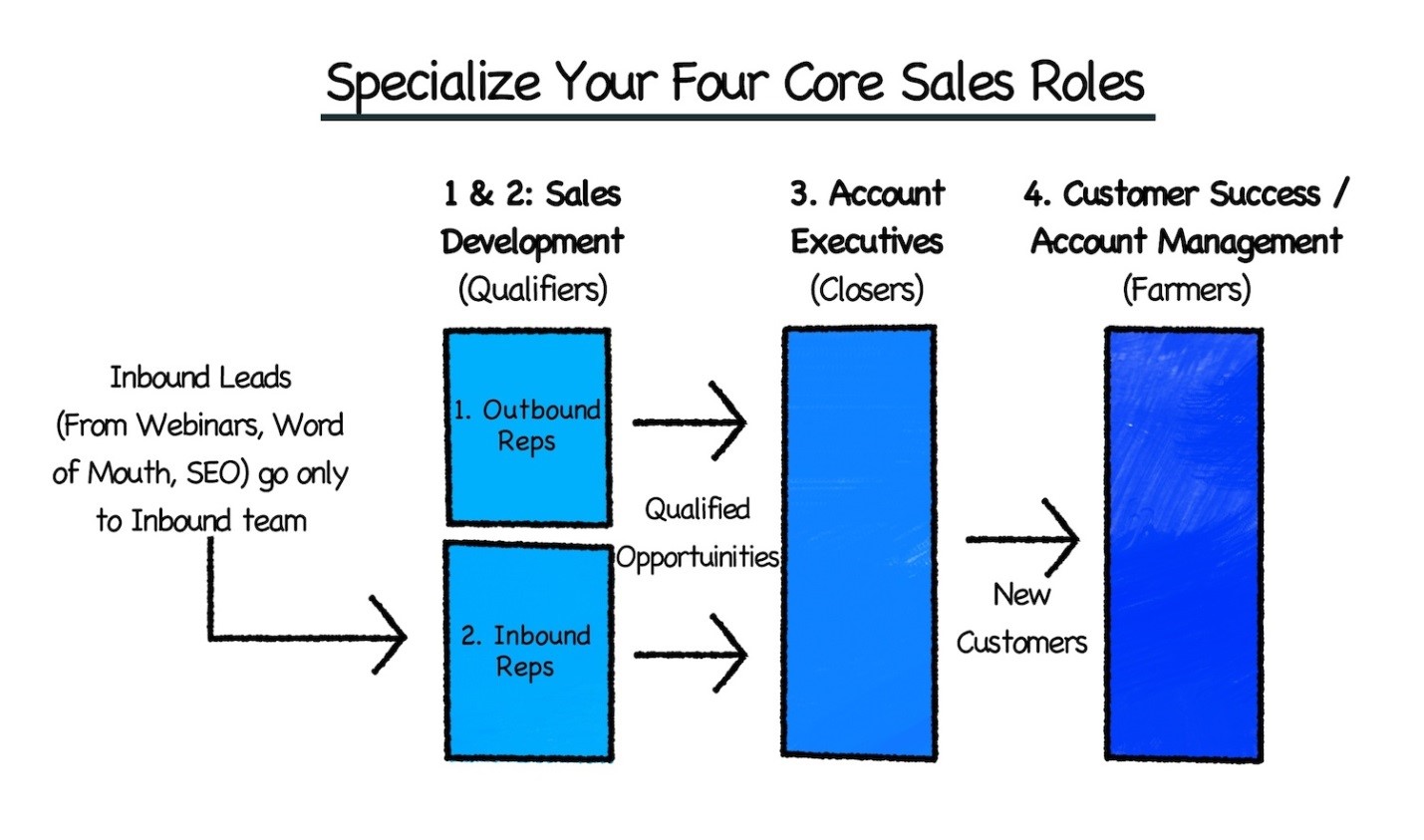
Specialization will help salespeople focus on leads and customers who require different sales approaches. It will also match outbound sales reps, for example, with outbound marketers to foster improved collaboration and even access to customer input.
When anticipated, the eventual convergence of sales and marketing can be a win-win environment for everyone as opposed to a threat to salespeople and marketers. As Marketing and PR Guru David Meerman Scott said:

The best organizations will not run marketing and sales as separate ‘departments’ but will merge the two functions into one customer-facing organization focused on revenue generation.”

Emerging Marketing and Sales venues

social (1)

Just when think you have figured out how to carve a presence on the latest social app, another one surfaces. Although platforms like Snapchat, Medium, Alidrop and Periscope predate 2015, they have seen major growth transformation this year. Why?

Businesses have begun to understand how to connect with their customers/audience through them. Even though marketers are usually the first to explore these platforms, salespeople as well must seek to understand how their new-found customers and leads differ from old ones.

What it means for you:

Shopify has put together a revealing case study about the partnerships between Pinterest and online E-commerce stores. Here are some interesting numbers:

  • The average order value of sales coming from Pinterest is $50 – higher than any other major social platform.
  • Pinterest is the #2 overall source of all social media traffic to Shopify stores.
  • 2M people pin product pins per day. That’s 20x more than there are daily shoppers at the Mall of America.
  • 93% of Pinterest users use the platform to plan purchases.
  • Orders from Pinterest on mobile devices have increased by 140% in the last two years, and orders from non-US countries have increased 130% from 2013 to 2014.

These numbers illustrate how unique Pinterest’s users are. It proves to show that every salesperson cannot afford to ignore new social venues and, most importantly, the type of customers that frequent them.

Every new social platform requires you to research its users’ spending habits, online behavior, demographics, engagement approaches they most respond to, and other factors distinguishing them.

Of course, you don’t want to spread your prospecting and attention over too many online communities, but besides the staples (Facebook, Twitter, LinkedIn), it’s important to also experiment with one or two new social venues.

How can you treat your new customers in a way that is unique to their profiles? Check out our article on Customer Segmentation!

Sales Automation

teamgate_logo_pack_SC_Blue-01

Sales automation using Customer Relationship Management apps is bound to feature on every yearly Trends list. In fact, the increasing demand for CRM is expected to propel its worldwide market valuation to $36.5 billion by 2017 according to a Gartner Forecast.

As businesses expand and attract new customers, the need for customer data centralization arises. Tasks like email scheduling, sales pipeline monitoring, team collaboration, analytics tracking, and customer segmentation are made easier with CRM.

Without sales automation, data entry can put a significant toll on salespeople by distracting them from their core duties to focus on menial tasks.
Besides centralizing team communication and customer data, a CRM can also centralize your work apps. Thanks to the integration, you can easily design and build an entire ecosystem with a CRM at its core; allowing you to keep your business, like your CRM, customer-centric.

What it Means for You!

To illustrate what a CRM can do, let’s explore how Teamgate CRM can help you handle all of the previously mentioned trends:

Mobile Payments:

E-Wallets will make online shopping easier and faster. As a result, customers’ life-cycle spent in the sales pipeline (from lead to satisfied customer) will be significantly shorter. This also means that you will have very little time to engage with them while still having to record data pertaining to transactions and customers.

TeamgateZapier

By integrating Teamgate with an online form tool (like Wufoo) and with email marketing solutions (like Mailchimp), data entry and email management will no longer be a concern. Instead, you get to redirect your efforts towards customer success and customer retention. Automation will also make Teamgate’s forecasting and analytics tools richer by populating them with key data gathered.

Sales & Marketing Convergence:

Teamgate is great for teamwork and inter-departmental collaboration (the key is in our name). Not only can you assign Deals to individuals, but you can also add as many collaborators as possible. In addition, you can set individual goals for your team and track activity to make sure no task is left unattended.
Regardless of how far your sales department is from marketing, Teamgate will close the communication gap.

Do you have a CRM that keeps you organised?

The most user-friendly CRM on the market. 14-day free trial.

Start Free Trial

Painless setup, no credit card required

New Venues for Sales & Marketing Opportunities:

How is everything described on the internet? Tags.

As we discussed in a previous article “From social media hashtags to HTML tags, Tags serve as the internet’s infrastructure. They organize information into sub-groups and make archiving and searching history a matter of few clicks.”


Using customer segmentation, you can categorize customers according to the social platforms they originated from. Of course, for this strategy to succeed, it has to serve a key objective: Better knowing new customers.

And as you populate your CRM with more data specific to these customers, Teamgate’s analytics will help you convert this data into actionable information for your business.

To summarize:

Mobile Payments, Sales & Marketing Convergence, New Social Venues for sales opportunities and sales automation are some of the most important trends you should expect to gain significant momentum in 2016.

Even though trends like Sales Automation have been mainstay for a while, the opportunity cost of not adopting them earlier is only bound to increase. Likewise, missing out on mobile payments, sales specialization and emerging social media venues will make the future cost of entry higher than it is currently dude to competition.
Interested in giving Sales Automation a test drive? Try Teamgate CRM for free Today

Business is usually associated with risks but is there a way to minimize risk-taking while maintaining prosperity? The answer is trust.

But trust goes both ways: Customers have to trust the business and the business needs to learn to trust its clients. Where does CRM stand in this equation?

Trusting Customers

• Quantifying Trust

You have attended a very high profile networking conference where you met clients of all sorts. You updated your contact book and gave yourself a mental high five for all the prospect leads you have gathered. Is it enough?

Not all leads are the same. Old clients with whom you have successfully completed deals before feel more trust-worthy –and they should. Also, new leads with quick response rates take priority over the cold ones. Maybe you want to prioritize leads that can potentially yield the highest profit. This is where a CRM can quantify trust and reputation.

“Quantifying trust” might seem like a dubious expression at first, but if the key to trust is indeed consistency, CRMs are the best tools to track, visualize and quantify trust.

Monitoring deals through all phases of the sales pipeline allows you, and the CRM, to gather key information about your leads. Factors like purchase history, lead’s source, contact history and others give the CRM ample information to forecast the likelihood of a lead to convert into a deal.

quantifying1

If you find yourself unable to close certain deals, the visualization of the Sales Pipeline will help you identify precisely where they fell through. In future opportunities, you will be reminded to proceed with extra caution or even drop the deals if they have the reputation of falling through.

• Customized Leads = Personal Leads

customized

A sign that your business has seamlessly implemented the CRM into its workflows is when leads’ profiles reflect all of the information you have gathered about them. In fact, smart systems like CRMs provide more utility the more information you give them. For example, once your leads are well customized, a quick look at them should help you sort clients according to conversion rates, deal-based reputation, association with other deals and contacts or even overall profitability.

Email and other integrations are another source of information to customize your leads. To streamline data flows and keep customer information synchronized across your business systems, platforms like Integrate.io can help you build ETL and reverse ETL pipelines that automatically push lead data from your CRM into other business tools. Keeping track of emails, social media mentions, LinkedIn connections will alert you when a lead is inching in closer to conversion. It is also an excellent way to keep track of leads’ response rates and online interactivity with the business.

As we discussed in a previous article, having one platform solely dedicated to managing customer relationships will help your staff, and business in general, get accustomed to virtualizing customers’ details. As a result, consistency of use and integration of CRM into business workflows will make discerning trust and reputation an intuitive procedure.

Do you have a CRM that keeps you organised?

The most user-friendly CRM on the market. 14-day free trial.

Start Free Trial

Painless setup, no credit card required

Related: 4 Traits of a Trustworthy Customer Relationship Management Platform

Earning Customers’ Trust

• Knowing Your Customers

A CRM helps foster clients’ trust in your business. As a customer-centric app, CRMs allow businesses to approach each client separately based on their needs, their purchase history and the nature of previously closed deals. Likewise, knowing what each customer wants effectively eliminates the need for generic marketing campaigns that have the tendency to alienate clients. For B2B sales teams, this personalized approach extends to outreach efforts—tools like Sendspark enable you to record a single video message and automatically generate thousands of individually personalized videos addressed to specific prospects by name and company, creating a more genuine touchpoint that strengthens customer trust.

• Closely Monitoring Deals.

owner1

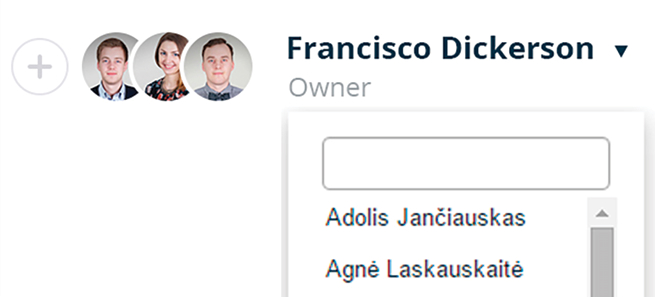
Miscommunications over who’s responsible of certain aspects of the deal are unfortunately very common. Small lapses of attention like that are how deals are sometimes left unattended, until they fall through.

Team Collaboration tools, like the one Teamgate offers, allow you to assign deals to individual staff or entire teams. The deal’s primary owner can assign and monitor each aspect of deal to make sure no glare mistakes could affect the customer’s trust in the business.

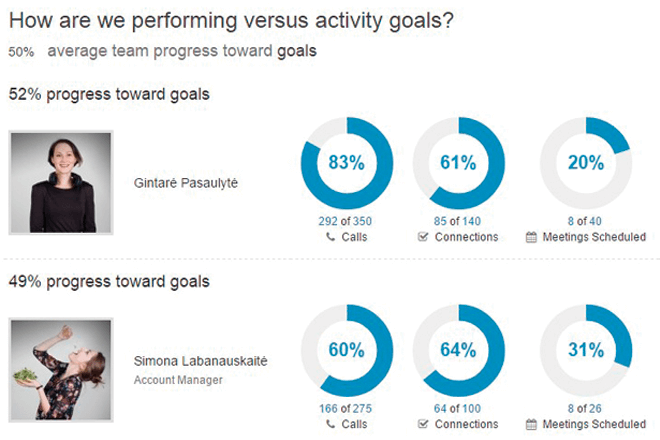
• Setting Goals and Meeting them


goals (1)

Customer-centric goal setting can help you sustain excellent performance when it comes to meeting deadlines, following up on deals, customer support and overall organization. You can also discern your best performing employees and assign them to your top clients. Alternately, choose staff with a good record of customer-support and assign to them tasks appropriate to their performance.

Clients can tell how organized and dedicated your business is based on the service they receive. With consistent CRM use, you should see a noticeable increase in customer satisfaction and client-retention thanks the trust you have earned.

Most of the images used in our blogs are from Teamgate. As an application dedicated to customer relationship, we understand the importance trust holds in business and we made sure our app embodies this commitment.

4 Traits of a Trustworthy Customer Relationship Management Platform. Why Should you trust your CRM?

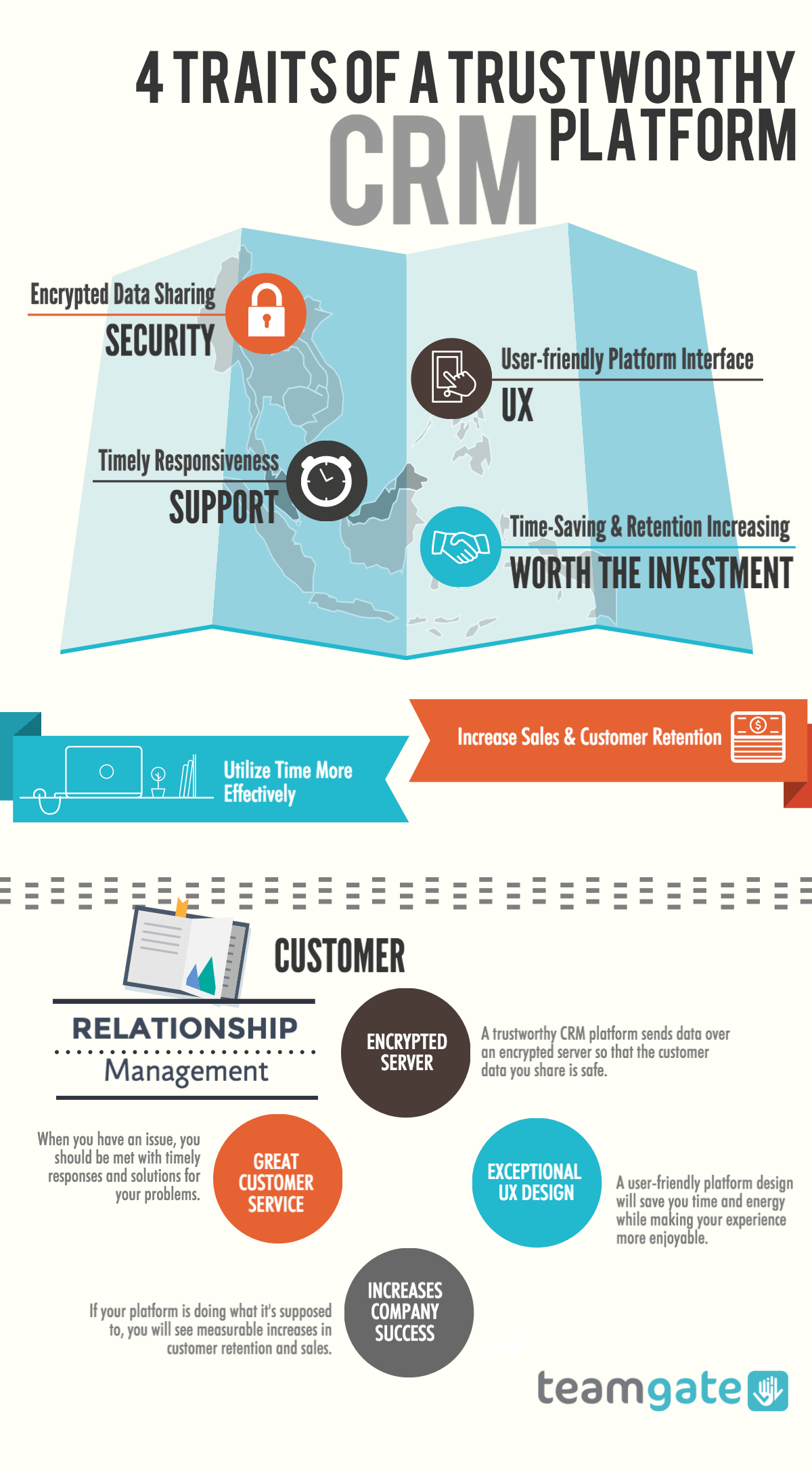
Most business plans involve a Customer Relationship Management (CRM) section, devoted to organizing customer data in a way that maximizes profits and helps maintain satisfactory relationships between your company and your prospects and customers. Implementation of the plan often requires utilizing technology to help you meet your goals. In most industries, it is necessary to keep your information in a platform designed specifically for CRM. The data you share here is sensitive, and you need to be very cautious with it. Here are some ways to know whether or not your CRM is trustworthy.

Sharing Your Customer Data Over a Secure System

A trustworthy CRM app is secure. You should be 100% certain that your customers’ information is safe. Always go with a platform that is well-known. If you’re unsure, read online reviews about the platform you’re prospecting. If you still feel uneasy about the privacy of your data, do not proceed. For enterprises handling sensitive customer data across multiple systems, platforms like DreamFactory provide an additional layer of security by offering governed API access with role-based permissions and identity passthrough, ensuring that data access is tightly controlled and auditable.

One trick is that, depending which browser you are using, you can determine the security of the site by looking at the address bar at the top of the page. If you see a green lock at the left of the screen, that is an indicator that the site is encrypted. Before you share any sensitive information online, you can easily make sure that you are sending via an encrypted site.

If you’re on a browser that doesn’t show whether or not the site is encrypted, you won’t see the green lock. You will have to find out, using other means, whether or not your information is safe. This is very important, as you don’t want your customer data shared with the wrong people. That could be a disaster for you and them.

security (1)

User-Friendly Platform for Information Management

The purpose of CRM platforms is to ensure that your customer relationships are managed with ease. They are here to help you, not make your job harder. Ask for a demo or take advantage of any free trials offered before you buy in. If you’re already working inside an app, but it seems difficult to navigate, try out some others to find one that’s right for you. Your CRM should be a step up from writing notes on a whiteboard, not a step-down.

Professional Customer Support

When you have issues with your CRM, their support team should be ready to help you in a timely manner. Whether your problem pertains to the usability of the platform or mistakes on either end, you should be provided with solutions. Your CRM provider should have a solid understanding of customer relationships themselves. This will be reflected in the way they treat you. If your problems aren’t getting solved, or it’s taking weeks for the service team to respond to you, it may be time to consider switching to a new platform.

When working with a CRM provider, you should not only find satisfaction in the relationships you have with their team but should also be able to learn from them. Who better to study business relationships strategies from than the pros. The major developers behind leading customer relationship management software are experts in the field. Use your satisfactory dealings with them as inspiration for tactics you can add to your plan and become or maintain your stature as an authority in your own field.

Do you have a CRM that keeps you organised?

The most user-friendly CRM on the market. 14-day free trial.

Start Free Trial

Painless setup, no credit card required

Actually Nurture Customer Relationships

Your CRM platform should be like the assistant that keeps you on track with your customers. Think of it as a real person that you work with all day. Is the platform actually helping you nurture relationships with your customers? You can measure this with retention and sales. If your relationships are being nurtured, helping you reach your goals, you can rest assured that you are getting exactly what you pay for.

Successful customer relationship nurturing comes from platforms that provide detailed data storage in a way that adds value (conversions) to your sales funnel. You should be able to take a look at the information stored in your CRM and analyze what’s going on a way that provides insight. What’s working in your sales funnel? What’s not working? You should be able to answer those two questions with confidence when the day is over. If you’re working with a trustworthy CRM, you will be able to. For teams looking to integrate customer data with broader business intelligence and analytics, Integrate.io provides the data integration pipelines needed to connect your CRM with databases, data warehouses, and other systems for comprehensive analysis and operational workflows.

The results of working with a reliable team of customer relationship specialists will be seen in your sales. Consider safety, user experience, customer support, and whether or not you are able to track relationships effectively when choosing your platform. If you are not already completely satisfied with the software you’re using, now might be the perfect time to try your options.

Trust your CRM (1)