Designed for Growth: Scale your recurring revenue with the new Teamgate SaaS CRM. Explore SaaS Features →

Book a demo today and save 50% off your first month, or 20% off your first year.

Get a free sales audit to uncover hidden revenue opportunities!

In this article, we’ll introduce you to the concept of sales velocity and explain its importance in driving sales growth. We’ll explore the Sales Velocity Equation, understand its variables, and learn how measuring sales velocity can offer unique insights into your sales and marketing processes.

Key Takeaways:

  • Sales velocity measures the speed at which opportunities and leads turn into revenue, represented as “revenue-per-month.”
  • Four main factors impact sales velocity: the number of leads, average deal size, conversion rate, and the length of the sales cycle.
  • It’s essential to focus on more than just adding new opportunities to the pipeline; optimizing other variables can significantly increase sales velocity.
  • Segmenting and analyzing sales velocity across different customer cohorts can provide valuable insights for targeted growth strategies.
  • A data-driven approach to sales, focusing on sales velocity, is crucial for businesses aiming for rapid yet consistent growth.

When Mark Roberge published his bestselling book “The Sales Acceleration Formula” in 2016 and told the world about a formula for achieving scalable revenue growth, that conversation fell on deaf ears.

Many startups go bust because they fail to scale or scale prematurely. And people still question whether you can even teach sales because it’s an art, not a science, according to many people. However, Mark led the software company HubSpot from one to hundreds of employees and grew its revenue by using a unique metrics-driven and process-oriented methodology. Balancing four main aspects—hiring, sales training, sales management, and demand-generation formulas—Mark proved a process can be replicated, and sales can be predictable.

Data-driven sales are at the core of what Teamgate—a web-based full-process sales CRM system—does, too. Teamgate puts into practice the metrics-driven, process-oriented approach to sales that Mark talks about in his book.

Below, learn Teamgate’s thoughts about one particularly interesting sales formula—the Sales Velocity Equation. This post unravels the details of this management metric and explains how to use sales velocity to accelerate your sales cycles.

What Is Sales Velocity?

Simply put, sales velocity is a marketing and sales metric used to measure the speed at which opportunities and leads turn into revenue, month over month. To effectively manage this, it’s essential to know your numbers in your business.

While normal velocity can be described as “miles-per-hour,” sales velocity represents “revenue-per-month.” Calculating sales velocity is one of the best ways to see how fast your sales team is making money and which levers you need to pull to accelerate speed.

Don’t confuse sales velocity with inventory velocity, which measures how much merchandise a retailer sells. Customer velocity is another related but different term that identifies whether customers are moving in a positive or negative direction in your sales pipeline.

There are four main factors that significantly impact how much you sell:

  • The number of leads
  • The average deal size
  • Your conversion rate
  • The length of your sales cycle

Learn more about these four variables to better understand the sales velocity equation.

The 4 Sales Velocity Variables and How To Calculate Them

The formula for calculating sales velocity is pretty straightforward: Multiply the number of leads in your enterprise or retail environment (#) by your average deal size ($) and your win/conversion rate (%). Then divide the result by the length of your sales cycle (average conversion time).

The Number of Leads (#): This is simply the number of leads your reps work with over a period of time. Your marketing team’s efforts and lead generation tactics (prospecting, lead nurturing, referrals, etc.) directly influence the number of new leads in your pipeline.

Collaborating with Duo Digital, a trusted marketing company, can significantly enhance your lead generation strategies by leveraging advanced targeting, personalized campaigns, and data-driven insights. By aligning your marketing and sales teams, you can create a seamless process for generating high-quality leads, ensuring your pipeline remains full of prospects with the highest potential to convert. With Duo Digital’s expertise, you can also optimize your prospecting and lead nurturing efforts, enabling your team to focus on opportunities that drive measurable growth.

Average deal size ($). Also known as average purchase value or average customer lifetime value in subscription-based business models, the average deal size is a metric that refers to the average selling price per closed deal over a set period.

Win/conversion rate (%). Conversion rate refers to the percentage of leads that convert into paying customers over time. You can calculate your win rate or conversion rate by taking the total number of conversions within a period and dividing that by the total number of leads over the same period.

Length of the sales cycle. Also known as average conversion time. This metric measures the amount of time from the first touch point with a prospect to conversion averaged across all won deals. You typically measure the length of a sales cycle in months.

It is important to understand that these four variables have a significant impact on sales velocity in general but are also interdependent, meaning that changing one variable will most likely affect the others too. For example, increasing your prices can lead to a larger average deal size but a lower conversion rate because fewer people will be prepared to spend more.

Another critical thing to take into account when calculating sales velocity variables is consistency. There are different ways you can go about measuring these metrics, but once you decide on a method, stick to it. For instance, if you measure the average length of your sales cycle from the moment you qualify a lead, then use this same method every time you calculate sales velocity. It will help you maintain a good level of consistency and avoid unnecessary confusion in the future.

Read more: Sales Velocity: 4 Key Metrics Controlling Your Income

Why You Shouldn’t Only Focus on Adding New Opportunities to Your Pipeline

It’s not uncommon for sales teams to focus entirely on lead generation in hopes of accelerating sales velocity. When you think about it, filling the pipeline with more opportunities to win more business does sound like a logical way forward in the sales process. However, if you assign the same values to all variables, then it is possible to increase sales velocity quite significantly even without increasing the number of opportunities.

A very common scenario among budding start-ups when preparing for an investment round would be concentrating all efforts on generating more leads/opportunities in the hopes of achieving consistent growth of monthly recurring revenue (MRR) over six months or so. The growth ambition of 50% would be a typical target. If the plan didn’t work out, the start-up might blame its marketing division. But why not try to increase the average deal size, improve the conversion rate, streamline the sales pipeline, or shorten the sales cycle?

You can achieve a lot simply by creating obvious upsells, value-add extras, and product bundles, focusing on high-velocity customer segments, adopting a more consultative closing technique, or shortening your trial offer.

Focusing only on adding new opportunities is not the best strategy, mainly because ramping up lead generation efforts eats into resources and leaves less time for other variables. Essentially, it’s simple math. If there are four equally important variables in one equation, and you dedicate all resources to improving only one of them, the result must be exceptional to make a significant impact.

Measuring sales velocity can give you a unique insight into those sales and marketing processes that either drive acceleration or dampen your sales growth potential. And to get an even clearer picture, you can measure sales velocity across different customer cohorts. That helps you learn more about salespeople, deal value, customer pain points, and the number of sales required for your business to thrive.

Read more: How to Capture Leads Smarter With Your Sales CRM

Generate Higher Sales Velocity by Measuring Different Customer Cohorts

Since there are different levers directly influencing the speed of your pipeline, it is good practice to look at various data sets to get fresh perspectives on sales velocity.

Open, Won, and Lost

Every successful business makes pipeline analysis one of its key priorities. Understanding how leads progress in your sales funnel and why some deals are won while others are lost can give your sales team a one-of-a-kind insight into parts of their processes that need improvement. If you take your won deals as a benchmark for measuring sales velocity, you will quickly be able to form and test various hypotheses that improve it.

Questions that often arise when analyzing open, won, and lost deals include:

  • Where do high-quality leads come from?
  • At what stage do you lose most of your deals?
  • How likely are you to close a deal if a lead spends this much at this stage?
  • Do “won” deals have certain shared characteristics that make them easier to recognize at this stage?
  • Do you know the red flags for each stage of the funnel? What is average for your company, and how far over average can an opportunity go before you deem it “lost”?

Ensuring your sales team keeps close track of what’s happening in your pipeline and, most importantly, why some deals are lost will help you adjust the levers and kick your velocity into speed.

New, Renewal, and Upsell

Using the sales velocity formula across different cohorts is crucial to identifying optimization opportunities and getting a realistic view of your sales funnel. Take, for example, new business, renewal, and upsell deals. Although they share one important characteristic (they are all won deals), throwing them into the same bucket of data would be a mistake as conversion times differ drastically. Comparing renewals of long-term contracts with your average won deals or quick upsell opportunities will only mess up your final calculation.

Segmentation, Sales Velocity, and Opportunity Analysis

If you go with broad segmentation—such as dividing your won business into large, medium, and small deals and measuring sales velocity for each one—that might be enough to uncover the most promising segments, industries, or regions. Other factors you can look at include location, channel, industry, sales cycle stage, and sales agent. Digging deeper into your data will help recalibrate your team’s efforts and throw resources at segments with the most potential.

Suppose you discover that large hospitality customers take much longer to make a purchase due to the number of stakeholders involved, while mid-sized technology companies progress through the funnel much faster because they’re ready to buy now. You can set up a separate high-velocity sales closing workflow to target these types of customers and accelerate your growth in a shorter time frame.

By measuring sales velocity for different segments as well as analyzing the opportunities sitting in your pipeline, your sales team will be able to devise a specific action plan and prioritize and address those opportunities with the most potential. A data-driven approach to sales is the only solution for companies seeking fast but steady growth.

Read more: The Ultimate Guide to Sales Qualification

Conclusion

The sales velocity equation is a simple but effective management metric that allows businesses to better understand and observe each variable and the impact on revenue that changes to those variables might have. Discovering a way to make your qualified leads enter and leave the funnel faster might take a bit of tinkering, but it’s always worth the effort.

How Teamgate Can Help

Teamgate is the sales CRM software that can help you boost sales velocity:

  • Teamgate’s Sales Dashboard provides unparalleled intelligence about sales performance in your organization. View conversion rates, win ratios, the average length of deals, the average length of sales cycles, and other metrics.
  • Insights lets you view these insights via graphs, charts, and other visualizations.
  • A lead scoring solution identifies the most lucrative leads in your pipelines.
  • Manage the deals that generate the most revenue for your organization. 
  • Boost sales velocity further with Teamgate’s extensions and integrations. 

Teamgate powers sales velocity in your enterprise. Start a free trial now!

A new sales leader doesn’t earn trust by changing everything. They earn it by fixing what’s leaking revenue.

If you’ve just stepped into a Head of Sales or Sales Manager role, your fastest path to impact is simple:

  • Bring clarity to the pipeline

  • Enforce next-step discipline

  • Create a weekly operating rhythm

  • Coach from evidence, not opinion

Teamgate helps reps follow a clear sales process and helps managers trust the numbers, without turning CRM into a full-time admin job. And that’s exactly what a new sales leader needs: discipline, insight, and adoption without adding complexity.

Below are practical, operator-level ways to add value in your first 30–90 days.

1. Define What “Real” Means in Your Pipeline

Most pipelines look healthy. Few are honest.

As a new sales leader, your first job isn’t motivation. It’s clarity.

Start by asking:

  • What must be true for a deal to enter each stage?

  • What evidence proves a deal is qualified?

  • What is the required next step for an active opportunity?

If stages don’t have clear entry and exit criteria, they become opinions. And opinions destroy forecast accuracy.

Fast impact move:

  • Document stage definitions.

  • Require a defined next step for every active deal.

  • Close or recycle anything that doesn’t meet criteria.

This is where disciplined pipeline structure matters. A visual deal pipeline with clearly defined stages forces alignment. When every deal sits in a real stage with a real next action, you immediately reduce “hope-casting” and improve forecast quality.


2. Enforce Next-Step Discipline Immediately

Late-stage deals with no scheduled follow-up are silent revenue killers.

One of the fastest ways to add value is to make this rule non-negotiable:

No active deal without a scheduled next step.

This single change:

  • Shortens sales cycles

  • Improves win rates

  • Increases forecast reliability

  • Reduces deal aging

When follow-up lives in reps’ memory, it fails. When it lives in tasks and reminders, it becomes consistent.

A system that turns activities, tasks, and reminders into a daily operating plan removes reliance on heroics. Reps start their day knowing exactly who to follow up with, and why.

That’s how discipline becomes predictable revenue.


3. Clean the Pipeline (Without Demoralizing the Team)

New leaders often hesitate to clean the pipeline because they don’t want to lower the number.

But inflated pipelines don’t protect morale—they destroy credibility.

Your first pipeline review should focus on:

  • Deal aging (how long has it sat in stage?)

  • Recent activity (has anything happened in the last 14–21 days?)

  • Next-step coverage (is something scheduled?)

Deals that fail those tests aren’t late-stage—they’re stalled.

Cleaning them:

  • Improves forecasting immediately

  • Frees up rep time

  • Reveals true conversion rates

  • Restores leadership trust

When pipeline hygiene becomes standard, not personal, you remove emotion from the process.

Managers need visibility into leading indicators like deal age, activity history, and next steps. That’s what transforms pipeline reviews from storytelling sessions into evidence-based conversations.


4. Establish a Weekly Operating Rhythm

Sales teams drift without structure.

One of the highest-leverage moves a new leader can make is installing a predictable cadence:

Weekly Pipeline Review

Focus on:

  • Aging deals

  • Missing next steps

  • Activity levels

  • Bottlenecks by stage

Not:

  • “How do you feel about this one?”

When dashboards show real signals, activity trends, stage distribution, forecast by probability, you stop debating feelings and start improving behavior.

Consistency builds trust.

Reps know what will be reviewed.
Managers know what matters.
Forecasts improve.


5. Standardize Follow-Up and Outreach Workflows

If every rep runs their own system in spreadsheets, inbox folders, and Slack reminders, you don’t have a team, you have individual operators.

Rapid value comes from reducing variability.

Standardize:

  • Email templates for key stages

  • Call logging practices

  • Qualification checklists

  • Required deal notes

When emails sync directly to accounts and deals, context stops getting lost. When calls are logged automatically, coaching becomes easier. When follow-up is triggered by simple automations, consistency stops depending on memory.

This reduces admin while increasing visibility, exactly what serious teams need as they scale.


6. Coach Using Activity + Context

You can’t coach what you can’t see.

Many new sales leaders try to coach only on results:

  • Closed deals

  • Revenue

  • Conversion rates

But real leverage comes from leading indicators:

  • Call volume

  • Follow-up timing

  • Deal aging patterns

  • Stakeholder engagement

If a rep consistently loses deals after demo, the question isn’t “Why didn’t it close?”
It’s “What’s happening between demo and next step?”

Centralized notes, activity history, and deal timelines give you the context needed for meaningful coaching.

That’s how you move from micromanagement to strategic guidance.


7. Improve Forecast Accuracy Fast

Nothing earns executive trust faster than improving forecast reliability.

To do this:

  • Align stage definitions with real buying signals.

  • Remove deals without recent activity.

  • Require scheduled next steps for commit deals.

  • Review deal aging weekly.

Forecasting becomes trustworthy when pipeline hygiene is enforced.

When leaders can clearly see:

  • What’s active

  • What’s stalled

  • What’s real

  • What’s noise

The business becomes predictable.

That’s the core shift: pipeline truth leaders can run the business on.


8. Reduce CRM Friction for Reps

Here’s the uncomfortable truth:

If reps hate the CRM, your pipeline will always be messy.

Rapid value comes from making the CRM help reps sell, not report.

Focus on:

  • Fast data entry

  • Clear daily task views

  • Email and calendar sync

  • Automated activity logging

  • Mobile access for field reps

When reps see:

  • Their follow-ups organized

  • Conversations tied to deals

  • Priorities clearly listed

  • Less duplicate admin work

Adoption happens naturally.

And when adoption is high, pipeline data becomes trustworthy.

Built-in discipline + insight + adoption — complexity = predictable revenue.


9. Clarify the ICP and Qualification Standards

Another high-impact early move:

Tighten qualification.

Ask:

  • Which deals actually close?

  • What industries convert fastest?

  • Where do deals stall most often?

Lead scoring and prioritization signals can help focus effort on accounts that resemble your best customers.

When reps spend less time on poor-fit opportunities, you:

  • Improve close rates

  • Shorten cycles

  • Reduce wasted effort

This is strategic value, not just operational.


10. Protect Revenue from Silent Leakage

Most revenue isn’t lost in dramatic ways. It leaks:

  • Deals sit open too long.

  • Follow-ups aren’t scheduled.

  • Hot leads cool off.

  • Forecasts include “maybe” deals.

Your job as a new sales leader is to prevent that leak.

You do that by enforcing:

  • Stage clarity

  • Next-step rules

  • Activity standards

  • Weekly hygiene checks

When selling becomes disciplined instead of heroic, outcomes become predictable.


The 30-60-90 Day Framework

First 30 Days

  • Audit pipeline truth

  • Define stage criteria

  • Enforce next-step rule

  • Clean stalled deals

60 Days

  • Install weekly pipeline rhythm

  • Standardize follow-up workflows

  • Align qualification standards

  • Introduce activity-based coaching

90 Days

  • Improve forecast accuracy

  • Refine ICP using data

  • Automate routine follow-up

  • Measure leading indicators, not just revenue

By this point, you’re no longer reacting to numbers, you’re controlling them.


Final Thoughts: Value Comes from Discipline, Not Disruption

New sales leaders often feel pressure to “make big moves.”

The real wins come from tightening fundamentals:

  • Clear stages

  • Defined next steps

  • Consistent follow-up

  • Evidence-based coaching

  • Clean pipeline data

When you bring structure, visibility, and operational rhythm, you add value immediately.

If forecasts feel like guesses and late-stage deals stall without visibility, pipeline discipline changes everything.

Unlock Your Sales Potential with Teamgate CRM

As a new sales leader, adding value to your role is essential for success. By building relationships, understanding data, evaluating the sales process, and making necessary adjustments, you can make a significant impact in your organization.

To streamline your sales efforts and maximize productivity, consider leveraging the power of Teamgate CRM. With its robust features and user-friendly interface, Teamgate CRM can help you manage your sales pipeline, track customer interactions, and enhance collaboration within your team. Take the next step in accelerating your sales growth by exploring the benefits of Teamgate CRM today.

FAQ: Creating value in sales

Q: How can I create value in sales? A: Creating value in sales involves understanding your customers’ needs and delivering solutions that meet those needs effectively. Here are some key steps to create value in sales:

  • Listen actively to your customers and identify their pain points.
  • Offer tailored solutions that address their specific challenges and goals.
  • Showcase your expertise and industry knowledge to establish trust and credibility.
  • Focus on delivering outcomes and highlighting the benefits your product or service provides.
  • Build strong relationships with your customers by providing exceptional service and support.
  • Continuously improve your offerings based on customer feedback and market insights to stay ahead. By following these strategies, you can create value in sales and build long-term customer relationships.

Q: How can I understand customer needs and create value? A: Understanding customer needs is crucial for creating value in sales. Here are some approaches to better understand customer needs and deliver value:

  • Actively listen to your customers, ask relevant questions, and empathize with their challenges.
  • Conduct thorough research on their industries, competitors, and market trends to gain insights.
  • Tailor your offerings to meet their specific requirements, showcasing that you understand their needs.
  • Clearly communicate how your product or service addresses their pain points and delivers benefits.
  • Provide exceptional service and support to exceed customer expectations. By understanding customer needs and offering tailored solutions, you can create value that resonates with your customers and sets you apart from competitors.

Q: How can I differentiate myself and create value in sales? A: To differentiate yourself and create value in sales, consider these approaches:

  • Identify and communicate your unique selling proposition that sets you apart from competitors.
  • Focus on customer outcomes and highlight the positive results your product or service can deliver.
  • Build strong relationships based on trust, understanding, and personalized attention.
  • Continuously improve your offerings to stay ahead of market trends and meet evolving customer needs.
  • Demonstrate thought leadership by sharing valuable insights and educational content. By implementing these strategies, you can differentiate yourself, create unique value, and establish long-term relationships with your customers.

Related: Why Many People Fail to Achieve Their (Sales) Goals and 6 Entrepreneurial Lessons You Can Learn From an Olympian

In the landscape of personal development, few books have stood the test of time as well as Dale Carnegie’s “How to Win Friends and Influence People”. Since its publication in 1936, this seminal work has guided countless individuals in understanding human nature and fostering meaningful relationships. Carnegie’s principles continue to resonate, offering timeless strategies for effective communication and influence in today’s interconnected world.

In both personal and professional realms, the ability to communicate and connect with others is invaluable. Carnegie’s strategies emphasize the power of building rapport and cultivating partnerships based on mutual respect and understanding, skills increasingly important in a world that values collaboration and social connectivity.

Key Takeaways:

  1. Empathy is Essential: Genuine interest in others fosters deeper connections.
  2. Active Listening: Enhancing professional networking through focused conversations.
  3. Digital Adaptability: Applying Carnegie’s principles to online communication.
  4. Ethical Influence: Balancing persuasive techniques with sincerity.
  5. Timeless Relevance: Carnegie’s principles remain applicable in today’s diverse corporate world.

Contents:

Who Was Dale Carnegie?

Dale Carnegie was a trailblazer in the self-improvement movement, renowned for his courses in public speaking and interpersonal skills. Born into modest circumstances in Missouri, Carnegie’s early experiences as a salesman and aspiring actor informed his deep understanding of human behavior. His passion for helping others communicate effectively led to the development of courses that revolutionized personal development and laid the foundation for his enduring legacy.

Early Life and Career of Dale Carnegie

Dale Carnegie’s early career as a traveling salesman and aspiring actor offered him firsthand experiences with rejection and success, which he later incorporated into his teachings and writings. His transition from the sales field to conducting public speaking engagements highlighted his understanding of human psychology and the importance of effective communication.

The Core Principles of Dale Carnegie’s Philosophy

Dale Carnegie’s approach to winning friends and influencing people is built on several fundamental principles that advocate for genuine empathy, active listening, and sincere appreciation. His philosophy is encapsulated in key principles that advocate for authentic interactions and mutual respect:

  • Genuine Interest in Others: Taking a sincere interest in others’ lives fosters trust and rapport.

  • Active Listening: Truly hearing and understanding others’ perspectives enhances communication and connection.

  • Avoiding Criticism: Refraining from direct criticism encourages openness and receptivity.

  • Appreciation and Praise: Offering honest and heartfelt appreciation motivates and uplifts others.

  • Encouraging Others to Talk About Themselves: Allowing others to share their experiences builds rapport and understanding.

These principles are not manipulative tactics but guidelines for cultivating sincere and meaningful relationships.

Practical Applications of How to Win Friends and Influence People

Carnegie’s principles are remarkably adaptable to modern contexts, including digital communication, professional networking, and customer relations:

Adapting to Digital Communication

Carnegie’s emphasis on personal interest and empathy can be transformative even across digital mediums. Personalizing emails, engaging genuinely in social media interactions, and being considerate in online communications can build rapport and foster relationships, just as they do in person.

Networking in the Modern Era

Effective networking extends beyond exchanging contact information; it involves creating meaningful connections through consistent and thoughtful communication. Applying Carnegie’s principles—such as showing genuine interest in others’ careers and offering assistance without immediate expectations—can enhance one’s influence within professional networks.

Customer Relations and Service

In customer service, Carnegie’s advice to show genuine appreciation and to listen actively can lead to significantly better outcomes. Businesses today can implement his strategies to enhance customer satisfaction and loyalty, which are crucial for long-term success.

Critical Review and Contemporary Relevance

While Carnegie’s teachings have been widely celebrated, some critics argue that his methods may appear insincere if used merely as tactics rather than genuine behaviors. It’s essential to apply his principles with authenticity and integrity to avoid ethical concerns.

Despite such criticisms, the core tenets of respect, empathy, and genuine interest remain vital in today’s diverse and dynamic societal landscape. These principles continue to be beneficial across various aspects of modern life, from personal relationships to professional settings.

Conclusion

Dale Carnegie’s How to Win Friends and Influence People has made a lasting impact on the way we view human interactions. His principles transcend time, offering valuable insights into building compassionate, understanding, and respectful relationships. By embracing these timeless strategies, individuals can enhance their interpersonal skills and foster positive connections in both personal and professional realms.

To put Dale Carnegie’s strategies into your sales process, consider using Capterra’s number 1 value-for-money CRM of 2024: Teamgate CRM.
Get started today for FREE.


FAQs: How to Win Friends and Influence People

What are the key strategies for building lasting relationships according to Dale Carnegie?

Dale Carnegie emphasizes the importance of showing genuine interest in others, listening attentively, and making people feel important and appreciated. These strategies foster mutual respect and create a foundation for lasting relationships.

How can I apply Dale Carnegie’s principles to improve my professional networking?

Apply Carnegie’s principles by actively listening, remembering names, and focusing conversations on others’ interests. This approach builds rapport and trust, making your professional interactions more meaningful and effective.

In what ways do Dale Carnegie’s teachings address modern digital communication?

Carnegie’s principles can be adapted to digital communication by ensuring messages are personalized, respectful, and empathetic, which helps maintain strong connections even through screens.

What are the ethical considerations in applying Carnegie’s techniques to influence others?

It’s important to use Carnegie’s techniques with sincerity and integrity. Manipulating others by feigning interest or insincere praise can lead to ethical concerns and damage relationships.

How relevant are the principles from ‘How to Win Friends and Influence People’ in today’s corporate world?

Carnegie’s principles are highly relevant in the corporate world as they enhance leadership, improve customer relations, and foster team collaboration by promoting a positive and respectful work environment.

Can Dale Carnegie’s methods help in managing customer relations and service?

Yes, applying Carnegie’s advice on showing genuine appreciation and listening to customer feedback can significantly enhance customer service and increase customer loyalty and satisfaction.

What is the impact of Dale Carnegie’s philosophy on leadership and team management?

Carnegie’s philosophy impacts leadership by encouraging leaders to foster a positive environment through appreciation, respect, and encouragement, leading to higher employee engagement and productivity.

How can I use Carnegie’s advice to enhance my personal and professional life?

Implementing Carnegie’s advice involves improving communication skills, being empathetic, and valuing others’ contributions, which can enhance personal relationships and professional collaborations.

What criticisms exist regarding ‘How to Win Friends and Influence People’?

Some critics argue that Carnegie’s methods can appear manipulative, as they focus on influencing others’ behaviors for personal or professional gain. It’s vital to balance these strategies with authenticity.

Why does ‘How to Win Friends and Influence People’ continue to be popular in the 21st century?

The book remains popular because its core principles of respect, understanding, and genuine interest are timeless and universally applicable across various cultures and eras.

The adaption of stacks had been the talk of the town in the businesses and enterprises for years now. The idea of using stacks has benefited many, and a lot more are still contemplating whether to go for this or not.  This rumination is also shared by the salespeople who have started to focus more on adopting the technological advancements available these days.

The more a business concentrates on the refinement of its sales process, better the results are. To get an extensive sales stack and to move one step ahead towards automation, the understanding of an organization’s sales pipeline is all-important.

Evaluation of Sales Process

A sales pipeline or sales process make it possible for organizations to guide the potential customers all the way till the finalization of the deal. The quality of journey that an organization is providing to its prospects can have a significant effect on its growth. By looking into the sales process with a greater perspective, a successful sales process looks something like this:

  • Lead Generation
  • Lead Management
  • Product Demonstration
  • Deal Closing

Let’s discuss the steps of the sales process in detail and know how we can use CRM strategies with a sales stack. The exploration of these steps is imperative because senselessly adding new tools can make things difficult for you in the long run. The understanding of these steps can lead to the creation of a comprehensive sales stack for the businesses these days.

Lead Generation

The generation of lead can be approached in different ways including outsourcing, 3rd party lead sourcing, and manual prospecting.

It is preferable to select a lead generation strategy that best suits your business. Manual prospecting is beneficial only when a company has got enough time to deal with this.  Sales intelligence software can prove to be helpful in the manual prospecting. Manual prospecting is cost effective but time-consuming.

In case if you have less time but more money, then outsourcing and 3rd party lead sourcing are feasible options where a company can hire freelancers from credible platforms after meticulously picking the high performers.

Lead Management

Lead management is the step where CRM plays its role by efficiently managing the sales process. The CRM is undoubtedly one of the main things that sales stack is about. Although it can be difficult to handle the process, in the beginning, CRM strategies are effective in this regard.

A sales platform that incorporates CRM can tackle with all the marketing activities while taking it along the sales process. A CRM is considered as the keystone for a successful sales pipeline being the major database of all communication.

A sales process needs to make persistent attempts to get a positive response from a potential client. A sales stack itself allows to manage the personalization and automation side by side to achieve a positive response from a prospect.

lead-management-teamgate (1)

Product Demonstration

At this stage, most of the organizations have already started to get responses from the prospective clients in the form of personal meetings, phone calls, and demonstrations. The inability of an organization’s sales stack to manage this high volume of responses can prove to be a nightmare.

A comprehensive sales stack can enable an organization to utilize a cloud-based conferencing system and save the prospects from the trouble of downloading software to get a demo.

The strategies work well with the sales stack by making sure that the scheduled demonstration doesn’t contradict with the organization’s timeline in any way.

Related: GetApp Announces Teamgate as #3 of the Top 25 CRM Apps

Do you have a CRM that keeps you organised?

The most user-friendly CRM on the market. 14-day free trial.

Start Free Trial

Painless setup, no credit card required

Deal Closing

The closing of the deal is the step when the prospect turns into a customer by committing to buy your product. It is also imperative to have such tools to make this deal closing process convenient.

One such tool is an online invoice template, which enables you to generate professional-looking invoices quickly and efficiently, streamlining the payment process and ensuring a smooth deal closure.

Acquiring tools for deal closing ensures that the prospect necessarily buys what he came for, and any glitches in this step can cause a prospect to move back and refrain from the deal closing process.

A CRM-Sales Stack strategy can ensure that a convenient deal closing experience awaits client. The satisfaction of a client is beneficial in the long run because the revenue of an organization gradually rises with the increased number of customers.

In a nutshell, a Sales Stack provides intelligent insights and makes multi-process management easy for the companies.

Email is a sort of digital currency that we use to get around online.

Want to download a free piece of content? Pay with your email. Want to buy a pair of shoes? Enter your email address to get a 10% discount and then track your order later on. Want to create an account on Facebook, Twitter, Instagram or any other platform or app? Share your email address to be granted access. Email is a crucial element of our online identity and to know how to harness its power is to win big time. Of course, giving out your email isn’t without risks. With so much personal information tied to it, some people even use services like credit monitoring to protect themselves against identity theft and fraud.

If you haven’t heard “money is in the email list” phrase yet, you haven’t done your homework. Sure, social media and content marketing are incredibly powerful tools to grow your business too, but comparing them with email marketing would be like comparing apples with oranges.

Each channel serves a different purpose, so it’s hard to tell which one performs better. However, to effectively spend your marketing budget, you need to identify channels that generate the best results for you.

For example, here is how the performance of email marketing compares to the results of social media and content marketing campaigns.

Let’s say you have 2000 Facebook fans, 2000 followers on Twitter, and 2000 email subscribers. Is it the same thing? Absolutely not.

Facebook’s organic reach has plummeted by 52% last year and is hovering around 6%, while Twitter’s organic engagement is even lower (around 2%). The average email open rate across all industries and devices in 2016 was 24.88%, a smashing figure compared to Facebook and Twitter performance.

Going back to our comparison, this would come down to the following figures:  

  • 498 people would open your email;
  • 120 people would see your Facebook post;
  • 40 people would see your tweet.

Quite obviously, email marketing by far outperforms social media in terms of organic reach and has significantly more potential for generating revenue. The same goes for click-through, conversion, and direct conversion rates. Most importantly, studies have shown that email has better ROI, which is what everything comes down to in business. The areas where social media performs better than email include engagement, virality, branding and assisted conversions.

But one thing that makes email marketing so sexy is that it’s much easier to build a mailing list of 2000 people than to get 2000 new followers on Twitter or Facebook

And here’s how you can do it 10x faster.

Make it ridiculously easy to sign up

Thanks to the increasingly digitalized lifestyle, the average attention span is 8 seconds. People find it more and more difficult to focus on one thing for longer than it takes to scroll through the Facebook feed. Which is an awfully bad news for marketers who need to keep their audience glued to their screens.

If you make the signup process too complicated, people will get distracted and never complete the conversion. Allow one-click signup to ensure you’re optimizing your conversions and keeping it dead simple for the frazzle-minded to join your list.

Another element that will have a huge effect on your conversion rate is the type of call-to-action you use. Both the button copy and design will influence your prospect’s decision. A well-designed CTA stands out from the rest of the offer and is usually the first thing a visitor sees. You’ll need to run some A/B tests to see what colours work best for your website or landing page, but the rule of thumb is to aim for high contrast and eye-catching colour.

When crafting the copy for your CTA, use Joanna Wiebe’s of Copyhackers.com tip. She says the best way to put yourself in your visitor’s shoes is to use the phrase “I want to ____” when brainstorming for the button copy. Fill in the blank with words that you think best describe the benefits of your offer. For example, if you’re offering a free productivity guide, you’d start with I want to “Learn the secrets of productivity”. See, it really is an awesome tip.

Make your “bribes” tempting and relevant

A relevant opt-in offer will focus on highlighting the benefits that a prospect can’t refuse. But heads up, you will only be able to come up with irresistible bribes if you have a clearly defined target audience and know what makes your prospects tick. If you try to sell ice to an Eskimo, you will fail pretty quickly.

This is the time where you look back at your buyer personas and carefully assess your own goals. Who are the people that you’re trying to attract? What are their passions, pain points, and desires? What is it that you do or have done in the past that intrigues and motivates others? Answering these questions early will help you better define and tailor your signup offer.

The popular opt-in bribes can include access to a closed community, special offers or discounts, highly valuable content, or anything else that fits with your brand.

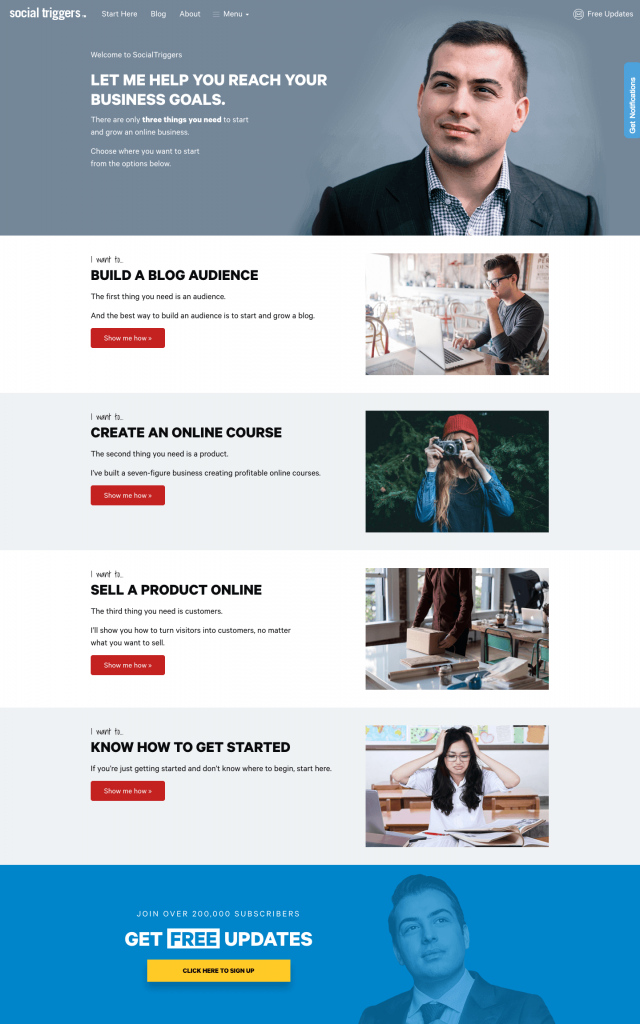
Build Email List Faster Opt-Ins

Images Source: SocialTriggers

Implement emotional triggers

According to the internet millionaire Jeff Walker, there are 9 mental triggers that can influence people’s decisions. Deeply rooted in our mental psyche, these triggers often work without us realizing it and are, therefore, incredibly powerful weapons of influence. These are the triggers on Walker’s list: authority, reciprocity, trust, anticipation, likeability, events/rituals, community, scarcity, and social proof.

When it comes to building an email list, many of these triggers can be incorporated into your tactics to boost their effectiveness. Here’s a little bit more about the triggers that work well in email marketing:

  • Authority. A doctor, professor or judge are some of the best examples of how powerful the idea of authority is. People tend to look for help and guidance from those who are established, respected experts in their fields, as it helps them to make decisions faster and more efficiently. By positioning yourself as an industry leader, you will have a better chance convincing people to sign up to your email list.
  • Scarcity. We are motivated by the perception of scarcity and often act on an impulse to get something while it’s available. Adding the element of scarcity (or urgency) to your headline or offer can have a significant effect on the conversion rates.
  • Trust. Getting your prospects to trust you almost as much as they trust their friends or family members will take quite a bit of time and effort, but once you break the ice it will be plain sailing from there. Focus on developing strong relationships with your prospects and learn how to boost your credibility if it’s a little shaky.
  • Social proof. If you can use testimonials, quotes, high-level statistics or case studies to demonstrate how you helped other people achieve their goals or solve their problems, your prospects will automatically place more trust into you and your offer. A very simple example of this trigger is people’s tendency to choose to go to a restaurant that has more people inside than another one that looks empty. Following the crowd requires less thinking.
  • Likeability. Personality sells. If you can get your prospects to like you, selling to them (or getting them to sign up to your mailing list first) will be much easier. It’s important to keep your messages simple and relatable, write in a human way and use high-quality, professional images as well as add your own headshot where appropriate.      

Make use of custom built landing pages

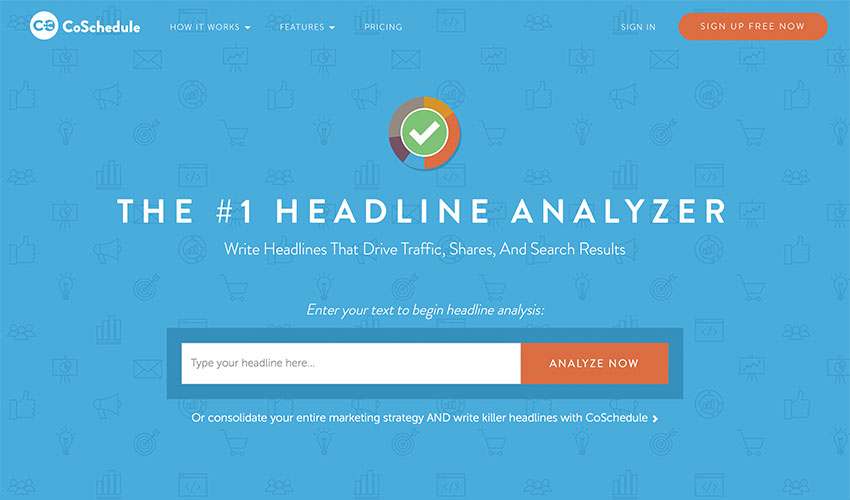
CoSchedule’s headline analyzer is a great example of how smart businesses implement list building tactics that also help them to raise brand awareness, build trust and likeability. Giving stuff away for free will boost your credibility and help you develop a value-based relationship with your prospects, you just need to make sure the signup process is stripped to the bare minimum.  

With this tactic, the best way to capture emails and build your mailing list is by creating a separate landing page for the piece of content or tool that you’re offering. This way, you can easily put a lock on the valuable content and track the performance of your campaign.

Build Email List Faster Landing Page

Image Source: CoSchedule

Organize giveaways that appeal to your target audience

If you can put a price tag on the stuff you’re giving away for free, your chances of succeeding increase significantly. To seize the attention of your target audience, you must refer back to your buyer persona and study your audience to identify the prizes that would be too difficult to ignore. Ridiculously attractive offers will most likely be shared with friends and even talked about offline. It can also be an opportunity to build your social following and generate awareness, depending on how and where you decide to host the giveaway.

[optin-monster-shortcode id=”kandoug21absj0ox”]

However, it’s worth keeping in mind that giveaways will only be effective if the main prize is something that people love and can hardly resist. If you can get your hands on products that are just about to be launched, are sold out or quite expensive, it’s more likely your giveaway will be a success. It’s probably best to run a few smaller-scale campaigns to test the concept, figure out the rules and capture the general sentiment towards your brand, and then go all guns blazing.

Utilize bots to automate email opt-ins

As one of the best performing marketing channels, email is also a fiercely competitive battleground for marketers. With so many different tactics at their disposal, they often struggle to cover the whole range and therefore, lose out on perfectly good opportunities. That’s why marketing automation is becoming a life-saving solution. If you can automate it, you should have done it yesterday. 

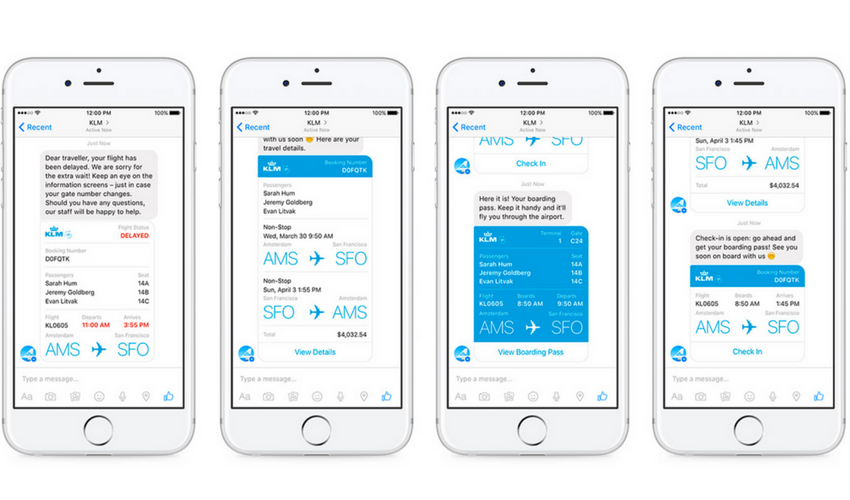
Messenger bots are dramatically outperforming email, as around 50% of people open bot messages compared to around 25% email open rates. Another great thing about bot messages is that they’re just as persistent as email, so if they want to, people can come back to those messages later on. You can also use bots to send direct messages to new followers on Twitter, Facebook or Instagram and include a link to a landing page with your offer, which is an incredibly effective tactic if you’re attracting the right kind of followers.

Build Email List Faster Bots Automation Opt-ins

Image Source: Engadget

Team up with influencers  

Being endorsed by a big name influencer and getting in front of their cult following will most certainly result in a sweet spike in email sign-ups. If you have an opportunity to work with an industry celebrity, seize the day. And while cross promotion is not a rare phenomenon in the digital marketing world, you need to make sure your goals and brand values align with those of the person you’re teaming up with. Otherwise, you’ll end up damaging your brand,  generating low-quality traffic and trashing your list with emails that have no potential.

The most trusted and credible form of advertising is personal recommendation, as according to Nielsen, 83%, or 8 out of 10 global consumers, trust word of mouth recommendations from friends and family. Influencers often enjoy a trust-based relationship with their community and can be incredibly powerful in terms of swaying their opinion. Look for someone who has the right kind of audience and is not a direct competitor of your business.

Incentivize the email forward to a friend

Again, personal recommendations can be incredibly effective. Deliveroo offers reward money if you invite a friend who orders food for the first time. Dropbox achieved staggering growth mostly due to this growth hacking idea to offer free storage space to users who invited their friends to sign up and try the app. Uber and Airbnb are also trying to capitalize on this technique by using monetary incentives. Since these wildly successful startups seem to be happily adopting the tactic, it’s safe to assume it is generating enough revenue to cover the costs. If you can’t afford to offer incentives that involve money, find a different offer that resonates with your audience.  

Do you have a CRM that keeps you organised?

The most user-friendly CRM on the market. 14-day free trial.

Start Free Trial

Painless setup, no credit card required

Produce valuable resources

There is no need to tout the importance of solid content, every decent marketer knows it’s gold. The only problem with content marketing is that it takes time to ramp up and show results. However, producing high-quality, valuable resources is a smart and effective workaround this issue. With a custom built landing page or smartly integrated email capture forms, downloadable long-form content, worksheets and gated online tools can generate a lot of interest and help you quickly grow your email list without breaking a sweat.

There are dozens of tools online that you can use to get the capture forms up and running in virtually no time (Email Before Download, WP Subscribe Pro, App Sumo or OptinMonster). If you decide to build a dedicated landing page to gate your content and collect email addresses, check out these easy-to-use landing page builders, like Instapage or Unbounce. Some marketers choose a more aggressive approach, which is to keep the resources locked until an email address is shared. It’s a great way to identify marketing qualified leads, as the initial barrier of sharing the email address puts off everyone who is just browsing. The other option would be to offer free access to all the content and resources and utilize popups or similar tools to entice visitors to sign up to a newsletter.

Redesign your main landing page to focus on email optin form using previously mentioned mental triggers

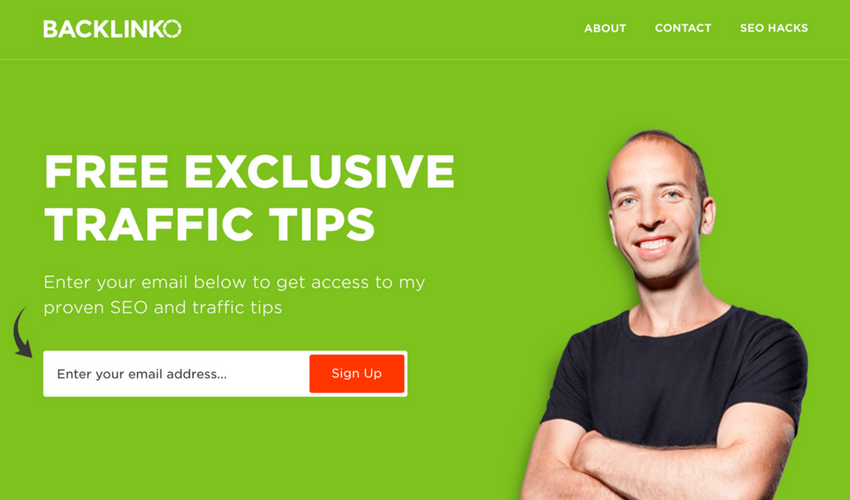
If you’re really serious about building an email list, take your time to revamp (or build from scratch) the main landing page, keeping in mind the mental triggers that drive people to take immediate action. The focal point of a robust lead capture page should be the email optin form that unapologetically asks visitors to join the email list in return for something very special. Ensure that you’re communicating the benefits clearly — when in doubt, simply read your landing page copy out loud and ask yourself “so what?”.

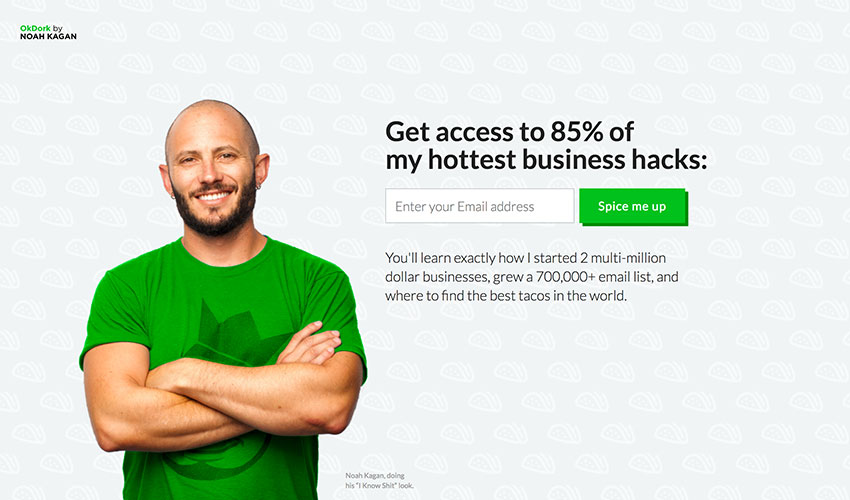
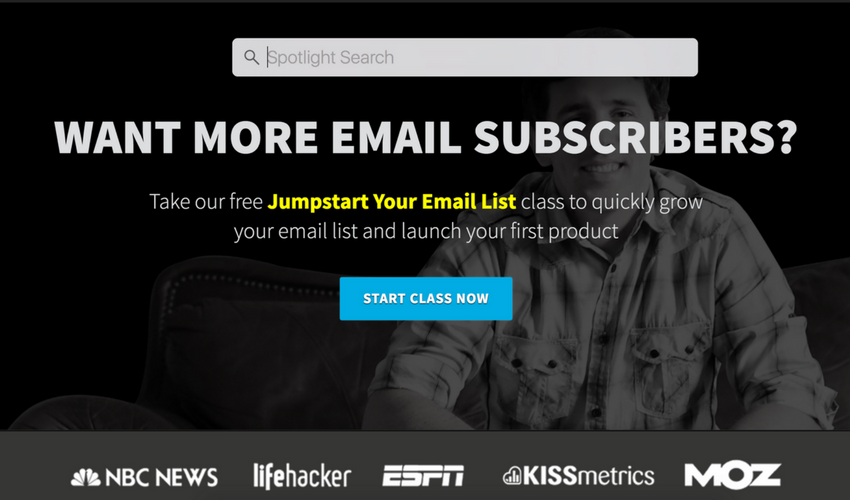
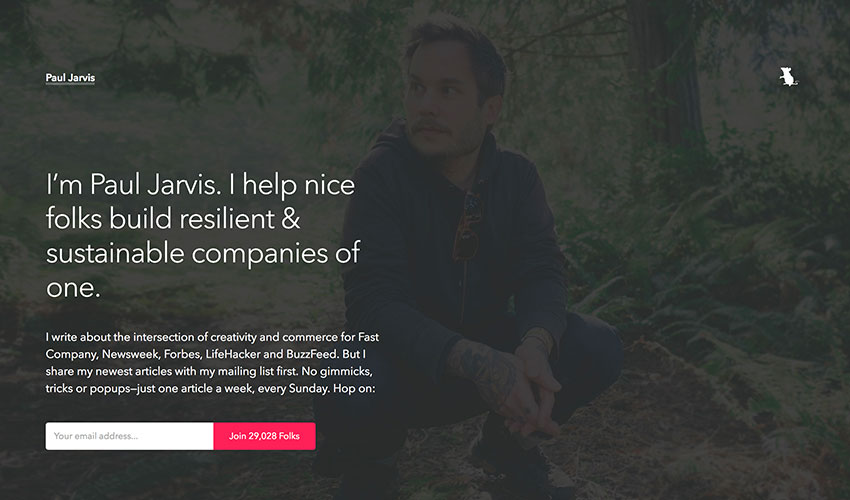
Here are several examples from successful email gurus who know how to optimize the email capturing process better than anyone else.

Build Email List Faster Backlinko Opt-in

Image Source: Backlinko

Build Email List Faster OkDork Opt-in

Image Source: OkDork

Build Email List Faster Videofruit Opt-In

Image Source: VideoFruit

Build Email List Faster PJRvs Opt-In

Image Source: PJRvs

As you can see from the examples above, the most important mental triggers are authority and social proof, so be sure to include them in your design too.  

Besides incorporating the mental triggers, you should also pay attention to the mobile intrusive interstitials penalty rolled out by Google in January this year. The penalty will impact pages “where content is not easily accessible to a user on the transition from the mobile search results”. One of the examples provided by Google states that pages displaying a popup that covers the main content and appears immediately after the user navigates to a page from the search results or while they are looking through the page may not rank as high.

Conclusion

And that’s it, we’ve covered the most effective list building tactics that can help you breathe some life into your current strategy.

If you can build your own little community of subscribers who are interested in the same things as you are, turning this email list into a passive income source will be incredibly easy. However, it’s super important to remember that you need to know why you’re building the list and how you’re going to make money off it well before you start implementing any of the tactics we discussed here. Your business idea will massively influence how you go about building that list.

In this article, we’ll unpack the “Eight Building Blocks of CRM,” a framework devised by Gartner, which pinpoints the essential areas businesses should focus on for successful customer relationship management. We’ll delve into how these building blocks apply to both large enterprises and small-to-midsize businesses (SMBs), and why understanding these components is pivotal for CRM success, regardless of business size.

Key Takeaways:

  • The “Eight Building Blocks of CRM” are a comprehensive guide to understanding and implementing effective customer relationship management strategies.
  • While the building blocks were initially designed for larger businesses, they offer valuable insights for SMBs, albeit with some variations in implementation.
  • Core building blocks like “Vision,” “Strategy,” and “Customer Experience” are universally crucial, while others like “Technology” and “Metrics” may vary in applicability based on business size and resources.
  • Real Estate agencies, among other sales-driven industries, can greatly benefit from adhering to these building blocks due to their reliance on robust CRM systems.
  • While some building blocks might seem more tailored to larger enterprises, SMBs can still extract valuable lessons and strategies from each block to enhance their CRM practices.

Recently Andrew Friedenthal, CRM Analyst for the online technology consultancy Software Advice, released a new report which studied the eight building blocks of CRM. We had the opportunity to talk with Mr. Friedenthal to learn a little more about what his research uncovered.

What are the Eight Building Blocks, anyway? 

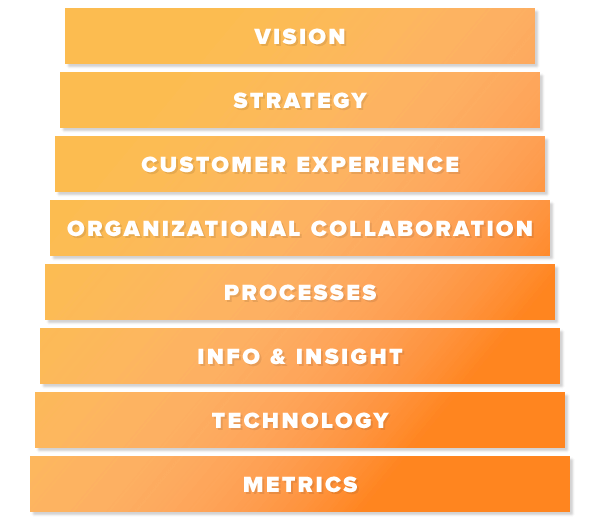
“The Eight Building Blocks of CRM” is a framework, devised by Gartner, of the most important areas that businesses need to focus on in order to implement and maintain successful customer relationship management (CRM). As Gartner explains, their analysts “noticed that the most successful organizations had a clear view of what they were doing in each of the eight areas, whereas the less successful had only a partial overview of what they were doing.” Thus, successful CRM relies on understanding these eight building blocks.

How do these building blocks apply differently to enterprise-level organizations and small-to-midsized businesses (SMBs)? 

Gartner’s series of reports on the Eight Building Blocks focuses on the large, enterprise-level businesses that make up their clientele. For our article at Software Advice, we wanted to make the building blocks useful and approachable to our audience of SMBs, many of whom have low tech literacy and little to no IT resources. For enterprise-level companies, as the building blocks grow more granular and based on data and technology, the resources required to meet the expectations of that building block may not be available to SMBs. In addition, the specific challenges faced by the businesses will vary based on size and scope. However, the larger, broad-scale advice of each building block will apply across all businesses, even if the implementation of Gartner’s advice will differ drastically.

Is any one of the building blocks more crucial than others for SMBs? 

“Vision,” “strategy” and “customer experience” are going to be universal aspects of CRM across companies of all sizes.

The first two are necessary to implement a CRM plan in the first place, while the latter is what you will need to focus on in order to make your CRM successful. The way each of these is handled may differ based on size, but they apply equally to SMBs as to larger businesses.

CRM Building Blocks

A version of this image originally appeared in: “The Eight Building Blocks of CRM: Overview,” by Ed Thompson, (content available to Gartner clients)

Do any of the building blocks not apply to SMBs? 

Because the final two building blocks, “technology” and “metrics,” rely upon resources that may not be available to many SMBs, they are probably the least applicable when it comes to implementing the Eight Building blocks for smaller businesses. However, the larger, high-level ideas behind both building blocks—”choose the right CRM vendor” and “use data to drive change,” respectively—are still highly applicable.

Do you have a CRM that keeps you organised?

The most user-friendly CRM on the market. 14-day free trial.

Start Free Trial

Painless setup, no credit card required

What industries/markets will find the Eight Building Blocks the most useful? 

Real Estate agencies are incredibly reliant upon a solid, successful CRM system because their entire business model necessitates keeping track of customers/prospects and nurturing their customer experience throughout the sales pipeline with individual attention.

Following the eight building blocks will thus be crucial for these agencies, even smaller ones that might only have one agent. The same is true of any sales-based company that relies upon good, ongoing relationships with customers and clients.

Though devised as a tool for larger businesses, the Eight Building Blocks of CRM have a lot to offer SMBs. Some of the building blocks are universal, some will differ in their implementation based on the size of a business, and some of them only apply to SMBs on a broader conceptual level, but they all have something to teach smaller businesses that can help them reach the heights of the enterprise organizations whose CRM models the Eight Building Blocks were based on.