Designed for Growth: Scale your recurring revenue with the new Teamgate SaaS CRM. Explore SaaS Features →

Book a demo today and save 50% off your first month, or 20% off your first year.

Get a free sales audit to uncover hidden revenue opportunities!

Selling does not have to be a number’s game. Companies and salespeople can improve future sales by studying the lost sales. When you imagine the number of hours and energy you have put forward, the only thing that you can be proud of is a call from a prospect telling you that he has changed his mind.

We all have been there. But the truth is, as a salesperson, you have the capability of closing almost every sales deal just like the top 1% of salespeople do. If you have been losing more sales than win, this article is about to show you a couple of things that you can start doing today to close more business.

1. Take Serious Study on the Sales System

Selling is a system. If you follow the sale system or circle, you will know the weak areas that you are performing poorly. If you have happen to have lost the sale in the past, all you need to do is study that particular sale from the presentation stage to the closing stage. From there, you will know the weak areas that are making you lose the sale.

If you have had past success, you can also take a close look on how you sealed that deal. If you start studying both the winning and losing sales, you will get a market gap that you are not fulfilling. It can be like you changed your presentation with the new deal that you lost. Or, it can be that you became so confident that you scared away the prospect. Taking both studies is the beginning of closing more business in the future.

photo-1444427169197-de497742b62d

2. Get Through Feedback from Your Previous Client Whom You Have Won the Sale

You have heard it a lot that you need to get feedback from past clients whom you have lost the sales. It is right. But, chances are only a few of those clients will be bluntly honest with you. Others will give you vague generalities like, ‘the product or services is not good enough’. You will not get a real answer that can help you close more business in the future. The only people that can help you are your previous customers, who have bought your services.

You can start conversation by telling them like:

“You are one of our most valuable customers. Now, my company wants to improve your life even better with this product or services. Why did you buy our product or services? What excited you about it? Is there anything that you would want our company to introduce or include in the service or product that can make your life easier and more comfortable?”

You can always get more creative and ask more questions. Now, depending on the answers that you will get, take a study of the kind of words your customer is using to describe your product or services. You will notice that they are using simple words, not corporate words that many salespeople use when doing their presentation. If you get the right words they use, this can help you change your presentation a little bit and use the exact words when doing a presentation to a new customer.

The exact words that the customers use are usually the hot buttons. Now, if your customers tell you that your company needs to improve in certain areas of your product or services, you need to be thankful because these customers will be buying from you for life. It means you can sell them more your product or services and they will be willing to buy. And you can always tell them how your product or services perfectly fit what they are saying.

As a sales company or a salesperson, it is so easy to get to know the concern for your existing customer so that you can see a way of selling to new customer.

Related: Reports and Summaries: The Two Ingredients for Your Business Success

3. Know Your Competitors

Chances are there is something unique that they are doing to close more sales deals. Your job is to study that. You begin by knowing their product or service better. Then your job is to come up with a major difference, which can be a great selling point. That difference is what you need to sell to the customer to close the deal. For you to get this, let me give you a short example about a pizza shop.

“Do you like pizza? Our competitor will tell you that they can create fresh mozzarella, but they don’t tell you that they buy it pre-shredded in a big plastic bag. At John’s Pizza, we hand-shred our mozzarella every morning.  Our competitor will tell you how convenient their home delivery service is, but they won’t tell you that their average delivery time is over an hour. John’s Pizza delivers in 28 mins or, your pizza is free.”

Do you have a CRM that keeps you organised?

The most user-friendly CRM on the market. 14-day free trial.

Start Free Trial

Painless setup, no credit card required

If you can get this difference from your competitor, you can win more business deal. You can win more sales deal than your competitor. All you need are these 3 tips that can help you change your marketing approach. It does not have to be that. You need the determination and commitment to make every sales deal count. If you can think through these ideas, you can improve your sales. Because now you have found what your focus is to spot the weak areas and see how you can serve that market better and efficiently.

The sales company and salespeople struggling today lost most deals in the past and moved to the next without doing a flashback of what happened. That is the key difference between top 1% of the salespeople that make it and the bottom 80% that are struggling.

Related: Again, Teamgate is a Category Leader on Top 25 CRM Apps Chart by GetApp

Now that the Rio Olympics have ended – let’s see what we can learn from the world-class athletes who competed there.

These athletes are working to go to the pinnacle of physical achievement; this means whatever lessons you learn can be applied to achieve entrepreneurial or sales success.

1. Prepare to the Best of Your Ability

This lesson is the most important and fundamental lesson you can learn from an Olympian. Do whatever you can to prepare.

Gather information by reading the bestsellers or joining networking events. Work tirelessly on your projects. Work out the kinks by going through the process again and again. Familiarize yourself with the ins and outs of the company or way of work.

Luck Is What Happens When Preparation Meets Opportunity” – Seneca

Olympians prepare for every scenario and outcome, and so should you. Work down to the last detail and you will have maximized your chances of luck working in your favor.

Do you have a CRM that keeps you organised?

The most user-friendly CRM on the market. 14-day free trial.

Start Free Trial

Painless setup, no credit card required

2. Adjust to the Circumstances

It is not uncommon to find, despite your preparations, things aren’t going your way. It is necessary to be able to improvise and keep going when your plans fail you.

You can see it is a common occurrence with rhythmic gymnasts to keep going and finish the routine when they lose or drop their apparatus. They know that their slip up will cost them valuable points and time, but it is even more important to salvage what time is remaining and complete the routine.

So it is that you too must keep going if and when a mistake happens. But it can be helped by some of the preparations you’ve made. Being knowledgeable and familiar with your work makes it easy to improvise and get back on track. Do not be discouraged!

3. Find a Mentor

Every athlete looking to compete on the world stage has a coach. Their coach trains them, provides them with knowledge accumulated through the years, has necessary connections, and much more. Why would you forgot a mentor as well?

This lesson is important for the young generation as well as the experienced. An instructor allows you to observe techniques and skills in a live environment. You will get first-hand experience and knowledge from the source. You’ll also be able to save a lot of time from trial and error through mentor teachings. With another person present, you’ll have the ability to bounce ideas off of them and compare notes to track progress. Remember to learn from them!

The second option, if a mentor is unavailable, is to join a group of peers who share the same interests and goals as you do. You’ll be in constant competition, keep up to date with current trends and ideas, and have help available to you if you fall short.

A side effect of having peers with the same goals is that it keeps you on track and avoids procrastination or other distractions. You’ll be improving because the group will be improving. It is a similar dynamic to Olympic teams; teammates push each other to do better constantly because there are limited spots available in an event.

photo-1457470572216-1240fac24b37-2

Related: Why Many People Fail to Achieve Their (Sales) Goals

4. Work In Cycles

Our bodies naturally perform in cycles. The most common cycle is the circadian rhythm. Our body’s natural clock functions in a daily cycle; this means the body functions in 24-hour periods. We work, eat, sleep, and do whatever else we need to do in these 24 hours. This idea is true for people on earth as it is for astronauts in space.

Olympians know that rest is vital to their performance because it is necessary after a day of training. So, this too applies to the salesperson. After working a long day, trying to close or learn a new technique, you must set aside time to recover. Take a break and don’t think about work. Do anything but work. Remember, work and then rest. On and off.

5. Always Set Goals

Athletes prepare for the Olympics months and years in advance. With this long period, it is easy to lose sight of your goals because what you want isn’t in the immediate future. Now, what do athletes do to stay on track each day?

They set goals for themselves. Long term goals that are years away can be made easier by breaking them down into monthly goals. Then, those goals are made more precise into daily tasks. Now, you have small checkpoints to know you’re keeping on track.

Do not underestimate the power of this technique. Spend some time to do a small task and it will be easier to do more. Then, do it every day and you’ll have reached your goals sooner than later.

Related: Reports and Summaries: The Two Ingredients for Your Business Success

6. Assume the Sale

If you have watched the Olympics, you will notice some athletes definitively stating they will take home the Gold. You will almost always see this type of declaration in Boxing. You may ask yourself, how can they say this and not worry about backing it up?

What is important to note here is the mentality these athletes have. They already assume they’re going to win, and so they shall as the saying goes. It even helps them because if they have made such a bold statement, then there is no choice but to make it come true.

Take sales for an example. It is the case that assuming you will get the sale naturally leads to the sale. Your mind focuses on the goal, and your body acts accordingly. It is a powerful tool and useful reference point for you to have when you are working.

Related: Lost (And Won) Deals: 3 Things to Take Into Account

In conclusion

If you follow these six lessons, you will see an increase in your productivity and results. Do all you can to prepare; then lady luck will be on your side. If, in the slimmest of chances, fate goes against you, adapt to the circumstances! Learn from an expert, or from the like-minded. Keep in mind that, work and rest are two sides of the same coin. Use goals as a tool to keep on track for long-term ventures. And when all of that is complete, have the mindset of someone who has already won.

It is a great feeling to share more great news with you again!

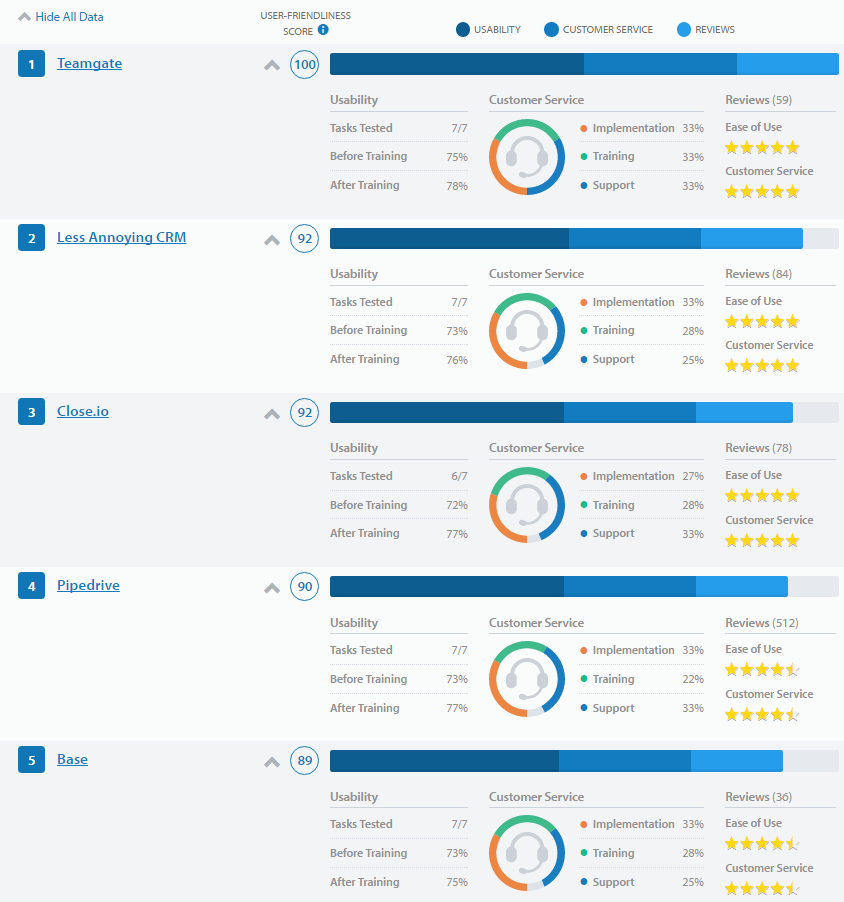
A well-known software marketplace Capterra.com which helps businesses to find the right software, announced that Teamgate earned #1 spot on their Top 20 Most User-Friendly CRM Software report!

All of the options are measured by a combination of their usability, customer services offered, and customer reviews.

On September 25 of 2015 Capterra was acquired by Gartner Inc.  (NYSE: IT)

* * *

capterra rank1

Related: Teamgate Receives A Very Positive Review From CompareCamp

The Ranking Metodology Guide

Capterra tested these tasks:

  1. Create a lead
  2. Add a task
  3. Add interaction/note
  4. Set reminder to follow up
  5. Change lead status to “qualified”
  6. Attach a document
  7. Generate a report

* These 7 common tasks were tested for usability testing.

Do you have a CRM that keeps you organised?

The most user-friendly CRM on the market. 14-day free trial.

Start Free Trial

Painless setup, no credit card required

Also,  usability, customer service and reviews were measured.

Usability:

  • Task completion time
  • Clicks to complete task
  • System Usability Score (SUS)*

* SUS – a questionnaire that measures perceived ease of use.

Customer service:

  • Implementation (configuration options offered)
  • Training (resources offered)
  • Support (services offered)

Reviews:

  • Ease of Use
  • Customer Service


* * *

For a full report on Capterra, click here.

Customer Relationship Management software, in theory, is a godsend for companies everywhere. It offers many different capabilities in all areas of operation. It offers the capability to handle automated phone calls for customer service, generate marketing campaigns based on the stored information of customers, and streamline data entry processes so employees can spend less time inputting information into spreadsheets. Companies should be leaping at the opportunity to use this technology and cut back on other operating expenses, then, right?

CRM Software – Pitfalls and Confusion

As it stands, CRM software is subject to the same pitfalls and confusions that any disorganized department within the company would be, and these pitfalls cost money. Data gets inputted incorrectly or not at all, leading to inaccurate information; records of phone calls aren’t recorded properly, so customers may receive duplicate calls regarding a product or issue; inaccurate data on a person’s whereabouts leads to completely irrelevant marketing campaigns being generated for them. The issues are numerous. So why invest a bunch of money in this new software and then have to double back and input the data that CRM software misses? It’s understandable that many companies out there don’t want to use it just yet.

While there is hope on the horizon, it’s difficult to say how close or far away we are from a point where the software can be effectively utilized across the board from a technological standpoint. There are issues that need ironed out, for sure. But companies have a lot to figure out in the interim, as well – there are some key issues that they face to implementing said software.

First, using CRM company-wide can prevent a lot of issues where the topic of keeping complete records is concerned. If every department utilizes the same technology, it greatly reduces the number of gaps in the records that are likely to be left. Many companies already utilize a common operating system that is slightly specialized for each department, for example; those companies that purchase the license for the software would be able to utilize CRM in the same way, specializing the platform slightly for each department so that the tools better suit their needs.

Related: How CRM Helps Companies in Logistics Industry to Improve

Is CRM Software A Substitute For Good Communication?

Communication is also key. CRM software at its peak is definitely capable, but it’s not a substitute for good communication within a company by any means. If departments just rely on CRM doing what it does and don’t bother to communicate otherwise, it will just lead to more confusion and inefficiency, which hurts the bottom line. Especially where sales and marketing departments are concerned, good communication is absolutely crucial, and the best way this can take place with CRM in use is to allow employees the ability to update information as necessary. With customer service complaints, for example, this function could be extremely important – for an issue that requires follow-up, the original person who spoke with the customer may not be available. And how frustrating would it be if the next person to help the customer had no prior knowledge of the situation, and CRM hadn’t effectively recorded the information? The customer and the customer service rep are both unhappy and more time has to be spent gathering information again. Giving employees the ability to update the information lessens the chance of this happening greatly. Again, CRM can be a very efficient tool, but employees need to be able to act as a safeguard against inefficiency when necessary.

photo-1431605695381-f4a9c3cdd150

Related: How to Win Friends and Influence People? Vs. What is CRM?

Data Flow in CRM

Data flow is also extremely vital – systems used by a company have to be able to communicate. Without the ability to translate the information received across different programs the company uses, CRM is significantly less useful. The technology has to be able to suit everyone in the company, from a sales representative to a top executive. After all, what good is it if the data a customer service rep needs is in the CRM database, but is unavailable to the program used to handle customer service issues? We end up with a situation like the one previously mentioned: frustrated customer, frustrated employee. Data flow and the ability to cross-communicate will make all the difference in the world for companies looking to use CRM to streamline their operations processes.

Do you have a CRM that keeps you organised?

The most user-friendly CRM on the market. 14-day free trial.

Start Free Trial

Painless setup, no credit card required

CRM software is a big investment for a company to make, especially in terms of time and budget. To make it work effectively requires a top-down overhaul: programs already in use need to be made compatible with CRM. Employees may need training to properly use the software. Policies regarding operations may need to change to reflect the way the new software is being used. Despite all of this, it can be worthwhile and can eventually save companies money in the long run by allowing them to cut down on expenses like payroll and preventing the need to outsource to more call centers. But these companies will have a lot to figure out about how the new software will require them to adapt. Without proper communication between employees and programs alike, and without making sure the system is used company-wide, CRM implementation can easily fail. That’s why you must take a closer look at charts of top CRM tools and make sure that CRM you plan to implement is capable to overcome all these pitfalls and confusions mentioned.

Artificial intelligence (AI) has undoubtedly come a long way from where it began. From robots programmed to play chess in the 1950s to AI designed to allow cars to run on autopilot, the technology has improved by leaps and bounds. Pattern recognition capabilities for AI have become so much more intricate and complex, especially with the advent of technologies like cognitive computing and natural language recognition. Now more than ever, artificial intelligence is able to receive extremely intricate inputs and make sense of the data collected. Where the technology sits today is a far cry from the artificial intelligence we knew just a decade ago; every day, more advancements are made. It is little wonder, then, that artificial intelligence is being looked at as a way to improve Customer Relationship Management software.

In theory, CRM software is wonderful. It collects input from all sorts of sources – phone calls, email correspondences, and the like – and neatly and accurately places all of that information into databases where it’s easily accessible for marketing and customer service purposes. It’s a dream come true for many companies – the ability of automated systems to accurately collect and utilize information has the potential to help cut back on large, difficult-to-control expenses like payroll.

Outsourcing to a computer should be more economically beneficial than outsourcing to a call center, after all. The efficiency of CRM allows sales reps to focus more on achieving sales goals and less on data input. It allows companies to generate marketing campaigns based on a customer’s geographic location, and it even knows when to send automated customer service and marketing calls. Customers never deal with blunders like duplicate sales calls, and companies get a much better return on their investment by making sure their marketing campaigns are as true to the target audience as possible. Great, right?

Data Leakage and Data Missing

Again, this technology is great in theory. The hope is that CRM is capable of doing all of this and more, but the reality is that some CRM tools just aren’t up to snuff. While it sounds crazy for a business to not jump on the CRM software bandwagon, many companies are still leery of the technology – and with good reason: it could be a huge investment for a system full of inconsistencies. At this time, many companies don’t want to even try to utilize the technology because some part of the CRM software on the market is plagued with potentially horrible problems like data leakage, inaccurate information, and sometimes even missing data altogether. The prevailing attitude among businesses these days seems to be that outsourcing to call centers is still more efficient and better for the bottom line than using the call centers’ automated counterparts – after all, a human can reason and logically deduce where to place that information as it is collected, leading to greater accuracy. Lots of businesses are using CRM, but many, many more are not. CRM technology needs to be improved – and AI has the answer for all of its troubles.

Artificial-intelligence

Having More Effective CRM for More Benefits

It’s a daunting task, but it can be done. The type of AI used today is what’s known as Artificial Narrow Intelligence, or ANI. This technology is everywhere – from your cell phone to your car’s fuel injection system. This kind of AI is designed to recognize a specific set of parameters and trigger a reaction to them. The chess-playing robots of the 1950s were incredible at chess, but don’t ask them to organize any files on your computer- they simply can’t do it.

ANI can be fine-tuned to recognize speech patterns and figure an according response; and this kind of technology is exactly what CRM needs in order to improve hyper-compartmentalized ANI components that excel at recognizing data and accurately inputting said data into the correct spot to be utilized later. Again, it’s more complicated than it sounds, but here’s where startup companies could swoop in to save the day.

Lots of startup companies may be focused on fine-tuning this technology to be successfully implemented in CRM software in the future, ultimately making it even more effective. Doing this has great advantages for all parties involved – by increasing CRM efficiency, the technology becomes more attractive to potential business customers – after all, higher accuracy means a better return on investment, and ultimately an even better bottom line. And startups can benefit by selling the improved software.

Do you have a CRM that keeps you organised?

The most user-friendly CRM on the market. 14-day free trial.

Start Free Trial

Painless setup, no credit card required

Whether a company opts for cloud-based CRM Software as a Service – or a CRM database hosted on their own server, the improvement in the quality and accuracy of the tech will be evident in sales, marketing techniques, and customer service. From chat bots pulling relevant information from correspondences and storing the data accordingly to more accurately tracking the geographical location of customers, the benefits are numerous.

Related: Hack Your Business Conference Experience With These 16 Must-Have Apps

Conclusion

Let it be said that this technology has a long way to go. The task is daunting and there are many pitfalls. However, with startup companies beginning to hone AI technology and implement it effectively in the future, the dream of even more effective CRM software may be closer to a reality than many of us realize.

Related: The Digital Future of Sales Management

You cannot run a business without the customers, and the customers do not just fall from the trees. Being in a startup business means that you have to establish the team relations as well as customer relations; therefore, to achieve that how can one not use a sales stack? You can never leave sales stack in a startup as an option for later. Various startup founders have deduced that the most important asset that one can have while starting a business is the contacts. No matter what business you are in, what you are starting, success and losses will come and go, but the relation that you have with your contacts that can last for eternity. Whether your business is the kind that is focused on customers or the kind that is focused on products, both require a sales stack.

Every startup has the opportunity to benefit from a sales stack. This is not only for the purpose of making sales or for the support teams, but a sale stack can help in impacting everyone working on a team through the customer relationships. As to why sales stack is important and should never be left as optional, the reasons are given below.

1. To Restructure the Sales Process

A sales process is very important and can impact business in various manners. A system that is accessible for leading the contacts and following up with them, and to bring in the new clients, such a system or process is what makes or breaks a startup. When you streamline your sales process, you get the benefit of coming off as professionals and also help in reducing the instances where lead is dropped.

This is where sales stacks can play an important role. The question is how? The answer: by spending time on meeting new prospect and connections, a sales stack can help you in keeping up with the people you are in contact with each day. With a sales stack, you can keep track of the progress of the prospective leads and follow up on them regularly. A sales stack surely helps in smoothing out the path towards bringing the client onboard.

With a sales stack, a flawless sales process is developed and deployed.

Related: Better Robots, Better Sales: Revolutionizing CRM Software with the Power of AI

2. Luminous Customer Service

Your sales reps require a sales stack almost on a regular basis. With the CRM, the sales reps can access the previous interaction with the client that enables them to help the client efficiently without having to ask too many questions.

With a CRM, the sales reps can:

  • Get the related information about the contact and their account details;
  • The details about the purchases that a customer made in the past;
  • The details about different sales rep dealing with the client in the past;
  • The progress and status of the project being worked on for the client

With an amazing customer service, you can go miles. Being a startup business, it is easy to create good and efficient customer service with CRM as there aren’t too many clients. The impact you can make at this stage is important and will make you prosper in your business.

3. Automation of the Marketing Efforts

Usually, people are unaware of the association that a sale stack has with the marketing; as they believe it is only for sales. However, a good CRM will incorporate both these factors. With the sales stack, you can determine where you are getting the leads from and where you are headed to. Sales and marketing are the two prospects that should be closely linked to a startup business, and sales stack is the best way to achieve both.

Related: Networking and Capturing of New Leads with CRM 

Do you have a CRM that keeps you organised?

The most user-friendly CRM on the market. 14-day free trial.

Start Free Trial

Painless setup, no credit card required

4. Customer Oriented

As a startup, the teams working should be involved with both sales and marketing. The teams should always be on the move for collaboration, and with CRM that is mobile enabled, can play a crucial role. The philosophy of the transparency and collaboration is what works best for a startup. With teams knowing where the prospect is coming from, what he is after, the knowledge about certain to all the members will lead to next to no information gap.

5. Saves Customer Data for the Future

With a sales stack or a CRM, you can think of the leads as a company’s property and not an individual’s property. Following this, it means that if a client goes towards a different opportunity, you will still have the contacts of that prospective client for future sales or referencing. In a startup, contacts are crucial, no matter if they are no longer with us they can prove to be beneficial in the long run.

More importantly, as a growing company, you might get new recruits, with a sales stack or CRM, the information of the clients or customers is immediately available to those new hires. Since everyone has to be up to date with the customers, CRM helps in achieving that.

To conclude, sales stack really is a non-optional thing for the startups. As a startup, you really can’t get too far without a sales stack or a CRM at your disposal. It is most important for a startup to acquire a sales stack as soon as possible and build up the business as you go.

A Customer Relation Management (CRM) and the Social Media Management (SMM) tools are a very important parts of the Business to Business (B2B) companies marketing tool. Nowadays, the B2B companies have started to discover that though CRM and SMM are important individually, they are extraterrestrial when integrated with one another.

The social-CRM integration provides with an extensive overview of the relationships between the customers and the organization through the social media. With this, you are able to provide the social content that leads towards the unwavering loyalty of a client. Moreover, with this integration, the sales teams are able to understand the customer from a touch point.

Not only that but by integrating the SMM with CRM, the two key databases will provide much better insights into the creation of the marketing strategies. With this knowledge, the complete ROI can be transformed exponentially. Why is that? Because, the larger the amount of data that you can acquire about your prospect, the more you will be able to raise it efficiently, and this leads in an increment in sales and revenues.

The insights that you get with the integration of Social Media Management with CRM are as following:

1. Feel about the Customers

The knowledge you can get about your customer, about the products they prefer, the marketing approaches you can use on them, and the way you can develop your relation with them is important. With the integration of SMM and CRM, you will be able to get the feel about the customer you are targeting. By attaining that knowledge, your sales and marketing teams will generate stronger and better responses from the customer when they know what the customer really wants.

The first thing that becomes prominent with this integration is the image of what the customer wants. Your marketing strategies can be adapted with a little brainstorming regarding the thoughts, opinions, and feeling of the customer.

2. Knowledge about the Customer Buying Habits

  • It is essential for a B2B business to understand what is it that makes the customer motivated to buy something. Each customer has his way of thinking and his personal quirks. The most important things that you will need to know about the customer are:
  • Purchasing speed of the customer
  • The complexity of the customer’s buying decisions
  • Are more than one people contacting about the product
  • With the knowledge of the customer behavior, the current customer relationships can be informed, and the buyer façades can be augmented to engage with the future leads. With the integration of SMM and CRM, you get to see the though process of the client in a prominent manner.

3. Customer Activism

If you monitor the social media, you will get to see how the customers are talking about your brand on a regular basis, on places like Facebook, Twitter, etc. If your product is satisfactory to the customers, they will probably link your blogs to their posts, and that is when you can approach them for case studies or testimonials. With the integration of SMM and CRM, keeping track of these interactions becomes transparent and easy to establish.

4. Sales Intelligence

The buying motivations of the customers are also important factors in order to understand the customers’ needs. The SMM integration with CRM can help in the interactions of the customers regarding the product since its creation till the end. With this, the thoughts and behavior of the client are revealed effectively. With the integrated system, a company will be able to easily identify members of the teams to whom specific projects should be assigned. 

Do you have a CRM that keeps you organised?

The most user-friendly CRM on the market. 14-day free trial.

Start Free Trial

Painless setup, no credit card required

5. Lead Generation

The most important point in marketing is the Lead Generation. When the SMM and CRM are integrated with one another, an abundance of data lies at your feet. With this integration, you will get everything that is needed for generating leads effectively with the proper marketing channels. You will know how the customers interact with the social media, and you can also get the content and marketing collateral that is required to pursue certain leads.

Related: Networking and Capturing of New Leads with CRM

We can deduce from the discussion above that integrating Social Media Management with CRM will provide with richer data, better and extensive marketing and many more sales. It is pretty much basic, the knowledge you can get about the customers and the leads is what helps you in serving them and making conversions and generating a better ROI and revenues. To achieve this SMM and CRM integration is the best solution.

As Teamgate CRM is integrated with MailChimp, all the functionalities mentioned above lead to a better understanding of the insights you receive. We look for ease everywhere we go, and the integration with MailChimp leads to a better CRM environment. Getting to see how the customer reacts to the newsletters and campaigns, the integration of MailChimp with Teamgate CRM, helps you figuring out where you need to make the improvements in order to get the leads and sales. Through the personalization of the messages, and knowing which campaigns to target, you can come to an understanding of the customer’s sentiments and their liking to your services or products. Therefore, integration with any of the social media will help you in retaining your customers and getting new ones as well.

***

If you are not familiar with Teamgate CRM and MailChimp integration yet, try it for free to discover all the functionality!

This is How the 360° Customer View is Easily Attainable

Last time we were creating an email marketing campaign, we had the same forms we always begin with, same autoresponders, and a similar outreach plan. The information collecting tactics, however, were just a little more intensive, and the monumental results were well worth the extra steps. By using free online data sources, paired with Teamgate’s simplistic platform, customers became much more than just email addresses and purchase histories. In turn, our outreach strategy underwent a metamorphosis from traditional advertising techniques to a targeted and high-converting conversation with our market.

The 360 degree customer view provided us with insights and trends, specific to our campaign, that we couldn’t have predicted otherwise. All of this was possible by following just a few extra steps when creating our customer profiles.

Is There any Difference Between Leads, Prospects, and Customers?

The very first thing to do with your customer profiles is to break them into three groups – leads, prospects, and customers. Customers are those in your target market who have solidified their position by purchasing something from you at some point. Prospects are those interested in making a purchase. Leads are potential customers (A lead may have signed up for your mailing list, but has yet to complete  or a transaction.). In order to compare traits later, it is important to know where on the spectrum an individual stands.

As prospects make purchases, you can move them into the customer category. As leads take interest, you can move them into the prospects category. A good Sales Stack platform will be set up for just this. With customer relationship management technology, there is no need to create tedious spreadsheets or clutter your life tons of separate files for each group; you can store information for each group in one place for easy comparison.

Where Did This Guy Come From?

Chances are that you’ve got hundreds, even thousands of customers. Wouldn’t it be nice if you could remember how each person is connected to your organization and what other customers and companies they’re connected to? You can. If you’re using a modern Sales Stack platform, you can easily categorize customers into detailed segments and organize by company. This means that if you’re selling to Company X, and Jane, John, and Suzan all work for company X, you can find them just by clicking on their company in your dashboard. In this way you can send targeted and personalized messages to subgroups that know more than just where you’re at in one sale.

This kind of list segmentation comes in especially handy when you’re delivering personal sales calls and sending out individual emails. You can mention to Suzan that Jane made her order last week, and let her know that, not only are you paying attention, but also instill a “team” mindset into the process. We all want to buy from those that treat us like real people. The more you know about a lead or prospect, the more successful you will be in closing any sale. 

Do you have a CRM that keeps you organised?

The most user-friendly CRM on the market. 14-day free trial.

Start Free Trial

Painless setup, no credit card required

Does List Segmentation Only Benefit Sales?

If you’re wondering if you can use a Sales Stack platform for your advertising and marketing efforts as well as sales, the answer is yes. You can give everyone in your company access to as much of your information as you want. A marketing professional may have a different kind of insight to add to customer notes that will aide the sales process and vise-versa. Through modern Sales Stack, you can see your customer from all angles. This describes the information that you have access to, and the perspective of the staff member looking at it.

Think of modern Sales Stack as more than just a gym floor; it’s a basketball… a basketball game. Even if you had every bit of your customers’ information before, you were still coming at the idea of customer relationship management as if the Earth were flat, so to speak. Now, you’re able to look at it as the three dimensional object it is, and see the way that it orbits in space. Feel free to get excited.

planet-teamgate (1) (1)

How Can You Start Taking Advantage of This Data Mine?

You knew there had been a breakthrough in business and data mining, and you were sure there was a way to start harvesting from your customers. What you didn’t know was how to do it without gambling a fortune on research that may or may not have anything to do with your target audience. Now is the perfect time to start exploring the vast universe inside your customer list. Sign up for a free trial with teamgate, upload your subscriber and customer lists, and start taking advantage of the advanced insights with everyone on your team, today.

It is not a secret that the modern day logistics is dealing with very complicated business management processes. Logistics companies need to analyze the information about thousands of clients around the world and effectively manage the routes that extends through several continents. How to find the best solution to run these complex procedures? Every larger logistics company has the same brain teaser.

Looking for an easy solution

Just a few years ago, an international freight forwarding company “Baltic transline” got stuck on the same business management question. The company offers a wide range of services which includes cargo collection, transportation between the terminals and delivery. The company operates in the Baltic States region as well as the Scandinavian countries, CIS, also in the Central and West Europe’s markets. “After the successful phase of development into the foreign markets, we gained more clients but their expectations have increased as well. Also, the need has arisen not only to monitor the effectiveness but also to follow the market trends. We have all kind of clients – from the leaders of the market to freshly made start-ups, so we needed a tool which adapts to the needs of every client”, – tells Mr. Marius Dūdėnas, the spokesman of “Baltic transline”. The interviewer highlights that they were looking for an easily managed tool which could help to fix all the complex issues. “From a technical point of view, the new tool had to help, rather to cause problems”, – he says. After considering the simplicity and provided opportunities, “Baltic transline” decided to try sales management system (CRM) created by Teamgate, which was installed in Spring, 2013.

Related: Ways a New Sales Leader Can Rapidly Add Value and How Do Sales Work at Innovative Companies?

The speed and quality of data analysis

Adolis Jančiauskas, a sales manager at Teamgate, observes that Logistics business sector is indeed very dynamic, having frequent changes in the market and huge competition. The clients are usually from different countries so their business habits are different as well, which makes the whole process even more complex and interesting.

“In order not to get involved into the so-called “price wars”, you need to see the full picture of the client. It helps to understand the needs better and to give the right solution on time. Also it is very important to give each client enough attention to ensure his loyalty. It is really hard or nearly impossible to do all of it without having the right tools”, – says A. Jančiauskas.

Exactly for this reason the “Excel” tables are no longer enough to store all the relevant data about the clients. “When working with loads of data, sooner or later the main disadvantage of the “Excel” tables becomes quite clear – it takes ages to find the information you need. These tables are designed to help you calculate, not to store other clients’ data. Anyway, the habit of working with the “Excel” tables could be explained that simply there were no decent client management tools some time ago”, – says A. Jančiauskas.

How does the most suitable CRM look like?

Marius Dūdėnas highlights that they are using the “Teamgate” system for three years now and their business development and customer service divisions especially values it for its simple control and the opportunities to easily plan and track all the actions. “One of the great features is that the system lets you not only to maintain a close connection between the company and its clients but also to react to the market changes, as well as to measure the effectiveness and results of the employees even more objectively”, – says M. Dūdėnas. 

Do you have a CRM that keeps you organised?

The most user-friendly CRM on the market. 14-day free trial.

Start Free Trial

Painless setup, no credit card required

Adolis Jančiauskas admits that the “Teamgate” tool is a perfect fit for the specifics of logistics industry because of wide functionality and simplicity. “It is really hard to find both functional and handy tools in the market. Functionality and simplicity also means a straightforward CRM installation process, team engagement and successful automation of the processes”, – says A. Jančiauskas.  An important role is held by analysis tools which helps to track how the goals are implemented and to identify where there is a need to improve. “Companies usually pay little attention to this but you must keep in mind that the business can only grow when it can clearly see this kind of data”, – points out the sales manager of “Teamgate”. He also pays attention that the “Teamgate” tool can also offer even more functions which are vital to the transportation industry – flexible additional information field management that allows to collect other specific data about the destinations of export and import, types of cargo and clients’ list filters under various criteria. This level of customization and automation is often achieved through Freight Logistics Software Development Services, which empower companies to build solutions tailored to their unique workflows.

The interest grows quickly

While talking about more general hot CRM trends, the sales manager of “Teamgate” notes that the interest in CRM solutions is increasing among the logistics companies in Lithuania. And there is a probability that this kind of interest will only grow in the future.

“The procedure of switching to CRM occurs gradually – when the organization grows, the number of employees and clients increases, therefore there is a desire to track the information from different angles. At this exact point it could be really hard to find the relevant information fast enough. When the same problem occurs for a couple of times, you start looking for a way to make this process easier. This happens frequently enough in our business and we see it as one of the cases when companies start to show interest in CRM solutions”, – tells Adolis Jančiauskas.

***

Stop losing leads now and try Teamgate CRM for free to discover all the opportunities!

CRM Technology Isn’t Just for Major Corporations. Customer relationships used to be handled with post-it notes and cork boards. Now, as with most things, there is a piece of technology that has improved the process. Customer Relationship Management software is a solution that small business can take advantage of.

Modern CRM tools combine basic sales tracking tools with task management systems that automate the process of following up on leads and closed sales. Advanced functions for your customers include facilitating satisfaction surveys, recommending future purchases, and delivering push order status information to customers’ online profiles. These functions are valuable and diverse.

Organizations with multiple sales and service channels can use these tools to unify the flow of data, even enabling self-service options for tracking and ordering. It sounds like a lot, and you may think that this type of technology is reserved for corporations with a lot of overhead and huge marketing budgets, but that’s not true. CRM technology provides many benefits for small business, and here are just a few of the ways your employees can use it to build relationships and increase sales.

Related: How Do Sales Work at Innovative Companies?

Do you have a CRM that keeps you organised?

The most user-friendly CRM on the market. 14-day free trial.

Start Free Trial

Painless setup, no credit card required

CRM Software Frees Up Time for Internal Communication and Marketing

When you crunch the numbers, you’re sure to see that your employees are crunching out a certain number of tasks in a 40 hour work week. How much of that goes into tracking customers and establishing satisfaction levels and sales trends? If the number is higher than you would like, it’s time to see what relationship software can do for you and your team.

Most CRMs will contain modules that track customer feedback and establish trends in sales, opinions, and overall consumer satisfaction. By implementing the use of this software into your business structure, you can eliminate hours of manual data entry and research that your staff would otherwise have to spend. This creates more time for improving your marketing message and promotes better-informed communication among team members. Employees will make more of their time with the use of CRM.

CRM Productivity Tools and Add-Ons Help the Creative Process

How many different productivity tools are your employees using? Wouldn’t it be better if they could login to one system for all of their creative needs? Depending on the systems, CRM may solve this issue.

A well-constructed CRM platform supplies the kinds of tools your sales staff needs to be more productive – things like email templates, customized reports, and asset libraries that make selling easier. Your staff can take advantage of any and all productivity tools supplied by the platform or integrate the ones they currently use. With CRM, an all-in-one system can be used for nearly any set of sales technology needs.

Creative-process-teamgate

Related: Hack Your Business Conference Experience With These 16 Must-Have Apps

Using CRM to Forecast Employee Trends

Sales meetings are often a time for touching on the strengths and weaknesses of your team. You can actually eliminate that all together and spend your time brainstorming new strategies and sharing motivational information. Technology makes that possible.

A good CRM platform has a way of instantly supplying metrics you’ll use to measure employee performance and identify weakness that can be discussed in future sales meetings. This is the ability to forecast sales trends within your small business structure so that changes can be made to strategies before difficulties become hurdles.

Employees stay integrated with updated information and analytics, distributing responsibilities (reducing the dependency on one or two employees, which could cause problems in case of staff turnover). Staff will appreciate the ability to easily see into their own performance metrics and reach out for ideas in advance, rather than hear about issues from someone else once individual shortcomings have already caused problems.

Analytics Tools Provide Valuable Insight for Current Campaigns

Sales campaigns generally have time written in for structured analytics and re-strategizing. Real time data sharing and reports eliminate the need for scheduled analysis, opening up the time for strategy.  

Today’s CRM delivers the enhanced ability to forecast trends, measure performance, and work smarter to small business employees. Data available in the analytics board represent the most important benefits for productivity and revenue growth in companies of all sizes. Changes and updates are communicated in close to real time, meaning that decisions can be made in real time.

Related: Insights You Gain by Integrating Social Media Management with Your CRM

In Conclusion

Using CRM software reduces time spent writing email templates, answering common questions, analyzing data. Add-ons and productivity tools enhance the creative process, while employee trends and sales data can be analyzed. CRM isn’t just for big business. Sign up for a free trial today, and find out what you’ve been missing.

New quarterly ranking reports of the Top 25 Products in CRM, as well as Sales Management is here. We are proud because Teamgate was named in the Top 3 & Top 5, respectively & becomes a Category Leader!

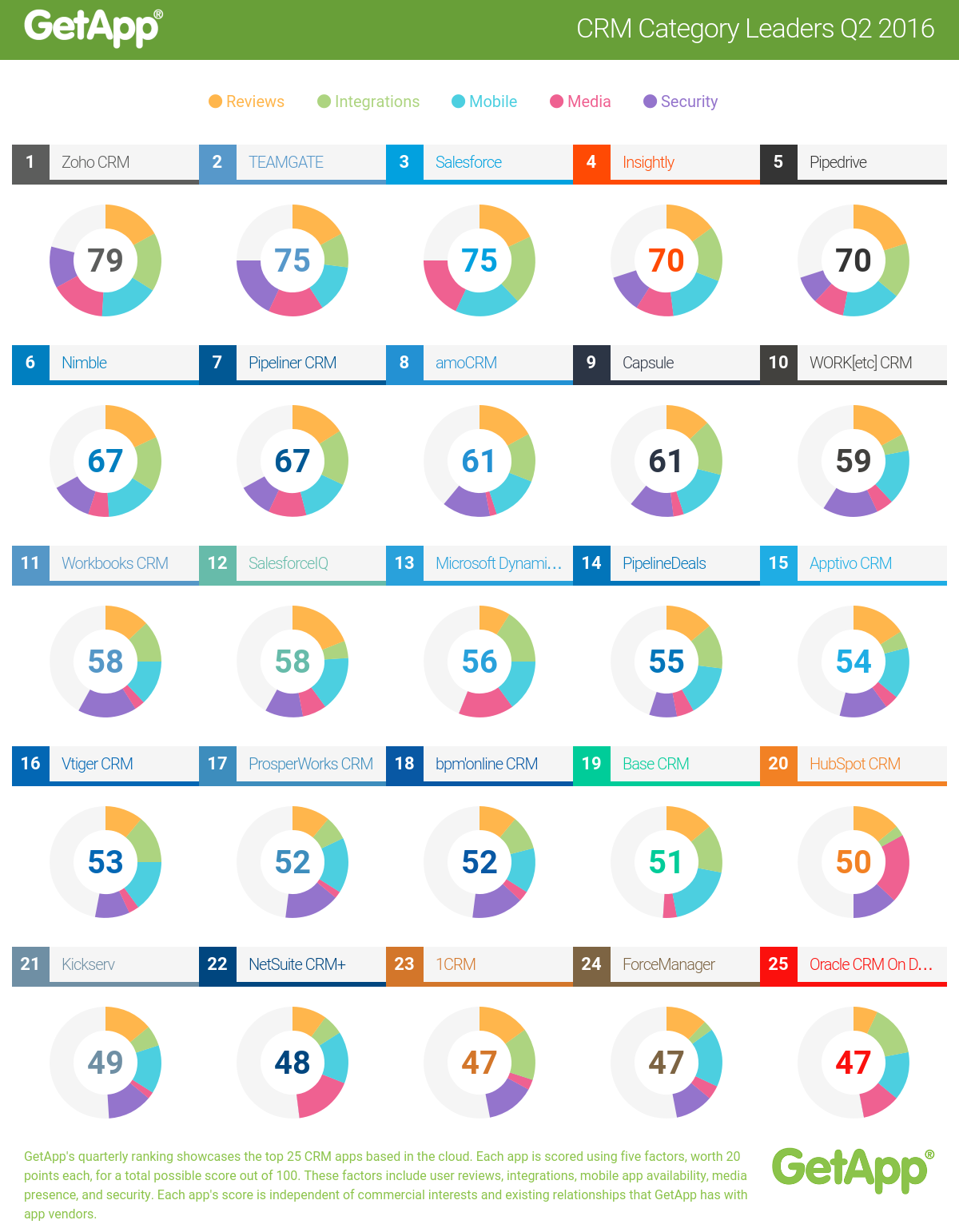
The leading Premium business app discovery platform GetApp.com announced Teamgate as the the second best of cloud CRM in Q2 2016 rankings. Unique ‘five-factor ranking’ includes an analysis of product data security, integrations, user ratings & more.

Find best comparison list of CRM applications & tools below:

Top CRM Software 2016 | GetApp

Each app’s GetRank score is completely independent of commercial interests and existing relationships that GetApp has with app vendors.

Along with GetRank, GetApp’s quarterly ranking of business apps within their category, reports aims to make the initial task of finding a cloud-based business software application easier. It identifies trends in the CRM, Customer Service & Support, and Call Center industries, the three focus categories of this quarter’s ranking under the broader umbrella of Customer Success software.

On July 1 of 2015 GetApp was acquired by Gartner Inc.  (NYSE: IT)

Related: GetApp Announces Teamgate as #3 of the Top 25 CRM Apps and Teamgate became a Google Campus Exchange Program Finalist

THE RANKING

GetApp uses five data points to rank apps based on a combination of its own unique data, as well as data collected from third-party sources. Each data point was chosen based on its relevance to businesses in the process of choosing business apps, as well as its ability to provide tangible, numerical data. Each data point was scored out of 20, with a total potential score of 100.

Do you have a CRM that keeps you organised?

The most user-friendly CRM on the market. 14-day free trial.

Start Free Trial

Painless setup, no credit card required

The five data points used to rank each app are:

  1. User reviews– based on the number and quality of reviews on GetApp.
  2. Integrations– based on the number of integrations with other apps listed on GetApp.
  3. Mobile Platforms– based on the availability of an Android and iOS app and its rating in Google Play and the App Store, respectively.
  4. Media Presence– based on the number of followers and fans on Twitter and Facebook, respectively.
  5. Security– based on a security survey developed by GetApp in collaboration with Microsoft, modeled on the Cloud Security Alliance self-assessment form.

For a full report on GetRank check out the information on GetApp.

When you first learn to drive a car, the first thing to do is to watch someone else. Only then can you be sure of yourself when it comes time to get behind the wheel. CRM is the same. We can learn what we need to get started by simply observing. We have take a look at three major case studies, published this year, and extracted what we think could benefit you the most. Here’s what we found, from a hotel chain, a bank, and retail outlets across the globe. What you will learn can be applied to any industry.

UK Chain Hotel Reveals the Impact of Organizational Culture on CRM

The Department of Marketing, Innovation, Leisure and Enterprise at the University of Wolverhampton administered a survey of 346 managers from a hotel chain in the UK to find the impact of organizational culture on implementing CRM in the hotel industry. What they found was that adaptability, consistency, staff involvement, and mission play a significantly positive role on the implementation of CRM. Success, although it correlates strongly with each of the above factors, does not depend on all of them. This is useful for every strategist.

Here’s how you can apply the findings to your planning:

  • Adaptability – All CRM strategies should include room for growth and transformation. When you can, write and create a calendar for analysis and changes directly into your plan. This ensures that you have a flexible plan that will evolve with your consumers and your brand.
  • Consistency – Across all platforms, your tactics should be consistent. This means that the sales team, customer service, and anyone else who will be in communication with customers (even offline), should have the same methods of resolving issues and helping people. By making sure that you brief everyone in your organization of your service guidelines, you create consistency across the board.
  • Staff Involvement – Who better to help create a CRM plan than the staff that is regularly in communication with clients and customers? When you are ready to start strategizing, involve everyone in your collaboration. If you have a large organization, it can be a good idea to create a survey asking pertinent questions about how to approach topics. Include a place in the survey for additional suggestions, as you never know what you could be overlooking. Not only will you be able to cover all of your bases, but your staff will be happy to feel involved.
  • Mission – When setting your CRM mission, keep in mind company goals as well as smaller “department level” sales goals. When an objective is present, you can measure success and make changes to a plan as needed.

If you’re able to implement at least one of the actions above, you know that you are on the right track. If you can integrate all of them, you are on your way to superstar growth. Your company will reap great benefits.

Can You Render Better Services to Customers by Reaching Out Like This Bank?

SBI is the largest bank in India. They are applying CRM technology to bring banks and customers together into immediate and close relationships. A case study conducted by Rayalaseema University and ICBM, shows that the SBI treats their customer relations as more than technology, and more of an attitude and concentrated behavior. By reaching out to all bank members and other consumers, not just those with the most return on investment, this bank has seen large, measurable growth in their income as well as membership numbers. They used the word “democracy” to describe their set of tactics.

You can follow their lead by making sure that your strategy includes and is influenced by all consumers – both hot and cold leads, those who have purchased your products and services as well as those who haven’t yet. Facilitating a unified relationship between members of an organization and consumers one of the most highly beneficial assets that technology can bring. In this way, your CRM tactics will enhance your brand image and make your company approachable and enjoyable to be a part of.

teamgate-india-bank (1) (1) (1)

This is How to Use CRM to Boost Sales, According to Retail Outlet Data

The Department. of Management Studies, Sri Venkateswara College of Engineering & Technology took a look at selected organized retail outlets in order to comprehend multiple facets of the CRM frameworks utilized. They found that many of the companies were not leaving their customers with the level of satisfaction that they expected (You didn’t expect that, did you?). These particular stores were not utilizing their technology to it’s full advantage. So, the study included a list of suggestions, based on the information that they had gathered from the outlets.

Do you have a CRM that keeps you organised?

The most user-friendly CRM on the market. 14-day free trial.

Start Free Trial

Painless setup, no credit card required

The suggestions included items such as responding quickly to clients’ grumblings and maintaining adequate information on hand about available inventory. Here’s what you can learn from this: Don’t wait for a specialist to analyze your customer data. With modern technology, you have access to complaints at your fingertips. Keep an eye on your customer data in your analytics dashboard and take note of any and all issues that arise. If a hurdle or dissatisfaction comes up more than once, that is an indicator that it’s time for you to implement changes in the way you approach the relationships your have with your customers.

Related: 4 Ways CRM Makes Small Business Employees More Productive and An Extensive Sales Stack for Current Business

In Conclusion

The fact that you have access CRM technology is not an isolated indicator that you are going to have improve relationships with your customers and target market; you must leverage the tools in a strategic way. Use CRM platforms in a way that shows what you’re learning from the successes and mistakes of yourself and others. Start applying what you’ve learned today for increased sales success. 

Related: 6 Sure and Simple Ways to Internationalize Your Business

Not every CRM software solution suits your business needs, their size and shape may not be the only concern, rather the point of concern comes into play where the compatibility of the software doesn’t match with the overall enterprise requirements. As CRM software is a crucial component not only for B2B but also for all B2C interactions, it is pivotal for businesses to make the right decision for setting an efficient sales trajectory across business functions.

Even if you are not new to the CRM software world, you still need to set some CRM-related goals as the new technological developments are pouring in every now and then. There are three types of users who would be reading this blog to make a choice for integrating the right CRM solution.

  • Startups & Millenials; who are new to the world of CRM Software world
  • Small and Medium-sized businesses who are finding it difficult to adapt to the new changes
  • Businesses who are planning to expand or revamp their existing CRM solutions

For gauging the compatibility of your CRM software, you must be looking for certain metrics. Some of them are mentioned below.

Related: The KPIs that indicate SaaS is in Demand and An Extensive Sales Stack for Current Business

Do you have a CRM that keeps you organised?

The most user-friendly CRM on the market. 14-day free trial.

Start Free Trial

Painless setup, no credit card required

Real Time Data processing

Many businesses operate on every shred of connectivity, the data gathering, sharing, and storing takes place in seconds. In such cases, businesses require a platform where data is processed in real-time, which can be presented in the form of trend reports or sales figures. Whether it’s about lead management or sales management, your CRM solution needs to give a clear presentation of the KPIs weighed against the actual performance map. So, your CRM solution must have smart reporting tools that can be broken down into measurable chunks of activities. Also, you can decide whether you would require a daily, weekly, or monthly track record for your CRM activities, depending on your business’s course of operation.

Related: Deference to Expertise – Respect Insights about the Business from “Experts”

Smart Integration Solution

Many channels of communication are already integrated into your business systems, such as emails, social networks, portals VoIP, and other connectivity tools. A good CRM solution must be able to blend in your existing systems with the smooth integration of additional features such as task management, leads and sales management, sales pipeline tracking, storage and collaboration areas, and many more.

Not only this, but you can also think of integrating enterprise resource management, automated call diversion, campaign management, and shared voice telephony. But, it all comes down to one thing: what does your CRM solution has to offer you. So, when choosing such software, you must be sure about its integration and compatibility with the built-in features of other enterprise solutions.

Related: Top 4 Challenges of Cloud Computing

CRM on Business Size Basis

It is pertinent that businesses must choose CRM based on the size of their enterprise. For small businesses, there are limited numbers of users who would be using the CRM software. The features and modules needed for such businesses will also be less as compared to large businesses. On the contrary, enterprise CRM would require more features for data handling and more access support. So, your choice must be based on the utility of the software rather than its popularity.

All these metrics will make it easy for you to choose the most suitable CRM system for all your B2C functions. You need to look into the bigger picture of the ever-changing technological landscape. It may sound cliché at the moment as many businesses have already ventured into the world of cloud-based CRM, but small and medium-sized businesses still struggle to get their way through such CRM solutions, till they don’t find a match that will make them competitive.

Interested in giving CRM for B2C a test drive? Try Teamgate CRM for free Today

From now on Mailchimp Integration is available on Teamgate! Create targeted lists of Contacts by using the advanced filtering & tag options in Teamgate and send them over to any of your MailChimp lists with just one click button.

In order to use the MailChimp integration, you’ll need a MailChimp account. You can get a free account by clicking here.

When you enable the MailChimp integration, you’ll be able to subscribe contacts from your Teamgate contact list to one of your MailChimp mailing lists.

Related: Integrate Teamgate CRM with Google Contacts

Initial setup

With Teamgate MailChimp integration, you can reach a small segment such as people that are Leads from Halloween ads campaign or a great base of customers with custom fields, for example, ‘interested in new integrations’. You would be able to export every segment of your database from Teamgate to the MailChimp list with only a few steps:

1. Open the Teamgate Settings. You can find this by clicking on your name in the top right corner.

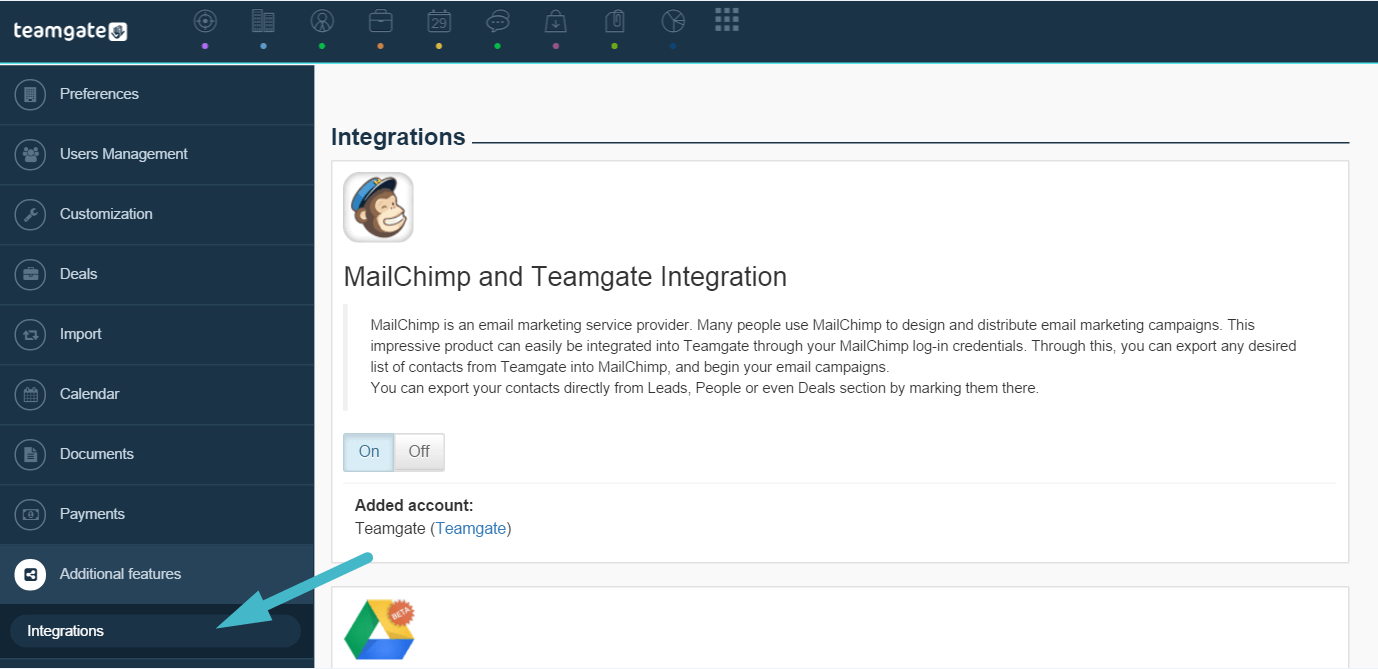
2. Click Integrations on the left side of the screen and Enable the MailChimp integration.

integrations (1)

Before this you also need to create a list in MailChimp (or use an existing one) by heading to Lists > Create List.

Few Clicks & Great Value

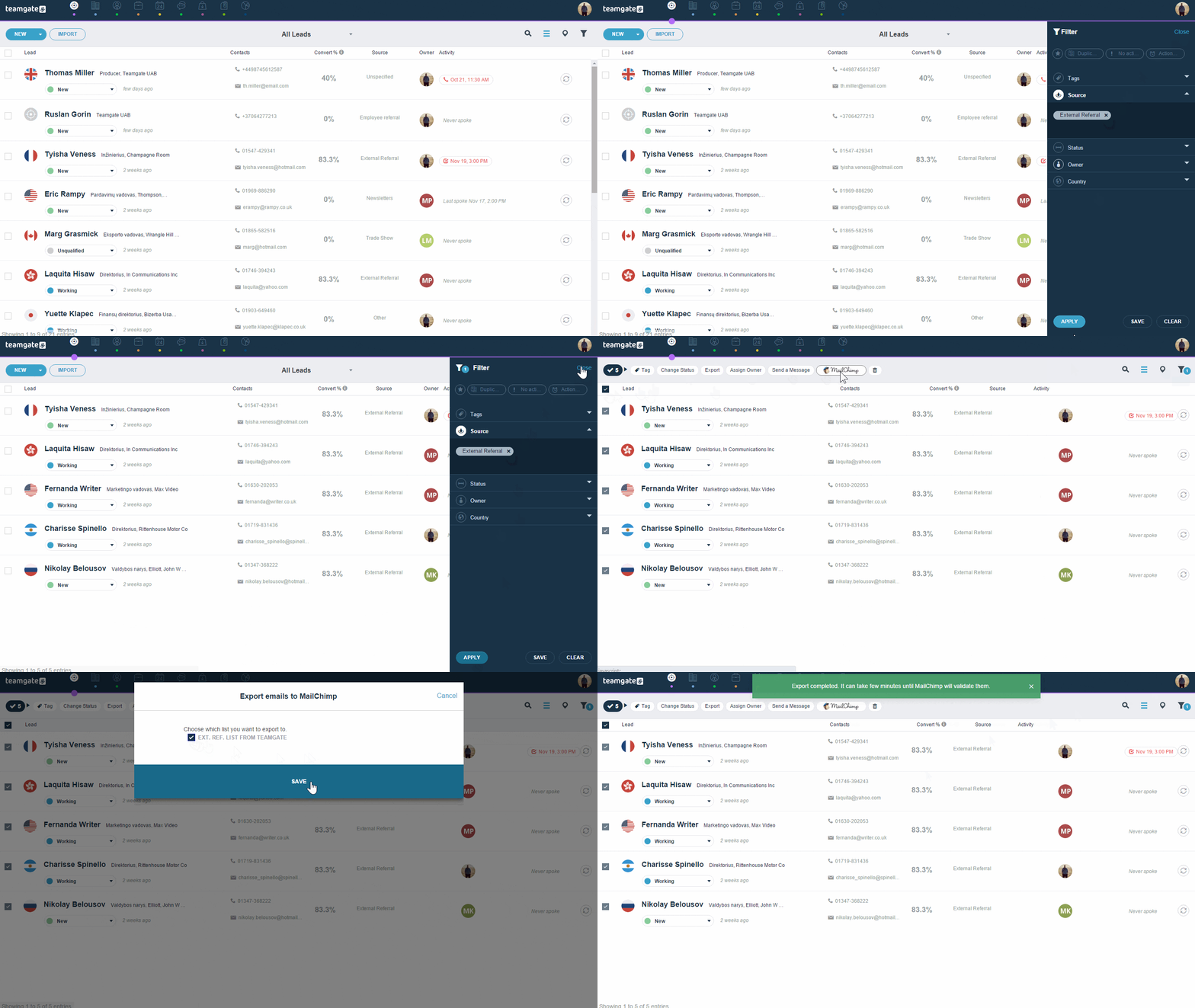
Understanding the importance of Mailchimp integration, we have a single button which quickly connects the two tools without any extra steps needed. In Teamgate, you use a filtered list based on the criteria of your segment group. Under Leads/Companies or People. You simply apply the filter and export the contacts in that list by clicking on the MailChimp button in the footer.Look how easy it is:

ezgif.com-optimize

Mailchimp integration lets you send personalized, well-targeted emails to specific lists of customers from Teamgate. Simply define your segment criteria in Teamgate, and click on the MailChimp top of the list to export the contacts into MailChimp.

Do you have a CRM that keeps you organised?

The most user-friendly CRM on the market. 14-day free trial.

Start Free Trial

Painless setup, no credit card required

It’s helpful, for example, when you want to send emails to lost prospects who are based in China and with whom you are in the middle of a high-value deal. With only a couple of clicks, you can set the criteria and export the list.

Don’t have a Teamgate account yet? Try it for free today!

We recognize that most of your contacts lay outside Teamgate CRM.

Yes, ideally you would like to think that your CRM would be the one place to exclusively store contacts, but in most cases, they remain somewhere else – and understandably so. In fact, besides sales automation, one of the primary reasons why customers acquire CRM solutions is to have a centralized platform for clients’ contacts. But what do you do when your leads and clients are scattered throughout social media, LinkedIn, Google, and Apple contact books?

Related: Introducing an easiest Mailchimp and Teamgate Integration

The answer is Integration

You can now import your Google Contacts into Teamgate CRM. Let’s find out how you can do it in a few simple steps:
First, decide the type of contacts you want to populate. You can apply the same procedures for Leads, Companies, People, etc.
In this example, we’ll be importing as Leads.

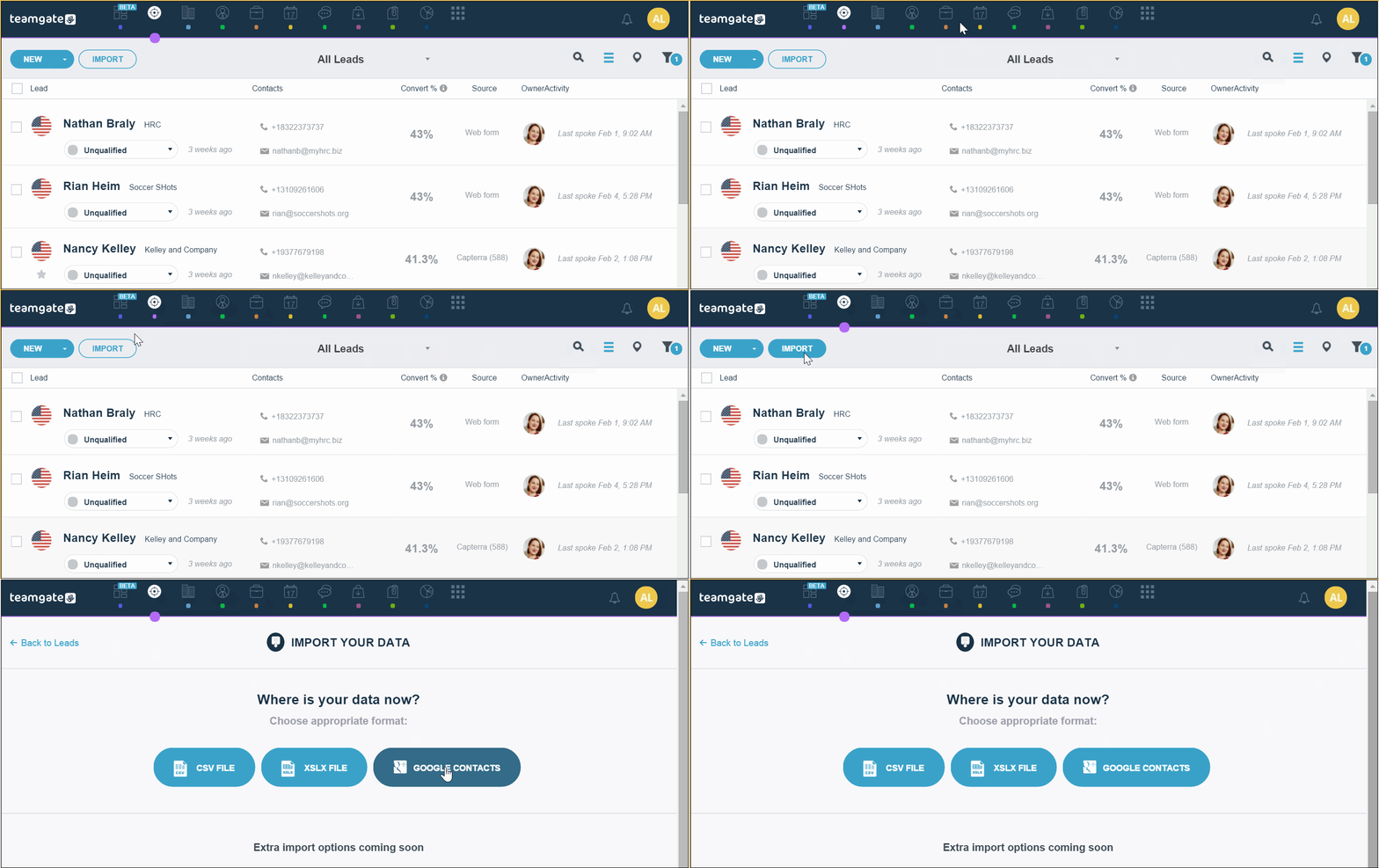
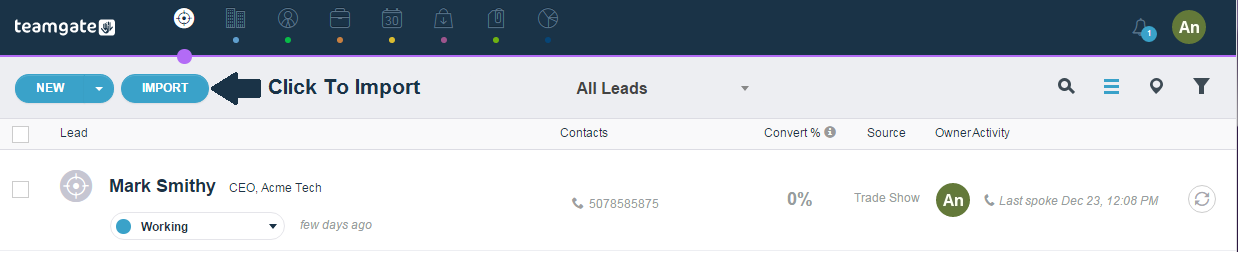
If you’ve imported contacts before, then you’re probably familiar with this page.
XLSX file extension is an Excel Microsoft Office Open XML Format Spreadsheet file.
CSV files can be used with any spreadsheet program, such as Microsoft Excel, Open Office Calc, or Google Spreadsheets.
Let’s go ahead and pick Google Contacts.

import-Google-crm

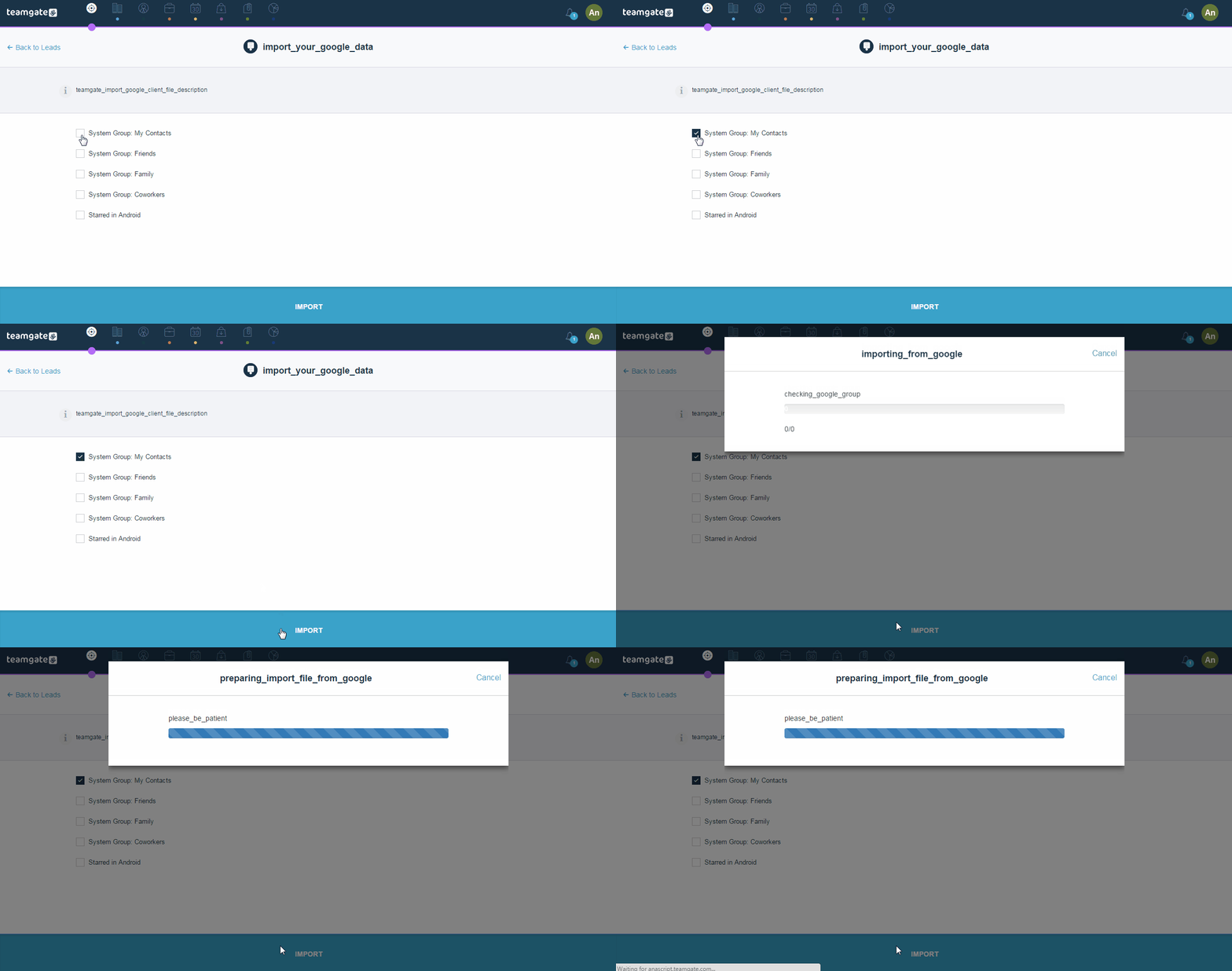
Now when we get to this page, we will choose My Contacts. Of course, this page will vary depending on the user and how they organize their contacts. Google usually tends to automatically apply their own sorting, but “savvier” users are likely to have included their own tags.

Step4Animation

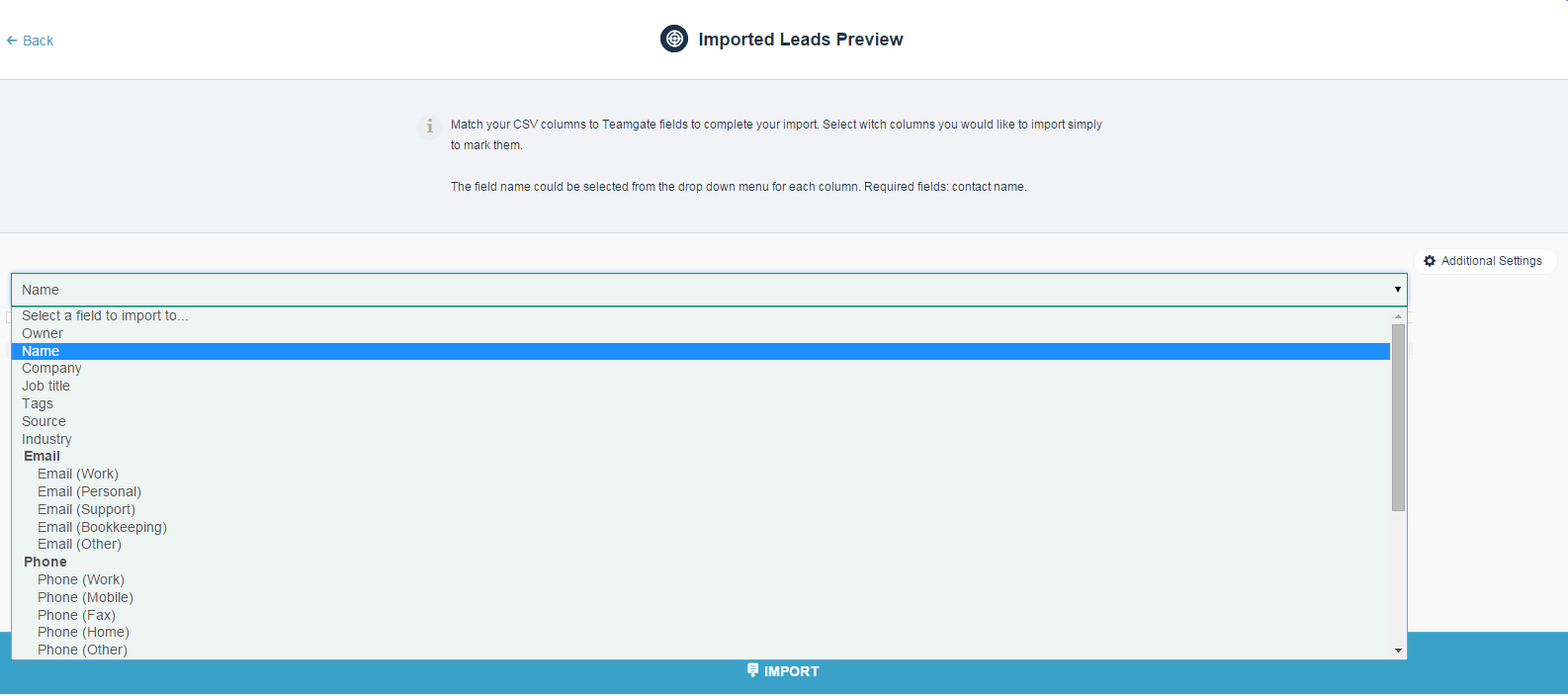
Our last step is to select the Teamgate field that will match the imported CSV (Google Contacts columns).

Since we’re uploading leads, we’ll choose “Name”. If we were importing companies, we would have chosen “Company”, but it is not the case in this example.


step5

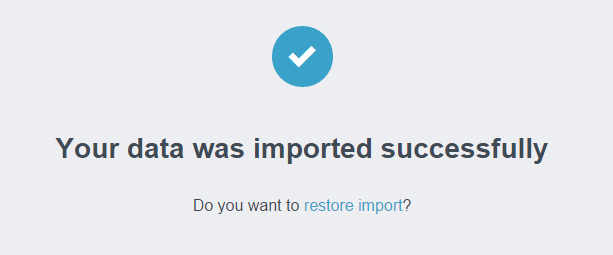
Congrats!

laststep

Assuming you approved giving permission to Google to connect with Teamgate, the two apps should be fully integrated by now. You should be able to access all of your Google Contacts throughout Teamgate’s CRM.

Teamgate is also working on seamless Outlook, LinkedIn and other integrations. You can subscribe to our blog to stay in the know!
Don’t have a Teamgate account yet? Try it for free today!