Get a free sales audit to uncover hidden revenue opportunities!

In this article, you’ll get a comprehensive guide to 100 powerful inbound marketing tools that can skyrocket your business growth. We’ll explore a variety of tools to automate, optimize, and enhance every facet of your inbound marketing strategy, ultimately leading to more leads and prospects.

Key Takeaways:

  • Learn how to streamline your marketing efforts using a multitude of automation tools.
  • Discover the importance of analytics and the top tools to get the most detailed insights into your marketing performance.
  • Uncover the potential of blogging and SEO tools in increasing your online visibility.
  • Understand how design and visual resources can play a pivotal role in your inbound marketing strategy.
  • Get introduced to the best tools for managing leads, social media, and streaming.

Nothing makes a marketer happier than seeing their efforts and hard work pay off. And there’s little we wouldn’t be prepared to do to see those leads trickling in.

We’ll write eBooks, spend weeks chasing influencers for three-line quotes and comb through pages and pages of data to string together sleek-looking infographics to get the prospects to notice us. Because every lead counts.

So let’s face it, if there was a way for us to amplify our inbound marketing efforts and raise the lead gen game, we’d snatch that opportunity with no questions asked.

And as the luck has it, we’ve gathered one hundred powerful tools that will help you automate, optimize and enhance your inbound marketing strategy and win more business.

Make yourself happy, dig in.

Research tools

  1. Buzzsumo

Buzzsumo is a powerful tool for content marketing and is particularly helpful with finding trending content by any topic. It saves a lot of time that you would usually spend on browsing and googling popular topics. Buzzsumo will also show you many convenient statistics, like how many people are talking about a specific subject.

  1. Keyword Planner

Keyword Planner is a completely free tool created by Google that researches the best keywords for your ads, video ads, etc. With this tool, you can build a completely new campaign or improve an existing one. It is an effective tool for both experienced and completely new advertisers.

  1. Looking for a new Entry

This used to be Klout.

Do you have a CRM that keeps you organised?

The most user-friendly CRM on the market. 14-day free trial.

Start Free Trial

Painless setup, no credit card required

  1. Mention

Mention makes sure you keep track of all the real-time social media mentions and always stay in the know of what people are saying about you online. It also lets you follow and analyze your competitors and similar businesses. Mention also has some awesome features like Custom Insights and Find Influencers.

  1. TrustRadius Trustmap

The TrustRadius marketing TrustMap is a two-dimensional chart that compares marketing products based on end-user satisfaction ratings and research frequency by prospective buyers. You can use the tool to compare different marketing tools and read authentic reviews from real users.

  1. SurveyMonkey

SurveyMonkey is one of the best online survey tools used by millions. With this tool, you will gather useful information and insight about your target audience and clients by creating original surveys. Choose from more than 15 different question types, branding options and much more.

  1. AYTM

AYTM is another survey tool that provides professional market research. The main key components and features include the survey platform that lets you host, program and analyze your surveys, a proprietary panel with an access to 25 MM all over the world and the research services.

  1. Quora

Quora is a well known question-answer type of website that makes any research much easier. Here, questions and topics can be organized into boards that can be followed – this will help you keep up with your competitors and news in your market. With Quora, you can also follow relevant questions and discover many other ways to do research.

Analytics tools

  1. Google Analytics

Google Analytics is a very popular and effective analytics tool provided to you by Google. When integrated with Google AdWords, it becomes an even more powerful tool that lets you analyze and track your website and conversions. The main analytics data is displayed on the main page of Google Analytics, but you can also find and use such features as Advanced Segments, Location Demographics and much more.
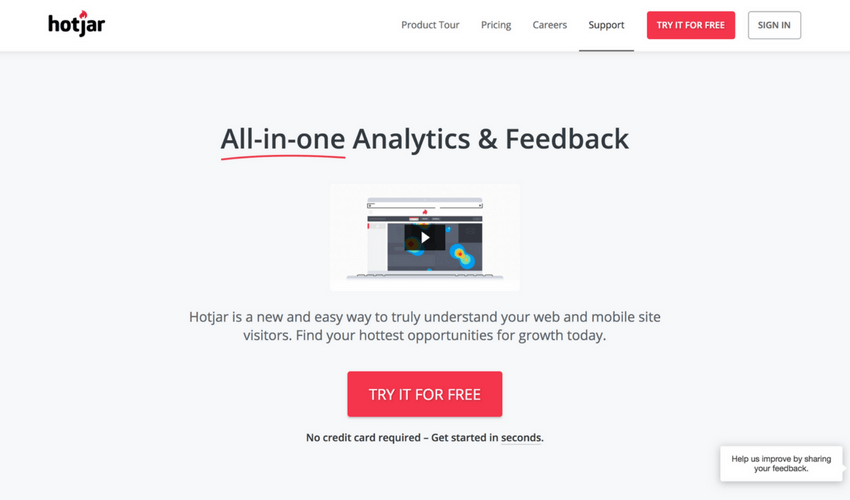
  1. Hotjar

Inbound Marketing Tools Hotjar

Hotjar is an amazing tool for analyzing the online behavior of your users by studying heatmaps, visitor recordings, feedback polls and conversion funnels. This tool combines two most important things – feedback and analysis to make the analytics as accurate as possible.

  1. SumoMe

SumoMe is an extremely user-friendly WordPress plugin that can serve as an efficient analytics tool. The main goal of this tool is to help you grow your website traffic and email list. It offers many free tools for you to choose from, so by using them, you can analyze your content, users, visitors and much more.

  1. Adobe Analytics

Adobe Analytics is a part of Adobe Marketing Cloud (AMC) that offers many online marketing tools. With Adobe Analytics, you can assemble, coordinate, organize and analyze your customer’s activity. Real-time analytics, segmentation, and predictive marketing through all Adobe channels.

  1. Ubersuggest

Want more traffic? Ubersuggest shows you how to win the game of SEO. Just type in a domain or a keyword to get started.

  1. Crazy Egg

Crazy Egg is another brilliant online application to analyze user activity on your website. This tool suggests useful features like heat maps, scroll maps, overlay reports, and confetti, which lets you determine all the clicks that have been made on your website and analyze them by search term and referral sources.

  1. Matomo

By choosing the ethical alternative, Matomo, you won’t make privacy sacrifices or compromise your site. You can even use Matomo without needing to ask for consent

  1. Mixpanel

Mixpanel is a very advanced analytics tool that gives you the opportunity to analyze every action your user takes – not just the clicks. With this tool, you can also see when someone uploads a picture, shares a post, etc. Here you can also experiment with the A/B testing to reach the best results.

  1. SimilarWeb

SimilarWeb is a universal tool for any insights – both web and app. It works with a wide range of sources to receive as accurate data as possible and convert it into useful insights. SimilarWeb offers website analytics, industry analytics, and app analysis. Besides all this, you can also see traffic and engagement data and much more.

[optin-monster-shortcode id=”cvfuxuhchvywm9wl2q6w”]

  1. Quick Sprout

Quick Sprout suggests a direct connection with Google Analytics to offer you a reliable and accurate information and data. This tool will help you understand and use Google Analytics to the maximum – you will be informed about important activity on your website every day and receive personalized website alerts.

Blogging tools

  1. Triberr

Triberr is both a tool and a community to help you grow the traffic on your blog. It is segmented into categories called “Tribes” that are differentiated by topics. You can follow the tribe you are interested in to see all the newly published posts, interact and engage with other bloggers.

  1. WordPress

WordPress is a very popular and widely used tool for website and blog creation that has a wide range of templates and plugins for you to choose from and use for your own benefit. It is a very powerful tool, yet very user-friendly and easy to use. It is so huge that it supports more than 60 million websites.

  1. Grammarly

Inbound Marketing Tools Grammarly

Grammarly is a proofreading tool that can also be used as a plagiarism-detection application. Besides creating content and driving traffic to your website, it is also crucial to make sure that your content is free of grammar mistakes, so this super simple tool will help you out with that. Its AI-driven engines check plagiarism and detect AI text patterns to improve your texts’ structure and readability. Multiple features and stellar user-friendliness make Grammarly one of the best tools for content creators on the market.

  1. Yoast

Yoast is a SEO tool for WordPress users. Its main cause is to help people with their website optimization through many different courses, e-books, software and plugins like Yost SEO, Video SEO,  Local SEO, News SEO, Local SEO, Yoast WooCommerce SEO and other analytics, metric, comments, and functionality plugins.

  1. Readability Test Tool by WebpageFX

Readability Test Tool is an application to check the readability of a specific article, post or the entire website. You can check it by entering the URL of your content and clicking the button “Calculate Readability”. The tool is useful not only for bloggers but also for SEO experts, copywriters, and other specialists.

  1. Portent Title Maker

Portent Title Maker is a great tool when you need to come up with an original idea for your article title name. Simply enter your subject in the field and choose one of the generated titles. To get the best results from this tool, don’t capitalize keywords and use singular version of your keyword.

  1. Hubspot Blog Topic Generator

Hubspot Blog Topic Generator helps you create great titles for your post. When you visit the website, you will have to enter three nouns that describe what you’re writing about (or what the article is about) and press the button below. You will then be given a few popular blog topic ideas that you can use for your piece.

  1. Toggl

Toggl is a perfect tool for busy bloggers who like to keep on track with their time management. With this tool, you can see how much time you spend on each task and discover what is most time-consuming. Here you can also track how many time you spend on different projects, clients and analyze reports.

  1. Hemingway App

Hemingway App is an advanced text editing tool that is also available as a desktop app. It highlights your sentences in different colors that indicate sentences that are too hard to read, phrases that have simpler alternatives, etc. In the online mode, you can also edit your document and the desktop version offers such cool features as publishing directly to WordPress and much more.

Design tools

  1. Picsart

Picsart is an all-in-one platform where users can create, customize, and share images and videos with ease. It combines powerful editing tools, AI features, and a wide range of creative assets to help bring any idea to life—whether it’s for social media, marketing, or personal projects.

  1. Freebiesbug

Freebiesbug is a website where designers can find a number of free graphic resources for their designs. It is full of app designs, icons, mockups, website templates, illustrations, fonts, sketches and much more. You can browse by the category, use the search field or upload a freebie of your own.  

  1. Adobe Spark

Adobe Spark is a tool by Adobe Systems that offers three different design apps: Spark Page, Spark Post, and Spark Video. Here you can create social and website graphics like Travel Journals, Quotes, Announcements, Advertisements, Pitches, Animated stories and much more.

  1. Xtensio

Xtensio is a platform every team or business needs to create beautifully crafted online presentations, reports, slides, or any documents. It functions with an easy-to-use drag and drop feature so users can do customization, living up to their brands.
Apart from being user-friendly, it ensures real-time collaboration and privacy of shared documents.
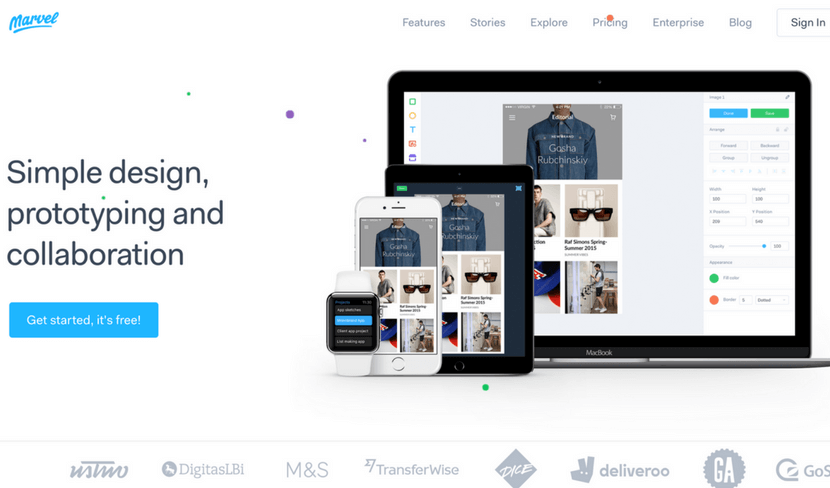
  1. Marvel

Inbound Marketing Tools Marvel

Marvel is a prototype creation tool for apps and websites. You can create straight in Marvel or transport your images from the cloud storage, Sketch, or Photoshop. The tool has a user-friendly editor that lets you link your designs and create prototypes for iPhone, iPad, Apple TV, Apple Watch, Desktop, and Android.

  1. Ceros

Ceros is a cloud-based tool with a digital canvas that can be accessed by the entire team. Ceros allows you to create amazing, interactive infographics and animated designs. The tool is very convenient for both designers and marketers. After creating a unique design, you are able to see the insights of its performance.

  1. Figma

Figma is a collaborative design tool that gives you the ability to work on a design together with your team. Here you can create icons, interface design, responsive layouts and much more. Figma is very easy to use so you won’t waste your time trying to understand the tools and it also allows the integration with Sketch app.

  1. Fuse

Fuse is a design tool for creating apps on Android and iOS. An effective and quick way to create for teams, developers, and designers. With Fuse, adjust animation, UI, layout or anything else you like and test changes in real time. It makes it easy for people that are new to app development and is also very useful for the experienced ones.

  1. Placeit

Placeit offers more than 2500 mockups and demo videos. It is super quick to use and works as a great substitute for Photoshop when you want to place a screenshot of your website on a screen of a computer or a phone. You can choose between many different devices or simply use the search field.

  1. VSCO

VSCO is a very popular photo editing app available for both iOS and Android. It lets you edit your photos and images, add many different trendy filters and share it with other users of the app. The app is widely used by photographers and the youth and constantly updated by its developers.

  1. PicMonkey

PicMonkey is an online tool for design making and photo editing. It has some paid features, but even without them, the tool is pretty powerful. Besides designing and editing, you can also create beautiful collages, or use the “Touch up” feature that can whiten teeth or remove wrinkles in a photo.

  1. Infogr.com

Infogr.com is an application meant for creating stunning, interactive charts and infographics. You are free to choose between more than 35 charts, over 500 different maps and over 20 ready-made templates for infographics. Besides that, you can edit the style, colors and many other things in your design.

Visual resources

  1. Unsplash

Unsplash is a photo stock library that lets you download, edit and use all the photos for free without any copyright. The website is believed to be one of the leading photography websites in the world. Here you can browse new photos, view collections or simply use the search field.

[optin-monster-shortcode id=”u0wiahzfsrgu4dsbbxsb”]

  1. Pixabay

Pixabay is an international website that offers more than 870,000 stock photos that are completely free. Here you will also find vectors, illustrations, and videos of high quality. All of the content you will download on this website is completely copyright free, so feel free to edit and distribute it the way you like.

  1. StockSnap.io

StockSnap.io is full of beautiful stock photos in high quality. It is also copyright free so no contribution to the author is required. When you visit the website, you can see the most popular searches that are displayed as tags under the huge search field. You can also view the trending and recently added photos or add them to your favorites.  

  1. Life Of Pix

Life Of Pix is another brilliant place to find free stock photos. Some photos are features, so you can browse them straight away when you visit the website or choose to use the search field. If you find it time-consuming to preview photos on a big display, you can simply switch to a different viewing display.

  1. SplitShire

SplitShire is a great resource of visual content: free images, photos, and videos. Besides the search field, you will also discover many convenient categories to choose from: animals, fashion, landscapes, mockups and much more. In free videos section, you can scroll down and view all the amazing video content that you can easily download.

  1. Death To Stock

Inbound Marketing Tools Deathtostockphoto

Death To Stock has a lot of content you can use for your creative projects and designs. It has a very convenient feature where you can subscribe to receive a monthly email with beautiful photos. On the website, you can also browse themed photo packs on a specific subject.

  1. PhotoPin

PhotoPin is a completely free tool that might come in handy both for designers and bloggers. In PhotoPin you will find millions of photos with Creative Commons licensing. A very neat feature that this tool offers to its users is that when you download a picture, you receive a contribution link at the same time, so there’s no need to search for it separately.

  1. Freepik

Freepik also offers some free stock photos but is mainly focused on free vectors, icons and PSD files. This website is probably one of the most popular free graphic resources among experienced and new designers. You can use the search field, or browse the vectors by popularity or recency.

  1. Flaticon

Flaticon is probably the biggest database full of icons in PSD, EPS, SVG, PNG and BASE 64 formats. Here you will discover more than 310,000 icons that can be customized to a specific color code before downloading. If you are working on a specific project and you need your icons to have the same style, you can find some icon packs as well.

Automation tools

  1. IFTTT

IFTTT is an amazing tool that lets you connect and create chains of applets. Applets are useful features that different apps are able to offer to their clients. For example, using a certain applet, you can set it up to receive an email when an Instagram picture with a chosen hashtag is posted.

  1. Zapier

Zapier is a great web automation tool for busy people that seamlessly connects one’s apps and automates the processes. Apps are linked in seconds and when data is shared, Zapier passes the data to “Zaps” that represent your workflows. This will help you to finish your tasks and processes faster than usual.

  1. Moosend

Moosend is a powerful email marketing and marketing automation tool. Its features are easy-to-learn and easy-to-use and it promises a minimal learning curve with maximum potential, due to its sophisticated automation, personalization and analytics features.  From designing beautiful email newsletters and landing pages with zero code knowledge to segmenting your email list and making educated decisions through data and analytics, this all-in-one marketing platform gives your business more for less.

  1. Skyvia

Skyvia is a tool that offers a cloud data integration service. It also lets you backup, manage and access your data from all your apps by using only one tool. Cloud data management is processed through SQL so you don’t need to bother about native web API’s of different cloud sources.

  1. Looking for new tools recommend

This used to be Hooks

  1. CloudHQ

CloudHQ synchronizes your apps and your data and lets you integrate your apps with cloud platforms you are using at the moment, including Google apps, like Google Drive and Google Email. The tool offers real-time backup of any data that is in your cloud. It also lets you integrate your dropbox with Evernote, Gmail, Sharepoint, and Basecamp.

  1. Automate.io

Automate.io is a tool that is able to connect all the apps that are located in your cloud. This helps you to automate such processes as marketing, business, and sales. Automated processes include sending automated emails, automate follow-ups and much more.

  1. Looking for new tools to recomend

This used to be CloudWork.  

  1. Integromat

Integromat is a powerful workflow optimization and automation tool. With it, you will be able to connect different devices, apps, and services. The main advantage of this tool is that it can integrate and automate almost any app that’ been created. It can be used in various fields: social media, online stores, customer support and project management.

Management tools
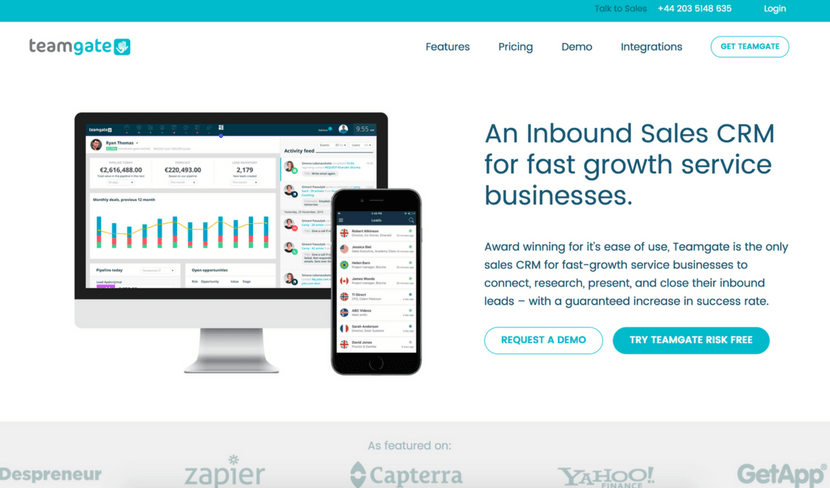
  1. Teamgate

Inbound Marketing Tools Teamgate

Teamgate is a powerful CRM tool that can be developed especially for you and your team – no matter whether you work alone, run a small business or manage a big team. It helps you curate and plan daily tasks, schedule your calls and appointments, create individual goals and view how close you have gotten to your goal. It also has a neat feature where you can view insights of your team’s sales score and an evaluation on how much better or worse you are doing compared to last year, month or week.

  1. Bitrix24

Bitrix24 is a widely used management tool because of its many features and other tools like CRM, task and project management, document and time management, calendars, chats and much more. It also offers a telephony service so you can call anywhere – domestically or internationally.

  1. Copper

Coppers CRM is a user-friendly, simplistic management tool that is focused on teams and interactions. It makes it really easy to keep on track with what your team is working on and keep an eye on the sales.

  1. Zendash

Zendash makes tracking your marketing performance simple and efficient. With its user-friendly dashboards and seamless integrations, it brings all your analytics into one place. Use Zendash to gain valuable insights, optimize your inbound campaigns, and make smarter, data-driven decisions to grow your business.

  1. Salesflare

Salesflare is a CRM that stands out due its focus on technological development. The tool is integratable with Office 365, Gmail, iCloud, Zapier and Exchange. It offers useful insights on sales and assists you with follow-up opportunities. The Salesflare takes care of all the data input so you can focus all your attention on sales and profits.

  1. Act!

Act! is a CRM and a brilliant management tool for managing customer relationships and contacts. This CRM is mainly meant for individuals, sales teams, and small businesses. Here you can choose between three different plans to suit your needs: Act! Pro, Act! Premium and Act! Essentials.

  1. Insightly

The name of this CRM tool speaks for itself – it can offer you many useful insights on your sales, team workflow and many other aspects. The tool is also packed with an array of great features, such as contact and lead management, task, events, reports, email integrations and so much more.

Lead collection tools

  1. AeroLeads

AeroLeads is one of the most powerful prospecting software on the web used by over 5000 businesses. It finds all the details of a business or person that includes Email, Name, Phone Number and social profiles. It also provides you with the service of giving you the email list or email database as per your requirements.

  1. OptinMonster

OptinMonster is an amazing and very popular lead generation tool, especially for WordPress. It helps you convert visitors into subscribers by creating convenient and smart signup forms. It works with MailChimp, AWeber, Infusionsoft, GetResponse, Constant Contact and many eCommerce platforms

  1. Leadfeeder

Leadfeeder is a simple lead collection tool that helps to turn your visitors into subscribers. It is mainly focused on the B2B market and works by connecting to your Google Analytics account where it collects useful data about your website visitors. Offers integration with MailChimp.

  1. Leadpages

Leadpages will generate leads through social media, emails, web and text messaging. Here you can choose from a selection of high quality and performance templates and then customize them to your own taste. The customizable templates are mobile friendly and the tool itself can integrate with MailChimp, Salesforce, Infusionsoft and many other tools.

  1. Leadformly

Leadformly is a website that lets you create interactive lead generation forms and use them to capture more leads. After you choose a template you like, you can redesign it as you wish, then simply add the embed code to your website and wait for the results. It integrates with Salesforce, Sugar CRM, Infusionsoft, MailChimp, HubSpot, Marketo etc.

  1. Lead Forensics

Lead Forensics is a tool that will turn anonymous traffic into leads. With this tool, you can identify the leads in real-time and reveal such information as contacts, business name, financial data, demographics, etc. It also lets you analyze each case from the first click to sale.

  1. LinkedIn Sales Navigator

LinkedIn has a special tool called Sales Navigator that is packed with features focused on social selling. It gives you custom lead recommendations, imports Salesforce data, constantly informs you with real-time sales updates and lets you measure your social selling stats and efforts. On their website, you will also find success stories and useful resources.

Social media tools
  1. Buffer

Inbound Marketing Tools Buffer

Buffer is a social media scheduling tool for Twitter, Facebook, Instagram, Pinterest, LinkedIn, and Google+. It will help you to save loads of your precious time and focus on your strategy.  You can easily schedule by using the website, installing the browser extension or on the go – with apps for iOS and Android.

  1. Quuu Promote

Quuu Promote enables you to share and promote your generated content via Facebook, LinkedIn, Twitter and Google+. The entire system consists of three steps: first, you create a post using URL address, second, you select the most relatable topic and lastly, monitor and track your promotions via Quuu.

  1. Hootsuite

Hootsuite is social media management tool that works with more than 35 popular social networks. It has many different tools that include Publisher, Engagement, Analytics, Insights, Campaigns, Platform, Amplify, and Ads. These tools are best for fields, such as social selling, marketing, customer service and Employee Advocacy.

  1. MeetEdgar

MeetEdgar is a tool for social media planning and scheduling. One of the cool features of MeetEdgar is that it does not throw away your published posts, but keeps them in a safe library so you can analyze, edit and repost them later. Here you can also place your scheduled posts in different categories.

  1. Looking for a new tool

This Used to be Mentia

  1. Tagboard

Tagboard is a social search platform based on hashtags. It searches through social media content and finds relevant content in seconds. The tag search is processed through such platforms as Facebook, Twitter, Instagram, and Flickr. A very convenient feature is that you can automatically promote any posts you like.

  1. SharedCount

SharedCount is a very simple service and a tool for social media analytics. Its main feature is to quickly track URL shares and likes across the internet. After you enter the URL of your post, you will see how many shares, likes and comments it has collected on Facebook and how many times it was shared on Google+, Twitter, Diggs, LinkedIn, Pinterest, StumbleUpon, and Delicious.

  1. Agora Pulse

Agora Pulse is an amazing yet simple tool for social media management. It brings all the most popular social media networks to one place where you can easily track and manage the engagement. The tool offers many useful stats and insights and has a feature that allows you to run contests and promotions.

GET READY TO OWN YOUR WORKDAY

with the most user-friendly CRM on the market.

Start Free 14-Day Trial

Painless setup, no credit card required

  1. EveryPost

EveryPost is a simplified social media publishing platform and an app for both iOSand Android. With this great tool, you can manage your content, edit your posts, collaborate, schedule, publish and study the social media analytics to come up with even greater solutions for your business.

  1. Sprout Social

Sprout Social is a powerful social media management tool. It has many advantages to offer: Smart Inbox, Monitoring, Social CRM, Publishing, Analytics, Collaboration, Account Structure and Mobile – all these features in one simple tool. Sprout Social works perfectly for social customer service and social media marketing as well.

  1. Bitly

Bitly is a widely used and well-known URL shortener. Nothing is uglier than a long URL on social media or your website. Besides its main features, Bitly lets you optimize and share the links via Bitly, API or other partner integrations. With this tool, it’s also possible to track link analytics and stats.

  1. Tailwind

Tailwind is a free scheduling platform for Pinterest and Instagram. With this tool, you will be able to discover new interesting content, schedule your social media posts in advance, curate conversations and study analytics to reach better results in the future. You can use the free version or choose from plans meant for small businesses and large organizations.

  1. Tweepi

With Tweepi, you can Tweet faster and more efficiently. This tool was specially developed for one social media channel only with a greater focus on it and its capabilities. In the year of 2017, it already has more than 1,500,000 users. With this tool, you can follow relevant users, follow back, schedule tweets and much more.

SEO tools

  1. Übersuggest

Übersuggest is a tool that generates loads of keyword ideas for you. Simply enter one of the main keywords that describe your business and receive hundreds of similar suggestions. Besides that, you can also choose other options, such as browsing in the web, images, shopping, YouTube, and News section.
  1. Moz

Inbound Marketing Tools Moz

Moz is a great SEO tool and a software that performs 5 billion searches each day. It has two main services: one is called “Moz Local” and focuses on local searches by using your location information. The other service is called “Keyword Explorer” that lets you find the best keywords and offers many intuitive suggestions.

  1. SEMrush

SEMrush is another tool to help you find more keywords that are relevant to your business. Besides this useful tool, SEMrush can also offer SEO audit, position tracking, semantic core collection, backlink audit and much more. Next to SEO, the company also works with paid traffic, social media, content management and PR.

  1. Ahrefs

Ahrefs is a tracking tool for mentions across the internet, keywords, and backlinks. By using Ahrefs, you also gain access to other tools, such as position, size and content explorers, position tracker, crawl report and alerts that make sure you never miss a new mention.

  1. Backlinko

Backlinko is a place where you can find many marketing and SEO tips, tricks, guides, ebooks and blog posts about it. In general, the website helps you master the link building process, lift up the user experience, optimize and promote your content. You can also sign up for free updates and the newsletter to make sure you don’t miss a thing.

  1. Wordtracker

Wordtracker is a tool with the main focus on longtail keyword search. While researching the keywords, you can choose a specific time period and region so that the result would be more relevant. This tool also lists some advantages why it’s better than Google Keyword Planner: not grouped keywords, results are not banded, SERP comparison and much more.

  1. Keyword Tool

Keyword Tool is a substitute and an alternative for the Google Keyword Planner. It finds the most searchable keywords that your potential customers type into Google Search Box. Every search term is estimated to receive at least 750 keyword suggestions, it is absolutely free and you can freely use it without any registration.

  1. Looking for new Adition

Used to be Keyword Eye

Streaming tools

  1. Crowdcast

Crowdcast is a simple and dynamic streaming tool that lets people share content via webinars, live courses, summits and Q&As. It’s very quick and easy to get started because you don’t have to download any files, the setup is very easy and there’s only one URL.

Livereacting is a platform that helps to boost your social media presence by creating and scheduling an engaging 24/7 live stream. It provides tools to automate interactive content, such as polls and quizzes, to maintain continuous audience engagement.
  1. Bambuser

Inbound Marketing Tools Bambuser

Bambuser is an interactive platform for live streaming. It benefits from another tool called “Iris” that focuses on simple mobile live videos. This tool can help you to create professional live videos, organize and manage them via Content Dashboard, and publish them through Player SDKs.

  1. Google Hangouts

Google Hangouts is a very popular streaming tool provided by Google. Through this tool, you can message your team or a single person, make a video or an audio call. In one chat, you can connect up to 100 people which is a pretty large number. To make your interaction even more fun and accurate, you are free to use emojis, maps, photos, stickers, and GIFs.

  1. Tinychat

Tinychat is a simplistic live video chat platform that can also be used as an app for iOS and Android. It is called a video chat, but it does not obligate you to participate in a conversation, you can just observe and watch. To start a chat room, simply click on the bright blue button that says “Instant Room”.

  1. Livestream

Livestream is a powerful and a highly developed live streaming tool. It has a high-tech live video solution with tracking and analytics so you can track the engagement, end to end hardware and software, 24/7 support and many different product solutions, developed for distinct needs.

  1. Twitch

Twitch is a streaming website with more than 9.7 million daily users and mainly focused on video game streaming. It has a few listings that show the most recent top live channels, Top PS4 Channels and Top Xbox One Channels. To start streaming, you can try a free trial to test out the features. 

  1. YouNow

YouNow is a broadcasting tool where people can stream live. On the left corner of the website, you will always find trending topics and in the middle section – trending broadcast that you can view freely. It is completely free and available both for iOS and Android as an app.

  1. Youtube

Youtube has a live streaming section called “Live” where you can stream videos of your own and watch other live streams of people gaming, playing music, racing, etc. You can choose between two different streaming options: “Stream now” that lets you send content and stops it at the right time and “Events” that gives you more over the content.

While working on these outstanding tools, you also need the right peripherals. One of the key things you need while working on marketing tools is AirPods. Whether it’s about watching marketing tutorials on YouTube or editing a sales video, good sound quality is necessary. Buy Airpods online or from a store and to make the buying easier, this guide on AirPods generations is important. From AirPods first generation in 2016 to the latest fourth generation in 2024, there have been major changes in them. Knowing how things have changed and what the key differences are between various generations is an important factor to consider before buying.

Final Thoughts

Growing a business is a day-to-day mission and we should take all the help we can take. Leveraging the right inbound marketing tools is crucial for the success and growth of your business. These tools not only help streamline processes but also optimize and enhance the effectiveness of your marketing strategy.

Make the most of the insights you’ve gained from these 100 powerful inbound marketing tools and watch your business soar to new heights.

Now that you’re armed with this knowledge, take the next step to further boost your marketing efforts – try Teamgate CRM.

It’s an innovative solution designed to perfectly align with your inbound marketing strategies, ensuring you harness the full potential of every lead and customer interaction.

Don’t underestimate the power of social media. The right choice of a social media strategy can help you increase sales. Substantially. 

The influence of social media marketing continues to spread. You can see, how much the landscape of social media marketing has changed over the past decade:

How to Use Social Data to Increase Sales

Image credit: Statista

Social media platforms have tremendous outreach and are very user-friendly for businesses who want to grow their audience and increase their online presence. And, with the help of selling tools, you can actually have your customers shop without leaving a social media platform. 

However, the part of social media that brings the most value is social data. Mined with the help of the built-in Analytics tools, which every social media platform provides, businesses can get up-to-date information on their social media performance. 

More on Social Data

So what is social data?

This data includes public information that users share on social media, including shares, likes, as well as demographical and biographical data, etc. 

Social data is generated through social networks in real-time and is used to determine:

  • reach
  • influence
  • relevance
  • brand exposure, etc. 

Social data not only helps brands measure their online presence but also helps customer acquisition and retention, which is crucial for sales. 

Is Social Data a Cure for All Issues?

It may seem that social data can provide answers to all the questions. 

In reality, however, social data has limitations:

  • Users don’t always share all the information. So, you should be prepared that social data that you mine from social media will not be 100% accurate. 
  • It is hard to confirm the identity of many users on social media. Some of them can have fake accounts, and other accounts are used by bots and robots. This may undermine the credibility of social data. 
  • Because many comments, received from the users, are neutral, it’s quite hard to do sentiment analysis and estimate the real influence of the brand. 

Despite all the limitations, however, social data still provides information necessary to identify and implement the strategies that will help your brand increase sales. It helps brands answer the most important questions regarding the effective use of social media to increase sales. 

What are these questions?

Let’s take a look. 

  1. Who Are You Selling To?

Just as with a marketing campaign, knowing your audience will help you develop a more elaborate strategy to increase sales. Social data provides brands with extensive information on their audience, which they can use to develop a further sales strategy. 

In particular, social data can help you determine, which social channel is the best one to use in order to increase sales. For this, you need to compare your target buyer persona with your general audience on a certain social media platform. 

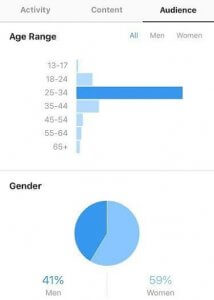
Let’s say, your target buyer persona is an English-speaking male aged 25-34, working in manufacturing and located somewhere in Europe. 

Once you determine your target buyer persona, check your Analytics tabs on social media platforms that you’re interested in using to increase sales. For instance, on Facebook your target audience may look like this:

How to Use Social Data to Increase Sales

And let’s take Instagram for comparison:

How to Use Social Data to Increase Sales

While both social platforms work in terms of age, they are drastically different in terms of gender. Thus, between these two platforms, the best choice would be Facebook. 

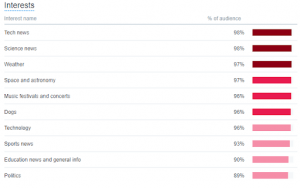
You can also check the interests of your audience to match more points that you’re looking for in a target buyer persona. For instance, on Twitter, social data provides you with extensive information on what your followers are interested in:

How can it help increase sales?

Choosing the right platform to target a buyer persona will increase your outreach and the chances that your brand will stand out more. Audiences on social media platforms are different, so social channels are not universal in terms of outreach. Tools like SocialBoosting can help brands tailor their strategy to match the engagement patterns of their target audience, ensuring more effective reach.

Social data, however, can help you find the right social platform to reach the audience you’re looking for. 

  1. What Content Are You Selling With?

Many brands post regularly on social media and expect their sales to go up, but it doesn’t happen that way. 

Indeed, content can help bridge the gap between marketing and sales. However, the success of your sales through social media depends on content rather than on regular updates. 

Social platforms provide up-to-date social data on the content preferences of your audience, helping you choose the best content type in terms of sales. On Facebook, for instance, you can see the statistics on the best-performing post types as well the how each post performed individually in terms of reach and engagement:

How to Use Social Data to Increase Sales

This social data can help find the answer to the question, which content to use to boost engagement and drive sales. Content is one of the main driving forces for customer acquisition and retention through social media, thus, the choice of the right content type has a significant impact on sales. 

  1. How Can You Increase Your Outreach?

Outreach and sales go hand-in-hand. The higher is the outreach, the better are the sales. The outreach depends on how well your brand is in-line with the current social media trends and tools, and how well you can use them. 

One of the tools that have a substantial effect on outreach is hashtag. The right choice of a hashtag determines the visibility of your brand, consequently influencing the outreach. 

Companies employ hashtags to create hashtag campaigns that go viral. For instance, Flatfy, an international real estate company, did a hashtag campaign with #bootstrap when they were a startup. After several months, they were able to extend to the international market, spreading across Europe, Asia, and Latin America. 

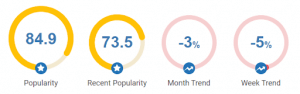
Of course, the choice of a hashtag depends on its performance. The performance of a hashtag is measured with social data that’s updated in real-time. For instance, if you take #tbt, you can see its performance and popularity growth within the period of one week and one month:

How to Use Social Data to Increase Sales

Image credit: Hashtagify.me

You can also get on board with current hashtag trends by adding some of the most popular hashtags to your hashtag campaign. Of course, the choice of the hashtags will also depend on how relevant they are to your brand and your product.

Ultimately, hashtags will help make your brand more traceable, visible, and more relevant, helping more people find you and learn about your product. 

Wrapping Up

Social data doesn’t have a direct impact on sales, but it can help you determine targeting strategies that will help you reach out to the right audience through the right platform with the right content. 

Hopefully, our tips will help you better understand the role of social data in increasing sales and to use it to grow your brand. 

Why Social Network Is a Crucial Part of an Omnichannel Client Experience

Due to the fast development of web technologies today it is almost impossible to find a company that does not use the omnichannel principle of development. This event has affected almost all sectors of advanced companies, which for example led to the mass use of artificial intelligence, as well as a more productive search for employees with the help of HR-software. Thus, this method allows you to analyze much more data than it could.

Social Network Assists You Offer Wonderful Client Service

It’s no secret that social networks occupy a huge part of your customers ‘ lives, so when developing an omnichannel marketing strategy you need to follow clear standards to achieve maximum results. As a rule, sites such as Instagram are an illustration of your brand or product, as customers first of all pay attention to your profile, and specifically to the photos that reflect your brand. In other words, people pay attention regardless of whether your product is placed on the website or not, ie your goal is to give them the opportunity to see the specific prospects of your project.

The key feature of the use of social networks in this area is its simplicity and ease of use. Since a person spends a lot of time on social networks, it is more convenient to contact you there than to go to your site. If you take these arguments into account, it becomes clear that social media is an integral part of the client environment, and more importantly, it allows you to improve the level of service, despite their niche.

Customer Reviews Matter for B2B Brands

According to the TrustRadius resource, most of the decision-makers in the field of b2b (about 60%) do not immediately agree to make a purchase, before that they try to read some reviews. This means that user reviews are one of the most important tools for gathering information about the upcoming transaction. Typically, more than 90% of shoppers are more predisposed to make a purchase based on reviews from sources they trust according to a G2 Crowd study. But the whole resonance is that according to this resource, only about 20% of companies use reviews as a marketing tool.

Potential customers are usually aimed at obtaining p2p information. In this regard, there is a well-managed customer feedback program that allows them to get the information they need before making a purchase. As a result, many b2b brands could gain good competitiveness in the market, as the number of companies using a good feedback program is negligible.

By asking for feedback, you build some kind of relationship with your customers, get interaction, improve your offerings, and find potential topics for some kind of research and feedback. Positive feedback in the future can become an integral part of your social media or email marketing campaign. It follows from this that the more reliable your feedback program is, the more trust your brand builds around itself, which means that customer feedback can play other roles within the B2B marketing program.

It is worth understanding that customers first pay attention to fresh reviews, according to G2, so you should always have an influx of new reviews so that you always have feedback and some interaction with customers, as this is most important to them. Managing multiple review channels, as well as maintaining profitable marketing programs aimed at creating a stable flow of new reviews requires a lot of time and other resources. Based on this, such programs work best within the omnichannel method of attracting potential buyers which in turn uses automation to be more productive.

Social Media Contribute to Existing Clients

Let’s say your product is quite complex and raises a lot of questions for people. In this case, social networks are ideal for providing support and resolving any issues with existing customers. A good bonus is that you do not need to attract new people to your product page, you just need to notify your existing customers about the existence of this group, as well as its advantages and opportunities.

Social Network Helps You Gain Trust

First of all, please note that if you do not have a page in the social network, then, in general, you do not exist. Initially, people always collect information about the company they heard about for the first time. They immediately look through the reviews section of your company and study other people’s opinions, specifically what people say and think about this product or project.

Social Network to Show Your Values

The number of companies using social networks every day is only growing. Judging by this, it can be concluded that companies form a certain ideology, which in turn forms a number of tasks that help solve simple consumer issues, as well as in general has a positive impact on the world.   At the same time, this ideology contributes to the increase of reputation, commercial benefits, as well as the protection of your market position and increase demand, which proves the commercial effectiveness of the use of social networks.

Conclusion

Once your customers feel confidence in your brand, as well as feel the seriousness of your approach to the social network, the result will not be long in coming. Thus, you will create a base of regular customers, and they, in turn, will play the role of promoters of your business, which will further affect the increase in sales and revenues. Social networks will be a great tool for sharing experiences between customers for any business. As a result, we can conclude that you can not talk about omnichannel customer experience until you start to cooperate with social networks. The potential of social networks, as a rule, has no boundaries. You can use them both to increase your brand awareness and to develop your business as a whole.

The Internet is changing in many ways. One of the main trends today is that Internet users want informative and genuine stories, rather than generic, copy-pasted content.

Because of that, every business owner needs to invest their time and energy to create and publish their original content.

That’s why we’ve analyzed various strategies that will help entrepreneurs reach that goal. We’ve selected the five most effective methods in the next five paragraphs.

1. Deeper immersion for higher conversion

The deeper you immerse your readers in your content, the more likely they’ll be to become your customers. So, posting authentic content materials to your website and other places will increase your chances to reach this higher immersion.

In addition to that, it’s important for business owners to engage their readers both personally and empirically.

It’s highly probable that some other entrepreneurs of your level have had the same experiences. The more such stories you share, the more likely it is that they’ll identify will you. Such content bits can help you establish closer collaboration with other businesses.

On the other hand, your potential customers might have had similar experiences in their niche.

Therefore, work on authentic and true examples from your professional experiences.

2. Problem-solving content for your readers

Everybody’s trying to sell someone on the Web today. However, the method you choose to boost your sales makes a huge difference.

If you use too many pop-up windows, email spam, and aggressive ads, you might not get the desired results. It’s important to know that technology is changing the business world in many different ways. One of the most notable ways is that modern buyers know what they want. People of all generations and all nations access the Internet from their computers, their mobiles, and other devices.

All these options have shaped the preferences of contemporary Internet users. In a nutshell, they appreciate getting some tips and solutions to their problems. So, if you offer some tutorials, guides, and DIY-articles on your website, you’ll start creating a trust of loyal followers.

And it’s within these useful, problem-solving content bits where you can offer your products and services.

3. First-person insights from the industry

We’ve already pointed out earlier in the article that first-person experiences have a huge value in this day and age.

Therefore, don’t hesitate to share your personal experiences as a business owner. You can cover different stages of your entrepreneurial development, from the beginnings to the present moment.

Of course, business beginners won’t have too much experience to offer but even this can mean the world to other people in a similar position.

Apart from your tips and tricks as a business owner, it’s recommended to dig deeper into your professional past. Try to remember some challenging situations and how you managed to sort them out.

Moreover, don’t be afraid to talk about your failures. The more realistic your content is, the more readers will be able to identify with it. In line with that, some bitter stories from the past can generate some sweet conversions in the present.

4. One-of-a-kind visuals

There’s no authentic content without proper visual material. Even if you write smashing first-person stories, they need to be accompanied by authentic images and videos.

In line with that, every business owner needs to take photos in various business contexts. From the business atmosphere in the office to business events and products, everything is important. For businesses with a long history, restoring old photos can provide valuable visual storytelling, capturing the journey and heritage of the company.

Apart from that, bear in mind that this is the age of explainer videos. They don’t have to be too long or detailed, but they need to present your business and its services. If possible, shoot real videos with scenes at your business premises, as well as yourself and your employees at business events. It is way easier than one might think as there are tools such as Biteable and many other which offer ready-to-roll video templates. 

As explained by the design experts for custom web application and SaaS development in Houston, your website, your blog, and your app (if you have one) should contain as many genuine visual features as possible. Since the Internet is brimming with generic content, every such business owner will stand out from the crowd. So, being visually authentic is another way to increase your sales and revenues.

5. Engagement in social media

Last, but not least, it’s vital for all business owners and managers to use social media as much as possible.

As reported in the analysis on the Small Business Trends website, as much as 90% of business owners say that their engagement in social media has increased their website traffic. The more traffic you have, the more likely you are to boost your sales.

So, decide what social networks are important for your products and services. Some businesses might use all the social media, while others will focus only on one or two of them.

Use the audience-targeting tools to ensure that the most relevant users see your authentic content.

Also, make a schedule for your articles, videos, photos, and other posts. Your business activity in social media should have a certain plan or schedule. Avoid hasty or impulse posts, especially the negatives ones.

To cut a long story short, use all the original content materials suggested in this article and deploy them to social media to generate more traffic and improve your sales.

Conclusion

Business owners need to be original, authentic, and consistent in their online presence. If you want to generate a loyal and relevant audience, share both your positive and negative experiences with these people.

Also, let them know some of your special tricks of the trade. While this doesn’t mean that you should tell them all your secrets, give them some of your efficient strategies.

Finally, don’t forget to create original and well-edited visual features.

All these elements will improve your chances of increasing your business revenues on the global market.

Many B2B businesses use social media just to be present.

However, just being on social media and regularly putting your content up doesn’t guarantee that your sales will immediately go up.

You may invest thousands of dollars in making high-quality content, and your sales still will be floppy and unstable.

So, what are you missing out on?

The secret is in building strong relationships with your followers/customers/target audience.

In marketing, specifically in customer relations management (CRM), it’s commonly known as social selling.

Social selling is the strategy to develop relationships that become a part of the sales process. This strategy is often applied using social networks and involves:

  • sharing relevant content
  • direct interaction with potential buyers
  • personalization and personal branding
  • social listening techniques (involving user-generated content, influencers, customer support, etc.)

Ultimately, it’s not just about sharing content that’s high in value. The relationships between a business and a potential buyer are multifaceted. It’s all about building a strong connection, and businesses are paying more and more attention to become closer with their customers.

What do the numbers say?

According to Impact, with the reference to several statistics sources:

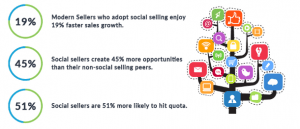
  • Businesses that employ social selling, are able to attract 51% more opportunities than their competitors, and outsell their non-social competitors in the 78% of the time.
  • Companies that use social selling strategies are 40% more likely to hit their revenue goals.
  • 39% of businesses reported that social selling helped them reduce the time they had to spend researching potential leads.

Sales for Life has put together a comprehensive infographic, describing the benefits of social selling for B2B:


Ultimately, Impact reports that 31% of businesses named social selling the main strategy that helped them build stronger and deeper relationships with their buyers.

So, what essential steps should you follow to drive your sales with social media, using CRM and social selling?

Let’s take a look.

1. Automate to Boost Sales

First of all, let’s discuss the technical part of driving sales.

With any social media platform, you’re already targeting thousands if not millions of people, potentially getting thousands of leads. Managing this all without using technology is barely possible, and since social selling is about a personal approach, personalization can be hardly achieved without involving technology.

So, unless you thought ahead when created your online store, and chose a tool with all top popular social media platforms integrated, the first and the most important step is to automate customer relationship management.

At Teamgate, we developed a number of highly effective tools that help businesses effectively manage their relationship with customers on every stage:

  • Collecting leads by converting visitors into qualified leads, grabbing leads from social channels, like LinkedIn, transferring email requests to the Sales CRM as new leads, and even including missed calls as qualified leads.
  • Identifying and organizing leads by prioritizing them more strategically to grow revenue.
  • Managing and accelerating sales to multiply sales and build a highly personalized connection with your customers, no matter where they are located.

Of course, to track the progress, your business will be provided with automatically generated analytics and reports.

What are the benefits of sales automation?

First of all, CRM automation tools provide businesses with a sales dashboard, which helps to keep track of sales activity and progress.

In addition, all contacts are easy to manage, thus, allowing a more personalized approach.

And, of course, you will be in line with your KPIs and sales goals, as automation makes it easier to trace lead opportunities as well as bottlenecks, and other issues.

2. Take Advantage of B2B Influencer Marketing

Now, let’s take a look at the content strategy that performs the best in terms of driving sales on social media.

Of course, you’ve heard about influencer marketing. It’s one of the most versatile content strategies that has helped many businesses to become household names and gain millions of new buyers.

Commonly perceived as an effective B2C marketing strategy, influencer marketing, however, is expected to be one of the most in-demand solutions to help B2B businesses boost sales.

According to Marketing Land:

  • content shared by an influencer can provide a B2B business with 11x higher ROI
  • 92% of businesses who’ve employed influencer marketing say that it’s the most effective strategy when it comes to reach audiences and attract leads
  • that’s why 71% of businesses, both B2B and B2C, invest in ongoing ambassadorships

How are B2B businesses incorporating influencer marketing?

Here’s an example.

Cherwell Software, a B2B company specializing in IT Service Management software, launched the campaign to increase brand awareness, promote thought leadership, and increase sales by targeting more IT companies.

To achieve their goals, they invited 15 influencers – field experts – to co-create content that promotes next-generation IT Service Management solution. As a result, these experts produced blog posts, an e-book, developed a landing page as well as organic and paid content to reach the goals of the campaign.

What’s the result?

Their content, the e-book, in particular, was viewed 170% more than other content, and this campaign was accountable for 22% of all sales during the year.

What’s the place of social media in all this?

It’s well-known that influencer marketing is mostly about social media. Influencers share the content that they co-create on their social platforms. For B2B businesses, this can be Twitter, LinkedIn or Facebook.

By doing so, they help you reach out to more audiences, as they redirect their followers to your business via their content. As a result, you get more potential leads, which you can then convert using CRM automation tools.

3. Go Live

Now, since we’ve discussed the type of content that helps achieve personalization in order to drive sales, let’s take a look at content that can be used for social listening and direct interaction with potential buyers.

They say that there’s no universal type of content for every social media platform. That’s not exactly true, however. “Videos have proven to be effective on every social platform, with 98% of people giving their preference to video content, comparing to only 67% of people who support static content”, says Neightan White, a researcher at TopWritersReview.

Over the past year, live video has become one of the most in-demand content types on social media. Brands regularly go live to communicate with their followers and answer frequently asked questions.

HubSpot, for instance, has been very active on Facebook, regularly going live to cover the latest trends on social media and answer the most asked questions:


Facebook live video function includes a live comment section, where a brand can communicate with the customers, allowing a better connection and a more personal approach.

Will it work for you?

This is exactly the type of content you’re looking for when it comes to CRM and social selling.

People are already loving this content type, as it brings brands closer to them. 80% of consumers have already confirmed that they would rather watch a live video than read a blog.

For B2B businesses, live videos work with the same effectiveness as with B2C brands. This content has a significant impact on lead conversion, bringing you more potential buyers, and ultimately, increasing sales.

Concluding Thoughts

It’s a common idea that it’s harder for B2B brands to have an effective social media strategy. It’s often perceived that B2B brands can only gain new customers and drive sales by taking part in long boring meetings.

This is far from reality, however.

Today, B2B businesses can lead a successful social media strategy that can help them drive sales even more effectively than long boring meetings.

Achieving your sales goals, in this case, depends on your relationship with your followers, who are also your potential buyers. Using CRM automation tools and producing high-quality content that brings value, creates a personalized connection, and allows direct interaction between a brand and a customer, has a significant impact on successfully achieving your sales goals.


A Customer Relation Management (CRM) and the Social Media Management (SMM) tools are a very important parts of the Business to Business (B2B) companies marketing tool. Nowadays, the B2B companies have started to discover that though CRM and SMM are important individually, they are extraterrestrial when integrated with one another.

The social-CRM integration provides with an extensive overview of the relationships between the customers and the organization through the social media. With this, you are able to provide the social content that leads towards the unwavering loyalty of a client. Moreover, with this integration, the sales teams are able to understand the customer from a touch point.

Not only that but by integrating the SMM with CRM, the two key databases will provide much better insights into the creation of the marketing strategies. With this knowledge, the complete ROI can be transformed exponentially. Why is that? Because, the larger the amount of data that you can acquire about your prospect, the more you will be able to raise it efficiently, and this leads in an increment in sales and revenues.

The insights that you get with the integration of Social Media Management with CRM are as following:

1. Feel about the Customers

The knowledge you can get about your customer, about the products they prefer, the marketing approaches you can use on them, and the way you can develop your relation with them is important. With the integration of SMM and CRM, you will be able to get the feel about the customer you are targeting. By attaining that knowledge, your sales and marketing teams will generate stronger and better responses from the customer when they know what the customer really wants.

The first thing that becomes prominent with this integration is the image of what the customer wants. Your marketing strategies can be adapted with a little brainstorming regarding the thoughts, opinions, and feeling of the customer.

2. Knowledge about the Customer Buying Habits

  • It is essential for a B2B business to understand what is it that makes the customer motivated to buy something. Each customer has his way of thinking and his personal quirks. The most important things that you will need to know about the customer are:
  • Purchasing speed of the customer
  • The complexity of the customer’s buying decisions
  • Are more than one people contacting about the product
  • With the knowledge of the customer behavior, the current customer relationships can be informed, and the buyer façades can be augmented to engage with the future leads. With the integration of SMM and CRM, you get to see the though process of the client in a prominent manner.

3. Customer Activism

If you monitor the social media, you will get to see how the customers are talking about your brand on a regular basis, on places like Facebook, Twitter, etc. If your product is satisfactory to the customers, they will probably link your blogs to their posts, and that is when you can approach them for case studies or testimonials. With the integration of SMM and CRM, keeping track of these interactions becomes transparent and easy to establish.

4. Sales Intelligence

The buying motivations of the customers are also important factors in order to understand the customers’ needs. The SMM integration with CRM can help in the interactions of the customers regarding the product since its creation till the end. With this, the thoughts and behavior of the client are revealed effectively. With the integrated system, a company will be able to easily identify members of the teams to whom specific projects should be assigned. 

Do you have a CRM that keeps you organised?

The most user-friendly CRM on the market. 14-day free trial.

Start Free Trial

Painless setup, no credit card required

5. Lead Generation

The most important point in marketing is the Lead Generation. When the SMM and CRM are integrated with one another, an abundance of data lies at your feet. With this integration, you will get everything that is needed for generating leads effectively with the proper marketing channels. You will know how the customers interact with the social media, and you can also get the content and marketing collateral that is required to pursue certain leads.

Related: Networking and Capturing of New Leads with CRM

We can deduce from the discussion above that integrating Social Media Management with CRM will provide with richer data, better and extensive marketing and many more sales. It is pretty much basic, the knowledge you can get about the customers and the leads is what helps you in serving them and making conversions and generating a better ROI and revenues. To achieve this SMM and CRM integration is the best solution.

As Teamgate CRM is integrated with MailChimp, all the functionalities mentioned above lead to a better understanding of the insights you receive. We look for ease everywhere we go, and the integration with MailChimp leads to a better CRM environment. Getting to see how the customer reacts to the newsletters and campaigns, the integration of MailChimp with Teamgate CRM, helps you figuring out where you need to make the improvements in order to get the leads and sales. Through the personalization of the messages, and knowing which campaigns to target, you can come to an understanding of the customer’s sentiments and their liking to your services or products. Therefore, integration with any of the social media will help you in retaining your customers and getting new ones as well.

***

If you are not familiar with Teamgate CRM and MailChimp integration yet, try it for free to discover all the functionality!

In the U.S. there are roughly 74.3 million Millennials, representing 23.6% of the population. Each year these people spend approximately $600 billion. You can not afford to ignore millennials in your consumer outreach, period. Even if you’re selling bed pans.

#1: Your business will fail without Millennials – Let Them Know Their Value

If they haven’t done so already, companies have very little time to get a strategy together to engage Millennials as either consumers or employees…or both. Those that can’t will be out of business, as Millennials are unlikely to work  for or purchase from a company they don’t believe in. 

#2 Create a memorable experience with customers

Growing your CRM by creating a positive experience with integrated technology. Capture a millennial’s attention by showing them you’re listening.

Have a two-way conversation with your millennial consumers using online tools, create an insight community using social media platforms.

  • “Understand which issues actually matter to them
  • Get insights on why they switch and their triggers of purchase
  • Improve your community and philanthropic efforts by understanding which issues actually matter to them
  • Focus your promotion efforts by knowing which mediums they use and how often”

#3 Capture a millennial’s attention by showing them you’re listening.

Have a two-way conversation with your millennial consumers using online tools, create an insight community using social media platforms.

  • “Understand which issues actually matter to them
  • Get insights on why they switch and their triggers of purchase
  • Improve your community and philanthropic efforts by understanding which issues actually matter to them
  • Focus your promotion efforts by knowing which mediums they use and how often”

Gen-Y customers expect an answer instantly, anytime, anywhere, to any question, and they aren’t afraid to look for the information they crave.

As technology is such a crucial player in most Millennials’ lives, they will expect it to work hand and hand with any device, anytime, and anyplace.

Businesses need to be able to tap into the tech-savvy expectations of this new generation and weave it into making every day actions accessible through technology.

Millennials are not fans of calling a rep.

Unlike baby boomers, millennials are not big fans of calling a customer service representative. Millennials want to choose how they’re going to communicate with brands, which includes SMS and social. The days of face-to-face communication are over. So make sure that you have other ways to keep in touch with millennials instead of just the phone. Only around 1 percent of the calls that we get to our company are from the millennial generation.

Do you have a CRM that keeps you organised?

The most user-friendly CRM on the market. 14-day free trial.

Start Free Trial

Painless setup, no credit card required

How to Cater your CRM to Millenials

The advent of social media and the proliferation of mobile devices has caused CRM providers to upgrade their offerings to include new features that cater to customers who use these technologies.

Social CRM refers to businesses engaging customers directly through social media platforms such as Facebook, Twitter and LinkedIn. Social media presents an open forum for customers to share experiences with a brand, whether they’re airing grievances or promoting products.

The millennial generation identifies strongly with working for the greater good and making the world a better place. Great, right? 

This isn’t just blabber either – in one study 50% of millennials said they’d prefer to have a lower salary but find a workplace that matches their values, and a staggering 90% said they wanted to use their skills for good.

Just wrap it up with a brief touch on each of the subheadings + ask readers to leave a comment.

Keep an eye on our blog for future updates and tips on how to be a salesperson or how to make the best out of CRM.