Designed for Growth: Scale your recurring revenue with the new Teamgate SaaS CRM. Explore SaaS Features →

Book a demo today and save 50% off your first month, or 20% off your first year.

Get a free sales audit to uncover hidden revenue opportunities!

Imagine this. You’ve finally launched your long-anticipated product to the world. You’ve hired the best hands and have vetted the product as a standard and quality one in its niche.

You have amazing content and all looked fine except the sales. The sales suck and it’s not promising. Let’s stop there. You know how it feels right? A lot of businesses and entrepreneurs are on this table. They have good content and good traffic but no conversion and sales.

There’s no secret in content marketing, what you are missing is a content marketing funnel. According to statistics, While 83% of B2B marketers use content marketing for lead generation, 61% of B2B marketers find high-quality lead generation a top challenge.

Irrespective of what you must have learned about content marketing, you definitely need a content marketing funnel to increase your engagement and boost sales.

Content marketing funnel lets you control what your customers think about your product and also Influences their purchasing decision.

So what exactly is a content marketing funnel? Definitely you have an idea of what a marketing funnel is, if not you wouldn’t be here. But let’s go over it again together.

What’s a Content Marketing Funnel?

A content marketing funnel is a content process that revolves around creating content in a priority and funnel type-order in order to influence customers’ purchasing decisions.

It involves creating content for each stage of the buyer’s purchasing journey from awareness of the problem to the purchase of the product (read: solution)

A content marketing funnel is an essential element of content marketing and a must for every marketer to understand. Definitely there is a good number of posts on the marketing funnel, but I will make this as simple and effective to get you rolling in sales.

Why Do You Need a Marketing Funnel?

Great you asked. What’s the need for a marketing funnel?

Wait! Let’s assume you want to convince your boss or anyone else – do it this way.

“Boss, Have you ever thought of the work of a funnel? Or why’d we needed a funnel when filling a bottle? Definitely, the funnel allows you to fill the bottle without spilling the content on the ground.

If you don’t use a funnel, there’s a high probability that you’ll spill the content on the ground.”

Same thing here. In content marketing, our greatest assets are our content. And we create great content in order to serve our audience and convert them into customers.

But here’s where we got it wrong: we keep pouring them content without taking control of how they digest content and the order of the content. We keep spilling the content all over our customers without a funnel to guide them.

You can avoid the stress and risk of sleepless nights lost to poorly implemented content marketing tactics if you use a funnel-approach.

Here’s what a content marketing funnel does, it allows you to serve your audience the right content at the right time; one at a time.

Instead of just sending your audience disorganized contents, marketing funnels allow you to send them the right one based on their stage in the purchasing funnel. Ultimately, you need a marketing funnel to control the content experience of your audience.

That said, another reason is that you want to control what your customers think about your product. If you’re not feeding your prospects what you want them to think about your product, your competitors will feed them with biased information.

Therefore, you shouldn’t leave your audience in the care of your competitors. Search for your product, and there’s a probability that your competitors are creating content about you.

So if you’re not careful, the brand you spent years to build can be destroyed by negative content marketing from competitors.

So let dive right in.

Stages of Content Marketing Funnel

As expected, a funnel has different stages and as you move down the funnel, the circle becomes smaller and smaller.

For content marketing funnel, the same principle applies. The content marketing funnel has three different stages for your prospects to move through; from the top of the funnel (a big audience ) to the middle of the funnel (a small prospect) down to the bottom of the funnel ( a smaller lead ).

The functions of the three stages are to create awareness, evaluate possible solutions, and prompt purchase of the product respectively.

Top of the Funnel (Awareness stage)

The top of the funnel is the first stage of the funnel where you generate awareness for your prospects’ problems.

Most people don’t even recognize their problems at the top of the funnel while some that do aren’t aware of the gravity of the problem. And as a marketer, your job isn’t just to sell them a product but to educate them about their problem.

Instead of telling your prospects why they should buy your product, you should start by telling them the problem they’ve got.

Sad but true, you need to sell your prospects their problems before a solution. In this 21st century, nobody wants to feel he’s been sold to. But we all don’t enjoy having problems and we wouldn’t spare a dime in solving critical problems.

Therefore, if you’re educating your prospects, dress the problem for your prospects. I’m not asking you to tell a lie. But you should emphasize what the prospects can lose if the problem is not solved.

At the top of the funnel, your prospects are searching for a more general question or problem with a less technical term.

A look at Teamgate’s marketing funnel could be of great help. Teamgate is a sales CRM tool that helps you improve conversion rates and sales.

Here’s an example of the top of the funnel content created by Teamgate.

How to Increase Sales Using the Power of Inbound Sales

Just like you, there are a lot of entrepreneurs, small business owners, and marketers that want to increase their sales. That’s the common word. And Teamgate caters for you at the top of the funnel.

To be frank, a lot of small business owners don’t even understand a Sales CRM tool. Some don’t even understand what it does.

As bad as it hurts, there are existing tools that I don’t have a clear picture of the problem they solve because I have no problem related to the product they sell.

In essence, if you’re trying to sell something to someone like me; start by creating awareness of the problem and assurance that there’s a solution.

However, at the top of the funnel, most aren’t interested in buying the solution. Better put, only a few of them are interested in paying for a solution.

Put in mind that, despite a large percentage of them aren’t interested in buying the solution, you need to be resourceful enough to get the few that are ready to take action down the funnel.

In the end, the top of the funnel is your first impression and the first impression always counts.

Middle of the Funnel (Evaluation)

Here in the middle of the funnel, your focus is on the evaluation of possible solutions.

Here your prospects are aware of their problem. And at this stage, they’re interested in comparing the possible solutions to their problems.

At every stage of the funnel, you need to prove your credibility and authority through your content.

Instead of just believing everything you say, the new age customers are good at researching and evaluating their options.

As expected, they’d confirm if they truly have a problem and if the problem is really what it’s called. Also, the possible solutions.

For Teamgate, the types of content that prospects would be a fit here are Best Sales CRM tools, {competitor} Alternatives, etc.

Definitely, Teamgate isn’t the only Sales CRM tool in the industry. Prospect will look into the other alternatives; comparing their features, reviews, and pricing plans.

At this point, the quality of your service or product will help a lot. But nothing beats good marketing.

Here’s an example of content in the middle of the funnel from Teamgate.

Best Salesforce Alternatives – Why The Top CRM May Not Be for You

Salesforce is a sales CRM tool like Teamgate and definitely one of the leaders in the industry.

And if you’re familiar with the industry, you’d agree that competing against Salesforce will be quite difficult, right? But it isn’t.

Every product has its own strength and weakness. The above content on Salesforce Alternatives is one of the best middle of the funnel content.

Teamgate starts by saying the best and most popular in the industry doesn’t mean the most suitable for your business – which is very true.

You see the difference. Absolutely, Salesforce is not an option for some businesses. Simple.

One thing to note in the middle of the funnel is that you might need to be a little biased.

While the top of the funnel is where you pass valuable nuggets without being promotional, in the middle of the funnel you need to add some promotional copies in between.

Your middle of the funnel must have a way of promoting the good qualities of your product while still promoting valuable resources for your prospects.

Notably, at this stage, your audience is smaller compared to the top of the funnel. But have a higher conversion rate than the top of the funnel.

Therefore, as you move down the funnel; you need to take your audience seriously. Because the more they move down the funnel, the more they become a valuable asset to your business.

Bottom of the Funnel (Purchasing Stage)

Finally, we are at the bottom of the funnel. If at the bottom of the funnel, you still have a reasonable number of prospects ready-turn leads; then you successfully hacked the funnel.

That’s to say, it isn’t easy to keep a larger percentage of the prospects from the middle of the funnel down to the bottom of the funnel – and it isn’t impossible.

At the bottom of the funnel is where you become very promotional and you make everything about your product.

Most of the contents created at this stage aren’t blog posts but website pages. The regular contents are pricing plans, features page, documentation, and landing pages.

However, the bottom of the funnel content isn’t limited to website pages. Creating valuable content on how to use your product is another bottom of the funnel content.

But as said earlier on, each of the stages has sub-stages which depends on the structure of your content marketing.

You can have over 20 different top of the funnel contents or even more than that.

And just as we evaluate the worth of our assets, each of the contents at the top of the funnel isn’t of the same value or position in the chain of conversion – they differ.

In essence, at the bottom of the funnel, you can have content that discusses how to use your product to solve a problem.

As expected, this kind of posts only lays emphasis on your product and nothing else. Your audience at this point knows about your product and must have heard about it, but are interested in seeing the specialties and features of your product.

Therefore, this kind of content is lower in value compared to website pages like pricing plans and features pages.

Other forms of content that worked perfectly at this stage are free trials, case studies, free demo, and onboarding webinars, and checkout page.

Find all the stages of content marketing funnel development in detail below:
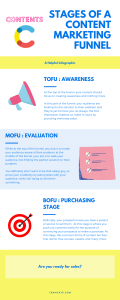
Content marketing funnel development

Hacking the Funnel – Tested Hacks

When it comes to content marketing and funnel hacking, you have to be consistent and focused. Below are some of the proven tips to help you hack your marketing funnel.

  • Diversify your Content Types

As expected, content marketing isn’t all about creating blog posts. There are different types of content ranging from YouTube videos, podcasts, audio, eBooks, webinars, images, infographics, and many other forms.

Your priority and concern should be splitting your content marketing to accommodate essential content types. Rather than sticking to blog posts, enlarge your reach by organizing your content to include videos, images, podcasts, and many more. For B2B sales teams specifically, Sendspark offers an innovative approach by letting you create AI-powered personalized videos at scale—recording a single video and using AI voice cloning to automatically generate thousands of individually tailored versions for prospect outreach.

If you’ve been writing blog posts, start creating videos, infographics, and many more. The content type isn’t the end goal, the end goal is sales.

  • Distribute to Different Platforms

There are a lot of platforms to share your content. We’ve blogs, YouTube, Facebook, Twitter, Pinterest, Quora, Forums, and many more.

Don’t limit your content to your website or blog, spread it as far as you can. The joy of being a content creator isn’t to just have content against your name or brand; it is to see it attract viewers and readers.

The goal should be to get your content to as many people as you can, irrespective of how they get to see your content. It could be by sharing it with your colleague or family, just keep distributing your content; that’s where viral marketing starts.

  • You Need Marketing Tools

Sad but true, you need some marketing tools to scale your content marketing. Without these tools, you can still achieve something. But when your aim is to scale your marketing campaign fast, you need a tool.

For organizing your content marketing funnel, there are a lot of content marketing tools to help you do this perfectly. Each of them has its purpose and the problems they solve.

As said earlier, you need a marketing funnel in order to provide an explicit content experience to your audience. And without the right tool, you’ll be doing hard work.

Here are some essential tools that you might be interested in if you’re on a tight budget.

  • Audience Research / Keyword Research

Let’s start here. Keyword research tools are software that assists with content curation. We’ve different content marketing platforms that help with automating audience research and content creation.

Examples of content marketing platforms are SemRush, BuzzSumo, Ahref, and many more others.

  • Communication Tools

Unlike other forms of content, if you’re including a free call or chat to close a deal at the bottom of the funnel; then you’ll be needing a VoIP tool.

Nextiva and GetVoip are one of the best VoIP services in the industry.

Other than a VoIP service, you’d be needing a webinar platform for hosting demos.

  • Sales CRM tools

A sales CRM tool improves the customer relation of a business. Instead of making a one-off sale, a sales CRM tool allows you to cultivate the relationship beyond generating leads and sales to building a loyal customer base that keeps bringing repeat sales and business.

The sales CRM tool simplifies lead generation, contact management, and forecasting giving a detailed report of the performance of your funnel.

Teamgate is one of the best sales CRM tools in the market and a great asset for your business.

  • Project Planning tools

To start with, content marketing is a long term project and requires proper planning to keep going.

You definitely wouldn’t be doing it all alone, I suppose you have a small team for content creation, distribution, and lead generation.

A project planning tool lets you assign different tasks to your team members and also track the progress of the project.

Stop Spilling Your Content – Use a Funnel

Finally, building a marketing funnel is a necessity for any business that wants to take over their sales.

If you’re concerned about your customers and your business, then you need to learn the art of strategic marketing via content marketing funnel.

I’m happy you made it down here. But, I’ll be happier if you stop spilling content all over the ground – please use a funnel.

“`html

No one can dispute the competitive nature of sales. In the world of SaaS—where many teams are peddling products that appear similar on the surface—the need for competitive advantage is real.

To successfully make the sale, product quality can only get you so far. SaaS sales teams also need a flexible, dependable infrastructure that enables them to offer and adjust pricing and packaging options that appeal to the specific needs of potential buyers. This means having a flexible product catalog.

Catalog flexibility can inform your understanding of business operations while shaping the customer experience. For the SaaS company that provides both products and subscription services, an agile subscription billing system that offers this kind of adaptability can make all the difference between sales and frustration.

Among other things, you want your billing system to assist your sales team in tailoring offers to individual clients. Sales teams also benefit greatly from your business’s ability to update your catalog instantaneously, bringing products and services to market at the same rate as competitors. If your system is dated, chances are it isn’t succeeding at either.

Below, are several ways of adding catalog flexibility to your billing interface that can give your SaaS sales team that extra leverage.

  • Alignment of Price and Value

It’s integral that your pricing strategy makes sense to potential customers as they consider their features, functionality, and usage needs. The products that your sales team is tasked with moving need to represent a clear value offer, as buyers expect to understand why your charge model is appropriate for the service they’re to receive.

For example, having tailored plan packages for the individual, the small business, the large business, etc. broadens the range of customers likely to see themselves in your pricing structure. And having the flexibility to offer volume, usage-based, and many other pricing strategies can further align price and value, making it easier for your team to make the sale.

Your catalog should also have the flexibility to easily extend promotions and discounts to attract new customers and handle unique pricing situations. This empowers your sales team to respond with agility to the budgets of customers as well as the offerings of your competitors.

Remember that, while consumers value quality, more than half still consider the price—or rather, the cost of ownership—of a service to be the principle guiding factor in how they make their buying decisions. By ensuring you’re able to keep your catalog offerings competitive in terms of cost, you’ll do much to avoid losing customers to your competition.

Granted, some businesses bring a very straightforward product to market, requiring only that their customers sign up to enjoy a one-size-fits-all experience. Consider the difference between streaming giant Hulu, and the writing software company Grammarly.

While both function primarily on a subscription basis, Hulu ostensibly provides a single service, while Grammarly offers a much more multi-faceted range of products, including consultations with writing professionals among other things. Consequently, the two companies have very different catalog and billing needs, despite both falling into the category of subscription-based services. For subscription-first SaaS companies, platforms like Baremetrics provide the subscription analytics and revenue recovery capabilities needed to understand churn patterns, manage failed payments, and optimize recurring revenue across different pricing tiers.

The specifics of your niche will ultimately dictate the level of flexibility your billing interface, and your sales team requires.

  • Variability of Plans at a Customer Level

Though the products and services featured in your generic plans may prove serviceable to a considerable portion of your customer base, the ability to bend to individual needs and personalize the customer journey can really set your business apart and help your team win sales.

While your SaaS billing software catalog should maintain your more generic plans, using flexible saas billing platforms allows you to override certain catalog rules. This gives your team the ability to customize how each subscription is built on an individual basis-essentially offering a unique catalog to each customer

With the ability to change how your offers behave for each customer subscription, and the technical capability to override elements like pricing, quantity, entitlement, and discounts, your sales team will be able to create unique subscription offers that won’t become a nightmare for your customer service team once they become active.

  • Speed to Market

The pace of business is unrelenting. If you can’t keep up with market fluctuations and consumer demands, you’re sure to be outperformed by someone who can. In the most extreme cases—such as a very sudden dip in the economy, or even a global pandemic—it’s the businesses that are able to adapt on the fly that will be most likely to weather the storm.

Ideally, your business should be able to quickly update its catalog with relevant new pricing and offerings in a matter of minutes—without support from developers.

For SaaS companies that also rely on visual product presentations, using a flipbook catalog can further enhance agility, allowing marketing and sales teams to update and distribute interactive catalogs in real time without developer involvement.

In being able to operate at this pace, your sales team is empowered to respond to external factors at the drop of a hat, updating their strategy to account for previously unforeseen variables.

Catalog Flexibility is the SaaS Sales Gift that Keeps on Giving

It’s important to keep in mind that, while you might not have upgraded your billing and catalog infrastructure yet, chances are some of your competitors have or are well on their way to digital transformation.

An up-to-date billing capacity doesn’t just automate many of the more banal aspects of your working day, it also helps ensure that your sales team isn’t losing ground. And the one-size-fits-all approach that antiquated billing platforms often necessitate isn’t suitable to the sales team hoping to meet customers at their level to provide products that truly are catered to their unique needs and situations. By updating your billing platform for improved catalog flexibility, you broaden your business’s appeal and add numerous tools to your sales team’s belt.

Don’t underestimate the growth potential catalog and billing flexibility can provide. Agility in these areas doesn’t just allow you to turn on a dime, it also enables you to consolidate and analyze data to help you identify subscription sales trends within your business. This information can be used by your sales team to further understand the wants and needs of the marketplace and chart their future strategies.

Your company’s billing platform and catalog flexibility are assets that scaffold, permeating into many aspects of your business, keeping you competitive, adaptable, and scalable for the future.

“`

Search engine optimization (SEO) is what separates top-performing bloggers from the crowd of less successful authors, but it’s not as difficult as it may seem at first. You don’t need to be an optimization expert to learn and apply a few practical tricks and make your blog easily discoverable.

This is very important because 93% of all traffic comes from a search engine, whereas 60% of clicks go to the top three websites. So how exactly do you improve the SEO strategy? Here are eight simple blog SEO tips to create a post-Google and readers will love. 

1. It all begins with keywords

Keywords represent a fundamental aspect of SEO, so the first tip is to find the most relevant phrases and search terms for each article. You should go for it all – keywords, synonyms, longtail keywords, and all the other solutions that guarantee a higher ranking. Always use research tools such as Google Keyword Planner to identify the best options and analyze the following features:

  • Difficulty score
  • Keyword length
  • Search volume

For instance, Dissertation Today and custom essay know they need to use keywords like “essay papers” or “dissertation writing” to approach their target audience. You have to know the search intent of your target audience as well in order to find the right keywords.

If your content targets a global audience or multilingual markets, it’s important to also consider marketing translation services to ensure that your keywords are appropriately adapted. Companies like Milengo specialize in helping businesses effectively translate and localize their keywords, making sure they resonate with users in different languages and regions. This approach ensures that your SEO efforts aren’t limited by language barriers, allowing you to connect with international customers more effectively.

2. Use meta tags cleverly

Meta tags are short previews of the original post that describe the purpose and the content of a given page. They are visible to search engines and serve as one of the most influential ranking factors. Here’s what you need to pay attention to:

  • Title tag: It appears at the top of the browser
  • Meta keywords: These are the keywords you are targeting
  • Meta description: It’s a brief description of your post

3. Write attractive headlines

Do you know that 80% of readers never make it past the headline? It’s a mind-blowing figure that proves the importance of writing a perfect headline for each blog post. Your job is to come up with a title that is humorous, thought-provoking, intriguing, or simply interesting. 

Another very common solution is to write up-to-the-point headlines that clearly show what the post is all about. Most people love listicles, so don’t hesitate to use numbers in your headlines as well. 

4. Write standout articles

SEO is a rather technical process designed primarily for search engines, but don’t forget that you are writing for real people. Google and other engines will always appreciate high-quality articles that really inspire readers and solve practical problems, so you better make sure to combine the two principles all the time – quality writing and content optimization. 

5. Mind the structure

This tip goes hand in hand with the previous one. Namely, even the best article will look strange and silly if you don’t structure it properly. It means you ought to use a heading hierarchy with lots of different chapters. How come?

Well, the idea is to create a structure that is easy to skim and scan. Most readers will run through the text quickly, so you definitely want to highlight the most important messages using headings, subheadings, whitespace, bolded keywords, and similar.   

6. Add internal links 

Bloggers tend to neglect this SEO tactic gets way too frequently, but you don’t want to make the same mistake. Relevant internal links will support your statements and encourage visitors to spend more time on your website. 

7. Write a good alt text for images

According to the report by academic writers online from research paper writing service, images are returned for 34% of search results. A lot of people will search for images and end up finding your blog post, but it can happen only if you write a proper alt text for your photos. In other words, you should write a description that clearly explains the content of the image and use keywords to solidify the alt text.

8. Increase page load speed

The last tip on our list is to make your site super-fast. The worst thing you can do is to let visitors wait for your pages to load for too long, so it’s crucial to increase the technical capabilities of your blog. A tool that can help you solve the issue is Pingdom, a simple platform with powerful page speed monitoring. 

Up to You!

SEO is a complex concept, but all it takes is to use a few basic rules to make your articles stand out. We showed you eight simple blog SEO tips to create a post-Google and readers will love. Now it’s up to you to make a move and earn your post the first page in search engine ranking!

Don’t you feel good about a tool that analyzes your customer data by itself, drives insights from it, works on those details in real-time, and streamlines the given strategy unswervingly? Thankful to marketing automation. It does exactly the same!

Marketing automation optimizes your communication efforts by reducing monotonous and time-consuming tasks and thereby helping you in the right utilization of time and resources. From customer procurement to loyalty marketing, it helps your brand to perform at a grand scale.

With the assistance of this mechanism, you would now be able to convey a focused message across client fragments, making coordinated connections conceivable in the advanced space. To put it plainly, marketing automation drives the client loyalty revival.

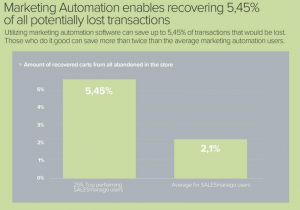
And when you make loyalty as a vital part of your strategy, you will be rewarded with high-value customers at a low cost. Check the graph below that speaks the same.

Image Source: Sales Mango

Other Benefits of Customer Loyalty Includes

  • Customers rarely purchase something different if they like a brand. It includes 55% of older millennials, 53% of younger millennials, and 51% of Gen Z. (Business2Community)
  • 80% of incomes come from 20% of a firm’s existing clients. (Fundera)
  • Loyalty pioneers develop ROI 2.5 times as quickly as their industry peers. (Harvard Business School)

The majority of the leading brands use marketing automation tools to delight the sales leads and hold them throughout their journey.

Apple is the most exceptional example of brand loyalty done right through marketing automation. The average brand loyalty of Apple is 87% across the US and Europe.

The tech giant leads the brands with the most loyal customers. It is followed by other famous names – Amazon, Lululemon, IKEA, Dunkin’ Donuts, and Starbucks. If you are interested to learn their tactics, read on to find out.

Steps to Enhance Customer Loyalty with Marketing Automation Tools

1. Spot Active Brand Advocates

B2B and B2C brands require the support of advocates, who recommend your products and bring in referrals for your business. They will share your brand message with enthusiasm, and will always play a crucial role in its success.

Brand advocacy will help you gain new customers as well as create rewards/incentives for the loyal ones. Marketing automation enables you to track and reach these brand advocates. With social media integration, you can identify those customers who are advocating your product or service.

If you are unsure who is loyal to your brand, fret not. Utilize lead scoring dimensions to recognize the people who every now and then share, comment, or download your content, and then use personalized video outreach with AI-powered tools to strengthen these relationships and encourage further engagement.

Starbucks’ advocate marketing campaign called “Tweet-A-Coffee” allowed customers to purchase a $5 gift card for their friends through Twitter.

Image Source: Starbucks

Clients needed to Tweet the @tweetacoffee handle along with their own Twitter handle. The initial 100,000 individuals joining the program would get a $5 gift voucher.

Outcome:

  • This loyalty program generated around $180,000 in sales for Starbucks.
  • More than 27,000 brand advocates partook in this social event.
  • 34% of individuals purchased more than one gift card, and 32% of the buyingbefell on the first day itself.
  • Starbucks linked 54,000 Twitter IDs of active members to their cell phones and client identification numbers.

2. Personalize the Experience

Marketing automation lets you personalize the customer experience across multiple campaigns, and make your audience feel special at every stage of buying. Especially by integrating CRM with the automated marketing tool, you can provide a stellar experience that’s worth remembering.

You might have spent all your time guessing the interest of your audience. However, it does no good for your business in this modernized world. Instead, you must learn their interest by tracking them across different channels, using tools like web trackers, and analyze their behavior based on clicks. Later, you can prepare content around these analysis report.

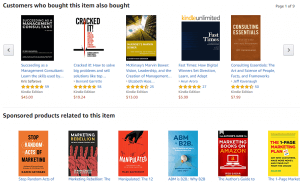
Speaking of personalization, Amazon has been doing it since 2013. I just finished reading a book on capitalism, and my pretty big hobby includes reading. So what does Amazon show me? A list of relevant books! It’s perfect.

]Image Source: Amazon

Amazon uses my purchase history and viewed products to recommend the related items that I would be interested in. Besides, it also uses a shipping address to customize the experience based on my current location.

According to Accenture, 91% of customers are more likely to buy from a brand that offers relevant content and recommendations.

3. Re-engage the Inactive Customers

There are times where even a most loyal customer may abandon your brand for a tiniest of reason. In such scenarios, it is essential to gently remind them about you, or lure them with the offers to reactivate old accounts. You need to use automated tools to identify such customers and nudge them towards taking action.

For instance, if a customer has visited your website, but haven’t picked any product or abandoned the cart, you can automate an email to notify them of:

  • Limited time offer for the discarded products.
  • Remind them of ways to utilize the unused points in their account.
  • Reach out to them on special days, such as their birthdays or anniversary.

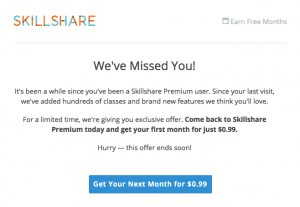
The re-engagement email by Skillshare draws attention to the new classes and features since the last subscriber engagement. They have tactfully highlighted the offer for $0.99 and hoping to push more engagement with loyal customers.

Image Source: Skillshare

4. Analyze Customer Feedback

Seek customer feedback actively rather than waiting for their complaint on social media platforms. This method increases good-will and quickly detects at-risk accounts. Before beginning, segment your existing customer list into separate streams, then ask them how they feel about your product, service, or your relationship with them.

By asking these questions, you will learn more about their unfavorable experiences, and how to improvise it at the earliest stage. Social media automation tools help you garner the online feedback of a large number of audience in a short time. Here, you can encourage shout-outs from your followers, and make them feel how you value their voices. Baremetrics is an example of a platform that captures detailed customer data and metrics to help identify at-risk segments and recovery opportunities.

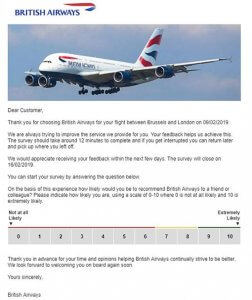
One common example of how to do this is in the confirmation email from British Airways, with a visual scale for their NPS question and a link to a survey that takes 12 minutes to complete.

Image Source: British Airways

It shows how collecting the feedback at the end of the customer journey is an ideal way to try on. Here, travelers can assess their experience and share informed perspectives.

Final Thought

Marketing automation tools will let you successfully execute the customer loyalty strategies across correspondence channels. Right from segmentation to sending custom messages, or seeking feedback to sharing important material, automation tool does it all in a couple of snaps. So, without any delay, utilize this marketing armor and win your battle against competitors.

Today, customer experience defines a brand. Quality, variety, and discounts are important. Yet, they are minor when it comes to customers’ feelings.

According to MarTechToday, by 2020 customer experience will be the biggest factor in brand differentiation. It will leave behind both price and product. So, customer experience improvement remains the top priority for digital marketers. Brands who don’t invest more in it won’t be able to compete.

To deliver outstanding customer experience, it’s crucial to refocus on digital personalization. New technologies have changed a lot in the sales process, except customers. They are still ordinary people who want to be understood and cared about more than anything else. And understanding and care is what brands now need to offer.

Understanding the role of a personalized digital customer experience in sales

The idea of a personalized digital customer experience wasn’t invented yesterday. It’s been part of marketers’ daily lives for a decade. Marketers have learned to send personalized emails, show different landing pages based on location, add chatbots to websites, etc. Those first steps worked for a bit, but not anymore. Not the way marketers want.

Customers are demanding more. They want brands to figure out what they need in less time than it would take them to say it. In fact, customers expect a brand to connect with them as fast as they connect with a brand’s website. To be exact, about 71% of customers feel frustrated when they get impersonal service, according to a 2017 report from Segment. It’s a big issue. Yet, that means even more room for improvement.

Implementing a personalized digital customer experience isn’t cheap. But there is a fact that makes that bitter pill easier to swallow. After a personalized experience with a brand, 44% of customers say they will likely buy from that brand again, according to the same report from Segment.

Yes, a personalized customer experience turns almost half of new clients into loyal ones. As a reminder, loyal customers are responsible for generating about half of business revenue of an average company.

So, how can a brand increase sales by implementing a personalized digital customer experience? Here are five big developments in tech worth looking into.

1. Artificial intelligence

Make customers feel more confident about their choices.

Robots will take over the world. No panic though. There is a simple rule: if you can’t fight them, join them. To start, add artificial intelligence to your marketing routine.

Let’s start with a simple example: It’s been scientifically proven that when someone calls your name, it impacts your behavior significantly. Imagine you’re in the center of a noisy crowd at a rock concert. Suddenly you hear your name. Wouldn’t you turn to the source of the sound? I bet it would grab your attention.

Now imagine you don’t just hear your name but feel chosen and valued. Imagine that someone learned your preferences, likes and dislikes, and principles. They’ve taken care of you and respected your individuality.

An excellent example of a company taking such an approach is a startup called Thread. This young fashion company decided to look at shopping from a different angle. They offer their customers clothes chosen by artificial intelligence.

To get stylish advice customers complete a few forms and answer some simple questions. After that, the “Thimble” algorithm does all the work. Thread emphasizes it takes only three minutes and you’re free from making choices forever. Great deal, isn’t it?


Customers get personalized recommendations they can approve or disapprove every time they visit. Thread’s stylists use this data and the Thimble AI to find styles that match a customer’s preferences and tailor their offers.

At the moment, the company has one million users. Sales are growing by almost 80% a year. And a quarter of the customers shop exclusively at Thread, says Alex Alcott, Thread’s head of brand.

2. Augmented reality

Give offline shopping fans a recent to shop online.

In 2019 you don’t need to go to a regular store to try on hiking boots. You can do it online while sitting cozily on your couch. Augmented reality (AR) improves customer experience by letting them see how shoes look on them or how a new cozy couch looks in their apartment.

Lacoste is already using it. Its app makes it possible to try clothes online and roughly see the look and fit.

AR is an inevitable next stage of retail development. Today, over 70% of customers would rather shop at a store using AR than one without it. And 40% agree to pay more for an item if they can experience it through AR.

In the US alone, the number of AR users will jump to almost 70 million this year, according to an eMarketer report from earlier this year. The same report predicts that number will be around 85 million in 2021.

Any retail operation selling online can’t afford to miss out.

3. Location-based marketing

Make the best offer at the right time.

The main goal of this kind of digital marketing is to show the customer a highly relevant message at the most appropriate time.

Whole Foods proved this method works. In fact, the geo-conquest strategy helps them to increase their conversion rate to 4.69% – three times the national average.

Starbucks and Macy’s use their apps to show the best offers to customers when they are nearby store locations.

When they are getting closer to a store, they can make an order online in advance. They don’t have to wait in lines and can quickly buy exactly what they want with a flick of the wrist.

This feature saves customers time and increases their loyalty. It shows the brand is attentive to its customers’ needs and values their time – a complete win-win for the brand and the

4. Personalized content

Choose relevant messaging and an individual approach over general marketing pitches.

“To make customers loyal, we need to identify their preferences and make the best offer. However, the best offer is not always a product we sell. It also could be a message that resonates with a certain person. Customers want to feel cared about, otherwise, they won’t stay loyal”, says Adam Simon, Head of Customer Service at LegitWritingServices.

It’s crucial to know your customer and be able to make them feel valued and remembered, something that becomes easier when teams rely on a ux research repository to centralize insights. My Admissions Essay, for instance, always addresses its clients by name and tries to collect some personal information about its customers (it can be their cat’s or child’s name, their birth date, etc.). These little touches can, when used in a smart way, can have a big impact. Tools like Sendspark take personalization even further by enabling businesses to send individually personalized video messages at scale, making each customer feel uniquely valued.

There are three levels of personalization that the company uses:

      1. Sociodemographic (age, sex, family status, profession, education level)
      2. Behavioral (email ads based on what a certain customer ordered before)
      3. Situational (ads and promos that are linked to holidays and special events)

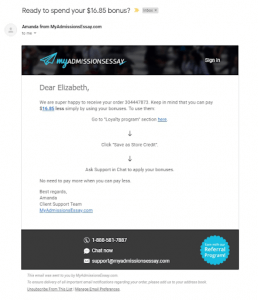
Sometimes it takes very little personalization to achieve better results. MyAdmissionEssay has recently managed to significantly increase the open rate and CTR of their referral program promotion emails. It was decided to add a little bit of personalization to the subject line of the email, as well as to the content of the email itself. As a result, the open rate increased by 28% and CTR by 17%, bringing more repeat orders and more profit. Take a look at how these emails differ.


IBM shares the secret of efficient content strategy. Instead of sending cold emails, they invented amazing personalized content. It is delivered through different channels and doesn’t seem generic.

Let’s say, a customer viewed a sleeping bag in an online shop a few times. But they never made a purchase. In this case, they receive a personally crafted message about the upcoming hike season. Such email or SMS doesn’t trigger negative emotions like when you receive blatant spam. On the contrary, it sounds like a thoughtful reminder to get ready for the season. And, obviously, to come back for the sleeping bag.

Yet, content isn’t just verbal information. For example, Netflix plays with shows posters. Different customers see different posters for the same shows. It depends on their preferences and searches history.

And how does Amazon drive 35% of its sales? They never miss a chance to offer customers a supplementary product. A simple recommendation feature brings them a third of the income.

At first, a personalized digital customer experience may sound like an oxymoron. People have never been so far away from each other. Sure. And that’s why they so desperately lack a personal approach. And surprisingly, the world of technology can give it to them. And even level it up.

Now, to stand out from the mass of product and service providers and increase sales businesses have the only option. Listen. They should listen to their customers carefully. Nothing changed, after all. People still want to be heard. But this time we have modern technology that makes a process more challenging, yet, even more predictable.

Big companies and small startups already proved that personalized digital customer experience rules. So, artificial intelligence, machine learning, and crafted content are going to become digital marketers’ satellites for at least the next few years.

You want loyal clients and higher revenue. Your customers want a personalized customer experience. Connect the dots and do what’s needed.

You’ve heard the tips: every B2B and B2C company benefits from sales CRM. Through this software, you can manage contacts and drive leads through the sales funnel in the most effective way possible.

Collecting and managing user data is a time-consuming task. It’s also not the kind of task that’s forgiving of mistakes. That’s why it’s so important for brands to invest in a top-level CRM tool.

These are only a few of the many benefits you’ll get:

  • Improved customer support
  • More efficient communication between the brand and its customers
  • Automation of repetitive tasks
  • Improved teamwork
  • Insightful reports that help you make business decisions

Essentially, a well-implemented CRM will improve the brand’s profitability.

But it’s not as easy as getting a random CRM tool and using it straight away. You should think about the implementation process. It’s what sets you up for successful results.

Tips: How to Implement a Sales CRM Tool

  • Explain the Tool to the Sales Team

If you get a tool and tell your team to start using it, you’ll get them confused.

In essence, the system is designed to help your sales team connect with the customers in a more effective way. The customers are supposed to get answers to their questions ASAP. The support should be relevant, quick, and problem-solving.

However, the system will come with various details:

  • One aspect will define the team’s goals and activities. You must guide your team through the chart, so everyone will understand how it works.
  • You’ll have to teach them how to use the lead scoring feature. They will need to provide updates on the ongoing sales processes, too.
  • Your team members should also understand the analytics. You can’t expect them to look at a report and intuitively understand what it means.

Once you choose a CRM tool, explain how it works.

It might be a good idea to create comprehensive documentation that covers all your CRM workflows. Whenever they encounter a problem, they will go back to those guidelines and figure out a solution. If your sales team is also using video for prospecting and outreach, tools like Sendspark can integrate with your CRM to enable personalized video campaigns that enhance customer engagement.

  • Take Everyone through a Pilot Run

When you introduce the idea for implementing a CRM tool, the members of your sales team may doubt your intentions. Not all of them will welcome the change. They will be concerned that you’re trying to control them more. Without explaining your intentions, they will assume you’re aiming for micromanagement because you’re not happy with the work they’ve done so far.

So you need to strategize. Right after you explain what the CRM is, you should implement it through a pilot run. It’s an opportunity for your team members to learn how to use the system, analyze the data, and feel comfortable with it.

There will be no warnings and lecturing during this process. You’ll make them feel comfortable through an easy transition.

  • Train an In-House Expert

If you choose a great CRM tool, you will get constant support as a user. That doesn’t exclude the need for you to train an in-house expert, who will take care of all minor issues.

Whenever someone has a question about the tool, they will go to this person. You will introduce them to the tool early on. In the ideal situation, you should connect them with the CRM support, so they will discuss the features and troubleshooting in detail.

The business leader can be this person. But if you don’t have enough time to learn everything about the tool and observe the process of implementation through all steps, it’s best to get someone else trained.

  • Set Clear Expectations

The internal user guidelines should include a few points:

  • How the sales team members can set up a new user
  • How they can create workflows based on a user’s profile
  • How they can document results and figure out what the best practices are
  • What data they should collect
  • What format they should use for representing data
  • How they can collaborate with other team members through the system
  • How they can analyze the data they have and use it to make better decisions in the future
  • How they can input lead information

In other words, you should teach them how to do everything that the CRM allows them to do. However, you shouldn’t present these as features that they are allowed to use. You should set clear expectations around each feature. For example, when you’re teaching them how to set up a new lead, tell them how many leads you would expect from a successful sales team per month. When you explain what data they should collect, give precise points on how you want them to present it in a report.

Your expectations shouldn’t be overwhelming. Give them in small bites and provide a reasonable period of time for your team to get used to them.

  • Set a Clear Date for Going Live

All those preparation steps must come to an end.

You’ll give your team a couple of months to get prepared. It’s a complex tool, after all.

But set the date to go live right from the start. It will give your team a clear target, so they won’t prolong the training process.

Let’s be honest: you won’t implement the entire solution in a day or two. You may face some issues. However, you’ll easily solve them with great support. Don’t be afraid to go live. If your team went through the pre-launch steps with success, they are ready to handle the real deal.

You should be prepared for some negative attitude among your team members. Any change within a company is hard. Your sales team members will heavily rely on a tool, and they aren’t used to it just yet. You should expect some level of rejection but respond to it with optimism and support. Your in-house expert will help a lot with any arising issues.

Don’t Worry; The Implementation Will Go Easy

You get consistent support when you choose a great CRM tool. Its team will make sure that the software blends well into your brand’s sales ecosystem.

Your choice of a tool is critical. It must cover the entire sales process, and it should be easy for your team to use. Of course; it should be affordable, too.

Once you make the right choice, the rest is easy. You will get instructions on how to implement it in the sales team processes, and you’ll get support during the training part.

Get your team excited about this! It’s a tool that makes their work more effective. Everyone benefits from it!