Designed for Growth: Scale your recurring revenue with the new Teamgate SaaS CRM. Explore SaaS Features →

Book a demo today and save 50% off your first month, or 20% off your first year.

Get a free sales audit to uncover hidden revenue opportunities!

Begin with the end in mind. It’s a well-known mantra for many business owners, and an effective mindset when setting visions and helping identify the necessary steps to achieve them. It’s a philosophy that provides clarity, efficiency, and purpose, and can get you to those leads that you never thought were available.

In terms of lead generation and marketing, the “end” would be a working list of potential subscribers who are likely to become loyal customers. This crucial list should give you insightful information into each individual—their name, age, gender, location, purchase history, and other bits of data that you can capture through online and offline interactions.

Think of a business that doesn’t need to do cold calls and direct, hard sales. That’s a business that is probably doing well in terms of online lead generation. They know their target audience, where their subscribers spend their time on the internet, and what types of sponsored ads and materials pique their interest. 

In this post, we’ll walk through the different ways how you can leverage lead generation for your business

1. Learn how to use lead magnets

Offer lead magnets to your potential subscribers in exchange for their email address. You can embed these lead magnets into pop-ups on your website’s homepage or through links on your social media accounts. Businesses often use the following types of lead magnets, which are almost always free-of-charge:

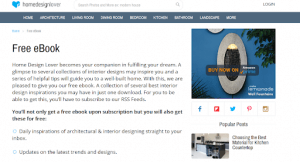
      • Resource kits. Establish expertise in your niche by coming up with a well-written downloadable ebook, podcast, or a small resource kit about what you do. However, don’t make the material all about your specific business and products. Make sure that it’s educational and something that your subscribers will surely enjoy reading. Check out the example below:

Source: Home Design Lover

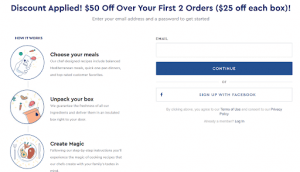
      • Promotions. Coupons are a popular and effective lead magnet, especially if they offer discounts or freebies. As a business owner, you already know by now that customers’ willingness to pay significantly increases with even just a small price slash. Here’s how Blue Apron did it:

Source: Blue Apron

2. Offer gated content.

Gated content is very much like lead magnets, only it can be accessed by providing more information on top of the email address. Sometimes, even though it’s rare, gated content has a cost. 

Gated content is best integrated into email marketing campaigns and may come in the form of more detailed resource materials and bigger discounts. 

Here are more specific types of attractive gated content:

      • Content or subscription upgrades 

If a customer is interested in your product or service, they will likely be willing to pay for something that offers more. Try to identify customers who are frequent readers of your blogs or  regular buyers of a specific product. Let them know you have a better offer or promotion and that it’s on sale today.

      • Whitepapers

A welcome ebook is good source material, but wait until your customers read a full-blown whitepaper about your service. The whitepaper is usually written by the business owner with the help of experts.

Below is an email with gated content:
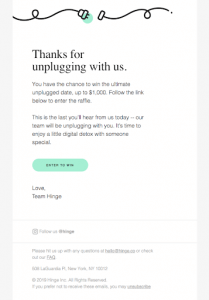
Source: Hinge

3. Monitor your performance.

Who are your closest competitors? Chances are they are also browsing your website, looking at your social media profiles, and analyzing your marketing strategy. Try to be one step ahead of them and offer your potential subscribers something unique and innovative. You can also check out how similar businesses in other countries are doing lead generation, and mimic their best practices (in your own way).

4. Identify website-based tactics.

There are a number of ways to use your website as a lead generation tool. Here are some key reminders:

      • Come up with a visually appealing design consistent with your brand identity and messaging. Use video and audio, if possible.
      • More than design, make sure your website offers as many lead magnets as can be integrated into the website.
      • As an online user yourself, you know that ads can become annoying. Your lead magnets should not all be pop-ups but should be placed in strategic areas where visitors can see them, but they aren’t disruptive. These can be through sidebars, slide-ins, and top bars, or through a dedicated page on your website.
      • Learn how to do search engine optimization (SEO) and how your content can be tailored for the web.

Pet retail store Life’s Abundance used a content slider that visitors can navigate by clicking the left and right arrows or by waiting a few seconds for it to change into the next offer or lead magnet:

Source: Life’s Abundance

5. Personalize, personalize, personalize.

Effective lead generation understands that products and services are not one-size-fits-all. Successful businesses are not afraid to request more information from their visitors to give them a highly customized experience. This will drive more conversions than if irrelevant products were mixed with interesting ones and offered to customers in one go.

For example, energy innovation ecosystem Turning Tables asks visitors to answer a little survey before they can be reached with any inquiries:
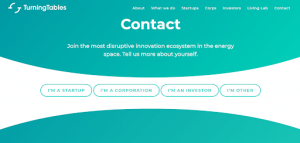
Source: Turning Tables

You can also draft specific trigger emails that will automatically send whenever visitors complete a specific activity, such as signing up for an event, downloading a podcast, or purchasing a discounted product.

Wrap up

If you want to begin with the end in mind and generate as many leads as possible, identify specific and clear goals such as:

  • The number of subscribers you want to achieve within a specific timeframe
  • Feasible sales targets for each month
  • Email open, click-through, and forward rates
  • Type of customers you want to attract

It’s also important for your business to have a feedback and tracking mechanism, so you know which leads are working and which ones need to go. Your teams should also be able to filter out leads that are not cost-effective for your business, even if these are highly appealing and have worked for more well-known brands.

The number of lead generation strategies continues to expand, and many businesses have already explored tactics such as drip campaigns, exit-intent boxes, and referral programs. These tools can be integrated into your overall email marketing strategy, which will eventually increase your chances of acquiring those highly valuable leads and customers.


 

If you’re finding that your website visitors aren’t converting to paying customers, it may be because of your copywriting. It’s important to have a high-quality copy in every single marketing material in a campaign, or all of your traffic and advertising won’t make up for it. The good news is that most copywriting mistakes that people make on their landing pages are quite easy to fix and avoid in the future if you know what you’re looking for. Here are the six mistakes that are probably killing your sales online, and tips to fix them. 

1. Being Too General 

One major problem is trying to appeal to everyone when you should be focusing on a specific target audience. Unless your brand is global and includes everything like Amazon, you shouldn’t be trying to appeal to everyone. It will come across as generic and boring. Instead, you should be writing as though you’re speaking only to your core customers and target clients. If you speak like them and think like them, they’ll find it easier to relate to your brand and are more likely to convert and become loyal customers. 

2. Poor Writing

It might seem obvious to write this, but it’s absolutely critical to review and edit your copy to make sure there are no spelling mistakes. There are so many brands and options out there these days and customers have their pick of which company they’ll go with. Because of that, perception and first impression matters. If your brand seems unprofessional because of its spelling mistakes, viewers will assume the rest of your company is like that – unorganized and low-quality. Take the time to review your work and if editing isn’t your strong suit then you should ask someone else to reread it. 

3. Email Pop-Up with Passive Aggressive Message

These pop-ups are the ones on a website that give you the option to sign up for a brand newsletter. The problem with these pop-ups is when the exit out button says something like “no, I’m not interested in becoming successful.” This comes off as passive-aggressive and will almost always turn off people who were on the fence in the first place. The only result of this overused tactic is that people will think you’re desperate or you have to shame users into subscribing. 

4. Too Much Text

You’ll have so much competition out there, so it’s important that you can gain people’s attention and keep it. As per Nicki Poulson, a sales manager at Boomessays and Best British Essays, “if you have only large blocks of text, your website visitors are unlikely to read what you have to say and will navigate away from the page. If you have a lot of text content, break it up into shorter portions, add infographics and images, and anything else that will make is easier for your users to read through quickly.” 

5. Not Addressing Consumer Concerns

Regardless of your product or service, customers always want to know certain things about it before they commit to something. For that reason, you should make it easy for them to get that information by giving that information out freely. This builds trust and a relationship between the company and the client. You’ll also be saving yourself time since you won’t have to individually answer all these questions. If you’re not upfront with the information they want, they might think you’re hiding something and will turn to a competitor without secrecy.

6. Not Getting to the Point

The human attention span is shorter than ever. There’s also so much content out there. These two facts mean that you must get your point across as briefly and concisely as possible. This doesn’t mean that your writing should suffer or you can’t have your brand voice. It just means that you should be getting to the point without any extra unnecessary words. Short copy is often more appealing and persuasive to people since they’ll actually be more tempted to read it. 

Regardless of your business type, it’s important to use effective copy to boost your conversions and increase sales. By avoiding these mistakes, you’ll be well on your way to a successful copy.

Roll up! Roll up! Roll up! Nothing for sale!

If you’re involved in sales you might have wondered about this for some time.

Every Christmas and holiday season you come across the big name high-street department stores, with half a mile of street frontage, all advertising what appears to be NOTHING in their windows. At least nothing saleable that is.

OK, I agree (after all, I used to work in the business for a long time) the window displays themselves are spectacular, dazzling, traffic-stopping affairs; looking more like a big bucks Broadway production, or the set from a 1940’s Ziegfield Follies movie than a means of selling products. Money seems to be no object with these lavish creations.

So what’s going on? 

Where’s the value behind these extravaganzas which often take more than a year or two to design, plan, and execute?

A brief history of sales showmanship

Believe it or not lavish window displays began in the mid-eighteen hundreds, with the introduction of, wait for it… plate glass. I kid you not.

Suddenly, retail architects had the means to do something they couldn’t do before: to create window spaces that ran the entire length of a city block, places where the owners could visually attract the attention of the passerby in any way they fancied.

And that’s just what they did.

All of a sudden a new band of creative professionals – charged with maintaining the look of these commercial window spaces – appeared on the scene. At the time, they were known simply as window trimmers.

These window trimmers ensured that the products on display were arranged and shown in their most appealing and stylish manner. Many of the trimmers – coming from backgrounds in the arts, theatre, and fashion design – employed ever more creative techniques to appeal to the whims of the consumer. 

Specialist signwriters were tasked with extolling the benefits of the product in ever more fanciful ways. 

Lighting designers ensured the products always looked their best on the skyscraper darkened streets of the world’s major cities. 

Carpenters, painters and other craftspeople created specialist ‘sets’ to complement the season or product type. 

Some of the most famous artists of the day stylised props and backdrops with which to give life to the imagination of the window trimmers. 

Slowly but surely the profession evolved from being purely commercial to what it is today – a multi-layered crossover between psychology, science, salesmanship, retail management, and the arts. 

Visual merchandising was born. 

And then things changed

In 1874 R.H. Macey & Co. become one of the first recorded retail outlets to feature a designated holiday window display. The display was short on product, but high on imagination, playing out scenes from the hugely popular Harriet Beecher Stowe book, Uncle Tom’s Cabin across the entire shopfront and throughout the store’s interior. 

The crowds it drew were enormous and so was born the fiercely competitive battle for supremacy of the Holiday Season Window Display.

Things got ridiculous – and ever more fanciful – as Macy’s battled Marshall Fields, Lord and Taylor battled Neiman Marcus, and across the Atlantic, Selfridges battled Harrods. 

All was fair game, right up to the point in 1958 when Woodward & Lothrop – the progressive Washington DC department store – arguably stole the crown with a seasonal window display featuring LIVE PENGUINS, borrowed from the National Zoo. 

The gloves were off and the results can still be seen each holiday season in every major city around the world.


Window displays, live penguins, and CRM software

The black and white behind penguins and sales

But what have live penguins, winter wonderlands, scenes from a space-age fantasy, or display spaces adorned with nothing more than pure imagination and artistic playfulness got to do with the billions of dollars derived from sales each year?

The answer is simple. LOTS!

Whether you employ sales CRM software, website landing pages, email marketing and cold calling, or trade shows and social media, every business wants to get their brand name out there, recognized, and respected. And, they want to sell.

The truth is that glamorous high street retail outlets don’t really hope to sell diamond encrusted unicorns (as much as they’d like to), life-sized reindeer-drawn sleighs, or even live penguins. What they hope to sell is brand loyalty that spans the generations.

And that’s what you should be doing too.


Window displays, live penguins, and CRM software


Great customer service is your window display

Think of your customer success management strategy as your high street window display. 

Your customer success team is doing the job of even the most creative holiday window display artists, week in and week out throughout the year.

Instead of ribbons and bows, fairytale scenery populated by elves and woodland nymphs, or whims of fantastic imagination, your customer success people are out there every day creating the brand loyalty that you need to succeed.

Traditional window displays might attract prospective customers into your store, but that’s only the start of the journey. 

It’s the one-on-one conversations that they have with your sales and customer success team that get the job done and the cash registers ringing. That’s where customer success management is paramount.

Without the properly trained and suitably tooled human touch, no matter how many visitors you attract to your doors, the product is unlikely to sell itself.

In the busy high streets of B2B selling, sales and customer success teams armed with modern CRM software, are already aware of your customers’ journey, right up to the point of walking through the door of your sales process. 

Thanks to customer success SaaS systems they already know the customer’s background, their pain points, their persona, exactly what it is that’s attracted them to your premises and not your neighbors’, along with a whole lot more. 

That’s way more information than a sales assistant in a high street store is armed with, and the pivotal advantage that gives your people the edge.

Creating a sales wonderland all year round

Modern sales technology like website landing pages, CRM software bristling with tools, features, apps and AI integrations, all go a long way towards attracting the attention of the customer. These are the ‘plate glass’ windows that allow the public to see your product.

But, never forget, it’s the great people you surround yourself with that give your brand the voice that will ultimately attract prospective customers through your doors. 

Your sales and customer success team are the real window displays of your company. The ones who create and nurture the brand loyalty that will see you and product through the years ahead.

Season’s greetings and happy holidays to you and yours from all of us here at Teamgate.

Sales CRM can really help in writing branded content as you are able to store all the personal information of your customers. However, it can also help you reduce costs or save money for your organization. Here are eight ways how you can do this.

1. Work on a Single System

Customer relationship management program of any kind enables you to work on a single system keeping all of your tasks in one place. Various CRM programs can help manage anything from sales to marketing to customer service. However, there’s special importance that the sales CRM bears.

Such a program can help you increase sales and reduce costs simply by being more efficient with all of the tasks you complete. It saves your time and allows you to access everything in one place meaning that you see the big picture while having access to smaller bits right there and then.

2. Remove Duplicate Customer Records

Another great benefit of sales CRMs is that they can help you remove duplicate customer records and save you money this way. Duplicate records are usually the cause of performance problems and even fraud, so once you get those out of the way you will be saving yourself a headache at least.

Sales CRM can help you boost sales by having all of the information in one place and eliminating the probability of you spending money on someone who has been already marketed to before. Lead and customer records must always be kept in check for this to work well.

3. Improve Tracking Mechanisms

This is probably a no-brainer but it is still worth mentioning. Customer relationship management programs can help you improve your tracking mechanisms and, consequently, increase sales and save your money. It’s simple yet extremely effective in many ways.

Sales CRMs help you to track everything from lead status to conversion ratios to FTRs to customer satisfaction. The good news is that your teams from all departments can all work with the program, so your marketing team, sales team, and service team can all coordinate their actions.


4. Streamline the Sales Process

Streamlining your sales process with the help of your CRM is directly related to the first point in this article. A streamlined sales process improves different aspects of your organization including the fact that it can boost sales. You can free the sales rep up and continue pursuing new customers.

As mentioned above, your team can keep track of virtually all the metrics that could be important for you as a part of the personal information about your clients. Everything can be accessed at once on one dashboard meaning that you spend less time, effort, and money on keeping everything in check.


5
. Plan Activities Ahead

While tracking the past data is nice, planning ahead is even better. You can significantly increase sales and reduce costs this way, so it’s very important to acknowledge the usefulness of sales CRM in this way. It is impossible to do everything all at once, so having a comprehensive plan is simply essential to any job.

You can plan as much as a day, a week, a month, or even a year of your future activity with the help of a sales CRM program. Don’t forget to sort your priorities through and pay more attention to the tasks that are urgent or require more time to be completed.


6. Reduce New Customer Acquisition Costs

This is probably one of the best news out of the whole article. Sales CRM can help you reduce new customer acquisition costs dramatically as well as help you boost sales among first-time customers. You always have to remember that new customers are just as important as repeat clients, so they mustn’t be overlooked.

You can close sales much faster and reduce the amount of rework. This is all possible thanks to the smart processes and real-time decision support that CRM programs provide teams with. The result is that your customers are happier and more satisfied with the interaction they had with your organization which leads to word-of-mouth advocacy.


7. Scale Your CRM

Customer relationship management programs are scalable and can grow and develop along with your business. This means that they can directly influence the development of your own organization as well as your business can influence them.

It is crucial to remember that the underlying architecture uses adaptable codes that can be customized for certain business scenarios. And that can be achieved without any additional code writing. You won’t have to spend additional money on increasing your potential. Instead, you might even be able to save up some money and direct it on a more important matter in your organization reducing your budget entirely.


8. Create a Self-Service Portal

Last but not least, your sales CRM can help you create a self-service portal allowing you to boost sales and save the money you need to use elsewhere. Basically, a self-service portal or an SSP is a strategic way that allows you to have a quick turnaround for creating and resolving cases. At the same time, it doesn’t even add any pressure on your contact centers.

Your customers will be able to use various communication touchpoints across the different channels you work with. This will, in turn, reduce person-to-person time, overall customer service costs, and administrative costs. For instance, your clients will be able to apply for financial schemes and be approved almost immediately.

You can also include quick surveys in your self-service portal. These surveys will help you collect feedback regularly and identify areas that must be improved or developed. The sales CRM program can then be used to instantly assign the tasks to the members of your team without losing any extra time. It’s easy, yet many organizations and businesses seem to forget about it.


Final Thoughts

In conclusion, saving money for your organization by using sales CRM is very possible. Use these eight simple ways to help you reduce costs with the help of your customer relationship management program.


It’s no secret, but software and tech’ industries are the clear favourites when it comes to sourcing investment for their startup. See, I told you it was no secret.

In stark contrast, non-tech’ startups tend to be Cinderella-like figures, last to be invited to the ball when it comes to investment funding. But why is that?

One of the main factors behind this is the fact that figures are already resolutely stacked in favour of the tech’ sectors. The history is already there. This can be a disappointing element which disparages investment and involvement in non-tech’ startups. But how does a non-tech’ founder bring their idea to fruition?

Begin, be bold, and venture to be wise  Horace

Firstly, we have to remember one important fact. From the thousands of startups springing to life each new day – both tech’ and non-tech’ – most will fail. And just because your startup happens to be non-tech’ it does not naturally follow that it can’t, or won’t use technology at its core to achieve success. If you don’t believe me, ask Uber, or Airbnb.

successful people

As sure as art imitates life, so does business. Some succeed beyond all expectations whilst other fall flat on their faces. And, it doesn’t matter whether your business is tech’ or non-tech’, people fail; it’s as simple as that.

Business founders and owners who tend to be successful in the non-tech’ world share one thing with entrepreneurs right across the board – they don’t give up. Resilience is the common characteristic shared by all successful people; in business, sport, the arts, and academia.

Being impaired by a lack of technical knowledge can be daunting for any start-up. Especially if you’ve made a decision that your business is going to be non-tech’ orientated, that fear can be even more profound? However, non-tech’ founders who face this fear from the outset tend to stand a far better chance of success and competing with their competitors.

Get it wrong to get it right

If you’re prepared not to give up; I mean, really not give up, if you’re prepared to fail again and again until you’ve mastered what it is you’re trying to do, there’s a very good chance that you’ll eventually master that task. No matter what walk of life you’re involved in, persistence pays dividends, and why should the non-tech’ startup be any different? To put it simply, there’s no reason.

Dream big, work hard, stay focused, and surround yourself with great people

Once again it’s no big secret, but, successful people tend to surround themselves with other successful people. There is a group energy radiated from successful people, an energy which raises all boats and those in them. If you strive to be successful it is the positive energy of successful and good people around you which can help you achieve your goals. But the opposite is also true; surround yourself with negativity and lack of vision and watch your plans and dreams stall and die.

Remember, technology doesn’t have a heart – people do

Don’t let technology cloud your vision, it’s the people around you who really matter. While technology can ease the path it’s people who walk with you on that path; helping you when you stumble and offering encouragement to carry on when all seems lost.

tech startups

It’s better to light a candle than to curse the darkness

It might seem like a pretty obvious thing to say, but you’d be surprised how many people never light that candle. Embrace the problems which come your way. Learn to love them in fact; these are the challenges, the darkness which will make any non-tech’ startup ultimately better and more prepared to compete successfully.

Learn to explore the problems with which you’ve been presented; examine them from all angles and never be afraid to ask for advice. There may be no one clear-cut manner of surmounting any obstacle which can arise, there may be multiple means to realise the required change, so, learn to embrace the problem and explore it until you secure the solution that’s right for you. Try to keep in mind that it may be this specific problem, and its ultimate solution, which presents you with the edge allowing you to shine brighter than your competitors.

Be the absolute best you can be, and then be better

Sometimes it’s possible to bring a product to market that has been done a hundred times before.

Take bread for example: it’s been around for tens of thousands of years but a new variety or brand appears on our shelves every other day. If your business idea happens to emulate others around it, make sure that you offer something which others don’t. Something better, something innovative, or something more appealing to trend, price or society. There’s always room for improvement in everything we do.

Is technology the answer or the problem?

Many startups have no requirement for technology but still manage to bog themselves down searching for technological answers to problems which don’t exist. Some functions and processes are still best performed in the manner in which they have been for years – without the need for mechanisation and modernisation.

non-tech

Examine your process well, and decide the best route for you, your business model, and your product or service. Do not be afraid to go back to basics, attempt to eliminate the need for high-end prototypes or 4D modelling, use the tools at your disposal, with the necessary respect due for your product and your eventual goal. Even with this in mind, you can compete as a non-tech’ company employing technology as a means of delivering your product or service.

Whatever you do, don’t give up

Mr. Steinbeck we have decided not to publish your novel, the seminal American masterwork of the great depression, The Grapes of Wrath.” And so reads a letter from Random House Publishing, the rest is appointed to history. Steinbeck didn’t give up and neither should you.

Yes, dreams get damaged and even broken. Investors walk away. Markets often aren’t ready for you or your product. Whatever life throws at you be prepared to rework your plans, dust yourself off, and get back on that horse. Do not give up!

Sometimes the failures are your fault – fix them

Really great products are born from a need, and through innovative or simple design. If there happens to be a problem with any part of this equation, things are going to get difficult.

However, once a problem has been logged it becomes a necessity to analyse exactly what went wrong, where it went wrong, how to fix the problem and get back on the market as quick as possible. The fact of the matter is that most products never make it to market without some changes to their initial design or marketing plan; it’s just the way it is. Accept it, change and move on to the next stage.

Once upon a time, there was a…

Usually, the first few lines of a story are enough to capture the attention. Those first words grab your interest, engage you entirely and demand you know more. In business it’s your job to be those words; to engage colleagues, investors, and mentors with great storytelling. Leave them wanting more.

Most great start-ups are accompanied by great storytelling. Take Apple’s launch of the Macintosh personal computer with a video directed by Hollywood mogul, Ridley Scott, and set in a dystopian future in the style of George Orwell’s ‘1984’. The advertisement was aired on US television as the last piece of the night on December 31st, 1983. A great story, great timing, launching a revolutionary product, in the most visually stimulating of manners.

For most start-ups storytelling on the scale of Apple is but a dream, but remember, a great story is just that; a great story.

Try to be compelling, to educate, to solicit an emotional response, or to launch a movement or campaign.

Keep it simple and develop a style that suits your start-up and appeals to your customer.

And most of all; tell your story with the passion with which you build your brand.

Do you have a CRM that keeps you organised?

The most user-friendly CRM on the market. 14-day free trial.

Start Free Trial

Painless setup, no credit card required

Here’s something you might really want to take note of – 73% of consumers say they are more likely to choose a business with online customer reviews over a business without them. That’s a pretty valuable piece of information right there and one you should remember if you are trying to solicit a happy customer review. 

Maintaining a glowing online reputation is a balancing act that draws on several factors, but none so important as customer satisfaction. A happy customer will reward your business with a positive review, and that, in turn, will help to propel your sales ever higher and stimulate your company’s growth.

But, even the satisfied ones can forget to leave a customer review, so its vital for you to learn to implement the very best practices for collecting that valuable feedback.

The importance of a good customer review

The value of a good customer review has been proven time and time again, so, if you’re questioning whether they are important to your business or not, the answer is a resounding YES they are! Customer reviews have become vital in modern business.

It has become commonplace for consumers to research a company and its products online before making a decision to buy. To put it simply, it has become a critical part of the modern online buying process. However, the abundance of choice out there has also muddied the waters somewhat and has made the buying decision an even more complex and time-consuming affair. But that’s where customer reviews come in.

To quickly and easily gauge the real value of a product or service prospective customers now prefer to seek out the opinions of those who have taken the journey before them. Research shows that 84% of people trust an online customer review as much as a personal recommendation, and 73% are more likely to choose a business with online reviews compared to those without.

Ignoring the importance of an online customer review can result in a business losing more than 50% of its potential customers; a risk that no smart business should ever be willing to take.

The types of online customer reviews you should not ignore

So, you probably think that one online customer review is just like any other, but you’re wrong. There are different types of reviews, each of which can affect your conversion rates and your bottom line in different ways.

Analysing and categorising customer feedback into differing categories can really help you figure out just where and how to use these reviews to create more value for your company. Let’s take a look at the various types of online reviews and how they can help boost your sales.

customer review freshdesk
Image credit: Freshdesk

#1 Testimonials

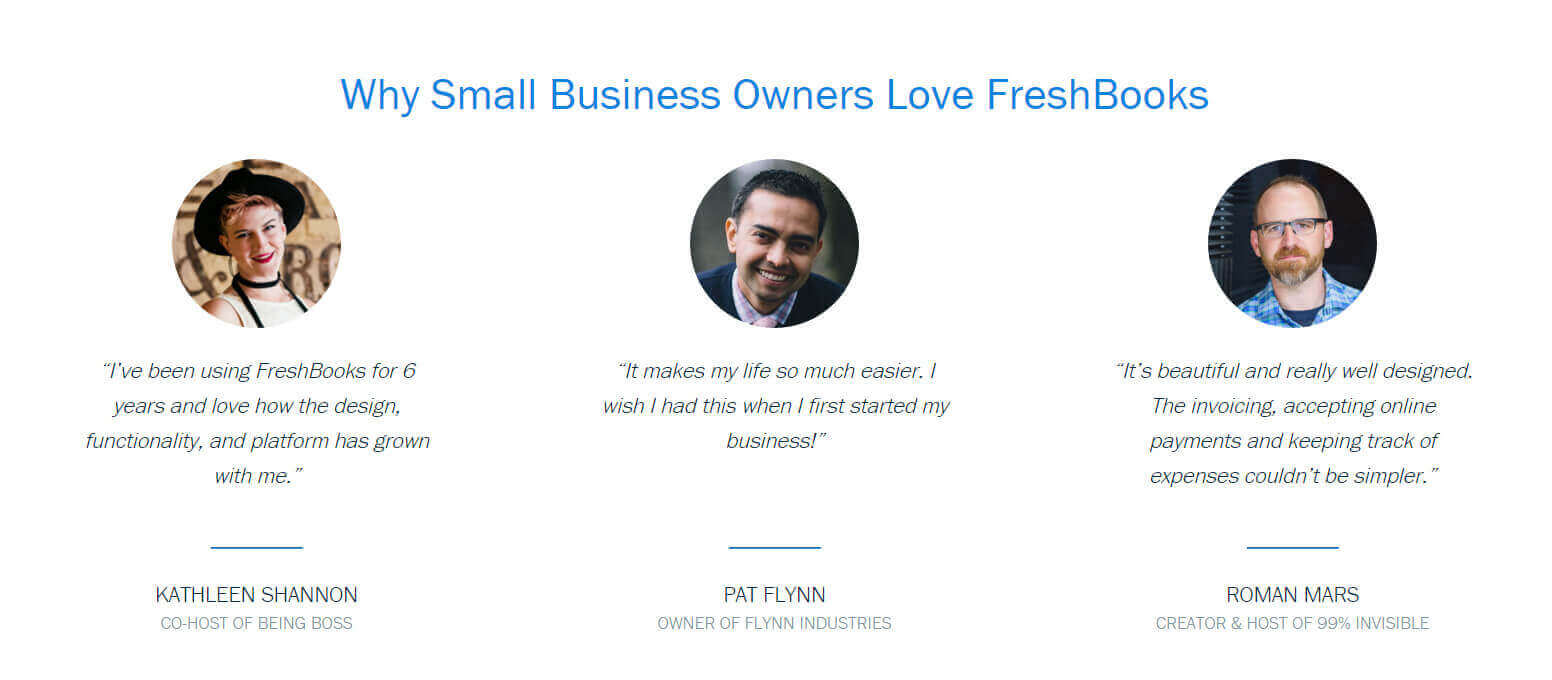
Using testimonials is one of the most effective ways of converting visitors into customers. If you’re trying to establish credibility, real-life customer stories are the method to prove to prospective buyers that your product does exactly what it says on the tin. Testimonials give you the opportunity to use real customers’ words to prove your product claims. When you’re making big promises that concern that quality, durability, performance or impact about your product or service, consider placing a relevant testimonial close to that statement to provide hardcore evidence and establish trust.

#2 Product Reviews

First of all, unique product reviews mean extra SEO juice. Search spiders love fresh content. Adding product reviews to your site will not only help you improve customer experience and boost sales, but will also help grow the flow of traffic to your website. Online product reviews from customers contribute to building your brand’s trustworthiness, allowing new users to feel more comfortable about making their first purchase with greater confidence. Research shows that a single product review can boost sales by 10% and 200 reviews can increase sales by 44%.

#3 Customer Rating and Customer Review Software

What is CRM integration with online review software? By aggregating user-generated content for you, it can be an exceptionally powerful influence on potential buyers. Different tools offer different possibilities, but most of them can do the legwork for you by collecting all reviews and ratings of your product posted online and displaying them on your site. The more reviews a customer sees, the more popular and the more trustworthy the site appears to be. If you are having trouble generating reviews using other methods, this could be the most simple and effective solution.

How a customer review can make or break your business

According to research, site visitors who interact with reviews, and customer question and answers, are 105% more likely to purchase while visiting. These customers spend, on average, 11% more than visitors who don’t interact with user-generated content.

There’s no doubt that customer reviews enable businesses to improve their conversion rates and build a stronger brand. But what happens when the reviews generated by your users are not so good? What impact could they have on your business?

Interestingly enough, various studies have found that bad reviews can actually help improve conversion. 68% of consumers trust reviews more when they see both good and bad feedback, while 30% suspect censorship or faked reviews when they don’t see any negative opinions on the page.

Consumers who are actively seeking out bad reviews are often at the end of their buying journey and tend to convert more fluidly, even if they encounter some negative opinions; so long as their core expectations are met, they are willing to accept the possible risks that may come with their decision.

However, bad reviews must be proportional to positive customer feedback. Negative reviews serve an important purpose by making great reviews more believable, but as soon as the balance is tipped, it can send a business nose-down. Streamlining the process of review collection through tools like Uniqode’s QR Code Generator can help businesses gather balanced feedback effectively. QR Codes can enable seamless feedback collection at physical spaces and provide reengagement opportunities. Let’s say you have 15 product reviews on your site. In such case, you could afford to have 2 negative reviews and they’d still be making a positive impact on your conversions. But more than 2 bad reviews would dampen your sales. To maintain this balance, large sellers on platforms like Amazon often rely on negative review removal services like Tracefuse.

Case studies

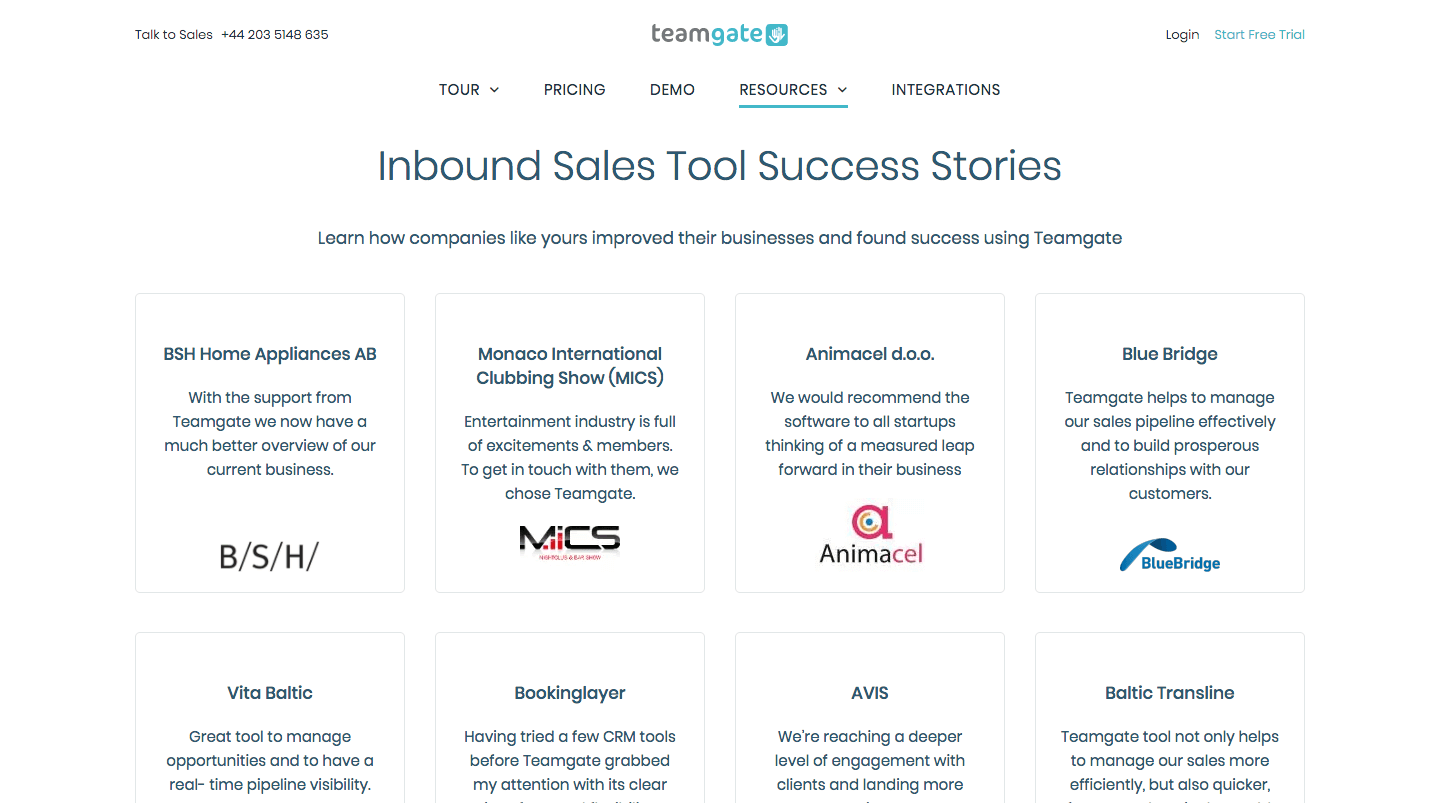
Case studies are yet another form of customer review. It’s a more structured, eloquent way to use your customers’ success stories to fuel the growth of your business. Case studies are geared towards showcasing the key benefits of your product or service, and how they can meet and exceed the customer’s expectations. The element of surprise, the unexpected success that comes from using your product is what makes case studies a secret weapon in every marketer’s arsenal.

customer review teamgate case studies
Image credit: Teamgate

When crafting compelling case studies, it’s key to ensure that you’re using exact words and phrases from your interview with the customer to bring out the authenticity of the experience and strike a chord with the readers. For our own case studies, we aim to highlight the result that was achieved using Teamgate CRM.

As a way of demonstrating social proof, case studies take consumers on a journey from “life before the product” and “life after the product” which can really showcase the rewards to be reaped.

Techniques – how to ask for a customer review

One thing that businesses need to realise is that customers don’t want to leave reviews. To get consumers to review your product or service, you need to create a more compelling reason than the standard “sharing your experience with others” excuse. Once that is figured out there are various techniques at your fingertips.

Post-purchase email follow-up

Sending an automated email immediately after a purchase can help you catch consumers in the right mental state and buzzing from the excitement of buying what they wanted. Amazon excels at this technique; they shoot out emails requesting feedback seconds after the payment is completed.

Enable reviews on product pages

A simple and quick way to engage your customers and aid your conversions is to display review forms on product pages. This could be further enhanced by adding star reviews to accompany customer feedback.

Create incentives for customers

It’s possible that customers are greatly enjoying your product or service, but simply don’t want to invest their time and energy into leaving feedback because they don’t see how that would benefit them in return. Creating rewards for customers who leave online reviews is an effective tactic for increasing engagement. Offering limited-time discounts or coupons could not only encourage your customers to leave feedback but have the potential to help you generate repeat sales.

Take advantage of social media

Using social media to reach out to your loyal customers and fans is a fantastic way to attract more customer reviews. Simply share a link to your product review form calling all customers who bought something recently to leave their feedback. In exchange, you can offer incentives; like coupons, points or vouchers. Sharing existing customer reviews on social media is also a great way to show off your products and spur other customers into action.

Who should you ask for a customer review?  

Reaching out to loyal customers first makes sense for two reasons. First of all, they’re more likely to put in the time to write an online review for you because they like and trust your brand. Secondly, extending a special offer or discount to them can not only get you the reviews you’re after but at the same time give your repeat sales a lift and strengthen the bond with customers that have the potential to become your brand ambassadors. Customer satisfaction is a key metric to monitor; happy customers become your brand advocates and can generate a significant amount of revenue by referring their friends.  

But, if you’re actively approaching customers and requesting them to leave feedback, you should also be prepared for the possibility that some of them may also be disappointed with your product or service, or even angry for not getting what they may have expected. As we’ve discussed before, negative reviews are needed too, yet it all comes down to the ratio of positive to negative feedback that you receive.

Handling bad reviews with grace is an opportunity for your business to retain the unhappy customer and even generate positive PR on the back of it. Take the time to listen to and empathize with the unhappy client. Show that you care and offer to solve the issue the best way you can. This could involve facilitating a return or exchange of the product, offering a discount on a future purchase, or promising free shipping on the next order. If the customer is still unsatisfied, the best thing you can do is learn from your mistakes and move on. Potential buyers will notice and take into consideration the effort you put into accommodating the disgruntled customer. Knowing that the brand doesn’t shy away from difficult situations and strives to rectify its mistakes will make them more comfortable with making the final purchase decision.