Get a free sales audit to uncover hidden revenue opportunities!

Did you know that 71% of sales reps blame their inability to close deals on their lack of knowledge? Yes, knowledge!

So here’s the deal. If you want to master the type of sales techniques that blow up pipelines, make yourself a cuppa and work down this list because what made it is simply dynamite.

Let’s get philosophical: Socratic questioning

“I know that I know nothing” is one of Socrates’ best-known quotes. Perhaps that’s why the remarkable teacher and philosopher, credited as one of the founders of Western philosophy, was so alarmingly skilled at asking probing questions.

In fact, he was so good that a separate method for asking questions the right – Socratic – way was developed. In a nutshell, Socratic questioning is disciplined questioning that is often employed to pursue and explore complex ideas, get to the bottom of things, uncover assumptions, and so on. It’s a systematic, disciplined technique that is based on the practice of thoughtful dialogue.

But can Socrates teach you a thing or two about sales? Doubt him not, the man’s game is still strong.

A sales professional is only as good as his questions. To overcome buyer objections, eliminate wrong assumptions and fears, and craft personalized solutions that solve your clients’ headaches, you must know where it hurts. Simple as that. Can a doctor treat someone if they don’t know the cause of their pain? Well, they can, but it most likely won’t work. Think of the last time you went to consult your GP – did she offer you a spoon of coughing syrup or a shot of vitamin B12 (it’s crucial for a healthy brain, by the way) before you even sat down? No, she didn’t. She asked you loads of questions, and then some more.

To move a lead from the solution-gathering stage to a solid close, a sales person needs to approach the sale methodically, ask the right questions at the right time, and actively listen. Now, it sounds simple, but making assumptions about a client’s needs is a classic mistake. And while the leading salespeople have upped their game with the help of robust CRMs and smart tools, appropriate questioning techniques remain the main gun in their arsenal.

Do you have a CRM that keeps you organised?

The most user-friendly CRM on the market. 14-day free trial.

Start Free Trial

Painless setup, no credit card required

So hear it from Socrates. Here are his five types of questions devised to control the discussion and unlock the truth.

Questions to clarify your clients’ thinking: could you elaborate? Why do you think/say that? What exactly does this mean?

Questions to challenge your their assumptions: why do you think that this assumption holds here? You seem to be assuming that… What would happen if…?

Questions to probe their evidence/reasons: What would be an example of…? Why do you say that? Is there a reason to doubt this…?

Questions to explore their viewpoints/perspectives: what are the alternative ways of looking at this? What if you compared… and…?

Questions to uncover implications/consequences: How does… affect…? What would happen if…?

You will need different questions at different stages of your sales process, but mastering the Socratic technique will give you the means and the confidence necessary to lead conversations towards the desired outcome.

When you’re an expert, and you know it

It’s no surprise that deep product knowledge almost always means more sales. To effectively address clients’ needs and craft tailored solutions, a salesperson must know the product inside out.

If you ask your sales team to describe the value your product or service create, you’re likely to get a whole array of different answers. Some of them will be compelling, leaving you wanting more, others will hardly make an impact. What a salesperson knows about a product, drives how he sells and what he’s able to achieve.

41.3% of sales organizations identified “difficult competitive differentiation” as one of the barriers to success, according to this CSO report. Showing a customer why she should spend her money with you instead of going next door is a crucial step in the sales process. It requires a detailed understanding of the product’s key features and benefits to the customer as well as the ability to recognize opportunities when emphasizing certain solutions is appropriate and beneficial.

When you’re an expert, and you know it

Image Source: Picjumbo

A Richardson Training whitepaper states that “Sales Professionals who prepare and deliver meetings of high value to a buyer win deals 3.6 times more than their peers.” It’s down to the fact that buyers are increasingly knowledgeable about the products they are planning to purchase and only accept meetings or seek assistance from sales reps that they believe can provide valuable insights. In fact, as much as 57% of B2B buyers have done their research and know what product they want before they even speak to a sales rep. This represents a great challenge to sales teams as they’re left with little negotiation room and some serious assumptions to tackle.

To get to a deal faster, you must make your prospect feel that your product is the best solution on the table, refraining from making it a race to the bottom. It can only be possible if you speak about your product fluently, leaving no trace of doubt, and exude confidence and enthusiasm.

Focusing on Value vs. Cost

Practice shows that sharp decreases in prices typically lead to only modest increases in sales. How is that possible? The truth is, customers, want cheap, but not too cheap.

Prices that are significantly lower than the industry standard signal that something is potentially amiss and put customers off. Turning to cost-based pricing with hopes to attract more leads can only be effective if the discounts are controlled and kept within industry norms. Otherwise, your products might be perceived as cheap imitations of your competitors’ produce.

The point of focusing on value vs. cost pricing is that it creates a fantastic opportunity for a company to make healthy margins. Value-based selling is a pricing strategy which sets prices according to the perceived value to the customer rather than the cost of the product.

It’s all about how much your customers are willing to pay for your product and how much they think it is worth. Utpal M. Dholakia, the Professor of Marketing at Rice University, offers a reliable definition of value-based pricing:

“Value-based pricing is the method of setting a price by which a company calculates and tries to earn the differentiated worth of its product for a particular customer segment when compared to its competitor.”

He also states a few important conditions that can make value-based pricing model the right option for your business:

  • It’s targeted to a single market segment. The same value-based price should not be implemented in all segments. Instead, you should focus on choosing a different value-based price for each segment.
  • There is a competitor in a segment.  Expect this pricing model to be effective only if your target audience in that segment have an alternative, i.e. a product from your competitor. The value of your product will be determined based on your competitor’s product. If there isn’t one, the value-based model won’t work.
  • The differentiated feature is unique. The feature can only be available in your product, and you have to understand its perceived value to the customer.
  • Assign a monetary value. Now that you understand the differentiated value, it’s time to assign a monetary value to it and determine the final product cost.

It sounds great and all, but value-based pricing can only be successful if there is full support from a sales team. If a salesperson is unable to explain the value to the customer without justifying a higher price with higher costs, then it won’t work.

Value-based selling rests on a sales rep’s ability to understand and reinforce the reasons why his offer is valuable to the buyer.

In the classic sales book SPIN Selling, Neil Rackham reveals four phases of successful selling:

  1. Understanding the situation;
  2. Defining the problem;
  3. Clarifying the short-term and long-term implications of that problem;
  4. Helping the buyer internalize how much they need your help, and the ultimate financial and emotional payoff of working with you.

Discovering customer pain points early in the conversation will give you the opportunity to emphasize just how beneficial your offer is and explain its value in terms your customers will understand and appreciate.

Highlight the Opportunity cost

What’s an Opportunity cost? Investopedia offers a simple definition:

“Opportunity cost refers to a benefit that a person could have received, but gave up to take another course of action.”

The value of Opportunity cost in business is in helping decision makers decide which business opportunities to pursue. If the principle is applied correctly, every option gets an equal, fair assessment and the one with the highest ROI or the greatest value wins.

For a sales rep, leveraging the Opportunity cost is a chance to deliver a tailored pitch that addresses the potential client’s biggest concerns and solves unique problems. Making your prospect realize that the value of your product is too great to pass on is a surefire way to close the deal fast. This hugely depends on a sales rep’s ability to highlight the top benefits of a product in a way that proves its superiority over the competition.

Besides that, employing the Opportunity cost can help you tap into the buyer’s feeling of FOMO, Fear Of Missing Out.

Highlight the Opportunity cost

Image Source: Pexels

To invoke feelings of FOMO, marketers and salespeople rely on several proven tactics: creating urgency, cultivating exclusivity, showcasing success stories, and keeping their customers in the loop on the latest offers and product developments. But we’ll cover this in more detail later on; let’s come back to the Opportunity cost.

Although a crucial element of a buying process, opportunity assessment does not come naturally to all decision makers. Many tend to make up their minds based on a few criteria, such as budget or the speed of implementation, without scrupulously researching the pros and cons of their decision. Your responsibility as a sales rep is to ensure the prospect realizes the potential opportunity costs when they’re nearing the decision time.

Instead of focusing on “this is what you get if you work with us,” try to stress all the benefits that a prospect will lose if they went elsewhere.

Be generous with your extras and bonuses

Make your offer so good they can’t ignore it.

If you think it’s easier said than done, you haven’t played the “enormous bonuses” card yet. Yes, it does come with higher costs and commitments on your side, but giving your prospects an additional reason to say “Yes, I want it” can make the closing of the deal that much easier.

As a tried and tested call to action, “Buy now to get [insert an offer that matters to your customers]” can help you tip the scale in your favor, especially when a prospect is leaning towards a no. It’s a simple but effective tactic to increase the perceived value of an offer without incurring many costs.

Some of the most popular extras that help to win clients over include:

  • Free consultation
  • Free coaching
  • Free implementation support
  • Free lifetime support

The thing about the word free is that it is incredibly compelling and we irrationally value free things. It doesn’t make any rational sense to queue for an hour to get a free ice cream, but people happily do it. Capitalizing on the power of “free” can help you bring a deal to a close faster, so if you have something interesting to offer – do it!  

Scarcity is your best friend

Scarcity is one of the most effective tactics to invoke FOMO. It’s about how much of something is offered and that there’s never enough of that something to satisfy everyone’s needs due to high demand, limited production, or restrictions on the time or place you can acquire them.

Scarcity is your best friend

Image Source: Picjumbo

Salespeople can take advantage of scarcity to close more deals, too. The best way to create the urgency-to-buy effect is by showing your prospects that if they don’t move now, they will miss out. Limited availability reinforced with a set deadline can be a hugely effective incentive for buyers to make a decision sooner rather than later. Other kinds of incentives a sales rep can offer to a hesitant buyer include:

  • Offering a discount: “If you make a decision within (the next x days/weeks), I can secure an x% discount for you, which will save you x dollars!”
  • Offering special features or higher tier plans. Instead of lowering the price, try to increase the value of your offer. For instance, offer the premium version of your product for the price of the basic plan for a limited time only.

Most people are naturally risk averse. In fact, people would rather avoid loss than acquire gains, which means inducing a feeling of FOMO can yield better results than offering a bunch of free stuff.

Consider, for example, the tactic used by many maturing businesses. When their product grows and improves, and they offer even more value, companies often choose to increase their prices.

Announcing your price increases well in advance to existing customers and hot leads can be a wonderful incentive for them to beat the price increase by making the buying decision quickly.

If you tame the FOMO tactics, getting to a yes will be easier than ever.

Closing thoughts  

The simple truth about closing is that there is no silver bullet. What works with one lead, might be completely ineffective with another. However, the key to nailing your sales techniques every time is in working your leads methodically, monitoring their behavior and learning to recognize certain triggers. It’s much easier to do if you’re using a CRM because it does all the legwork for you, but putting a robust sales process in place can also make a difference.  

So if there’s anything you take away from this article, let it be these 6 lessons:

  • The right questions will help you progress and qualify the leads faster – use the Socratic questioning method to learn everything that can help you close.
  • Be the expert in the room. Your leads might have excellent googling skills, but you have the product knowledge that will help you beat their reservations and match your product to their needs.
  • Understand and reinforce the reasons why your offer is so valuable to the customer.
  • Make your leads realize the Opportunity costs early in the conversation – it’s what they’re missing out on that pushes those buying buttons.
  • Include enormous bonuses and extras to tickle prospect’s compulsion with free stuff.
  • Don’t underestimate the power of FOMO – induce the urgency to buy.

The nature of B2B sales has experienced a seismic shift. And since the world has apparently moved on from the “Always be closing” mentality, some B2B businesses find themselves in a bit of a pickle, scrambling to adapt to the new buyer-seller relationship.

People don’t want to be pitched, qualified, or closed. They want to be helped.

The most successful salespeople these days are living by the “teaching is the new pitching” mantra. Having taken up a more consultative approach to selling, they’re using new tactics to win business and close deals.

A money-making B2B sales strategy is not a miracle. Use these eight practical steps to sharpen your selling prowess and level up your game.

Learn pre-framing

Pre-framing is one of the best-kept secrets of the sales world. Even if you haven’t heard of it, you have most likely experienced it at some point in your life. When successfully mastered, this technique puts salespeople in control, giving them full power to steer the sale the way they want it.

Wonder what this clever technique is all about? In essence, pre-framing is the act of directing someone’s focus in advance and influencing the results you want to get from a particular situation, interaction, experience, interview, and so on. Salespeople achieve that by letting their prospective clients know exactly what is going to happen before it happens and what it is going to mean.

We all know that sinking feeling of having to make a decision when we’re unsure and feel completely out of our comfort zone. The natural response in these types of situations is to step back and reject whatever is causing the feeling. For a salesperson, that’s a lost sale and a lot of disappointment. So to tackle buyer objections and eliminate potential doubts and hesitations in advance, salespeople invoke the pre-framing technique and deal with the challenges while they are either insignificant or non-existent. They set the scene on their terms, address common objections and create ways of pre-framing them to influence people in a positive way.

A simple example of pre-framing in sales can be something along the lines of, “I know you think this is too expensive, but if we could get you a discounted price, would you see yourself using a service like this?”  

What do good frames include? Most often they make situations more ‘human’ by embracing emotion, vision, and ownership. The goal is to make the context more engaging and relatable to make people care about what you’re selling.

You will be able to overcome client objections much easier when you learn how to pre-frame a sales call or meeting. The difference between winning and losing a deal will lie in the story you set up for your customers.

Do you have a CRM that keeps you organised?

The most user-friendly CRM on the market. 14-day free trial.

Start Free Trial

Painless setup, no credit card required

Take advantage of weak ties when prospecting

The strength of your weak ties determines how far you can extend your network beyond your normal reach. In his paper on the strength of weak ties, Mark Granovetter refers to strong ties as your ‘friends’ and weak ties as your ‘acquaintances’. The easiest way to look at weak ties is to think about your ‘LinkedIn’ account. Are all of your connections on LinkedIn strong ties? Do you consider those people friends? Or are they colleagues with who you occasionally mingle? You will most likely find several sets of weak ties once you start inspecting your social media networks.

In sales, weak ties represent the opportunity to greatly expand your reach and increase the potential of finding new clients. And in B2B sales, in particular, connections mean a great deal when it comes to developing and maintaining relationships with clients and winning new deals. Sometimes a friend of a friend’ can be all it takes to land an important client or close a huge deal. Or at least get through the door to be able to pitch a new prospect.

Generally, the importance of strong ties increases as we progress in the sales process. At the prospecting stage, though, weak ties can prove to be of great value. They typically act as connectors to other social groups, opening new worlds of opportunity to hungry salespeople. If we only relied on strong ties, we’d always be simmering in the same juice – talking to the same people about the same stuff. In the social economy world that we live in today, weak ties are critical to getting access to important information early on, finding work, and winning new business.

So when prospecting, tap into your social networks to make those weak ties work for you – don’t be shy to ask for introductions or recommendations; only by extending your reach beyond the first ‘layer’ of friends can you generate new leads and discover new nuances of influence.

Polish your sales script

There are so many no-nos when it comes to writing a good sales script that I’m tempted to jump straight into listing the most common mistakes. A poor sales script would typically entail the following:

  • It’s sketchy about who you are and why you’re calling. The goal is to ‘get through rather than to have a proper conversation.
  • It’s a hideous monolog. Aim to ask lots of questions to connect with prospects early on and avoid talking to people.
  • It paraphrases what the prospect does instead of showcasing your knowledge of their pains and struggles. Focus on telling the prospects how you can help rather than what they do.

B2B Sales - Calling Scripts

Image Source: Pexels

A good sales script can be your best friend, but it can also be your worst enemy if you fail to write one that meets customer expectations. A successful script will always focus on confirming the next step – whether that’s setting up a face-to-face meeting, video call, or email follow-up, rather than pitching on the spot. To put your prospect at ease right from the start, make sure your script answers these questions truthfully:

  • Who are you?
  • Why are you calling?
  • How does the prospect benefit?
  • What are you asking for?

Although a little time-consuming, the best way to make sure you cover the most important points and touch on the prospect’s pain points is to write a personalized outline of what you want to say. Even if the conversation takes a different course, you will always have a clear plan in front of your eyes, keeping you focused on your main goal.

Take a few minutes before each call to research your prospect: their hobbies and interests, any mutual connections, issues and pain points, and so on. Imagine if you went to the same school or are huge fans of the same sports team – that could be a wonderful icebreaker.

Be prepared to face objections and know how to overcome them. One of the best formulas used by salespeople for this purpose is called the Best Friend Formula, which involves three steps:

  1. Relate: demonstrate your understanding.
  2. Bridge the gap: make it easy for them to move forward by offering new information.
  3. Ask again: cement their commitment.

This formula works perfectly if you’re facing objections like “we already work with your competitor”, “call back in x months, this is not a priority right now”, “email me with more information”, and “thanks, but we’re not interested”.    

Related: Stop Cold Calling. Work Your Inbound Leads Instead

Qualify leads

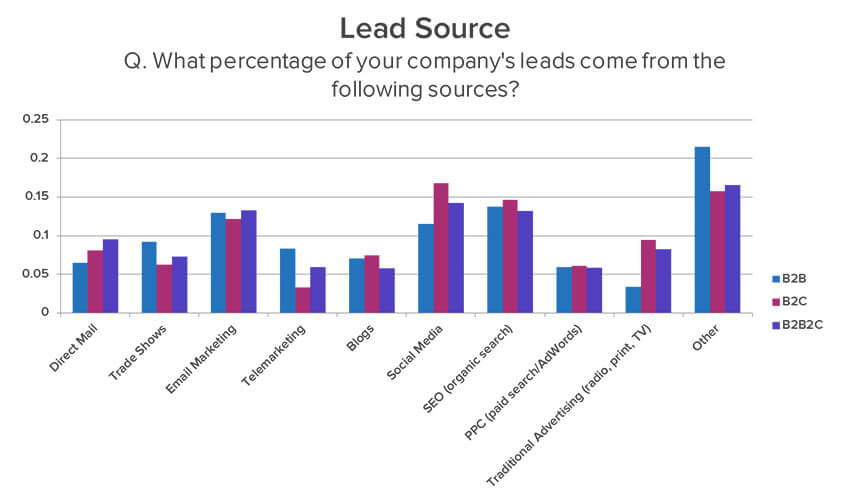
A study by HubSpot found that the best three lead sources for B2B companies are SEO (14%), email marketing, (13%), and social media (12%).

B2B Sales- Qualify

Image Source: HubSpot

However, before you put a lead generation process in place, take some time to think about and clearly define what a “good lead” means to you and your business. It’s best to set specific criteria that will help you identify and qualify leads for your business, as with the vast variety of terms being used to describe the same thing (prospect, lead, suspect, opportunity, etc.), sales and marketing teams often struggle to communicate effectively. Agree on what criteria a lead needs to meet to qualify and stick to that throughout the entire process.

That lead qualification is a vital part of B2B sales confirms these self-explanatory statistics:

Without a robust lead qualification process, B2B businesses would waste most of their time chasing people who are not ready to buy. It’s not only a huge waste of time, money and resources but could also be incredibly demotivating.

BANT is a simple but effective set of questions used by salespeople to qualify leads and move deals forward:

  • What is your Budget?
  • Who has the Authority to make the decision?
  • Do you have a Need for this solution?
  • What’s your implementation Timeline?

It’s also highly recommended to establish a lead scoring system and continue grading the leads until they convert. This way your sales team can focus on the most promising leads and hopefully, close more deals.

Close

A study by CEB showed that an average B2B buyer is 57% through the buying decision before engaging with a salesperson. That’s a massive change since the days when buyers used to rely thoroughly on the information and help from sales reps needed to make a decision. To be relevant and useful in the newly established buying processed, salespeople must find a way how to provide more value and assist customers during their journey.

B2B Sales - Close

Image source: Pexels

That’s why HubSpot insist that BANT isn’t good enough and have therefore given it an upgrade. GPCTBA/C&I is a process HubSpot have developed internally to be used during an exploratory call. Here’s a breakdown of this three-part framework.

  • GPCT (Goals, Plans, Challenges, Timeline). The first opportunity for a sales rep to establish herself as an advisor is at the Goals stage. Ask about their and the company’s goals, priorities for the year and revenue objectives. You want to identify quantifiable goals that your prospect needs to reach and provide help if the goals need resetting or quantifying. The next stage is Plans where you should start assessing the prospect’s plan for hitting their goals and their chances of implementing it. The Challenges stage is where the sales rep should try to seize the day and figure out what keeps the prospects from reaching their goal. This is when you can determine whether your product or service is the right solution for the prospect. Timeline is obviously focused on figuring out timing and determining whether it is the right time to offer your solution.
  • BA (Budget & Authority). Once you finish qualifying the lead using the GPCT approach, it’s time to start talking about how the prospects will make the decision and what budget the money will come out of. Budget is the critical part where you learn what your prospect’s financial capabilities are and whether you’ll be able to offer a solution. Then move on to establishing the decision maker and go through GPCT with them if it’s a different person.
  • C&I (Negative Consequences and Positive Implications). The last stage will focus on establishing your value proposition. Find out what will happen when your prospects reach or don’t reach their goals and how your product can be of value to them.

Use S.M.A.R.T. goals

SMART is a framework developed to help people set goals and objectives more efficiently. It can be highly effective because it keeps everyone focused and on the same page. A SMART goal stands for:

Specific – use clear language to communicate what is expected, why it is important, who is involved and where it is going to happen;

Measurable – the criteria for measuring the progress and reaching your goal should be clearly defined;

Attainable – your goal should be realistic;

Relevant – your goal should matter to your business;

Timely – you should have a clear deadline for reaching your goal.

SMART goal setting is a surefire way to concentrate your efforts on tasks and projects that aid in achieving what you planned. It’s also a great way to identify and work on your weaknesses.

Master your chosen CRM software

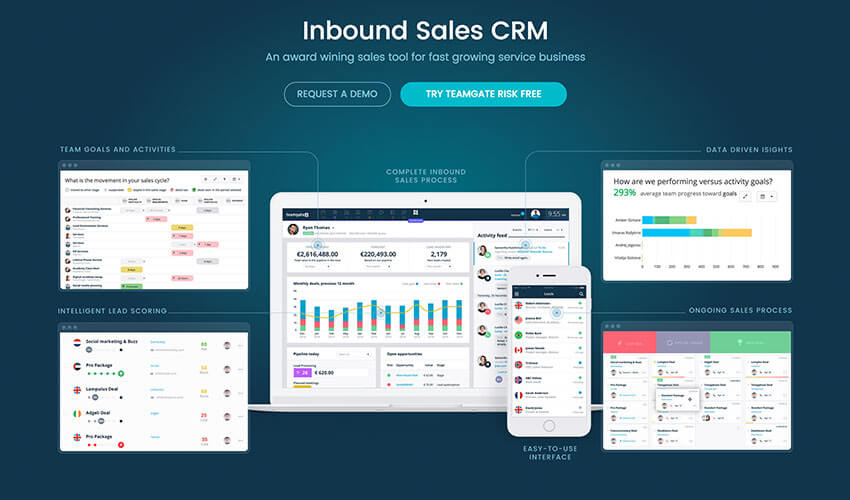
Teamgate CRM

Image source: Teamgate

The B2B sales funnel is a much more complex beast than it might seem at first. The metaphor somehow implies that leads continuously trickle into the funnel and, at some point, eventually emerge as customers. In reality, prospects can get stuck at any stage or drop out altogether never even reaching the purchase stage. For B2B companies it’s often tricky to untangle this all-mysterious funnel and see where their prospects are, how they got there and why. This is where CRM comes in to save the day.

CRM systems help B2B businesses track opportunities through every step of the funnel and replace the guesswork with easily observable and measurable sales processes. By adopting and mastering a CRM software of your choice, you will know exactly how, when and why your prospects travel through the sales funnel and what you need to do to help them progress to the final stage. More visibility over leads and pipeline will keep your sales team up-to-date and in check and more reliable data and reporting will help you figure out which metrics make a difference to your bottom line. The bonus is less admin and increased efficiency (once you reach the CRM master level and actually know what you’re doing). 

Track your ROI and iterate

When you implement a CRM software, lead tracking will be an easy thing to do. This will not only tell you where the leads are coming from, but will help increase sales by directing sales reps to customer segments that are most profitable. Once you have a clear idea of what generates the best ROI, you can focus your efforts on the best performing channels as well as add new ones to the mix.  

Different segments of your customer base will require a different approach, so don’t settle on one-size-fits-all solution. Ensure you’re closely following the buyer journey and catering to customer needs.  

Conclusion

Although we think that more information makes the buying experience easier and motivates the customer to follow through on their purchase intentions, a CEB research shows that customers are deeply stressed, uncertain and paralyzed by the sheer amount of information. To avoid overwhelming your customers with needless decisions, aim to simplify your buying process using a prescriptive approach.

The same CEB study found that ‘a proactive, prescriptive approach increases purchase ease by 86%.’ A prescriptive approach requires businesses to give clear recommendations backed by a specific rationale, present a concise selection of options, and explain the complex parts of the sales process meticulously. Purchase ease is by far the biggest driver of deal quality, with customers perceiving prescriptive salespeople as being more helpful and  keeping ahead of everyone else.

Satisfying customers’ every request for information doesn’t make buying easier. On the contrary, it can quickly get too overwhelming. By mastering pre-framing and taking advantage of your weak ties network, you can also eliminate some obstacles and reduce the buying tension. In this article, we have covered eight practical steps you can take to calibrate your B2B sales approach to achieve profitable, long-term outcomes. Stay tuned for more new age sales advice coming soon!

David Ogilvy, the father of advertising, once said, “On the average, five times as many people read the headline as read the body copy. When you have written your headline, you have spent eighty cents out of your dollar.”

It’s been awhile since he said that but the words still resonate with us. According to Copyblogger, 8 out of 10 people will read a headline, but only 2 out of 10 will read the rest of the article. Imagine, if you could flip this number on its head by boosting your headline’s performance. That would change everything.

Crafting a high-performing headline that is not click-bait but is also incredibly alluring is no easy task. But once you wrap your head around the different creative strategies, you’ll be much more confident about publishing your content to the world wide web.

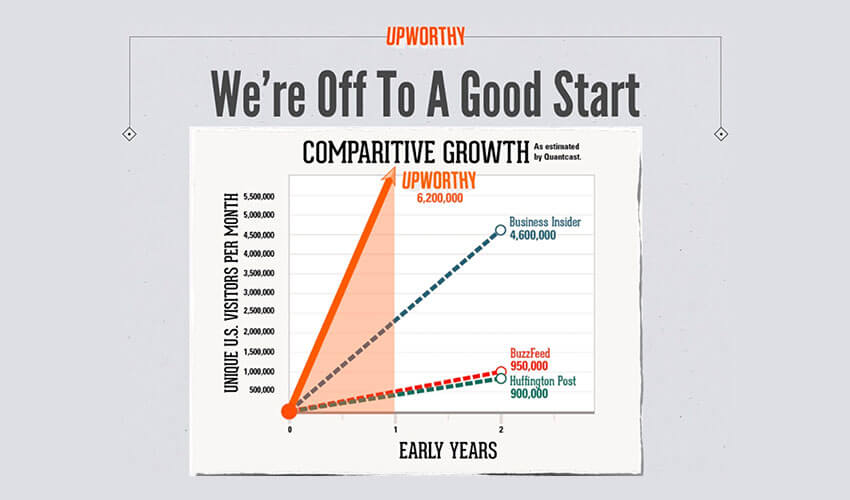
Upworthy.com have demonstrated what crafting intuitive, intriguing and unexpected headlines can result in. The site’s explosive growth is for the most part attributed to the team’s unbeatable headline crafting skills. Yes, the data is real!

Image Source: The Sweet Science of Virality

Now, let’s explore the different ways of writing irresistible headlines.

Use specific numbers & data in your headlines

Numbers are proved to be one of the best triggers to hook the reader’s interest. For several reasons, our brain is attracted to numbers, and we just can’t help ourselves when we see a carefully constructed headline using a numeral.

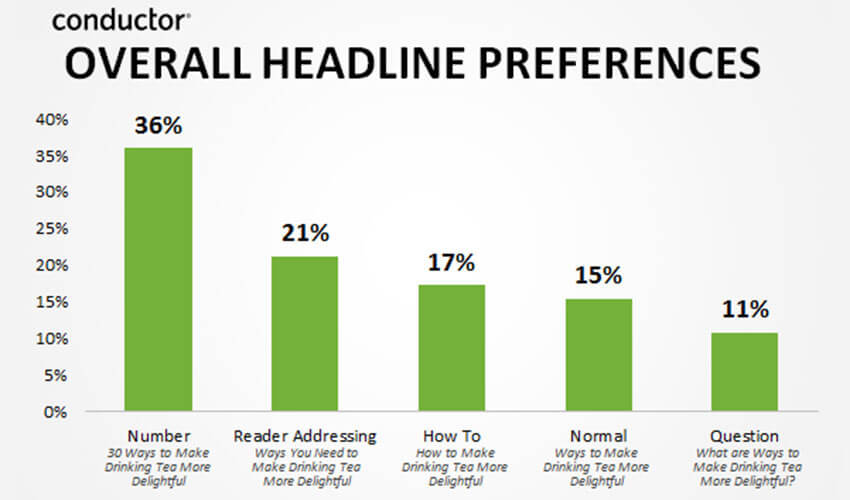
Using real headlines from Buzzfeed, The Huffington Post, and similar content sources, Conductor carried out a study to determine what type of headlines resonate most with readers. They divided the headlines into five high-level types:

  • Regular (Ways to Make Drinking Tea More Delightful)
  • Question (What are Ways to Make Drinking Tea More Delightful?)
  • How to (How to Make Drinking Tea More Delightful)
  • Number (30 Ways To Make Drinking Tea More Delightful)
  • Reader-Addressing (Ways You Need to Make Drinking Tea More Delightful)

What they found confirmed the growing suspicion that numbers are vital to grabbing people’s attention. Number headlines outperformed the second most popular type by 15%.

Image Source: Moz blog

What is it that makes the number headlines so attractive? There is more than one reason.

  • The promise of something substantial. When you’re on the lookout for something specific, and you’re scouring the internet for real advice, there’s nothing more annoying than clicking on a perfect-sounding headline only to find out it has nothing to do with the rest of the article. But number headlines make a promise that the author will offer more than one idea or solution within the article, so the chances of finding something useful are much higher.
  • The convenience of speed reading. Again, if you’re scanning the internet in search of an answer to a specific question, you don’t necessarily want to spend 20 minutes reading the whole article to find one or two relevant sentences. Number headlines suggest that the article is scannable and won’t take too much time to digest.
  • The simplicity of numbered structure. Writing eloquently and making smooth transitions from one point to another is not always easy – ideas can quickly get lost in the babble. Numbered headlines guarantee at least some measure of structure and flow, which gives readers the confidence to click through and easily find what they’re looking for.
  • It’s the preferred way of receiving and organizing information. In this New Yorker article, Maria Konnikova shows how lists hit our “attentional sweet spot.” We process the information we receive spatially because that makes it much easier to recall it later on. That’s why we write shopping lists, and to-do lists the way we do – even if we lose that piece of paper, our brain can still recall the information based on its location on the paper. Besides that,  lists also appeal to our “general tendency to categorize things”. In fact, we’re struggling not to categorize things even when we make an effort to leave something unlabelled.

But what makes lists truly appealing in the current media environment, where people are overwhelmed by the amount of content, is their promise of a definite ending. The alluring and reassuring certainty that we know what we’re in for also triggers the anticipation of pleasure associated with completing a task. So, really, listicles are a sort of brain candy that online readers simply can’t resist.  

[optin-monster-shortcode id=”wqwp7kre2udnzd6c”]

In case the listicle structure is not suitable for the piece of content you’re working on, another click-enticing element you can include in your headline is data. Adding “Backed by research” or “Backed by science” to support your claim can significantly boost the credibility and appeal of a headline. Readers love the promise of solid, evidence-based content that they can trust and share with their network.

Craft a unique headline

Let’s say that a headline is like a tip of an iceberg. These few words will determine whether the main chunk of your content is read or ignored, so don’t feel like you’re wasting your time writing and rewriting headlines. It takes more than a few tries to capture the essence of your article in an irresistible way. And even more so if you’re determined to craft a unique one.

Upworthy.com, who are notoriously skilled at constructing killer headlines, generate more than 3 million unique visits per month. And as insane as it sounds, they credit most of the success to their unique, inventive headlines that poke at readers’ curiosity.

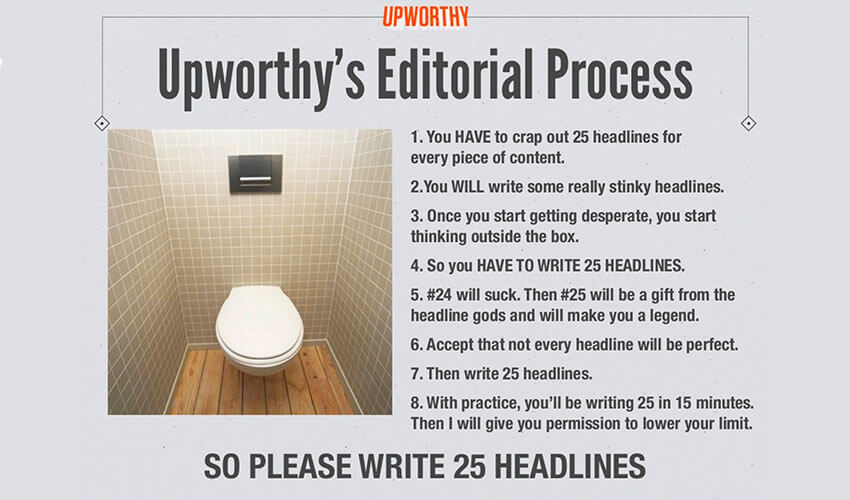
Have I got your attention yet? Good, because the most important part of the Upworthy.com story is this – their editorial team writes at least 25 headlines before settling on the winner.

In their slide presentation The Sweet Science of Virality, Upworthy.com share their creative process and outline the most important steps to crafting high-performing headlines and content. But there’s one idea that keeps on resurfacing:

“It doesn’t matter how good your content is. If you don’t make it compelling enough to click, no one will know it exists.”

And here’s Upworthy’s editorial process that they follow to write really damn good headlines.

Image Source: The Sweet Science of Virality

Jotting down your best (25) ideas is the first step to writing a unique headline. Once you think you have the one, it’s important to verify its uniqueness quickly. Remember, there are no new ideas in this world, so it’s very likely someone’s already snatched that headline before you. The easiest way to check whether your headline is as unique as you think it is is to ask almighty Google. Type your headline in the search bar, enclose it in double quotation marks, hit search and wait for the moment of truth.

Check what people are seeking for

If we go back to the headline being a “tip of an iceberg” metaphor, its relevance and topicality are crucial to tap into trends and capture a decent amount of traffic. To entice browsers to click on your headline you must use the language, style, and tone that’s most appealing to your target audience.

The best way to get a sense of how your audience talks and what specific words they use is by joining the discussion on social media or sites like Quora. Get involved and analyze the type of questions, ideas, and topics being tackled by your ideal readers to ensure the headlines you craft hit the bullseye.

Google autocomplete is also a smart way to identify keyphrases that your headlines need to include. Orbit media suggest that using a colon to combine search-friendly and social-friendly phrases can lead you to the perfect headline, as it gives prominence to the keyphrase but also leverages the human psychology. Here are a few examples of this writing tactic:

  • How to Research Keywords: Tips, Competition, and Squirrels
  • Competitive Analysis Tools: 5 Free Ways to See the Analytics of Any Website
  • Neuromarketing Web Design: 15 Ways to Connect with Visitors’ Brains
  • Internal Linking: 9 Best Practices for Internal Links
  • Ego Bait: 5 Simple Ways to Leverage Blog Mentions
  • Thank You, Pages: 9 Example of Missed Opportunities

Make it targeted and specific

If you want your content to be picked up by search engines, incorporating target keywords into your headlines is a must-do. Follow the best on-page SEO practices when crafting a headline to make sure it’s not only unique but also optimized for search.

When creating content for the web, identifying target keywords should be your starting point. It’s the only way to get in front of the right audience and generate traffic. The trick here is to find the balance between creating something that’s findable and content that’s valuable enough to be sought out by your audience.

To indicate relevance to search engines and give prominence to the target keyphrase, ensure you place it at the beginning of the headline.

Do you have a CRM that keeps you organised?

The most user-friendly CRM on the market. 14-day free trial.

Start Free Trial

Painless setup, no credit card required

Raise a question

The magic of question headlines comes from tapping into your reader’s concerns. With mobile search taking the lead, people are increasingly searching by voice, which means they’re asking complete, full-sentence questions and are using natural language when doing so. Google uses something called “semantic indexing” to understand the content of an article, so if you use a question in your headline and provide a complete answer in the article, chances are the search engine will connect people to your content.

Another huge benefit of question headlines is their power to intrigue the reader and cause their mind to engage in a sort of silent conversation. Once they read a question headline, readers can’t help but try to answer it in their head or start wondering what the real answer is and click through.

Both open-ended and closed-ended questions can increase the effectiveness of your headline, and you can also experiment with the colon trick recommended by Orbit Media to combine the target keyphrase or question that will make it findable with something more appealing to humans.

Create curiosity and urgency

Headlines that leverage human psychology are always incredibly powerful. If you find a way how to trigger curiosity or evoke urgency, it’s almost guaranteed that people will give in and click through. Obviously, your content must match your headline, or you’ll make plenty of enemies very quickly.

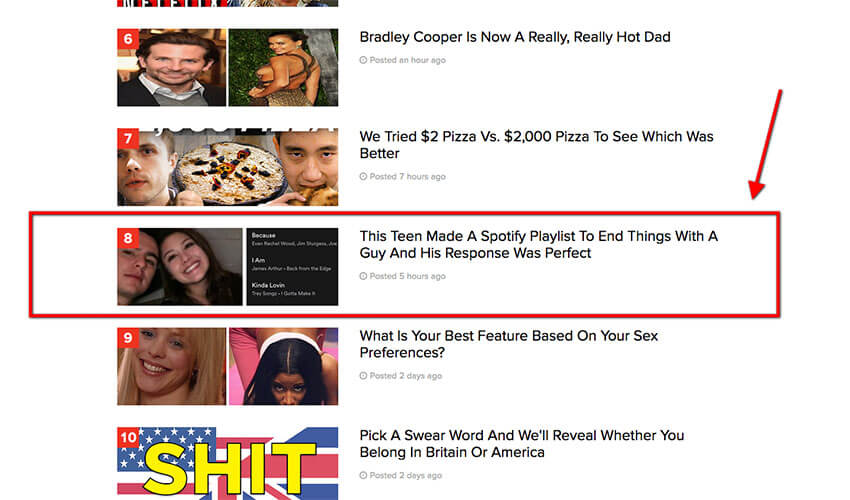
So how do you create curiosity? It’s not a precise science, and there’s no formula how to  hook a reader instantly, but one of the most effective methods is not to give everything away in a headline.

Image Source: BuzzFeed

That curiosity gap will be what drives people to your website and hopefully leads to a sale at some point in their journey (or make them come back for more similar content in the future).

The curiosity-gap approach can easily be overdone though, so stay honest about what your readers can actually expect from the content and avoid any click-baiting games. Lying to your readers will only work once, and then you’re in big trouble.

The urgency factor can be a game changer, too. Nothing makes people act faster than the fear of losing out on a good deal or missing their chance to see, hear or download something that’s available for a limited time only. If you’re making a limited offer, be sure it’s reflected in the headline to compel people to take action immediately.

Focus on benefits or loss

Using a headline to state the biggest benefit or loss your readers might experience is a great way to find and address the right audience. This headline style has the best chance of making a long-lasting impression on a reader even if they don’t click through immediately. Since headline is the hook that will determine whether your content is consumed, it’s a good idea to transform the biggest benefit (or loss) that your post offers into a headline. We’ve already discussed people’s unwillingness to spend more time reading something that they don’t find useful, so writing a headline like this will give them the confidence to click and read.

One of the greatest benefits of this style is that even if they don’t visit your site to read the article, they’ve at least laid eyes on your best selling point.

Use power words

Some words attract more shares and likes; other generate better traffic. Since headlines need to fit a certain length to perform well, word choice is truly critical to squeeze the most out of your headline. A lot of research has gone into determining what words elicit readers and have the potential to drive more traffic.

Employing power words is a surefire method to grab people’s attention and get them excited about reading the whole article.

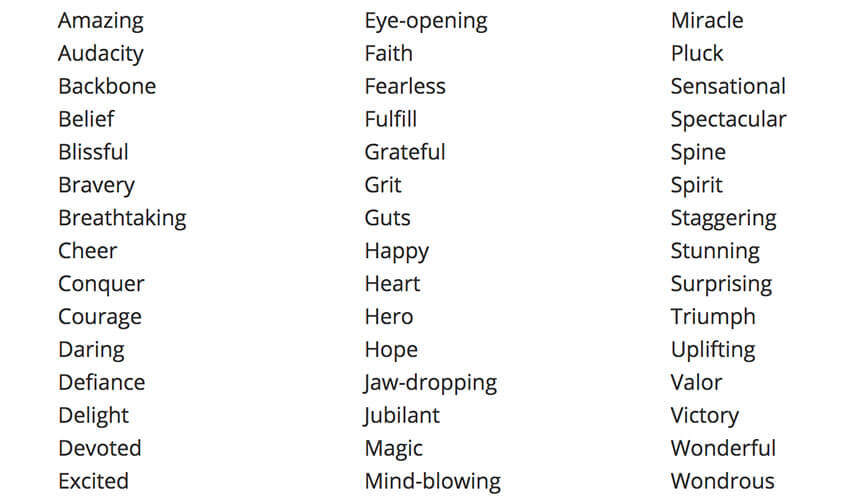
Here are some research-backed power words that have been shown to achieve the best results:

  • Words that increase clicks from search results: why, best, tricks, how to, free, you, blog post, great;
  • Words that get more retweets: you, Twitter, please, retweet, post, blog, social, free, media, help;
  • Words that appear most often in viral posts: smart, surprising, science, history, hacks (hacking, hackers and “life hack” related topics), huge / big, critical;
  • Negative words that are most appealing (negative words that appear in viral posts): Kill, Fear, Dark, Bleeding, War;

Power words are simply emotionally impactful words that can make people cry, laugh or ponder. Charging your headline with a couple of power words will make it stand out more, so spend a few minutes searching for a less commonly used but just as effective combination:

Image source: SmartBlogger

Run numerous A/B tests

As with everything online marketing, testing is an instrumental process that should never be ignored. You may think a headline is too small of an element to run A/B tests on and who has time for that anyway? However, ensuring your headlines are polished to perfection and have the capacity to drive a decent amount of traffic will make your content creation efforts worthwhile.

One of the main tips from the Upworthy.com editorial team was to test the hell out of those headlines that made it to the top of your list and choose the one that clearly outperforms the rest. With the data obtained from A/B tests, you will quickly learn to write headlines targeted specifically at your audience, in the right style, tone and using the right language.

Make a bold statement evoking an emotion

People connect with emotions, not words. Studies have shown that viral content tends to be emotionally complex, often invoking strong positive or negative feelings, such as happiness, admiration, anger or fear. It’s been demonstrated numerous times that people are more likely to click, read and share content that pulls at their heartstrings, so packing your headline with words that elicit feelings will lead to increased virality and reader engagement.

[optin-monster-shortcode id=”rs4shvbsq8bjva7m”]

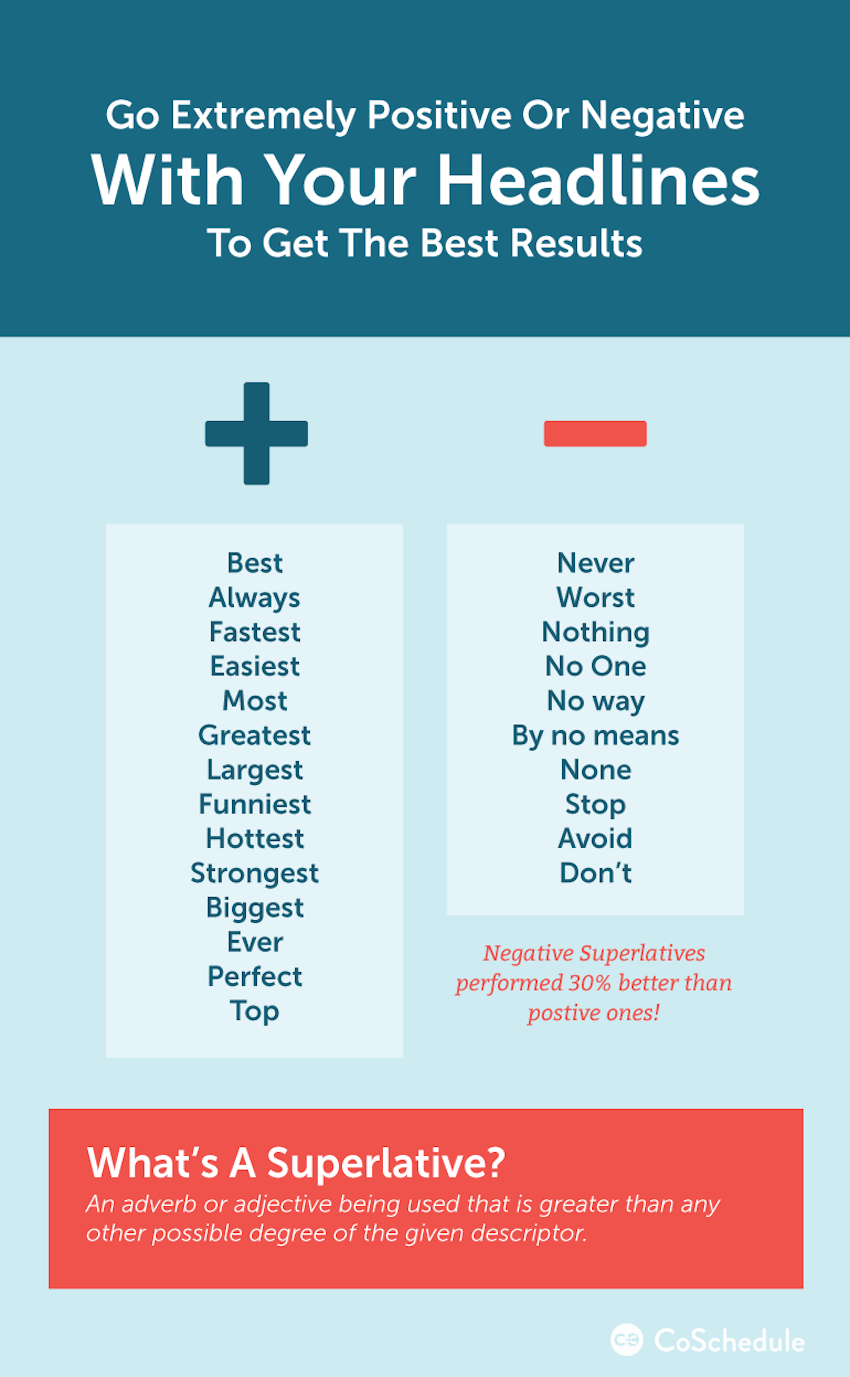
CoSchedule found that negative superlatives performed 30% better than positive ones, but be sure to run your own A/B tests before letting the content out into the world.

Image source: CoSchedule

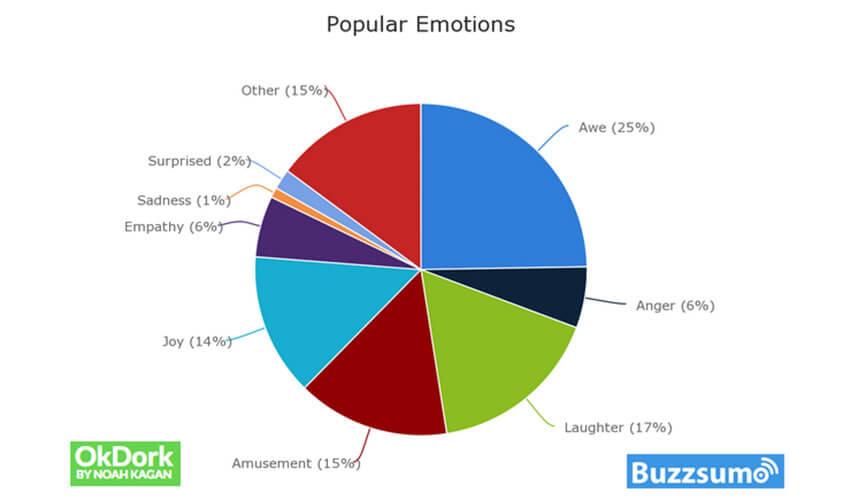
BuzzSumo analyzed top 10,000 most shared articles on the web and used a categorization system to map each color to emotion, like joy, sadness, laughter, amusement, etc.

Here’s the breakdown of emotions:

Image source: okDork

Positive emotions are clearly leading the headline optimization race, so it’s best to focus on crafting content that has the power to surprise people, make them laugh or drool in admiration.

Get crafting

We have only scratched the surface on the number of headline writing tips available online. They’re all tried and tested by online marketers, but no one has the formula for writing killer headlines that go viral. Great headlines are a mixture of creativity, honesty, and surprise and often take almost as much time to write as the content itself. So use Upworthy.com advice and start writing a minimum of 25 headlines for each article until you hit the jackpot. As they say, 24 out of 25 headlines will be stinky, but the winning one will make you glad you tried.

Bloggers, content marketers and social marketing experts dream of creating legendary 10x content.

The content marketing hype is still on the rise.

Business owners and CEOs are prepared to make you rich IF you know how to make your content spread like wildfire!

Wouldn’t it be nice to find the components of a viral post with facts backed by hours of research and hard data?

Well, that’s exactly what Teamgate did with this infographic.

Teamgate 18 Data Backed Facts

Download the PDF of this infographic.

Have you ever argued with yourself over buying something?

These are typically the moments when the real human nature shines through, as we’re scrambling to find compelling facts to justify purchases that are driven entirely by an emotional need to feel good.

Appealing to the logical mind is essential to make a compelling case and convince your customers you’ve got the best solution, but when it comes to actually making them pull out a credit card, nothing beats a strong emotional pull.

People often think they make decisions based on rational thinking and analysis when, in reality, most of our decisions are highly influenced, if not entirely determined, by emotions.

According to research, positive emotions towards a brand lead to higher consumer loyalty than trust or any other sentiment. And more importantly, fMRI neuro-imagery shows that when evaluating brands, consumers tend to use their emotions – feelings and experiences – rather than information, such as facts, features, and brand attributes, to drive their decisions.  

So it seems that we get incredibly emotional all the time.

Learning how to invoke consumer emotions and influence their behavior can have a direct impact on your bottom line. Businesses of all caliber are successfully optimizing their marketing campaigns to activate emotional triggers and increase their sales by acting on solid research.

Here are 9 emotional triggers that can help you boost your sales.

Loss aversion

Loss aversion is one of the strongest emotional triggers. People would much rather avoid a loss than enjoy an equivalent gain. Or to put it bluntly, it’s better to avoid a $5 charge than to get a $5 discount.

A simple change in how you frame an offer or situation can have a huge impact on consumer decision-making. Instead of highlighting to your customers what they would gain by buying your product, focus on escalating the loss, they’ll suffer if they don’t. Another interesting twist that is a result of people’s tendency to avoid losses is our inability to easily let go of something that we already have, which, in turn, increases its value even further. If you can make your prospects feel as if they already own your product, they will be more likely to buy it because not buying it will mean losing it.

Here are a few ideas on how you can implement loss aversion in your marketing messages:

  • Encourage people to imagine what it would be like to have or use your product by peppering your page copy with words like imagining, visualize, and imagine.
  • Frame your copy to emphasize losses rather than benefits; e.g., “You will lose $75 a month in surcharge fees if you don’t switch to our Pro account.”
  • Let your prospects use your product for free for a limited period of time to increase the sense of loss.
  • Use video content to demonstrate how your product works – watching somebody else use your product will make prospects feel as if they’re the ones doing it.

The biggest challenge when applying this tip to marketing communications is to learn to focus on potential losses rather than gains offered by your product.

Reciprocity

The law of reciprocity is pretty straightforward: if you do something nice for someone, they’ll feel indebted to you and will try to return the kindness.

For example, when you enjoy some free food samples at a supermarket, don’t you feel a nagging obligation to buy some just because you tried it? Obviously, online retailers need to find different ways how to utilize reciprocity in their messaging and marketing campaigns. Adding a free gift,  offering a lot of free high-quality content, and offering a free trial are some of the most common tactics of making prospects feel like they ‘owe’ you.

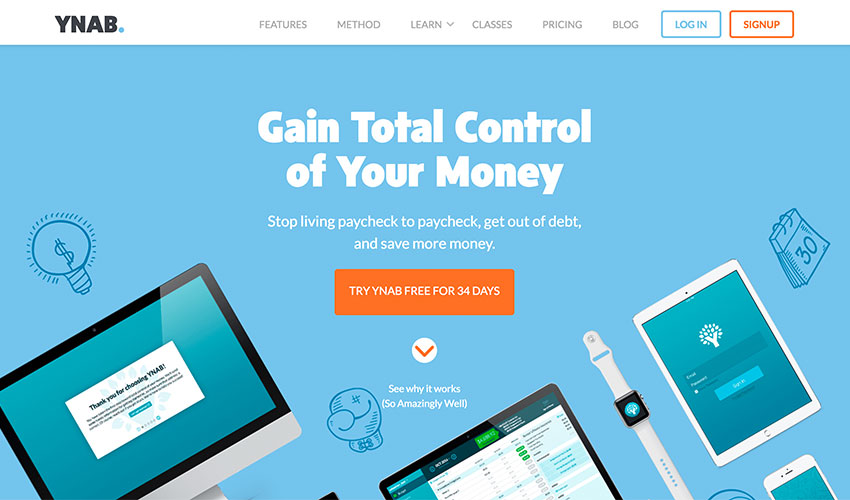
A budgeting software Ynab has geared its marketing towards invoking reciprocity by offering a 34-day trial and publishing a huge amount of educational content that would be difficult to find somewhere else.

Image source: Ynab

The key to making this principle work is to gently remind your prospects about what you’ve done for them. For example, when someone downloads your free lead magnet, it’s perfectly okay to send a follow-up email at some point saying: ”Since I’ve given you this guide for free, I’d like to ask for a favor — click this link to…”.  

Newness and novelty

Researchers have found that new experiences and new facts in learning significantly improve memory. Our brain is particularly attracted to new information and the promise of a new experience. By tapping into this trend, businesses can quite easily boost their revenue.

The entire fashion industry would collapse if the novelty factor lost its influence on consumers. Just think about it — we’ve been ‘trained’ to spruce up our wardrobes every season to keep up with the new fashion trends and looks. Failing to do that can have serious implications on our lives, as we know that the brain needs less than 30 seconds to form an impression of someone. A poor first impression can be the leading cause of a failed job interview, an unsuccessful sale, and lots of new customers. The appeal of trends and the promise of new exciting experiences make the wheel of sales spin every day.  

Look at Apple and its consistent strategy to release new, updated products every year. It is one of the best examples of a company that has recognized and successfully used the novelty factor to drive sales. Everyone knows that the difference between iPhone 6 and iPhone 7 is too insignificant to convince anyone to upgrade and still, hundreds of thousands of people eagerly toss their ‘old’ phones away to get their hands on the new model.

By constantly upgrading, updating, and improving your products or service, you’ll keep your prospects on their toes and wishing to spend their money. Depending on the industry you’re in, you can also experiment with creating new products and taking advantage of the scarcity trigger to further fuel consumers’ desire.

Transparency

“No hidden fees” and “money-back guarantee” are some of the oldest tactics applied by online businesses. Building trust and credibility in the eyes of your customers directly translates into higher sales volume and stronger relationships. Interestingly, keeping your sales promise is no longer enough to achieve business success, as millennials hold companies to account for their values, policies and brand promises. Being completely honest and transparent with your prospects will help you tackle the most common objections and instill a sense of trust in your brand. Not only will your prospects spend their money with you, but they’ll also become your greatest advocates, too.

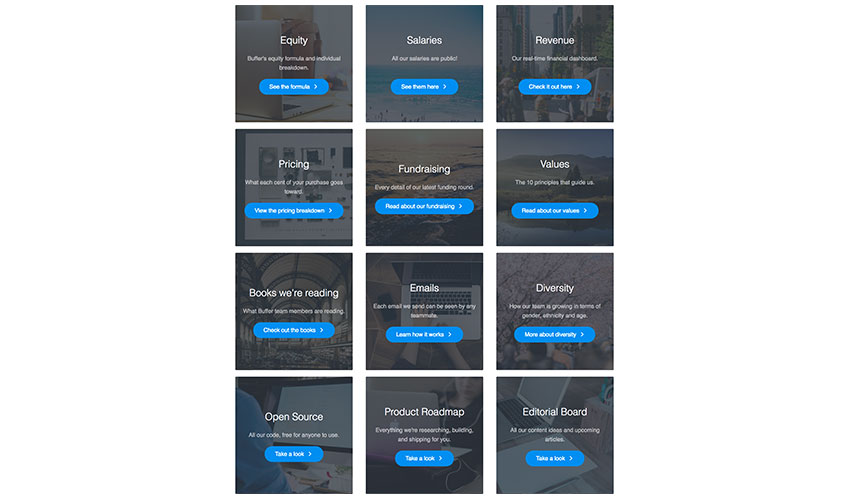
Baremetrics’ Open startups initiative is a great example of a growing trend to be painstakingly open about the performance of your business. Companies of all types and sizes are embracing transparency and openness to build deeper connections with their customers, which in turn increase brand trust and boost sales. For example, Buffer chooses to disclose the most sensitive information about their business – everything from employee salaries to their revenue – to foster an open company culture.

Image source: Buffer

Marketers have been playing with the concept of total transparency for years, but the current online climate that is charged with a desire to learn and improve has pushed the envelope even further. By sharing the naked truth about their experiences, successes and failures, companies and entrepreneurs tap into the mindset of growth and development as well as utilize the unique content they have to increase engagement and capture people’s imagination. Blogger and entrepreneur Tomas Laurinavicius are publishing his lifestyle reports with data on his income, fitness, sleep, productivity, blog, and personal expenses to inspire others to follow their professional and personal passions.     

Analysis paralysis

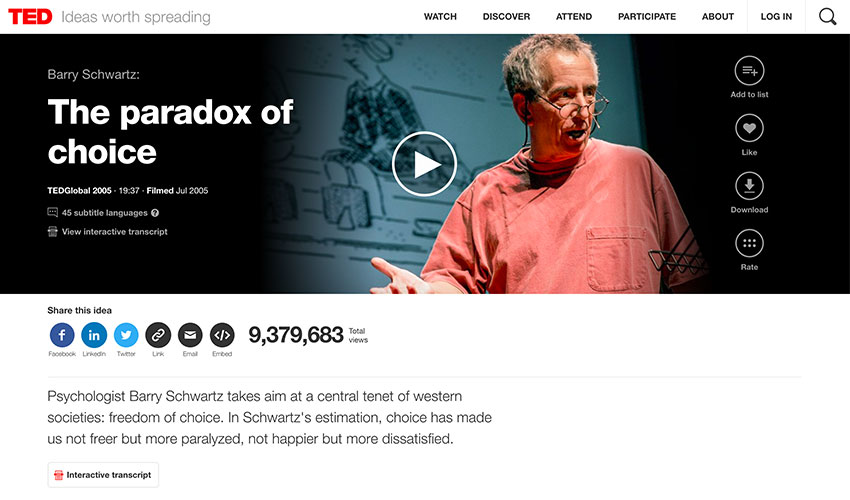
Even the most loyal customers can sometimes fall into the traps of the analysis paralysis of decision-making. Psychologist Barry Schwartz has coined the phrase “The paradox of choice” to summarize his findings on how the increased choice “has made us not freer but more paralyzed, not happier but more dissatisfied”. It would seem that the unlimited access to a wealth of information online should empower us to make better decisions, and yet it often leads to greater fear of making the wrong choice, which in turn leaves us in the clutches of analysis paralysis (all the while making no progress on our most important projects).

Image source: TED

When customers are faced with too many options, they go into a state of overthinking and end up not making a choice at all (out of fear of making the wrong one). Too much information can be a serious conversion killer and businesses need to address this issue carefully. For example, if there are too many features on your landing page or the pricing page is littered with too many offers, it will drive your customers into over-analyzing their options and the majority will choose to delay the decision.

Be sure you’re displaying the most important information required to make a decision, but nothing more. When you want your users to take action, you need to give them a simple, clear-cut option to do that, guiding them through every step.

Instant gratification

Injecting urgency into your marketing messages is a surefire way to trigger the emotional need for instant gratification. From on-demand food and movies to install polaroid cameras and Amazon Prime, the modern consumer is so used to instantly getting what they want that they choose not to have it at all if they can’t get it now. Instant gratification has become the norm.

Image source: Pexels

The two emotions believed to be the driving forces that compel human beings to take action are pain avoidance (or loss aversion) and pleasure. Instant gratification is a need to satisfy our needs, wants, and urges immediately and when we don’t get fulfillment, it causes us great anxiety and tension.  

How can you implement instant gratification in your marketing efforts? Well, there are the obvious options like offering next day delivery or ‘click & collect service or peppering your copy with words like ‘today’, ‘within 24 hours’, ‘x hours left’ and so on to appeal to the emotional trigger, and slightly less obvious ways, like offering live chat support, implementing a loyalty program, or giving something away for free that they can use immediately (a voucher code or access to a video, etc.).  

Familiarity

The concept of social proof is well-known to online marketers. Human beings are social creatures and so we tend to place great value on the opinions of people that are similar to us. And even more so if that person is a friend. The decision-making process is a complicated one, so providing your prospects with as much reassurance as possible will lead to higher conversions.

Testimonials are a foolproof way of showing that your product works. Turn to your loyal clients to get a review of your product or a brief testimonial to demonstrate the range of industries your product serves and the number of people that can testify to its effectiveness.

Another great way to generate new qualified leads is to implement a referral program. Getting a personal invitation from a friend is much more compelling and effective than being bombarded by marketing messages. Create incentives for your users to invite their friends and generate leads that are much more likely to convert.

Do you have a CRM that keeps you organised?

The most user-friendly CRM on the market. 14-day free trial.

Start Free Trial

Painless setup, no credit card required

Safety and security

When people are trying to make a decision whether to spend their money with you or not, payment safety and security should be the least of their worries. But not only that — consumers are more and more often looking for reassurance that you will continue to provide excellent service long after they click the buy button.

It’s crucial to give customers a sense of security and there are several ways you can do it. You can take on policies like “money-back guarantee, no questions asked” to tackle their concerns about making a wrong choice and integrate with the most popular payment gateways to let your customers choose a payment option that they’re familiar with. To demonstrate your commitment to building a long-term relationship, you can also offer a free and convenient exchange & returns policy that will guarantee a hassle-free after-sale experience.

Image source: Pexels

By making the legal stuff, such as the Privacy policy, clear and simple, you will not only remove the prospect’s fear of having their private data misused or stolen, you will also earn their trust and respect.

Urgency

Nothing makes you want it more than the possibility of not getting it. Marketers are well-versed with invoking the urgency trigger and it works every time. It can be done by using all kinds of tactics to suggest that a product is low in stock or that low prices are about to expire.

If you’re running a special promotion, adding a countdown timer is an excellent way to inject urgency and motivate people to act now or miss out. Adding out-of-stock announcements to products that are low in stock also highlights the product’s popularity invoking the social proof trigger (yes, people just want to have what everyone else has). Offering something exclusively to a chosen group of people makes them feel special and taps into the FOMO (fear of missing out) effect compelling them to buy. A special sale to registered members is a great example of this tactic in action. You can also try introducing seasonal products that are available for a limited time only. Starbuck’s Pumpkin Spice Latte is a success story of this tactic.

Over to you

Many make the mistake of confusing emotion-focused marketing with clear-daylight manipulation of consumers. That’s just wrong. Human beings are incredibly complex and often mysterious, so claiming there is a proven way how to coerce them into taking the desired action is silly.

However, by learning to activate the psychological cues and triggers, businesses have the opportunity to influence consumers’ behavior and aid their decision-making process. And to look at it another way, a lack of influence is also an influence. So take note of these incredibly powerful emotional triggers and implement them in your marketing tactics to achieve greater sales. It’s okay to get smart sometimes.

“Content upgrades are all about making it easier for your reader to execute on your article’s strategies.” ~ James Scherer, Wishpond.com

Go ahead and take a wild guess at the number of blog posts published every day.

The answer is 2M. Yeh, 2 million blog posts are written and published every single day. Just to give you some context for the enormity of this figure, here are some mind-blowing statistics about content consumption in general:

  • The average reader spends around 15 seconds reading the article they land on. In fact, 55% of people spend less than 15 seconds actively engaged on a page.
  • Only 20% of readers will finish an article they started reading.
  • The average visitor will only read 25% of an article.
  • Readers spend about twice the time with long-form news content on their mobile phones as with short-form.
  • 43% of people admit to skimming blog posts. (HubSpot, 2016)

Now, don’t get me wrong. I’m by no means advocating for less content. On the contrary, I believe the success of any profitable online business lies in its ability to produce amazing content that stands out and garners high engagement. But how do you get yourself noticed in such a ridiculously saturated marketing channel with an audience that suffers from content fatigue? By giving your readers more valuable stuff than they could ever expect.

Essentially, content upgrades are free, high-value “bonuses” that you create for your readers to help them act on the advice you share in the article. They’re called upgrades because these additional pieces of content elevate people’s reading experience to a more hands-on approach and come as “extras” in addition to the value of your post. Let’s say it’s like buying an alarm clock and receiving batteries as a free complimentary gift “on the house”. Yes, you could get the batteries somewhere else, but that would be such a hassle, wouldn’t it?  

Typically, readers can access and download content upgrades by sharing their email address, making these bonuses a fantastic list building tool. We are quite used to seeing content upgrade offers at the end of an article, but, in fact, the bonus material can be included at the beginning of and throughout the article.

As post-specific, bite-sized lead magnets, content upgrades are one of the most effective ways to build an email list. But what makes a desirable content upgrade? The key factor in producing enticing bonus material is to keep it uber relevant to your article. There’s nothing wrong with offering something simple like a checklist, a cheat sheet, a template or workbook, as long as it’s seen as a value-add and would make executing on the article’s strategies easier.

Even though it’s unrealistic to expect all the visitors to finish reading your articles (no matter how well written they are), you can pack them with additional offers to grow your email list and make the most of the traffic you get.

And here’s everything you need to know about creating content upgrades that will send your readers into a downloading frenzy.

Remove friction from user to the desired outcome

We’re used to seeing lead magnets promoted on dedicated landing pages, in sidebar banners and pop-ups. Marketers often go to elaborate lengths to create visually striking pages in an effort to entice visitors to enter their personal information and email address to download or access whatever’s on offer. There are several steps involved in this kind of conversion path, significantly increasing the likelihood of drop-offs.

What’s different about content upgrades is that they’re much simpler-looking and more accessible offers that have an explosive effect on conversion rates. Brian Dean of Backlinko saw a 785% increase in conversions in one day by adding a content upgrade to one of his high-performing blog posts.  

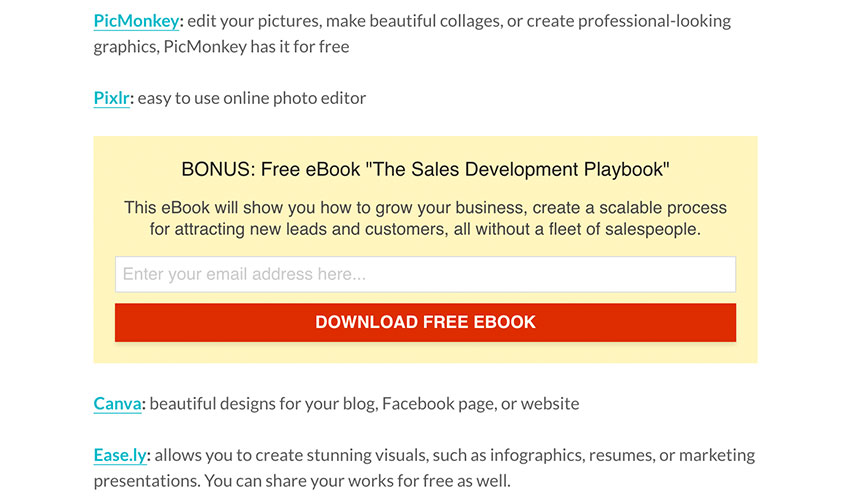
Thanks to its simplistic design, content upgrade stands out just enough to draw the reader’s attention but still looks like a part of the blog post. They’re often designed to look like infoboxes with a peach-coloured background and a simple frame.

Here’s what Teamgate used for his super successful test:

content-upgrade

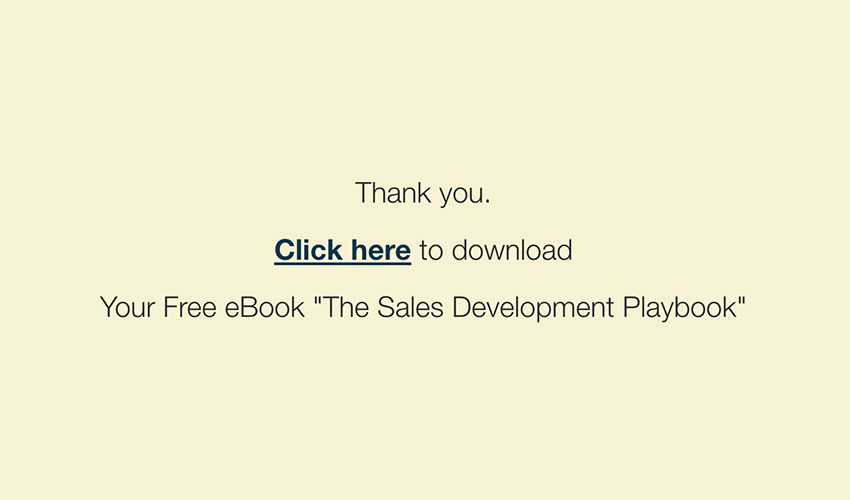
And after entering your email address, a very straightforward link to content upgrade would come up:

Content upgrade offers don’t need to be flashy sales messages. Keep the fancy stuff to a bare minimum, and you’ll start seeing the benefits very soon.

It must be valuable and relevant to context, audience, and even month

This may come as a surprise, but no one wants your 10-page whitepaper on marketing trends. Maybe it’s a great piece of content, but if I landed on your site looking for information on Instagram ads, it’s unlikely I’d be tempted to download a generic paper.

Content upgrades are so effective at boosting conversions because they are created specifically for that particular blog post, which means you catch people in the right state of mind and provide an actionable solution to their problem. If your content upgrade offer is a perfect fit for what the reader is looking for, sharing their email address will seem like a small price to pay.

You should also think about tailoring your content upgrade to the type of audience that will be consuming your article. This can determine the format, style and length of your content upgrade. For instance, if you’re writing for the creative crowd, you’ll need to keep the design side of the piece in mind as well as sharpen your copy. If the article is aimed at top-tier managers, you’ll know that you need to keep it brief and to the point — a checklist or a summary would perform best.

Depending on the industry you’re in, there might be potential to harness seasonality or a certain time of year, too. Christmas period is a great time for eCommerce blogs to churn out content about discounts, shopping tips, and gift guides. Fitness blogs are thriving in spring and summer, when most people are concerned with improving their looks. January is the month of New year’s resolutions, when everyone’s looking for quick hacks and tricks that could lead to achieving their goals much faster.

When creating content upgrades, don’t ignore the bigger picture but keep the content highly focused on adding value to the post and making your readers’ life easier.

People are sold by their emotions instead of you telling them to get it

As mentioned above, in order for your content magnets to be effective, the piece of information you offer should solve a problem and make your target audience’s life easier. You must offer something of value to them in order for them to give up their email, so focus on their emotions. Use strong storytelling in order to convince and persuade your audience. For example, intertwine your content magnet (i.e. eBook) in your post, rather than creating a flashy pop-up. This proves to your audience that you are trustworthy and, in turn, makes them more inclined to come back for more. Case studies are also great for establishing that kind of relationship with your audience.

Another way to secure your audience’s trust is by including testimonials on your website or even post. Consumers find the reviews and opinions of other customers to be more trustworthy than the brand’s promise. Ensure you talk about the benefits of joining your mailing list – eBooks, cheat sheets, discount codes etc, but do so in the words of your already existing happy customers. Include links/action buttons under each testimonial (even if they’re old) in order to make the content instantly available for your audience.

Create case studies where you highlight the success stories of your customers in order to create credibility and build trust with your audience. Case Studies are long and in order for them to be successful the content within it must be of great value to the consumer. Use it to answer questions and doubts about your brand, mostly focus on the success of your already existing consumers.

Remember, people love free stuff, so ensure that you make your offers clearly visible and easily accessible to your audience.

Research shows that using scarcity and making it exclusive makes people want it more

It’s been known for a while now that scarcity can significantly increase the perceived value of a product or service. The fear of not getting something because it sells out drives people to make impulsive decisions and act much faster.

While not particularly relevant for digital offers (you would be hard-pressed to advertise a content upgrade as ‘low in stock’), you can take advantage of the urgency factor to prompt visitors to act immediately. For example, you can achieve more conversions by adding a countdown timer to your offer or stating a “available until” date. This will give your visitors an additional reason to quickly get in with the content upgrade. To get off to an easy start, check out Fomo, a one-click plugin that creates urgency by displaying key customer behaviors in real time.

Images Source: Fomo

Exclusivity is a huge catalyst of sales for many of the luxury brands. People want what’s rare and exclusive. They want to be among the selected few that get what others could only dream about. If you know how to harness exclusivity, your conversions will skyrocket.

Buffer compiled a list of 12 phrases that imply exclusivity and could be used in the copy of your offer: members only, login required, class full, membership now closed, ask for an invitation, apply to be one of our beta testers, exclusive offers, become an insider, be one of the few, get it before everybody else, be the first to hear about it, only available to subscribers.

By highlighting the exclusivity of your content upgrades, you’ll encourage people to join your mailing list (which is what you want!).

Make it problem-focused and provide an actionable solution

Images Source: Pexels

When you start looking into your Google Analytics reports to find the most popular articles, you will be able to quickly identify the topics that your readers are most interested in. The best part about creating a content upgrade is that you know the subject is relevant and interesting to your audience. All you need to do then is figure out how to enhance the blog post with a piece of actionable content. Essentially, a content upgrade is the ‘how’ part of the proposed solution.

One of the best tips is to take your time to review all reader comments under your high-traffic articles. Chances are, your readers have already told you what kind of content upgrade would have the highest value. Maybe it’s a transcript, if you’re posting videos, or a spreadsheet template, if you did a step-by-step piece on creating an editorial calendar. Whatever your readers want, though, it shouldn’t take you too long to produce.

Content upgrade is only effective when it’s useful and packed with exclusive tips and hacks. It should be action-oriented and aim to help readers to apply what they’ve learned from your blog post.

Provide tangible result and instant gratification

When someone’s hunting for a solution to a problem, they want it solved immediately. Technology has spoilt us to the point where there is an app for everything and we can access the information, products and services we need in a few seconds.

Something as vague as “join our mailing list to receive awesome tips and tricks every month” will put most people off because it sounds impersonal and does not promise instant gratification. Focus on crafting compelling CTA copy for your content upgrades to ensure the benefits are communicated clearly.

Targeting people’s desire for instant access to products, experiences and solutions is a shortcut to boosting conversions and growing your email list fast. But be sure you can deliver the content upgrade as fast as you promise because people hate waiting to receive something.

Do you have a CRM that keeps you organised?

The most user-friendly CRM on the market. 14-day free trial.

Start Free Trial

Painless setup, no credit card required

Use social proof

Social proof is a tactic used to increase conversation by easing the mind of worried consumers. Nearly 70% of customers read product reviews before making a purchase and customer reviews are 12 times more trusted than manufacturer’s sales copy. Consumers basically seek 3rd party approval of the product or service they are about to purchase before they commit to buy. The power of social proof is undeniable. This is why almost all big companies display consumer testimonials on their website, and so should you. Ensure that testimonials are displayed clearly and in the right format. Whether you decide to have a separate customer review page or you display them right under the product or service (star ratings/comments) ensure it is the right format for your business. Studies have shown that testimonials can increase conversions on sales pages by as much as 34%, so make sure you are making the most out of your testimonials.

Another great way to ease your audience and capture their attention is by letting them know how many people have downloaded a piece of content or bought your product or service. Use your statistics to bring credibility to your brand and your content. The numbers will act as 3rd party approval of your offer and the higher the number, the more likely that next visitor will trust it.

If your service or product has been mentioned in the media, let your audience know. Take excerpts, if possible, from any mentions of your product or service in the media (i.e., articles, reviews, podcasts) and paste them on your homepage. Make sure they are concise and clearly visible. The simplest and probably most convenient way of showing that is by having a ‘Featured In’ section on your homepage followed by a handful of recognizable items. Media mentions is another great way to naturally incorporate your content upgrades into your posts and website.

Conclusion

So, the key points to take away for your killer content upgrades are: ensure you are providing enticing and valuable material. Eliminate the noise and keep it simple – make your content upgrades a part of your post and watch your mailing list grow. Content upgrades are only effective at boosting conversions when they are specifically created for that particular post – so make sure you are paying attention at who you’re talking to. Make use of social proof to increase credibility and desire and don’t forget the fear of missing out. The real kind and the the tool FOMO, which helps you boost your product and service by creating the sense of scarcity around your product or service. Nothing worse than missing out on a great deal, huh?