Get a free sales audit to uncover hidden revenue opportunities!

Sales Isn’t the Wild West — It’s a Process You Can Run

If your sales results feel inconsistent, it’s rarely because your team “can’t sell.” It’s usually because the process isn’t clear, enforced, or visible.

A strong sales process:

  • Defines clear stages from prospecting to nurturing

  • Requires a next step for every active deal

  • Standardizes qualification and follow-up

  • Uses tools like CRMs to reduce admin and enforce discipline

Teamgate helps reps follow a clear sales process and helps managers trust the numbers—without turning CRM into a full-time admin job.

In this guide, you’ll see how modern sales teams structure their process, where deals usually break down, and what you can fix immediately—without overhauling your entire business.

Key Takeaways:

  • The sales process is more than just making a pitch; it consists of structured steps from prospecting to nurturing.
  • Standardizing the sales process enhances efficiency and makes onboarding new salespeople smoother.
  • Incorporating tools like CRMs can greatly aid in automating and optimizing various stages of the sales process.
  • Researching potential clients is paramount, ensuring tailored pitches and understanding how one’s solution fits into their existing business processes.
  • Properly handling objections and ensuring a smooth closing process is vital for maintaining client relationships and reducing buyer’s remorse.

What is a sales process?

The sales process is the structured path your team follows from first contact (e.g., cold calling or inbound lead response) to closing and nurturing the account.

It can be chaotic. Or it can be clearly defined, measurable, and repeatable.

A standardized sales process almost always outperforms an improvised one because it:

  • Reduces missed follow-ups

  • Makes onboarding new reps easier

  • Improves forecast accuracy

  • Protects revenue from “stale” deals

Generally, a sales process includes 7 parts:

  1. Prospecting.
  2. Lead qualification.
  3. Research.
  4. Pitching.
  5. Handling objections.
  6. Closing.
  7. Nurturing.

Optimizing the sales process

Prospecting

Optimizing the sales process

Prospecting

Prospecting is how new leads enter your pipeline. It can happen through outbound (sales-driven outreach) or inbound (marketing-generated leads).

Outbound prospecting typically includes:

  • Cold emails

  • Follow-ups

  • Phone calls

  • Social media outreach

  • Live meetings

Inbound leads usually come from ads, referrals, or organic channels and are handed to sales once qualified.

For many sales teams, outbound remains the main engine. But this is also where discipline often breaks down.

Common rep-level symptoms:

  • “I don’t know who to follow up with today.”

  • Follow-ups rely on memory.

  • Outreach history is scattered across inboxes and spreadsheets.

This is where structured tracking matters. Every prospect should:

  • Sit in a defined stage

  • Have a clear next step

  • Have outreach history tied to the deal

When email sync, activity logging, and task reminders are centralized in one place, prospecting becomes systematic instead of heroic. Reps can work from a daily task list instead of guessing what to do next.

Sales teams can also use a scraper API to automatically gather company or lead data from public sources, enriching CRM records and speeding up prospect research. But enrichment only works if the data feeds into a system that enforces follow-up.

A disciplined setup makes it easier to onboard new sales hires. Follow-up templates, stage definitions, and automated task creation reduce ramp time and eliminate “figure it out as you go.”

Lead qualification

Once the prospecting stage is nailed down, a somewhat easier part of the sales methodology can be implemented. Lead qualification, while incredibly important for good conversion rates and the entire buying process, is significantly simpler to standardize when compared to other stages.

Lead qualification is all about identifying the customer’s needs and whether they can be matched by your solution. Qualifying questions, as they are called, can be sent over emails or over an early sales call (sometimes known as a discovery call). Using a platform like Mailgo can make this step smoother by automating personalized cold emails and improving deliverability, ensuring your qualifying questions actually reach decision-makers. While they can differ, commonly such questions are used:

  • What problem are you trying to solve?
  • How does it impact your day-to-day activities?
  • What solutions are you evaluating?

Additionally, some businesses won’t be able to easily reach decision-makers during the prospecting process. In these cases, adding a few questions that would ensure that salespeople are talking to the right person is necessary. These can be simple qualifiers like asking what is the person’s role in the company.

Finally, lead qualification should always be related to the ideal customer profile (ICP). Understanding how your leads fit into the ICP makes it easier to build a streamlined and successful sales process that will keep bringing in repeat business. When you standardize what data is most important for you regarding your inbound leads – Teamgate can automate your qualification by scoring your leads.

Research

Before delivering a sales presentation, careful research is essential.

Unlike other stages, research cannot be fully automated. It requires thinking.

The goal is to understand:

  • The prospect’s business model

  • Their internal processes

  • Key stakeholders

  • Operational constraints

  • How your solution fits their current workflow

Understanding surface-level needs isn’t enough. You must understand integration—where your product fits inside their operations.

When notes, past conversations, emails, and stakeholder information are centralized, research becomes easier. Reps don’t lose context between calls, and managers can see where deals are getting stuck.

Good research increases win rates and shortens sales cycles because you’re solving real problems—not pitching generic benefits.

Pitching

The sales pitch is often seen as the main event. In reality, it’s the result of everything that came before it.

A strong pitch:

  • Reflects the research

  • Addresses identified pain points

  • Includes relevant stakeholders

  • Aligns with the buying process

If you only bring decision-makers but exclude operational stakeholders, deals can stall later. In complex sales, multiple personas influence outcomes.

Many businesses overestimate the pitch and underestimate process discipline. If qualification was weak or next steps weren’t enforced, even a strong pitch won’t save the deal.

When stages reflect reality and every deal has a defined next action, pitching becomes one step in a managed flow—not a gamble.

Handling objections

Objections are normal, especially in B2B.

Common categories include:

  • Pricing

  • Technical integration

  • Process alignment

  • Internal approval concerns

Pricing objections often require flexibility within predefined ranges. Other objections tend to repeat over time.

When managers review pipeline data regularly—looking at deal aging, activity history, and lost reasons—patterns appear. You can then draft standardized responses and improve qualification criteria.

Without structured tracking, objections feel random. With disciplined data, they become predictable.

Closing

Closing may be shorter than other stages, but it benefits from structure.

Best practices include:

  • Pre-drafted contract templates

  • Clear handoff to onboarding or account management

  • Defined expectations for implementation

Part of closing is reducing buyer’s remorse. That means structured onboarding and proactive follow-up.

When tasks, reminders, and ownership are clearly assigned, deals don’t “close and disappear.” Instead, they transition smoothly into active accounts.

Nurturing

Modern businesses are rarely “fire-and-forget.” Long-term revenue depends on nurturing.

Nurturing includes:

  • Ongoing support

  • Regular check-ins

  • Upsell and cross-sell opportunities

  • Collecting testimonials and case studies

Customer history, notes, and activity logs should remain centralized so account managers have full context.

Two-way relationships matter. Asking for feedback, testimonials, or joint case studies strengthens loyalty and reinforces value.

Consistent follow-up isn’t luck, it’s a system. And systems protect revenue from silent decay.

Conclusion

Sales is no longer the Wild West. It’s a process you can define, measure, and improve.

If your pipeline feels messy, forecasts slip late in the quarter, or reps rely on memory for follow-ups, the issue isn’t motivation—it’s structure.

When you:

  • Define stage entry and exit criteria

  • Require a next step for every active deal

  • Centralize activity and communication

  • Review deal aging and activity weekly

You move from hopeful forecasting to predictable revenue.

If forecasts feel like guesses and late-stage deals stall without visibility, pipeline discipline changes everything.

Streamline Your Sales with Teamgate CRM

Discover a sales operating system designed to keep your pipeline clean, your reps consistent, and your managers confident in the forecast—without enterprise CRM bloat or feature overload.


If you want to become a better sales leader, don’t rely on instinct alone, borrow perspective.

The fastest way to grow in sales leadership is to learn from people who’ve already built teams, fixed broken pipelines, scaled revenue, and coached under pressure. This list of 100 business, sales, and marketing leaders gives you a practical starting point.

Here’s what you’ll gain from following them:

  • Clear thinking about modern sales leadership

  • Proven frameworks for pipeline discipline and team performance

  • Real-world insight into marketing, growth, and customer experience

  • Inspiration to refine your own leadership style

Strong sales leadership isn’t about charisma. It’s about clarity, consistency, and execution.

Key Takeaways

  • Surrounding yourself with proven sales and marketing leaders sharpens your thinking and raises your standards.

  • Learning from experienced operators helps you avoid common leadership mistakes.

  • Exposure to different philosophies broadens your perspective on pipeline management, team coaching, and growth strategy.

What Good Sales Leadership Really Looks Like

How do you see the process of good sales leadership?

Some people have a better view than others.

When I was a kid, I used to stand on an old wooden fruit box at the end of my garden so I could see over the wall. That small lift in height changed everything. It gave me perspective.

Sales leadership works the same way.

Books. Mentors. Podcasts. Industry leaders. Data. Hard lessons. These are all “fruit boxes” that elevate your view beyond your own experience.

In sales, that perspective matters. Because without it, you risk:

  • Running a pipeline based on hope instead of evidence

  • Letting deals quietly go stale

  • Coaching reps based on opinion rather than activity data

  • Forecasting from gut feel instead of process discipline

Great leaders understand that consistent selling, structured stages, and clear next steps are what make revenue predictable. That’s why disciplined operating systems matter.

Teamgate helps reps follow a clear sales process and helps managers trust the numbers, without turning CRM into a full-time admin job.

When sales leadership is grounded in real visibility and consistent follow-up, performance becomes repeatable, not heroic.

***

Neil Patel

1. Neil Patel

Neil Patel is a co-founder of KISSmetrics, Crazy Egg and Hello Bar. In his spare time he shares his expertise with companies like Amazon, NBC, HP, General Motors and Viacom and writes amazing online sales and marketing pieces.

Website: neilpatel.com
Follow on: Twitter, LinkedIn.

Joe Pulizzi

2. Joe Pulizzi

Content Marketing Institute and wrote five great books, including Epic Content Marketing.

Website: joepulizzi.com
Follow on: Twitter, LinkedIn.

Grant Cardone

3. Grant Cardone

A self-made millionaire, sales trainer, speaker and entrepreneur, best known as a New York Times bestselling author for his booksThe 10X Rule and If You’re Not First, You’re Last, Grant Cardone is also the host of The Cardone Zone podcast and founder of The Cardone Group.

Website: grantcardone.com
Follow on: Twitter, LinkedIn.

Jay Baer

4. Jay Baer

Jay Baer is a digital expert, New York Times bestselling author and founder of Convince & Convert. During more than 25 years in the business,
he assisted more than 700 brands with insights and helped them to upgrade their marketing and customer services.

Website: jaybaer.com
Follow on: Twitter, LinkedIn.

Gary Vaynerchuk

5. Gary Vaynerchuk

No matter which social network you prefer, GaryVee will reach you there. Founder of VaynerMedia, NY
Times bestselling author, serial entrepreneur and keynote speaker is taking the internet by storm and doesn’t seem to stop anytime soon.

Website: garyvaynerchuk.com
Follow on: Twitter, LinkedIn.

Anthony Iannarino

6. Anthony Iannarino

Know as one of the smartest guys in sales, Anthony Iannarino is the guy behind The Sales Blog and such books as The Only Sales Guide You’ll Ever Need and The Lost Art of Closing.

Website: thesalesblog.com
Follow on: Twitter, LinkedIn.

Tim Ferriss

7. Tim Ferriss

A revolutionary thinker and self-proclaimed “human guinea pig” is known for his hit book The 4-Hour Work Week, other 4-hour series books and
podcast The Tim Ferriss Show.

Website: tim.blog
Follow on: Twitter, LinkedIn.

Joanna Wiebe

8. Joanna Wiebe

Joanna Wiebe is a much-respected marketer, conversion copywriter and the founder of Copy Hackers and Airstory.
She has worked with Buffer, Tesco, Crazy Egg, Shopify and many other top brands.

Website: copyhackers.com
Follow on: Twitter, LinkedIn.

Nir Eyal

9. Nir Eyal

Author of Wall Street Journal Bestseller Hooked: How To Build Habit-Forming Products, Nir is also a keynote speaker, investor, behavioral scientist and product design consultant for some of the iconic world brands.

Website: copyhackers.com
Follow on: Twitter, LinkedIn.

Marc Benioff

10. Marc Benioff

CEO of Salesforce, cloud computing pioneer and American internet entrepreneur. He is also one of the most important and recognizable faces in sales industry.

Website: –
Follow on: Twitter, LinkedIn.

Matt Barby

11. Matt Barby

One of the best SEO writers on the web. Matt is a real growth-hacking machine and a director of acquisition at HubSpot. In his spare time, he writes a fantastic personal blog that aims to help you land more customers.

Website: MatthewBarby.com
Follow on: Twitter, LinkedIn.

Brian Dean

12. Brian Dean

Brian Dean is an acknowledged link building, SEO and content marketing specialist with one of the finest SEO blogs online – Backlinko, which is full of smart tactics and invaluable insights.

Website: backlinko.com
Follow on: Twitter, LinkedIn.

Michael Hyatt

13. Michael Hyatt

Michael Hyatt is a top-notch blogger, leadership mentor for marketers and entrepreneurs, speaker and author of NY Times, USA Today, Wall Street Journal and Amazon bestseller book Platform: Get Noticed in a Noisy World.

Website: michaelhyatt.com
Follow on: Twitter, LinkedIn.

Francesca Nicasio

14. Francesca Nicasio

Francesca is one of the most intelligent and well-researched e-commerce writers at Vend blog, where she shares her online retailing secrets.
She is also a founder and owner of Credible Copywriting and Beafreelanceer.com.

Website: francescanicasio.com
Follow on: Twitter, LinkedIn.

Jeb Blount

15. Jeb Blount

Nicknamed as “the hardest working man in sales”, Jeb Blount is an author of 6 popular sales books and CEO of Sales Gravy – one of the leading sales acceleration and customer experience enablement companies.

Website: jebblount.com
Follow on: Twitter, LinkedIn.

Aaron Ross

16. Aaron Ross

Father of 11 and author of bestselling books Predictable Revenue
and From Impossible to Inevitable, Ross
is an expert on how to achieve predictable and scalable sales income.

Website: predictablerevenue.com
Follow on: Twitter, LinkedIn.

Larry Kim

17. Larry Kim

Founder of Wordstream and currently a CEO of MobileMonkey, Larry Kim is an internet marketing guru specializing in PPC, Facebook advertising and entrepreneurship inspiration.

Website: medium.com/@larrykim
Follow on: Twitter, LinkedIn.

Rand Fishkin

18. Rand Fishkin

Also known as “the wizard of Moz”, its former CEO and co-founder. Rand has also co-founded Inbound.org. Today, Rand remains one of the online marketing stars with a particular interest in startups and SEO.

Website: moz.com/rand/
Follow on: Twitter, LinkedIn.

Derek Halpern

19. Derek Halpern

The founder of Social Triggers, Derek is a marketer and entrepreneur who reaches millions of online sellers and is an expert at getting traffic and sales for startups by using human psychology.

Website: derekhalpern.com
Follow on: Twitter, LinkedIn.

Brian Halligan

20. Brian Halligan

CEO and founder of HubSpot, Brian Halligan lives and breathes inbound marketing, lectures at MIT and is passionate about scaling up startups.

Website: blog.hubspot.com/marketing/author/brian-halligan
Follow on: Twitter, LinkedIn.

Mike Weinberg

21. Mike Weinberg

Mike is the author of New Sales Simplified, founder and CEO of The New Sales Coach – a consultancy group advising senior executives and coaching sales managers, teams and individual hunters.

Website: newsalescoach.com
Follow on: Twitter, LinkedIn.

Koka Sexton

22. Koka Sexton

Koka Sexton is a founder of Social Selling Labs, former head of social media at LinkedIn, startup mentor and social strategies master at Hootsuite. He surely knows his way around social media, so if you’re looking for solid advice on how to generate leads using social networks, Koka is the guy to follow.

Website: kokasexton.com
Follow on: Twitter, LinkedIn.

Jill Konrath

23. Jill Konrath

Jill is a bestseller author of four sales books, keynote speaker and thought leader. She always looks for new sales strategies and her expertise is widely recognized in such publications as Fortune, Forbes, The New York Times, ABC News, Wall Street Journal, Entrepreneur, Inc and many other prominent media outlets.

Website: jillkonrath.com
Follow on: Twitter, LinkedIn.

Talia Wolf

24. Talia Wolf

Talia Wolf specializes in consumer psychology, experience design and conversion rate optimization (CRO). As a founder and keynote speaker for Getuplift, she regularly shares great tools and practical advice that every e-commerce marketer will appreciate.

Website: getuplift.co
Follow on: Twitter, LinkedIn.

Joel Comm

25. Joel Comm

Bestselling author and entrepreneur Joel Comm has written 14 business books and currently specializes in live video marketing.
Having spent more than 20 years in online business, former radio DJ Joel is also the CEO of InfoMedia and leads The Bad Crypto Podcast.

Website: joelcomm.com
Follow on: Twitter, LinkedIn.

Ann Handley

26. Ann Handley

Quality over quantity. As a head of content at MarketingProfs, author of Everybody Writes and
Content Rules, Ann is a top-tier content marketer who wages war on mediocrity in content marketing.

Website: annhandley.com
Follow on: Twitter, LinkedIn.

Mark Hunter

27. Mark Hunter

The Sales Hunter Mark is the author of High-Profit Selling and High-Profit Prospecting.
He is one of the leading and most followed speakers in the sales space.

Website: thesaleshunter.com
Follow on: Twitter, LinkedIn.

Amy Porterfield

28. Amy Porterfield

Fast Company, Forbes, Mashable, Entrepreneur and MSNBC are just a few publications that recognize the value Amy’s data-driven marketing wisdom.
Other than that, she spreads expertise in online course creation, building highly engaged email lists and coming up with innovative sales strategies.

Website: www.amyporterfield.com
Follow on: Twitter, LinkedIn.

Kunle Campbell

29. Kunle Campbell

If there are genuine retail strategy experts, Kunle is definitely one of them. He explores e-commerce issues in his podcast and
actively shares interesting ideas on how to create customer experiences that attract, convert and retain clients.

Website: 2xecommerce.com
Follow on: Twitter, LinkedIn.

Jayson DeMers

30. Jayson DeMers

DeMers is the CEO of AudienceBloom, link-building, content marketing and SEO company and is an acknowledged marketing strategist who shares his tips with Forbes, Inc,
Huffington Post, Business Insider, Search Engine Land and other major news outlets.

Website: audiencebloom.com
Follow on: Twitter, LinkedIn.

Michael Stelzner

31. Michael Stelzner

Michael Stelzner is the man behind Social Media Examiner, Social Media Marketing World, host of the
Social Media Marketing podcast and author of books
Launch and Writing White Papers.

Website: socialmediaexaminer.com
Follow on: Twitter, LinkedIn.

Jim Keenan

32. Jim Keenan

Jim Keenan is an award winning blogger, author of the book Not Taught and CEO of A Sales Guy. Energetic, entertaining and practical, he is amongst the best sales influencers and trainers to follow.

Website: asalesguy.com
Follow on: Twitter, LinkedIn.

 John Lee Dumas

33. John Lee Dumas

John Lee Dumas is American entrepreneur and podcaster. Known for his leading podcast on iTunes – Entrepreneurs on Fire,
he sources daily interviews with people like Tony Robbins, Gary Vaynerchuk, Seth Godin or Brian Tracy. He also likes life coaching and helps people to form and achieve SMART
goals and master productivity, discipline and focus with The Mastery Journal.

Website: asalesguy.com
Follow on: Twitter, LinkedIn.

Shanelle Mullin

34. Shanelle Mullin

Shanelle Mullin is a real gem on this list and is responsible for content and growth at Shopify. Previously she wrote for
Conversion XL blog and crafted some of the best CRO and growth articles there.
Keep an eye on her social media posts as they are always well-researched and informative.

Website: shopify.ca/Shanelle+Mullin
Follow on: Twitter, LinkedIn.

Jill Rowley

35. Jill Rowley

After having spent over 20 years in Silicon Valley, Jill Rowley is an admired advisor and one of the greatest speakers in social selling space. Her core competencies include social selling, digital sales transformation, marketing and sales alignment and sales enablement.

Website: –
Follow on: Twitter, LinkedIn.

Craig Campbell

36. Craig Campbell

Craig Campbell is a real deal and has been involved in digital marketing long enough to be able to distinguish between what works and what doesn’t. His consultancy company also offers a broad array of marketing services, such as PPC advertising, email marketing and others.

Website: craigcampbellseo.co.uk
Follow on: Twitter, LinkedIn.

Daniel Wallock

37. Daniel Wallock

Recognized as a must watch marketer in 2017 by Forbes, Inc and Huffington Post, 21-year-old Daniel Wallock already has an impressive resume. He was the guy behind viral crowdfunding campaigns of Perseus Mirrors and OneX and worked with BMW I Ventures, The American Heart Association and Amazon Studios.

Website: danielwallock.com
Follow on: Twitter, LinkedIn.

Lori Richardson

38. Lori Richardson

Lori specializes in helping women achieve better goals in sales and is the president of Women Sales Pros.
Over the years in business, she became a real pro of B2B sales, sales pipeline building and one of the top sales training influencers.

Website: scoremoresales.com
Follow on: Twitter, LinkedIn.

Carolyn Hyams

39. Carolyn Hyams

Marketing director for Aquent, Firebrand Talent and Vitamin T, Carolyn’s is a passionate digital marketer and influencer and it reflects in her social feeds.

Website: firebrandtalent.com/author/carolyn-hyams
Follow on: Twitter, LinkedIn.

Jeff Bullas

40. Jeff Bullas

Jeff Bullas blog has over 5 million annual readers for a reason. He is a globally acknowledged CMO, digital entrepreneur, marketing blogger,
digital strategist and author of several books. His topics are innovation, entrepreneurship, social media, digital marketing, content and marketing automation.

Website: firebrandtalent.com/author/carolyn-hyams
Follow on: Twitter, LinkedIn.

Lee Bartlett

41. Lee Bartlett

Author of the favorite sales book The No.1 Best Seller, tech entrepreneur and sales leader.
Lee Bartlett is a sought-after consultant with lots of practical experience and useful advice. His unique niche is launching new technologies in Europe.

Website: leebartlettbestseller.com
Follow on: Twitter, LinkedIn.

Lee Bartlett

42. Ryan Holmes

A serial entrepreneur and CEO of Hootsuite has a high drive for innovation and VR technologies.
Not so long ago he also released his guide to social media for leaders – The 4 Billion Dollar Tweet.

Website: medium.com/@invoker
Follow on: Twitter, LinkedIn.

Lincoln Murphy

43. Lincoln Murphy

Lincoln Murphy is a synonym for customer success driven growth. His broad expertise helps companies to deal with customers,
generate leads and deliver impactful content marketing campaigns. If you need an expert to improve your business-customer relationship, he is the one.

Website: lincolnmurphy.com
Follow on: Twitter, LinkedIn.

Dave Chaffey

44. Dave Chaffey

Dave Chaffey is a seasoned e-commerce marketing expert and is eager to share his expertise on social media. By the way, he is a co-founder and CEO of Smart Insights.

Website: davechaffey.com
Follow on: Twitter, LinkedIn.

Ashley Friedlein

45. Ashley Friedlein

Ashley is the founder of Econsultancy, chairman of a real-time data delivery platform Ably,
author, keynote speaker and blogger on digital, marketing and e-commerce.

Website: econsultancy.com/blog/authors/ashley-friedlein
Follow on: Twitter, LinkedIn.

Max Altschuler

46. Max Altschuler

Max is the sales hacker who helps B2B tech startups to build high-velocity sales machines. He is also a founder and CEO of SUTRA
and mentor at GrowthX. He wrote a book Hacking Sales,
so if you’re into entrepreneurship and growth hacking, Max is your kind of inspirer.

Website: saleshacker.com
Follow on: Twitter, LinkedIn.

Shama Hyder

47. Shama Hyder

Shama Hyder is a digital marketing expert and leads the global PR and online marketing community Marketing Zen.
She is also an acclaimed Zen Master of Marketing and her bestselling digital marketing books Momentum
and The Zen of Social Media Marketing serve to prove it.

Website: shamahyder.com
Follow on: Twitter, LinkedIn.

Heidi Cohen

48. Heidi Cohen

Heidi is an integrated marketing expert and author of Actionable Marketing Guide which teaches how to achieve best results in content and mobile marketing, branding, blogging and social media. Follow her for more comprehensive insights on these and similar marketing topics.

Website: heidicohen.com
Follow on: Twitter, LinkedIn.

Mari Smith

49. Mari Smith

If you’re into Facebook marketing, the Queen of Facebook
aka Mari Smith is your best resource. She helps small businesses get the most value from their social campaigns and has written many Facebook and
social media marketing books.

Website: marismith.com
Follow on: Twitter, LinkedIn.

Deb Calvert

50. Deb Calvert

Deb Calvert is all about sales effectiveness. Other than that, she is about to release her next book
Stop Selling and Start Leading and is an extraordinary sales trainer.
As you might have guessed, her approach to success is people first.

Website: peoplefirstps.com
Follow on: Twitter, LinkedIn.

Chris Brogan

51. Chris Brogan

Chris Brogan is beloved for his books on entrepreneurship, social media and trust building.
As the CEO of Owner Media Group, he is also a well-respected business relationships consultant.
He gives speeches at Microsoft, Google, Disney, IBM and other companies dealing with top talent. Sign up for his newsletter
to receive some of his best insights.

Website: chrisbrogan.com
Follow on: Twitter, LinkedIn.

Brian Solis

52. Brian Solis

Author of numerous bestsellers, digital analyst, futurist, entrepreneur and anthropologist…
The list could go on and on, but his main research focuses on digital transformation,
customer experience and culture 2.0, the future of industries, trends and behavior.

Website: briansolis.com
Follow on: Twitter, LinkedIn.

Jonathan Farrington

53. Jonathan Farrington

Sales superstar Jonathan Farrington is the CEO of Top Sales World and editor of
Top Sales Magazine. Like all people with his level of knowledge,
he writes books, delivers keynote speeches, but he is also an admired sales futurist and customer experience evangelist.

Website: topsalesworld.com
Follow on: LinkedIn.

Trish Bertuzzi

54. Trish Bertuzzi

Ever read The Sales Development Playbook by Trish? If you haven’t, then it should be on your reading list.
Her core qualification is in sales and sales development, but she is also a fan of social prospecting using
latest mobile and web developments. Besides that, she is a president and chief strategist at The Bridge Group.

Website: bridgegroupinc.com
Follow on: Twitter, LinkedIn.

Julie Joyce

55. Julie Joyce

If you’re into link building, you must follow Julie Joyce. She runs
Link Fish Media, founded SEO chicks and also shares her professional secrets at
Search Engine Land.

Website: linkfishmedia.com
Follow on: Twitter, LinkedIn.

Mark Roberge

56. Mark Roberge

Mark Roberge is a former CRO at HubSpot, author of The Sales Acceleration Formula,
inbound sales, data and tech specialist. On top of that, he also teaches some of the best world students as a senior lecturer at Harvard Business School.

Website: –
Follow on: Twitter, LinkedIn.

Pam Moore

57. Pam Moore

Pam has presented at companies like IBM, HubSpot, Adobe and many others, but that’s some of her less impressive achievements
because she also is the CEO and founder of Marketing Nutz and her
Social Zoom Factor podcast easily hits 100.000 downloads on a monthly basis.

Website: pammarketingnut.com
Follow on: Twitter, LinkedIn.

Jeffrey Gitomer

58. Jeffrey Gitomer

The author of The Sales Bible himself,
Jeffrey goes by the nickname “The King of Sales”. Likewise, he is a blogger,
social media expert, podcaster, international sales trainer and keynote speaker who submits some of the best blog content on the web.

Website: gitomer.com
Follow on: Twitter, LinkedIn.

Tamara Schenk

59. Tamara Schenk

Tamara is all about sales enablement in B2B sales. Productivity, complex sales, customer-core strategies, conscious collaboration,
sales management and leadership are also her topics and as a research director of CSO Insights, she rewards her social
followers with a lot of credible insights.

Website: tamaraschenk.com
Follow on: Twitter, LinkedIn.

Scott Brinker

60. Scott Brinker

Scott is a digital marketing expert who blogs about technology-driven marketing changes, industry evolution, agile marketing and other exciting areas.
Scott is the platform ecosystem VP at Hubspot and also leads MarTech conference?

Website: chiefmartec.com
Follow on: Twitter, LinkedIn.

Art Sobczak

61. Art Sobczak

Art Sobczak is a cold calling expert and teaches B2B inside sales teams the fine art of effective calls.
He even wrote several books about it, including Smart Calling
and shares many free tips and videos with his audiences.

Website: businessbyphone.com
Follow on: Twitter, LinkedIn.

Angie Schottmuller

62. Angie Schottmuller

Another well-known growth marketer and keynote speaker who helps organizations increase their ROI with conversion optimization, SEO and mobile marketing.
She also made her name by writing for such publications as Moz and Unbounce.

Website: –
Follow on: Twitter, LinkedIn.

Tobias Lütke

63. Tobias Lütke

This list wouldn’t be complete without the CEO and founder of Shopify. Despite incredible success, Tobi still shares interesting insights on entrepreneurship
and e-commerce and is in charge of premier retail marketing resource – Shopify blog.

Website: shopify.com
Follow on: Twitter, LinkedIn.

Jack Kosakowski

64. Jack Kosakowski

Current CEO of Creation Agency, Jack Kosakowski is a lifelong learner and a social selling expert.
His blog and podcast will be handy for everyone interested in CRM, marketing automation, SMM, lead scoring and generation and social media strategy.

Website: jackkosakowski.com
Follow on: Twitter, LinkedIn.

Alexandra Tachalova

65. Alexandra Tachalova

If you’re a regular reader of Moz, Search Engine Journal or Entrepreneur you probably stumbled into one or two of her writings.
Alexandra is a digital marketing expert with lots of experience in link building, competitor analysis, marketing automation and best
lead generation practices. These days, she is a founder of Digital Olympus and is obsessed with content marketing.

Website: alextachalova.com
Follow on: Twitter, LinkedIn.

Cyrus Shepard

66. Cyrus Shepard

Cyrus Shepard is all about SEO, online marketing and digital publishing. His background includes working as a head of SEO and Content for Moz. Now he runs his own digital media company Fazillion and consults the best companies in the world.

Website: cyrusshepard.com
Follow on: Twitter, LinkedIn.

Tucker Schreiber

67. Tucker Schreiber

Tucker is still young, however, that didn’t stop him from founding four successful e-commerce companies. Former product manager at Shopify now does the same for
Wealthsimple and wrote some of the best content for the online retail industry.

Website: shopify.com/blog
Follow on: Twitter, LinkedIn.

Kim Garst

68. Kim Garst

Kim Garst is a social selling specialist with prolific knowledge of live streaming, Twitter, Facebook, LinkedIn and Pinterest.
As a founder of CEO of Boom! Social, she also teaches sales managers, brands and entrepreneurs and wrote several handy
online marketing books.

Website: kimgarst.com
Follow on: Twitter, LinkedIn.

Matt Heinz

69. Matt Heinz

Award-winning blogger Matt Heinz is a pipeline management, B2B demand generation, sales enablement and content strategy expert.
Part of his experience is packaged in his Successful Selling books
and the show Sales Pipeline Radio.

Website: heinzmarketing.com/blog/
Follow on: Twitter, LinkedIn.

Richard Lazazzera

70. Richard Lazazzera

A Better Lemonade Stand is one of the most helpful e-commerce education platforms and Richard Lazazzera is its creator.
It reaches more than 150.000 entrepreneurs every month. Richard himself is an active online entrepreneur and likes to share great content on Twitter.

Website: abetterlemonadestand.com/blog
Follow on: Twitter, LinkedIn.

Tony J. Hughes

71. Tony J. Hughes

Tony J. calls himself the most read B2B seller on LinkedIn and for all the right reasons – just check out his
article collection. On top of writing on LinkedIn,
Tony also writes outstanding sales books, such as The Joshua Principle.

Website: abetterlemonadestand.com/blog
Follow on: Twitter, LinkedIn.

Scott Galloway

72. Scott Galloway

Scott Galloway is a professor of marketing at NYU Stern School of Business and founder of the top digital research agency
L2. He’s also an active member of online communities and is
known for his latest work The Four: The Hidden DNA of Amazon, Apple, Facebook, and Google.

Website: l2inc.com
Follow on: Twitter, LinkedIn.

Avinash Kaushik

73. Avinash Kaushik

Avinash wrote two best books on web analytics and currently works as a digital marketing evangelist at Google.
Also, he is the founder of Market Motive and is one of the most respected marketing gurus on the internet.

Website: kaushik.net
Follow on: Twitter, LinkedIn.

Kath Pay

74. Kath Pay

Email marketing is Kath’s bread and butter. She is a founder of Holistic Email Marketing and advocates for treating email inboxes with care and love.
Besides that, she also teaches email marketing at Econsultancy, so tune in into Kath’s social media feeds to see more groundbreaking email insights.

Website: holisticemailmarketing.com
Follow on: Twitter, LinkedIn.

Aleyda Solis

75. Aleyda Solis

Aleyda is a terrific entrepreneur with several companies on her profile, but an SEO expert first. In fact, she’s one of the best SEO experts there is.
She also blogs a lot and you can occasionally read her publications on Search Engine Land, State of Digital and Moz. During her career,
she has worked with multiple international Fortune 500 companies, unicorn startups and currently does so via her firm Orainti.

Website: aleydasolis.com
Follow on: Twitter, LinkedIn.

Tibor Shanto

76. Tibor Shanto

“Success in sales is all about execution – everything else is just talk” is Tibor’s mantra. Chief sales officer at Renbor Sales Solutions and strategic advisor for Charlie app,
he is a 25-year veteran of B2B sales. He teaches how to shorten sales cycles, increase close ratios and find the right mix of sales tools, strategy and metrics to finetune
the tactical sales process execution.

Website: sellbetter.ca
Follow on: Twitter, LinkedIn.

Dan Barker

77. Dan Barker

Freelance retail strategist Dan Barker is also a qualified CRO, email marketer, PPC, SEO and analytics professional and works with the most prominent e-commerce brands. The best part is that he is keen on sharing his insights with his followers.

Website: barker.co.uk
Follow on: Twitter, LinkedIn.

Zaid Ammari

78. Zaid Ammari

Zaid is the CEO of PPC Masterminds, the number one PCC management company and a data-driven marketing guru and is known for his
ability to double client’s revenue in 3 months. He also runs popular free monthly webinars where anyone who wants to deepen their
digital marketing knowledge is welcome to join.

Website: zaidammari.com
Follow on: Twitter, LinkedIn.

Ann Smarty

79. Ann Smarty

Ann Smarty is the founder and owner of MyBlogU, ViralContentBee,
MyBlogGuest and SEOsmarty communities and also is a brand manager of
Internet Marketing Ninjas.
Be sure to follow her for keyword research, online reputation management, marketing and link building tips.

Website: seosmarty.com
Follow on: Twitter, LinkedIn.

Murray Newlands

80. Murray Newlands

A serial entrepreneur, author, advisor and motivator Murray Newlands is also a certified lawyer and advises entrepreneurs on everything from funding to growth hacking.

Website: murraynewlands.com
Follow on: Twitter, LinkedIn.

Glen Gilmore

81. Glen Gilmore

Attorney Glen Gilmore has written Social Media Law for Business
and is a renown thought leader in AI, Augmented Reality, IoT, content marketing and travel. His areas of expertise also include social media law, crisis communication and brand management.

Website: glengilmore.com
Follow on: Twitter, LinkedIn.

Elinor Stutz

82. Elinor Stutz

Elinor defied the old cliche “women can’t sell” many times over. Author of Nice Girls DO Get The Sale and
Hired!,
she is a world-class influencer and runs one of the best sales blogs Smooth Sale.

Website: smoothsale.net
Follow on: Twitter, LinkedIn.

William Harris

83. William Harris

William Harris is the founder of Elumynt consultancy, growth strategist at Sellbrite and Dollar Hobbyz.
He helps e-commerce businesses to grow their revenue with targeted and low-cost tactics. If you follow him, you will receive a steady dose of SEO, lead generation and CRO expertise.

Website: sellbrite.com
Follow on: Twitter, LinkedIn.

Andrew Chen

84. Andrew Chen

Andrew is responsible for growth at Uber. In his free time, he writes about tech, mobile marketing, growth and data and consults various startups such as Dropbox and
Barkbox.

Website: andrewchen.co
Follow on: Twitter, LinkedIn.

Kotton Grammer

85. Kotton Grammer

Founder of Kotton Grammer Media and OMGmachines, marketer and entrepreneur
Kotton Grammer leads an eight-figure business and has earned a title of renowned SEO mastermind at publications like Forbes and Inc.

Website: kottongrammer.expert
Follow on: Twitter, LinkedIn.

Linda Bustos

86. Linda Bustos

Linda Bustos is an e-commerce specialist. She works at her own agency Edgacent and recently
launched a new blog Ecommerce Illustrated. Linda is known for being active on social media and sharing incredibly useful
ecommerce marketing and online customer experience design information.

Website: ecommerceillustrated.com
Follow on: Twitter, LinkedIn.

Ken Krogue

87. Ken Krogue

Ken is the founder of InsideSales and one of the best inside sales evangelists there is. He shares tips, webinars, ebooks, research and best practices for remote selling,
so if you’re into interior sales, Ken is your sort of professional to follow.

Website: kenkrogue.com
Follow on: Twitter, LinkedIn.

Sean Ellis

88. Sean Ellis

Sean Ellis coined the phrase “growth hacking” when he used it to cultivate Dropbox, Eventbrite,
LogMeIn and Lookout. Big names aside, he is a founder of
GrowthHackers – the leading growth hackers community and author of the book
Hacking Growth.

Website: growthhackers.com
Follow on: Twitter, LinkedIn.

Tom Hopkins

89. Tom Hopkins

An acknowledged expert in the field of sales training since 1974, Tom Hopkins wrote 18 sales books, including

How To Master The Art of Selling and time-proven sales trainer and speaker.

Website: tomhopkins.com
Follow on: Twitter, LinkedIn.

Joanne Black

90. Joanne Black

Joanne Black is known as America’s top referral selling expert and a real advocate of her trade.
She wrote No More Cold Calling and keeps on writing great articles and handy sales tips.

Website: nomorecoldcalling.com
Follow on: Twitter, LinkedIn.

Ramit Sethi

91. Ramit Sethi

I Will Teach You To Be Rich is Ramit’s signature piece and his blog attracts more than 1 million monthly readers. Ramit’s areas of expertise range from psychology,
online education and marketing to pricing and premium content and make him one of the most influential voices in business.

Website: iwillteachyoutoberich.com
Follow on: Twitter, LinkedIn.

Bill Slawski

92. Bill Slawski

Bill Slawski has been working with an extensive list of top-tier companies. He is a professional in content creation, SEO analytics, e-commerce, blogging,
social media and many more areas. At the moment he works as president at SEO by the Sea and conducts SEO research for
Go Fish Digital.

Website: seobythesea.com
Follow on: Twitter, LinkedIn.

Andy Paul

93. Andy Paul

Founder of Zero-Time Selling and the host of
Accelerate sales podcast
, Andy Paul is the first-rate advisor to CEOs and entrepreneurs.
He is also the author of two bestseller books,
Arm Up Your Sales and
Zero-Time Selling.

Website: andypaul.com
Follow on: Twitter, LinkedIn.

Brynne Tillman

94. Brynne Tillman

Brynne Tillman is a digital selling expert and author. She wrote the book The LinkedIn Sales Playbook
and takes pride in transforming the way sales professionals leverage social selling to grow their businesses.

Website: socialsaleslink.com
Follow on: Twitter, LinkedIn.

Sujan Patel

95. Sujan Patel

Neil Patel’s cousin Sujan is a tough nut himself. A data-driven marketer, growth hacker and entrepreneur Sujan is a co-founder of
WebProfits, Narrow and MailShake.
He is also responsible for some of the best content on Forbes, WSJ, Entrepreneur and Inc and helped to grow companies like SalesForce, Mint and Sony.

Website: socialsaleslink.com
Follow on: Twitter, LinkedIn.

96. Arnie Kuenn

CEO of Vertical Measures, Arnie is a skilled leader in content marketing and strategy and has written two content marketing books:
Accelerate and Content Marketing Works.
SEM, SEO and SMM come naturally to him.

Website: socialsaleslink.com
Follow on: Twitter, LinkedIn.

Mike Kunkle

97. Mike Kunkle

He is a writer, consultant and speaker. Sales transformation, enablement and support are just a few things taken out of Mike’s wide portfolio, since he is also an expert in analytics, diagnostics, talent management, sales process, sales methodology, and technology.

Website: mikekunkle.com
Follow on: Twitter, LinkedIn.

Peep Laja

98. Peep Laja

One of the most influential conversion rate optimization experts, Peep Laja founded
ConversionXL and CXL Institute.
Everything he does comes from data, studies and customers research. Therefore, Peep’s content is extremely interesting and useful.

Website: peeplaja.com
Follow on: Twitter, LinkedIn.

Barbara Giamanco

99. Barbara Giamanco

Barbara is amongst the top sales leaders. A keynote speaker, social media and sales strategist, corporate podcast and webcast host, the host of the
Razor’s Edge podcast and bestselling author of
The New Handshake. Along with that, she likes to share her experience with innovative midsize and enterprise companies.

Website: barbaragiamanco.com
Follow on: Twitter, LinkedIn.

Mark Schaefer

100. Mark Schaefer

During his 28 years in the field of global sales and marketing, Mark Shaefer became an award-winning writer,
globally recognized blogger, speaker, educator and consultant to Fortune 100 companies. Follow him for branding coaching and sales strategy insights.

Website: businessesgrow.com
Follow on: Twitter, LinkedIn.

Glad you made it to the end!

It sure was a long list, but hopefully, you discovered some new thought leaders to follow and perhaps learn the skills of sales leadership from. These 100 individuals are my top picks of living
legends who exemplify the most meaningful aspects of business, sales, and marketing leadership.

But who are your top examples? I am looking forward to hearing your suggestions in the comment section below.

FAQs: Top sales leaders

Q: What qualities make a sales leader stand out as one of the top performers?

A: Top sales leaders possess a combination of key qualities that set them apart. These include exceptional communication and interpersonal skills, strong leadership abilities, a deep understanding of sales strategies and techniques, adaptability to changing market conditions, resilience in the face of challenges, and a relentless drive to succeed.

Q: How can I learn from top sales leaders to improve my own sales performance?

A: Learning from top sales leaders can be a valuable way to enhance your own sales performance. You can follow their content through books, blogs, podcasts, and social media channels. Attend their seminars, workshops, or webinars, and study their sales methodologies and approaches. By implementing their proven strategies and incorporating their insights into your own sales approach, you can elevate your performance.

Q: Are there any specific books or resources recommended by top sales leaders?

A: Yes, many top sales leaders have authored influential books that provide valuable insights into sales strategies and leadership. Some recommended titles include “The Challenger Sale” by Matthew Dixon and Brent Adamson, “To Sell Is Human” by Daniel H. Pink, “The Psychology of Selling” by Brian Tracy, and “Fanatical Prospecting” by Jeb Blount. These resources offer valuable knowledge and techniques to improve sales performance.

Q: How can I connect with top sales leaders in the industry?

A: Connecting with top sales leaders can be done through various avenues. You can follow them on social media platforms like LinkedIn, Twitter, or Instagram, engage with their content, and participate in discussions. Attending industry conferences, events, and networking opportunities can also provide opportunities to connect with and learn from these leaders. Additionally, joining professional sales associations and groups can facilitate connections with top performers in the field.

Q: What are some common traits or habits of top sales leaders?

A: Top sales leaders often exhibit certain common traits and habits that contribute to their success. These may include strong goal-setting abilities, a focus on building relationships and trust, continuous learning and self-improvement, effective time management, resilience in the face of rejection, and a customer-centric approach to sales.

Q: How can I incorporate the strategies of top sales leaders into my own sales team?

A: To incorporate the strategies of top sales leaders into your sales team, start by identifying the specific approaches or techniques that align with your team’s goals and values. Communicate and train your team on these strategies, providing relevant resources and support. Encourage open dialogue and collaboration to share best practices and learn from each other. Regularly evaluate and refine your sales processes based on the insights and results from implementing these strategies.

Q: Can I learn from top sales leaders even if I’m in a different industry?

A: Absolutely! While sales techniques may vary across industries, the principles of effective sales leadership often transcend specific sectors. The strategies, mindset, and skills shared by top sales leaders can be adapted and applied to various contexts. Look for the underlying principles and concepts that can be relevant to your industry, and tailor them to suit your specific needs and challenges.

Q: How can I stay updated on the latest insights and trends from top sales leaders?

A: To stay updated on the latest insights and trends from top sales leaders, you can follow their blogs, subscribe to their newsletters or podcasts, and engage with their social media accounts. Many sales leaders also share their expertise through webinars, online courses, and industry conferences. Actively seeking out and consuming their content will help you stay informed and continuously learn from their experiences and knowledge.

Q: Are there any mentorship or coaching programs offered by top sales leaders?

A: Yes, many top sales leaders offer mentorship or coaching programs to support aspiring sales professionals and leaders. These programs often provide personalized guidance, feedback, and strategies to help individuals enhance their sales skills and reach their goals. Research and explore the mentorship or coaching opportunities offered by specific sales leaders you admire to find a program that aligns with your needs and aspirations.

Content marketing has shown incredible results for businesses. For example, content marketing results in a 62 percent lower cost than standard marketing by three times as much. The first thing you have to do is to develop a marketing plan for content. You can take the first step towards successful content marketing material this year with a good plan.

Marketers who prepare their initiatives or campaigns proactively are 400 percent more likely to succeed. If you want to be one of those who will produce outstanding returns in 2020 from content marketing, continue by drawing up a written plan. We will share some important steps in this blog posting to build an effective content marketing strategy.

Conduct an audit of content

You need an inspection to assess your current performance to consider what works and what won’t do to build a brand content plan for 2020. Such audits help you to prepare your strategy for content marketing.

While auditing your content, it’s also important to identify overlapping pages targeting the same keywords. Using Keyword Cannibalization Checker Tools helps you detect competing URLs, consolidate content where needed, and improve overall search performance.

Check the following things while auditing your content:

  • Content that performs best
  • Content that performs as average
  • Frequency of content publishing
  • Researched Keywords

Use a plagiarism checker to avoid plagiarized material because it is terrible for your content marketing strategy. More knowledge will help you build future content marketing plans because you know your current content performance.

Set content goals for products

You would definitely not get a return on investment if you have no target for content marketing. Your marketing activity loses its focus without targets, and its success or failure becomes challenging to evaluate. That’s why many SaaS firms partner with Concurate, a content marketing agency that aligns content goals directly with business metrics like demos and signups.. In the majority of cases, companies use content marketing for awareness of the brand, lead generation, and lead conversion.

Whatever your goals are, you have to set them correctly. A smart approach should be adopted, which is critical to establish successful goals. Obviously, the goals will focus on the selling funnel stage for which you create content. That said, the goals will dictate the type of content, how the content is being marketed, and other things you make.

Conduct research on audience

Another critical aspect of designing a content marketing strategy is to know precisely who the content is aimed at. Through undertaking comprehensive audience research, you can know your target audience. Partnering with a content marketing strategy agency can provide additional insights and frameworks for this process. Following your research, you should have as many details on your ideal client so that you can arrange a buyer persona for each kind of ideal client.

Another way of conducting your research is to create a list of the kinds of clients for the content that you want to convert. The current customer base can be analyzed, and future customers or leads can establish goals.

Decide the content type

The writing was initially synonymous with written content. But various formats of content have become more popular over the years.

One argument is the visual material that is particularly popular. No wonder many people now prefer visual content rather than written content. 

You can make several types of content, including:

  • Videos
  • Webinars
  • Podcasts
  • Presentations
  • Infographics

The kind of material you need to use depends heavily on your specific audience. You should ideally use some different formats of content that work best with your target audience.

Use a different mix of content based on the platforms you use and the tastes of your viewers. In fact, it’s worth experimenting with various content types to see how the overall results impact them.

Set a timeline for content

One of the key factors of your success is regularity when delivering content to draw your audience. The performance of content marketing takes time, and you need to regularly publish great content to evolve. You can schedule your publication of material at your desired time using a content timeline. Your timeline also provides a digital description of your tasks in content marketing. Team members can then quickly improve on ideas, making the whole cycle more successful for the whole team.

You can either try Google Sheets or develop a timeline yourself or use a professional tool. You can Google for “content calendar,” and you will see various tool can be used free of cost. Get any one of them and start making a timeline for publishing your content. There are also plugins available for WordPress and Joomla if you use a content management system. You can generate content regularly enough with your content calendar to accomplish the expected outcomes of your content marketing.

Have a strategy to promote your content

Content generation is one aspect of content marketing, while its promotion is another important part. Many professionals would advise you to use the same time to create and advertise the content. You need one to promote it while having a plan to create content. Naturally, you should choose the best platforms to promote the content and reach your audience. Content can be promoted using various platforms such as guest posts, social media, search engines, email advertising, and forums.

Guest posts are essential pieces of content that will increase your presence on broader business sites. You can promote your content on social media sites like Facebook and Instagram by creating pages of your products with an Instagram ad agency. Search engines can be optimized by using content specially designed for searching users. You can send emails to your clients to inform about new products. Engage with your customers by answering their questions. Tools like AIHumanize can also help refine and adapt AI-generated text to better connect with your audience, making your promotional efforts more authentic and effective.

Finally, create advertising and spent some money to advertise your content and product as well. You must include the advertising on each channel in your promotion strategy. 

Evaluate the success of your content marketing

You have to run a campaign to achieve good results from content marketing. You also have to monitor the success of your campaign after taking action. In fact, to monitor your campaigns, you need different measures. Because the metrics used to measure the success of your campaigns change when the objectives change.

To accurately measure performance, marketers need reliable data on search rankings, impressions, and competitor visibility. Integrating search intelligence from a Google SERP API allows teams to monitor how content performs across target keywords and locations, helping refine strategies based on real-world search behavior and measurable outcomes.

In other words, the measurements you follow will depend on your goals. In your marketing schedule, you have to determine certain metrics, since you can track results as soon as the campaign begins. In doing so, you can quickly determine whether something performs as it should and tailor your plan to potentially boost the performance and ultimately achieve your goals. In fact, metrics can provide feedback on how to develop a future campaign plan.

Final Words

The development of a content marketing strategy increases the chances of meeting your goals effectively and efficiently. You need to know the current performance of content, target audience, use a timeline for content, promote content, and track results. In 2020, you will be able to attract more leads and customers by all these moves in content marketing.

Business acumen and intuition were once staples of every manager’s and CEO’s toolkit. Today, however, big data is king. While persuasion, negotiation, and interpersonal skills are still necessary, successful sales teams leverage data to guide their decisions.

Key Takeaways

Teams with data-driven decision-making practices consistently outperform their counterparts employing more traditional methods. Leveraging available data at every step of the sales process can lead to:

  • Prioritization of high-quality leads
  • More accurate revenue forecasts
  • Better engagement through personalized outreach
  • Growth

What Makes Data-Driven Teams Succeed?

One of the key aspects of data-driven sales is identifying quality leads. Instead of guesswork, you can use lead scoring to rank prospects based on firmographic data (business size, industry, and annual revenue), past interactions, and engagement levels.

In fact, data-driven decision-making can be employed at all stages of the sales funnel, from awareness to purchase. Employee confidence and efficiency increase when they can rely on real-world metrics instead of hunches, coupled with the resulting conversion rates. 

Predictive analytics, for example, can be used for more accurate sales forecasting. Past performance, real-time market conditions, and seasonality can all be taken into account. Realistic goals can then be set and resources allocated accordingly. This ultimately saves the team time and the company money.

 Data also allows for personalization of the customer experience. McKinsey & Company reports that a personalized sales approach results in a 10 to 15 percent boost in sales performance and a 20 percent increase in customer satisfaction. This can be done by tracking customer behavior and preferences, and then tailoring follow-ups and personalized pitches. In turn, greater customer satisfaction leads to referrals and repeat customers.

 Much of the above can be assisted by the use of artificial intelligence (AI) and automation. If you hire AI developers, for example, they can build an AI agent that drafts custom newsletters to be sent to customers.

How to Build a Data-Driven Sales Team

Whether you’ve got a functioning team or you’re building one from the ground up, you can apply the following principles to create a data-driven sales team.

Upskill for Data Literacy

First, you’ll need to put your management skills to work and lead by example. Increase your own skills so that you can understand and interpret data effectively. Take classes, attend workshops and seminars, read, and watch videos to keep your skill set on the cutting edge.

Then pass along what you’ve learned to your team. You could train them directly or invest in other training solutions, such as on-the-job training, classes, and certifications.

 In the end, both you and your team should be able to read and analyze sales reports, identify trends and patterns, and employ analytics tools in your decision-making. We’ll discuss those tools in the next section.

Invest in the Right Technology

To work efficiently, your team needs access to the right tools, and they must know how to use them. These include: 

  • Up-to-date computer hardware including laptops and PCs
  • Customer relationship management (CRM) software such as HubSpot or Salesforce
  • Sales intelligence platforms like ZoomInfo or LinkedIn Sales Navigator
  • Data analytics and automation tools like Gong.io or Outreach.io

 As mentioned above, training is vital. Most platforms offer training modules, and courses can also be found on Coursera or tutorial websites.

Refine Your Strategies

Once your tools are in place, use them to analyze your team’s past performance. Identify what has worked and what hasn’t, and act accordingly.  

What should you look for? You might compare the success rates of cold calls to conversionsfrom email or social media marketing. If one avenue is much more successful than another, concentrate your efforts on it. Consider A/B testing new methods. 

Adaptability is key to long-term success. Encourage a culture of learning and experimentation. Incentivize learning new methods and technologies. Regularly encourage sales reps to try new approaches, review sales reports together, and adjust strategies based on new trends or responses.

Consider a collaboration with your marketing team. By sharing data insights, both teams can provide real-time feedback and seamlessly target the right audience.

Establish Key Performance Indicators (KPIs)

Especially if portions of your team are working remotely, standardized KPIs are important to maintaining efficiency and goal alignment. Sales teams can pinpoint areas for improvement by considering KPIs such as: 

  • Lead conversion rates
  • Customer Acquisition Costs (CAC)
  • Sales cycle lengths
  • Revenue generated per sale

Final Thoughts

To obtain this kind of data-driven sales culture, you’ll need to invest in training and technology. The long-term benefits of increased efficiency, higher conversion rates, and sustainable growth provide ample return on investment. 

Reliance on data is no longer just an advantage—it’s a necessity, and companies that embrace it are the ones destined to close deals and dominate their industries.

Additional sources: https://www.mckinsey.com/industries/retail/our-insights/personalizing-the-customer-experience-driving-differentiation-in-retail

Video is a powerful tool. But often, it doesn’t get the kind of attention it should in the sales world. It’s seen as an essential element in marketing, however, marketing shouldn’t be the only team that benefits from it. Sales has the opportunity to get in front of more prospects with more powerful messaging, simply because video is engaging. 

If you’ve been on the fence about using video to create a more engaging and successful sales experience for your customer, keep reading. This blog post is designed to give you a practical approach to using video to call on prospects, and develop the kind of rapport that helps prospects down the sales funnel.

But first, let’s examine why video is so important to sales.

Sales videos: a potent tool

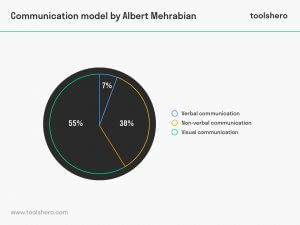
Video grabs attention because it fulfills the most critical elements of communication. According to Albert Mehrabian, a Professor Emeritus of Psychology at the University of California, effective communication is a combination of three elements. These are verbal, non-verbal, and visual communication. Of these, visual communication is responsible for the lion’s share of how much your audience absorbs what it is that you’re communicating.

Image: Tool Hero

And because video is by nature visual, and you have the ability to connect and really get your message and personality across, you have the chance to make a strong impact on prospects. Through the use of your voice, gestures, and the energy you bring forth in videos, you can make a positive and lasting impact on prospects.

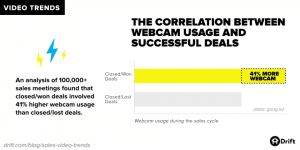
There’s also proof that video calls help close more deals. According to Drift, analysis of 100K sales meetings that took place via WebCam video generated 41% more closed/when deals.  

While that’s a convincing statistic, it’s important to note that video isn’t new. Prospects are used to video engagement and count it as a valid form of communication along the journey to making a purchase decision.

Image: Drift

Video also makes cold email prospecting less impersonal and can supercharge your outreach strategy. Sales get to share a strong and valuable message that really grabs attention where text can easily be glossed over. And this makes a real difference today. In a world where prospects are bombarded with emails from your competition, making that brief moment when your email is viewed count is crucial.

How to elevate sales engagements using video

Sales is a collection of human-to-human engagements with the goal of arriving at a destination where both parties are satisfied. While we could use common sales terminology, often a lot is lost in translation. 

Instead of talking about generating awareness, educating your customer, or close the deal, we’re going to introduce a different approach. This approach transforms sales engagements from being hard, metric-driven interactions with customers, into more personable and rewarding experiences for both parties, sometimes by using tools like Notta to capture and review conversations for deeper understanding.

The know, like, and trust philosophy

Back in 2017, Renae Gregoire, wrote a piece titled, “How to Infuse ‘Know,’ ‘Like,’ and ‘Trust’ Into Your Content”. While the concept is marketing related, it’s valid for sales, too. 

The know, like, and trust idea works like this:

For customers to commit to your product/service, they need to be able to trust you and your brand. Getting people to trust you and your brand requires sharing more about who you are and how your brand can make a difference in their lives. And to get to the place where your brand and solution(s) are considered, prospects need to know enough about you and your brand to want to pay attention and learn about your solution.

So you see, knowing leads to liking, and liking to trust and a greater probability of closing more business. 

Here’s how this process looks using video.

Make yourself (and your brand) known

What sales would typically call “generating awareness” is what I’ll refer to as “making yourself and your brand known”. This is one of the more weighted engagements with a prospect. Failing to make the right impression can result in a loss of interest and likely the chance to do business.

As you produce your first video, focus on an attention-grabbing and valuable message that addresses at least one pain point. If you don’t identify a problem that you can help solve, you’re not going to be seen as helpful. 

Your video must also be authentic to your personality, aligned with your brand, and also make your prospect stop and realize that they want to get to know more.

Nick Saltzman, an account executive with HubSpot agency partners, knew he needed to stand out from the crowd. He turned to video prospecting and went all in. He sent 191 email videos in one month and created 50 opportunities. Videos he made took 3-4 minutes to create, depending on how much he chose to personalize the video, about the time it takes to send a personalized email. 

Here’s a great example from VidYard. Pay attention to how Diana uses simple post-it notes to connect her prospect’s challenge with a tangible experience and drive her message home.

Create familiarity and trust

Familiarity and trust are born in proof that you are able to deliver value, and do so consistently. Often, the sales process is one that a lot of prospects are used to because they’re being called on by many other salespeople in different industries trying to sell them something. 

If you’re going to use video effectively to create familiarity and trust, it’s got to be done in a way that I like to call “superhuman”. 

We all want to be the very best versions of ourselves. To be superhuman versions of ourselves, we need to take values like caring, interest in your prospect’s situation, and a genuine desire to want to make a difference and amplify them. 

Amplification doesn’t mean becoming overbearing or overwhelming. It means being prepared, honest, helpful, and most importantly, sincere about helping your prospect experience a better, brighter future. Creating a video to connect with your audience is impactful, but transcribing your video to text helps reach a wider audience. Adding subtitles makes your content more accessible, allowing people with hearing impairments and non-native speakers to engage with your message.

When you embody these traits, prospects see that you’re looking beyond a quick sale. They become willing to commit more time and effort to learn more about what you have to offer. They’re open to trusting and becoming more familiar with you, the brand to represent, and your product.

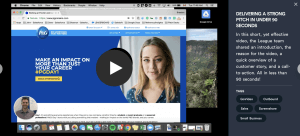
In this 90-second video, Braedon shares a success story with a client, and empathizes with his prospect. He also goes into detail, showing what his solution looks like, and that there’s more than can be learned by jumping on a 20-minute call. 

Close loops

“Closing loops” may not seem like the most sales-like term, but it’s one of the most accurate when it comes to selling. In typical sales language, this would be closing the deal. Typically that also means asking for the business. While you could do this over a WebCam call, closing loops is all about ensuring that you address any last-minute concerns or fear, uncertainty, or that the customer has about committing to your solution.

Closing loops can also be as simple as recapping on salient points before your next engagement. Often, prospects have so much happening during the day that they may not be adequately prepared for sales engagement. 

Sending a quick video that touches on the most important reasons for your call not only shows that you care about helping them find a solution, but also that you appreciate your prospect’s time and really want to maximize the time they’re giving you. Plus, you give them all they need to make a decision on what to do next.

Note: these should never be long-winded videos but more concise and value-driven.

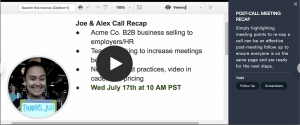
Alex does a great job of recapping her meeting with Joe. In under two minutes, she covers important points from their call and invites Joe to connect for any help. You can use this format, too. It works for anything from selling video membership site software to professional services.

Tips for nailing your sales videos

Using video to enhance the customer sales journey is powerful, but crafting even a three-minute promotional video requires time for scripting, filming, and editing. Strategic production efforts ensure each video effectively guides and engages customers at every stage.

Let’s look at tips for creating powerful engagements. Here are four steps to use to crush yours.

1. Prepare a script

While this may not sound exciting, or feel like you’re able to use your natural sales ability to engage, prepare a script. Scripts are important, even if you’re creating videos to monetize Instagram. They simplify the recording process. You’ll be able to communicate a clear and concise message, and not waste any of your prospect’s time.

2. Record in the right environment

Being in sales means that you may be in a room full of salespeople, and that might mean you’re a noisy environment. To create your best videos, find a place where you won’t be interrupted, and your videos won’t include any distractions like a colleague walking by or someone tapping in your shoulder to ask a question.

3. Make sure your equipment works

You can get away with a standard WebCam on the laptop, and a pair of headphones with the mic. But make sure that your recordings are clear. Video must be easy to make out and audio easy to hear. If you’re using a presentation software, make sure that the content of your presentation is legible on the video. I recommend testing your equipment with the trial video and having a colleague watch to pick up on any quality issues.

4. Let your personality shine

People love engaging with likable people. Smiling, gesticulating, and positive energy attracts more of the same. As you share your message, think about communicating as your best self, giving your prospects a look at your authentic approach to making a positive difference in their life, and their business.

Recording software

If you’ve never recorded a sales video, you may wonder about what software to use. The great news is that there are many great options available. Each offers unique features, but all allow you to easily record yourself and share the video through email. If you’re looking for the perfect tool, try Bonjoro, Loom, TinyTake, VidYard, and Soapbox.


Source: Bonjoro

Over to you

While marketing may have domain over areas like monetizing live video, running webinars, and social media video ads, video is still very much a tool that can be used to close the gap and drive sales. As you leverage video, don’t miss out on the opportunity to make human-to-human contact. That’s what drives sales success. To use video to elevate your customer sales journey, you have to focus on developing a relationship that leads to a mutually beneficial outcome.

Sales forecasting software uses predictive analytics and machine learning to analyze past data, including sales, customer demographics, and market conditions, to provide businesses with accurate predictions of future sales. All these can help you identify and take advantage of new opportunities before competitors.

In this article, we’ll explore 10 of the best sales forecasting software you should start using in 2025, covering their benefits and key features you should look for when choosing the best software for your needs.

Key Takeaways:

  • Accurate Sales Predictions: Leverage historical data and market trends.
  • Increased Efficiency: Automate data collection and analysis.
  • Better Decision-Making: Use insights for strategic planning.
  • Enhanced Collaboration: Improve team communication and alignment.

Contents

Introduction to Sales Forecasting Software

Sales forecasting software plays a crucial role in modern business strategies, helping organizations predict future sales with greater accuracy. By leveraging historical data, market trends, and advanced analytics, these tools provide businesses with actionable insights that drive growth and efficiency.

Why Sales Forecasting Matters

Accurate Sales Predictions

Accurate sales forecasting is essential for effective planning and decision-making. It helps businesses anticipate market demand, allocate resources efficiently, and set realistic sales targets.

Increased Efficiency

Automated data collection and analysis streamline the forecasting process, saving time and reducing the risk of human error. This leads to more efficient operations and a more productive sales team.

Better Decision-Making

Data-driven insights from sales forecasting software empower businesses to make informed decisions. By understanding market trends and customer behaviors, companies can adapt their strategies to maximize profitability.

Enhanced Collaboration

Sales forecasting tools promote better communication and collaboration within teams. By providing a unified view of sales data, these tools ensure that all team members are aligned and working towards common goals.

Key Benefits of Sales Forecasting Software

Improve Accuracy of Sales Predictions

Sales forecasting software uses sophisticated algorithms and machine learning to analyze historical sales data and market trends. This results in more accurate predictions, allowing businesses to adjust their strategies proactively.

Increase Efficiency and Productivity

By automating the data collection and analysis process, sales forecasting software frees up time for sales teams to focus on more strategic activities. This leads to higher productivity and more efficient use of resources.

Better Decision-Making Through Data-Driven Insights

Access to real-time data and predictive analytics helps businesses make better decisions. Sales forecasting software provides insights into customer behavior, market trends, and sales performance, enabling companies to stay ahead of the competition.

Enhanced Collaboration and Communication

Sales forecasting tools facilitate better communication within teams by providing a single source of truth. This helps reduce misunderstandings and ensures that everyone is working towards the same objectives.

Essential Features of Sales Forecasting Software

Automated Data Collection and Analysis

Automated data collection and analysis eliminate the need for manual data entry, reducing errors and saving time. This feature allows businesses to gather and analyze large volumes of data quickly and accurately.

Customizable Forecasting Models

Customizable forecasting models enable businesses to tailor their forecasts to their unique needs. These models can be adjusted based on historical data, market conditions, and specific business goals, providing more accurate predictions.

Integration with Other Business Tools

Integration with other business tools, such as CRM systems and marketing platforms, enhances the functionality of sales forecasting software. This integration allows for seamless data flow and provides a comprehensive view of sales performance.

Reporting and Visualization Tools

Advanced reporting and visualization tools help businesses understand and interpret their sales data. Customizable reports and interactive dashboards provide clear insights into sales trends and performance metrics.

Top Sales Forecasting Software 2025

If you’re looking for the best sales forecasting software, look no further. Here are our top 10 picks for 2025.

Teamgate CRM

Teamgate is a comprehensive sales management tool designed to enhance forecasting accuracy and streamline sales processes. With features like pipeline management, lead management, and KPI tracking, Teamgate helps businesses optimize their sales strategies and improve overall performance.

Teamgate Pricing

Teamgate offers a variety of pricing plans to cater to different business needs, including a free trial period to explore its features. The pricing is competitive and scalable, making it suitable for businesses of all sizes.

Teamgate Key Features

  • Pipeline and lead management
  • LinkedIn integration
  • KPI tracking and detailed analytics
  • User-friendly interface

Salesforce Forecasting

Salesforce is a leading CRM platform known for its powerful sales forecasting tools. It provides businesses with AI-driven insights into customer behavior and market trends, helping them make data-driven decisions and improve sales performance.

Salesforce Forecasting Pricing

Salesforce offers various pricing plans, ranging from basic packages to more comprehensive solutions. Pricing is flexible and can be tailored to meet the specific needs of any business, with options for annual or monthly subscriptions.

Salesforce Forecasting Key Features

  • AI-powered forecasting tools
  • Customizable pricing plans
  • Comprehensive CRM integration
  • Deep insights into customer behavior

HubSpot Sales Forecasting

HubSpot is a versatile CRM platform offering robust sales forecasting features, ideal for small to mid-sized businesses. Its tools include multi-pipeline forecasting, reporting, and analytics, making it a valuable asset for sales teams.

HubSpot Sales Forecasting Pricing

HubSpot provides a range of pricing options, from free basic plans to more advanced paid subscriptions. The flexible pricing structure allows businesses to choose a plan that fits their budget and requirements.

HubSpot Sales Forecasting Key Features

  • Multi-pipeline forecasting
  • In-depth reporting and analytics
  • User-friendly interface
  • Ideal for small to mid-sized businesses

Zoho CRM Forecasting

Zoho CRM offers powerful sales forecasting tools that help businesses create accurate forecasts based on historical patterns and trends. It’s a flexible solution with various pricing plans tailored to different business sizes.

Zoho CRM Forecasting Pricing

Zoho CRM provides a variety of pricing plans, ranging from basic to enterprise levels. The flexible pricing structure ensures that businesses of all sizes can find a plan that meets their needs.

Zoho CRM Forecasting Key Features

  • Historical data analysis
  • Flexible pricing plans
  • Customizable forecasting models
  • Integration with other business tools

Pipedrive Forecasting

Pipedrive is a popular choice for small and medium-sized businesses, known for its simplicity and effectiveness. It offers features like recurring revenue reports and goal setting based on historical data.

Pipedrive Forecasting Pricing

Pipedrive offers several pricing plans, including a free trial to explore its features. The pricing is designed to be affordable and scalable, making it suitable for growing businesses.

Pipedrive Forecasting Key Features

  • Recurring revenue reports
  • Goal setting based on historical data
  • Free trial available
  • Simple and effective interface

SugarCRM Forecasting

SugarCRM provides intuitive and user-friendly forecasting software suitable for businesses of all sizes. Its features include change detection, trend identification, and integration with various business tools.

SugarCRM Forecasting Pricing

SugarCRM offers competitive pricing plans that cater to different business needs. The plans are flexible and can be customized based on the size and requirements of the business.

SugarCRM Forecasting Key Features

  • Change detection and trend identification
  • Integration with business tools
  • User-friendly interface
  • Suitable for businesses of all sizes

Freshsales Forecasting

Freshsales provides a range of features to help businesses create detailed sales forecasts and set realistic revenue targets. Its customizable reports and versatile pricing plans make it a valuable tool for sales teams.

Freshsales Forecasting Pricing

Freshsales offers a variety of pricing plans, including a free tier and premium options. The flexible pricing structure allows businesses to choose a plan that fits their budget and needs.

Freshsales Forecasting Key Features

  • Detailed sales forecasts
  • Customizable reports
  • Versatile pricing plans
  • Realistic revenue targets

Insightly CRM

Insightly offers predictive analytics and automated forecasting tools that help businesses anticipate sales outcomes and make data-driven decisions. Its team collaboration tools further enhance sales forecasting effectiveness.

Insightly CRM Pricing

Insightly provides multiple pricing plans, including a free tier and various premium options. The plans are designed to be affordable and scalable, catering to businesses of all sizes.

Insightly CRM Key Features

  • Predictive analytics
  • Automated forecasting tools
  • Team collaboration features
  • Data-driven decision-making

Outreach

Outreach is known for its customizable forecasting models and real-time insights. The platform integrates seamlessly with other business tools, providing comprehensive sales management and enhancing forecast accuracy.

Outreach Pricing

Outreach offers a range of pricing plans, tailored to meet the needs of different businesses. The plans are flexible and can be customized based on the specific requirements of the company.

Outreach Key Features

  • Customizable forecasting models
  • Real-time insights
  • Seamless integration with business tools
  • Comprehensive sales management

Gong.io

Gong.io leverages AI-driven insights from customer conversations to generate accurate sales forecasts. Its advanced analytics and intuitive interface make it a powerful tool for optimizing sales strategies.

Gong.io Pricing

Gong.io provides various pricing plans, designed to cater to businesses of different sizes and needs. The plans are flexible and can be customized to suit specific requirements.

Gong.io Key Features

  • AI-driven insights
  • Advanced analytics
  • Intuitive interface
  • Optimization of sales strategies

Conclusion

A sales forecasting software is an invaluable tool for businesses of all sizes. It helps you accurately predict future sales and helps you plan for future growth. With sales forecasting software, you can set realistic goals and plan your resources accordingly.

When selecting the right sales forecasting software for your business, it is important to consider what features you will truly use and make sure they are available. You should also consider the fees associated with the software, the ease of use, and the customer support provided by the vendor.

With Teamgate, you can easily track your sales pipeline, find opportunities to close more deals faster, and accurately predict future revenue. Try Teamgate today free for 14 days and see how it can improve your sales forecasting and business operations.


FAQs: Top Sales Forecasting Software

Q: What is the primary purpose of sales forecasting software?
A: Sales forecasting software is designed to predict future sales based on historical data, market trends, and advanced analytics. It helps businesses plan strategically, allocate resources effectively, and set realistic sales targets.

Q: How can sales forecasting software improve business efficiency?
A: By automating data collection and analysis, sales forecasting software saves time, reduces errors, and allows sales teams to focus on strategic activities, thereby increasing overall productivity.

Q: What features should I look for in sales forecasting software?
A: Key features include automated data collection, customizable forecasting models, integration with other business tools, and robust reporting and visualization capabilities.

Q: Which sales forecasting software is best for small businesses?
A: Teamgate and Pipedrive are excellent choices for small businesses due to their user-friendly interfaces, affordable pricing plans, and comprehensive forecasting tools.

Q: How does AI enhance sales forecasting accuracy?
A: AI improves sales forecasting accuracy by analyzing vast amounts of data, identifying patterns, and making data-driven predictions. Tools like Salesforce and Gong.io leverage AI to provide deeper insights into customer behavior and market trends.

Q: Can sales forecasting software integrate with other CRM tools?
A: Yes, most sales forecasting software integrates seamlessly with other CRM tools to provide a comprehensive view of sales performance and customer interactions. Examples include Salesforce, Zoho CRM, and Outreach.

Q: What are the benefits of using customizable forecasting models?
A: Customizable forecasting models allow businesses to tailor their forecasts based on unique sales patterns, customer data, and business goals, leading to more accurate and relevant predictions.

Q: How do reporting and visualization tools aid in sales forecasting?
A: Reporting and visualization tools help businesses understand and interpret their sales data. They provide clear insights into sales trends and performance metrics through customizable reports and interactive dashboards.

Q: What should I consider when choosing sales forecasting software?
A: Consider factors such as key features, pricing, ease of use, integration capabilities, and customer support. It’s also helpful to take advantage of free trials to assess the software’s suitability for your business needs.

Q: How can enhanced collaboration improve sales forecasting?
A: Enhanced collaboration through sales forecasting tools ensures that all team members have access to the same data and insights, reducing misunderstandings and aligning efforts towards common sales goals.