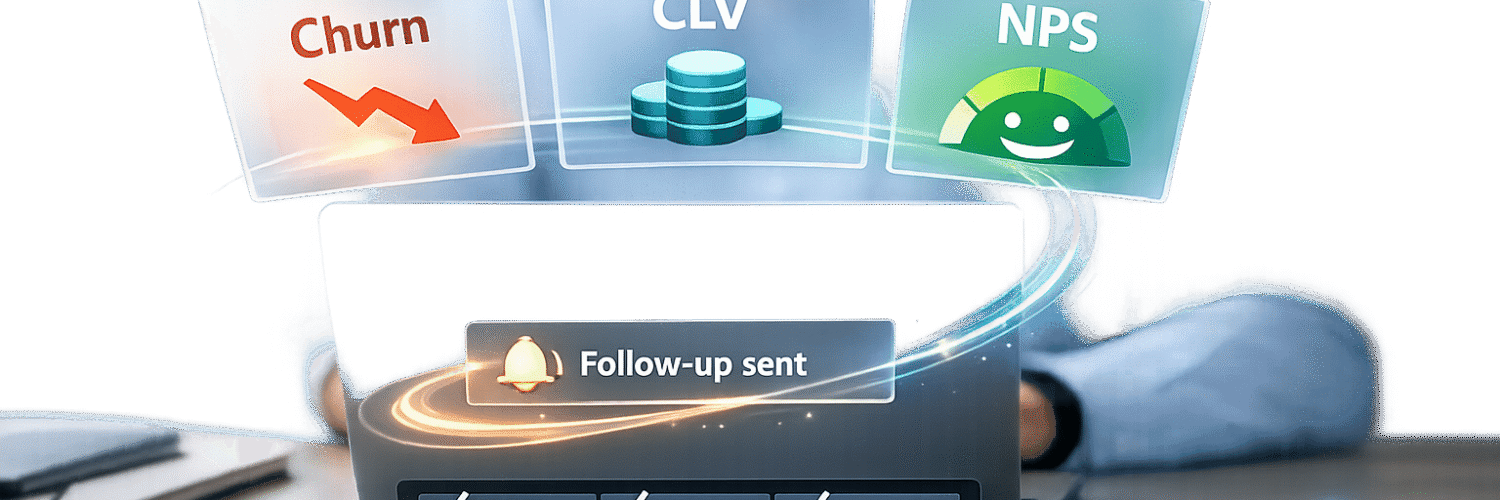

Most businesses lose customers due to missed follow-ups, unresolved issues, or unnoticed engagement drops – costing far more than retaining existing clients. Improving retention by just 5% can increase profits by 25% to 95%. A reliable CRM system can help by centralizing customer data, automating follow-ups, and tracking key metrics like churn rate, CLV, and NPS. Tools like Teamgate ensure sales teams stay organized and proactive, preventing churn and driving growth with clear insights and disciplined processes. Teamgate gives growing sales teams clarity, structure, and trustworthy pipeline insight – without enterprise CRM bloat or feature overload.
How to Use #CRM and Lifecycle Marketing to Drive #CustomerRetention
sbb-itb-5772723
Key Retention Metrics in CRM Data
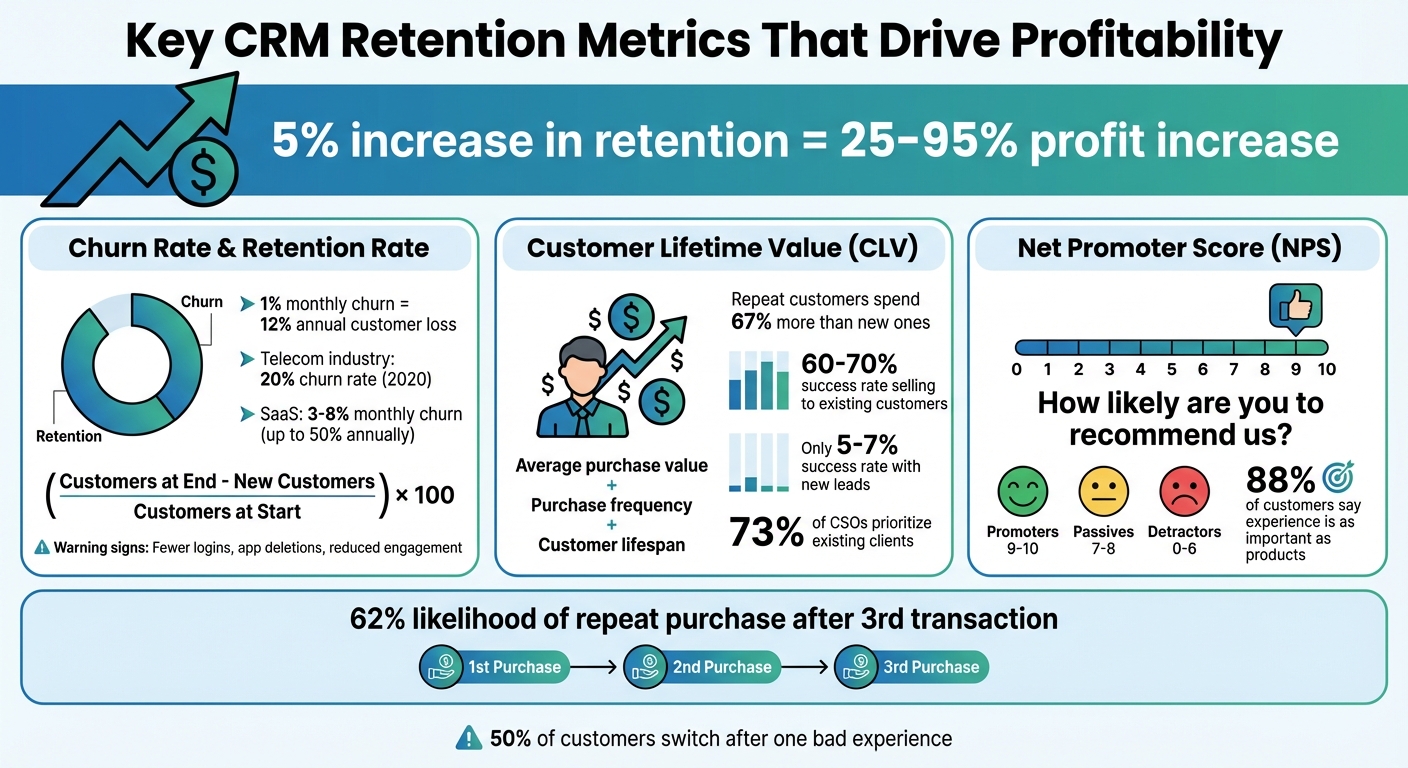
Customer Retention Metrics and Impact on Business Profitability
When it comes to keeping customers happy and loyal, understanding the right metrics – like churn, retention, Customer Lifetime Value (CLV), and Net Promoter Score (NPS) – is essential. These numbers offer clear insights into whether customers are sticking around, leaving, or becoming more valuable over time. By analyzing CRM data, teams can shift from guesswork to targeted strategies for improving retention. These metrics lay the groundwork for identifying challenges and creating effective, data-backed solutions.
Churn Rate and Retention Rate
Churn rate shows the percentage of customers lost during a specific time frame, while retention rate highlights the percentage that stays. CRM tools calculate these metrics by tracking actions like account cancellations, subscription lapses, or missed renewals. The formula for retention rate is:
((Customers at End of Period - New Customers Gained) / Customers at Start of Period) x 100.
Even small monthly churn rates can add up. For example, a 1% monthly churn means about 12% of customers are lost annually. CRM systems also flag early warning signs of churn, such as fewer logins, app deletions, or reduced engagement. Industries like telecommunications faced a 20% churn rate in 2020, while SaaS companies experience monthly churn rates between 3% and 8%, leading to annual losses as high as 50%.
Customer Lifetime Value (CLV)
CLV focuses on the long-term revenue potential of each customer. It estimates the total income a business can expect from a single customer over the course of their relationship. CRM systems calculate CLV using three key factors: average purchase value, purchase frequency, and customer lifespan – drawing from transaction data and engagement trends.
A higher CLV signals strong customer loyalty. For instance, repeat customers spend 67% more than new ones. Plus, selling to existing customers has a 60%–70% success rate, compared to just 5%–7% for new leads. CRM data also helps identify upsell and cross-sell opportunities by tracking product usage and engagement, allowing sales teams to act at the right moment.
"73% of chief sales officers (CSOs) put top priority on doing business with existing clients".
Net Promoter Score (NPS)
NPS gauges customer satisfaction and loyalty by asking a simple question: "How likely are you to recommend us to others?" CRM tools often deploy these surveys at strategic points. Responses group customers into promoters, passives, or detractors, giving teams a clear understanding of who supports the brand and who might be at risk.
"88% of customers say the experience a company provides is as important as its products or services".
By integrating NPS data with CRM systems, businesses can track customer sentiment in real time and address concerns before they lead to churn. Combining NPS results with engagement metrics paints a full picture of customer health, helping teams focus their retention efforts where they’ll have the greatest impact.
Using a CRM like Teamgate makes tracking these metrics straightforward. Teamgate offers intuitive dashboards that bring all this data together, helping teams take proactive, informed steps to improve customer retention and loyalty.
Finding Retention Problems in CRM Data
Spotting early warning signs in your CRM data is crucial to keeping customers from leaving. Patterns like missed follow-ups, declining engagement, or stalled deals often indicate trouble. By identifying these trends early, teams can act quickly to prevent churn and strengthen customer relationships.
Finding Patterns in Missed Follow-Ups
Missed follow-ups are a clear sign of trouble. Overdue tasks or deals stuck in the same pipeline stage for weeks often mean momentum has stalled. Similarly, contacts with no outreach for extended periods are at a higher risk of disengaging. The longer these lapses persist, the harder it becomes to re-establish a connection.
CRM systems make it easier to track and address these gaps. For example, deals without a defined next step or tasks that are overdue stand out in dashboards, signaling where immediate action is needed. Teamgate CRM tackles this head-on by requiring every deal to have a follow-up action. Overdue tasks are flagged prominently, ensuring follow-ups become a consistent process rather than something that slips through the cracks. This approach helps prevent opportunities from quietly fading away.
Engagement Trends and Behavior Analysis
Beyond follow-ups, shifts in customer behavior can signal retention risks. CRM tools can track how often customers interact with your team, how quickly they respond to outreach, and their overall activity levels. A drop in engagement – like fewer logins, slower response times, or reduced usage – can indicate that a customer is losing interest.
Metrics such as email open rates, response times, and communication frequency help distinguish active customers from disengaged ones. Additionally, an uptick in support tickets or unresolved issues may point to dissatisfaction that could lead to churn. Behavioral segmentation allows teams to group customers by their activity levels, focusing attention on those showing signs of stagnation. Notably, the likelihood of a customer making another purchase jumps to 62% after their third purchase, emphasizing the importance of proactive engagement tracking.
Predictive Analytics for Risk Prevention
Modern CRMs use predictive analytics to flag at-risk accounts. By analyzing historical data, these tools can detect patterns like declining product usage, stalled deals, or negative customer sentiment. This proactive approach allows teams to address issues before they escalate. A 5% boost in customer retention can increase profits by 25% to 100%, highlighting the financial impact of early intervention.
Customer health scores, which combine data points like usage frequency, support history, and feedback, provide a clear view of retention risks. Accounts with dropping health scores trigger alerts, prompting teams to act quickly. For instance, Teamgate CRM dashboards surface key indicators like deal age, activity levels, and follow-up coverage. This enables managers to focus on real risks rather than guessing, turning retention efforts into a proactive, data-driven strategy. By identifying aging deals and disengaged accounts, teams can intervene early to preserve relationships and improve outcomes.
How to Use CRM Data to Improve Retention
Spotting retention risks is just the start – the real impact comes from using CRM data to take meaningful action. By automating follow-ups, keeping data accurate, and relying on clear dashboards, you can create a system that supports consistent engagement and informed decisions.
Automating Follow-Ups and Task Reminders
Relying on memory for follow-ups is a recipe for missed opportunities. CRM automation steps in by triggering actions when specific conditions are met. For example, if a customer’s engagement drops, the system can create a task for their account manager or add them to a targeted email campaign.
Research shows that improving customer retention by just 5% can increase profits by 25% to 95%. Yet, many businesses lose customers because follow-ups are forgotten. Teamgate CRM helps solve this by ensuring every deal has a clear next step. Overdue tasks are flagged, and automated reminders handle routine touchpoints like renewal dates or customer anniversaries. This turns follow-up into a seamless process rather than an occasional effort.
Behavior-based triggers are particularly powerful. For instance, if a customer hasn’t logged in for two weeks, the CRM can alert the right team member, ensuring the kind of personalized outreach that 71% of customers now expect.
Maintaining Clean Pipeline Data for Retention
Accurate data is just as important as timely follow-ups for retaining customers. If CRM data is outdated or incomplete, retention efforts can falter. Missing or unclear customer information makes personalized outreach difficult, and stagnant deals without next steps may quietly slip away. Regular data reviews and clear data-entry processes are key to avoiding these pitfalls.
Centralized communication is where clean data starts. A CRM should capture all interactions – emails, calls, meetings, and support tickets – in one place. This creates a full view of customer activity, reducing miscommunication between teams. Custom fields can track unique customer details, while product analytics integrations reveal real-time usage trends that signal potential churn risks.
Teamgate CRM actively supports pipeline accuracy. Deals must always include a next action, and the system highlights aging opportunities before they become inactive. This approach prevents revenue loss caused by forgotten deals and ensures forecasts are based on reliable, actionable data.
With up-to-date records, businesses can avoid the costly mistake of losing customers after a single bad experience – a scenario that drives up to 50% of customers to competitors.
Using Dashboards for Data-Driven Decisions
Accurate data enables dashboards that help teams make informed decisions. Instead of waiting until renewal time to uncover issues, dashboards can track early warning signs like engagement levels, health scores, or time since the last interaction. This allows teams to act before problems escalate.
A good dashboard pulls together multiple data points. For example, customer health scores may combine factors like usage frequency, support interactions, and feedback to identify risks. Monitoring "time since last interaction" can highlight accounts that need attention, while automated alerts notify account managers when health scores fall below a certain level.
Teamgate CRM dashboards focus on the metrics that matter most – such as deal age, activity levels, and next-step coverage. This visibility helps managers spot risks and opportunities, turning raw data into actionable insights. By making retention efforts measurable and repeatable, dashboards ensure teams can consistently improve outcomes.
Examples: Retention Improvements Through CRM Data
Retention strategies are most effective when they’re deeply rooted in actionable data. Below are some real-world examples of how businesses have used CRM data to cut churn rates and build stronger customer relationships through automation and proactive coaching.
Retention Gains Through Automated Workflows
Adobe Creative Cloud has implemented an automated cancellation process that steps in when a customer tries to cancel mid-cycle. This system offers a retention incentive, such as two free months of service, to encourage the customer to stay. Similarly, Best Buy uses CRM-powered feedback systems to identify customers with low satisfaction or frequent support interactions. These flags trigger automated follow-up workflows, ensuring that at-risk customers receive timely attention.
These automated workflows not only reduce churn but also create a foundation for more personalized and data-driven retention strategies.
Data-Backed Coaching for Better Retention
Automated workflows are just the starting point. Data-backed coaching takes retention efforts further by enabling more precise and proactive interventions. With CRM data, sales managers can move from reacting to churn to preventing it. For example, when product analytics are integrated with CRM systems, managers can spot warning signs like declining usage or reduced engagement. This allows them to coach sales reps on how to re-engage these accounts before they churn.
Platforms like Teamgate CRM enhance this coaching model by highlighting critical metrics such as deal age, activity levels, and next-step coverage. These insights help managers quickly identify accounts that need attention, making retention a structured and repeatable process instead of a reactive effort. Teamgate helps growing sales teams maintain clarity and focus, ensuring that no account falls through the cracks.
Conclusion
Customer retention doesn’t happen by chance – it’s built on clear visibility and disciplined action. By focusing on key metrics like churn rate, customer lifetime value (CLV), and Net Promoter Score (NPS), you can spot early warning signs and address issues before customers walk away. Digging into CRM data, such as missed follow-ups or declining engagement, helps shift your approach from reacting to problems to proactively preventing them. These efforts directly tie to increased profits.
What truly drives retention are practical, repeatable strategies. Automating follow-ups ensures no customer is overlooked. Keeping your pipeline data accurate allows for sales forecasting and more effective coaching. Dashboards transform raw numbers into insights you can act on immediately.
These strategies come together in tools like Teamgate CRM, which prioritizes discipline, pipeline clarity, and actionable insights. It eliminates the chance of missing next steps, highlights aging deals before they slip away, and equips managers with real-time indicators – like deal age and activity trends – to coach their teams based on facts, not assumptions.
Retention thrives on systems that ensure consistent follow-up, maintain accurate data, and provide visibility into every customer interaction. When your CRM doesn’t just track revenue but actively safeguards it, steady growth becomes a natural outcome.
FAQs
What CRM data signals churn risk the earliest?
The first indicators of churn risk in CRM data are low customer activity and overlooked interactions. These show up in patterns like fewer emails, calls, or meetings logged over time. By keeping an eye on these trends, you can step in early to resolve issues and re-engage customers before they drift away.
How do I calculate CLV from my CRM data?
To calculate Customer Lifetime Value (CLV) using CRM data, focus on three key metrics: average purchase value, purchase frequency, and customer lifespan. Multiply these figures to estimate the total revenue generated by a customer. Then, subtract acquisition and ongoing costs to determine the net profit. CRM data, which tracks transactions and interactions, provides the insights needed to refine these calculations, offering a clearer picture of customer retention and overall profitability.
How does Teamgate CRM enforce consistent follow-up?
Teamgate CRM helps you stay on top of every deal by making follow-ups a built-in habit. It requires setting mandatory next steps for each deal, flags opportunities that are aging or being overlooked, and seamlessly integrates tasks, reminders, and straightforward automations. This approach ensures no opportunity slips through the cracks and keeps your deals progressing smoothly.