Get a free sales audit to uncover hidden revenue opportunities!

Implementing various tools and practices, up-to-date businesses strive to capture and hold leads. And for many reasons, this can often force business owners to run around in circles. Modern companies have chosen online marketing as the primary tool for their promotion, but we should also consider offline methods to generate leads and increase sales. Moreover, these two approaches could be interrelated. For example, cold calling will be more effective when the target user can easily find your website (this is where search engine optimization helps) and ensure you’re a trusted company.

This article explains two different marketing channels – SEO and cold calling – in words that are easy to understand. You will learn the effectiveness of SEO strategy, dive into the cold calling process, and discover how to make these essentials work for your company.

The data behind effective SEO

The effectiveness of SEO is hard to overvalue. Search engine optimization is a powerful digital marketing channel that can dramatically improve a website’s online visibility in search results—an essential advantage for local businesses offering same day courier services. The reality is that many online customers research the goods they desire by employing a search engine before making a purchase. And almost 50% of marketers evaluate SEO outcomes, reporting that organic search delivers the best ROI. 

This data shows that a robust and well-thought-out SEO strategy that contains adjustments to technical SEO, website content, on-site SEO, and off-site SEO is beneficial for businesses and their prospects. Consumers find what they need and have a delightful shopping experience, while companies enlarge their customer pool, promote their products and services, and grow their revenue.

The right SEO strategy helps businesses comply with search engines’ rules and achieve better rankings in search results. The worldwide desktop market share of leading search engines indicates Google, which takes almost 82% of the global search market, as a dominating search engine. So, to make your ranking positions game-changing, follow Google Search algorithm regulations and their ongoing updates. 

Effective SEO here leads to first-page rankings and a better CTR. For example, businesses that retain the top three positions in Google SERPs get the lion’s share of all clicks. The first rank obtains almost 29% of clicks. The second place gets over 15%, and the third position, 11%. After the third position, the percentage decreases steadily, which is crucial to consider.

Why SEO is the oxygen for your website

Even though there are several marketing channels to benefit from, the effectiveness of SEO makes it the most beneficial due to its straightforward approach, cost-effectiveness, and long-lasting results. At its core, SEO refers to improving website structure and content to make site pages accessible and relevant for users and web crawlers. Thus, by implementing proven search engine optimization practices, you can boost your rankings in organic search and get more potential clients acquainted with your products or services.

In essence, SEO helps to obtain relevant traffic to your website. You can attract your target audience, as in-depth keyword research will collect data on how users search for goods in your business niche and implement the insights within your site pages. Using the appropriate keywords will allow you to enhance your rankings by getting more clicks and impressions. Moreover, with SEO, you can gather information on your competitors’ performance and utilize the retrieved data for your benefit. If you opt for a state-of-the-art SEO strategy, ongoing rankings monitoring is on the list. 

By analyzing your website pages’ positions in organic search results, you can promptly remove the weak points and realign your efforts to create a blueprint for coming optimization activities. For this, you’ll need a rank tracker like the one by SE Ranking, which allows you to understand which keywords you are ranking for at top results, pinpoint pages competing for the same keyword, track ranking positions from different locations to a specific zip code, acquire valuable traffic forecasts, and more. You can also connect your Google Search Console, and Google Analytics accounts to get even deeper insights to make sure that your SEO strategy is working.

Search engine optimization allows for improving different areas of your website, considering its speed and accessibility, the relevance of information, user experience, overall site architecture, and more. SEO encourages you to make your business website a better place for customers and boost your brand awareness.

It is a worthwhile, high-return investment that allows for consistent, high-quality traffic at a low cost. However, bear in mind that you should update the content to meet customer demand and comply with search engine ranking algorithms.

Myth: Cold calling is dead

Stirring up controversy is a scourge of our times. That is why the web is full of information on unlikely search engine optimization outcomes and grinning predictions about the death of SEO every forthcoming year. However, the truth is that SEO will be valuable for businesses as long as search engines exist. And every new Google Search Algorithm update with precise attention to website structure and content undeniably proves this.

Apparently, SEO is not the only essential for businesses that are surrounded by myths and fake facts. The effectiveness of cold calling also invites many questions; some even consider cold calling dead and irrelevant for businesses. However, cold calling will be in-demand as long as there are dedicated sales reps and prospects fascinated by something that may meet their needs. Thus, those who think that cold calling is dead are certainly wrong.

Traditional cold calling, when salespeople have no idea whom they attempt to capture, is outdated. The reality of social networks and web surfing as a daily routine has affected the way sales reps perform cold calling. Nowadays, you need to find details about the people you want to attract with your calls. So modern cold calling has been enhanced with cold calling best practices like personalization and research on customer data, which has made it different but not dead.

The data behind effective cold calling

In essence, cold calling refers to a sales and marketing technique that involves reaching out to leads via outbound phone calls. With cold calling, you can reach businesses (B2B) and individual consumers (B2C). Almost 70% of buyers accept cold calls, and over 50% of C-level clients prefer to be contacted by phone, which means that cold calling still matters.

Effective cold calling means valuing prospects and building relationships with people you do business with, so it goes far beyond regular selling. Responsive cold calls with a personalized approach can bring exceptional data insights on the quality of leads, issues in the target markets, expectations for products and services, and existing strategy gaps. Besides, appropriate cold calling can even help with investigating competitors’ efforts. Sales agents can gather information on the number of prospects using competitor goods and discover the weak points competitors embellish or hide.

Process of cold calling

The effectiveness of cold calling depends on three primary stages: pre-contact, the cold call itself, and the follow-up. Below you can find some handy cold calling tips that will help you to hit the mark.

Preparing for the call

Preparation is a fundamental stage of cold calling. To capture prospects, you need to make them want to hear you out until the end of the call. Therefore, take your time to get to know the people you intend to pitch by gathering more than just their names and phone numbers. Consider searching for their current job position, the industry they work in, competitors’ products they may opt for, etc. 

Additionally, try to find them on social media like Instagram or LinkedIn. Instagram will help you to discover their hobbies and interests, while LinkedIn will assist you in getting their career information and connections. This data will boost your chances of closing the deal as you will be able to understand if your products or services can resolve the problems they may be facing.

Also, think about the right tone for the upcoming conversation. Introduce yourself accurately, clearly state the company you work for, and convey the purpose of your phone call. Find a good conversation opener to personalize the call and sound more polite, friendly, and uplifting. You can excite your leads with ad-libbing or switch to cold calling scripts if you don’t have a knack for out-of-the-blue conversations. Eventually, to avoid awkward situations and frustrated prospects, learn the ideal time for the call and check the time zone.

During the call

Once the conversation is in progress, it is the right time to use an active listening approach and ask open-ended questions. Active listening will help you stay on the same page with your leads and ask only pertinent questions without bothering and confusing the person on the other end of the line. Moreover, it also helps to show your prospects they are respected and valued, so they are more likely to listen to your pitch and provide you with important information.

As for the open-ended questions, they come as an excellent tool to prolong your communication with leads and boost the effectiveness of cold calling. You can precisely understand prospects’ pains and provide better solutions. Just stay consistent and avoid questions that may elicit innuendos. Then do your best to evade yes/no questions and avoid the why questions overload, as such a conversation will look like an obnoxious interrogation.

After the call

Professional cold calling never ends after putting the phone down. After the call, you can analyze the strengths and weaknesses of the conversation from your side. To do so, record all calls with prospects, as this is key to improving your performance and seamlessly reviewing the main parts of each call. Also, use handy notes for additional insights after ending the call to memorize all the essential information that can affect future communications.

Additionally, you can utilize the power of follow-ups to achieve your goals. Once a call is over, send a follow-up email to acknowledge all the decisions made during the conversation and to help prospects recognize you. Here, persistence and regular progress tracking are crucial to making sales and hearing back from prospects. 

Blend cold calling and SEO

The effectiveness of SEO and cold calling is hard work that provides excellent results. Search engine optimization and cold calling can perfectly complement each other with a well-thought-out strategy used for these two essentials. Even though SEO and cold calling may serve different purposes, they are both similar in that they stimulate you to discover your customers and understand their needs and anticipations. Moreover, they help to improve all your marketing efforts, enhancing company performance and outcomes.

With an effective combination of cold calling and SEO, you can operate valuable data that covers everything related to your online promotion and customer satisfaction.

For even deeper insights into your SEO performance, consider integrating a SERP scraper API. This allows you to programmatically track keyword rankings, monitor competitor performance, and extract real-time search engine results data – crucial for refining both your cold calling pitch and digital strategy.

Conclusion

Measuring the effectiveness of cold calling and SEO is crucial for every company striving for online success and a steady customer flow. When employed separately, SEO and cold calling have their pros and cons. Nevertheless, they are brilliant when working together. 

Search engine optimization aims for coherent site architecture, evergreen content, appropriate keywords corresponding to user search queries, and excellent website usability and accessibility that draws more curious users. Meanwhile, cold calling provides you with priceless information, such as product or service accuracy, competitors’ performance, client preferences, and more. A blend of SEO and cold calling is also a great solution for company teams’ collaboration. You will be able to fine-tune all the business processes on short notice.

Break a leg!
Video is a powerful tool. But often, it doesn’t get the kind of attention it should in the sales world. It’s seen as an essential element in marketing, however, marketing shouldn’t be the only team that benefits from it. Sales has the opportunity to get in front of more prospects with more powerful messaging, simply because video is engaging. 

If you’ve been on the fence about using video to create a more engaging and successful sales experience for your customer, keep reading. This blog post is designed to give you a practical approach to using video to call on prospects, and develop the kind of rapport that helps prospects down the sales funnel.

But first, let’s examine why video is so important to sales.

Sales videos: a potent tool

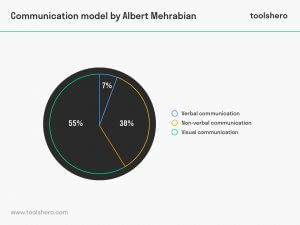
Video grabs attention because it fulfills the most critical elements of communication. According to Albert Mehrabian, a Professor Emeritus of Psychology at the University of California, effective communication is a combination of three elements. These are verbal, non-verbal, and visual communication. Of these, visual communication is responsible for the lion’s share of how much your audience absorbs what it is that you’re communicating.

Image: Tool Hero

And because video is by nature visual, and you have the ability to connect and really get your message and personality across, you have the chance to make a strong impact on prospects. Through the use of your voice, gestures, and the energy you bring forth in videos, you can make a positive and lasting impact on prospects.

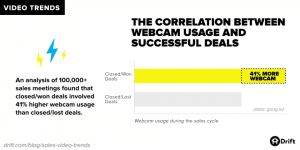
There’s also proof that video calls help close more deals. According to Drift, analysis of 100K sales meetings that took place via WebCam video generated 41% more closed/when deals.  

While that’s a convincing statistic, it’s important to note that video isn’t new. Prospects are used to video engagement and count it as a valid form of communication along the journey to making a purchase decision.

Image: Drift

Video also makes cold email prospecting less impersonal and can supercharge your outreach strategy. Sales get to share a strong and valuable message that really grabs attention where text can easily be glossed over. And this makes a real difference today. In a world where prospects are bombarded with emails from your competition, making that brief moment when your email is viewed count is crucial.

How to elevate sales engagements using video

Sales is a collection of human-to-human engagements with the goal of arriving at a destination where both parties are satisfied. While we could use common sales terminology, often a lot is lost in translation. 

Instead of talking about generating awareness, educating your customer, or close the deal, we’re going to introduce a different approach. This approach transforms sales engagements from being hard, metric-driven interactions with customers, into more personable and rewarding experiences for both parties, sometimes by using tools like Notta to capture and review conversations for deeper understanding.

The know, like, and trust philosophy

Back in 2017, Renae Gregoire, wrote a piece titled, “How to Infuse ‘Know,’ ‘Like,’ and ‘Trust’ Into Your Content”. While the concept is marketing related, it’s valid for sales, too. 

The know, like, and trust idea works like this:

For customers to commit to your product/service, they need to be able to trust you and your brand. Getting people to trust you and your brand requires sharing more about who you are and how your brand can make a difference in their lives. And to get to the place where your brand and solution(s) are considered, prospects need to know enough about you and your brand to want to pay attention and learn about your solution.

So you see, knowing leads to liking, and liking to trust and a greater probability of closing more business. 

Here’s how this process looks using video.

Make yourself (and your brand) known

What sales would typically call “generating awareness” is what I’ll refer to as “making yourself and your brand known”. This is one of the more weighted engagements with a prospect. Failing to make the right impression can result in a loss of interest and likely the chance to do business.

As you produce your first video, focus on an attention-grabbing and valuable message that addresses at least one pain point. If you don’t identify a problem that you can help solve, you’re not going to be seen as helpful. 

Your video must also be authentic to your personality, aligned with your brand, and also make your prospect stop and realize that they want to get to know more.

Nick Saltzman, an account executive with HubSpot agency partners, knew he needed to stand out from the crowd. He turned to video prospecting and went all in. He sent 191 email videos in one month and created 50 opportunities. Videos he made took 3-4 minutes to create, depending on how much he chose to personalize the video, about the time it takes to send a personalized email. 

Here’s a great example from VidYard. Pay attention to how Diana uses simple post-it notes to connect her prospect’s challenge with a tangible experience and drive her message home.

Create familiarity and trust

Familiarity and trust are born in proof that you are able to deliver value, and do so consistently. Often, the sales process is one that a lot of prospects are used to because they’re being called on by many other salespeople in different industries trying to sell them something. 

If you’re going to use video effectively to create familiarity and trust, it’s got to be done in a way that I like to call “superhuman”. 

We all want to be the very best versions of ourselves. To be superhuman versions of ourselves, we need to take values like caring, interest in your prospect’s situation, and a genuine desire to want to make a difference and amplify them. 

Amplification doesn’t mean becoming overbearing or overwhelming. It means being prepared, honest, helpful, and most importantly, sincere about helping your prospect experience a better, brighter future. Creating a video to connect with your audience is impactful, but transcribing your video to text helps reach a wider audience. Adding subtitles makes your content more accessible, allowing people with hearing impairments and non-native speakers to engage with your message.

When you embody these traits, prospects see that you’re looking beyond a quick sale. They become willing to commit more time and effort to learn more about what you have to offer. They’re open to trusting and becoming more familiar with you, the brand to represent, and your product.

In this 90-second video, Braedon shares a success story with a client, and empathizes with his prospect. He also goes into detail, showing what his solution looks like, and that there’s more than can be learned by jumping on a 20-minute call. 

Close loops

“Closing loops” may not seem like the most sales-like term, but it’s one of the most accurate when it comes to selling. In typical sales language, this would be closing the deal. Typically that also means asking for the business. While you could do this over a WebCam call, closing loops is all about ensuring that you address any last-minute concerns or fear, uncertainty, or that the customer has about committing to your solution.

Closing loops can also be as simple as recapping on salient points before your next engagement. Often, prospects have so much happening during the day that they may not be adequately prepared for sales engagement. 

Sending a quick video that touches on the most important reasons for your call not only shows that you care about helping them find a solution, but also that you appreciate your prospect’s time and really want to maximize the time they’re giving you. Plus, you give them all they need to make a decision on what to do next.

Note: these should never be long-winded videos but more concise and value-driven.

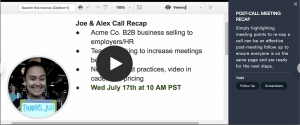
Alex does a great job of recapping her meeting with Joe. In under two minutes, she covers important points from their call and invites Joe to connect for any help. You can use this format, too. It works for anything from selling video membership site software to professional services.

Tips for nailing your sales videos

Using video to enhance the customer sales journey is powerful, but crafting even a three-minute promotional video requires time for scripting, filming, and editing. Strategic production efforts ensure each video effectively guides and engages customers at every stage.

Let’s look at tips for creating powerful engagements. Here are four steps to use to crush yours.

1. Prepare a script

While this may not sound exciting, or feel like you’re able to use your natural sales ability to engage, prepare a script. Scripts are important, even if you’re creating videos to monetize Instagram. They simplify the recording process. You’ll be able to communicate a clear and concise message, and not waste any of your prospect’s time.

2. Record in the right environment

Being in sales means that you may be in a room full of salespeople, and that might mean you’re a noisy environment. To create your best videos, find a place where you won’t be interrupted, and your videos won’t include any distractions like a colleague walking by or someone tapping in your shoulder to ask a question.

3. Make sure your equipment works

You can get away with a standard WebCam on the laptop, and a pair of headphones with the mic. But make sure that your recordings are clear. Video must be easy to make out and audio easy to hear. If you’re using a presentation software, make sure that the content of your presentation is legible on the video. I recommend testing your equipment with the trial video and having a colleague watch to pick up on any quality issues.

4. Let your personality shine

People love engaging with likable people. Smiling, gesticulating, and positive energy attracts more of the same. As you share your message, think about communicating as your best self, giving your prospects a look at your authentic approach to making a positive difference in their life, and their business.

Recording software

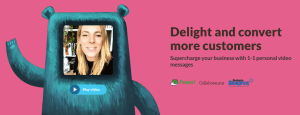
If you’ve never recorded a sales video, you may wonder about what software to use. The great news is that there are many great options available. Each offers unique features, but all allow you to easily record yourself and share the video through email. If you’re looking for the perfect tool, try Bonjoro, Loom, TinyTake, VidYard, and Soapbox.


Source: Bonjoro

Over to you

While marketing may have domain over areas like monetizing live video, running webinars, and social media video ads, video is still very much a tool that can be used to close the gap and drive sales. As you leverage video, don’t miss out on the opportunity to make human-to-human contact. That’s what drives sales success. To use video to elevate your customer sales journey, you have to focus on developing a relationship that leads to a mutually beneficial outcome.

Digital marketing has transformed the advertising industry tremendously. In fact, it has become pivotal to developing advertising strategies. But, there are two forms of digital advertising: search ads and display advertising. The former was the most popular in the advent of digital advertising, but display advertising has outdone text ads by a pretty significant margin in the last three years.

Experts predict a 25% increase for the next five years due to the soaring demand for display content among consumers. Here’s an in-depth overview of what display advertising is and the types marketers should use to foster growth.

Contents

<

Understanding Display Advertising

The Essence of Display Advertising

Display advertising is the digital equivalent of a billboard that you encounter on the internet’s highways. Yet, it transcends the static nature of traditional billboards, offering interactive, dynamic, and targeted content tailored to the online consumer’s interests and behaviors. At its core, display advertising is a visual-based form of online advertising that encompasses banners, images, and videos to convey a marketing message across various websites, social media platforms, and digital environments.

The Strategic Role in Marketing

Display advertising doesn’t just aim to inform; it seeks to engage and persuade. It plays a pivotal role in the marketing mix, offering versatility in strategy from brand awareness and engagement to conversion and retention. By leveraging data analytics and targeting technologies, display ads can reach a specific audience segment at optimal times and places, making every impression count.

A Journey Through Time

The evolution of display advertising is a testament to the internet’s rapid growth and the ever-changing landscape of digital marketing. From the first banner ad that graced the internet in 1994, proclaiming “Have you ever clicked your mouse right HERE? You will,” to today’s sophisticated programmatic advertising platforms, display advertising has come a long way. It has adapted to the shifts in consumer behavior and technological advancements, becoming more personalized, interactive, and measurable.

Display Advertising Categories

It is a form of sales and marketing that attracts the audience to a website, social media platform, or other digital channels to perform a particular action (click-through a landing page or purchase an item). The ads are also used for retargeting a campaign encouraging a visitor to return to the website to take action. The adverts may be in the form of images, videos, flash or audio and may appear on specific websites on the internet. Here’s a breakdown of the different categories:

Banner Ads

It is an advertisement displayed on a web page that consists of an image (gif, .jpg, .png) or a multimedia object. Banner ads can be animated or static, depending on the media used to create it.  Banner ads function the same way as regular table banners, and other forms of print media advertise products, inform customers about a new product and create brand awareness. Some advantages of using banner ads include:

  • Announce sales offers and discounts
  • Increase sales: Customers are then encouraged to purchase certain products
  • Increase customer traffic: the banners encourage visitors to go to the advertiser’s website

Rich Media

This kind has interactive features like audio, video, and clickable elements that encourage visitors to engage with the content. The ad provides more ways of engaging an audience as it can float and expand. Additionally, marketers can access aggregated metrics like the audience video completions, their behavior, and the number of expansions.

Rich media display advertising allows marketing agencies to create elaborate ads that can trigger a user’s response. What’s more, the introduction of HTML5 technology enables advertisers to include different content (tweets, videos, games) in one placement. Some advantages of using rich media are:

  • Access to better metrics than traditional advertisements
  • Increased view rates, conversions, and click-through rates
  • A better user experience

Interstitial Ads

They are full-screen ads designed to cover the interface of a website. Interstitial ads are a popular form of advertisement used on mobile ads due to their high impression rate. Since they appear between the content, they are best placed at natural breaks, e.g., in-between game levels. This full-coverage differentiates them from other ads like banner ads and pop-ups. Other reasons marketers use these ads include:

  • High click-through rates that lead to higher conversion rates
  • Their large sizes that leave large impressions on the target audience

Video Ads

It is the use of video content to advertise products. Marketers use this form of advertising because it allows them to connect with the audience on a personal level and is relatively cheap to create. Also, the proliferation of mobile devices has spurred the growth of video advertising.
A report by IAB Video Advertising Spend shows that two-thirds of video ad revenue originates from mobile devices. There are three types of video ad formats, which are Linear video ads that mimic TV commercials, non-linear video ads that run along with video content, and companion ads that include images and texts.

Types of Display Advertising

As we delve deeper into the world of display advertising, it becomes evident that one size does not fit all. The diversity in types of display advertising allows marketers to craft campaigns that resonate with their target audience, align with their objectives, and fit within their budget. Here, we explore the primary types of display advertising that have become essential tools in the digital marketer’s toolkit.

Standard Display Ads

Standard display ads are the foundational elements of display advertising. These ads appear as static or animated images or banners placed on websites within ad networks. They are versatile and straightforward, offering a direct approach to conveying a message or promoting a product. However, their simplicity does not detract from their effectiveness. With compelling creative elements and strategic placement, standard display ads can significantly enhance brand visibility and user engagement.

Responsive Display Ads

In a world where consumers switch between devices like channels on a television, responsive display ads stand out for their adaptability. These ads automatically adjust their size, appearance, and format to fit any ad space available, ensuring optimal display across different screen sizes and devices. This fluidity not only improves the user experience but also maximizes the ad’s reach and impact. Responsive ads are a testament to the evolution of display advertising, embracing flexibility in a multi-device world.

Retargeting Ads

Retargeting ads serve as a digital reminder, nudging users who have previously interacted with a brand but did not convert. These ads strategically reappear to these users as they browse the internet, keeping the brand top of mind and encouraging them to complete a desired action, such as making a purchase. Retargeting is a powerful tool in converting potential interest into tangible action, leveraging past engagement to foster future transactions.

Social Media Display Ads

Social media platforms are not just social networking sites anymore; they are powerful advertising landscapes where display ads thrive amidst engaging content. Social media display ads leverage the platforms’ vast user data to offer unparalleled targeting capabilities, from demographic and psychographic segmentation to behavior-based targeting. Each social media network offers unique ad formats tailored to its environment and audience behaviors, such as Facebook’s Carousel Ads, Instagram’s Sponsored Posts, and Twitter’s Promoted Tweets. These ads are designed to blend seamlessly with the user’s feed, offering a less intrusive advertising experience that can drive higher engagement and conversion rates.

Native Advertising

Native advertising is the chameleon of the display advertising world. These ads match the look, feel, and function of the media format in which they appear, disguising themselves as natural content rather than blatant advertisements. By aligning closely with the user’s browsing experience, native ads reduce ad fatigue and improve user engagement. They can take various forms, including sponsored content articles, in-feed ads, and recommended posts. The key to successful native advertising lies in its relevance and value to the audience, providing content that is not only promotional but also informative or entertaining.

Video Display Ads

As digital consumption patterns shift towards a preference for video content, video display ads have surged in popularity and effectiveness. These ads incorporate video to capture attention, convey messages more dynamically, and create a deeper emotional connection with the audience. Video display ads can be found in pre-roll, mid-roll, or post-roll slots within video content, as well as in standalone placements on websites and social media platforms. The immersive nature of video allows for creative storytelling and brand presentation, making it a powerful tool for awareness and engagement campaigns.

Interactive Display Ads

Interactive display ads invite user participation, transforming passive viewers into active participants. These ads incorporate elements such as games, quizzes, polls, or interactive videos to engage users in a unique and memorable way. The interactivity not only enhances user engagement but also provides valuable insights into user preferences and behaviors. Interactive ads can significantly increase the time spent with the brand, fostering a stronger connection and higher likelihood of conversion.

Measuring Success in Display Advertising

In the realm of digital marketing, the adage “What gets measured gets managed” rings particularly true. For display advertising campaigns, assessing performance and impact is crucial to justify investments and guide future strategies. Here’s how to measure success in display advertising:

Key Performance Indicators (KPIs) for Display Advertising

Success in display advertising can be quantified through several key performance indicators, each offering insights into different aspects of campaign effectiveness:

  • Click-Through Rate (CTR): The ratio of users who click on an ad to the number of total users who view the ad (impressions). High CTR indicates compelling ad creatives and effective targeting.
  • Conversion Rate: The percentage of users who take a desired action (e.g., purchase, sign-up) after clicking on an ad. It measures the ad’s ability to persuade users to complete a conversion goal.
  • Cost Per Click (CPC) and Cost Per Acquisition (CPA): CPC measures the cost incurred for each ad click, whereas CPA denotes the cost for each conversion. These metrics help evaluate the financial efficiency of display ad campaigns.
  • Return on Advertising Spend (ROAS): A metric that calculates the total revenue generated for every dollar spent on advertising. ROAS is critical for understanding the profitability of display advertising efforts.
  • Engagement Metrics: Includes metrics like time spent on site, pages per visit, and bounce rate for users who arrive via display ads. These metrics provide insights into how engaging and relevant the ad content is to the audience.

Tools and Techniques for Tracking and Analyzing Performance

Leveraging the right tools and technologies is essential for accurately measuring and analyzing the performance of display advertising campaigns. Google Analytics, Google Ads, and various ad management platforms offer comprehensive analytics features, including:

  • Conversion Tracking: To monitor actions taken by users after clicking on an ad, enabling advertisers to understand how ads contribute to conversion goals.
  • A/B Testing Tools: For comparing different versions of ads to determine which performs best in terms of engagement and conversions.
  • Audience Insights: To gain deeper understanding of the audience’s demographics, interests, and behaviors, informing better targeting and personalization strategies.

As we look to the horizon, the future of display advertising is shaped by technological advancements, evolving user expectations, and changing regulatory landscapes. Here are key trends that will define the next era of display advertising:

Emergence of AI and Machine Learning

Artificial intelligence (AI) and machine learning (ML) are set to revolutionize display advertising by enabling more sophisticated targeting, personalization, and optimization. AI algorithms can analyze vast amounts of data to predict user behavior, automate ad placements, and optimize bidding strategies in real-time, ensuring maximum efficiency and effectiveness of ad campaigns.

Increased Focus on Privacy and Data Protection

With growing concerns over privacy and data protection, regulations like GDPR and CCPA have reshaped the digital advertising landscape. Advertisers will need to navigate these regulations carefully, adopting privacy-first strategies that respect user consent while still delivering personalized ad experiences. Cookie tracking software remains a valuable tool for understanding user preferences and enhancing ad relevance when used responsibly. By ensuring that tracking aligns with consent standards, companies can create personalized experiences that benefit users, while giving them greater control over their data.

Rise of Augmented Reality (AR) and Interactive Ads

Augmented reality and interactive ad formats are gaining traction, offering immersive experiences that engage users in novel ways. AR ads, in particular, can bridge the gap between digital and physical worlds, providing users with interactive and personalized experiences that drive engagement and conversion.

Shift Towards Contextual Advertising

As cookie-based targeting becomes less viable due to privacy restrictions, contextual advertising is making a comeback. By aligning ads with the content’s context, advertisers can achieve relevance and engagement without relying on personal data, ensuring compliance with privacy standards.

Conclusion

The landscape of display advertising is continuously evolving, driven by innovation, consumer behavior shifts, and regulatory changes. By understanding the various types of display advertising, adopting strategic approaches for growth, measuring success accurately, and staying ahead of future trends, marketers can leverage display advertising to achieve significant business growth. As we venture forward, the agility to adapt and innovate will remain key to harnessing the full potential of display advertising in the digital era.


FAQs: Display Advertising

1. What is the difference between display advertising and search engine advertising?

Answer: Display advertising and search engine advertising are two pillars of digital marketing with distinct approaches. Display advertising focuses on visually engaging ads (like banners, videos, and interactive ads) placed on various websites across the internet to build brand awareness and capture attention. It targets users based on their interests, demographics, or behaviors, often regardless of their immediate intent to purchase. Search engine advertising, on the other hand, targets users based on their search queries on platforms like Google or Bing. These ads are text-based and appear alongside search results, targeting users with a specific intent or who are actively searching for related products or services.

2. How do I choose the right type of display advertising for my business?

Answer: Choosing the right type of display advertising depends on your marketing objectives, target audience, budget, and content strategy. For brand awareness and broad reach, standard and responsive display ads are cost-effective options. If your goal is to engage users or promote interaction, consider video or interactive display ads. For businesses aiming to drive conversions from users who have previously shown interest, retargeting ads are highly effective. Analyzing your audience’s online behavior and preferences can also guide your choice, ensuring your ads resonate and achieve your desired outcomes.

3. Can small businesses benefit from display advertising?

Answer: Absolutely, small businesses can significantly benefit from display advertising. It offers a flexible and scalable approach to reach a broad audience without requiring a large upfront investment. By targeting specific demographics, interests, and behaviors, small businesses can efficiently allocate their budgets to reach potential customers. Additionally, the use of retargeting ads and local targeting strategies can help small businesses drive conversions and build brand loyalty within their community or niche market.

4. How much should I budget for display advertising?

Answer: The budget for display advertising can vary widely depending on your campaign goals, target audience, and competition. It’s advisable to start with a test budget to experiment with different ad formats and targeting options to see what works best for your business. From there, you can scale up your spending based on the ROI and KPIs like CTR, CPC, and conversion rate. Remember, the key is not just how much you spend but how effectively you allocate your budget across different types of display ads and targeting strategies to maximize your returns.

5. What are the best practices for creating display ad creatives?

Answer: Effective display ad creatives are visually appealing, brand-consistent, and message-clear. Use high-quality images or videos, concise and compelling copy, and a clear call-to-action (CTA) to encourage user engagement. It’s also important to design with your target audience in mind, personalizing the message to their interests and needs. A/B testing different creative elements can help identify what resonates best with your audience. Additionally, ensure your ads are optimized for different devices and screen sizes, especially for responsive display ads.

6. How does retargeting work in display advertising?

Answer: Retargeting in display advertising works by tracking visitors to your website and then serving them targeted ads as they browse other sites on the internet. This is achieved through cookies or pixels placed on your website, which collect data on user behavior. This information allows advertisers to target ads based on specific actions a user has taken on their site, such as visiting a product page or adding items to a shopping cart, with the goal of encouraging them to return and complete a purchase or another desired action.

7. What are the most common mistakes in display advertising campaigns?

Answer: Common mistakes in display advertising campaigns include not defining clear objectives, failing to target the right audience, using generic ad creatives that don’t resonate with the target audience, neglecting A/B testing, and not optimizing campaigns based on performance data. Another mistake is overlooking the importance of mobile optimization, given the increasing prevalence of mobile device usage. Avoiding these pitfalls by setting clear goals, targeting effectively, creating engaging and personalized creatives, and continually analyzing and refining your strategy can significantly improve your campaign’s success.

Research tells us that personalized emails have 29% higher open rates and 41% higher click rates than emails without any personalization. And experience tells us that one of the easiest ways to create this sense of personalization is to find and communicate a shared connection or mutual “in” as part of your sales outreach messaging.

But where do you find these types of outreach opportunities, and how do you use them in a way that’s impactful, instead of forced? Read on for five places you can look to find individual and company-wide insights:

Individual Outreach Opportunities

There are two different approaches you can take when it comes to finding an in: looking for common ground with an individual or with their company. Both are appropriate in different scenarios, so consider all of the following options when deciding which to pursue.

LinkedIn

Start by analyzing your prospect’s LinkedIn profile, looking for any of the following connections:

  • Did they recently change jobs? If so, you could congratulate them on their new position.
  • Do they belong to any LinkedIn Groups you’re also a part of? If so, you could highlight a recent Group discussion that might be valuable to them.
  • Where did they go to school? If you share an alma mater, note it in your outreach. Even if you don’t, you may be able to comment on recent events at the school, such as a big sports win or promising new research.
  • Do you have any shared connections? If so, calling them out can create rapport (just be careful to ensure that the connections you shared aren’t LinkedIn spammers who reach out to every profile they come across).
  • Do you have common skills, certifications or follow any of the same influencers? Asking them what they thought about the leader’s latest blog post or video can be a good jumping-off point, as can asking whether they can recommend any great skill-based training resources.
  • What have they posted recently? Keep an eye on any published content, post comments, or other public engagements, as these can all provide conversation-starting fodder.
  • Have they shared their personal website? Many LinkedIn users list theirs in their bios. If so, check it out. Something like a new blog post, a new portfolio project, or a new case study can help you kick off a connection.

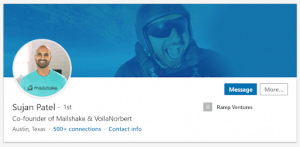
Take a look at my LinkedIn profile, as an example:

If you were going to reach out to him, there are at least two ins you could identify from this top portion alone:

  • Because my profile features a picture of me skydiving, you could ask if I’ve been on any jumps recently or if I could recommend any resources for people who want to try it for the first time.
  • It also notes that I live in Austin, TX. If you’ve been to the city before, you could reference a restaurant or other landmark you loved. If you haven’t, and you plan to be in the area soon, you could ask for recommendations for your trip.

Twitter

Next up, take a look at your prospects’ Twitter feeds (add them to a Twitter list while you’re there to make future research easier). A few pieces of information you’ll find there include:

  • Any personal projects or websites listed in their Twitter bios.
  • Past tweets sharing personal or professional updates.
  • Content they’ve shared from others.
  • The influencers and companies they follow or engage with.

You may not find all four of these on each Twitter profile you follow, but even one can give you an in. For instance, if you follow the same influencers, your outreach email can ask what they thought about a specific article. If they’ve tweeted about receiving a promotion or achieving some other milestone, congratulating them in your message creates instant personalization.

Web Analytics Tools

Finally, if you’re using a tool on your company’s website to track visitor behavior, make sure you check it before sending any outreach. If you haven’t connected with a prospect before, you may not have any activity records associated with them yet. But if you have (or if they’ve filled out a form on your site), you can easily personalize your message by asking if they found what they were looking for on their recent visit.

Company Outreach Opportunities

Personal ins are great if you can find them. But if you can’t? Don’t try to force some tenuous connection. If you do, you risk coming across as disingenuous or as if you’re trying too hard to manufacture a relationship.

Instead, set up Google Alerts or use LinkedIn Sales Navigator to identify news items relating to the companies where your prospects work. Specific types of information to look for include:

  • Announcements about new funding rounds or new investors.
  • Press releases sharing news about the company.
  • Job postings that are relevant to your offer (that suggest a growing need for capacity and resources you may be able to fulfill).
  • News of internal promotions.
  • Upcoming events, new research, or newly released resources.

Not only do these signals serve as possible areas of common ground, but they can also be thought of as “buying signals” or “trigger events.” According to Alex Greer, founder and CEO of Signal HQ, “Finding a prospect counts for nothing if you don’t contact them at the right time.” 

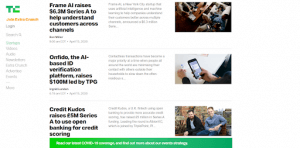
As an example, check out the Startups feed on TechCrunch news:

If Frame AI, Onfido, or Credit Kudos were on your list of target companies, these articles – which would have shown up in your Google Alerts for their brand names – represent an ideal in for sales messages. Adding a line to your email that reads, “Congrats, just saw Frame AI closed its Series A round,” forms a connection and proves that you’re paying attention.

Get in the habit of paying attention to what’s going on at your prospect’s companies. You’ll identify not just potential connections you can leverage, but the right time to deploy them as well.

Be Smart When Leveraging Mutual Ins

Each of the sources above can be used to find shared connections that help you capture attention and strengthen rapport. But they can be abused as well.

Imagine that I shared a tweet of funny dog memes on a whim. That’s not an invitation for a salesperson to come barrelling into my inbox with a message reading, “I see you like dogs, and I like dogs too – how crazy!”

The golden rule of leveraging mutual ins is that, if you wouldn’t say it to someone in person, don’t say it in email. Be thoughtful about how you wield them, and you’ll save yourself the embarrassment of alienating a potential prospect over an awkward, forced connection.

What other sources of mutual ins do you use? Share any others you’d add to this list by leaving a comment below.

Video marketing is on the rise. Reportedly:

There are no signs of video marketing slowing down even a little bit in the next two-three years. Stats show that by 2022, online videos will make up more than 82% of all consumer internet traffic, which is 15 times higher than in 2017. 

Why Do People Love Videos So Much?

We can give you numerous stats on how beneficial video marketing can be for your brand. 

However, the reasons why people love video content so much are rather psychological than consumer-related:

  • The principle of social proof. Although you may think of yourself otherwise, we tend to observe others to validate our decisions. Have you ever caught yourself watching product reviews before purchasing it? This is the principle of social proof in action. 
  • Addressing the right emotions. As video content combines auditory and visual sense, it appeals to our emotions stronger than any other content type. 
  • The FOMO effect. Fear of missing out – FOMO – one of the strongest instincts, and one of the reasons why we obsessively follow some YouTube vloggers. People like to possess up-to-date information, and video content is the best way to deliver it to them. 

It is not an exaggeration to say that online video is slowly climbing to the top of popular marketing strategies. Some people claim that they prefer watching online videos over regular TV programs. Online videos are more engaging, informative, and easy to access. With the rise of technology, tools like an AI video generator make it easier than ever to create high-quality content without extensive production efforts. Many of these videos also use text to speech technology to quickly generate voiceovers, making the production process faster and more scalable.

What Are the Most Engaging Videos?

Now that we’ve taken a look at the psychological reasons of why we love videos so much and made a round-up of the current state of video marketing, let’s dive into the types of video content proven to tur your viewers to buyers. 

P.S. These are general video content types that work well for marketing purposes as well. 

  1. How-To Tutorials

Educational videos are among the most search video types on YouTube. And why not? Watching a video is always easier than reading a manual!

These videos are structured around a particular object and aimed at teaching people to master the skill of using this object. For video marketing, you can take your product and make an explainer video of how viewers can make the most of using it. Also, it is a perfect space to emphasize your product’s benefits for potential buyers. 

A perfect example of a simple, and yet very effective how-to tutorial is Headspace’s “How to use the Headspace App”:

Video credit: Headspace

Using a simple video animation, the narrator explains how you can draw more benefits from the Headspace app in less than 2 minutes. The Headspace app is very extensive, with a lot of additional features. This simple explainer video allows viewers to quickly learn how to use it, and the viewers appreciate this tutorial very much (just look at the comments). 

This format fits every product or service, from helping people rent an apartment in a certain area to a guide on installing a home security system. 

One of the great examples of how-to guides (with over 700L views) is Michelle Phan’s “Master the Art of Liquid Liner” tutorial on Ipsy:

Video credit: Ipsy

In this video, she teaches ladies how to apply liquid liner, using the products from her personal EM Cosmetics line. Michelle manages to show her products in actions without imposing them on the viewers. This is a good marketing lesson to follow when creating a successful tutorial video.  

  1. Storytelling Videos and Vlogs

People like stories and vlogs. Why do you think vloggers are among the most followed influencers on YouTube?

We love to take a little peek at someone else’s everyday life. We can’t resist a little bit of self-comparison and we love being a part of someone else’s life, even for a short period. Hence, the popularity of storytelling videos and vlogs stems from our DNA. 

As of 2019, vlogs and storytelling videos have taken the 1st place in the ranking of most viewed types of videos on Youtube (according to MediaKix). 

Storytelling Videos

When it comes to marketing, this video format is widely used by companies worldwide. Brands invite celebrities as well as ordinary people to shoot storytelling videos, featuring their products. 

Airbnb is a great example of storytelling videos. They launched a successful campaign featuring various Airbnb hosts in their unique homes worldwide. Here is one of the short videos presenting Cándida and Jeff’s beach Bungalow:

Video credit: Airbnb 

This campaign aims to show the unique people behind the houses. It suggests Airbnb being more of a way to experience a new city or culture rather than just an accommodation service.

Storytelling videos are great for marketing purposes because they:

  • Always send the right message that is in line with your company’s strategy
  • Appeal to certain buyer emotions
  • Show your product in a different light, applying more value to it

It is worth mentioning that storytelling videos require creating a detailed script. Marketing video scripts help you take into consideration everything that your marketing video needs to include, and help your video look less messy. 

Writing a video script is a creative process, but your creation should be planned and very detailed. Moreover, a video script should be proofread to avoid any mistakes getting in the way during the video production process. Online tools like Grammarly or Grabmyessay can do this job for you. 

Vlogs

Vlogs are perfect examples of the FOMO principle in action. Marketers can use that for their benefit, turning the format of a vlog into a behind-the-scenes video. 

A good example of a behind-the-scenes vlog is “Road to the Runway” by Victoria’s Secret:

Video credit: Victoria’s Secret

This video gives viewers an exclusive look at the behind-the-scenes of Victoria’s Secret 2018 Fashion Show. This video is the final part of the series, where company executives, as well as the models, show how they prepare their annual event, which is famous around the world. 

Behind-the-scenes vlogs are a good way to let viewers learn more about the company and feature the products. 

  1. Interactive Videos

Lastly, what is a better way to attract potential buyers than to engage them in an interactive activity?

Interactive videos dominate the list of successful types of online interactive content together with infographics, contests, and generators. Reviews that use interactive videos show that they generate 5X more traffic to their websites than those that don’t use interactive videos. 

One of the perfect examples of an interactive video is “Can You Destroy the Debt” by Banquer:


Video credit: Banquer

This video does not only promote the company but also brings educational value by teaching the viewers, how to use money wisely to escape the debt. 

Interactive video requires a lot of preparation in terms of writing a script and producing a video, as it consists of several parts. However, it’s worth investing in, as this video content type is among the few that people watch until the end (interactive videos have a 90% completion rate). Besides, interactive videos are among the emerging trends in video marketing, so why not give it a try?

The Bottom Line

Of course, we don’t say that all these types of video content will fit your marketing needs. Depending on your product or service, you’ll have to pick one or two types that will dominate your video marketing strategy and show the value of your product. 

Other than that, these 3 types of video content have proven to be effective in attracting potential buyers. They can be easily adjusted to your marketing needs, and promote your product in an unconventional way. We encourage you to use them and share your experience with us! 

Other than ensuring that your SaaS product is running like a well-oiled machine, do you know the other thing that keeps developers up at night?

They would ask themselves how to increase their sales.

Mind you, acquiring new customers is one of the most challenging things that you should do when you are in SaaS. No wonder some companies would tap the help of a SaaS marketing agency to take the load off of their shoulders.

Nonetheless, acquiring sales is one of the most rewarding things about SaaS. That’s why we have listed down five tactics that can help you boost your SaaS sales.

Generate Leads Using PPC

Pay-per-click may seem a boring lead generation technique, but it can be the most efficient. After all, you just simply need to write the ad copies, create a landing page, run the campaign, and start seeing results.

Nonetheless, you can use this tactic to target your preferred users. A good example is a business manager who is looking for an alternative to the software that they are already using.

If you are able to attract his attention using your PPC ads, the next thing you should expect to happen is that he will click it, and he will be redirected to your landing page.

However, instead of directing a site visitor to a landing page that explains what makes your SaaS product awesome, we suggest that you use a comparison landing page. It is the kind of landing page wherein you compare your product versus leading brands.

A great example of this is MailerLite’s pricing and feature comparison page.

What makes a comparison landing page work?

For one, it gives your target users the information they need. It shows how affordable your SaaS product is compared to others, as well as the better features that you can offer. It simply answers the question, “What makes you the right choice?”

Stay Connected Using Social Media

Regardless of whether you are targeting individual users or business owners, there is a big chance that the majority of them haven’t made up their minds about your SaaS product yet.

The rest are divided between those who love you and those who hate you.

Luckily, you can connect to these three kinds of target users through social media. Here’s how:

Use Client Testimonials as Social Proof

User testimonials are the best kind of social proof that you can get, and you should leverage it whenever you have the chance.

You can turn it into a case study, for example, and share it on social media. Or you can feature one of your clients in a Facebook video to showcase how your SaaS product was able to achieve their goal.

A great example would be Shopify’s feature on Kurasu as part of their #Shopify1Million campaign.

Properly Address Negative Issues

Using social media to address negative feedback from haters has two benefits:

  1. It sets the record straight before it gets out of hand.
  2. It lets you demonstrate your superb customer service.

Doing so allows you to quell rumors and inaccurate complaints, as well as earn the respect of your audience.

Educate Your Undecided Prospects

As mentioned earlier, the majority of your target users are undecided about your SaaS product. Fortunately, you can use social media to educate them on what makes you a better choice.

Did they send an inquiry via Facebook? Make sure to reply promptly. You can also direct them to the right resources, be it to your website’s knowledge base section or to a particular post on your page.

The key here is to directly answer their queries so that you can educate them on the value of what you offer.

Get Featured on Review Sites

Here’s the thing, your clients definitely do their homework before making a purchase. In fact, 66% of software buyers said that reading product reviews could have an impact on their buying decision.

As such, it would be a good idea to get featured on third-party review sites such as PCMag. First, review sites make it easy for your target users to compare products. Second, they are deemed more trustworthy than vendor sites (a.k.a. your website).

There are various ways to get featured on review sites.

One, you can partner with tech blogs, give them free access to your SaaS product for a limited time in exchange for a detailed review. There are also paid options wherein you pay a review site to review your product and share it with their network or place it on a “Featured Review” section.

Getting featured on review websites does not only validate your product, but it also helps your own website to earn backlinks from credible sources.

Use Strong Trust Signals

In SaaS marketing, credibility is gold.

There is a big chance that your target user already knows what your SaaS product is, as well as the solution it provides. But can you deliver your promise?

This is where strong trust signals come in. It allows you to project that your product is credible and reliable.

Here are some quick tips on how you can display your credibility:

  1. Use well-known trust seals. Trust seals from the likes of Norton, BBB, and Visa or Mastercard helps allay your prospects’ fears and concern about data privacy and security.
  2. Feature client testimonial. As mentioned earlier, it is the best kind of social proof that you could get. That’s because it demonstrates that your products can deliver results.
  3. Provide case studies. Case studies illustrate what your SaaS product can do, just like a client testimonial. But in addition, it gives your prospects a walkthrough on a particular use case that may be similar to theirs.
  4. Put customer service contact details front-and-center. Doing so simply shows that you are accessible should a prospect need your help or has an inquiry.

Offer a Free Trial

It is a no-brainer that offering free trial has become the standard in the SaaS industry. Otherwise, it could hinder your conversion rate.

Sure, your trust signals can put your prospects’ minds at ease, but a free trial gives them comfort to give your product a try. Plus, being able to tinker your software allows them to evaluate whether your product suits their needs.

On your end, this is a great opportunity to generate and capture leads that you can nurture later on and turn into paying clients.

Nonetheless, it is a rule of thumb that your trial period should not be longer than 14 days. After all, most prospects jump ship after three days.

SaaS is like the F1 race of the IT industry. It is fast-paced and highly competitive. Thus, the best way to get ahead of the competition is not just to work hard, but also to implement effective tactics that can help increase your SaaS sales.

Thinking about redesigning a website or migrating to new CMS??

Do you know that redesigning can be critical?

Yes, only when done, wrongly!! 

It can affect your website’s organic traffic.  

Obtaining organic traffic is a tough job, though. From link building, link generation, to on-page optimization, it takes a lot of hard work. If you tend to lose your vision on those efforts, then it could be disastrous for your business. 

When you lose your website traffic and ranking, then you will notice fewer sales and leads. 

But, on the contrary, it is also essential to redesign a website. There are many reasons, some of the leading ones are defined below:

  • The requirement of changing the website theme (appearance). 
  • Rebranding is demanded.
  • Platform migration is required, like, from HTML to WordPress.
  • A mobile-friendly theme is required. 

A redesign of the web site does not certainly imply modifying the domain name. Therefore, in the cases, as mentioned above, it is believed that you retain the same domain name but improve the appearance of the web site, basically the design.

Updating your website and changing the features, design, and user experience are recommended.  But, Google does not accept it.  

Resigning a website undoubtedly gives you the chance to improve conversion rate, SEO, and digital marketing on an all.  Remember that it could be disastrous if appropriate steps are not taken to ensure the stable migration from the existing website to the new one.  It surely will destroy SEO equity.

To assure the redesigning has a definite influence on search engine rankings after the new launch, you should keep some considerations intact. Redesigning tends to engage with marketers, designers, and other stakeholders to keep not only current ranks but also to generate new ones for more organic growth. Check out the key considerations below:

  • User interactions
  • On-page SEO
  • Website content
  • Technical health

We are here to give you the steps that you should follow while redesigning your website.  Let’s get started!!

Step  1: Setup the New Website on a Temporary URL

It is recommended to copy the existing website to the temporary URL, and adopt the new design. When the process is ready, change the domain.

Some technical details are there, but the hosting provider will supervise you to set up everything. 

Operating directly is not advised because it might invite some inevitable problems. As per the SEO perspective, assure that the testing website is in the list of Google indexing (for avoiding duplicate content). Two methods are there to execute it:

Method 1

While working in WordPress, go to Settings/ Discussion. Review the Search engine visibility option.

Method 2

Update your robots.txt file and integrate the below lines of code:

User-agent: *

Disallow: /

The aim of the code mentioned above is to block the search engines for accessing the website.

Step 2: Test the New Website

As of now, the existing website is copied in the new one comprehensively. Though, before redesigning the website, it is better to check the website thoroughly. 

While examining, other significant aspects such as; CSS, features, and broken links should be checked. XENU, a free tool to check whether the links are valid.

Step 3: Build a list of All Pages from your Existing Website

Changing the URL structure is not a big thing, but what is important is to let Google and other search engines know what you have changed. 

And, if you are not doing so, then you are hurting your website ranking and declining the trust rate. Accordingly, you are losing the organic traffic. 

The best thing is to make a list of URLs your current website has. And, the way you can adopt is to get your sitemap and save it to the text file later.

Step 4: Do proper 301 redirects

The next thing to do is to make 301 redirects among existing and new URLs. For instance, for the “Services” page on the existing website, the URL would be” “www.yourwebsite.com/aboutus.html.” While redesigning, the designer will change the URL to “www.yourwebsite.com/about-us.html”. 

Apply the 301 redirects to ensure that the mentioned URLs are working properly. And it does not result in losing the SEO benefits that you had obtained from the existing URL.

And, if it is not done accurately, then 404 errors will be displayed. In this process, the existing URL will be redirected to the new URL. 

This way (technically), you are conveying the search engines that you have changed your URL.  Accordingly, your efforts that you have put into gaining SEO previously will not get affected. 

“.htaccess” file could be used to integrate the redirects. Check out the below code to know how it will look like:

Redirect 301 /oldwebsite http://yoursite.com/new-url

If you do not have any idea to execute it manually on the WordPress CMS, then you can give a try to the redirect plugins. All you need is to fill out the form.

Step 5. Switch to The New Website

After carrying out the designing, developing, and testing, your new website is all set to go live. It is just one step away.

Whatever you will do at this stage will assure you that you are switching to the new website quickly and effortlessly — Google advice to perform this step at once. 

Step 6: Verification of New Website with Google Search Console

When your website is live, the main thing is to check if everything is working well.  It is suggested to run the broken links to assure that you have not missed anything. The subsequent thing is to log in to the webmaster tool (Bing and Google) and secure you about the verification of the website.

And, if in any case, it is not, then verification should be done to monitor how Bing and Google are indexing the new websites.

Step 7: Use the URL Inspection Tool to Check that Google is indexing the New Website Properly

In the Google Search Console, use the URL INSPECTION option (from the top bar) to assure that Google can index and read the newly migrate website accurately.

And, if there are no issues, then click on the “Request Indexing” button. It is used to boost the indexing process.

Step 8: Review robots.txt

In the process of redesigning, there is a probability that the robot.txt can get corrupted. And, if in any case, it is, then click on the “robot.txt” option below the crawl.   Robots is the file which is used by the experts to deny or allow access to the search engines for the website (as a whole or on specific pages). 

Any incorrect configuration in robots.txt can refuse access to the search engine crawlers, and it should be fixed promptly.

Step 9: Optimize and resubmit XML sitemap to Google and Bing

The next step is resubmitting the XML sitemap to the search engines (Google and Bing). When the URLs are changed, then consequently, the new XML sitemap will also get a new structure. It helps the search engines to index the redesigned website quickly. 

Step 10: Observe the Changes

Last but not least. It is vital to check the changes and the appearance for the notable growth.  Check the rankings on the top keywords. Many SEO tools (SeMrush) are there that lets you keep an eye on the keywords. If you notice any substantial change in SEO, then find out the reasons for this.  Discover the solution to avoid the slow loading of your website. It is also important to examine your website every two or three months. 

Wrapping Up

Redesigning is a daunting task.  But, it is the best way to boost the conversion rate and SEO.  Websites with substantial organic traffic must handle everything adequately.  

We have mentioned ways to redesign the website without affecting SEO.  These steps assure you of the definite improvement. If you are following a definite process with the imperative choices, monitoring the results, performing the regular changes, then you should not worry. 

Consider redesigning not only as an opportunity to improve the design but to capture more audiences. 

We hope you liked this article.  Related queries and suggestions are welcome. 

Thanks for reading!

Begin with the end in mind. It’s a well-known mantra for many business owners, and an effective mindset when setting visions and helping identify the necessary steps to achieve them. It’s a philosophy that provides clarity, efficiency, and purpose, and can get you to those leads that you never thought were available.

In terms of lead generation and marketing, the “end” would be a working list of potential subscribers who are likely to become loyal customers. This crucial list should give you insightful information into each individual—their name, age, gender, location, purchase history, and other bits of data that you can capture through online and offline interactions.

Think of a business that doesn’t need to do cold calls and direct, hard sales. That’s a business that is probably doing well in terms of online lead generation. They know their target audience, where their subscribers spend their time on the internet, and what types of sponsored ads and materials pique their interest. 

In this post, we’ll walk through the different ways how you can leverage lead generation for your business

1. Learn how to use lead magnets

Offer lead magnets to your potential subscribers in exchange for their email address. You can embed these lead magnets into pop-ups on your website’s homepage or through links on your social media accounts. Businesses often use the following types of lead magnets, which are almost always free-of-charge:

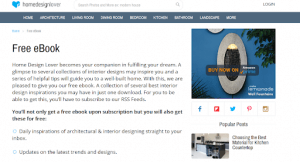
      • Resource kits. Establish expertise in your niche by coming up with a well-written downloadable ebook, podcast, or a small resource kit about what you do. However, don’t make the material all about your specific business and products. Make sure that it’s educational and something that your subscribers will surely enjoy reading. Check out the example below:

Source: Home Design Lover

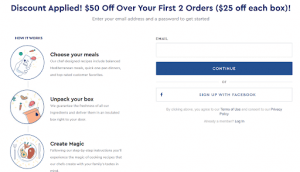
      • Promotions. Coupons are a popular and effective lead magnet, especially if they offer discounts or freebies. As a business owner, you already know by now that customers’ willingness to pay significantly increases with even just a small price slash. Here’s how Blue Apron did it:

Source: Blue Apron

2. Offer gated content.

Gated content is very much like lead magnets, only it can be accessed by providing more information on top of the email address. Sometimes, even though it’s rare, gated content has a cost. 

Gated content is best integrated into email marketing campaigns and may come in the form of more detailed resource materials and bigger discounts. 

Here are more specific types of attractive gated content:

      • Content or subscription upgrades 

If a customer is interested in your product or service, they will likely be willing to pay for something that offers more. Try to identify customers who are frequent readers of your blogs or  regular buyers of a specific product. Let them know you have a better offer or promotion and that it’s on sale today.

      • Whitepapers

A welcome ebook is good source material, but wait until your customers read a full-blown whitepaper about your service. The whitepaper is usually written by the business owner with the help of experts.

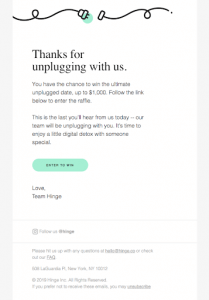
Below is an email with gated content:

Source: Hinge

3. Monitor your performance.

Who are your closest competitors? Chances are they are also browsing your website, looking at your social media profiles, and analyzing your marketing strategy. Try to be one step ahead of them and offer your potential subscribers something unique and innovative. You can also check out how similar businesses in other countries are doing lead generation, and mimic their best practices (in your own way).

4. Identify website-based tactics.

There are a number of ways to use your website as a lead generation tool. Here are some key reminders:

      • Come up with a visually appealing design consistent with your brand identity and messaging. Use video and audio, if possible.
      • More than design, make sure your website offers as many lead magnets as can be integrated into the website.
      • As an online user yourself, you know that ads can become annoying. Your lead magnets should not all be pop-ups but should be placed in strategic areas where visitors can see them, but they aren’t disruptive. These can be through sidebars, slide-ins, and top bars, or through a dedicated page on your website.
      • Learn how to do search engine optimization (SEO) and how your content can be tailored for the web.

Pet retail store Life’s Abundance used a content slider that visitors can navigate by clicking the left and right arrows or by waiting a few seconds for it to change into the next offer or lead magnet:

Source: Life’s Abundance

5. Personalize, personalize, personalize.

Effective lead generation understands that products and services are not one-size-fits-all. Successful businesses are not afraid to request more information from their visitors to give them a highly customized experience. This will drive more conversions than if irrelevant products were mixed with interesting ones and offered to customers in one go.

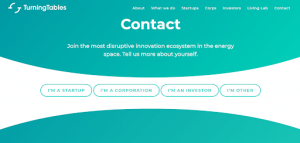
For example, energy innovation ecosystem Turning Tables asks visitors to answer a little survey before they can be reached with any inquiries:

Source: Turning Tables

You can also draft specific trigger emails that will automatically send whenever visitors complete a specific activity, such as signing up for an event, downloading a podcast, or purchasing a discounted product.

Wrap up

If you want to begin with the end in mind and generate as many leads as possible, identify specific and clear goals such as:

  • The number of subscribers you want to achieve within a specific timeframe
  • Feasible sales targets for each month
  • Email open, click-through, and forward rates
  • Type of customers you want to attract

It’s also important for your business to have a feedback and tracking mechanism, so you know which leads are working and which ones need to go. Your teams should also be able to filter out leads that are not cost-effective for your business, even if these are highly appealing and have worked for more well-known brands.

The number of lead generation strategies continues to expand, and many businesses have already explored tactics such as drip campaigns, exit-intent boxes, and referral programs. These tools can be integrated into your overall email marketing strategy, which will eventually increase your chances of acquiring those highly valuable leads and customers.


Talking about the B2B email marketing, one medium that has proved constantly to be of greatest use is Email marketing. More and more businesses are turning towards enhancing their budget of Email marketing because the research has shown it to super effective.

The research revolves heavily around how this type of marketing brings in ROI. But how does one write b2b emails?  The best use of this marketing is put to is for generating leads. The leads then transpire into clientele in the coming times. While it has been established that email marketing is the answer to your B2B issues, even bigger question is what makes up for an ideal copy that is the most effective.  

The wide arena of Email marketing involves an entire array of communication strategies. These range from newsletters and autoresponders to follow-ups and surveys. Despite all the options available, the most common and effectively used approach is newsletters in the email to target the potential audience.

The important thing to consider is that there is a very fine line between the email newsletter being effective or ineffective. It is useless to bombard the consumer who is not interested and force him to unsubscribe you ultimately. This happens when the users receive emails not related to you.

Know the Target Audience

If you are looking to target the right audience, it is important to segment the audience aligned with their unique personas. Know the needs, problems, and solutions to those problems. Using a free email finder can help identify the right contacts. So instead of getting hyped up about email marketing and sending out generic newsletters, targeting the right spot is important.

Segmentation involves collecting user data at any possible opportunity. Social media interactions, landing page visits, subscription forms, and download provide valuable user data. This user data can do wonders for you and your business by letting you include what interests the audience the most.

If managing this segmentation process seems daunting, partnering with a specialized B2B email marketing agency can streamline the effort, ensuring your campaigns are both targeted and effective.

B2B marketing does not always have to be impersonal and dull, as opposed to popular belief. With an influx of information, it is best to design the newsletter in a way that is user-specific and more personal.  

Tell before you sell!

Newsletters are not meant to sell the product directly. These work to educate the consumer. You cannot expect the consumers to make a buying decision over an email or even a series of emails. The newsletter should be designed in a way that leaves an impact on the mind of the consumer. Even if they are not potential customers at that time, the newsletter must be compelling enough that whenever a related need arrives, the first brand or product to pop up in mind be yours.

Therefore newsletters also have that cushion to put in extra information as well that supplements the product information.

The research in the area also shows that addressing the need when the consumer desire like “Read more” works better than tabs like “Buy now”. So, set the ground for the consumer and educate him rather than forcing him to make an immediate buy. This strategy works best.

Design is the Key!

The design is the first thing that the consumer will come across. Before he reads the content, he develops an impression of your brand in mind by seeing the design. The design must have a few basic attributes to it.

  • It should be clean and easy to digest.
  • It should complement the email content and the buyer persona.
  • The graphics must be catchy.
  • The Call to Action must be visible and active.
  • Font should be good and generated from a font styler

All these attributes are guided by the knowledge of consumer attitudes, needs, and preferences. The color scheme plays an essential role as well.

Font can be generated from Fontalic. The newsletter must be responsive as well as most users open their emails on their cell phones. It must render smoothly on all devices for it to create leads. To test the newsletter with various browsers is also important.

One of the anchors to good and creative newsletters is that it should be easy to scan. The recipient should be able to get the main idea in the first few seconds of opening the email. A vertical format, white space to separate different items, short paragraphs, more graphic, less written content, self-explanatory images-all these factors add up to a readily imparted message.

Make use of user analytics

Analyzing email analytics is very important. The user data is magic in your hand. It gives you an insight into what the users are thinking, what they like and dislike, how much time they spend on your newsletter, what attracts them and makes them click.

After having a good knowledge of what the users are into, it helps to streamline your testing and orient accordingly. For instance, the content may be alright, but your newsletter fails to grab attention because of a flimsy subject line or the time at which you are sending out emails!

By testing the various variables, you can make an informed decision in the right direction. Analyzing the data helps you provide the customer what they want to see and allows you to avoid what repels them!

Reflect your Marketing Strategy

The newsletter must be a part of the greater whole of the marketing strategy. If it is not a continuation of the entire campaign, it fails to connect the consumer with the strategy as well as the product. If the consumer must go back to the website for each little thing, you simply lose leads.

If you’re finding that your website visitors aren’t converting to paying customers, it may be because of your copywriting. It’s important to have a high-quality copy in every single marketing material in a campaign, or all of your traffic and advertising won’t make up for it. The good news is that most copywriting mistakes that people make on their landing pages are quite easy to fix and avoid in the future if you know what you’re looking for. Here are the six mistakes that are probably killing your sales online, and tips to fix them. 

1. Being Too General 

One major problem is trying to appeal to everyone when you should be focusing on a specific target audience. Unless your brand is global and includes everything like Amazon, you shouldn’t be trying to appeal to everyone. It will come across as generic and boring. Instead, you should be writing as though you’re speaking only to your core customers and target clients. If you speak like them and think like them, they’ll find it easier to relate to your brand and are more likely to convert and become loyal customers. 

2. Poor Writing

It might seem obvious to write this, but it’s absolutely critical to review and edit your copy to make sure there are no spelling mistakes. There are so many brands and options out there these days and customers have their pick of which company they’ll go with. Because of that, perception and first impression matters. If your brand seems unprofessional because of its spelling mistakes, viewers will assume the rest of your company is like that – unorganized and low-quality. Take the time to review your work and if editing isn’t your strong suit then you should ask someone else to reread it. 

3. Email Pop-Up with Passive Aggressive Message

These pop-ups are the ones on a website that give you the option to sign up for a brand newsletter. The problem with these pop-ups is when the exit out button says something like “no, I’m not interested in becoming successful.” This comes off as passive-aggressive and will almost always turn off people who were on the fence in the first place. The only result of this overused tactic is that people will think you’re desperate or you have to shame users into subscribing. 

4. Too Much Text

You’ll have so much competition out there, so it’s important that you can gain people’s attention and keep it. As per Nicki Poulson, a sales manager at Boomessays and Best British Essays, “if you have only large blocks of text, your website visitors are unlikely to read what you have to say and will navigate away from the page. If you have a lot of text content, break it up into shorter portions, add infographics and images, and anything else that will make is easier for your users to read through quickly.” 

5. Not Addressing Consumer Concerns

Regardless of your product or service, customers always want to know certain things about it before they commit to something. For that reason, you should make it easy for them to get that information by giving that information out freely. This builds trust and a relationship between the company and the client. You’ll also be saving yourself time since you won’t have to individually answer all these questions. If you’re not upfront with the information they want, they might think you’re hiding something and will turn to a competitor without secrecy.

6. Not Getting to the Point

The human attention span is shorter than ever. There’s also so much content out there. These two facts mean that you must get your point across as briefly and concisely as possible. This doesn’t mean that your writing should suffer or you can’t have your brand voice. It just means that you should be getting to the point without any extra unnecessary words. Short copy is often more appealing and persuasive to people since they’ll actually be more tempted to read it. 

Regardless of your business type, it’s important to use effective copy to boost your conversions and increase sales. By avoiding these mistakes, you’ll be well on your way to a successful copy.

Even though it’s a small section of your email, it is arguably the most crucial part. Yes, I’m talking about the subject of an email. It’s the first thing a reader sees, and they judge the email by it. It is a vital element of email marketing and has a lot of useful aspects to it.

Whether you are selling a service or trying to persuade someone to read an article on your website, you need eye-catching subject lines that force the reader to focus on your email. Many businesses use variation in their subject lines so that they have a good response from email marketing.

You always need a unique subject line or else it’ll be boring and won’t attract many readers. As a result, you need to learn the craft of making an eye-catching subject line that sells your product. There can be many email marketing strategies for this, but most businesses use some standard techniques.

7 tips proven to provide positive results:

1. Keep it short

Nobody wants to read a long subject line. Just like marketing strategies to come up with a clever line for advertisement, you can use smart ideas for email marketing. Keep it under 50 characters so that a reader can quickly finish reading it. But be sure that it includes simple words that are easy to understand. Your readers are not ready with a dictionary to find out the meanings of your emails.

2. Keep it simple

Don’t use such email lines that can confuse the users. Readers are not dumb to click on an email that tries to lure users. State the main subject of your email in a simple line so that anyone who isn’t familiar with the products of your company can easily understand the topic at one glance. The easier it is, the more clicks it gets.

3. Shock the readers

Ever got an email that had a crazy and shocking subject line that forced you to click on it? Most of us have fallen under this persuasion as our mind forces us to know more about it. But be careful so that the subject line matches with the body of your email or readers’ dissatisfaction will be seen. Some examples can be:

  • Here’s why your marketing strategy sucks.
  • Why are you still not aware of this?

Be careful about these as they will surely persuade people to click, but if the body of your email isn’t good enough, they’ll lose interest.

4. Scarcity

Scarcity is a well-known marketing strategy that has been proven to work well. World-famous marketing teachers have always stated the effectiveness of scarcity in a marketing strategy. When someone has thought of missing out on something good, they always tend to focus on it. This strategy increase sells at a great level. Some examples are:

  • Pay $20 for [product] – Available for 48 hours.
  • ONLY TODAY! Buy now to get a 20% discount.
  • ONLY FOR 5 HOURS! Enjoy our services with a 50% discount.

Don’t spam readers with these types of emails as they’ll find out your strategy. Only send these types of emails once and post another one after a certain period of time.

5.Personalization

Everyone likes it when you call them by their name. It has a psychological effect on their brain and makes them feel better. By calling them by their name, you can be seen as a familiar figure, and it increases the possibility of being viewed or clicked. Use “you” to make the email friendlier. You can also use the location of a user to provide a more personalized email, but be sure that it isn’t creepy.

6. Avoid using false promises

Do not use false promises for your email subject lines. It brings a bad reputation to your company, and readers lose their trust. If you have written about an offer in the subject line, but it is not present in the body of the email, it will irritate the reader as he will think he has wasted his time. Furthermore, such a bad experience will take a long time for recovery, and your business will undoubtedly face a terrible time.

7. Use compelling questions

You can ask a compelling question that relates to your business so that interested people can click on it. It is useful because only interested people will click on it and the sells will be higher. You do not only want people to read your email but also buy your product or service. A lot of businesses use the compelling question, so be sure that your subject stands out. Some examples can be:

  • Have you tried these SEO techniques?
  • Are you familiar with the most effective marketing techniques?

Again, be sure that the question relates to your email’s body, and people can have sn idea about your email.

These seven tactics are beneficial for email marketing. With variations in your emails, you can attract more ‘interested’ people who will be willing to buy your products or read your articles. Big corporations are now using email marketing; so it can be slightly hard to stand out. But with the right strategies, you can have success.

Roll up! Roll up! Roll up! Nothing for sale!

If you’re involved in sales you might have wondered about this for some time.

Every Christmas and holiday season you come across the big name high-street department stores, with half a mile of street frontage, all advertising what appears to be NOTHING in their windows. At least nothing saleable that is.

OK, I agree (after all, I used to work in the business for a long time) the window displays themselves are spectacular, dazzling, traffic-stopping affairs; looking more like a big bucks Broadway production, or the set from a 1940’s Ziegfield Follies movie than a means of selling products. Money seems to be no object with these lavish creations.

So what’s going on? 

Where’s the value behind these extravaganzas which often take more than a year or two to design, plan, and execute?

A brief history of sales showmanship

Believe it or not lavish window displays began in the mid-eighteen hundreds, with the introduction of, wait for it… plate glass. I kid you not.

Suddenly, retail architects had the means to do something they couldn’t do before: to create window spaces that ran the entire length of a city block, places where the owners could visually attract the attention of the passerby in any way they fancied.

And that’s just what they did.

All of a sudden a new band of creative professionals – charged with maintaining the look of these commercial window spaces – appeared on the scene. At the time, they were known simply as window trimmers.

These window trimmers ensured that the products on display were arranged and shown in their most appealing and stylish manner. Many of the trimmers – coming from backgrounds in the arts, theatre, and fashion design – employed ever more creative techniques to appeal to the whims of the consumer. 

Specialist signwriters were tasked with extolling the benefits of the product in ever more fanciful ways. 

Lighting designers ensured the products always looked their best on the skyscraper darkened streets of the world’s major cities. 

Carpenters, painters and other craftspeople created specialist ‘sets’ to complement the season or product type. 

Some of the most famous artists of the day stylised props and backdrops with which to give life to the imagination of the window trimmers. 

Slowly but surely the profession evolved from being purely commercial to what it is today – a multi-layered crossover between psychology, science, salesmanship, retail management, and the arts. 

Visual merchandising was born. 

And then things changed

In 1874 R.H. Macey & Co. become one of the first recorded retail outlets to feature a designated holiday window display. The display was short on product, but high on imagination, playing out scenes from the hugely popular Harriet Beecher Stowe book, Uncle Tom’s Cabin across the entire shopfront and throughout the store’s interior. 

The crowds it drew were enormous and so was born the fiercely competitive battle for supremacy of the Holiday Season Window Display.

Things got ridiculous – and ever more fanciful – as Macy’s battled Marshall Fields, Lord and Taylor battled Neiman Marcus, and across the Atlantic, Selfridges battled Harrods. 

All was fair game, right up to the point in 1958 when Woodward & Lothrop – the progressive Washington DC department store – arguably stole the crown with a seasonal window display featuring LIVE PENGUINS, borrowed from the National Zoo. 

The gloves were off and the results can still be seen each holiday season in every major city around the world.


Window displays, live penguins, and CRM software

The black and white behind penguins and sales

But what have live penguins, winter wonderlands, scenes from a space-age fantasy, or display spaces adorned with nothing more than pure imagination and artistic playfulness got to do with the billions of dollars derived from sales each year?

The answer is simple. LOTS!

Whether you employ sales CRM software, website landing pages, email marketing and cold calling, or trade shows and social media, every business wants to get their brand name out there, recognized, and respected. And, they want to sell.

The truth is that glamorous high street retail outlets don’t really hope to sell diamond encrusted unicorns (as much as they’d like to), life-sized reindeer-drawn sleighs, or even live penguins. What they hope to sell is brand loyalty that spans the generations.

And that’s what you should be doing too.


Window displays, live penguins, and CRM software


Great customer service is your window display

Think of your customer success management strategy as your high street window display. 

Your customer success team is doing the job of even the most creative holiday window display artists, week in and week out throughout the year.

Instead of ribbons and bows, fairytale scenery populated by elves and woodland nymphs, or whims of fantastic imagination, your customer success people are out there every day creating the brand loyalty that you need to succeed.

Traditional window displays might attract prospective customers into your store, but that’s only the start of the journey. 

It’s the one-on-one conversations that they have with your sales and customer success team that get the job done and the cash registers ringing. That’s where customer success management is paramount.

Without the properly trained and suitably tooled human touch, no matter how many visitors you attract to your doors, the product is unlikely to sell itself.

In the busy high streets of B2B selling, sales and customer success teams armed with modern CRM software, are already aware of your customers’ journey, right up to the point of walking through the door of your sales process. 

Thanks to customer success SaaS systems they already know the customer’s background, their pain points, their persona, exactly what it is that’s attracted them to your premises and not your neighbors’, along with a whole lot more. 

That’s way more information than a sales assistant in a high street store is armed with, and the pivotal advantage that gives your people the edge.

Creating a sales wonderland all year round

Modern sales technology like website landing pages, CRM software bristling with tools, features, apps and AI integrations, all go a long way towards attracting the attention of the customer. These are the ‘plate glass’ windows that allow the public to see your product.

But, never forget, it’s the great people you surround yourself with that give your brand the voice that will ultimately attract prospective customers through your doors. 

Your sales and customer success team are the real window displays of your company. The ones who create and nurture the brand loyalty that will see you and product through the years ahead.

Season’s greetings and happy holidays to you and yours from all of us here at Teamgate.

Business is always focused on customers aka those, who use it and pay for it. And every person can tell you that a company will not survive without their customer base, be it IT technology developer or movie production, bakery or a coffee shop chain. Yet, with all the technologies coming up and taking over our lives, everything is changing rapidly, and marketing is included in this process. When you wake up, the first thing you do is unlocking your smartphone, it’s clear that every company would love to let you know about its existence through the net. That’s where CRM comes to play, making this experience a lot easier and happier for both staff and customers.

What is CRM?

CRM (Customer Relationship Management) is a special tool/strategy for managing the relationships between the company and its potential and stable customers. While this is the right definition, CRM meaning can vary from person to person, and some may interpret it as technology, tool or process. In the end, the goal of CRM is one – to improve a company-customer relationship and create useful content for anyone in need.

Why is it so crucial?

  • Establish your company as a professional

The first and most important point is when you have to stop and find a base for your business finally – that’s the time to establish your company as professionals in the field you work on. In reality, there’s a bunch of confusion in the customers’ heads. So, when you come out with helpful information and make it clear for them – you’re proving that they can trust you without a doubt.

  • Be of help for your customers

It doesn’t matter what you do and how you work with your company; you shouldn’t just focus on sales and giving out your product. In this case, building trust is essential for selling what you have to offer. Even if you do assignment help Melbourne VIC, first you should make your content understandable for people, so their desire to try it will increase. Just try to write really valuable content and improve the style of your text, so it’s easy to attract people’s attention.

  • Build relationships

After you’ve proven that you can share important information, you’ll slowly build the potential customer base that will probably buy something from you in the future. Let’s focus on the word “slowly” because you shouldn’t expect quick results. Yet, this CRM marketing strategy is way more effective for any business. You’re giving your customer ideas that help them, and you’re not pushing your product. Some may see the connection quickly, and they will look into you right away, though, so the opportunities are enormous.


  • Keep customers engaged

The marketing and CRM strategy may seem like it’s mostly focused on finding new customers; it’s not always true. When you already have those who bought your product, it’s better to keep them engaged so they won’t leave your side, feeling betrayed. With creating more content, your existing customers will not only use it for their own needs, but it will prove to them that you’re constantly changing for the best and developing your business.

The most successful way to develop your business is not just focused on leads, but actually, engage in the customer activity and prioritize the needs of people who want to use or already use your services. It can be said that it’s nice how marketing is changing with times, focusing more on technology, because it becomes livelier, more helpful and interesting, with all the content being created for people. In this case, if you actually think about your customer, you take the deal with them seriously, and you want to help without being focused on your product and selling it. To make it simple, trust between people is essential, and good business won’t be able to survive without it.

As a startup, we are always keen to learn from others and seek the advice from successful CEOs and entrepreneurs. It would be hard to find a better example than Yam Regev, a CMO of Webydo and a co-founder of Zest, a marketing content sharing platform. We are big fans of  Zest as it helps publish Teamgate blogs; therefore, it was a great pleasure to interview and learn from the founder Yam. In this interview, we learn the value of getting your hands dirty, the importance of processes and why finding a suitable business partner is a very important step for a company. With 10 years of marketing experience and a passion for helping B2B businesses, Yam surely has some good tips to share, so we hope you find it helpful.

– I saw you’ve got your BA in East Asia studies – so how did you decide to become an entrepreneur? Do you think it is necessary to have a degree in business? Tell us about your early business experience?

Oh my… Actually, I need to update my profile as I never graduated. My initial plan was to learn East Asian studies while combining it with learning Chinese and Economics, but I sucked at both.

In my second year (it was in 2006) I founded a web marketing agency with two partners. This agency grew fast so I had to put the studies behind me and after two years we had 30+ employees and two teams in India. I CEO’ed the company for 4.5 years and then I started my own gig where I consulted to mega brands on how to build huge in-house marketing teams.

Do you have a CRM that keeps you organised?

The most user-friendly CRM on the market. 14-day free trial.

Start Free Trial

Painless setup, no credit card required

I certainly do not think that a degree is necessary. I’m a big believer in practical experience rather than theories and for me, one year of experience equals to two years of learning theories.

I was fortunate enough to interview, hire and manage over 200 people in the last 11 years.

Actual experience and “dirty hands” always overcame theoretical knowledge as far as it relates to my hiring decision-making.

The main reason for that is to have someone that already “did it” on your team, meaning that he doesn’t just know what to do, but more importantly, he knows HOW to do it. And to know how, means that they understand processes, and processes are what’s important in any team’s dynamics.

I can proudly say that many of my past employees are now VPs marketing, CMOs or executive directors in many leading startups, mainly in Israel, but also abroad, so as far as I’m concerned, this is the PoC (Proof of Concept) of my pragmatic approach of experience vs. knowledge.

–  What motivated you to start Zest? Where did the idea come from?

I love to consume content. Actually, I’m addicted to it. There, I said it!

I know that as a marketing executive I can’t afford to miss out new doctrines, methodologies and updates. Hence I found myself skimming through dozens of articles each day.

As time went by, I started to send relevant articles that I read to different people around me – current and past employees, new bosses, colleagues in the States and in Canada and so on. In most cases these guys told me that 1) They can’t understand how I found these value-added articles and 2) That this or that article is exactly what they needed right now.

A few years later, as CMO at Webydo, I thought: “Well, why don’t I create a place where people will come to read the content that I think is the the most relevant, instead of me sending dozens of articles to so many people.

I knew the right guys that could help me create Zest and so we started it as a side project.

I must say that my co-founders took the original idea and completely revamped it to something that is far more visionary and bigger than my small initial idea. They created a growth monster.

– As with every startup, there must have been some mistakes and downfalls on the way? Can you share some of the lessons learnt?

We had tons of mistakes. My first learned lesson was to be clear with our vision and stick to it. If we listened to all the feedback we gathered from our Alpha & Beta users and actually executed it, there would be no Zest today. Sometimes it just might take a bit before your targeted market is getting used to your solution.

Lessons learned

We created Zest by doing many iterations with our Alpha & Beta users, and although no one gave it a chance at the beginning, at some point, they got addicted to it – they understood the added value it’s giving them, they increased their usage and even shared it with their colleagues. As of today we have 8,000 WAU and around 92% of them came through WoM (Word of Mouth).

The second lesson, and one that I think we are still making a mistake on is scale fast.

Once you understand that you’ve attained Product-Market Fit, stop all other things you are doing and push the pedal to the metal.

–  What is the best and your favourite feature of Zest?

Without a doubt it’s the social layer we added to Zest just before we launched on March 7th. I love it because it is also functioning as a sweet and authentic growth hack – marketers are following each other and see what type of articles their colleagues suggested on Zest, what articles they saved for reading later and it is giving an amplified, humanized experience to the product.

It also puts front and center our agenda – we’re creating a tribe of marketers who unite around a clear purpose – creating the best content consumption platform by using our own tribe. It means that our tribe members (users) are suggesting content, and then a group of Chiefs (power-users) are reviewing these content suggestions and making sure that they are aligned with Zest’s content quality style guide.

It’s a proactive, engaged community which is centered around consuming high-quality content that only professionals from the same segment can precisely determine the value for other professionals.

Zest

– What challenges do you face every day? How do you motivate yourself to stay productive?

The work-life balance is currently my main challenge. As a co-founder of a bootstrapped startup that is scaling fast, I find myself working around the clock. It puts a strain on my other job, being a father of three daughters.

What keeps me propelled is my supportive family, who understands my madness and also, our tribe’s feedback. We get around 20-30 different messages a day from marketers who love what we do and feel engaged with our agenda and movement.

– What are your goals over the next 6 months?

We are on the right way to be profitable. This is our main focus. We prefer to be profitable rather than to raise funds. In 6 months from now we plan to expand into two more segments, other than marketing, and to integrate our content recommendation widget (yet to be launched), in 10-15 marketing related publishers and blogs.

– How do you attract new customers? Do you follow a certain strategy?

It’s all about the community. I call this strategy “Community Growth” and it means keeping our communication with our tribe personal and almost face to face.

Marketers told us that they are experiencing three main “Aha!” moments when using Zest – the first one is from the first encounter with the product. They say it is beautiful, fast and VERY intuitive.

The second one is after they played around with it a bit, so they understand and appreciate its added value. It means that the content they consume is not only highly contextual but also it’s very valuable for them.

The third Aha! moment is after they suggest an article. They get a personalized email from our Chief Moderator (me 🙂 ), which details the reason their suggested article was declined or accepted and published on the Zest feed.

These three-phases of engagement creates a hyper-WoM effect.

– Can you share you book recommendations or any useful blogs talking about product marketing?

I must admit that I’m not a book-reader kinda guy. I believe that the fact that I’m dyslexic is preventing me from enjoying this world of reading books.

As for the best Product Marketing blogs:

  1. https://blog.prototypr.io/
  2. https://producthabits.com/
  3. https://productcoalition.com/
  4. And of course https://blog.intercom.com/

– Lots of startups rely on forums to get traffic – did you have any experience with review platforms and forum posting? Did you find this effective?

Forum Marketing and Comment Marketing are becoming tougher as time goes by. The main reason for that is that users are more sensitive to lack of authenticity.

I didn’t try these methods with Zest, but with other startups I’m consulting, we saw great success with this method.

I believe that a better method comes from a close marketing doctrine. What I’m doing at Zest is engaging Medium bloggers to try Zest out and to briefly write about their actual experience with the product and how it fits in with their daily routine. Actually, this was one of our product launch tactics and on the week of the launch, with about 30 Medium bloggers publishing their experience.

That method proved to be super efficient and authentic.

– Do startups need a big investment? Is it possible to create and develop a company on a low budget?

Definitely and without a doubt – YES.

Marketers/founders should always think on how they can increase their exposure by collaborating with 3rd parties. Think about what the other side wants, and help them with it. They will help you in return to accomplish what you want to achieve.

– What is the biggest mistake you found most leaders make?

Not circulating an idea or strategy with other people within their organization. As a CMO at Webydo (a 50+ employee company), I was amazed from the feedback we got from other departments when showing them our next campaign, brand-messaging strategy or just a simple landing page design.

Leaders must democratize their thought-process and procedures in order to engage their employees with their vision and to get a constructive feedback of what they plan on doing.

– If you have one piece of advice for someone who is just starting a company, what would it be?

It’s all about finding the right partners. I know that without mine, I would be lost. Literally! And my vision would have been dwarfed as compared to what a mutual, healthy thought process between a couple of founders bring.

Don’t find partners that simply share your vision or because it’s cool for you to hangout. Make sure you complete each other in the core technical fields of Marketing, Product & Design, Development & IT, Sales & Biz dev.

Make sure you’re completing each other professionally.

At Teamgate, we agree with Yam that you need to just get your hands dirty and test a lot of different marketing methods. You can never be afraid of failure that something will not work, and at the same time you need to be sure that a traction channel that does work needs to be pushed and scaled very quickly to build the momentum.

Do you have a story to share? We would love to get in touch and turn your experience into the article. Leave a comment down below and we’ll make sure to get in touch.

Have you ever argued with yourself over buying something?

These are typically the moments when the real human nature shines through, as we’re scrambling to find compelling facts to justify purchases that are driven entirely by an emotional need to feel good.

Appealing to the logical mind is essential to make a compelling case and convince your customers you’ve got the best solution, but when it comes to actually making them pull out a credit card, nothing beats a strong emotional pull.

People often think they make decisions based on rational thinking and analysis when, in reality, most of our decisions are highly influenced, if not entirely determined, by emotions.

According to research, positive emotions towards a brand lead to higher consumer loyalty than trust or any other sentiment. And more importantly, fMRI neuro-imagery shows that when evaluating brands, consumers tend to use their emotions – feelings and experiences – rather than information, such as facts, features, and brand attributes, to drive their decisions.  

So it seems that we get incredibly emotional all the time.

Learning how to invoke consumer emotions and influence their behavior can have a direct impact on your bottom line. Businesses of all caliber are successfully optimizing their marketing campaigns to activate emotional triggers and increase their sales by acting on solid research.

Here are 9 emotional triggers that can help you boost your sales.

Loss aversion

Loss aversion is one of the strongest emotional triggers. People would much rather avoid a loss than enjoy an equivalent gain. Or to put it bluntly, it’s better to avoid a $5 charge than to get a $5 discount.

A simple change in how you frame an offer or situation can have a huge impact on consumer decision-making. Instead of highlighting to your customers what they would gain by buying your product, focus on escalating the loss, they’ll suffer if they don’t. Another interesting twist that is a result of people’s tendency to avoid losses is our inability to easily let go of something that we already have, which, in turn, increases its value even further. If you can make your prospects feel as if they already own your product, they will be more likely to buy it because not buying it will mean losing it.

Here are a few ideas on how you can implement loss aversion in your marketing messages:

  • Encourage people to imagine what it would be like to have or use your product by peppering your page copy with words like imagining, visualize, and imagine.
  • Frame your copy to emphasize losses rather than benefits; e.g., “You will lose $75 a month in surcharge fees if you don’t switch to our Pro account.”
  • Let your prospects use your product for free for a limited period of time to increase the sense of loss.
  • Use video content to demonstrate how your product works – watching somebody else use your product will make prospects feel as if they’re the ones doing it.

The biggest challenge when applying this tip to marketing communications is to learn to focus on potential losses rather than gains offered by your product.

Reciprocity

The law of reciprocity is pretty straightforward: if you do something nice for someone, they’ll feel indebted to you and will try to return the kindness.

For example, when you enjoy some free food samples at a supermarket, don’t you feel a nagging obligation to buy some just because you tried it? Obviously, online retailers need to find different ways how to utilize reciprocity in their messaging and marketing campaigns. Adding a free gift,  offering a lot of free high-quality content, and offering a free trial are some of the most common tactics of making prospects feel like they ‘owe’ you.

A budgeting software Ynab has geared its marketing towards invoking reciprocity by offering a 34-day trial and publishing a huge amount of educational content that would be difficult to find somewhere else.

Image source: Ynab

The key to making this principle work is to gently remind your prospects about what you’ve done for them. For example, when someone downloads your free lead magnet, it’s perfectly okay to send a follow-up email at some point saying: ”Since I’ve given you this guide for free, I’d like to ask for a favor — click this link to…”.  

Newness and novelty

Researchers have found that new experiences and new facts in learning significantly improve memory. Our brain is particularly attracted to new information and the promise of a new experience. By tapping into this trend, businesses can quite easily boost their revenue.

The entire fashion industry would collapse if the novelty factor lost its influence on consumers. Just think about it — we’ve been ‘trained’ to spruce up our wardrobes every season to keep up with the new fashion trends and looks. Failing to do that can have serious implications on our lives, as we know that the brain needs less than 30 seconds to form an impression of someone. A poor first impression can be the leading cause of a failed job interview, an unsuccessful sale, and lots of new customers. The appeal of trends and the promise of new exciting experiences make the wheel of sales spin every day.  

Look at Apple and its consistent strategy to release new, updated products every year. It is one of the best examples of a company that has recognized and successfully used the novelty factor to drive sales. Everyone knows that the difference between iPhone 6 and iPhone 7 is too insignificant to convince anyone to upgrade and still, hundreds of thousands of people eagerly toss their ‘old’ phones away to get their hands on the new model.

By constantly upgrading, updating, and improving your products or service, you’ll keep your prospects on their toes and wishing to spend their money. Depending on the industry you’re in, you can also experiment with creating new products and taking advantage of the scarcity trigger to further fuel consumers’ desire.

Transparency

“No hidden fees” and “money-back guarantee” are some of the oldest tactics applied by online businesses. Building trust and credibility in the eyes of your customers directly translates into higher sales volume and stronger relationships. Interestingly, keeping your sales promise is no longer enough to achieve business success, as millennials hold companies to account for their values, policies and brand promises. Being completely honest and transparent with your prospects will help you tackle the most common objections and instill a sense of trust in your brand. Not only will your prospects spend their money with you, but they’ll also become your greatest advocates, too.

Baremetrics’ Open startups initiative is a great example of a growing trend to be painstakingly open about the performance of your business. Companies of all types and sizes are embracing transparency and openness to build deeper connections with their customers, which in turn increase brand trust and boost sales. For example, Buffer chooses to disclose the most sensitive information about their business – everything from employee salaries to their revenue – to foster an open company culture.

Image source: Buffer

Marketers have been playing with the concept of total transparency for years, but the current online climate that is charged with a desire to learn and improve has pushed the envelope even further. By sharing the naked truth about their experiences, successes and failures, companies and entrepreneurs tap into the mindset of growth and development as well as utilize the unique content they have to increase engagement and capture people’s imagination. Blogger and entrepreneur Tomas Laurinavicius are publishing his lifestyle reports with data on his income, fitness, sleep, productivity, blog, and personal expenses to inspire others to follow their professional and personal passions.     

Analysis paralysis

Even the most loyal customers can sometimes fall into the traps of the analysis paralysis of decision-making. Psychologist Barry Schwartz has coined the phrase “The paradox of choice” to summarize his findings on how the increased choice “has made us not freer but more paralyzed, not happier but more dissatisfied”. It would seem that the unlimited access to a wealth of information online should empower us to make better decisions, and yet it often leads to greater fear of making the wrong choice, which in turn leaves us in the clutches of analysis paralysis (all the while making no progress on our most important projects).

Image source: TED

When customers are faced with too many options, they go into a state of overthinking and end up not making a choice at all (out of fear of making the wrong one). Too much information can be a serious conversion killer and businesses need to address this issue carefully. For example, if there are too many features on your landing page or the pricing page is littered with too many offers, it will drive your customers into over-analyzing their options and the majority will choose to delay the decision.

Be sure you’re displaying the most important information required to make a decision, but nothing more. When you want your users to take action, you need to give them a simple, clear-cut option to do that, guiding them through every step.

Instant gratification

Injecting urgency into your marketing messages is a surefire way to trigger the emotional need for instant gratification. From on-demand food and movies to install polaroid cameras and Amazon Prime, the modern consumer is so used to instantly getting what they want that they choose not to have it at all if they can’t get it now. Instant gratification has become the norm.

Image source: Pexels

The two emotions believed to be the driving forces that compel human beings to take action are pain avoidance (or loss aversion) and pleasure. Instant gratification is a need to satisfy our needs, wants, and urges immediately and when we don’t get fulfillment, it causes us great anxiety and tension.  

How can you implement instant gratification in your marketing efforts? Well, there are the obvious options like offering next day delivery or ‘click & collect service or peppering your copy with words like ‘today’, ‘within 24 hours’, ‘x hours left’ and so on to appeal to the emotional trigger, and slightly less obvious ways, like offering live chat support, implementing a loyalty program, or giving something away for free that they can use immediately (a voucher code or access to a video, etc.).  

Familiarity

The concept of social proof is well-known to online marketers. Human beings are social creatures and so we tend to place great value on the opinions of people that are similar to us. And even more so if that person is a friend. The decision-making process is a complicated one, so providing your prospects with as much reassurance as possible will lead to higher conversions.

Testimonials are a foolproof way of showing that your product works. Turn to your loyal clients to get a review of your product or a brief testimonial to demonstrate the range of industries your product serves and the number of people that can testify to its effectiveness.

Another great way to generate new qualified leads is to implement a referral program. Getting a personal invitation from a friend is much more compelling and effective than being bombarded by marketing messages. Create incentives for your users to invite their friends and generate leads that are much more likely to convert.

Do you have a CRM that keeps you organised?

The most user-friendly CRM on the market. 14-day free trial.

Start Free Trial

Painless setup, no credit card required

Safety and security

When people are trying to make a decision whether to spend their money with you or not, payment safety and security should be the least of their worries. But not only that — consumers are more and more often looking for reassurance that you will continue to provide excellent service long after they click the buy button.

It’s crucial to give customers a sense of security and there are several ways you can do it. You can take on policies like “money-back guarantee, no questions asked” to tackle their concerns about making a wrong choice and integrate with the most popular payment gateways to let your customers choose a payment option that they’re familiar with. To demonstrate your commitment to building a long-term relationship, you can also offer a free and convenient exchange & returns policy that will guarantee a hassle-free after-sale experience.

Image source: Pexels

By making the legal stuff, such as the Privacy policy, clear and simple, you will not only remove the prospect’s fear of having their private data misused or stolen, you will also earn their trust and respect.

Urgency

Nothing makes you want it more than the possibility of not getting it. Marketers are well-versed with invoking the urgency trigger and it works every time. It can be done by using all kinds of tactics to suggest that a product is low in stock or that low prices are about to expire.

If you’re running a special promotion, adding a countdown timer is an excellent way to inject urgency and motivate people to act now or miss out. Adding out-of-stock announcements to products that are low in stock also highlights the product’s popularity invoking the social proof trigger (yes, people just want to have what everyone else has). Offering something exclusively to a chosen group of people makes them feel special and taps into the FOMO (fear of missing out) effect compelling them to buy. A special sale to registered members is a great example of this tactic in action. You can also try introducing seasonal products that are available for a limited time only. Starbuck’s Pumpkin Spice Latte is a success story of this tactic.

Over to you

Many make the mistake of confusing emotion-focused marketing with clear-daylight manipulation of consumers. That’s just wrong. Human beings are incredibly complex and often mysterious, so claiming there is a proven way how to coerce them into taking the desired action is silly.

However, by learning to activate the psychological cues and triggers, businesses have the opportunity to influence consumers’ behavior and aid their decision-making process. And to look at it another way, a lack of influence is also an influence. So take note of these incredibly powerful emotional triggers and implement them in your marketing tactics to achieve greater sales. It’s okay to get smart sometimes.