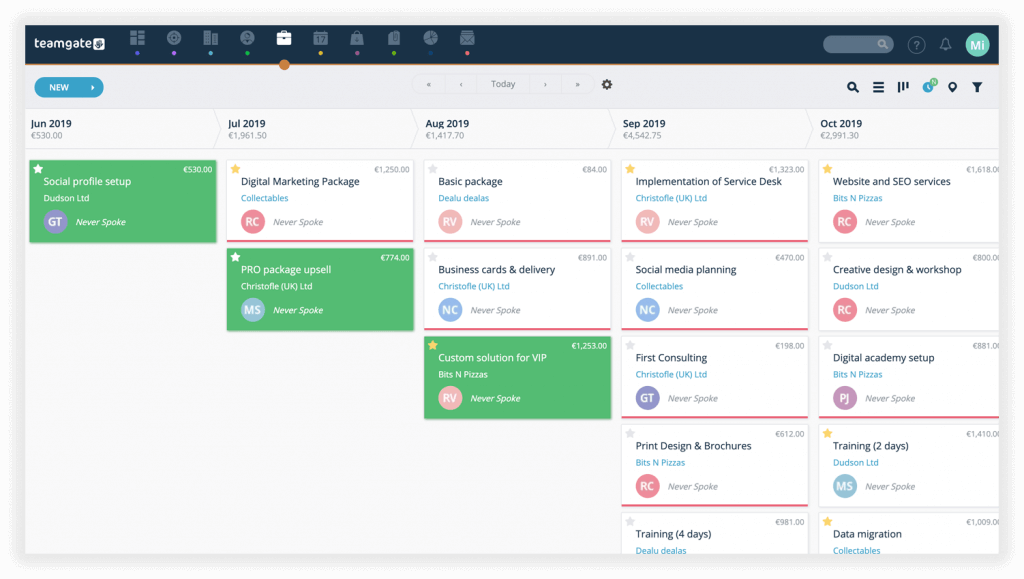
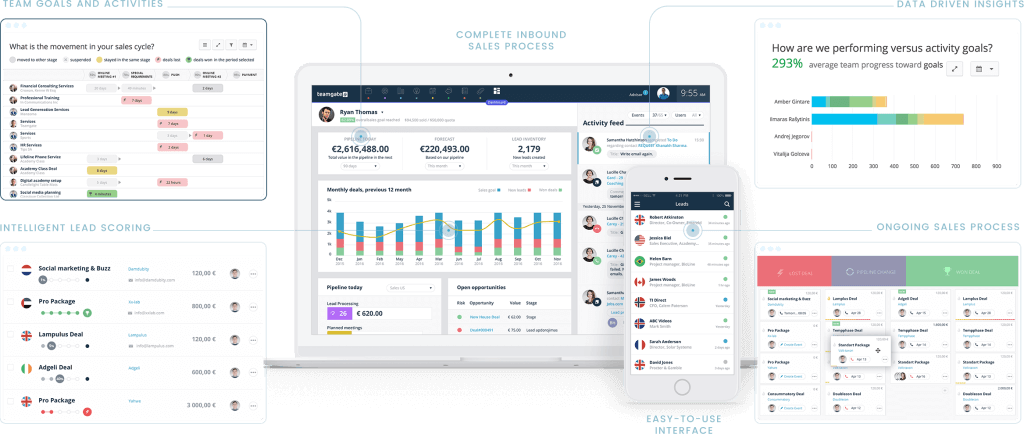
Any good salesperson knows that organization is key when pursuing prospects and leads and working to turn them into loyal customers. Otherwise, you can become overwhelmed manually tracking whom you’ve talked to, when you spoke to them, what you discussed, and which sales funnel stage they were in. That’s where good sales tracking CRM software simplifies the process and allows you to spend more time performing client-facing duties.

In this informative guide, you’ll delve into the essential world of sales tracking Customer Relationship Management (CRM) software, its remarkable benefits, and a detailed analysis of the top seven CRM platforms in the market. You will discover how CRM software can streamline your sales process, manage prospects with ease, and offer invaluable insights into your business performance, making your sales journey more efficient and successful.

Key Takeaways:

  • Sales tracking CRM software is crucial in efficiently managing, tracking, and guiding all stages of the sales process, providing valuable data and insights.
  • CRM software offers benefits such as focusing on sales, easy lead management, seamless email integration, lead conversion, and streamlined account management.
  • Top sales tracking CRM software includes Teamgate, Salesforce, Zendesk Sell, HubSpot Sales Hub, LeadSquared, Less Annoying CRM, and Nutshell.
  • Each CRM platform offers unique features, functionalities, and pricing structures that cater to different business sizes and needs.
  • Most CRM software providers offer a free trial or demo period, enabling businesses to test and select the software that best suits their specific needs.

Contents:

What Is Sales Tracking Software?

Sales tracking CRM software enables businesses to monitor, manage, and optimize their entire sales process. From capturing leads to closing deals, CRMs provide visibility into your pipeline and equip teams with tools for smarter decision-making.

Key Features:

  • New Lead Tracking: Track how leads found you, where they are in the funnel, and what actions are needed to convert.
  • Sales Forecasting: Project revenue and set targets based on real-time sales activity and historical data.
  • Activity Reports: Analyze calls, emails, meetings, and follow-ups to evaluate rep productivity.
  • Loss Reports: Understand why deals were lost and improve your process.
  • Won Opportunities: Replicate successful strategies by reviewing won deals.
  • Conversion Rates: Measure the percentage of leads that convert to customers.

Benefits of Sales Tracking CRM Software

Sales tracking CRM software offers numerous benefits that enhance your sales process and overall efficiency. Here’s a detailed look at how this software can transform your sales operations:

1. Focus on Selling

With a clear, customizable pipeline, reps spend less time on admin and more time closing deals. By automating routine tasks, the software frees up your time to focus on closing deals and building relationships with prospects.

2. Easy Prospect Management

Centralized communication tools let you call, email, and view activity history directly from your lead list. For field teams and delivery-based services, proof-of-delivery software with route optimization and GPS can complement CRM tools. For companies that require detailed delivery tracking and seamless handovers, such as couriers, e-commerce stores, and service providers, using specialized proof of delivery software for teams can be transformative.

3. Email Integration

Sync with Gmail, Outlook, Mailchimp, and other tools to streamline communication and reduce context-switching.

4. Lead Conversion

Use CRM insights and lead scoring to qualify prospects based on your Ideal Customer Profile (ICP). By combining this data with conversational AI solutions, businesses can engage leads more effectively and in real time. These tools help personalize interactions, answer questions instantly, and ensure that qualified prospects move smoothly through the sales funnel.

5. Account Management

Track team and department performance with customizable dashboards and real-time reporting.

Comparison Table of Sales Tracking CRM Software

CRM Software Best For Free Trial Pricing (per user/month) Reporting & Analytics 24/7 Support
Teamgate CRM Small–Midsize brands Yes Starter (free) / Team / Growth
Salesforce Large or enterprise Yes Tier‑based (from ~$25) ✓ (on higher tiers) ✓ (at higher tiers)
Zendesk Sell Ticket‑centric no-code Yes Tier‑based
HubSpot Sales Hub Medium businesses Yes Starter/Professional/Enterprise Partial
LeadSquared SMBs Yes Tier‑based Partial
Less Annoying CRM Solo entrepreneurs Yes Monthly subscription Minimal
Nutshell CRM Small teams Yes From $19

7 Best Sales Tracking CRM Software

Teamgate CRM

Teamgate is your one-stop shop for all of your sales tracking software needs. The complete customer relationship management software is designed to guide you from point A to point Z of the sales process, from marketing to lead generation and conversion, to ensure you attract and retain satisfied customers.

Teamgate also lets you track and share Key Performance Indicators (KPIs) and business metrics with your entire sales team to empower them with a detailed picture and understanding of the sales process. KPIs you can track with Teamgate include sales trajectory, profitability, and deal loss reasons.

 Teamgate CRM Integrations

You can also use integrations with Teamgate, including:

Teamgate CRM Features

Teamgate’s key features include:

Teamgate CRM Pricing

Teamgate provides pricing options for businesses at every stage, whether a sole trader of scaling enterprise. Teamgate offers the following pricing tiers:

Starter

Teamgate’s Starter plan is FREE for up to 2 users. The foundational plan includes all of the basic contact and communication tools to get you started.

Key features of the Starter Plan include:

  • Free for up to 2 users
  • Pipeline Management
  • Calendar synchronization
  • Activity and task creation
  • Contact management

Team

You can upgrade to the Professional plan for $39.90 per month, per user. This offering is aimed at small teams looking to scale and boost sales efficiency and process management with a complete toolkit.

Key features of the Team Plan include:

  • Unlimited users
  • Full email synchronization with email templates
  • Workflow automations
  • Sales dashboards and forecasting
  • Dedicated account manager
  • In-app dialling and SMS integrations
  • Mass import leads and contacts
  • 24/7 chat and email support

Growth

The most comprehensive plan Teamgate offers starts at $59.90 per month, per user. The all-in-one sales CRM with extensive reports and native integrations.

Key features of the Growth Plan include:

  • Advanced sales insights and analytics
  • Lead scoring and prioritization
  • Open API and Zapier integration
  • Unlimited integrations
  • Multi-currency
  • Products catalogue
  • Sales training, strategy sessions and CRM implementation
  • 24/7 phone and video support
  • Exclusive access to the Sales Accelerator Community

Teamgate is an intuitive and easy-to-use platform with flexible pricing options to fit a wide range of business needs. It differs from the competition by offering extensive, out-of-the-box insights and analytics to power sales managers in their decision making, goal tracking, and ability to identify and target their true ICP.

Understand your sales funnel by segments such as source, geographical location, and industry.

Powering your performance is made easy with Teamgate.

Learn more at www.teamgate.com.

Salesforce

Salesforce is another CRM solution that provides one platform to manage all aspects of the sales process, including service, marketing, and analytics.

The sales tracking software uses a Community Cloud feature that gives salespeople the freedom to access all customer information by themselves. This accessibility helps reduce the need for dedicated customer service representatives.

You can access the fully cloud-based system through Android and iOS devices, laptops, and desktop computers.

Salesforce Features

Salesforce’s key features include:

  • API Access
  • Integrations
  • Contact management
  • Contract management
  • Database management
  • Pipeline management
  • Performance reporting
  • Funnel reporting
  • Partner tracking
  • Task assignment
  • Territory management
  • Quota management

Salesforce Pricing

Salesforce offers different pricing tiers, allowing businesses to only pay for the services they need. Their tiers are:

Essentials

For $25 per user per month, you gain access to:

  • Account, contact, lead, and opportunity management
  • Email integration
  • The Salesforce mobile app

Professional

For $75 per user per month, you gain access to:

  • Account, contact, lead, and opportunity management
  • Email integration
  • The Salesforce mobile app
  • Lead registration and lead scoring
  • Collaborative forecasting

Enterprise

For $150 per user per month, you have access to:

  • Account, contact, lead, and opportunity management
  • Email integration
  • The Salesforce mobile app
  • Lead registration and lead scoring
  • Collaborative forecasting
  • Workflow and approval automation

Unlimited

For $300 per user per month, you gain access to all of Salesforce’s features:

  • Account, contact, lead, and opportunity management
  • Email integration
  • The Salesforce mobile app
  • Lead registration and lead scoring
  • Collaborative forecasting
  • Workflow and approval automation
  • 24/7 support

Salesforce is a popular but pricey sales tracking software. Since the platform can help businesses keep up with their sales and CRM needs as they scale, it’s best for businesses that expect fast growth and have the budgets to pay for extensive features.

Learn more at www.salesforce.com.

Zendesk Sell

Zendesk Sell is a web- and mobile-based CRM app that helps B2B and B2C salespeople manage their sales, track leads, and engage with their customers, no matter where they are.

With Zendesk Sell, salespeople can funnel their leads from various sources, such as marketing platforms, spreadsheets, and websites, and then track their sales.

Managers can also establish and monitor quotas and goals for their teams and reps.

Zendesk Sell Features

Zendesk Sell’s key features include:

  • Lead management
  • Email management
  • Contact management
  • Sales pipeline management
  • Calendar management
  • Marketing automation
  • Interaction tracking
  • Document storage
  • Lead qualification

Zendesk Sell Pricing

Zendesk Sell offers the following pricing tiers:

Team

For $19 per user per month, you can access:

  • Up to two customizable sales pipelines
  • Email integration with tracking
  • Calendar integration
  • Task and appointment setting
  • 2GB per user of document storage
  • Call and text message tracking and recording
  • Offline mobile access
  • Pre-built sales dashboards
  • Public apps and integrations
  • Robust APIs (core)
  • Onboarding and adoption resources

Growth 

For $49 per user per month, you can access:

  • Up to ten customizable sales pipelines
  • Email integration with tracking, bulk emailing, and unlimited templates
  • Calendar integration
  • Task and appointment setting
  • 5GB per user of document storage
  • Call and text message tracking and recording
  • Offline mobile access
  • Pre-built sales dashboards
  • Public and private apps and integrations
  • Robust APIs (core and premium)
  • Onboarding and adoption resources
  • Custom sales reports and dashboards
  • Sales forecasting and goals tracking
  • Advanced activity reports
  • Product and price book

Professional

For $99 per user per month, you can access:

  • Up to 20 customizable sales pipelines
  • Email integration with tracking, bulk emailing, and unlimited templates
  • Calendar integration
  • Task and appointment setting
  • 10GB per user of document storage
  • Call and text message tracking and recording
  • Offline mobile access
  • Pre-built sales dashboards
  • Public and private apps and integrations
  • Robust APIs (core and premium)
  • Onboarding and adoption resources
  • Custom sales reports and dashboards
  • Sales forecasting and goals tracking
  • Lead and deal scoring
  • Task automation
  • Advanced roles and permissions
  • Company hierarchy

Zendesk Sell is easy to learn and has a simple interface, making it a good choice for new businesses using a CRM for the first time. However, users need to upgrade to pricier tiers to get extensive reports and features. While Zendesk Sell integrates with other software to create a cross-department ecosystem, it may not be robust enough for larger enterprises.

Learn more at https://www.zendesk.com/sell/.

HubSpot Sales Hub

HubSpot’s Sales Hub is a robust and easy-to-use sales CRM that includes sales engagement tools and powerful sales analytics and reporting.

Sales Hub is built on the HubSpot Growth Platform to allow users to bring their customer data, tools, and teams together in one streamlined system. It also offers more than 500 apps in the HubSpot App Marketplace.

Hubspot Sales Hub

Sales Hub’s key features include:

  • Contact management
  • Lead management
  • Workflow management
  • Task management
  • Lead qualification
  • Email marketing
  • Email templates
  • Document storage
  • Prospecting tools
  • Integrations
  • Document management
  • Customer Relationship Management
  • Reporting and analytics
  • Call tracking
  • Sales automation
  • 24/7 customer support

Hubspot Sales Hub

HubSpot’s Sales Hub offers the following pricing tiers:

Free

For 100% free, you can access:

  • Contact management
  • Deal Pipeline
  • Quotes
  • Meeting scheduling
  • Live chat
  • Reporting dashboard

Starter

Starting at $45 per month, you can access:

  • Contact management
  • Deal Pipeline
  • Quotes
  • Meeting scheduling
  • Simple automation
  • Goals
  • Conversation routing
  • Multiple currencies
  • Rep productivity performance

Professional

Starting at $450 per month, you can access:

  • Contact management
  • Deal Pipeline
  • Quotes
  • Meeting scheduling
  • Live chat
  • Reporting dashboard
  • Goals
  • Conversation routing
  • Multiple currencies
  • Rep productivity performance
  • Deal stage, task, and lead rotation automation
  • Sequences
  • Teams
  • Custom reporting
  • Phone support

Enterprise

Starting at $1,200 per month, you can access:

  • Contact management
  • Deal Pipeline
  • Quotes
  • Meeting scheduling
  • Live chat
  • Reporting dashboard
  • Goals
  • Conversation routing
  • Multiple currencies
  • Rep productivity performance
  • Deal stage, task, and lead rotation automation
  • Sequences
  • Teams
  • Custom reporting
  • Phone support
  • Custom objects
  • Predictive lead scoring
  • Playbooks
  • Forecasting
  • Recurring revenue tracking

HubSpot is an easy-to-use sales tracking platform with a lot of flexibility in terms of pricing. It also offers limited service for free. Although this free CRM option is good for newer businesses and startups to see whether HubSpot fits their needs, it lacks several key functions. To truly benefit from a full suite of analytics and sales tracking, users need to upgrade to get these pricey yet effective analytical tools.

To learn more, visit https://www.hubspot.com/products/sales/enterprise.

LeadSquared

LeadSquared is a cloud-based marketing automation and CRM solution specializing in servicing clients in finance, e-commerce, education, real estate, software, and hospitality.

The software has sales tracking features and helps users automate tasks like lead capturing, marketing, reporting, and analytics.

LeadSquared Key Features

LeadSquared’s key features include:

  • Real-time reporting
  • Marketing automation
  • Mobile access
  • Lead segmentation
  • Lead capturing
  • Lead management
  • Sales pipeline management
  • Customizable reports
  • Workflow management
  • Communication management
  • Customer relationship management
  • Contact management
  • Activity tracking

LeadSquared Pricing

LeadSquared offers the following pricing tiers:

Lite

For $25 per user per month (billed annually), you can access:

  • Lead tracking
  • Lead qualification
  • Lead scoring
  • Custom fields
  • Duplicate blocking
  • Smart views
  • Sales tracking
  • Tasks and follow-ups
  • Conversation tracking
  • Sales reporting
  • One-on-one emails
  • Text messages
  • Phone call tracking
  • Geo-tracking
  • Multilingual support
  • Offline functionality

Pro

For $50 per user per month (billed annually), you can access:

  • Lead tracking
  • Lead qualification
  • Lead scoring
  • Custom fields
  • Duplicate blocking
  • Smart views
  • Sales tracking
  • Tasks and follow-ups
  • Conversation tracking
  • Sales reporting
  • One-on-one emails
  • Text messages
  • Phone call tracking
  • Geo-tracking
  • Multilingual support
  • Offline functionality
  • Email campaign features such as responsive templates, personalization, and campaign reports
  • Lead distribution
  • Custom tabs
  • Custom actions
  • Sales notifications
  • Role-based access
  • Territory management
  • Sales performance reports
  • Account management

Super

For $100 per user per month (billed annually), you can access:

  • Lead tracking
  • Lead qualification
  • Lead scoring
  • Custom fields
  • Duplicate blocking
  • Smart views
  • Sales tracking
  • Tasks and follow-ups
  • Conversation tracking
  • Sales reporting
  • One-on-one emails
  • Text messages
  • Phone call tracking
  • Geo-tracking
  • Multilingual support
  • Offline functionality
  • Email campaign features such as responsive templates, personalization, and campaign reports
  • Lead distribution
  • Custom tabs
  • Custom actions
  • Sales notifications
  • Role-based access
  • Territory management
  • Sales performance reports
  • Account management
  • Visual workflow designer
  • Communication automation
  • Sales automation
  • Escalations
  • Customizable sales processes
  • Advanced sales signals
  • Sales sequences
  • Advanced lead distribution features such as zip code-based and performance-based distribution
  • Permission templates that include hierarchy-based restrictions and location-based restrictions
  • Advanced reports
  • Developer Platform (LAPPS)

LeadSquared offers complete marketing automation and CRM software for businesses of all sizes. It allows users to organize their lead capture and lead management, handle sales management, and track analytics in one place. Customers who have reviewed the platform like the precision and details provided in the reporting tools. However, many have complaints about how much storage space the mobile app takes up for cell phone users, and others have reported some difficulties with lead management.

To learn more, visit www.leadsquared.com.

Less Annoying CRM

Less Annoying CRM is a CRM solution specifically for small businesses. This software offers cloud-based deployment, several configuration options, and a dashboard that provides a complete sales process overview.

Less Annoying CRM Key Features

Less Annoying CRM offers the following features:

  • Contact database
  • Contact management
  • Lead management
  • Task management
  • Workflow management
  • Sales pipeline management
  • Customizable fields
  • Calendar/Reminder system
  • Interaction tracking
  • Mobile access
  • Reporting/analytics
  • Document storage

Less Annoying CRM Pricing

Less Annoying CRM offers a subscription-based pricing model of $15 per user per month instead of pricing tiers. They also have personalized pricing plans for companies that want more than ten users to access the system.

Less Annoying CRM offers flexibility and performance for a flat fee monthly rather than the pricing tiers we see in the other software options. This can help startups and small businesses budget better while determining which features they need in a CRM. Less Annoying CRM is a very affordable option, but in exchange, users receive limited and basic reporting features that costlier and more sophisticated CRMs offer.

To learn more, visit https://www.lessannoyingcrm.com.

Nutshell CRM

Nutshell provides one streamlined platform to view your leads and their place in the pipeline and see important metrics, including conversation rate and revenue per sale.

Nutshell CRM Key Features

Nutshell’s features include:

  • Sales reports
  • Loss reports
  • Activity reports
  • Forecasting
  • Downloadable charts
  • Sales funnel
  • Automated sales email sequences
  • Intuitive contact management

Nutshell CRM Pricing

Nutshell’s pricing tiers include:

Nutshell

For $16 per user per month, you can access:

  • Contact management and communication timelines
  • Email and calendar sync
  • Customizable single sales pipeline
  • Sales and lead reporting
  • Drag-and-drop pipeline board and interactive lead map
  • Embeddable web forms
  • Activity reminders

Nutshell PRO

For $42 per user per month, you can access:

  • Contact management and communication timelines
  • Email and calendar sync
  • Sales and lead reporting
  • Drag-and-drop pipeline board and interactive lead map
  • Embeddable web forms
  • Activity reminders
  • Sales automation
  • Unlimited pipelines
  • Personal email sequences
  • Sales and activity quotas
  • Full reporting suite with activity, funnel, and forecast reports
  • Unlimited in-app phone dialing and recording

Nutshell offers an easy-to-use interface intended for teams that have grown tired of juggling different sales and marketing tools. This platform allows you to have your tools in one organized place without paying a full-time administrator to manage the software. Users report enjoying the ease of use that the Nutshell platform offers, but they would like to see more integrations and the ability to chat with more clients on different third-party email marketing platforms.

To learn more, visit www.nutshell.com.

Ready for Simplified Sales Management? Teamgate Can Help

As you can tell by now, there is no shortage of sales tracking CRM software options available today. All options can streamline your sales process, but Teamgate comes out on top, allowing you more time to focus on customer service and lead nurturing and less time tracking down leads and updating your database.

WHY TEAMGATE? With Teamgate, you can utilize data-driven analytics to gain real-time insights into your business and department performance while uncovering sales truths with in-depth insights and analytics as Teamgate’s CRM powers your growth.

When you count on Teamgate, you can assure a boost in efficiency and a more straightforward sales process with all your essential customer management tools in one easy-to-use platform. To learn more about Teamgate and how we can help with your workflow,contact us for a free 14-day demo.


FAQs: Sales Tracking CRM

Q: What is sales tracking CRM software?

A: Sales tracking CRM software is a tool that assists in managing, tracking, and guiding all aspects of the sales process. It provides workflows, allows for new lead tracking, sales forecasting, activity reports, loss reports, won opportunities, conversion rate tracking, and average sale price tracking.

Q: What are the benefits of using sales tracking CRM software?

A: Sales tracking CRM software allows for a more focused sales approach, easy management of prospects and leads, seamless email integration, lead conversion, and streamlined account management. It also enables easy scheduling of activities, and provides insights into your prospects to personalize your approach.

Q: What are some of the best sales tracking CRM software?

A: One of the best sales tracking CRM software is Teamgate which has unique features and pricing options to cater to various business needs.

Q: Do sales tracking CRM software providers offer a free trial or demo period?

A: Yes, most sales tracking CRM software providers offer a free trial or demo period. This allows businesses to test and select the software that best suits their specific needs.

Q: What features do Teamgate CRM software offer?

A: Teamgate offers features such as API Access, integrations, partner tracking, contact management, contract management, funnel reporting, sales reports and analytics, performance reporting, pipeline management, task assignment, quotation handling, and product and price control. It also provides a variety of pricing tiers to suit different business needs.

Developing a strong academic voice is crucial for students and researchers who wish to clearly and convincingly present their ideas. Unlike informal writing, academic writing calls for accuracy, formality, and a logical reasoning flow. It can be difficult to strike the ideal mix of professionalism and uniqueness. Expert essay writers stress that a superb academic style is not about rigorously following a template or employing advanced language. It is rather about clearly and confidently expressing well-organized thoughts.

What Defines an Academic Voice?

Strong academic voice is defined by:

  • Clarity and Precision. Ideas should be straightforward and unambiguous. Vague statements weaken arguments and reduce credibility. To eliminate vagueness and improve clarity, you can use an AI-powered paraphraser.
  • Formality. Academic writing avoids slang, contractions, and overly casual expressions. Instead, it maintains a professional and objective tone.
  • Critical Thinking. Academic writing requires evaluating, interpreting, and interacting with many points of view rather than simply summarizing material.
  • Consistency. A complete academic voice keeps a paper’s tone and style constant, preventing needless changes.

Though this sometimes results in uncertainty, many students believe academic writing requires difficult vocabulary and extensive phrases. Strong argument paired with simplicity makes writing more powerful.

The Role of Research in Shaping Your Voice

Expert writers emphasize that a strong academic style depends on a solid study background. Good writing involves creating arguments grounded on reliable data, not only expressing ideas. Students should critically review sources, search for gaps in current research, and engage in intellectual debate rather than merely compiling information.

However, developing well-structured arguments and maintaining clarity in academic writing can be challenging. In such cases, using resources like WritePaperForMe can guide in organizing research findings and refining complex ideas effectively. While external help can assist in structuring thoughts, critical engagement with the material remains essential for developing a strong academic voice.

A strong academic voice also requires interacting with several points of view. Understanding counterarguments and carefully answering them reveals the depth of study. Skilled writers recognize competing points of view and offer rational replies instead of completely discounting them, strengthening their position.

Structuring Arguments Effectively

A well-defined framework guides the reader over an argument. Expert essayists guarantee coherence by using a rational sequence:

  1. Introduction. This section provides background information, presents the thesis statement, and outlines the main discussion points.
  2. Body Paragraphs. Each paragraph should focus on a single idea, supported by evidence. Smooth transitions between paragraphs create a seamless flow.
  3. Conclusion. A strong conclusion does not introduce new information but reinforces the paper’s key points and leaves a lasting impression.

Strong academic writing also avoids sudden changes in subject matter. Natural and logical transitions between concepts help the reader follow the development of the argument easily.

Refining Language for a Stronger Voice

Academic writing depends much on the use of words. Professionals advised:

  • Using Specific Terminology. Instead of vague words like “thing” or “good,” opt for precise academic terms relevant to the subject.
  • Avoiding Unnecessary Jargon. While specialized vocabulary is important, excessive jargon can make writing inaccessible.
  • Maintaining an Objective Tone. Academic writing relies on evidence rather than personal opinions. Even when writing in the first person (if the discipline requires).

One additional frequent problem is that too much passive voice is used. Passive constructions may make sentences confusing and wordy, yet occasionally required. For instance, saying “The experiment was conducted by the researchers” is less straightforward than saying “The researchers conducted the experiment.” Active voice and passive voice combined enhance impact and readability.

Common Pitfalls to Avoid

Even seasoned authors have errors that compromise their scholarly voice. Among the most often occurring problems are:

  • Redundancy. Repeating the same idea in different words does not add value. Instead of reiterating, deepen the analysis or provide additional evidence.
  • Overgeneralization. Broad claims without supporting evidence can weaken credibility. Every argument should be backed by specific examples or research.
  • Weak Transitions. Ideas should flow smoothly from one to another. Sudden shifts make writing disjointed and harder to follow.
  • Poor Citation Practices. Failure to cite sources properly reduces credibility and can lead to accusations of plagiarism. Following the correct citation style (APA, MLA, Chicago, etc.) ensures academic integrity.

Students aware of these traps can improve their writing and become more authoritative.

The Importance of Revision

Perfect work on the first try is not produced by the finest authors. Refining an academic voice depends critically on editing and revision. Expert essayists work through several rounds of editing, emphasizing:

  • Clarity and Conciseness. Ensuring that each sentence contributes meaningfully to the argument.
  • Logical Flow. Checking whether ideas connect smoothly without abrupt jumps.
  • Grammar and Style. Proofreading for errors, inconsistencies, and adherence to the required academic format.

While looking for comments from peers or mentors might offer fresh ideas, reading the writing aloud is a helpful approach for recognizing problematic language. Although many experts also utilize editing tools like Grammarin, hand proofreading is vital.

Developing Your Academic Voice Through Practice

Strong academic voice is not something one acquires immediately; it takes constant effort. At the same time, regular writing lets students improve their style, and reading well-written scholarly papers aids in understanding tone and organization. Part of the learning process includes asking for comments, trying different phrase patterns, and editing drafts several times.


Academic writing is ultimately about more than following guidelines. It’s a way to engage with ideas, add to discussions, and effectively debate. Students who give research, structure, language, and revision top priority will grow to have a strong, authoritative academic voice that will serve them both now and going forward.

Gathering enormous volumes of data, customer relationship management (CRM) systems give companies understanding of consumer behavior, preferences, and demands. Raw data by itself is insufficient; it must be developed into worthwhile material that interacts, educates, and transforms viewers. It is where services for expert essay writing help. Combining CRM data with experienced content development allows companies to create customized, focused materials that increase customer connections and promote involvement.

Understanding CRM Data: A Goldmine for Content Strategy

Over several touchpoints, CRM systems log consumer contacts, purchases, questions, and comments. This information provides close-ups on:

  • Customer Demographics. Age, location, occupation, and interests.
  • Behavioral Patterns. Purchase history, website visits, content engagement.
  • Pain Points and Preferences. Common complaints, frequently asked questions, and product/service interests.
  • Communication Preferences. Email interactions, social media engagement, and preferred content formats.

Although company operations depend on CRM data, its actual value is released when used for content production. Businesses may use CRM analytics to create relevant and engaging content that appeals to their target market.

The Role of Professional Essay Writing Services in Content Creation

urning unprocessed CRM data into useful material requires audience knowledge, strategic thought, and specific writing abilities. Expert essay writing services provide knowledge in turning data-driven ideas—often supported by data migration tools—into well-researched, interesting, and authoritative material. Their roles comprise:

Personalizing Content Based on Customer Insights

Generic material lacks audience appeal. Writing pros examine CRM data to produce customized content directly appealing to consumers’ interests and pain areas. For example, services like SpeedyPaper can also help structure complex topics into clear, engaging content. For instance, if statistics reveal many searches about a particular product feature, an in-depth article or guide addressing typical questions can be created.

Enhancing Customer Engagement Through Targeted Messaging

Content powered by CRM is more successful when it meets audience expectations. Expert writers may provide whitepapers catered to many consumer groups, case studies, and blog entries. A B2B software provider may, for example, use CRM data to find sectors displaying the highest interest and then create industry-specific thought leadership pieces or studies addressing their particular issues.

Driving Conversions with Data-Backed Content

Guided clients through the purchasing process, mostly through the use of educational materials. Combining CRM insights with skilled writers produces convincing pieces that establish credibility and confidence. Examples consist of:

  • Product Comparisons. Highlighting key benefits based on customer feedback.
  • Success Stories. Showcasing real-world applications and customer testimonials.
  • How-To Guides. Providing step-by-step solutions to common problems.

Direct addressing of consumer demands by content increases engagement rates, which increases conversions and brand loyalty.

Why Businesses Need Professional Essay Writing Services

Although internal teams may produce materials, they may lack the time and knowledge to create data-driven products that enhance interaction. Expert essay writing services have various benefits.

Expertise in Research and Analysis

Data-driven content experts among writers know how to evaluate CRM findings and turn them into gripping storylines. They guarantee in every work depth, credibility, and correctness.

Consistency in Brand Voice and Messaging

One single content strategy calls for a consistent tone and style. Professional writers provide consistency across all media by matching materials with the messaging of a brand.

Scalability and Efficiency

Content production outsourced enables companies to mass-produce premium items. Professional writers guarantee prompt delivery without sacrificing quality, whether it comes from case studies, papers, or blog entries.

SEO Optimization and Content Performance

Online presence depends on search engine optimized content. Writing services improve search results and natural reach by including organized formatting, readability improvement, and keyword research.

Best Practices for Integrating CRM Data with Content Writing Services

Companies should follow a disciplined strategy to optimize the influence of CRM-driven material:

Define Clear Content Goals

Before commissioning content, identify objectives such as:

  • Increasing website traffic
  • Generating leads
  • Educating customers
  • Enhancing brand credibility

Clear goals help writers tailor content to specific business needs.

Segment Audience Data for Personalized Content

Sort clients depending on demographics, behavior, and degree of involvement using CRM data. This division helps to provide very focused material meant for several audience groups.

Provide Writers with Actionable CRM Insights

Share pertinent CRM data with authors to guarantee quality of article development. Important details include:

  • Common customer questions and concerns
  • Trending topics and frequently searched keywords
  • Customer testimonials and success stories

This information helps writers create material the target audience will find appealing.

Align Content with the Customer Journey

Plot the client journey and provide material for every level:

  • Awareness Stage. Blog posts, industry reports, and social media content.
  • Consideration Stage. Case studies, product comparisons, and expert insights.
  • Decision Stage. Testimonials, success stories, and in-depth guides.

Content gains more power when one addresses several phases of the buyer’s path.

Monitor Performance and Optimize Content Strategy

Track content success using CRM data and engagement benchmarks. Important benchmarks consist of:

  • Website traffic and time spent on pages
  • Click-through rates on email campaigns
  • Lead generation and conversion rates

Apply these realizations to hone content strategies and improve future content quality.

Conclusion

Strategic action improving content relevancy, engagement, and efficacy is bridging CRM data with professional essay writing services. Companies which use CRM-driven content development may better relate to their target market, meet their particular demands, and initiate significant connections. Working with talented writers helps businesses make sure their material is not only interesting and well-researched but also in line with consumer insights for best effect.

Choosing the best CRM for your small business in Australia can streamline your operations, improve customer relationships, and drive growth. This article explores the top CRM options available, key features to look for, and how these tools can boost productivity and profitability.

Key Takeaways:

  1. Look for scalability, ease of use, affordability, local support, and compliance in a CRM.
  2. Top CRM options for small businesses include Sendpulse, Zoho CRM, and HubSpot CRM.
  3. Customization and integration with existing tools are essential for optimizing workflows.
  4. Mobile access is critical for managing customer relationships on the go.
  5. CRMs enhance sales efficiency, improve customer service, and provide valuable data insights.

As Aussie small businesses face increasing pressure to stay competitive in a fast-moving market, managing customer relationships efficiently becomes more critical than ever. A Customer Relationship Management (CRM) system helps businesses streamline sales processes, enhance customer interactions, and organize client data, offering a strategic advantage in today’s digital age. For small businesses, choosing the right CRM can be a game-changer. However, with so many options available, identifying the best CRM for your business requires careful consideration of factors like ease of use, scalability, cost, and local support.

This article explores the best CRMs for Australian small businesses, focusing on those that offer robust features without overwhelming small teams or requiring large budgets. We’ll delve into the key features to look for in a CRM, compare some of the top options available in the market, and guide you in selecting a solution that aligns with your business needs. Teamgate CRM, in particular, stands out as an ideal choice due to its user-friendly interface, scalability, and local support tailored for Australian businesses. Whether you’re just starting out or looking to scale your operations, the right CRM can help you improve productivity, boost customer satisfaction, and drive business growth.

Essential CRM Features for Australian Small Businesses

Selecting the right CRM for an Australian small business requires balancing cost, functionality, and future growth potential. A good CRM should simplify business processes without adding complexity. Here are the key factors to consider when evaluating CRM options:

CRM Scalability

As your business grows, so should your CRM. A CRM that cannot adapt to increased data volume or team size will become a bottleneck rather than a tool for growth. Scalability ensures that the CRM continues to meet your needs as your customer base and business operations expand. Solutions like Teamgate CRM offer scalable features, allowing businesses to easily adjust their CRM usage without the need to switch platforms.

CRM Ease of Use

Small businesses often lack the time and resources for extensive training. Therefore, a CRM should be intuitive and easy to navigate. An overly complicated system can slow down teams and reduce productivity. Look for systems that offer a straightforward user interface, drag-and-drop functionality, and quick learning curves. Teamgate CRM is designed with usability in mind, ensuring that even non-technical users can quickly master its features.

CRM Affordability

For small businesses, budget constraints are a reality. Therefore, the CRM should offer a pricing model that fits within limited budgets, ideally with tiered pricing or flexible plans. Many CRMs, such as Teamgate, offer affordable subscription plans that scale with the business, allowing for gradual upgrades as needs evolve.

CRM Australian Local Support

Access to reliable customer support is essential, particularly for businesses operating in specific regions like Australia. Having support available in the same time zone can minimize downtime and ensure faster resolutions to technical issues. Australian small businesses benefit from choosing CRMs with localized support, which Teamgate provides.

CRM Compliance

Compliance with data privacy regulations such as GDPR is crucial for any business handling customer data. A CRM that offers built-in security features, such as encryption and user permission settings, ensures that your business stays compliant with Australian laws and international standards. Teamgate CRM, for example, offers strong compliance features tailored to meet these needs.

Top 5 CRMs for Australian Small Businesses

When selecting a CRM for a small business in Australia, it’s important to consider how different platforms measure up in terms of scalability, usability, and cost. Below, we explore some of the top CRM solutions, each offering unique features designed to meet the needs of Australian small businesses.

Teamgate CRM


Teamgate CRM interface

Teamgate CRM is an all-in-one sales management tool tailored specifically for small and medium-sized businesses. Designed to simplify the sales process, Teamgate focuses on improving customer interactions, optimizing sales pipelines, and enhancing overall team productivity. A recent winner of Capterra’s #1 Value-for-Money CRM of 2024, here’s why Teamgate is an ideal option for Australian small businesses:

Teamgate CRM User-Friendly Interface

One of the standout features of Teamgate CRM is its intuitive interface. The platform is designed to minimize the learning curve, enabling users to start managing their sales and customer data quickly without needing extensive training. For small businesses, this is a critical advantage as it allows team members to focus on their core tasks rather than mastering complex software.

Teamgate CRM Affordability and Flexible Pricing Plans

Teamgate CRM offers competitive pricing plans with included customer support that recently won them best value for money CRM of 2024! Their are multiple pricing options that scale with your business, making it an affordable solution for small businesses. The platform provides tiered options that cater to businesses at different stages, ensuring that companies don’t have to overspend on unnecessary features. This flexibility makes Teamgate a cost-effective choice for businesses looking to manage their customer relationships without breaking the bank.

Teamgate CRM recently won best value-for-money CRM of 2024!

Teamgate CRM Scalability for Growing Businesses

As Australian small businesses expand, Teamgate CRM grows with them. Its scalable infrastructure allows businesses to seamlessly add more users, manage larger data sets, and incorporate more advanced features as the company grows. This makes it an ideal choice for businesses that anticipate growth in the near future.

Teamgate CRM Local Customer Support and Compliance

Teamgate offers robust customer support with resources specifically geared toward Australian businesses. Support is available within Australian time zones, ensuring that issues are resolved promptly. Additionally, Teamgate adheres to GDPR and local data protection regulations, giving businesses peace of mind regarding data security. Oh and did I mention they have an Aussie CEO?

Teamgate CRM Customizable Features and Integration

Teamgate is highly customizable, allowing businesses to tailor the system to their specific needs. Whether it’s sales tracking, customer management, or reporting, businesses can modify Teamgate to fit their workflows. Moreover, the CRM integrates with popular tools such as Gmail, Outlook, and various marketing platforms, making it easy to streamline operations.

Zoho CRM

Zoho CRM is another popular choice among small businesses due to its wide range of features and affordability. With a focus on automation and customization, Zoho CRM enables businesses to streamline their sales processes while maintaining flexibility.

Zoho CRM Affordability and Scalability

Zoho CRM offers a free tier for businesses just starting out, with premium plans available for those looking to access more advanced features. This pricing flexibility makes Zoho CRM a good option for small businesses with varying needs. As the business grows, Zoho offers more comprehensive solutions that can scale with the company’s demands.

Zoho CRM Automation and Customization

One of the key strengths of Zoho CRM is its ability to automate repetitive tasks, freeing up time for teams to focus on more important aspects of their business. Additionally, Zoho allows for high levels of customization, enabling users to tailor the platform to their specific processes and workflows.

Zoho CRM Comparison with Teamgate CRM

While Zoho CRM offers a wide array of features, its interface can be more complex and may require more time to master than Teamgate. Teamgate’s simplicity and localized support make it a better choice for businesses that prioritize ease of use and quick implementation.

HubSpot CRM

HubSpot CRM is a popular free CRM option that offers a robust suite of inbound marketing tools in addition to basic sales management features. It’s particularly attractive to small businesses that want a no-cost solution with the potential to upgrade as their needs grow.

Hubspot Free CRM Solution with Marketing Tools

HubSpot CRM’s free tier is highly attractive to small businesses on a tight budget. The platform includes essential features like contact management, deal tracking, and email marketing automation. This makes it a great option for businesses looking to improve customer relationships without upfront costs, although be weary of scaling costs as you grow.

Hubspot CRM Scalability and Integrations

While the free version of HubSpot CRM is ideal for smaller businesses, it also offers paid upgrades that unlock more advanced sales and marketing tools. HubSpot integrates seamlessly with other popular business tools, making it a flexible solution for growing businesses.

Hubspot CRM Comparison with Teamgate CRM

Although HubSpot’s free version is appealing, businesses that require more advanced features may find themselves needing to upgrade sooner than expected. Compared to Teamgate, HubSpot lacks the same level of local support and customization, making Teamgate a stronger option for Australian small businesses looking for a long-term CRM solution.

SendPulse CRM


SendPulse is a versatile platform known for its multichannel marketing automation, flexible CRM functionality and chatbot builder that works with most social media platforms and messengers as Instagram, WhatsApp, Facebook, Telegram.

SendPulse CRM Features

SendPulse’s CRM was primarily designed with ecommerce and infopreneurial business in mind. It offers essential features to develop a sales pipelines to attract your target audience, create landing pages and pop-ups, sell your products, courses, services , and manage your contacts in CRM. SendPulse’s CRM comes with advanced segmentation that allows users to deliver highly targeted campaigns that drive better engagement through preferred communication channels. One of the latest updates to SendPulse’s CRM functionality was WhatsApp CRM integration that significantly simplifies WhatsApp campaign management and customer communications.

SendPulse CRM Comparison with Teamgate CRM

Although SendPulse CRM provides a comprehensive set of features, the sheer amount of tools and marketing channels might be overwhelming and may take longer to learn compared to Teamgate. With its intuitive design, Teamgate is often a more suitable option for businesses that value simplicity.

Monday.com CRM

Monday.com is known primarily as a project management tool, but it has expanded its offering to include CRM functionalities tailored for small businesses. The platform is highly customizable and flexible, making it an attractive option for businesses that want a CRM system that can also handle project management and team collaboration tasks.

Monday CRM Flexibility and Project Management Features

Monday.com CRM stands out due to its unique approach to managing both sales pipelines and project workflows. The platform allows businesses to customize boards, automate workflows, and track both customer interactions and internal project progress simultaneously. This dual capability is particularly beneficial for small businesses that need a tool that can handle more than just customer relationship management. Teams can track sales opportunities, manage customer communications, and assign tasks all within the same platform, offering an all-in-one solution for businesses with diverse needs.

Monday CRM Comparison with Teamgate CRM

While Monday.com offers impressive flexibility and project management capabilities, it can be more complex to set up and customize than a traditional CRM like Teamgate. Small businesses that need a straightforward CRM solution may find Monday.com’s flexibility comes at the cost of ease of use, requiring more time and effort to tailor the platform to their needs. In contrast, Teamgate CRM focuses exclusively on customer relationship management, offering an intuitive, easy-to-use interface with powerful sales tracking and customer management features. Additionally, Teamgate’s scalability is specifically designed for growing sales teams, whereas Monday.com’s broader focus on project management may dilute its effectiveness as a CRM.

For businesses that require both CRM and project management features, Monday.com can be a versatile option. However, for those that prioritize simplicity, ease of use, and dedicated CRM functionality, Teamgate is a more focused and efficient choice.

How CRM Systems Boost Productivity and Profitability for Small Businesses

A well-implemented CRM system is a critical tool for improving both productivity and profitability in small businesses. By automating time-consuming tasks, streamlining customer interactions, and providing valuable insights into business performance, a CRM helps businesses achieve more with less effort.

Streamlining Sales Processes

A CRM helps small businesses manage their entire sales pipeline more efficiently, from lead generation to closing deals. By keeping all customer data organized and accessible in one platform, CRMs reduce the time spent searching for information and managing leads manually. Features like task automation, lead scoring, and pipeline management ensure that sales teams can focus on selling rather than administrative tasks. CRMs like Teamgate provide visual sales pipelines and drag-and-drop functionality, making it easy to move leads through the sales stages and prioritize the most promising opportunities.

Improving Customer Relationships

In addition to managing sales, CRMs play a critical role in improving customer relationships. By tracking customer interactions and preferences, businesses can provide more personalized service, which leads to higher customer satisfaction and retention. CRMs also provide a 360-degree view of each customer, allowing sales and support teams to anticipate customer needs and resolve issues more quickly.

Data-Driven Decision Making

A good CRM provides insightful reports and analytics that help businesses make data-driven decisions. By tracking key metrics such as sales performance, customer acquisition costs, and customer lifetime value, businesses can optimize their strategies and identify areas for improvement. CRMs like Teamgate offer customizable reporting tools that allow small businesses to track their most important KPIs and adjust their operations accordingly.

Ultimately, using a CRM leads to better organization, increased sales, and stronger customer loyalty—resulting in improved profitability for small businesses.

Conclusion

Choosing the right CRM can significantly impact the growth and efficiency of your small business. By carefully considering factors like scalability, ease of use, and integration capabilities, you can find the perfect CRM to streamline your operations and strengthen customer relationships. Whether you’re a startup or an established small business, investing in a powerful CRM solution is a critical step toward long-term success.

If you’re ready to take your business to the next level, try Teamgate CRM with a 14-day free trial to see how it can transform your sales and customer management processes. For a more personalized experience, you can also book a system demo and explore how Teamgate’s features can be tailored to meet your business needs. Take the first step today and see the difference a smart CRM solution can make!


FAQs: Best CRM for Australian Small Businesses

1. What is the best CRM for small businesses in Australia?
The best CRM for small businesses in Australia depends on your specific needs. Solutions like Teamgate CRM offer user-friendly tools, excellent customer support, and features tailored for small and growing businesses.

2. What makes Australian CRM software different?
Australian CRM software often comes with local support and features that cater specifically to the needs of Australian businesses, such as compliance with local regulations and data privacy laws.

3. What is the best CRM software for Australian businesses?
Teamgate CRM is among the top CRM solutions for Australian businesses due to its scalability, ease of use, and dedicated Australian support. Other contenders include Zoho CRM and HubSpot, but Teamgate stands out for its local focus.

4. Are there free CRM options available in Australia?
Yes, several free CRM options are available in Australia, including Teamgate’s free trial and other platforms like HubSpot’s free CRM version. Free versions typically have limitations on features or user numbers but are a great starting point for small businesses.

5. What CRM solutions are popular in Australia?
Popular CRM solutions in Australia include Teamgate, Zoho, and Salesforce. These platforms are known for their ease of use, comprehensive features, and strong customer support tailored to Australian businesses.

6. Do CRM systems offer Australian-based customer support?
Yes, many CRM systems, including Teamgate, offer dedicated Australian support teams. This ensures that users receive assistance that understands the local business environment and operates during Australian business hours.

7. How do I choose the right CRM for my Australian small business?
Consider factors such as ease of use, cost, integration options, and customer support. Teamgate CRM, for example, offers affordable pricing plans, seamless integration with other tools, and strong Australian-based support, making it ideal for small businesses.

Email marketing is among the most effective outreach tactics for reaching new customers and engaging existing ones. In fact, 79% of B2B marketers believe email is the most successful content distribution channel, and 80% of buyers prefer sellers to contact them via email.

However, manually crafting, sending, and tracking emails to communicate with each customer is slow and inefficient. Fortunately, several CRMs (Customer Relationship Management) are available for automating email marketing and outreach.

In this article, we explore the benefits and features of integrating email with your CRM system, detailing how it can streamline communication, enhance sales productivity, and improve customer relationship management. We’ll cover the essentials of what CRM with email integration offers and why it’s a critical tool for modern businesses.

Key Takeaways:

  1. CRM with email integration simplifies managing customer communications.
  2. Email integration boosts productivity by automating follow-ups.
  3. It provides valuable insights from email interactions.
  4. Integration supports seamless workflow within a single platform.
  5. Mobile access ensures you stay connected on the go.

Contents:

Benefits of Integrating Email with Your CRM

Customer Relationship Management software simplifies managing interactions and relationships with existing and potential customers. One of the ways a CRM tool does this is by helping your team execute a data-driven email outreach to improve or build customer relationships and grow your business.

Let’s take a closer look at the benefits of CRM email integration before delving into the five best CRMs that made our list:

  • Save Money: Email marketing and CRM are separate functions that previously required two different tools. A CRM with email integration saves you money and stress by being a one-in-all tool that seamlessly handles both functions.
  • Access More Sales Opportunities: A CRM integrated with email can identify the recipients opening and acting on emails. These recipients are prospects most likely to convert, and targeting them with your email marketing will yield more sales.
  • Convenient Data Management: A CRM will help you manage, store, and update your customer data. It will also give your team easy access to the data they need to do their job and make data-driven decisions that lead to better results.
  • Less Work: You can use a CRM with email integration to automate email follow-ups and responses to customer queries. Also, the integration will automatically synchronize stored data, ensuring that you don’t have to enter or modify the same data twice.
  • Act on Time: A CRM with an integrated email marketing solution can help sales teams identify when qualified leads are ripe for the next stage in the customer journey. The insight equips salespeople to contact prospects with the right message at the right time.

Other Reading: 6 Best CRM with Gmail Integration

5 Best CRMs with Email Integrations

Now that you know the benefits of a CRM with email integration, you only need to find a product that delivers these benefits and fits your budget and marketing goals. At least one of the top CRMs below will meet your requirements:

Teamgate CRM

null

Teamgate is a leading CRM software that enables your team to focus on selling and increasing productivity. You can integrate the CRM with your current email, including email accounts provided by Gmail, Outlook, and other providers.

Most businesses prefer Teamgate because it is easy to set up and user-friendly. The user-friendliness extends to managing, tracking, and storing email communications with your leads, prospects, and customers.

Also, users can transfer any email to Teamgate and store it with just a few clicks. The application is fast, and you can reply to all emails from the CRM, eliminating the hassle of switching between platforms.

Lastly, your team can access email accounts via Teamgate’s online platform or mobile app, which works on most computer and mobile browsers. In summary, Teamgate is an excellent all-in-one CRM that provides everything you need to optimize and simplify email communication with your current and potential customers.

Teamgate CRM Benefits

Other benefits that set Teamgate apart as an excellent CRM with email integration are:

  • Mailchimp Integration: Teamgate’s Mailchimp CRM integration simplifies accessing contact lists, user activity, and other data for automating email personalization, replies, and sending. Setting up the Mailchimp integration only requires entering your Mailchimp account details.
  • All-In-One Tool: Besides email integration, Teamgate has several other features that can help boost your team’s productivity and overall performance.
  • Sales Inbox: You can connect Teamgate with your regular email provider (Gmail, Outlook, and others) to receive, view, and answer all emails from the CRM platform.
  • Customizable Email Template: You don’t have to write emails from scratch. Communicate better and faster by modifying the email templates provided by Teamgate.
  • Valuable Resources. Teamgate offers several articles, whitepapers, and case studies that you can study to write emails that convert and create more effective email campaigns.
  • Contact Management: Build your email list with less effort by using Teamgate to manage your contacts. Also, finding customer data is easier, thanks to Teamgate’s intelligent customer contact management feature.
  • Sales Reports and Analytics: Make data-driven decisions and improve operations with the real-time customer insights provided by Teamgate.

Teamgate CRM Pricing

Teamgate offers three affordable plans for businesses of different sizes. However, if you want all the email integration features, such as email templates, sales inbox, and Mailchimp integration, you will be needing a paid plan on either the Team ($39.90) or Growth ($49.90) options.

Nutshell CRM

null

Nutshell is a CRM and email marketing tool with various features for managing customer relationships and boosting sales. Even though it has many advanced features, Nutshell is easy to use, ensuring your entire sales team won’t have trouble using it.

You can integrate Gmail and Office 365 accounts with Nutshell and access various email automation features, such as email sequencing and contact filtering for targeted bulk emails. On the downside, Nutshell charges extra for each team member you add to the platform as a user. The cost may be inconvenient if you are on a budget and have a large marketing team.

Nutshell CRM Benefits

Other features that make Nutshell a top CRM with email integration are:

  • Pre-Built Templates: Nutshell offers email templates that you can quickly modify to update or reply to customers. You can find templates for many communication scenarios.
  • Excellent Customer Support: If you run into issues while using Nutshell, you can quickly get help via email, phone, or live chat. Unlike other companies that use chatbots, Nutshell’s customer support consists of real people.
  • Personal Email Sequence Tool: You can create and schedule one-on-one sales drips for each customer to lead them through your sales pipeline. Such emails are more likely to capture attention and engage recipients so that they convert.
  • Analytics and Insights: Nutshell can assess various aspects of your email campaign and provide useful insights for optimizing your campaign to perform better. For example, you can discover which email recipients read messages and if you need to reduce the number of emails you send daily.
  • Automated Outreach: Automating your email creation and sending will allow your team to focus on more important jobs.

Nutshell CRM Pricing

Nutshell’s Basic plan costs $19 per month, while its Pro plan costs $46 per month. The price goes up with each user you add to your plan.

HubSpot CRM

null

HubSpot is a popular CRM platform among marketers because of its many marketing tools and user-friendliness. Another reason HubSpot is so popular is it offers a free-forever plan, which is sufficient for most small businesses. Free plan users can access several email features, such as automated lead nurturing, email templates, team inbox, reply tracking, and audience segmentation.

However, you will need to pay at least $800 per month if you want sales sequencing, A/B campaign testing, and other advanced features. While HubSpot’s paid plans cost more than many of its competitors, the CRM is still a good option for teams that want one solution that does it all.

Hubspot CRM Benefits

Below are more benefits that make HubSpot a top-five CRM:

  • Flexibility: The CRM allows you to create professional emails that display perfectly on any device. You can work with the email templates provided by the platform or build your own templates.
  • Personalization: You can personalize emails to engage your audience better and boost your click-through rate. If you need help identifying your most effective personalization, you can use the platform’s A/B testing tool.
  • Email Reply Tracking: Identify the emails your customers are opening and use the insight to discover your best-performing campaigns. You can also use the information to identify the best times to send emails.
  • Team Inbox: Your whole team can access and view emails from one location, eliminating the need to switch between email providers to check or reply to messages.
  • Unlimited Users: All plans, including the free plan, support unlimited users and give them access to email automation and live chat support.

Hubspot CRM Pricing

Besides its free plan, HubSpot offers a $45 Starter plan, $800 Professional plan, and $3,600 Enterprise plan.

Zoho CRM

null

Zoho CRM takes email automation to a new level, allowing your team to do less and achieve more. You can use your customer data to automate customer journeys, processes, and campaigns, and your whole team can monitor everything from different devices.

You can also connect the Zoho CRM software to your existing marketing tools to gather data and identify the best leads to follow up. However, while Zoho offers bulk email campaigns, you can only launch them after integrating the CRM with Zoho Campaigns. Lastly, if you have an underperforming email campaign, you can identify the areas to improve with Zoho’s advanced analytics tool.

Zoho CRM Benefits

Other benefits of using Zoho for email marketing are:

  • Template Creator: Create email templates that your team can modify and use. Creating and adapting templates is hassle-free, thanks to Zoho’s drag-and-drop interface.
  • Real-Time Notifications: Get real-time alerts when a client subscribes or unsubscribes from your email campaign. You can also get alerts when recipients open emails and use the insight to time your campaigns.
  • Customize: You can customize Zoho to match your team and business goals. Also, deploying the platform into your existing ecosystem is quick and does not require special skills.
  • Monitor ROI: Monitor the performance of your campaign to identify if the return on investment matches your expectations.
  • Multi-Platform Integration: Zoho CRM integrates seamlessly with several popular email marketing tools, such as Mailchimp, GetResponse, and VerticalResponse.
  • Sync Campaigns: The Zoho CRM can sync all your marketing campaigns and let you know which leads interacted with which campaigns and when the interaction occurred.

Zoho CRM Pricing

You can pay around $58 monthly to access multiple Zoho email marketing tools. Alternatively, save money by paying for only the Zoho features you need.

FreshSales

null

FreshSales promises to boost your team’s productivity, email outreach effectiveness, and sales cycle speed with its sales-specific CRM solution. A free version that integrates with email and supports an unlimited number of users is available.

However, if you want advanced features like multiple sales pipelines, AI-powered contact scoring, and Sales Sequences, you will need a paid plan. The cheapest paid plan allows teams to access and customize email templates, use the team inbox to reply to messages, and deploy automated sales email sequences.

FreshSales Benefits

While FreshSales is not perfect, it is still a user-friendly and dependable email marketing CRM that businesses in various niches can adapt to fit their needs. Here are more reasons to try FreshSales:

  • Scheduled Emails: Automatically schedule emails to deliver when recipients are most likely to open them.
  • Real-Time Alerts: Receive alerts immediately when recipients open emails or click links in the email.
  • Email Forwarding: Help your team save time and effort by letting them receive and respond to all their emails from one CRM account.
  • Email Customization: Customize emails to be more attractive and engaging so that they get better results
  • Email Automation: Automate your outbound email campaigns with the help of FreshSales’ Sales Sequences and Workflows.
  • Shareable Email Templates: Identify your emails that get the best results and share the templates with your team so they can replicate the winning format.

FreshSales Pricing

FreshSales offers a 21-day free trial that lets you try out all of the platform’s features. Once the trial ends, you can sign up for the free plan. Alternatively, opt for the $15 Growth plan, the $39 Pro plan, or the $69 Enterprise plan.

Improve Your Email Marketing by Integrating with the Right CRM

Several impressive email marketing CRM platforms are available, but they cannot all be a good fit for your business. The best CRM with email integration for your company is one you can easily afford and adopt. The CRM should also integrate with your existing email and other marketing and sales tools that your team uses.

Teamgate checks all these boxes because it has an intuitive interface and offers dozens of software integrations. Also, Teamgate offers pricing plans for different budgets, allowing you to take your email marketing to the next level without breaking the bank. Take Teamgate for a test drive today with its 14-day free trial and discover for yourself if it’s the perfect CRM with email integration for your team.


FAQs: Best CRM with Email Integration

1. What is CRM with email integration?

  • Answer: CRM with email integration combines Customer Relationship Management software with email capabilities, allowing businesses to manage, track, and optimize email communications directly within the CRM platform.

2. How does email integration benefit CRM users?

  • Answer: Email integration with CRM streamlines communication, automates follow-ups, provides data-driven insights, and reduces the need for switching between platforms, ultimately enhancing productivity and sales effectiveness.

3. Can I integrate my existing email accounts with Teamgate CRM?

  • Answer: Yes, Teamgate CRM allows integration with popular email providers like Gmail and Outlook, enabling users to manage and reply to emails directly from the CRM interface.

4. What features does Teamgate CRM offer for email management?

  • Answer: Teamgate CRM offers features like Mailchimp integration, customizable email templates, a sales inbox, and advanced contact management to enhance your email communication efforts.

5. Why should I choose a CRM with email integration over separate tools?

  • Answer: A CRM with email integration saves time, reduces costs, and provides a unified platform for managing customer data and email campaigns, leading to more efficient operations and better sales outcomes.

6. How can email integration improve my sales process?

  • Answer: Email integration in CRM helps identify high-potential leads, automate follow-ups, and deliver targeted messages at the right time, all of which can significantly improve your sales conversion rates.

7. Does Teamgate CRM support mobile access to email features?

  • Answer: Yes, Teamgate CRM provides mobile access to email features, allowing users to manage and respond to emails on the go through its mobile app.

8. What are the costs associated with Teamgate’s email integration features?

  • Answer: Teamgate offers different pricing plans, with email integration features such as customizable templates and Mailchimp integration available in the $65-a-month Enterprise plan.

In today’s competitive business landscape, selecting the right Customer Relationship Management (CRM) system is crucial for driving sales efficiency and growth. A Full-Cycle Sales CRM encompasses the entire sales process, from lead generation to customer retention, providing a comprehensive solution for managing sales activities. This article will delve into the top 9 features to look for when choosing a Full-Cycle Sales CRM, ensuring your business can optimize its sales processes, improve customer interactions, and drive revenue growth.

Understanding the core functionalities and benefits of a robust CRM can empower your sales team, streamline workflows, and enhance data-driven decision-making. With a myriad of CRM solutions available, identifying the features that align with your business needs is essential. This guide will help you navigate the essential components of a Full-Cycle Sales CRM, enabling you to make an informed decision that fosters long-term success.

Key Takeaways:

  1. Understanding Critical CRM Features: Learn about the essential components that make a CRM effective for full-cycle sales management.
  2. Optimizing Lead and Contact Management: Discover how robust lead and contact management features can enhance customer relationships and streamline sales processes.
  3. Enhancing Sales Efficiency with Automation: Understand the importance of sales automation in reducing manual tasks and increasing productivity.
  4. Leveraging Reporting and Analytics: Explore how real-time data and customizable reports can drive informed decision-making and improve sales strategies.
  5. Ensuring Scalability and Integration: Gain insights into the importance of customization, scalability, and integration capabilities in a CRM to support business growth and seamless operations.

Contents:

Full-Cycle Sales CRM: Top 9 Features in 2024

Lead Management

Definition and Importance of Lead Management

Lead management is a critical feature in a Full-Cycle Sales CRM, serving as the foundation for successful sales operations. It involves capturing, tracking, and nurturing leads until they are ready to make a purchase. Effective lead management ensures that potential customers are systematically guided through the sales funnel, improving conversion rates and maximizing revenue opportunities.

Key Functionalities

Key functionalities of lead management include lead capture, lead scoring, and lead nurturing. Lead capture involves collecting information from various sources such as web forms, social media, and events, centralizing all potential customer data in one place. Lead scoring helps prioritize leads based on their likelihood to convert, allowing sales teams to focus their efforts on high-potential prospects. This scoring is often based on factors such as engagement level, demographic information, and previous interactions.

Benefits of Lead Management for Sales Teams

Lead nurturing is essential for building relationships with prospects over time, using targeted communication strategies like email marketing and personalized content. A CRM with robust lead nurturing capabilities can automate follow-up tasks, ensuring that leads receive timely and relevant information that moves them closer to a purchase decision. Incorporating these functionalities into your CRM can significantly enhance the efficiency and effectiveness of your sales team, ensuring that no potential opportunity is overlooked.

Contact Management

What is Contact Management?

Contact management is another vital feature of a Full-Cycle Sales CRM, providing a centralized repository for all customer information. It goes beyond merely storing contact details, encompassing a comprehensive view of customer interactions, preferences, and history. This holistic approach enables sales teams to build stronger relationships and deliver personalized experiences.

Essential Features of Contact Management

A robust contact management system allows you to maintain detailed records of every customer, including communication history, purchase behavior, and support tickets. This 360-degree view of each contact ensures that all team members have access to up-to-date information, facilitating seamless and informed interactions with customers. Additionally, contact management systems can segment customers based on various criteria such as demographics, buying behavior, and engagement level. This segmentation is crucial for targeted marketing campaigns and personalized communication strategies.

How Contact Management Enhances Customer Relationships

Effective contact management also integrates with other CRM features, such as lead management and sales automation, to provide a unified platform for managing customer relationships. This integration ensures that all aspects of the sales process are interconnected, enabling a smooth and cohesive workflow. A comprehensive contact management system is essential for maintaining organized and detailed customer records, fostering stronger relationships, and enabling personalized communication strategies that drive sales and customer loyalty.

Sales Pipeline Management

Understanding Sales Pipeline Management

Sales pipeline management is a crucial feature in a Full-Cycle Sales CRM, providing a visual representation of the sales process. It helps sales teams track the progress of deals from initial contact to closing, ensuring that all opportunities are managed effectively and efficiently. A well-structured sales pipeline can significantly enhance sales forecasting, performance tracking, and overall sales strategy.

Features to Look For in Sales Pipeline Management

A key aspect of sales pipeline management is the ability to customize pipeline stages to reflect the unique steps of your sales process. This customization allows businesses to tailor the CRM to their specific needs, ensuring that each stage of the sales journey is accurately represented. For instance, a typical sales pipeline may include stages such as lead qualification, needs analysis, proposal, negotiation, and closing. Visual pipelines provide a clear overview of all ongoing deals, allowing sales teams to quickly identify the status of each opportunity and prioritize their efforts accordingly.

Impact of Pipeline Management on Sales Forecasting

Visual pipelines help sales managers monitor team performance, identify bottlenecks, and make data-driven decisions to optimize the sales process. CRM systems often include features such as drag-and-drop functionality, enabling users to easily move deals through the pipeline stages as they progress. Real-time tracking and updates ensure that all team members have access to the most current information, facilitating collaboration and coordination. Effective sales pipeline management is essential for visualizing the sales process, tracking deal progress, and making informed decisions that drive sales performance. By customizing pipeline stages, utilizing visual tools, and leveraging real-time updates, businesses can optimize their sales strategies and achieve better outcomes.

Sales Automation

Definition of Sales Automation

Sales automation is a pivotal feature in a Full-Cycle Sales CRM that focuses on reducing manual tasks by automating repetitive sales processes. By streamlining these tasks, sales teams can focus more on strategic activities such as building relationships and closing deals. Automation not only increases efficiency but also ensures consistency in sales operations.

Key Automation Features

Key automation features to look for include task automation, email sequences, and workflow automation. Task automation handles routine activities like data entry, appointment scheduling, and follow-up reminders, freeing up time for more critical tasks. Email sequences automate the process of sending personalized emails at various stages of the sales cycle, ensuring timely and relevant communication with prospects.

Workflow automation integrates various sales activities into a seamless process, triggering actions based on specific criteria. For example, when a lead reaches a certain stage in the pipeline, an automated task can be generated to notify a sales representative. These features ensure that no lead is neglected and that follow-ups are timely and relevant.

Benefits of Reducing Manual Tasks and Increasing Efficiency

The benefits of sales automation are manifold. By reducing the burden of manual tasks, sales teams can operate more efficiently and effectively. Automation helps maintain a high level of consistency in how tasks are performed, reducing the likelihood of human error. It also ensures that sales processes are followed rigorously, enhancing accountability and performance tracking. Ultimately, sales automation leads to higher productivity, better lead management, and increased sales success.

Reporting and Analytics

Importance of Data-Driven Decision Making

Reporting and analytics are essential features of a Full-Cycle Sales CRM, providing insights into sales performance and helping businesses make data-driven decisions. By analyzing key metrics, businesses can identify trends, measure the effectiveness of sales strategies, and make informed adjustments to improve outcomes.

Essential Reporting Features

Essential reporting features include customizable reports, real-time analytics, and interactive dashboards. Customizable reports allow businesses to tailor the information to their specific needs, focusing on the metrics that matter most. Real-time analytics provide up-to-date data, enabling businesses to respond quickly to changes in the market or sales performance.

Interactive dashboards offer a visual representation of key metrics, making it easy to monitor sales activities and outcomes at a glance. These dashboards can display information such as sales pipeline status, lead conversion rates, and revenue forecasts, providing a comprehensive view of sales performance.

How Analytics Help in Identifying Trends and Improving Strategies

Sales and CRM Analytics play a crucial role in identifying trends and improving sales strategies. By analyzing data over time, businesses can spot patterns and trends that indicate the effectiveness of their sales efforts. For example, if a particular sales strategy consistently leads to higher conversion rates, it can be adopted more broadly. Conversely, strategies that underperform can be revised or discarded.

Additionally, analytics can help identify bottlenecks in the sales process, such as stages where leads are frequently lost. By addressing these issues, businesses can streamline their sales process and improve overall efficiency. In summary, robust reporting and analytics features enable businesses to make informed decisions, optimize sales strategies, and drive continuous improvement.

Integration Capabilities

Need for CRM Integration with Other Tools

Integration capabilities are a critical aspect of a Full-Cycle Sales CRM, enabling seamless connectivity with other tools and systems used by the business. A CRM that integrates well with other software ensures a smooth flow of information across different platforms, enhancing overall productivity and efficiency.

Key CRM Integrations

Key integrations to look for include email, calendar, marketing automation, and ERP systems. Email integration allows sales teams to manage all their communication within the CRM, ensuring that all interactions are logged and easily accessible. Calendar integration helps in scheduling meetings and follow-ups, ensuring that no appointment is missed.

Marketing automation integration enables the synchronization of marketing campaigns with sales activities, providing a unified view of customer interactions. ERP system integration ensures that sales data is seamlessly connected with financial and operational data, providing a comprehensive view of business performance.

Benefits of Seamless Data Flow and Improved Productivity

The benefits of integration capabilities are significant. Seamless data flow between systems reduces the need for manual data entry, minimizing errors and saving time. It ensures that all team members have access to the same information, enhancing collaboration and decision-making.

Improved productivity is another major advantage. By integrating various tools and systems, businesses can streamline their workflows and eliminate redundant tasks. This leads to more efficient operations and allows sales teams to focus on activities that drive revenue. In conclusion, robust integration capabilities are essential for maximizing the effectiveness of a Full-Cycle Sales CRM, ensuring that all business processes are connected and streamlined.

Customization and Scalability

Need for a Customizable and Scalable CRM

Every business has unique needs and processes, making customization and scalability essential features in a Full-Cycle Sales CRM. A customizable CRM allows businesses to tailor the system to fit their specific requirements, while scalability ensures that the CRM can grow with the business, accommodating increased data volume and additional users.

Customization Features

Customization features to look for include custom fields, workflows, and dashboards. Custom fields enable businesses to capture and store information that is specific to their industry or sales process. Custom workflows allow for the automation of unique business processes, ensuring that the CRM supports the way the business operates.

Customizable dashboards provide a personalized view of key metrics and data, allowing users to monitor the information that is most relevant to their role. This level of customization ensures that the CRM is aligned with business needs, enhancing usability and effectiveness.

Scalability Considerations

Scalability considerations include user licenses, data storage, and feature expansion. As a business grows, the CRM should be able to support additional users without compromising performance. Adequate data storage is also crucial, as the volume of customer data and interactions will increase over time.

Feature expansion is another important aspect of scalability. A scalable CRM should offer modular features or add-ons that can be integrated as needed, ensuring that the system can evolve with the business. This flexibility allows businesses to start with the core functionalities and expand the system as their needs change.

User Experience and Interface

Importance of a User-Friendly CRM Interface

The user experience (UX) and interface of a CRM system play a significant role in its adoption and effectiveness. A user-friendly interface ensures that sales teams can navigate the system with ease, reducing the learning curve and increasing productivity. A CRM with a poor UX can lead to frustration, decreased usage, and ultimately, a lower return on investment.

Key Aspects of User Experience

Key aspects of a good user experience include intuitive design, easy navigation, and comprehensive user training. Intuitive design means that the CRM is logically structured, with clear menus and functions that are easy to understand. Easy navigation ensures that users can quickly find the information they need, without having to click through multiple screens or search extensively.

Comprehensive user training is essential for maximizing the benefits of the CRM. Training resources such as tutorials, webinars, and user guides help users understand how to use the system effectively. Ongoing support and training updates are also important to keep users informed about new features and best practices.

Impact on User Adoption and Productivity

A user-friendly CRM interface has a direct impact on user adoption and productivity. When the system is easy to use, sales teams are more likely to embrace it and incorporate it into their daily routines. This leads to higher engagement and better utilization of the CRM’s features.

Increased productivity is another significant benefit. A well-designed interface reduces the time spent on administrative tasks, allowing sales teams to focus on selling and customer engagement. Additionally, a positive user experience fosters collaboration and communication within the team, as users are more likely to share information and work together effectively.

Customer Support and Training

Importance of Robust Customer Support

Customer support is a crucial feature of a Full-Cycle Sales CRM, ensuring that users can get the help they need to resolve issues and maximize the system’s potential. CRM’s who provide robust support options provide users with the confidence to fully utilize the CRM’s features, knowing that assistance is available if needed.

Support Features

Support features to look for include 24/7 support, a comprehensive knowledge base, and various training resources. 24/7 support ensures that help is available at any time, which is particularly important for businesses operating in different time zones. A comprehensive knowledge base offers self-service options, allowing users to find answers to common questions and troubleshoot issues independently.

Training resources such as tutorials, webinars, and user guides are also essential. These resources help users understand how to use the CRM effectively, ensuring that they can leverage all its features to their advantage. Ongoing training and updates keep users informed about new functionalities and best practices, enhancing their skills and knowledge over time.

How Good Support Enhances CRM Utilization

Good customer support and training significantly enhance CRM utilization. When users have access to reliable support, they are more likely to adopt the system and use it effectively. This leads to higher engagement, better data quality, and more accurate reporting.

Effective training ensures that users are knowledgeable about the CRM’s features and how to use them to improve their sales processes. This results in greater efficiency and productivity, as users can take full advantage of the system’s capabilities. Additionally, ongoing support and training help users stay up-to-date with new features and enhancements, ensuring that they continue to derive maximum value from the CRM.

Conclusion

Choosing the right Full-Cycle Sales CRM is a critical decision that can significantly impact your sales team’s efficiency and overall business success. By focusing on the top 9 features, you can ensure that your CRM system meets your specific needs and drives optimal performance.

Teamgate CRM stands out as the preferred choice for full-cycle sales teams. With its comprehensive feature set, user-friendly interface, and robust support, Teamgate CRM is designed to enhance your sales processes and deliver exceptional value. Start your journey towards sales excellence with Teamgate CRM. Get started with a 14-day free trial, or speak with sales for a system demo.


FAQs: Full Cycle Sales CRM Top Features

What is a Full-Cycle Sales CRM?

A Full-Cycle Sales CRM is a comprehensive system that manages the entire sales process from lead generation to customer retention. It includes features like lead management, contact management, sales pipeline management, and more, providing a unified platform for sales teams to optimize their activities.

Why is lead management important in a CRM?

Lead management is crucial because it helps capture, track, and nurture potential customers through the sales funnel. Effective lead management ensures that no lead is overlooked and that sales teams can focus on high-potential prospects, improving conversion rates and maximizing revenue opportunities.

How does sales automation benefit sales teams?

Sales automation reduces manual tasks by automating repetitive processes such as data entry, email sequences, and follow-up reminders. This increases efficiency, ensures consistency, and allows sales teams to focus on strategic activities like building relationships and closing deals.

What are the key integration capabilities to look for in a CRM?

Key integrations include email, calendar, marketing automation, and ERP systems. These integrations ensure seamless data flow across platforms, enhancing productivity and providing a comprehensive view of customer interactions and business performance.

Why is mobile accessibility crucial for sales CRMs?

Mobile accessibility is essential for ensuring that sales teams can manage their activities and access critical information anytime, anywhere. Features like dedicated mobile apps, offline access, and real-time updates —often built using an application development platform— enhance flexibility and productivity for sales teams on-the-go.

What customization options should a CRM offer?

A CRM should offer customization options such as custom fields, workflows, and dashboards. These features allow businesses to tailor the CRM to their specific needs, ensuring that the system supports unique business processes and evolves with the organization.

How does user experience impact CRM adoption?

A user-friendly CRM interface enhances user adoption by making the system easy to navigate and use. Intuitive design, easy navigation, and comprehensive training resources ensure that sales teams can quickly adapt to the CRM, leading to higher engagement and productivity.

What type of customer support should a good CRM provide?

A good CRM should offer robust customer support, including 24/7 assistance, a comprehensive knowledge base, and various training resources like tutorials and webinars. Effective support ensures that users can resolve issues promptly and fully utilize the CRM’s features.

How do reporting and analytics improve sales performance?

Reporting and analytics provide insights into sales performance, helping businesses make data-driven decisions. Customizable reports, real-time analytics, and interactive dashboards enable businesses to identify trends, measure strategy effectiveness, and optimize sales processes.

What is the importance of contact management in a CRM?

Contact management centralizes all customer information, providing a 360-degree view of customer interactions, preferences, and history. This holistic approach enhances relationship-building, enables personalized communication strategies, and drives customer loyalty and sales success.