Designed for Growth: Scale your recurring revenue with the new Teamgate SaaS CRM. Explore SaaS Features →

Book a demo today and save 50% off your first month, or 20% off your first year.

Get a free sales audit to uncover hidden revenue opportunities!

In this article, we’ll delve into the concept of Customer Success strategies, primarily seen in SaaS (Software as a Service) businesses, and how these strategies can be adapted and implemented in non-SaaS enterprises. Through the use of various metrics and engagement types, even businesses outside of the subscription model can harness the power of customer success to optimize their client interactions and overall business growth.

Key Takeaways:

  • Customer Success is not solely for SaaS companies; non-SaaS businesses can also benefit from its strategies.
  • Metrics such as Churn, Customer Lifetime Value, and Net Promoter Score are essential tools to assess and improve customer experience.
  • Segmenting customers based on factors like their Customer Lifetime Value or onboarding status can drive more tailored and effective engagement strategies.
  • Engagement types, ranging from on-site visits to best practices meetings, can be customized based on the value and needs of the customers.
  • Achieving Customer Success is rooted in truly understanding your clients and building a foundation of trust.

In the previous our blog we have been talking about how to Guide Your Customers To Their Desired Outcome.

Customer Success is the SaaS answer to some of the challenges that the subscription model presents. Can non-SaaS businesses benefit from Customer Success strategies as well?

In the subscription model, the need to keep customers successful and happy throughout every single interaction with the company is urgent. In addition, there is a high focus on using customer data to implement key metrics in order to improve the product and customer experience. How does this translate for non-SaaS?

What gets measured can be managed

Metrics

The use of metrics is not exclusive to SaaS companies. Granted, the cloud unlocks significantly more data to assess than that available for non-SaaS businesses. However, through sampling, surveys, automation and precise measurements, non-SaaS businesses can benefit as well.  Here are some metrics to consider:

Churn:

Gainsight reports that “On average, companies with a dedicated Customer Success team have a 24% lower churn rate than companies without Customer Success”.

It’s completely normal for any business to have some customers leaving, but it’s important to monitor it closely to prevent it from getting higher.

The basic formula for monthly churn is: Number of churned customers divided by total number of customers.

churn teamgate (1)

Customer Lifetime Value:

How much are your customers worth? Are you spending more to acquire new customers than they are worth to your business? How can you tell if your customer success hacks strategies are increasing customers’ value?

CLV is one of the most common metrics used to asses Customer Success and customer retention. A customer who achieved their desired outcome is more likely to stay longer with your business and purchase more services.

CLV TEAMGATE (1)

For example, the CLV of a customer who spends $50 per month for 5 years would be:

$50 x 12 months x 5 years = $3000 in total revenue or $600 in yearly revenue.

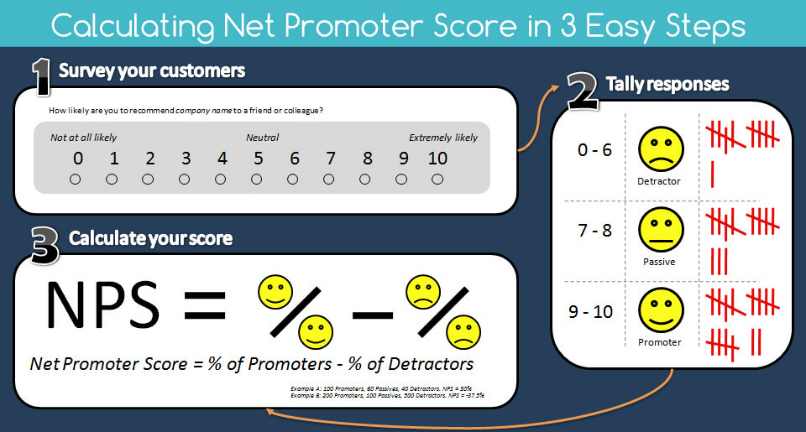
Net Promoter Score:

NPS is a metric used to measure customer advocacy. Although the effectiveness of this metric has been subject to ongoing debate, it remains commonly used in the corporate world.

Of course, churn, Customer Lifetime Value and Net Promoter Score are few example of the myriad of metrics that can be implemented. The folks at Groove have written extensively about the metrics they use to optimize Customer Success. Groove remains a SaaS startup, but their methodologies can be applied to any non-SaaS business as well.
net-promoter-score-teamgate-1

How We Measure and Optimize Customer Success Metrics in Our SaaS Startup

How One SaaS Startup Reduced Churn 71% Using “Red Flag” Metrics

Segmentation

As we previously discussed  on our blog, segmentation is essential to seamless integration of CRM into business workflows. Similarly, segmentation is key to managing customer success. However, the segmentation strategies that work for sales and marketing automation might not have the same result for customer success.

For example, it’s possible to segment customers according to their Customer Lifetime Value. By doing so, a business can determine whether a low-touch or high-tough approach to engagement would be appropriate.

It is also possible to segment customers according to their onboarding status. Let’s consider a gym offering free two weeks membership for example.  It’s possible to segment leads/customers in this example into various categories:

  • Customers who redeemed the offer.
  • Customers who didn’t.
  • Customers who used more than 4 sessions.
  • Customers who used less than 4 sessions.

This would allow the gym owner (or customer success manager) to uniquely target each particular segment for potential trial-to-paid conversion. Leads who haven’t redeemed the offer might be worth pursuing, but the ones who have used the trial extensively are more likely to convert into paying customers. In addition, those who have used the gym but not frequently present a good opportunity for customer surveying/interviewing.

Do you have a CRM that keeps you organised?

The most user-friendly CRM on the market. 14-day free trial.

Start Free Trial

Painless setup, no credit card required

Engagement Types

Engagement refers to the way and the frequency with which your customers will be contacted.  There is obviously no one-size fits-all approach to engagement, but some models persist throughout businesses.

For example, high value customers might warrant a high touch approach. In a Gainsight article, the following engagements are suggested for high-value customers:

  • On-site visits
  • Quarterly Business Reviews
  • Annual Health Checks
  • Monthly Best Practices meetings

Customer Success, after all, remains about knowing your customers  and earning their trust.

Would you like to know your Customers better? Start your Teamgate Free Trial today!
In this comprehensive guide, you’ll learn to master sales management strategies that can propel your business to new heights. From understanding key sales management terms to formulating precise sales tasks, acquiring sales talent, and analyzing sales performance, this guide provides the knowledge and tools you need to streamline your sales operations, boost team performance, and enhance overall productivity.

Key Takeaways:

  • Sales management involves crucial aspects such as strategy planning, operations, and analysis, similar to coaching a sports team.
  • The sales management process requires precise definition of sales tasks, effective acquisition and training of sales talent, and strategic motivation of the sales team.
  • Sales performance forecasting can be performed manually or automatically, aiding in efficient planning and decision-making.
  • Effective sales team management involves nurturing top talent, treating every member uniquely, and creating a conducive environment for growth and success.
  • Regular measurement and analysis of sales performance data are critical to making informed, data-driven decisions and improvements in sales strategies.

Excellent sales management can elevate your company to the next level. It does not matter if you represent a young start-up or have been in the field for years, you must acknowledge that sales are the single most important thing at the end of the day.

Whatever your current business situation is, it is important to remember that great sales managers always try do their best with what they have. This sales management guide is designed to help you do exactly that.

What is sales management? 

Sales management refers to all activities, processes, and decisions involved in managing sales function within a business.

However, for a sales manager, it only means one thing: coordinating and developing a successful sales team.

Like every management cycle, it is built on continuous observation, coaching, decision making, forecasting and making adjustments.

Essentially, we can break down sales management into three key areas:

  • Sales strategy
  • Sales operations
  • Sales analysis and reporting

Sales management is a lot like coaching a sports team. You have a roster of players that must be turned into a championship team.

The cycle starts by acknowledging your current situation. Sales are a practical extension of marketing strategy. So to start on the right foot, you have to know everything about:

  • What products do we sell?
  • Who are we targeting?
  • What is our unique selling proposition?

After you become familiar with the company’s marketing plan, it is time to get real with the sales strategy. Sales managers primary function is to convert marketing objectives into a specific and measurable sales task and supervise its execution. In other words, come up with a game plan and stick with it. Just like a coach does.

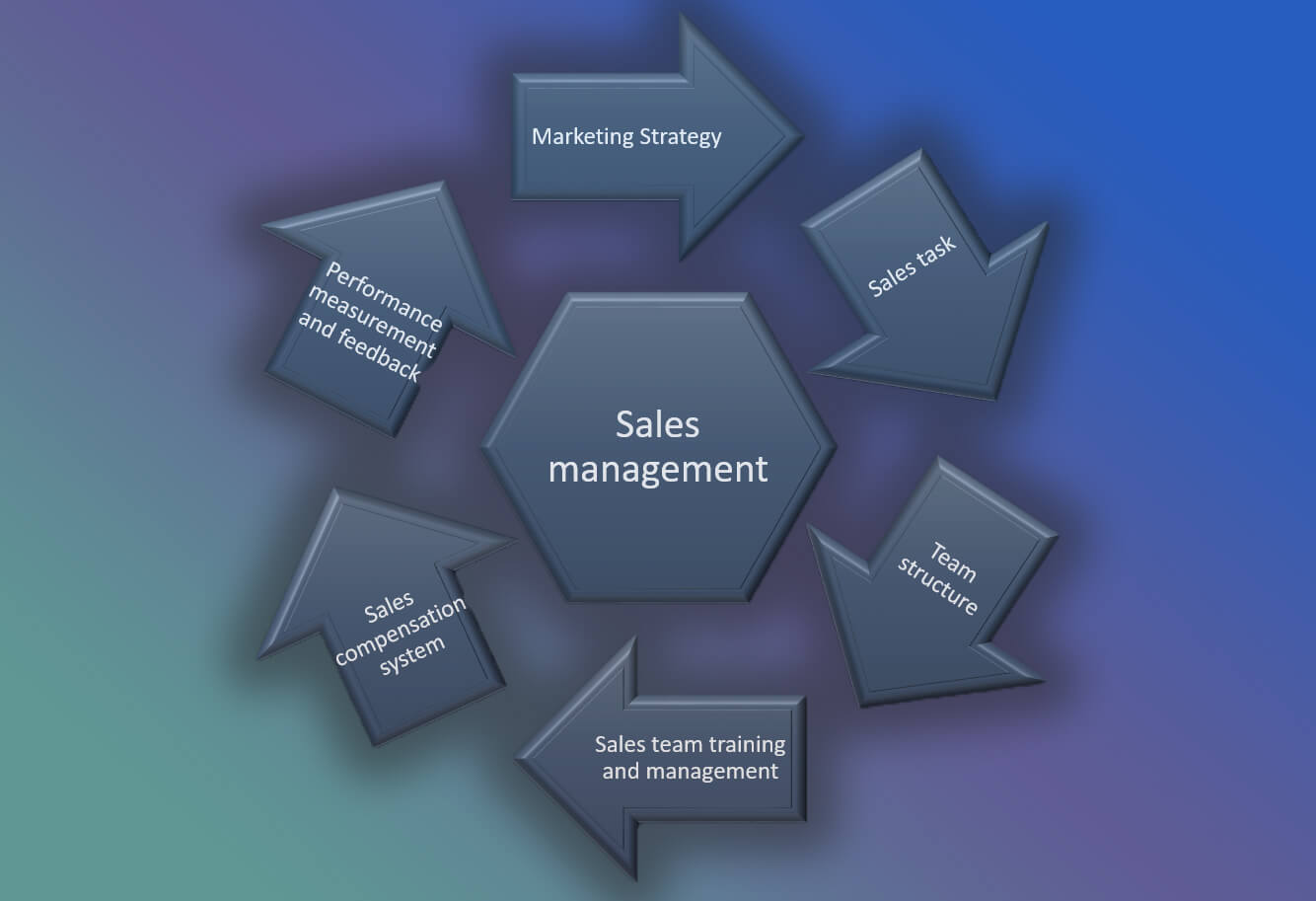
In the following parts of this guide, we will walk you through the next steps and issues that typically arise during the sales management process:

  1. Key terms
  2. Defining the sales task
  3. Acquiring sales talent
  4. Conducting sales training
  5. Motivate sales team
  6. Defining a sales force structure
  7. Forecasting sales performance
  8. Creating sales territories
  9. Setting sales quotas
  10. Managing sales team
  11. Designing sales compensation
  12. Communication sales compensation
  13. Managing underperforming reps
  14. Measuring sales performance

Key Terms

Account A regular, paying client.

Buyer persona – fictional, generalized profile of an ideal customer with specified age, job, gender or other relevant demographics.

CRM – Customer Relationship Management. It typically includes CRM software that helps to manage customer data or sales pipeline.

Client relationship management system – Customer relationship management software that helps an organization determine the preferences and needs of their customers by tracking, recording, organizing and managing all customer interactions.

Closing – Convincing a prospect to make a definitive buying decision.

Cold Calling – The process of approaching potential customers for the first time, without prior introduction, relationship or contact.

Conversion – Turning a prospect into a customer.

Deal – An agreement on something with a client or prospect

Decision-maker – A person who is in charge of making buying decisions.

Demo – Demonstration of your product or service.

Demographic – Characteristics of the population or particular groups in it, such as age, gender, hobbies or lifestyle choices, etc.

Filtering – A step between lead generation and lead qualification where new lead information is filtered for validity.

Funnel – Also called sales funnel or sales pipeline. A designed systematic process that customers go through on their way to closing.

Gate keepers – People who screen your attempts to approach a decision-maker.

Inbound calls – Business calls initiated by the clients. It includes most of the customer support calls.

Inbound marketing – Marketing approach focused on attracting leads through relevant and helpful content.

Key Account –  A client with a large budget that makes up a large portion of purchases and is significant for the business.

Lead – A potential client that could be interested in doing business with you, usually with little information about you or your business.

Lead generating – Initiation of consumer interest in business products or services via advertising media.

Lead management – A process designed to generate new leads via various marketing campaigns or programs.

Lead management software – A computer program designed to streamline lead management process. It can be integrated as a feature in a CRM software.

Lead qualification – A screening process to figure out whether a lead has a motive and ample buying power to become a prospect and later an opportunity.

Opportunity – A qualified prospect that has shown interest in your products and has presented his needs and requirements for you.  

Prospect – A qualified lead that is interested to know more about your products and services.

Quota – Monthly, quarterly or yearly sales targets used to measure sales success.

Sales analysis – Measuring, analyzing, reporting and making decisions based on sales results.

Sales operations – Building and maintaining the sales team.

Sales enablement – The process of ensuring that sales representatives have all the tools, skills and information needed to sell.

Sales force – People responsible for selling products and services.

Sales forecasting – Estimating future sales volume to predict company’s performance in the future or to make better, information based decisions.

Sales management – A comprehensive set of activities to create and manage a sales team.

Sales management planning – Organising a plan to achieve the established sales objectives.

Sales management strategy – Defining the sales process and finding the best way to approach it.

Sales manager – A person responsible for leading, managing and coaching a sales team and supervising the sales process.

Sales pipelineSystematic and visual representation of your sales process.

Sales process – a Systematic approach that enables sales force to map out and track interaction with prospects from the point of engagement to a close.

Sales representative – Or simply sales rep. Your sales team member who is responsible for specific accounts or territories.

Sales target – Objectives that business or individual sales rep expect to meet per sales period.

Sales tracking – Keeping tabs on, recording and detailing all aspects of your sales process and activities.

Sales tools –  All means that help you to improve your sales management process, such as CRM software, lead generation instruments, sales pipeline, funnel and others.

Sales Velocity – simply put, sales velocity is a marketing and sales metric used to measure the speed at which opportunities and leads turn into revenue, month over month.

Targeting – Reaching out to the segments and groups of the population that are similar to the buyer persona.

Territory – The area which is sales representatives responsibility.

Warm calling – Opposite of cold calling. Approaching customers with whom you have an already established relationship and experience.

Whale – A massive new lead that is at least ten times larger than your average sale.

Defining the Sales Task

A sales task formulation is first and the most important step in the sales management process as it sets a direction for your team.  Here you establish your sales goal and describe how are you going to achieve it. A well-defined sales task includes a definition of your product, target audience, selling tactics and how are you going to communicate with your team.

A clear and measurable sales task helps your team to work more efficiently, reduces anxiety and increases overall team’s motivation. The more precise your sales task is, the better. The clarity of your sales task can significantly improve if you:

Sales Management Cycle

  • Assign a particular number of accounts for each rep. Sometimes geographical allocation can be ambiguous and unclear. The more accurate the account coverage is, the easier it is to act on them.
  • Set precise and attainable account management goals. It includes personal sales targets, activity goals, different quotas for different products, etc.
  • Use trustworthy information system. A poor system may distort sellers perception of input and results, all while simultaneously skewing accuracy of feedback.
  • Assess and correct field sales on the go. Make use of field sales management tools, such as management by objectives, scheduling field time or monthly feedback sessions. Your team will perform better if you deliver consistent coaching and guidance.

Acquiring Sales Talent

When you know what and how are you going to achieve, it is time to assess your team and, if necessary, make changes. Every sales manager needs people who are the best at carrying out the sales task.

To fill your all star roster with the best players, make sure to:

  • Look for the best talent amongst your competitors and establish a relationship with them.
  • Find good candidates where best workers usually go: industry conventions, conferences, and meetings.
  • Scan for the in-house talent: people who already know your enterprise and product.
  • Create a profile and work closely with your human resources staff.
  • Even when all the positions are filled, make sure to have a few extra candidates ready in case of unforeseen circumstances.
  • Maintain a good reputation, offer an excellent compensation package and if necessary, engage senior management in the process. Best sales people know how valuable they are and they love to be appreciated.

Conducting Sales Training

“Train people well enough so they can leave, treat them well enough, so they don’t want to.” Richard Branson

No matter how impressive your team members might be, they still need to be on the same page when selling your product.

First, outline your sales process – funnel. Emphasize how long your sales cycle should take. Then, recognize the skills needed to manage it effectively.

As a sales manager, your job is to enable your representatives to sell. As a coach, you also have to guide them through your sales funnel. Your team consists of different people, so sometimes, formal training is not enough. Make use of metrics to identify individual struggles and develop your players.

Best sales managers usually lead by example, but you may not always be able to teach the necessary skills or expertise yourself. Consider hiring a professional sales trainer, expert speaker, or author. Other alternatives, including cube alternatives, include sharing good books, online courses, or attending live events.

Whatever training strategy suits you and your team best, put time and effort to make it something out of the ordinary. Don’t make it just a routine in the office, make it stick.

Most importantly, training is an ongoing process. Learned skills need to be constantly refreshed and built on, especially during this time of changes.

Motivating Sales Team

Even in such an exciting field as sales, employee motivation can be an issue. However, being a decent manager as you are, you can tackle it in numerous ways:

  • Build trust with your team. Trust is a cornerstone of motivation and the best way to create trust between you and your subordinates is by being transparent. Share your stories, failures, and disappointments and build on the real experience.
  • Encourage your team to follow a balanced and healthy lifestyle. Show them that you care not only about their sales stats but also about their general well-being.
  • Ask individuals how they would like to be managed. While it may sound comfortable, it is known that one size does not fit all and adjusting to the individual needs can go a long way.
  • Distinguish between their personal and professional goals. Provide them with solutions that truly make a difference by identifying what is truly important for your employees.
  • Hand out great rewards. Awesome rewards inspire people, and we are not talking about the money here. As part of an effective employee rewards system, do something personal for your employees. Modified sentence: organize a contest, invite them to the BBQ, give them canvas photo prints & wall art, bring them food to work, or go to see movies together. Manage creatively and remember, that great management is more about earning respect and having fun instead of just trying to buy it off with a better salary.

Defining a Sales Force Structure

In this step of sales management process, you decide how many sales reps you need. There are two methods that you can use.

A top down approach:

1) Divide total annual revenue by the average sale sum per client. That gives you a rough idea of how many customers you need.
2) Then, figure out how many calls per customer you need to close a deal and multiply it by the number of clients (1). That helps you to estimate the number of calls required to meet your yearly target.
3)  How many calls is a single rep capable of making per year? Divide (2) by this number and you will have your estimated number of employees.

A bottom up approach:

  1. Lookup the total number of accounts you have in your area.
  2. Decide how many calls you need per account to generate a sale. Multiply it by the number of accounts to get the yearly number of calls needed.
  3. Calculate how many calls a representative can make per year and divide it by the total number of calls required per year (2).

That should help you to estimate how many team members you need.

Sales Management Guide

Forecasting Sales Performance

These days sales performance forecasting can be done in two ways: manually and automatically.

The manual approach includes analyzing the market potential and sales potential.

Market potential is the size of the market. In other words, how much demand there is for you and your competitor’s product in your area? How much you and your competitors can expect to earn?

Forecasting sales potential is about claiming your share of the market. How much of the market potential can you win?

You can base both of these metrics by looking at either objective or subjective data. Objective data is based on past metrics and data. Subjective data stands for industry experts forecasts and opinions.

Automatic sales performance forecasting is based on external systems and services. That is the most attractive solution for businesses today. To make more objective sales decisions, you can make use of such tools as Teamgate.

Creating Sales Territories (Optional)

Sales territories are about allocating initial prospects. The main question here is who will sell where.

As mentioned previously, it is very important to point out as many details about the accounts as possible.

Another tip in assigning territories is to make them equal in sales potential, not physical size. If it is possible, make use of geographical boundaries, but be sure that they same similar numbers of customers.

Lastly, be ready to change and improve your territories constantly. The number of customers and the abilities of your salespeople tend to change over time.

Setting Sales Quotas

Every rep in every area should have an annual sales goal for the year. Quotas are a key metric to evaluate how well a salesperson did in his area. When setting sales quotas, it is important to remember, that data driven approach always guarantees more precision.

In contrast, inaccurate or unattainable sales quotas create a negative view of the managers, cause frustration, unfairness and can hurt you other ways.

The best technique to set sales quotas is the bottoms-up approach. It is based on real reps capabilities and historical team results. The key questions here are:

  • What are the stages of our sales funnel?
  • What are our conversion rates before each stage?
  • How do our conversion rates look like per territory?

To help you with the bottoms-up approach you can make use of Yesware’s quota calculator.

If you have a variety of products, you should create a different quota for all of them.  And most importantly, keep track of them and address issues on the go. Even if the quota is annual, good managers break them down to smaller periods. As a result, they enjoy better insights.

Managing Sales Teams

Great teams have great coaches and great sales teams have excellent sales managers. There are many books with tips and tricks on how to handle the teams and it would be impossible to fit them all in one paragraph. However, several important things you should know about sales teams management are:

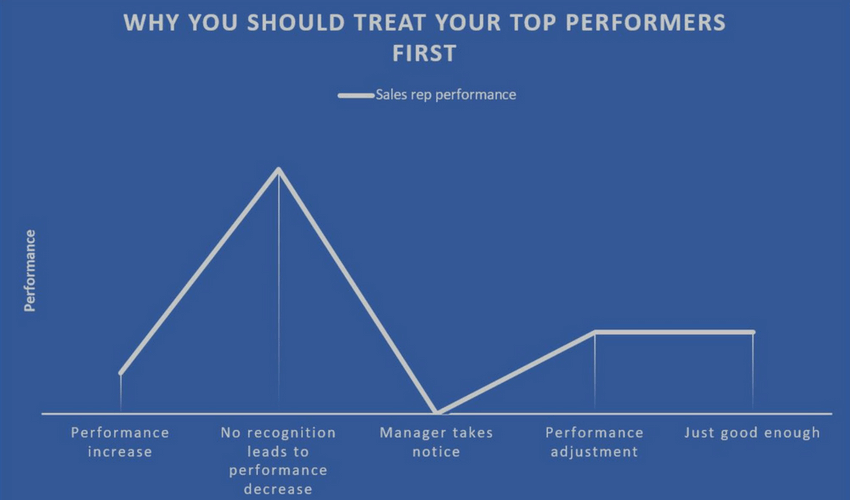
  • Take care of your top talent first. Many managers tend to take their eye off top performers and focus on the lesser ones. It only seems logical to help others. But in reality, top talent strives for attention and recognition, so you should consider dedicating even more attention to them along with some perks.
  • Treat everyone fairly but not the same. There is a big difference between discrimination and unfair treatment. Every one of your employees is a different person and what works for some will not function with the others.
  • Create winning environment. Encourage your team. Challenge them. Surround your subordinates with the best people and information available. Create an environment where they can do their best.
  • Give your salespeople all the attention they deserve.
  • Empower your people to grow. Growth is an essential element of job satisfaction. Make sure that your people feel like they are learning something new every day.

Sales Management Top Performers Chart

Designing Sales Compensation System

Another critical area of management is rewards. In other words, how much do you value your team members?

In general, there are two ways to design compensation plan: flat salary plans and variable commission programs.

Flat salary is fixed so your rep will get agreed amount no matter what.

Variable commission payment is linked with the number of generated sales and offers no limits. However, nothing is guaranteed as well.

The best approach in sales is to use the combination of both. Establish a competitive base salary and on top of it offer some bonuses for the reps or teams that achieve their target levels or quotas.

Communicating Sales Compensation

Great managers make sure that their reps are getting paid enough. Implementing sales compensation system consists of three steps:

  1. Communicate. Your reps want to know how they are getting paid. Consider creating a document that explains everything about how the plan works.
  2. Administer. Share the plan with HR or financial department, since they will have to process it, too. Using a sales commission software can make this step seamless by automating calculations and ensuring transparency across teams.
  3. Measure. Observe how your plan operates and receive continuous feedback. There is nothing worse than figuring out that your plan was not working at the end of the period.

Managing Underperforming Reps

Your superstars are getting the best rewards, but what about underperformers?

There can be a million reasons why a sales representative struggles.

However, like in every other management issue, you should start by searching for the root cause of the problem. The 5 Why’s model can you to discover it.

Amongst the most popular reasons for lagging performance are the following:

  • An employee lacks specific tools or skills.
  • An employee is unmotivated.
  • An employee is not the right fit.

There are many ways to stimulate underperforming reps once you identify the right reason. Possible options include leading by example, accepting responsibility for the problems or creating a culture of motivation.

In the worst-case scenario, you have to fire someone, which is never easy. However, it is the only viable option if the employee continues to perform way below the standards.

Measuring Sales Performance

No matter what kind of coach, planner, or analyst you are, data-driven decisions are the most reliable ones. Therefore, performance tracking and measurement are sales managers’ best friends.

To measure well, you have to measure right things. For a sales rep, the most important number is conversions. Of course, to see the bigger picture, there are many other numbers that you should take into account, such as total revenue, gross margin, the number of initial prospects or won accounts. Also, mind that raw numbers can be deceiving, so take advantage of the ratios.

Data analysis can consume a lot of your time, but smart managers know how to free up their time. Make use of intelligent data management systems designed to help your decision-making. After all, numbers are just indicators and you need to be out there for your team.

At the end of the sales management cycle, you should report the results back to your reps, senior management, and marketing department. Good sales managers know how important insights are for the business and their team. From here, it is time to repeat the cycle again. Good luck!

FAQs: Sales management

Q: What is sales management and why is it important?
A: Sales management refers to all the activities, processes, and decisions involved in managing the sales function within a business. It’s crucial as it helps streamline sales operations, boost team performance, enhance productivity, and propel a business to new heights.

Q: What are the key areas of sales management?
A: The key areas of sales management are sales strategy planning, sales operations, and sales analysis and reporting. These areas are crucial for coordinating and developing a successful sales team.

Q: How can sales performance forecasting aid in sales management?
A: Sales performance forecasting, either done manually or automatically (via sales forecasting tools including cube alternatives), provides valuable data for efficient planning and decision-making in sales management. It estimates future sales volumes to predict a company’s performance and aids in making informed, data-driven decisions. 

Q: What strategies are effective for motivating a sales team?
A: Effective strategies for motivating a sales team include building trust, encouraging a balanced and healthy lifestyle, asking individuals how they would like to be managed, distinguishing between personal and professional goals, and offering great rewards.

Q: How is sales performance measured in sales management?
A: Sales performance in sales management is measured by tracking and analyzing various key metrics such as total revenue, gross margin, the number of initial prospects, won accounts, and conversion rates. Regular measurement and analysis of sales performance data are critical to making informed, data-driven decisions and improvements in sales strategies.

Q: What role does sales training play in sales management?
A: Sales training is vital in sales management as it ensures that all team members are on the same page when selling a product or service. It helps to equip sales representatives with the necessary skills and information to sell effectively and also identifies individual struggles to aid in personal development.

Q: How can the sales management process impact a business?
A: The sales management process, when done effectively, can greatly impact a business by improving sales operations, boosting team performance, and enhancing overall productivity. It can also assist in defining precise sales tasks, acquiring and training sales talent, and strategically motivating the sales team.

In this article, you’ll gain exclusive insights into the strategies used by eight industry-leading marketers to craft email-closing phrases that seal deals. From invoking urgency to personalizing content and implementing scarcity tactics, you’ll learn how the right closing phrase can significantly impact the response rate and conversion success of your emails.

Key Takeaways:

  • Leveraging the power of scarcity and urgency can effectively push prospects to take the desired action.
  • Heavily personalized content tends to enjoy a higher response rate and encourages better customer engagement.
  • Unique and creative closing phrases can make a strong impression and contribute to a higher conversion rate.
  • Following up on prospects who do not reply is crucial in identifying any mistakes made during the pitching process.
  • Always focus on the prospects’ needs and pain points to better align your solution with their expectations.

No matter what style or tone you choose to use, the closing phrase will greatly affect how well your prospects remember your email and how willing they are to respond.

Closing strong requires a good mix of research, creativity and strategic thinking. Read on to find out how the industry’s best marketers craft their winning closing lines.

Marcus Miller

Marcus Miller, a digital marketing strategist at a UK digital marketing agency Bowler Hat, says that people “often need a push over the edge”. He finds that urgency and availability are his strongest cards when closing a deal.

We are a small team and have a great reputation so we do only have limited resources. The best close for us is that we have limited time and are in high demand.”

Tapping into the scarcity factor seems to be an effective approach, as the agency lands about 50% of the work they quote. It is also a way to quickly filter qualified leads, “The majority that don’t go for us tend to not do so down to price. Now, we are not expensive, but there is always someone who will do a bad job more cheaply. Often, the jobs we do land tend to be with people who have experience of the true cost of cheap work and know that doing the job properly needs a realistic budget.”

Paul Jarvis

Paul Jarvis

Image source: Pjrvs

Writer and designer, Paul Jarvis, had his fair share of email lead generation back in the day when he was doing freelance gigs. He has kindly agreed to share his one-liner that seemed to land most of his deals:

I’d love the opportunity to work with you and help your business grow in [list the solved specific pain point they came to me with] .

“Even though I was a designer, I always related everything I did back to their bottom line (i.e. making money) and problems they came to me with (i.e. increasing revenue, growing their audience, building their newsletter, increasing conversions, etc),” Jarvis explains.

He now uses email to distribute his newest articles about the intersection of creativity and commerce to his email list of almost 30k subscribers.

Dan Scalco

The goal isn’t for you to convince them that you’re the best option for them. The goal is for them to convince themselves that you’re the best option,” Dan Scalco, founder of digital marketing company Digitalux, believes. Unlike many other entrepreneurs who are searching for little-known conversion hacks, Dan Scalco relies on heavy personalization rather than one exact phrase to close a deal over email.

“I like to determine what their biggest pain point is in a conversation and use that information to drive home the value of my service. For example, if they are a small or mid-sized business having trouble converting leads on their website, I would reiterate how Digitalux has helped hundreds of businesses just like theirs increase conversions. I would then go into specific details as to how we did this,” he says.

Thanks to high level of personalization, their campaigns enjoy a decent reply rate and prove the point that going the extra mile is often the only conversion hack needed.

John Chen

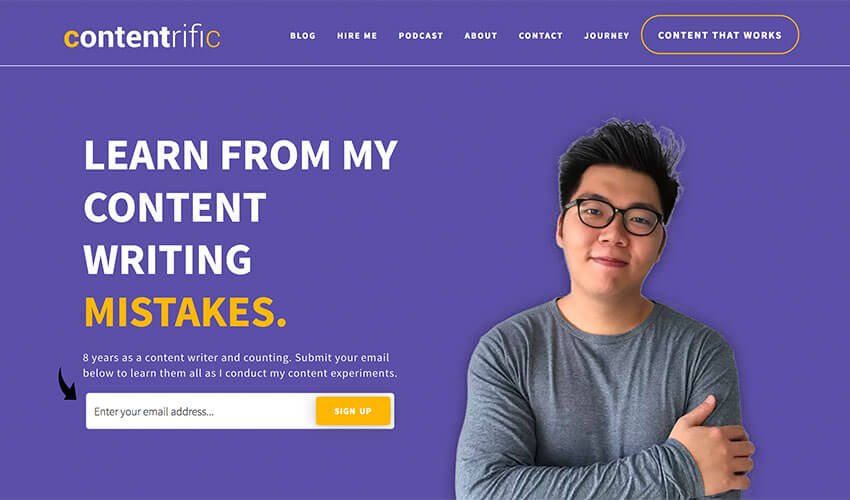
John Chen

Image source: Contentrific

As someone who’s created content for brands like Apple and Microsoft, John Chen has a few copywriting secrets under his belt. Having recently founded a content marketing blog Contentrific, where he aims to educate entrepreneurs on the power of words, he’s a keen experimenter with bags of experience in the email marketing game.

“Too often in the content marketing industry you’ll find countless business owners who think that content marketing is all about getting to the front page of Google,” Chen says. “Why wait 6 months and hope to rank, when you can go ahead and create content, share it to where your audience is right now, create value, and appeal directly to them?”

To communicate this message and make a strong first impression, he uses a rather unique closing phrase in his emails, “I’m not going to rank you. Google is. I’ll just rank you in the eyes of your reader with powerful content, so Google doesn’t have a choice but to rank you.”

That his refreshing approach is a winner is confirmed by the 75-80% reply rate in the sample size of 500+ customers.  

Hariesh Manaadiar

Hariesh Manaadiar is a niche blogger specializing in the dynamic shipping and freight industry. He uses his blog to educate his readers about the processes and procedures in the industry, but when it comes to closing a deal, he says face-to-face meetings are an invaluable piece of the puzzle.

Although different situations require different angles, Manaadiar found that one closing phrased works well in his field, “I look forward to an opportunity to explain our services in person and how we can add value to your business and provide you cost savings”. His one and only goal is to get the foot in the door and see where the meeting takes them.

“In the industry that I am in, the most difficult part is to get to the meeting stage, after which if the customer really has business, I have been able to secure it,” Manaadiar adds.

Sam Hurley

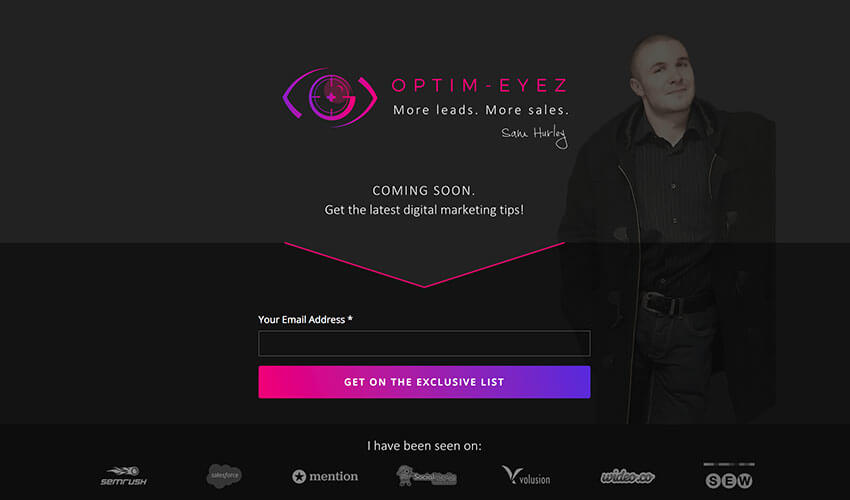
Sam Hurley

Image source: Optim-Eyez

Sam Hurley, one of the most influential digital marketers and the founder of Optim-Eyez, knows a thing or two when it comes to converting leads into paying customers. He estimates his email conversion rate (or the success rate) to be upwards of 80%, which is mind-boggling in the hostile world of email marketing.

He’s not particularly keen on relying on a closing line to do the hard work for him but says that in his personal emails he uses something similar to “Looking forward to the future together!”.

“This not only suggests the deal is already going ahead, but also describes the future as a collaborative effort,” Hurley explains.

However, a closing phrase is just a small detail of a much larger picture, “Speaking with the right prospects is 80% of success and my leads are currently all inbound. That considered, my reply rate is always 100%…”.  

Fahad Mohammed

Fahad’s goal since the age of 11 has been to do a multi billion dollar deal. Today he is the CEO of Bay Street Brands, a digital advertising agency dedicated to helping businesses and entrepreneurs build a social media brand, and he’s still striving to make that dream a reality.

To seal a deal in an email, Mohammed uses a top closing phrase shared with him by an international sales expert Grant Cardone:

“I understand you need to think about it, however, thinking about it does not change the fact that this investment solves your problem, saves you money. Sooner or later you’re going to do this, let’s take time out of the equation and let’s do this so you can get back to focusing on the other things in your business that require your attention. Not doing it will cost you, doing it will cost you and that’s a fact, it’s better to pay a little extra and get what you want vs paying a little less and making a mistake. I need your sign here.” He would normally send a contract alongside this and follow up by phone to confirm the final details.

This closing strategy yields an impressive 60% success rate.

Do you have a CRM that keeps you organised?

The most user-friendly CRM on the market. 14-day free trial.

Start Free Trial

Painless setup, no credit card required


Eric Christopher

Better known as ERock, Eric Christopher is an innovative marketing strategist, accomplished writer and speaker, founder and CEO of BizFamous.com and LocalBusinessRockstar.com, and a huge advocate of educational marketing. ERock has decades of experience in marketing and enjoys sharing the lessons he’s learned along the way. This time, he gave away the entire pitch that’s winning them a lot of business:

Subject: Were you serious or kidding?

Hey FirstName,

I know you said you were interested in working with BizFamous,

so we can help you [insert the desired outcome or benefit here]…

Were you serious or just kidding?

We’re ready to get started immediately, as we take the opportunity

to help you  [insert the desired outcome or benefit here] very seriously…

Can you imagine how you will feel when we make that happen together?

Let’s not waste any more precious time…

When would you like to start FirstName?

Thanks!

Signature

PS- If you’d like to jump on a quick call for any reason, then please let me know… we’re here to help you!

ERock explains that, “We really focus on what they said they really want. We then invite them to experience the emotion of that feeling and then invoke a bit of scarcity to imply that timing is ticking away.”

If you’re wondering how successful this pitch is, the answer is very. “Our reply rate is typically 75%, so 3 out of every 4 people will reply regardless of their final decision.  We will usually close 4 out of every 5 deals, if we’ve done a good job articulating the value of our offer,” Christopher reveals.

But it ain’t over till the fat lady sings, right?

ERock says they don’t give up on prospects who do not reply and use a special trick that he’s picked up from a book by a former international lead hostage negotiator for the FBI (“Never Split The Difference” by Chris Voss). They send the following follow-up email that’s proved to be extremely effective at generating responses and shedding light on mistakes made during pitching.

Subject line: Have you given up on this project?  

Hi FirstName,

It seems you’ve given up on this project?  If so, would you extend me the professional courtesy to let me know why?

It would help me to know what I could have done better or what I did wrong…  what’s the ONE thing I could have improved upon?

Thanks Firstname!

Signature

Mastering the Art of Sales Closing Phrases

Mastering the art of crafting persuasive sales closing phrases can drastically influence your prospects’ responses and drive your deal closures.

Always focus on creating a sense of urgency while keeping your email closing concise and action-driven. A clear call-to-action, like scheduling a quick call or requesting feedback, can make all the difference in getting a response, suggests the team at TKXMedia.

Start your journey of improved sales communication today with Teamgate CRM, and watch your sales soar.

FAQs: Sales closing phrases

Q: What is the importance of a sales closing phrase in an email?

A: A sales closing phrase in an email is crucial because it impacts how well your prospects remember your message and their willingness to respond. It’s the final impression and call to action, thereby directly influencing the effectiveness of your sales pitch.

Q: Can you give an example of a sales closing phrase that uses urgency and scarcity?

A: Yes, Marcus Miller, a digital marketing strategist, uses the following closing phrase: “We are a small team and have a great reputation so we do only have limited resources. The best close for us is that we have limited time and are in high demand.” This phrase employs both urgency and scarcity to motivate the prospect to take action.

Q: What is an example of a sales closing phrase that heavily personalizes the content?

A: Dan Scalco, the founder of Digitalux, personalizes his closing phrases based on the prospect’s biggest pain point. An example could be: “I would reiterate how Digitalux has helped hundreds of businesses just like yours increase conversions. I would then go into specific details as to how we did this.”

Q: What is a unique sales closing phrase that can make a strong impression?

A: John Chen, the founder of Contentrific, uses a unique closing phrase that focuses on the power of content: “I’m not going to rank you. Google is. I’ll just rank you in the eyes of your reader with powerful content, so Google doesn’t have a choice but to rank you.” This closing line makes a memorable impression by highlighting the value of content.

Q: What is an effective follow-up sales closing phrase when a prospect does not reply?

A: ERock, founder and CEO of BizFamous.com, uses the following phrase as a follow-up: “It seems you’ve given up on this project? If so, would you extend me the professional courtesy to let me know why?” This approach is non-confrontational and encourages prospects to provide valuable feedback that can help improve your sales approach.

In this article, you’ll get a comprehensive guide to 100 powerful inbound marketing tools that can skyrocket your business growth. We’ll explore a variety of tools to automate, optimize, and enhance every facet of your inbound marketing strategy, ultimately leading to more leads and prospects.

Key Takeaways:

  • Learn how to streamline your marketing efforts using a multitude of automation tools.
  • Discover the importance of analytics and the top tools to get the most detailed insights into your marketing performance.
  • Uncover the potential of blogging and SEO tools in increasing your online visibility.
  • Understand how design and visual resources can play a pivotal role in your inbound marketing strategy.
  • Get introduced to the best tools for managing leads, social media, and streaming.

Nothing makes a marketer happier than seeing their efforts and hard work pay off. And there’s little we wouldn’t be prepared to do to see those leads trickling in.

We’ll write eBooks, spend weeks chasing influencers for three-line quotes and comb through pages and pages of data to string together sleek-looking infographics to get the prospects to notice us. Because every lead counts.

So let’s face it, if there was a way for us to amplify our inbound marketing efforts and raise the lead gen game, we’d snatch that opportunity with no questions asked.

And as the luck has it, we’ve gathered one hundred powerful tools that will help you automate, optimize and enhance your inbound marketing strategy and win more business.

Make yourself happy, dig in.

Research tools

  1. Buzzsumo

Buzzsumo is a powerful tool for content marketing and is particularly helpful with finding trending content by any topic. It saves a lot of time that you would usually spend on browsing and googling popular topics. Buzzsumo will also show you many convenient statistics, like how many people are talking about a specific subject.

  1. Keyword Planner

Keyword Planner is a completely free tool created by Google that researches the best keywords for your ads, video ads, etc. With this tool, you can build a completely new campaign or improve an existing one. It is an effective tool for both experienced and completely new advertisers.

  1. Looking for a new Entry

This used to be Klout.

Do you have a CRM that keeps you organised?

The most user-friendly CRM on the market. 14-day free trial.

Start Free Trial

Painless setup, no credit card required

  1. Mention

Mention makes sure you keep track of all the real-time social media mentions and always stay in the know of what people are saying about you online. It also lets you follow and analyze your competitors and similar businesses. Mention also has some awesome features like Custom Insights and Find Influencers.

  1. TrustRadius Trustmap

The TrustRadius marketing TrustMap is a two-dimensional chart that compares marketing products based on end-user satisfaction ratings and research frequency by prospective buyers. You can use the tool to compare different marketing tools and read authentic reviews from real users.

  1. SurveyMonkey

SurveyMonkey is one of the best online survey tools used by millions. With this tool, you will gather useful information and insight about your target audience and clients by creating original surveys. Choose from more than 15 different question types, branding options and much more.

  1. AYTM

AYTM is another survey tool that provides professional market research. The main key components and features include the survey platform that lets you host, program and analyze your surveys, a proprietary panel with an access to 25 MM all over the world and the research services.

  1. Quora

Quora is a well known question-answer type of website that makes any research much easier. Here, questions and topics can be organized into boards that can be followed – this will help you keep up with your competitors and news in your market. With Quora, you can also follow relevant questions and discover many other ways to do research.

Analytics tools

  1. Google Analytics

Google Analytics is a very popular and effective analytics tool provided to you by Google. When integrated with Google AdWords, it becomes an even more powerful tool that lets you analyze and track your website and conversions. The main analytics data is displayed on the main page of Google Analytics, but you can also find and use such features as Advanced Segments, Location Demographics and much more.

  1. Hotjar

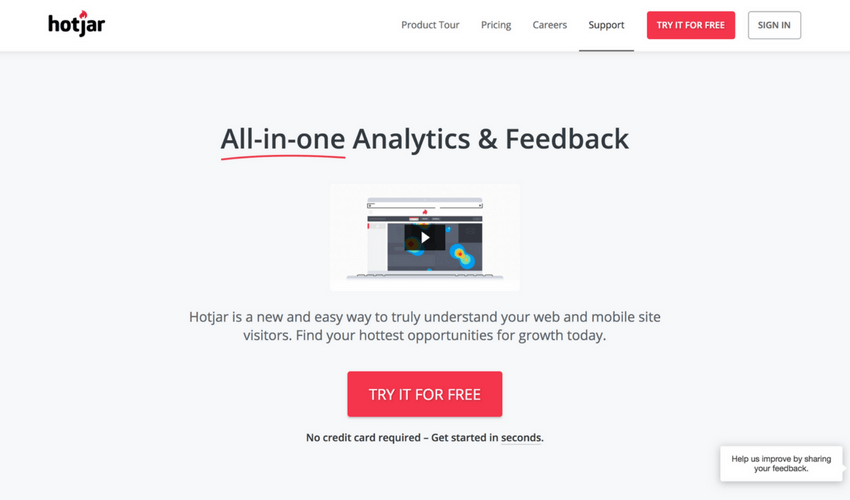
Inbound Marketing Tools Hotjar

Hotjar is an amazing tool for analyzing the online behavior of your users by studying heatmaps, visitor recordings, feedback polls and conversion funnels. This tool combines two most important things – feedback and analysis to make the analytics as accurate as possible.

  1. SumoMe

SumoMe is an extremely user-friendly WordPress plugin that can serve as an efficient analytics tool. The main goal of this tool is to help you grow your website traffic and email list. It offers many free tools for you to choose from, so by using them, you can analyze your content, users, visitors and much more.

  1. Adobe Analytics

Adobe Analytics is a part of Adobe Marketing Cloud (AMC) that offers many online marketing tools. With Adobe Analytics, you can assemble, coordinate, organize and analyze your customer’s activity. Real-time analytics, segmentation, and predictive marketing through all Adobe channels.

  1. Ubersuggest

Want more traffic? Ubersuggest shows you how to win the game of SEO. Just type in a domain or a keyword to get started.

  1. Crazy Egg

Crazy Egg is another brilliant online application to analyze user activity on your website. This tool suggests useful features like heat maps, scroll maps, overlay reports, and confetti, which lets you determine all the clicks that have been made on your website and analyze them by search term and referral sources.

  1. Matomo

By choosing the ethical alternative, Matomo, you won’t make privacy sacrifices or compromise your site. You can even use Matomo without needing to ask for consent

  1. Mixpanel

Mixpanel is a very advanced analytics tool that gives you the opportunity to analyze every action your user takes – not just the clicks. With this tool, you can also see when someone uploads a picture, shares a post, etc. Here you can also experiment with the A/B testing to reach the best results.

  1. SimilarWeb

SimilarWeb is a universal tool for any insights – both web and app. It works with a wide range of sources to receive as accurate data as possible and convert it into useful insights. SimilarWeb offers website analytics, industry analytics, and app analysis. Besides all this, you can also see traffic and engagement data and much more.

[optin-monster-shortcode id=”cvfuxuhchvywm9wl2q6w”]

  1. Quick Sprout

Quick Sprout suggests a direct connection with Google Analytics to offer you a reliable and accurate information and data. This tool will help you understand and use Google Analytics to the maximum – you will be informed about important activity on your website every day and receive personalized website alerts.

Blogging tools

  1. Triberr

Triberr is both a tool and a community to help you grow the traffic on your blog. It is segmented into categories called “Tribes” that are differentiated by topics. You can follow the tribe you are interested in to see all the newly published posts, interact and engage with other bloggers.

  1. WordPress

WordPress is a very popular and widely used tool for website and blog creation that has a wide range of templates and plugins for you to choose from and use for your own benefit. It is a very powerful tool, yet very user-friendly and easy to use. It is so huge that it supports more than 60 million websites.

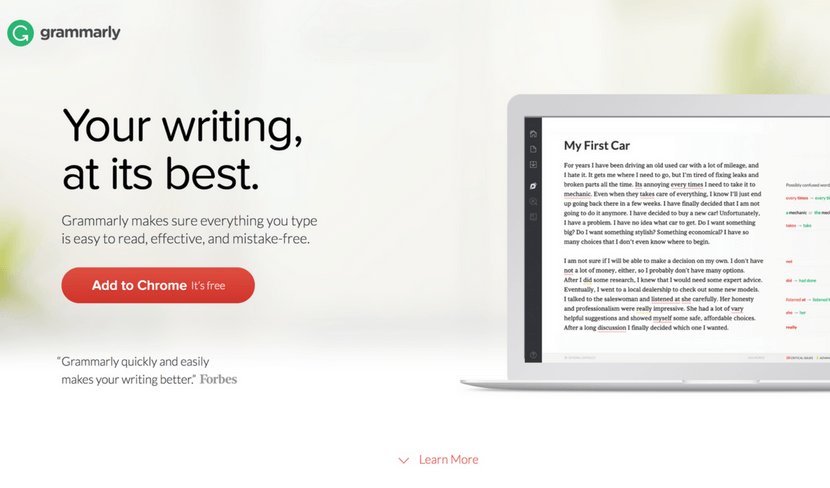
  1. Grammarly

Inbound Marketing Tools Grammarly

Grammarly is a proofreading tool that can also be used as a plagiarism-detection application. Besides creating content and driving traffic to your website, it is also crucial to make sure that your content is free of grammar mistakes, so this super simple tool will help you out with that. Its AI-driven engines check plagiarism and detect AI text patterns to improve your texts’ structure and readability. Multiple features and stellar user-friendliness make Grammarly one of the best tools for content creators on the market.

  1. GPTZero

GPTZero is the finest AI detector on the market to figure out if content was written by a human writer or by AI. It’s perfect for content managers who work with freelance writers or check user submissions. The tool scans your text and shows you exactly which sentences look like they came from AI. It can spot content from ChatGPT, Claude, Gemini, and other popular AI tools so they can be rewritten if language feels a bit blunt or less engaging.

  1. Readability Test Tool by WebpageFX

Readability Test Tool is an application to check the readability of a specific article, post or the entire website. You can check it by entering the URL of your content and clicking the button “Calculate Readability”. The tool is useful not only for bloggers but also for SEO experts, copywriters, and other specialists.

  1. Portent Title Maker

Portent Title Maker is a great tool when you need to come up with an original idea for your article title name. Simply enter your subject in the field and choose one of the generated titles. To get the best results from this tool, don’t capitalize keywords and use singular version of your keyword.

  1. Hubspot Blog Topic Generator

Hubspot Blog Topic Generator helps you create great titles for your post. When you visit the website, you will have to enter three nouns that describe what you’re writing about (or what the article is about) and press the button below. You will then be given a few popular blog topic ideas that you can use for your piece.

  1. Toggl

Toggl is a perfect tool for busy bloggers who like to keep on track with their time management. With this tool, you can see how much time you spend on each task and discover what is most time-consuming. Here you can also track how many time you spend on different projects, clients and analyze reports.

  1. Hemingway App

Hemingway App is an advanced text editing tool that is also available as a desktop app. It highlights your sentences in different colors that indicate sentences that are too hard to read, phrases that have simpler alternatives, etc. In the online mode, you can also edit your document and the desktop version offers such cool features as publishing directly to WordPress and much more.

Design tools

  1. Picsart

Picsart is an all-in-one platform where users can create, customize, and share images and videos with ease. It combines powerful editing tools, AI features, and a wide range of creative assets to help bring any idea to life—whether it’s for social media, marketing, or personal projects.

  1. Freebiesbug

Freebiesbug is a website where designers can find a number of free graphic resources for their designs. It is full of app designs, icons, mockups, website templates, illustrations, fonts, sketches and much more. You can browse by the category, use the search field or upload a freebie of your own.  

  1. Adobe Spark

Adobe Spark is a tool by Adobe Systems that offers three different design apps: Spark Page, Spark Post, and Spark Video. Here you can create social and website graphics like Travel Journals, Quotes, Announcements, Advertisements, Pitches, Animated stories and much more.

  1. Xtensio

Xtensio is a platform every team or business needs to create beautifully crafted online presentations, reports, slides, or any documents. It functions with an easy-to-use drag and drop feature so users can do customization, living up to their brands.
Apart from being user-friendly, it ensures real-time collaboration and privacy of shared documents.

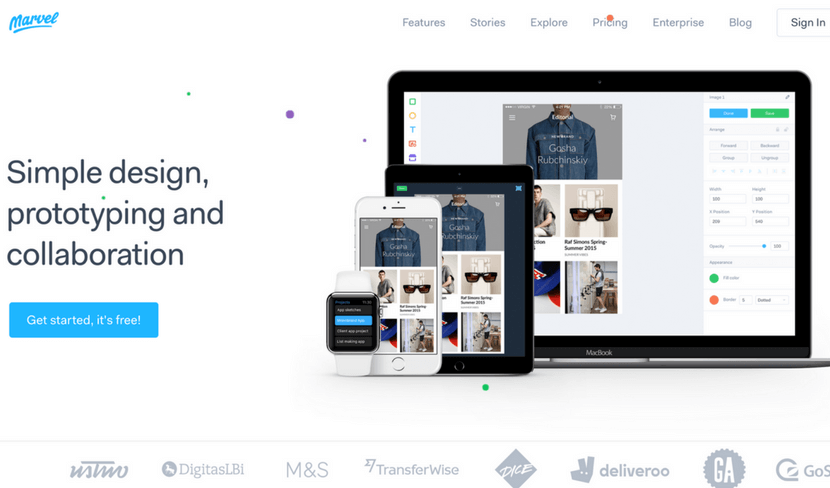
  1. Marvel

Inbound Marketing Tools Marvel

Marvel is a prototype creation tool for apps and websites. You can create straight in Marvel or transport your images from the cloud storage, Sketch, or Photoshop. The tool has a user-friendly editor that lets you link your designs and create prototypes for iPhone, iPad, Apple TV, Apple Watch, Desktop, and Android.

  1. Ceros

Ceros is a cloud-based tool with a digital canvas that can be accessed by the entire team. Ceros allows you to create amazing, interactive infographics and animated designs. The tool is very convenient for both designers and marketers. After creating a unique design, you are able to see the insights of its performance.

  1. Figma

Figma is a collaborative design tool that gives you the ability to work on a design together with your team. Here you can create icons, interface design, responsive layouts and much more. Figma is very easy to use so you won’t waste your time trying to understand the tools and it also allows the integration with Sketch app.

  1. Fuse

Fuse is a design tool for creating apps on Android and iOS. An effective and quick way to create for teams, developers, and designers. With Fuse, adjust animation, UI, layout or anything else you like and test changes in real time. It makes it easy for people that are new to app development and is also very useful for the experienced ones.

  1. Placeit

Placeit offers more than 2500 mockups and demo videos. It is super quick to use and works as a great substitute for Photoshop when you want to place a screenshot of your website on a screen of a computer or a phone. You can choose between many different devices or simply use the search field.

  1. VSCO

VSCO is a very popular photo editing app available for both iOS and Android. It lets you edit your photos and images, add many different trendy filters and share it with other users of the app. The app is widely used by photographers and the youth and constantly updated by its developers.

  1. PicMonkey

PicMonkey is an online tool for design making and photo editing. It has some paid features, but even without them, the tool is pretty powerful. Besides designing and editing, you can also create beautiful collages, or use the “Touch up” feature that can whiten teeth or remove wrinkles in a photo.

  1. Infogr.com

Infogr.com is an application meant for creating stunning, interactive charts and infographics. You are free to choose between more than 35 charts, over 500 different maps and over 20 ready-made templates for infographics. Besides that, you can edit the style, colors and many other things in your design.

Visual resources

  1. Unsplash

Unsplash is a photo stock library that lets you download, edit and use all the photos for free without any copyright. The website is believed to be one of the leading photography websites in the world. Here you can browse new photos, view collections or simply use the search field.

[optin-monster-shortcode id=”u0wiahzfsrgu4dsbbxsb”]

  1. Pixabay

Pixabay is an international website that offers more than 870,000 stock photos that are completely free. Here you will also find vectors, illustrations, and videos of high quality. All of the content you will download on this website is completely copyright free, so feel free to edit and distribute it the way you like.

  1. StockSnap.io

StockSnap.io is full of beautiful stock photos in high quality. It is also copyright free so no contribution to the author is required. When you visit the website, you can see the most popular searches that are displayed as tags under the huge search field. You can also view the trending and recently added photos or add them to your favorites.  

  1. Life Of Pix

Life Of Pix is another brilliant place to find free stock photos. Some photos are features, so you can browse them straight away when you visit the website or choose to use the search field. If you find it time-consuming to preview photos on a big display, you can simply switch to a different viewing display.

  1. SplitShire

SplitShire is a great resource of visual content: free images, photos, and videos. Besides the search field, you will also discover many convenient categories to choose from: animals, fashion, landscapes, mockups and much more. In free videos section, you can scroll down and view all the amazing video content that you can easily download.

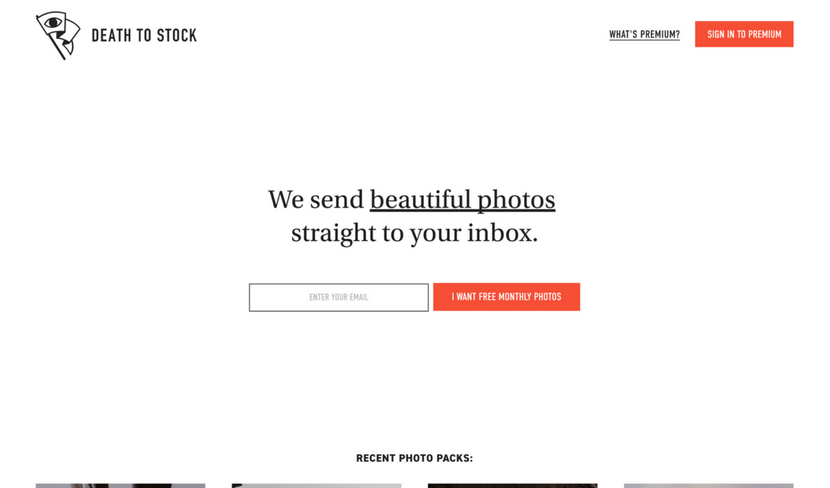
  1. Death To Stock

Inbound Marketing Tools Deathtostockphoto

Death To Stock has a lot of content you can use for your creative projects and designs. It has a very convenient feature where you can subscribe to receive a monthly email with beautiful photos. On the website, you can also browse themed photo packs on a specific subject.

  1. PhotoPin

PhotoPin is a completely free tool that might come in handy both for designers and bloggers. In PhotoPin you will find millions of photos with Creative Commons licensing. A very neat feature that this tool offers to its users is that when you download a picture, you receive a contribution link at the same time, so there’s no need to search for it separately.

  1. Freepik

Freepik also offers some free stock photos but is mainly focused on free vectors, icons and PSD files. This website is probably one of the most popular free graphic resources among experienced and new designers. You can use the search field, or browse the vectors by popularity or recency.

  1. Flaticon

Flaticon is probably the biggest database full of icons in PSD, EPS, SVG, PNG and BASE 64 formats. Here you will discover more than 310,000 icons that can be customized to a specific color code before downloading. If you are working on a specific project and you need your icons to have the same style, you can find some icon packs as well.

Automation tools

  1. IFTTT

IFTTT is an amazing tool that lets you connect and create chains of applets. Applets are useful features that different apps are able to offer to their clients. For example, using a certain applet, you can set it up to receive an email when an Instagram picture with a chosen hashtag is posted.

  1. Zapier

Zapier is a great web automation tool for busy people that seamlessly connects one’s apps and automates the processes. Apps are linked in seconds and when data is shared, Zapier passes the data to “Zaps” that represent your workflows. This will help you to finish your tasks and processes faster than usual.

  1. Moosend

Moosend is a powerful email marketing and marketing automation tool. Its features are easy-to-learn and easy-to-use and it promises a minimal learning curve with maximum potential, due to its sophisticated automation, personalization and analytics features.  From designing beautiful email newsletters and landing pages with zero code knowledge to segmenting your email list and making educated decisions through data and analytics, this all-in-one marketing platform gives your business more for less.

  1. Skyvia

Skyvia is a tool that offers a cloud data integration service. It also lets you backup, manage and access your data from all your apps by using only one tool. Cloud data management is processed through SQL so you don’t need to bother about native web API’s of different cloud sources.

  1. Looking for new tools recommend

This used to be Hooks

  1. CloudHQ

CloudHQ synchronizes your apps and your data and lets you integrate your apps with cloud platforms you are using at the moment, including Google apps, like Google Drive and Google Email. The tool offers real-time backup of any data that is in your cloud. It also lets you integrate your dropbox with Evernote, Gmail, Sharepoint, and Basecamp.

  1. Automate.io

Automate.io is a tool that is able to connect all the apps that are located in your cloud. This helps you to automate such processes as marketing, business, and sales. Automated processes include sending automated emails, automate follow-ups and much more.

  1. Looking for new tools to recomend

This used to be CloudWork.  

  1. Integromat

Integromat is a powerful workflow optimization and automation tool. With it, you will be able to connect different devices, apps, and services. The main advantage of this tool is that it can integrate and automate almost any app that’ been created. It can be used in various fields: social media, online stores, customer support and project management.

Management tools

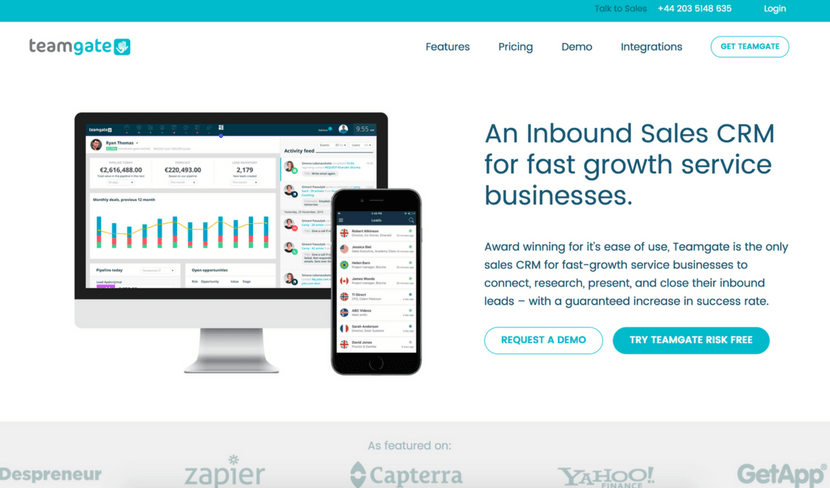
  1. Teamgate

Inbound Marketing Tools Teamgate

Teamgate is a powerful CRM tool that can be developed especially for you and your team – no matter whether you work alone, run a small business or manage a big team. It helps you curate and plan daily tasks, schedule your calls and appointments, create individual goals and view how close you have gotten to your goal. It also has a neat feature where you can view insights of your team’s sales score and an evaluation on how much better or worse you are doing compared to last year, month or week.

  1. Bitrix24

Bitrix24 is a widely used management tool because of its many features and other tools like CRM, task and project management, document and time management, calendars, chats and much more. It also offers a telephony service so you can call anywhere – domestically or internationally.

  1. Copper

Coppers CRM is a user-friendly, simplistic management tool that is focused on teams and interactions. It makes it really easy to keep on track with what your team is working on and keep an eye on the sales.

  1. Zendash

Zendash makes tracking your marketing performance simple and efficient. With its user-friendly dashboards and seamless integrations, it brings all your analytics into one place. Use Zendash to gain valuable insights, optimize your inbound campaigns, and make smarter, data-driven decisions to grow your business.

  1. Salesflare

Salesflare is a CRM that stands out due its focus on technological development. The tool is integratable with Office 365, Gmail, iCloud, Zapier and Exchange. It offers useful insights on sales and assists you with follow-up opportunities. The Salesflare takes care of all the data input so you can focus all your attention on sales and profits.

  1. Act!

Act! is a CRM and a brilliant management tool for managing customer relationships and contacts. This CRM is mainly meant for individuals, sales teams, and small businesses. Here you can choose between three different plans to suit your needs: Act! Pro, Act! Premium and Act! Essentials.

  1. Insightly

The name of this CRM tool speaks for itself – it can offer you many useful insights on your sales, team workflow and many other aspects. The tool is also packed with an array of great features, such as contact and lead management, task, events, reports, email integrations and so much more.

Lead collection tools

  1. AeroLeads

AeroLeads is one of the most powerful prospecting software on the web used by over 5000 businesses. It finds all the details of a business or person that includes Email, Name, Phone Number and social profiles. It also provides you with the service of giving you the email list or email database as per your requirements.

  1. OptinMonster

OptinMonster is an amazing and very popular lead generation tool, especially for WordPress. It helps you convert visitors into subscribers by creating convenient and smart signup forms. It works with MailChimp, AWeber, Infusionsoft, GetResponse, Constant Contact and many eCommerce platforms

  1. Leadfeeder

Leadfeeder is a simple lead collection tool that helps to turn your visitors into subscribers. It is mainly focused on the B2B market and works by connecting to your Google Analytics account where it collects useful data about your website visitors. Offers integration with MailChimp.

  1. Leadpages

Leadpages will generate leads through social media, emails, web and text messaging. Here you can choose from a selection of high quality and performance templates and then customize them to your own taste. The customizable templates are mobile friendly and the tool itself can integrate with MailChimp, Salesforce, Infusionsoft and many other tools.

  1. Leadformly

Leadformly is a website that lets you create interactive lead generation forms and use them to capture more leads. After you choose a template you like, you can redesign it as you wish, then simply add the embed code to your website and wait for the results. It integrates with Salesforce, Sugar CRM, Infusionsoft, MailChimp, HubSpot, Marketo etc.

  1. Lead Forensics

Lead Forensics is a tool that will turn anonymous traffic into leads. With this tool, you can identify the leads in real-time and reveal such information as contacts, business name, financial data, demographics, etc. It also lets you analyze each case from the first click to sale.

  1. LinkedIn Sales Navigator

LinkedIn has a special tool called Sales Navigator that is packed with features focused on social selling. It gives you custom lead recommendations, imports Salesforce data, constantly informs you with real-time sales updates and lets you measure your social selling stats and efforts. On their website, you will also find success stories and useful resources.

Social media tools

  1. Buffer

Inbound Marketing Tools Buffer

Buffer is a social media scheduling tool for Twitter, Facebook, Instagram, Pinterest, LinkedIn, and Google+. It will help you to save loads of your precious time and focus on your strategy.  You can easily schedule by using the website, installing the browser extension or on the go – with apps for iOS and Android.

  1. Quuu Promote

Quuu Promote enables you to share and promote your generated content via Facebook, LinkedIn, Twitter and Google+. The entire system consists of three steps: first, you create a post using URL address, second, you select the most relatable topic and lastly, monitor and track your promotions via Quuu.

  1. Hootsuite

Hootsuite is social media management tool that works with more than 35 popular social networks. It has many different tools that include Publisher, Engagement, Analytics, Insights, Campaigns, Platform, Amplify, and Ads. These tools are best for fields, such as social selling, marketing, customer service and Employee Advocacy.

  1. MeetEdgar

MeetEdgar is a tool for social media planning and scheduling. One of the cool features of MeetEdgar is that it does not throw away your published posts, but keeps them in a safe library so you can analyze, edit and repost them later. Here you can also place your scheduled posts in different categories.

  1. SocialRails

SocialRails is a social media scheduling tool that lets you create and publish to all major platforms from one place. It stands out with built-in AI tools for generating captions, short-form videos, carousels, and images. So you can handle content creation and scheduling without switching apps.

  1. Tagboard

Tagboard is a social search platform based on hashtags. It searches through social media content and finds relevant content in seconds. The tag search is processed through such platforms as Facebook, Twitter, Instagram, and Flickr. A very convenient feature is that you can automatically promote any posts you like.

  1. SharedCount

SharedCount is a very simple service and a tool for social media analytics. Its main feature is to quickly track URL shares and likes across the internet. After you enter the URL of your post, you will see how many shares, likes and comments it has collected on Facebook and how many times it was shared on Google+, Twitter, Diggs, LinkedIn, Pinterest, StumbleUpon, and Delicious.

  1. Agora Pulse

Agora Pulse is an amazing yet simple tool for social media management. It brings all the most popular social media networks to one place where you can easily track and manage the engagement. The tool offers many useful stats and insights and has a feature that allows you to run contests and promotions.

GET READY TO OWN YOUR WORKDAY

with the most user-friendly CRM on the market.

Start Free 14-Day Trial

Painless setup, no credit card required

  1. EveryPost

EveryPost is a simplified social media publishing platform and an app for both iOSand Android. With this great tool, you can manage your content, edit your posts, collaborate, schedule, publish and study the social media analytics to come up with even greater solutions for your business.

  1. Sprout Social

Sprout Social is a powerful social media management tool. It has many advantages to offer: Smart Inbox, Monitoring, Social CRM, Publishing, Analytics, Collaboration, Account Structure and Mobile – all these features in one simple tool. Sprout Social works perfectly for social customer service and social media marketing as well.

  1. Bitly

Bitly is a widely used and well-known URL shortener. Nothing is uglier than a long URL on social media or your website. Besides its main features, Bitly lets you optimize and share the links via Bitly, API or other partner integrations. With this tool, it’s also possible to track link analytics and stats.

  1. Tailwind

Tailwind is a free scheduling platform for Pinterest and Instagram. With this tool, you will be able to discover new interesting content, schedule your social media posts in advance, curate conversations and study analytics to reach better results in the future. You can use the free version or choose from plans meant for small businesses and large organizations.

  1. Tweepi

With Tweepi, you can Tweet faster and more efficiently. This tool was specially developed for one social media channel only with a greater focus on it and its capabilities. In the year of 2017, it already has more than 1,500,000 users. With this tool, you can follow relevant users, follow back, schedule tweets and much more.

SEO tools

  1. Übersuggest

Übersuggest is a tool that generates loads of keyword ideas for you. Simply enter one of the main keywords that describe your business and receive hundreds of similar suggestions. Besides that, you can also choose other options, such as browsing in the web, images, shopping, YouTube, and News section.

  1. Moz

Inbound Marketing Tools Moz

Moz is a great SEO tool and a software that performs 5 billion searches each day. It has two main services: one is called “Moz Local” and focuses on local searches by using your location information. The other service is called “Keyword Explorer” that lets you find the best keywords and offers many intuitive suggestions.

  1. SEMrush

SEMrush is another tool to help you find more keywords that are relevant to your business. Besides this useful tool, SEMrush can also offer SEO audit, position tracking, semantic core collection, backlink audit and much more. Next to SEO, the company also works with paid traffic, social media, content management and PR.

  1. Ahrefs

Ahrefs is a tracking tool for mentions across the internet, keywords, and backlinks. By using Ahrefs, you also gain access to other tools, such as position, size and content explorers, position tracker, crawl report and alerts that make sure you never miss a new mention.

  1. Backlinko

Backlinko is a place where you can find many marketing and SEO tips, tricks, guides, ebooks and blog posts about it. In general, the website helps you master the link building process, lift up the user experience, optimize and promote your content. You can also sign up for free updates and the newsletter to make sure you don’t miss a thing.

  1. Wordtracker

Wordtracker is a tool with the main focus on longtail keyword search. While researching the keywords, you can choose a specific time period and region so that the result would be more relevant. This tool also lists some advantages why it’s better than Google Keyword Planner: not grouped keywords, results are not banded, SERP comparison and much more.

  1. Keyword Tool

Keyword Tool is a substitute and an alternative for the Google Keyword Planner. It finds the most searchable keywords that your potential customers type into Google Search Box. Every search term is estimated to receive at least 750 keyword suggestions, it is absolutely free and you can freely use it without any registration.

  1. Looking for new Adition

Used to be Keyword Eye

Streaming tools

  1. Crowdcast

Crowdcast is a simple and dynamic streaming tool that lets people share content via webinars, live courses, summits and Q&As. It’s very quick and easy to get started because you don’t have to download any files, the setup is very easy and there’s only one URL.

Livereacting is a platform that helps to boost your social media presence by creating and scheduling an engaging 24/7 live stream. It provides tools to automate interactive content, such as polls and quizzes, to maintain continuous audience engagement.

  1. Bambuser

Inbound Marketing Tools Bambuser

Bambuser is an interactive platform for live streaming. It benefits from another tool called “Iris” that focuses on simple mobile live videos. This tool can help you to create professional live videos, organize and manage them via Content Dashboard, and publish them through Player SDKs.

  1. Google Hangouts

Google Hangouts is a very popular streaming tool provided by Google. Through this tool, you can message your team or a single person, make a video or an audio call. In one chat, you can connect up to 100 people which is a pretty large number. To make your interaction even more fun and accurate, you are free to use emojis, maps, photos, stickers, and GIFs.

  1. Tinychat

Tinychat is a simplistic live video chat platform that can also be used as an app for iOS and Android. It is called a video chat, but it does not obligate you to participate in a conversation, you can just observe and watch. To start a chat room, simply click on the bright blue button that says “Instant Room”.

  1. Livestream

Livestream is a powerful and a highly developed live streaming tool. It has a high-tech live video solution with tracking and analytics so you can track the engagement, end to end hardware and software, 24/7 support and many different product solutions, developed for distinct needs.

  1. Twitch

Twitch is a streaming website with more than 9.7 million daily users and mainly focused on video game streaming. It has a few listings that show the most recent top live channels, Top PS4 Channels and Top Xbox One Channels. To start streaming, you can try a free trial to test out the features. 

  1. YouNow

YouNow is a broadcasting tool where people can stream live. On the left corner of the website, you will always find trending topics and in the middle section – trending broadcast that you can view freely. It is completely free and available both for iOS and Android as an app.

  1. Youtube

Youtube has a live streaming section called “Live” where you can stream videos of your own and watch other live streams of people gaming, playing music, racing, etc. You can choose between two different streaming options: “Stream now” that lets you send content and stops it at the right time and “Events” that gives you more over the content.

While working on these outstanding tools, you also need the right peripherals. One of the key things you need while working on marketing tools is AirPods. Whether it’s about watching marketing tutorials on YouTube or editing a sales video, good sound quality is necessary. Buy Airpods online or from a store and to make the buying easier, this guide on AirPods generations is important. From AirPods first generation in 2016 to the latest fourth generation in 2024, there have been major changes in them. Knowing how things have changed and what the key differences are between various generations is an important factor to consider before buying.

Final Thoughts

Growing a business is a day-to-day mission and we should take all the help we can take. Leveraging the right inbound marketing tools is crucial for the success and growth of your business. These tools not only help streamline processes but also optimize and enhance the effectiveness of your marketing strategy.

Make the most of the insights you’ve gained from these 100 powerful inbound marketing tools and watch your business soar to new heights.

Now that you’re armed with this knowledge, take the next step to further boost your marketing efforts – try Teamgate CRM.

It’s an innovative solution designed to perfectly align with your inbound marketing strategies, ensuring you harness the full potential of every lead and customer interaction.

In this comprehensive article, you’ll unlock the secrets to crafting effective sales emails that elicit responses from prospects. Learn how to write engaging subject lines, connect with your audience on a personal level, leverage social proof, and create compelling calls to action that move your audience toward the next steps in your sales process.

Key Takeaways:

  • The significance of research in crafting personalized, response-driven sales emails cannot be overstated.
  • The art of creating catchy subject lines can drastically affect the open rates of your cold emails.
  • Always keep your emails simple, concise, and focused more on the benefits than the features of your product or service.
  • Leverage social proof to enhance credibility and make a persuasive case for your product or service.
  • Never forget to include a clear and concise call to action to guide prospects on the next steps.

Confession time: I have recently signed up to Unroll.Me.

It was a decision driven by desperation mostly — I was getting buried under unsolicited emails and irrelevant pitches. There were moments when I was really aghast at the lack of imagination and flair of the people who kept barraging me with thoughtless, generic emails.

When it comes to interpreting cold email responses, silence usually means no. And that got me thinking — what makes a stellar cold email? Is there a secret hack to writing a sales email that gets a response?

It appears now that there is more than one hack to crafting an inbox-busting cold email campaign. 

#1 Do your homework

A mischievous cat from ‘Alice in Wonderland’ once said that “if you don’t know where you’re going, it doesn’t matter which road you take”. It’s okay if you don’t want to take advice from a fictional character, but talk to any self-respecting inbound sales rep and they’ll tell you that the single most important aspect of their job is research.

Effective marketing and sales campaigns are based on connecting with prospects on an emotional level. What seems like a pretty simple box to tick, invoking emotions can actually be excruciatingly difficult. Not only do you need to know your lead’s pain points to be able to push the right buttons, but you also need to choose the right method to approach them and the right vocabulary to make them take the desired action.

Most inbound marketers will agree that if you don’t know who you’re targeting, your emails will stink.

Whether you’re reaching out to just a handful of leads or a database of 1000+, crafting a highly personalized sales email is the only reliable way to generate decent response rates. If your mailing list exceeds a reasonable number of people, consider a few basic tips for improving your chances of hitting the bullseye:

  1. Create a meaningful buyer persona that captures and summarizes the most important information about your target market, including their pain points and motivations. When you get to crafting the actual sales email copy, write for that particular person as if you were talking to them face to face.
  2. Use LinkedIn to get a better understanding of your list. Select just a few names at random to research their profiles, and see what language they’re using to describe themselves, what skills they’re highlighting, their recommendations, and so on. This will give you direction as to what style, tone, and messaging they’re most likely to respond to.

Anyone who’s ever tried to write a killer sales email knows that defining the buyer persona early can significantly shorten the writing and redrafting process as well as help you choose the right keywords and tone. A CMO will not respond to the same messaging as a CTO, so blindly shooting emails left and right in the hopes of winning some of the leads will waste your list and earn you a spammer’s badge.

Do you have a CRM that keeps you organised?

The most user-friendly CRM on the market. 14-day free trial.

Start Free Trial

Painless setup, no credit card required

At this stage, having the right tools in place can help you cut the research time in half, so make sure your prospecting process is well thought through. You will most likely need a few different tools and extensions to create, track and optimize your email campaigns. Here are some of the most popular email prospecting tools that you should explore.

Tools and Resources

Teamgate – helps to connect, research, present, and close their inbound leads. It also allows sending emails directly to your leads and clients from your CRM account.

Crystalknows – helps you write better emails and connect with prospects based on their unique personality and communication style.

Clara – an auto-scheduling plugin with a human feel that handles all your meetings calendar.  

Really Good Emails – a database of the best email designs and copy. Find your inspiration!

Sales Email

Image source: Really Good Emails

Gmail extensions

Rapportive – pull up your prospect’s LinkedIn info right into your inbox.

Boomerang – a Gmail plugin that lets you schedule emails to be sent at any time.  

Clearbit – find any sales email right from your Gmail inbox.

WiseStamp – enables you to create a professional email signature for free. 

Grammarly – boost your credibility with this grammar and spelling checker.

#2 Craft and test various subject lines

When you’re sending cold emails, the subject line can virtually be a door opener. But make a mistake and you’ll land in the spam folder with no chance of making it out of there. And I have the statistics to back this up: 35% of email recipients decide whether to open an email based solely on the subject line, while 69% of people report email as “Spam” based entirely on the subject line. 

Subject lines matter.

Besides getting you through the door, a strong, compelling subject line will also earn you a few extra seconds after a prospect opens the email. But how can you pimp your subject lines to really grab their attention? Marketing pros recommend:

  • Keep it short. And it’s not even because people have the attention span of a goldfish. You have only about six to eight words to transfix your mind, as a typical inbox reveals about 60 characters of an email’s subject line. If your prospects are checking their email on a mobile screen, you’ve only got 25 to 30 characters to seal the deal.
  • Start with the most important information. 55% of all email opens occur on smartphones. A long subject line will get cut off, putting the success of your entire campaign at risk. If it’s not skimmable, it’s not good enough.
  • Personalize your subject lines. Who doesn’t love the sound of their own name? Using personalization tokens, like name or location will help you break through the initial barrier and build rapport. Showing your prospects that you know more about them than just their email address is an effective tactic to get that email opened.
  • Avoid clickbait. Look, you’re already a stranger in someone’s personal inbox — don’t push it. Making false promises or telling half-truths to get your emails opened won’t get you far. If you want to build a relationship based on trust and respect, keep your subject lines honest.

Sales Email

Once you nail a few teaser subject lines, don’t rely on your gut to figure out which one achieves better open rates. The best way to see how your audience responds to different styles and subject line formulas is by implementing a smart A/B testing strategy. Most of the email marketing tools like MailChimp, GetResponse or Yesware will run the tests for you, giving you a detailed report of opens and clicks at the end. The most important lesson here is to let the data guide you.

#3 Keep it short and to the point

Cut the fluff. Everyone is busy and living by the “time is money” rule. Getting into someone’s inbox is one thing, making a connection with a prospect and getting a response is quite another. It’s not particularly helpful when you hear the “keep it short and simple” mantra but it’s the best advice you can get.

One of the easiest ways how to keep things simple is to write as you talk. An email written in a straightforward, casual style sets the right tone for future communications — you come across as more relatable, personable, and approachable. When you finish drafting the email, read it out loud and see whether it rolls off your tongue nicely or sounds like an excerpt from an essay. Don’t make your cold email sound cold, write like a human.

#4 Make it about them and talk about benefits over features

Whatever you’re selling, don’t go for a hard sell in the first email.

If you’ve done your homework and carried out thorough research, you’re starting from the position of strength. Addressing your prospects by their name and talking about their most pressing problems makes your intrusion a little less annoying and shifts their attention from you to their pain points.

The only important truth in sales is that you don’t sell products or services, apps, or tools. You sell dreams and aspirations and offer people a better version of themselves. Benefits over features is a classic example of how much buying decisions are driven by psychological cues. You will have a better chance of converting your leads by vividly painting the picture of what they can achieve if they get on board with your offer, rather than blowing your own trumpet and talking about the amazing features.

[optin-monster-shortcode id=”cvfuxuhchvywm9wl2q6w”]

Apple nailed the feature-selling technique when they launched the iPod. When crafting your email copy, keep the Apple example in mind, avoid the awful “me me me” attitude, and focus on the prospect. If you keep on asking yourself “So what?” after every sentence you write, you’re bound to reach a version of your email that will get you a “yes”.

Sales Email

Image source: Help Scout

#5 Use social proof

7 out of 10 Americans seek out opinions before making a purchase, so adding a little social proof can go a long way. It’s one of the few big guns under an inbound sales rep’s belt that can make it easier for a prospect to say “yes” as well as foster trust. Name-dropping and using high-level stats to add a little oomph to your pitch can be an effective way to demonstrate the value that your product creates and increase the response rate.

Although it’s important to weave some case studies, numbers, or client testimonials into your cold email copy, it’s also worth remembering that it needs to stay sharp and concise. You need to find a way how to make the social proof a part of your story instead of throwing dry facts and numbers at your prospects and expecting them to be impressed. Yet, the allure of proven success is incredibly powerful:

Studies have shown that people tend to value the opinions of those that resemble them in some way. If you nail your buyer persona and pick the right case studies or testimonials for your emails, social proof can be your lucky ticket.

#6 Make sure to include a clear CTA

It goes without saying that a strong CTA is the linchpin of any promotional campaign. Chances are, your prospects will skim through your email and jump straight to the bottom of it to quickly figure out what you want. If your closing line is too long, your CTA will lose its punch and might even get lost.

A good rule of thumb is to limit your CTA to one or two sentences, ensuring it directs the prospects to the next step. When they open your email, the first question they’ll have will be “What do you want from me?”. Ensure that your CTA or your closing text clearly states the desired action and next steps.

#7 Include an email signature

It’s okay to end your email with “Best wishes” and “Kind regards” if you want to, but make sure your email signature is a little more creative. WiseStamp will prove to be a particularly handy tool if you decide to give it a shot. A great-looking signature will send the right message to your prospects, help you improve email engagement, and garner trust. Besides that, using an email signature generator to create a professional email signature is a powerful tactic to establish credibility and put a face on a cold email. By adding relevant content, connecting your social media profiles, and keeping your email signature up-to-date you will easily differentiate your emails and engage with your prospects in a unique way.

sales email

Image source: WiseStamp

#8 Writing techniques for inspiration  

You have probably deleted quite a few cold emails yourself, without ever giving them a chance to charm you into some sort of action. Most people open cold emails already irritated, so failing to find the right copy formula to really seize your prospect’s attention can have disastrous effects on the entire campaign. There are many different schools of thought and a myriad of clever writing techniques that can come to your rescue if you feel particularly drained and uninspired. The following three are particularly liked among professional copywriters:

  • Military precision. Let’s just say that military professionals take their email communications as seriously as their job. Efficiency and speed are at the core of everything they do. A US Navy veteran has recently shared a few unique tips on how to format emails with military precision.
    Optimize the subject line: military personnel uses email subject to state the purpose of the email and to indicate the action that needs to be taken. They place special keywords, such as ACTION or REQUEST, at the beginning of the subject to get their emails noticed quickly.
    The five W’s: Another rule they have is to lead their emails with very brief statements, otherwise known as BLUF (Bottom Line Up Front). The ultimate goal of this procedure is to help the reader quickly digest the announcement or decision, without diving deeper into the background information. The statements are based on the five W’s technique and need to answer who, what, where, when, and why.
  • Use power words. There’s a lot to gain from combining active voice with power words. Putting nouns ahead of verbs and charging your writing with action-oriented, powerful words will help you sound more persuasive. Unsure about what power words are? Here’s a list of 317 of them.

sales email

Image source: dlvr.it

  • The essentials of business writing. Business writing is all about clarity and persuasion. It teaches us to cut out unnecessary words and inject a little bit of humor. One of the main takeaways from the business writing technique is to write short sentences and to avoid mixing multiple thoughts in one sentence.

#9 Follow up and follow up your follow-ups

Have you ever wondered how many follow-up emails you should send and how often? (See, I’m not even asking whether you think follow-up emails are important — they are key to any cold email campaign.) The number of follow-up messages will largely depend on the kind of relationship you have with the prospect. Yet, for a cold email outreach campaign, it’s not advisable to go beyond 2 follow-ups. Bombarding your prospects with unsolicited emails at this stage will only cause anger and tarnish your brand.

Keeping tabs on all the emails you send and remembering when the follow-ups should go out would be a nightmare without email automation and scheduling tools. The market is awash with smart email automation platforms, so choosing the right software might take as long as crafting the copy. Start with the best-known brands like Marketo, Pardot, or Yesware and work your way backward to find the most cost-effective solution for your needs.

If your initial campaign flopped or generated weaker results than you hoped for, here’s an interesting thought for you:

  • 44% of salespeople stop trying after one follow-up;
  • 80% of sales require five follow-ups.

If these few numbers shock you, take a look at the latest statistics on Email Marketing, the team of Sleek Note has gathered.

Quick takeaways

Crafting a winning cold email campaign takes practice and patience. Even with all these hacks and techniques at your fingertips, the most important factor determining your work’s success will be research. 

  • Research is the stepping stone to the success of cold email campaigns. Before you sit down to write anything, develop a buyer persona and gather as much information about your target segment as possible. Then turn that information into a story.
  • Spend time perfecting your subject lines because they can make or break your entire campaign.
  • The KISS (keep it simple, stupid) principle is one of the best rules you can follow to keep your prospects engaged.
  • Focus on the idea that you’re selling emotions, not products or services. Stressing benefits over features will help you capture the interest of a much wider base of people.
  • Use social proof to quickly build trust and credibility.  
  • Supercharge your emails with clear and simple CTAs that are a maximum of two sentences long.
  • Add a professional email signature with your contact and social media details to encourage your prospects to look you up and connect on other channels.
  • Take advantage of proven writing techniques to sharpen your copy and conquer your prospect’s inbox.
  • Follow up the first cold email at least twice.

Write to win prospects over, not to spam your way into their inbox.

FAQs: How to write a sales email

Q: How do I start writing a sales email?

A: The first step is to do your homework. Research your prospect thoroughly and create a meaningful buyer persona. This will help you understand their needs, pain points, and motivations, thereby allowing you to craft a highly personalized sales email that speaks directly to them.

Q: What is the importance of a subject line in a sales email?

A: Subject lines are crucial as they can greatly influence whether your email gets opened or not. Statistics show that 35% of recipients open an email based solely on the subject line. It should be short, start with the most important information, be personalized, and avoid clickbait.

Q: How should the body of a sales email be written?

A: The body of your sales email should be concise and to the point. Keep it short, use a straightforward, casual style, and make it about the recipient. Talk about their problems and how your product or service can offer a solution. Emphasize benefits over features to create a more compelling argument.

Q: How do I conclude a sales email?

A: Conclude your sales email with a strong and clear call to action (CTA). This tells the recipient exactly what you want them to do next. The CTA should be limited to one or two sentences. Also, include a professional email signature with your contact and social media details.

Q: How important are follow-ups in sales email strategy?

A: Follow-ups are crucial in a sales email strategy. Often, sales require multiple follow-ups. The right email automation and scheduling tools can help you manage your follow-ups effectively. Remember not to bombard your prospects with too many follow-ups, as it may tarnish your brand’s image.

Unleash the power of motivation in sales through inspirational quotes. This article dissects the profound wisdom held in various sales quotes, diving into themes like positivity, resilience, leadership, customer-centricity, and confidence.

Key Takeaways:

  1. Positive sales quotes inspire and redirect focus, driving an optimistic approach in challenging sales scenarios.
  2. Quotes about resilience and persistence serve as crucial reminders of the rewards inherent in overcoming sales obstacles.
  3. Sales leadership quotes enlighten the path towards empathetic and result-oriented leadership.
  4. Customer-centric sales quotes emphasize the importance of placing customer needs above all, shifting the sales perspective.
  5. Confidence-boosting sales quotes illuminate the path to success, instilling courage and driving action.

Table of Contents

  1. Introduction
  2. Power of Positivity in Sales Quotes
  3. Resilience and Persistence in Sales Quotes
  4. Sales Leadership Quotes
  5. Customer-Centric Sales Quotes
  6. Confidence-Boosting Sales Quotes
  7. Conclusion

Introduction

In the relentless world of sales, motivation operates as the primary fuel. It is the invisible hand that nudges the salesperson forward, driving them to reach their targets, foster client relationships, and surpass the competition.Inspirational quotes, distilled wisdom in a few succinct words, serve as a powerful tool in bolstering this much-needed motivation.

The forthcoming journey across varying themes of sales quotes will invoke a cascade of emotions—power of positivity, resilience and persistence, leadership in sales, customer-centricity, and confidence—all integral components in the art of selling. These categories encompass the essence of sales, delivering insights that can add value to any salesperson’s repertoire. You can also check out these amazing quotes for selling real estate.

Power of Positivity in Sales Quotes

Positivity is the beacon of hope in the sea of sales challenges. It fosters a conducive environment, driving optimism and stimulating creativity. Positive sales quotes inspire, rekindling the innate drive, and redirecting the focus towards the brighter side of every transaction.

  1. “Your attitude, not your aptitude, will determine your altitude.” – Zig Ziglar
  2. “The best way to sell something: don’t sell anything. Earn the awareness, respect, and trust of those who might buy.” – Rand Fishkin
  3. “Become the person who would attract the results you seek.” – Jim Cathcart
  4. “Sales are contingent upon the attitude of the salesman – not the attitude of the prospect.” – W. Clement Stone
  5. “Stop selling. Start helping.” – Zig Ziglar
  6. “Selling is essentially a transfer of feelings.” – Zig Ziglar
  7. “Always do your best. What you plant now, you will harvest later.” – Og Mandino

Resilience and Persistence in Sales Quotes

In the sales landscape, resilience and persistence are the twin towers that stand tall amidst the storms of rejection. Quotes echoing these sentiments serve as reminders of the reward at the end of the tunnel, fueling spirits and sparking determination.

  1. “Every sale has five basic obstacles: no need, no money, no hurry, no desire, no trust.” – Zig Ziglar
  2. “Success is the ability to go from one failure to another with no loss of enthusiasm.” – Winston Churchill
  3. “The secret of man’s success resides in his insight into the moods of people, and his tact in dealing with them.” – J. G. Bennett
  4. “Pretend that every single person you meet has a sign around his or her neck that says, ‘Make me feel important.'” – Mary Kay Ash
  5. “To build a long-term, successful enterprise, when you don’t close a sale, open a relationship.” – Patricia Fripp
  6. “Keep your sales pipeline full by prospecting continuously. Always have more people to see than you have time to see them.” – Brian Tracy
  7. “Most people think ‘selling’ is the same as ‘talking.’ But the most effective salespeople know that listening is the most important part of their job.” – Roy Bartell

Sales Leadership Quotes

Effective leadership influences sales dynamics significantly, nurturing a high-performing sales team. Sales leadership quotes inspire, enlightening the path towards empathetic and result-oriented leadership.

  1. “People buy from people they trust and they trust people they like.” – Bob Burg
  2. “Sales success comes after you stretch yourself past your limits on a daily basis.” – Omar Periu
  3. “Don’t find customers for your products, find products for your customers.” – Seth Godin
  4. “Opportunities don’t happen. You create them.” – Chris Grosser
  5. “Great salespeople are relationship builders who provide value and help their customers win.” – Jeffrey Gitomer
  6. “Sales are contingent upon the attitude of the salesman, not the attitude of the prospect.” – William Clement Stone
  7. “Salespeople sell more when their managers are better coaches.” – Jason Jordan

Customer-Centric Sales Quotes

In sales, the customer is the nucleus around which all strategies revolve. Quotes emphasizing a customer-centric approach facilitate a shift in perspective, underlining the significance of placing customer needs above all.

  1. “If you are not taking care of your customer, your competitor will.” – Bob Hooey
  2. “Profit in business comes from repeat customers; customers that boast about your product and service, and that bring friends with them.” – W. Edwards Deming
  3. “Don’t find customers for your products, find products for your customers.” – Seth Godin
  4. “It is not the employer who pays the wages. Employers only handle the money. It is the customer who pays the wages.” – Henry Ford
  5. “You don’t close a sale, you open a relationship if you want to build a long-term, successful enterprise.” – Patricia Fripp
  6. “Everyone lives by selling something.” – Robert Louis Stevenson
  7. “Your most unhappy customers are your greatest source of learning.” – Bill Gates

Confidence-Boosting Sales Quotes

Confidence is the magic ingredient that transforms potential into performance in sales. Confidence-boosting quotes illuminate the path, instilling courage, and driving action.

  1. “Believe in yourself! Have faith in your abilities! Without a humble but reasonable confidence in your own powers, you cannot be successful or happy.” – Norman Vincent Peale
  2. “Act as if what you do makes a difference. It does.” – William James
  3. “You miss 100% of the shots you don’t take.” – Wayne Gretzky
  4. “The difference between a successful person and others is not a lack of strength, not a lack of knowledge, but rather a lack of will.” – Vince Lombardi
  5. “I find that the harder I work, the more luck I seem to have.” – Thomas Jefferson
  6. “Success is not in what you have, but who you are.” – Bo Bennett
  7. “Either you run the day or the day runs you.” – Jim Rohn

Conclusion

Motivation forms the backbone of the sales landscape. It is the wind that steers the salesperson’s ship towards their goals, navigating through unchartered waters of challenges. The profound wisdom encapsulated in these sales quotes serves as a catalyst, triggering motivation, and guiding their voyage. Whether it’s the power of positivity, resilience, persistence, impactful leadership, customer-centricity, or confidence, these quotes offer valuable insights that resonate with various facets of sales.

As a salesperson, these quotes should be your companions, offering solace in times of distress, and motivating you to reach new heights. They remind us of the virtues that build success, subtly nudging us to incorporate them into our daily routines.

Another way to increase sales motivation is through increased sales performance. To learn more about how Teamgate can help your sales team or individual performance, talk to our team today!

Finally, if you’ve been inspired or have your own favorite sales quote that has been your beacon of motivation, feel free to share it with us. After all, wisdom grows when shared.

Frequently Asked Questions: Top Sales Quotes

  • What are some top sales quotes to inspire positivity?
    • Some of the best sales quotes to inspire positivity include:
      • “Your attitude, not your aptitude, will determine your altitude.” – Zig Ziglar
      • “The best way to sell something: don’t sell anything. Earn the awareness, respect, and trust of those who might buy.” – Rand Fishkin
      • “Always do your best. What you plant now, you will harvest later.” – Og Mandino
  • How can sales quotes foster resilience and persistence?
    • Sales quotes foster resilience and persistence by serving as reminders that every obstacle faced is an opportunity for growth.
  • How do confidence-boosting sales quotes impact performance?
    • Confidence-boosting sales quotes help to reinforce a positive mindset, inspire boldness, and reassure salespeople of their capabilities, which can greatly enhance performance.