Get a free sales audit to uncover hidden revenue opportunities!

Here’s a simple truth: there is a way for your business to generate more leads with less money, enjoy better returns, and attract more qualified leads. It also comes with the added benefit of stopping your prospects from hating your gut.

It’s inbound marketing.

The days when smashing out 80 calls a day to generate new leads was considered a progressive tactic are gone. Our dwindling desire to speak to strangers over the phone has led companies to reevaluate their efforts and look for new ways to attract potential customers.

It seems they stumbled on a goldmine.

Should you be doing cold calling?

Let me answer this by asking you another question. When was the last time you came across a success story entitled something along the lines of “How I used cold calling to grow my startup to 11 million users”? Exactly, the last time you were taken aback by a story like that was never.

The thing is, cold calling is an intrusive, old-school sales tactic that triggers more hate and resentment than getting stuck behind a slow walker while rushing to an airport gate. In the olden days, before caller ID and texting, cold calling was the way to get leads for businesses of all types and sizes. In theory, calling prospective clients to chat about a product they’re likely to need doesn’t sound half bad. You could even argue that you’re making their life easier. But when was the last time you picked up a call from an unknown number? Well, there you have it.

Do you have a CRM that keeps you organised?

The most user-friendly CRM on the market. 14-day free trial.

Start Free Trial

Painless setup, no credit card required

Consumers are increasingly more protective of their personal information and privacy and less and less likely to answer calls from unknown numbers. Getting through to cold leads is becoming a mission impossible. Which, in turn, points to the shrinking ROI of cold calling.

According to a research by Lead Creation, 55% of senior sales professionals who took part in the survey thought the effectiveness of cold calling has greatly decreased over the past five years.

A number of other respectable sources back up these research findings:

  • According to InsideView, 90% of C-level executives said they “never” respond to cold calls or e-mail blasts.  
  • HubSpot reports that cold calling costs at least 60% more per lead than other methods, like social selling. The newest HubSpot’s State of the Inbound report has revealed that only 19% of buyers rely on salespeople for purchase decisions.
  • Only 5% of business lead phone calls lead to a sale (DSWA)
  • Customers don’t want to deal with salespeople until they are 70% down the path of the buying process (HubSpot)

The reality is that the Internet, and Google, in particular, have changed the way we gather information and make buying decisions. With access to a vast amount of information at our fingertips at any given moment in our buying journey, we have learned to find answers to product-related questions without speaking to sales reps and only interact with them when we pretty much have our minds set. To put it simply, Google has killed the annoying kind of cold calling and brought about a new trend – smart calling, which is more of an inbound marketing tactic than anything else. But more about this later.  

Can cold calling be wrong for your business?

Companies that invest heavily in cold calling efforts always run several risks. First of all, the biggest red flag is that the ROI has been steadily decreasing. It’s getting more and more difficult to get the right people on the phone, not to mention maintaining their interest and converting a sale at the first touchpoint. Having learned how to navigate the online world, shoppers prefer to be attracted to a brand for its authenticity, superiority or capacity to deliver on specific expectations, rather than to be bombarded by irrelevant sales messages.

Then there’s the hate factor. The modern consumer values personalized communication, storytelling and brands that have a bigger purpose than to simply shovel money. Basically, everything that cold calling isn’t. The abundance of information that our brains need to process every day and the energy we use to keep pace with the world around us leaves little to no room for unplanned decision-making. Dealing with an unwanted call stirs up a lot of unpleasant emotions. When associated with a brand, these emotions can cause a great deal of damage. People hate being sold to and until cold calling is used to establish a connection rather than to push a product or service, it will fail to meet the changing buyer expectations.

So should you be doing cold calling?

It depends. Though an unwelcome outbound marketing technique, cold calling can turn out to be a tremendous asset for businesses that know how to spin it right. When married with clever inbound marketing techniques, cold calling can be upgraded to smart calling, help businesses gather feedback, develop personal relationships and understand their users better. For example, if you’re just starting out, cold calling can be a quick and cheap way to validate your business idea, figure out common buyer objections and evaluate the effectiveness of your pitch.

For businesses that are mainly concerned with getting more qualified leads rather than customer feedback, cold calling should only be an option if integrated with a robust inbound marketing strategy.

So to get the best out of cold calling you need to get the hang of the inbound sales process.

Introduction to inbound sales process

Inbound sales is selling the way prospects buy.

The old-fashioned way of selling was to build the entire sales process around the business needs instead of focusing on the buyer. With the advent of the internet, though, this has flipped on its head. Rather than basing everything on an assumption that a prospect wants your product or service, a smart inbound salesman (or saleswoman) finds a way how to get the prospect to hand all the important information over, allowing for a more personalized, targeted communication. Once a potential customer expresses explicit interest in the product or service, a skilled sales rep can leverage that knowledge and tailor the pitch to highlight the right product benefits.

By focusing on buyers’ personal needs, pain points, frustrations, and goals, businesses can craft more personalized pitches and align their product to meet the customer’s needs.  

Let’s see how the inbound sales process is developed.

#1 Start with defining your buyer’s journey

Traditionally, salespeople would focus all their energy on following some sort of script structure and checking certain boxes, as they were trained by their manager, instead of actively listening to the customer and trying to address their pain points. This is exactly what drives customers mad — they don’t want to be prospected, “warmed up” or closed. They’re looking for a solution to a problem or guidance on how to achieve a particular goal. If a sales rep can’t help, Google certainly will.

To be relevant and create value for the customer, salespeople must understand the different stages of a buying journey and how that affects a prospect’s expectations. The journey can roughly be divided into three different stages: awareness, consideration, and decision. As they progress through different stages, prospects narrow their choices and form a clearer vision of what they want and why. To make sure your company tops their list, the marketing department needs to work closely with the sales team to cover all bases.

When trying to figure out the specifics of each stage, try asking yourself the following questions:

Awareness stage. How do buyers gather information and learn more about the problem your product or service is solving? How do buyers describe or define the problem your product or service addresses? How do buyers decide whether the problem needs to be prioritized?

How to identify buyers at this stage:  they visit your blog, interact with your social media, share or otherwise engage with your content.

Suitable content ideas:  blog posts, ebooks, whitepapers, reports with original research, videos.

Consideration stage. How do buyers educate themselves on available solutions? How do they perceive the advantages and disadvantages of different solutions? What influences their decision when choosing the right solution?

How to identify buyers at this stage: they visit your product pages, check out your benefits and feature pages, “About us” section and area of expertise content.

Suitable content ideas: long-form content, such as guides and ebooks, webinars, live interactions, comparisons, and reviews.

Decision stage. What criteria do buyers use when evaluating your product or service? What objections or concerns do they have that might put them off from converting? What differentiates your offering from your competition? Do buyers expect to be able to trial the product before making a purchase? Besides the final purchasing decision, do buyers need to make any other important decisions, such as consider implementation or training strategies?

How to identify buyers at this stage:  they read your case studies and testimonials, look up comparison articles and reviews, visit pricing pages and “contact us” section of your site.

Suitable content ideas:  case studies and testimonials, demos, trials, product literature.  

Answering these questions before you pick up the phone or draft a sales email will help you look at the process from a different perspective and ensure your buyer journey is optimized to keep the prospects moving down the sales funnel towards a purchase.

You should also consider developing buyer personas to segment your customers based on their needs, pain points and goals. This will help you to create targeted content for each persona at different stages throughout the buying journey.
Inbound Marketing Define Your Buyers Journey

Image source: Jinbound Blog

#2 Develop your sales process   

Once you have fully grasped the different stages of your buyer journey and how the prospects progress or why they drop off, it’s time to develop a sales process that supports this journey and increases the likelihood of conversions.

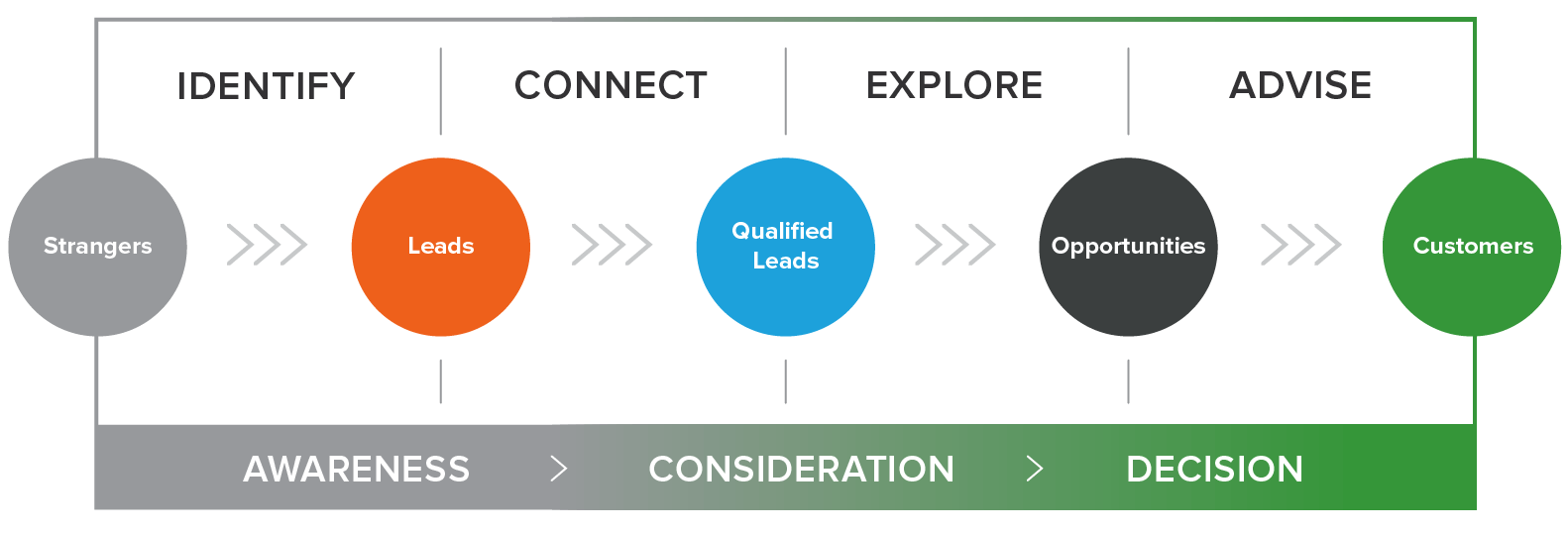
The inbound sales process is perfectly aligned with the buyer journey, supporting customers with timely additional information as they move from identifying a challenge or opportunity that they want to pursue to deciding which solution best meets their needs. The three main things you need to remember about inbound selling is that it is personalized, buyer-centric, and advisory.

The best way to tackle this is by following a four-part framework:

  1. Identify
  2. Connect
  3. Explore
  4. Advise

Inbound Marketing Sales Process

Image source: HubSpot

Identify. There are several ways how you can separate active buyers from the passive ones and identify potential leads. The easiest way to tell whether someone has entered the awareness stage is to look at your analytics data. If someone visited your website, read a blog post, filled out a form, opened an email, engaged with you on social media, or left any other kind of clue to suggest they are active in a buying journey, they move from the “Strangers” category to “Leads”.

Connect. Typically, this is the stage where the outbound calling would start. You obtain a list of leads and hammer them over the phone, regardless of whether your product is the right fit or not. Inbound salespeople, on the other hand, focus on leading with a personalized message that is aligned with the awareness stage of the buying journey. For example, based on the buyer persona that the prospect resembles most (e.g., HR director at an eCommerce company or CEO at a tech startup), the sales rep can offer a free consultation, an ebook or a whitepaper on the subject that the prospect is exploring. The goal here is to help the lead educate themselves about all the options available to them. If the buyer accepts the offer (downloads your ebook or books a consultation), they are considered a qualified lead.

Explore.  At this stage, the inbound salespeople are still unsure whether they can help the prospect, so they initiate exploratory conversations to develop additional trust and uncover buyer goals. That’s when you can pick up the phone and see what the lead is really worth. However, it’s important to understand that the purpose of a call here is to learn more about the prospect’s challenges to be able to determine if your product is a good fit. Through strategic questioning and smart value proposition, inbound sales people can guide prospects to draw their own conclusions about whether a product is the best solution for them. Once a match is established, a qualified lead becomes an opportunity.

Advise. During this stage, inbound sales reps put all the information they’ve gathered from speaking to buyers into context and tailor their offering to the unique situation of the buyer. The sales reps strive to showcase these opportunities how their product is uniquely positioned to address their problem and why it’s better than any other solutions out there. If a buyer finds the offer a perfect fit, they convert and become a customer.

Inbound marketing is so effective because it allows consumers to progress at a speed that they find comfortable and gives marketers and salespeople enough information about each prospect to make their buying experience more organic and enjoyable.  

Marketing qualified lead vs. Sales qualified lead

We have already established that a lead is a prospect who has explicitly expressed their interest in a product or service and is actively searching for more information. However, leads can also be categorized to indicate a specific stage in a sales cycle. As the names suggest, different teams can be responsible for handling different types of leads. So what’s the difference between marketing qualified leads (MQLs) and sales qualified leads (SQLs)?

Marketing qualified leads

Most of the inbound marketing leads are generated through marketing campaigns, but not all marketing leads are qualified. MQLs are easily identified based on their behavior on your site or towards your brand. Typically, MQLs are prospects that demonstrate a deep engagement with your product and send buying signals, but can not be described as fully fledged opportunities just yet. They are referred to as marketing qualified leads because they are more sales-ready than your usual leads and should be nurtured further by the marketing team before they can be handed over to sales. Marketers often design special trigger campaigns to identify MQLs. For example, someone downloading a buying guide, signing up for a free trial or requesting a demo is considered an MQL as it exhibits purchase intent.

Sales qualified leads

Sales qualified leads, or SQLs, are higher on the value chain than MQLs because they basically mean that the prospect has been vetted and accepted as a potential customer by the sales team. In theory, converting an MQL into an SQL should be quite easy — once a prospect raises their hand identifying themselves as a viable customer, everything that a sales team needs to do is nail the product demo and close the deal. However, every company defines an MQL differently, so the range of quality is very broad. Receiving a low-quality MQL is a huge pain for the sales team, as they’re unable to offer the kind of level of personalization that a buyer needs and often revert to autopilot, delivering a generic message that doesn’t clearly articulate how a product can solve the buyer’s problem or help achieve a goal.  

What you should do instead of cold calling

I’ve said it once and I’ll say it again — stop cold calling and start smart calling. There is no one-size-fits-all strategy in sales, especially when it comes to speaking to unqualified leads. Once your prospects enter the decision stage and are pinpointed as SQLs, be ready to engage them in a conversation and gently guide them to a buying decision.

Here’s how you can turn your SQLs into customers.

Discovery call

Not all discovery calls go well, but those that do almost always lead to a sale. A seemingly innocent part of a sales process, discovery calls are actually hard work and play a major role in the success of a sales rep.

The purpose of a discovery call is to delve deeper into a prospect’s situation, get a better understanding of their needs and goals, and learn more about their pain points. Only with this information at hand can a sales rep successfully position the product as the best solution and cement the deal.

One of the most important things to remember when scheduling a discovery call is to go into the conversation with a clear plan of the next steps. For example, if a sales rep establishes a product fit, he should strive to set up the next call or meeting right away, while he has the prospect on the phone. One of the most popular tactics used to nudge SQLs further down the sales funnel is demo calls.

Demo call

Specifically designed to demonstrate how a product will improve the prospect’s life and maybe even turn their struggles into strengths, demo calls is one of the best ways to convert the leads. The information gathered during a discovery call can be put to good use now, as the sales rep gets a chance to craft a highly tailored pitch addressing all the issues / goals discussed earlier.

By aligning buyer’s needs with the product offering and emphasizing relevant features and benefits, a sales rep has a much better chance at converting the lead into customer. As long as the lead doesn’t feel like they’re being “demoed”. At this point, it’s best to avoid industry jargon and empty sales messages and focus on leveraging the information you already have.

Cold calling is dead

And no-one is mourning.

Consumers are clearly embracing inbound marketing and prefer to be educated and nurtured (even if they know it’s all in the hopes of achieving a sale) than being subjected to irrelevant pitching.

What was once considered a ‘necessary evil’ that generated enough leads for businesses to compensate for a low morale of the sales team, is no longer the go-to tactic among successful sales rep. Knowing what buttons to push and how to approach every lead to build rapport and convert them into customers has given salespeople a renewed vigour for their craft. If you want to sink your teeth into this powerful sales process, stop cold calling and work your inbound leads instead.


As we’ve looked at the best practices of lead capturing quite recently, continuing with a topic about lead management seemed logical. So, this post is all about actions that one should take when they already have a solid amount of leads captured. It doesn’t really matter whether you use spreadsheets or a CRM to manage your sales process, tips shared in this article can be applied in any case.

But before diving into details, let’s point out why lead management is important:

  • It helps business to understand which tactics bring in the best leads.
    • Therefore, it allows to optimize your sales strategy.
  • It documents the full history of lead’s interactions and experiences with your company.
    • Therefore, your sales process becomes more personalized and consultative rather than generic and pushy.

Do you have a CRM that keeps you organised?

The most user-friendly CRM on the market. 14-day free trial.

Start Free Trial

Painless setup, no credit card required

Everything’s in Your Hands

Keeping things well-organized comes with the feeling that everything’s in your hands and you’re ready for whatever comes next. You know that unexpected guests won’t make you panic, you will find whatever you’re looking for in a tidy room and all that jazz. Likewise, keeping your sales leads organized can help you feel more confident and ready to qualify or convert them whenever necessary.

Smart Ways to Manage Sales Leads

Every person has their own way of keeping things organized, but here are some tips and tricks useful for everyone:

  • Customized fields is a good way to ensure that you track all the information necessary to match your business needs. The more information about a lead you have, the easier it will be to qualify and convert it. Teamgate users can set custom fields once they start using the CRM or later if they think that something useful is missing.
  • Tagging your sales leads allows to differentiate them from one another and categorize to conveniently perform actions, e.g. exporting, adding to a mailing list, etc. Moreover, tags can be useful when looking at reports. Teamgate does not only provide a number of default tags, custom tags are also supported to ensure that your business needs are satisfied.
  • Make sure your leads are not duplicated. Try keeping the list as clean as possible because this allows to focus your efforts on the right leads. To make de-duplicating easier and quicker, you may want to start using a CRM. Such systems automate the workflow; for example, Teamgate marks possible duplicates and allows users to instantly merge them.
  • Track status of your sales leads to make sure necessary actions are taken on the right time. By assigning leads status values, you can segment them based on previous sales activities, keep sales reps on the top of the sales funnel, prioritize the outreach, enable follow-ups, and nurture your leads.
  • If you follow these advices, sorting and filtering your leads will not only be easy but also beneficial. By sorting and filtering you are able to find necessary leads a lot quicker. Also, this helps to categorize leads and perform actions with multiple items at the time.

Finally, staying organized is nothing without planning. Make sure to plan your sales activities in advance and stay on schedule. A CRM may be of great use in this case, because most of the CRMs, including Teamgate, support event calendars and reminders. Well-organized sales leads and activity schedule is a good way to start lead nurturing.

Building Relationships Pays Off

Lead nurturing helps to raise company’s profile in the eyes of potential customers and build relationships with them at every stage of your sales funnel. Investing additional effort in lead nurturing definitely pays off. Therefore, we have put together a list of things to consider:

  1. Nurturing campaigns must offer value and create brand awareness. Build the relationships with potential customers by providing them with relevant and valuable content. From blog posts to videos, from infographics to e-books, and so on – create content that would attract, engage and serve your target audience.
  2. Focus on acquiring quality leads. Remember that quantity is less important, especially if you own a small business and have limited sales resources.
  3. Create targeted content, because if you understand who your audience are, you’re more likely to reach out to them. It’s time your marketing and sales teams put their efforts together because sales can identify what they look for in a lead and this is what marketing needs to create well-targeted content.
  4. Use multiple communication channels. People may prefer different ways to be contacted and, luckily, there are various channels available,  e.g. email, landing pages, web forms, ads, newsletters, social media, phone, etc. You can use them in combination, e.g. to retarget leads using different channels, or on their own, e.g. send newsletters to certain leads only.
  5. Communication has to be timely and two-way. Don’t miss a chance to interact with your leads, make sure to contact them as soon as possible and present the value proposition or next steps. Also, provide the opportunity to contact you, it can be via a live chat, social media, phone, or email.

Finally, consider automating the process of lead nurturing. Using a CRM helps saving time and ensures you don’t miss necessary follow-ups. For instance, instant automatic emails can make your prospects feel welcome and informed. Or, if you keep your leads database well-organized, you can easily communicate with particular categories by sending newsletters. For example, Teamgate supports an integration with the powerful email marketing platform MailChimp. You not only can automate the distribution of newsletters but also track the statistics without leaving the CRM.

Know What You’re Looking For

Sales Leads Management

Deal management can also be enhanced by lead scoring, which is used in conjunction with inbound marketing tactics to decide which of your leads are ready to convert. To make sure that lead scoring helps you close more deals, it is also important to follow the other tips in this article. Good organization of leads and careful nurturing contributes to getting the most out of lead scoring. This works vice versa too – lead scoring helps to categorize leads and identify those that need nurturing.

As lead scoring is not a particularly simple process, we made sure to describe it in detail. In a nutshell, here’s what you need to know about it:

  • Efforts of sales and marketing have to be joined to identify the ideal leads and decide on the lead score criteria.
  • Lead scoring is necessary if you have enough leads and want to focus the effort on the right ones.
  • To score your leads, you need lead capturing forms on your website to collect relevant data.
  • Capturing and funneling the data to CRM software is the most convenient way to score leads. Then, you can start tracking the interactions with your potential customers.

Improving the Never-ending Cycle

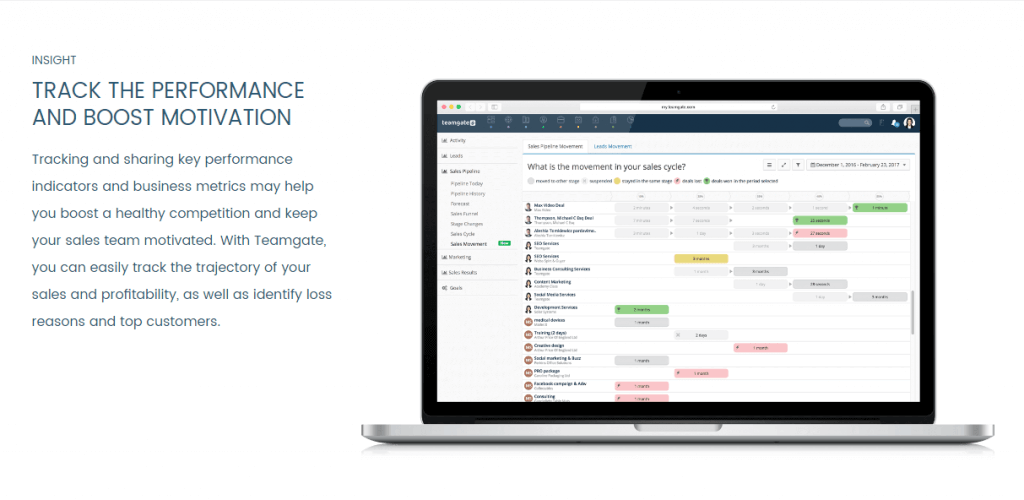
Tracking interactions of your leads allow you to collect and analyze information. This comes in handy with the processes of lead scoring and qualification. By tracking leads you get to know who they are, what impact nurturing has on them, and when it’s the best time to convert.

First and foremost, rather than striving to collect all the possible data, focus on the most relevant which would help to qualify and convert captured leads. The next step is data analysis, which, there’s no secret, is the most convenient when automated. Teamgate Insights offers a number of templates that facilitate the analysis. For example, you can:

  • Quickly identify where your leads come from.
  • Follow the trajectory of leads to get the big picture of your lead management process.
  • Audit leads history to understand how lead criteria are tied to the amount of opportunities and closed deals.
  • Analyze data to decide on lead score criteria, or revise it.

Manage Sales Leads Teamgate Insights

To sum up, tracking your leads and their management cycle helps to identify where optimizations can be made. We suggest to consider using a CRM to automate this process, because the time saved for the analysis can be invested in the optimization as lead management is a never-ending cycle.

Too Much Work? Think of Automating!

Long story short, you may want to keep your leads systematized to nurture, score, and track them easier. Building long-lasting relationships with potential customers start with lead nurturing and you should have a strategy for it. Moreover, you need to think of your ideal customer profile to be able to score your leads and get the most out of lead scoring, i.e. successfully qualify and convert the leads. Finally, tracking interactions and analyzing data is the key to success, because lead management is a continuous cycle, which has to be improved constantly. 

If you’d look back at the tips we’ve shared in this article, you would probably agree that automating some, or all, the processes might be a good idea. This may sound like a cliché statement, but using a CRM software would save time and help your team, to work more efficiently. Just think about it, you would be able to deal with different types of leads, categorize them and apply different nurturing strategies quicker. Also, you would have a chance to look at reports and decide on lead scoring criteria, identify necessary improvements, understand where your leads come from, and much more. You wouldn’t ever get lost in your spreadsheets again because CRMs help to keep everything well-organized and accessible.

By the way, what we’ve discussed here is only the beginning of a sales process. So, stay tuned for more articles about the next steps in the process and some extra tips and tricks.

Are you a person who thinks that fishing is boring? Or maybe you’re a fisherman who knows how exciting fishing can be? Either way, if you are someone who wants to know why lead capturing compares to fishing, just keep on reading.

Standing on a shore and waiting for a fish to bite can make you feel stupid, unless you have a strategy. If you come at the right time and prepared, if you know what kind of fish you want to catch, and if you have the necessary equipment, you are more likely to go home with a good catch. The same applies if you want to capture more sales leads.

In this article, we discuss how Smarketing can help you to come at the right time and prepared. Also, how important it is to know your target audience and how it can help to capture leads. Finally, we write about the necessary “equipment”, i.e. landing pages, web forms, mobile, and CRM, and share some useful tips and tricks.

Play Smart from the Very Beginning

You may have heard of Smarketing and think that it’s just another fancy buzzword. But we want to prove otherwise and show how exactly it can boost your sales. To begin with, Smarketing integrates sales and marketing processes to ensure a common approach. This can be done by frequent and direct communication between the two departments from the very start of your sales process.

Rule #1 – every marketing activity should be tied to a sales objective. As this article talks about lead capturing, let’s say your sales team has an objective to generate more leads. Here’s where Smarketing comes in. It is necessary to make sure that your sales team identifies what they look for in a lead and communicates this to the marketing team. This way marketers can create targeted campaigns and generate more qualified leads.

Leads Capturing Compares to Fishing

It’s worth noting that a CRM may come in handy in this process. With Teamgate, your marketing team is able to manage and track newsletter campaigns, thanks to the integration with MailChimp. Having additional information about leads can ensure that sales conversations become more helpful and consultative. Moreover, you can use Insights to analyze which of the sources are generating the most leads and what impact marketing campaigns have on deals. All in all, a common tool can facilitate the communication, which has to be frequent and direct. 

Know Your Prospects and Create Trust

To be one step closer to capturing more leads, you need to take care of your landing pages. Having a standalone page for each marketing campaign is important, but this page shouldn’t just be an in-your-face web form. There’s a lot to think about when designing an attractive landing page, so here are some tips & tricks to consider:

  • Think about your audience. Your landing pages, as well as your marketing campaigns, should be targeted to either prospects, leads, or existing customers. You may want to think what kind of content is relevant to each of these groups.
  • Give something back. Make it clear that in exchange to taking an action, e.g. filling out a form, you are going to repay. It can be digital content, a discount coupon, a longer trial, or something else, but whatever it is, it should be relevant to your target audience.
  • Content is the key. First, your landing page should have an informative headline, ideally, one that matches the CTA message. Second, the intro paragraph must be short but persuasive; listing benefits as bullet points might be a good idea because it’s easy to read. Lastly, you can add visual content to complement the overall design as well as repeat the visuals of your marketing campaign.
  • Add trust elements. Use elements which show involvement of other people, it can be a number of shares on social media, feedback from your customers, media mentions, etc.
  • Create a sense of urgency. People tend to stay on a page and take actions if there is a deadline or limitations set.
  • Look for inspiration and test. Spend some time to gather the best practices and try them yourself. And don’t forget that testing may lead you to the best result. For example, A/B testing can help to identify in what landing pages leads are more likely to convert. 

Get the Most by Asking for Just a Bit of Effort

Without doubt, web forms is a great way to capture leads. However, to gather enough data to be able to qualify leads, you need to create well-thought-out forms. Here are some useful insights which may help to get most out of the web forms.

Leads Generation

First, just like with landing pages, there is a lot to think about when creating a web form. It should draw the attention and be engaging, e.g. animated or visualized. Maybe it doesn’t even have to look like a form? Think of using attractive design elements, like images, sliders, etc.

Second, remember that shorter forms are more likely to convert, however longer forms may provide you with more information and capture better quality leads. Think about your ultimate goal and add only the relevant fields which are enough to convert and qualify leads.

Lastly, make sure to provide a Privacy Policy statement because people are concerned about the safety of their data. Like with landing pages, provide elements of trust and don’t forget to emphasize the value proposition

Integrate to Automate Leads Capturing

In addition, to be able to conveniently reuse your data, integrate web forms with a CRM. You can make special forms with the popular WordPress platform and add simple template web forms to all of the landing pages directly from Teamgate. Alternatively, look for a unique tool in the advanced technology platform Zapier. Finally, if you are looking for something more specific, a powerful API allows to integrate more systems which you need to capture sales leads. 

Leads Capturing Magnets

Image Source: ImpactBND

Be Where Your Prospects Are

It’s no secret that the use of mobile devices has increased over the past few years and is still growing. If you want to capture more leads, you should definitely think of strategies which would ensure you won’t miss the mobile users. Here are some things to consider if you want to be more mobile-friendly:

  • Establish your presence in mobile apps and consider having one yourself. Yahoo’s Flurry Analytics data shows that 90% of consumers’ time is spent in apps. And if you want to capture leads, you have to be where they are.
  • Make your landing pages and web forms mobile-friendly. A lot of user start their search using mobile devices, make sure that once they stumble upon your content, they can convert immediately.
  • Present clear CTA messages – this will help to prevent accident clicks and ensure better quality of your leads.

Finally, think about your sales team and allow them to capture leads wherever they are by using a CRM. Most of the CRMs, including Teamgate, have mobile apps which make it possible to enter new data at any time. 

Less Manual Work, More Focus on the Right Things

We have already discussed the importance of good quality landing pages and web forms, which help to capture more leads. If you take care of these, you’re half-way into automating your processes. Now you may just need a good CRM.

Automating your workflows allows to generate leads in a more convenient way. A CRM can help you save time – you won’t have to add new leads manually; instead, you will be able to import them from spreadsheets, various contact lists, or even your social media accounts. For example, Teamgate-LinkedIn Shuttle, a simple integration tool, allows to import a new lead from your LinkedIn profile in just a click. By the way, there are a number of proven ways to utilize LinkedIn to generate new and nurture your current sales leads.

Leads Capturing Lead Scoring

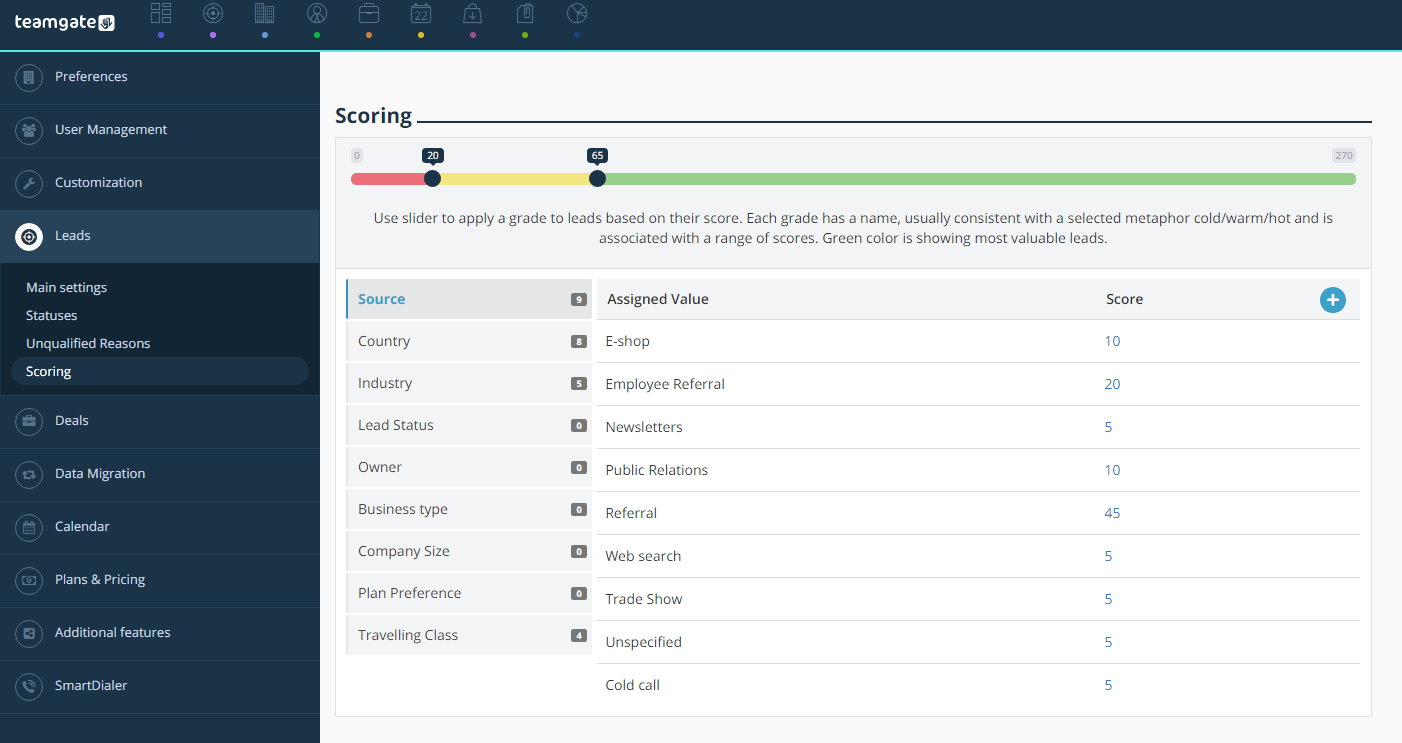
Image: Lead Scoring in Teamgate CRM

Talking about nurturing leads, automated workflows can facilitate it too. A CRM allows to track communication history, plan activities and tasks, push notification, automate lead scoring, and more. Put everything together and you can be sure that you won’t miss an opportunity to contact leads when they are most interested.

Do you have a CRM that keeps you organised?

The most user-friendly CRM on the market. 14-day free trial.

Start Free Trial

Painless setup, no credit card required

It Doesn’t End When You Catch a Fish

To sum up, if you want to be the one coming home with a good catch, you need to have a strategy and follow it. Marketing campaigns that are aligned with your sales team can be compared to a good bait. The more often you go fishing, the better you understand where to find the fish and how to catch it. Likewise, you need to understand who your leads are and how to capture them; lead scoring is a great for getting to know your leads. Make sure your landing pages and web forms are the “tasty bait” that ensures better conversion rates. Also, don’t forget that the waters are wide and you need to be where your fish are. Establish your presence on mobile; even though it may still be “a small river”, it’s getting filled with more and more prospects.

Finally, remember that you’re not the only fisherman standing on a shore. Maybe you need to get a better fishing rod, or even a boat? Always look for the right tools and improve your sales processes. Start with a CRM which can help you save time by automating lead generation process. The time saved is going to be a valuable asset when nurturing your leads.

If you run a small to medium-sized business, you’ve probably heard of lead scoring. We are sharing a set of lead scoring best practices which will help to improve sales conversion rates of your company. Lead scoring is not something you can set up overnight, but you can get started today with careful thought and evaluation of your customers. It may also be a good idea to invest in a lead scoring software to automate the process. We’ll discuss this in more detail, but let’s start from the beginning. 

How Does Lead Scoring Work

Lead scoring is a methodology used to help sales teams closing more leads. It’s a process that involves both marketing and sales, as each team must decide which leads should be qualified as the ideal ones. Lead scoring is used in conjunction with the inbound marketing tactics, such as building a social media following, blogging or offering free guides, to decide which of your leads are ready to convert.

Instead of pursuing every lead you have, you may rank your leads according to their value for your business and decide which ones to follow up with first. This allows you to prioritize and invest more of your energy into leads that matter most.

Do you have a CRM that keeps you organised?

The most user-friendly CRM on the market. 14-day free trial.

Start Free Trial

Painless setup, no credit card required

Why Would I need Lead Scoring?

It’s all about making your sales process more efficient. If your sales team doesn’t have enough leads yet, then lead scoring is not necessary. Instead, your marketing team needs to put more focus on the lead generation.

However, if there are more than enough leads, rather than following up on each one, simply assign values to your leads. This will help to decide which ones are ready to convert. Set the criteria, then use analytics and lead sign-up forms to collect the relevant data. As a result, you will be able to pursue only those leads that are most likely to convert.

Which Companies Need Lead Scoring?

lead scoring best practices for companies

Every organization is different and some may not require lead scoring at all. The best practice to follow is to identify whether your company is struggling with leads conversion or not. Companies that want to boost their sales conversions, and have more leads than they can pursue, most probably, need lead scoring. 

Setting Up Your Lead Capturing Forms

In order to score your leads, you have to know who they are. So, to start tracking your leads you would need a lead capturing form. This is a form on your website which offers a way for customers to sign up to hear more about you and your products. This data is then captured and funneled into your lead scoring or CRM (customer relationship management) software, where you can begin tracking interactions of your potential customers.

Optimizing Your Lead Capturing Form

Put forms on your landing pages where your prospects can see it. This could be combined as a gateway to some content that your target customers will be interested in engaging with, such as an ebook or a PDF that they can download. In exchange for this content, customers should provide their name, email address and a few details about themselves.

Note: If you ask your leads to fill in too many fields, you may fail to capture them as people may not want to sign up. If you ask for too few details, the quality of your lead data can suffer as well. Make sure you ask for relevant details about your customers by linking the fields you include with your lead score criteria, which we’ll go into next.

Deciding Upon Your Lead Score Criteria

lead scoring best practices criteria

You can find out what sort of characteristics your customers normally possess by analyzing your current customer base. They won’t be identical to the future prospects but they are your best source of inspiration. You can also work with your sales and marketing teams to create descriptions of your ideal customers. It could be that they are a CEO of a mid-sized tech company, or a Marketing Manager of a small health food supplier. You can have more than one type of ideal customer.

There are a number of factors you need to take into account when deciding upon your criteria, but the best practice is to follow a points-based system. You need a) demographic information and b) behavioral intelligence for your leads. First, you will be focusing on the characteristics of your ideal customers who are worth to be pursued as leads. Second, you’ll be looking at how these customers are behaving to see who is ready to be contacted by your sales team.

a) Demographic Information

After you have decided upon the characteristics of your ideal customers, you can start to set up your lead score by assigning multiple values to criteria, such as job title, industry, company size, country, marketing source, links with competitors, and more. Demographic information about a lead can identify personal information, such as job title, company information (e.g. number of employees), relationship to your organization (e.g. past customer), and others.

When considering which demographic information to choose to evaluate your leads, you may want to include some basic criteria which must be met for them to qualify or disqualify as a lead. For example, you may instantly disqualify someone if they are a student.

b) Behavioral Intelligence

After you have decided upon the essential criteria for determining your lead score, include some key behaviors for your leads to engage in, these will also contribute to their score. This is where it is really important to have the appropriate software to track the behavior of your leads. For example, if you send them an email, you need to track whether they’ve received it, opened and clicked on it. Or, if you post some content on social media, you want to know whether they saw it, how long they spent on the page, if they shared it on social media, and so on. You can also decide on behaviors that deserve a negative score, such as if they unsubscribe from your mailing list.

Identifying Leads to Pursue

You need to set up a points-based scoring system when evaluating your lead criteria for each potential customer, typically a scale between 1 and 100. With this in mind, score your leads based on how closely they match your ideal customer profile, based on the demographic information and behavioral intelligence.

lead scoring best practices leads to pursue

For instance, if one of your leads is a CEO of a mid-sized tech company, but they haven’t demonstrated any engagement behaviors, then your lead might score around 50 points. A similar company that fits the demographic criteria and has somewhat engaged with your company can be awarded 75 points, which is a trigger to your sales team to contact them.

There is a number of systems you can use to score how close your leads are to converting, ranging from the letters A, B, C and D, to Hot, Warm or Cold, or in numbers from 1 to 4. Then you may assign each label a range on your scale. Pick a system that feels most natural to your company and easiest to work with.

Other Purposes of Lead Scoring

In your process of scoring leads, some potential customers may not quite qualify, but you can identify and target the leads which need nurturing. If you have the right software, particular lead scores can trigger automation. For example, once a lead passes a certain score, an email is triggered to invite your lead for a demo of your product.

You can also use lead scoring to get to know your potential customers better. Paying so much attention to your target market is always great because you may uncover surprising insights. Test different marketing messaging with your leads to see which ones work best, and optimize your marketing strategy. 

Choosing Your Lead Management Software

Having the right software is key to success with lead scoring. If you lack the capabilities to properly analyze your leads, you won’t get very far. The type of lead scoring software that you need will depend on your company. Compare different options based on price, functionality and size with reviews from trusted sites such as Capterra or Software Advice

lead scoring best practices choosing the right software

Teamgate offers lead scoring as a part of our cloud-based intelligent Sales CRM for small and mid-size teams. With its user-friendly interface, Teamgate is a great sales stack for today’s business that helps you convert more leads. 

The software is changing all the time and becoming more sophisticated, with some solutions beginning to use AI and bots to engage leads. For example, software can determine if your lead is highly engaged or a student doing research. A virtual sales assistant using AI technology to email the leads can interpret their responses and alert your sales team. 

Smarten Up Your Teamwork

Know who your leads are, track when they’re ready to buy, and make your sales team contact them. Lead scoring streamlines this process so you’re only focusing on high-quality leads who are most ready to convert. The key is capturing your data with the right software, optimizing your website with properly prepared content and forms, and integrating your software solutions so your leads don’t fall through the cracks. It is a team effort, but totally worth it for the boost you’ll see in your sales conversions.

If hot leads aren’t converting, then you might need to take a look at the products and services you’re offering. Check whether they’re suitable for your target market and if your pricing is appropriate. Don’t get discouraged, but remember that analyzing your leads and scoring them is the beginning of streamlining your sales process. 

Setting up a “call center”, even if it’s just a small in-office operation, is a pain in the you know what. Even the best traditional phone systems are  clunky and hard to use. Tangled cords, managing multiple busy lines, dropped calls, a traditional dialing system produces more headaches than results. We don’t roll that way, sorry. That’s too 1990’s for us.

For inbound marketing and support teams, which often have a lot on their plate already, making and receiving phone calls can be a real drag. Calls -lots and lots of calls- are a must for these teams, but each team member is going to have a lot of other things that need to get done. Fortunately, the right dialing system can cut down on time wasted, as well as hassle, by making it easy to make and manage phone calls.

With the right automatic dialer, you get to enjoy the convenience of calling right from your web browser. With an auto dialer, there’s no need for an outside service provider, you can make your calls right through the web. And let’s not kid ourselves, most people these days are more familiar with web and smartphone apps  than old school push button phones and all their blinky little lights.

Do you have a CRM that keeps you organised?

The most user-friendly CRM on the market. 14-day free trial.

Start Free Trial

Painless setup, no credit card required

As a result, with a smart automatic dialer system you’ll spend more time being productive, and less time pulling your hair out, cursing at your clunky traditional phone system, smashing push buttons.

Of course, making a simple phone call through the web isn’t so difficult these days. What’s more of a challenge is finding a great platform that offers the value added services needed to really increase your company’s inbound and outbound performance.

Finding the right autodialer isn’t quite as hard as finding a needle in a haystack, but it’s close.  An automatic dialer itself isn’t enough, but when combined with a smart CRM system, you’ll be able to easily manage relationships.

With SmartDialer, you can use a smart management system that enables not only phone calls, but also makes it easy to record, manage, and track your efforts. With our automatic dialer, managing your calls isn’t “rocket science” precisely because we focused on making it easy. You don’t have to waste precious seconds hunting down names and numbers, and then dialing them. Everything can be managed with a few simple clicks.

In fact, SmartDialer is integrated directly into TeamGate’s customer relationship management (CRM) platform. This means you can plug your phone efforts directly into your overall relationship management efforts. This creates a more holistic and complete relationship management process. We hate using buzz words, but in this case it’s warranted: our autodialer will create synergy within your customer relationship management process.

Yup. We said it. Synergy. And our automatic dialer system will actually deliver it unlike all those PowerPoints cranked out by consulting firms. This results in increased productivity. Both sales and support teams are short on time. There are always more clients to call, or more issues to resolve. By increasing productivity, and cutting down on wasted time, your employees will be able to focus on more important tasks.

Using Recordings to Improve Team Performance

Recording phone calls is especially important for sales teams, as well as support and other business teams. Luckily, the SmartDialer autodialer makes that easy. You can record phone calls quickly, securely and with minimal effort. This creates a permanent record of your calls.

Worried about big brother? You’ll be in charge of your recordings. Hypothetically, you could set up some type of Orwellian state in the office, but we recommend using our autodialer for staff training and producing results.

You can use these recorded conversations to improve team performance. Did a sales team land a big sale with some clever tactics? Hand out some high-fives, review those tactics, digest them, and then share with the team. Is a particular issue with your software or product popping up frequently? Lots of hair getting pulled out on the support team? When a support team member finds that great solution for their customer, again you can use the recording to digest. Analyze and share.

When it comes to sales and support, knowledge is power. Simply put, not everyone on your team will know how to handle every single conversation or issue.  Of course, some team members are going to excel. Learn from them.

Besides recording conversations, you can also record scripts. Are you a sales closing Casanova that can sweep customers right off their feet? Rock it lover boy (girl?)! And with our automatic dialer,  you can record a script to execute those savvy lines automatically. This will save time, and ensure consistency.

Conclusion: In Browser Dialing Produces Efficiency

Seemingly “simple” features like SmartDialer autodialer can provide a huge number of benefits. Efficiency and productivity often isn’t achieved through sweeping changes, but instead smart innovations that save seconds here, and provide opportunities there.  That’s the SmartDialer auto dialing system.

No, an automatic dialer won’t provide you with any epiphany on its own. But SmartDialer will free up time and produce better results. What are you going to do with that extra time and profits? That’s up to you. Call more clients, meditate in a Zen garden, solve more support tickets, take a trip to Monte Carlo, whatever.

Calls are important both for sales and support teams, as well as others. Yet phones themselves are growing obsolete. By using an integrated, browser based automatic dialer that’s connected to your CRM, you can cut down on time spent making calls, and thus can gather more data and focus on what really counts: your customers.

2016 has been an incredible year for Teamgate with a wide range of the fresh market opportunities, significant investment and new experiences. Since the learning from industry experts and networking is one of the most important leverages for doing business, in this blog post we look back over all attended events in Europe and put together a list of the TOP hottest startup conferences this year. Also, as there are so many top-quality conferences and events for startups and tech companies, the interviews with few of the organizers as well as many lessons learned and other important details are included, too! 

GOOGLE CAMPUS WARSAW

Warsaw, Poland, January 7

2017 has already started with Google Campus Warsaw. Despite the fact, this year’s campus is already over, we highly recommend to save the date for the next year’s event.

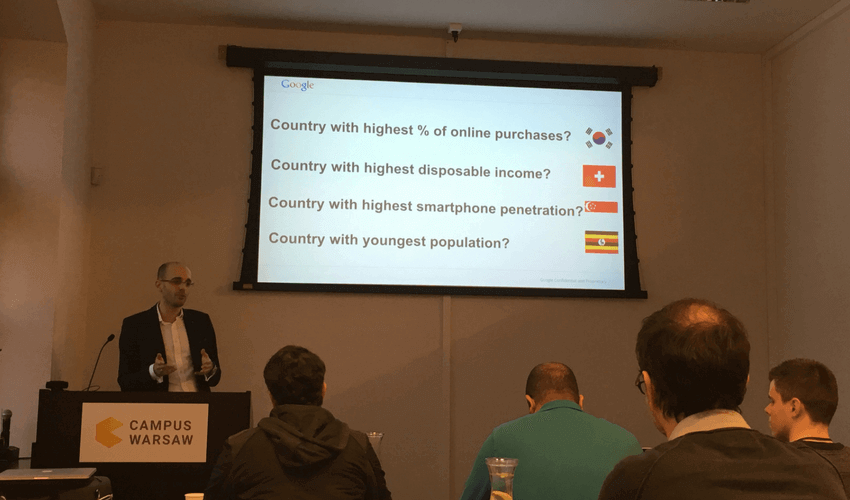
We have been chosen to participate in this weekly campus organized by Google. It was a week-long session with pitching workshops, design thinking training, theoretical and practical sessions. Everything was so impressive because the event featured speakers from Google and Facebook.

Startup Events Campus Warsaw Teamgate

Image source: ITKeyMedia

We have the training sessions held by experts such as Marcus Corah, Rafal Kudriawcew, Wolfgang Oberauer and others industry’s stars. You know, it is super cool to work together with such professionals and be inspired. Moreover, this event not only gives an opportunity to learn but also brought large groups of entrepreneurs with the same interests together in order to create a network.

Lessons learned:

As the event has been planned so precisely almost without any free time, we really recommend to participate there for a whole team (or at least 3-5 member of the team) in order to reach the maximum.

Campus Warsaw 2016 Presentation

Image source: Teamgate

Therefore, as we came three of us, we were able to attend as many events as we would like to. For example, one team member was dedicated to networking, another one to pitching and presentations and the third one to learn and improve his own competencies in order to share the knowledge with the whole team later on. Actually talking about this kind of events, it is always worth to remember that know-how and priceless experience which have to be absorbed is simply “walking around”, so you just need to grab the opportunity, meet people and talk-talk-talk.

[optin-monster-shortcode id=”kandoug21absj0ox”]

Finally, we all know that sometimes you are not able to spend as much time with your colleagues as you would like to, so these events are a great opportunity to discuss with your co-workers about future plans or just drink a couple of beers. So, one more lesson learned is to use this kind of trips for teambuilding, too.

Worth to know:

Google Campus Warsaw is located in the Praga district of Warsaw, in a place where 118 years ago the idea of the Polish “Koneser” distillery was born. The whole district as a former industrial area is impressive especially to unexpectedly found the modern office space inside these factory buildings.

Startup Events Google Campus Warsaw Teamgate Imagery

Image Source: Liebrecht&wood

By the way, as Google Campus Warsaw is a part of global Google Campus community, you can easily choose the most suitable location for you, whether it is Warsaw, London, Madrid, Tel Aviv, Seoul or even São Paulo in Brazil.

SALES INNOVATION EXPO

London, UK, March 28-29

It is our next big event taking place on March. Sales Innovation Expo is one of the largest and most important events gathered sales experts around the Europe.

Sales Innovation Expo 2016

Image Source: Sales Innovation Expo

Edward Lawrence, this conference’s director, says that the event is a perfect place for startups giving an access to the most recent market intelligence and research as well as the latest tools available on the market today.

“If you are serious about growing your business, there will be no better platform in the UK to network and be educated by like-minded business people”, Edward Lawrence says.

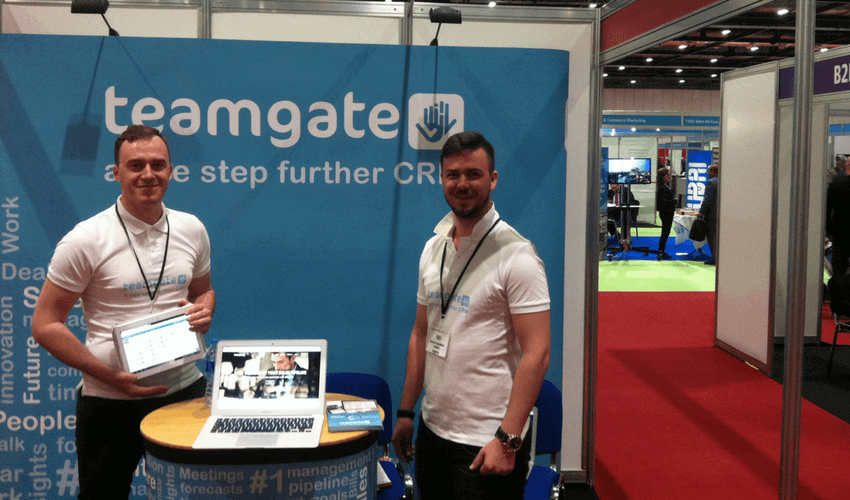
With 70 of the industry’s well-know companies exhibiting, 95 expert speakers, and 10.000 visitors per day, we have participated in last year’s event, too. Actually, we would say that it was our first such a large-scale international exhibition.

We had a display booth and a good place where to set it up. But unfortunately, we didn’t do our homework well enough. We simply did not schedule business meetings before the conference begins, so we just had to catch our prospects and partners directly at the venue. Of course, it wasn’t so effective as it could be.

In any case, this event allowed us to successfully close the several deals as well as better understand the UK market. Indeed, it was the largest foundation in the development of a new company’s branch office in the UK.

Lessons learned:

The first one lesson as we have already mentioned is to do your homework well by arranging as many business meetings as possible in advance.

Startup Events Sales Innovation Expo 2016 Teamgate

Image source: Teamgate

Despite the fact, this kind of exhibition can be the opportunity of a lifetime, let’s face the fact that usually startups don’t have the big budgets while market leaders do. So, it’s worth to be smart enough about your budget. For example, consider the chance to order booth directly in the UK instead of carrying it out from your country. That can allow you to spend approximately 7 times less. Actually, it’s a lot! Furthermore, we could also recommend to order all the necessary furniture (table, chairs, etc.) on site. On the basis of our calculations, it is considerably cheaper, too. Finally, remember that in this game isn’t always about who spend the biggest amount of money but rather who does their homework better by being more prepared.

Worth to know:

All these exhibitors, seminars and networking opportunities are completely free to attend. You are able to book your tickets here

PIRATE SUMMIT

Cologne, Germany, September 6-7

This is one of the craziest events where we have participated yet. Pirate Summit, often called Europe’s “Burning Man”, is an event designed for early-stage startup founders.

The aim of the two-day event is to gather around 1.000+ participants including 650 startup founders, 200 leading investors, 150 corporate and media executives. During this event, the startup has every chance to meet and talk with representatives from the biggest European venture capitals funds, well-know investors and other startup-world-stars. Moreover, pirate theme, startups’ “Walk The Plank” pitch competition, and passionate tech savvy crowd create an unlikely atmosphere. 

Startup Events Pirate Summit 2016

Image Source: Pirate Summit

It’s funny to remember how we have been shocked after we realized what kind of crazy event it is (and we are not even talking about its after-party yet). Actually, we were ready to expand our network by pitching to investors and meeting them face to face, but surprisingly, it was the opposite! Venture capitals funds, angels, and other investors presented themselves in front of a massive startups’ audience by trying to convince them to cooperate. That feeling was awesome!

Also, one of the most pleasant parts of the summit is a chance to meet all the important people without wearing a suit and talk with them about business in an informal and friendly way. It inspired us a lot and turned to continue our work with even bigger enthusiasm!

When we talked with Melanie Malurday, the representative of Pirate Summit, she said that this year they plan to focus even more on networking opportunities.

“Pirate Summit strives to connect early-stage founders and investors to create meaningful connections. All participants are handpicked from thousands of applications or personally invited to offer networking on the highest possible level of influence and quality. We would like to make sure that every participant leaves the Pirate Summit with new meaningful connections and two fantastic days to look back at”. In addition, according to her, it is expecting to welcome about 1.200 participants this year.

Lessons learned:

As a startup, you have to be always prepared for anything. At this case, to play by the new rules of the game – instead of pitching by ourselves, listen to the pitches from investors. Believe us, it can easily break your balance – at least for a while.

Also, one of our suggestions is to take part in summit’s after-party. Despite the fact, that this event is very informal, an amazing party lets you establish the even more personal relationship. As organizers say “you will meet like-minded people and celebrate entrepreneurship with your next potential business partner, investor or friend.”

Startup Events Pirate Summit 2016 Germany

Image Source: Pirate Summit

Besides, you simply have a chance to party hard with your colleagues, too. After all, “work hard, play harder” we would say. 

Startup Events Pirate Summit 2016 Teamgate

Image source: Teamgate

By the way, be ready to spend an extra time by trying to find the most suitable and cost-effective plan to reach Cologne.

Worth to know:

The event takes place in Odonien, the wicked and legendary republic of pirates, dinosaurs, and other creatures. As the organizers want to skip the formalities, during this event it is not desirable to wear a suit. “Please leave your fancy suits at home. We would like to dress as pirates as possible instead”, organizers note. By the way, it’s not a joke, because all the suit-guys have been kind of mocked in order to force them to change their fancy clothes.

Also, please keep in mind that the mobile app will be created this year, too. “We are working on our own networking app for the Pirate Summit, which will allow us to adjust the networking process to the specific needs of our participants. The goal is to create even more meaningful connections”, says Melanie Malurday. So, it is definitely worth to add this event to your list.

More information about the summit, please find here.

LATITUDE 59

Tallinn, Estonia, May 25-26

Estonia is known for Skype, for its e-Residency and digital society in general. Therefore, Latitude 59 is the flagship startup and tech event of the world’s first digital society. Today the event attracts more than 1.500 participants including startups, entrepreneurs, and investors. 

Startup Events Latitude59

Image Source: Latitude59

It was amazing to listen to an inspiring speech from the Minister of Entrepreneurship and Information Technology (just look, Estonians even have the Minister of Entrepreneurship and Information Technology!). Also, we were no less impressed by listening the Prime Minister of Estonia and his ability to talk with startups in our language.

The strong synergy between startup business and the government was seen clearly. Overall, it was totally obvious that Estonia has a clear picture to became a part of a global startup ecosystem.

Startup Events Latitude59 Teamgate

Image Source: Latitude59

Lessons learned:

Let’s not confuse ourselves by thinking about Latitude 59 as a small regional event organized only for Estonians, Latvians, Lithuanians, and in the best scenario for Finns, too. It’s a quite big international event with participants not only from the Baltic region but from Western Europe, Russia, US, and Asia, too. So, we advise you to consider it and be prepared for the event well enough.

SILICON VALLEY OPEN DOORS (SVOD)

State of California, US, May 24, 2017

Despite the fact, 2017 event has been located to its homeland, Silicon Valley Open Doors (SVOD Europe) was one of the most informative events for startups in Europe. The key purpose is to gather only 25 the hottest startups around the Europe in order to pitch their products and services to prospective investors. Moreover, the program also includes speeches from a brilliant lineup of guests from Silicon Valley.

Startup Events Google SVOD Teamgate

Image source: Teamgate

We definitely say this event acts as an alternative to traditional, crowded conferences. It is a quite intimate and cozy meetup held at Google’s European Headquarters in Dublin, Ireland. Therefore, we had an opportunity to look around in Google office as well as talk and consult with various mega-company’s experts. The chance to talk with Google employees does not appear every day, so we learned a lot even during this short period of time.

Furthermore, as we use many Google products, it was a great chance to discover the new solutions which could be used by our employees to solve their daily task.

Lessons learned:

Networking is one of the most important things you do in order to help boost your business. Therefore, during this kind of event, the initiative and intention to meet and talk with high-profile investors, founders, CEOs, and other leaders from Silicon Valley should come from your side. So, don’t be afraid to start first!

Startupmn Eventsm Silicon Valley Open Doors Dublin

Image source: Teamgate

Also, we would like to advise to use your free time as efficiently as possible. If you just have a free time, don’t forget to plan the meetings with your clients and partners around the city. From our point of view, the startup have to always demonstrate the initiative and take actions first. Consequently, as we had a little time, we contacted our partners Zendesk and Intercom in order to visit their offices and meet the representatives in person. Believe us, it was such a great experience and a nice example how easily the network can be built.

Worth to know:

As we already mentioned, this year SVOD came back to the US. Nevertheless, perhaps it is even more important (and definitely more catchy!) to plan participation in the upcoming event, too. Here you can find more useful information.  

Do you have a CRM that keeps you organised?

The most user-friendly CRM on the market. 14-day free trial.

Start Free Trial

Painless setup, no credit card required

LEARN, MEET, NETWORK, AND SHARE

If you’re still asking why startups should attend tech conferences, the answers have been presented earlier. In addition, we can just add these magic words: learn, meet, network, and share.

Besides, the various kind of information is so easily accessible nowadays, the conferences and meetups are an ideal place to meet the potential investors and partners in person by pitching them face to face. Moreover, as we have already mentioned, the greatest experience and know-how come together with people. So, participating in exhibitions, conferences and summits can be a really pleasant, quality and fast way to grasp the pulse of the market. After all, we all know that the best solutions and deals are still discovered offline.

Have we included your favorite? If not, feel free to provide additional input in the comment section below.