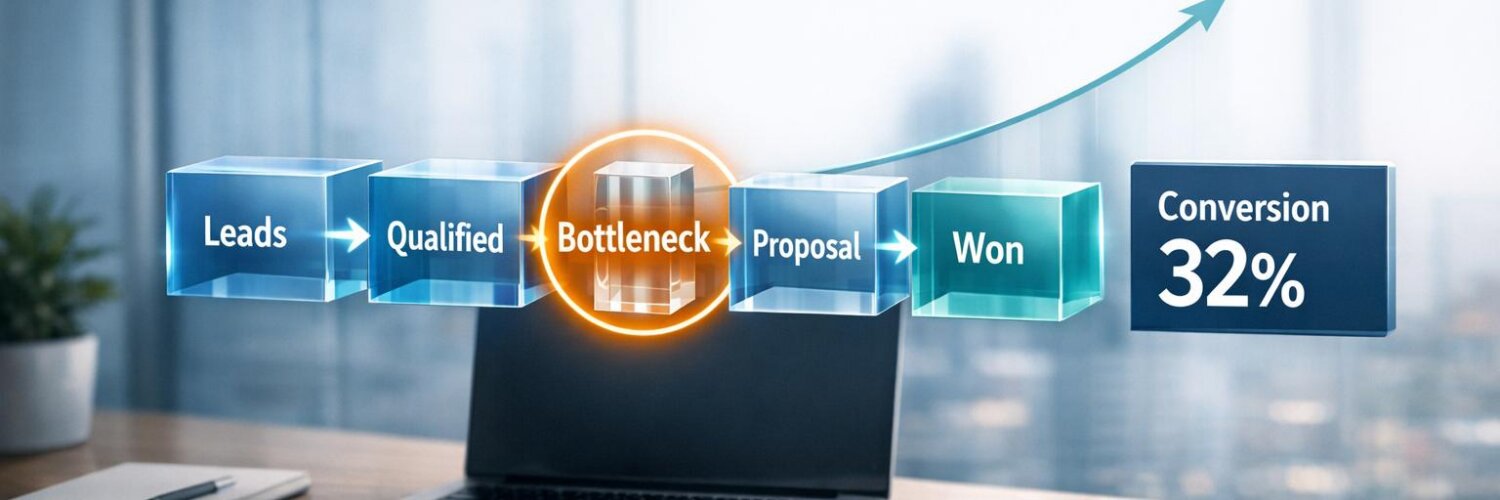

Sales data is only useful if it drives action. Many teams collect endless metrics but struggle to turn them into clear next steps, leading to stalled deals, missed follow-ups, and unreliable forecasts. By focusing on actionable metrics, structured tracking, and targeted coaching, you can transform your sales process into a system that consistently delivers results.
Key Takeaways:
- Track core metrics like pipeline velocity, win rates, and deal stage conversions to identify bottlenecks and opportunities.
- Use CRM automation to reduce admin work and ensure accurate, real-time data.
- Monitor pipeline health by spotting stalled deals, overdue tasks, and stage movement delays.
- Forecast accurately by combining historical trends with real-time pipeline insights.
- Tailor coaching to individual reps based on activity levels, conversion rates, and deal management.
Teamgate helps sales teams achieve clarity, structure, and reliable pipeline insights – without the complexity of bloated CRM systems. With tools to flag stalled deals, automate follow-ups, and track next steps, it ensures your sales process is disciplined and your data trustworthy.
Let’s dive into how to make sales data work for you.
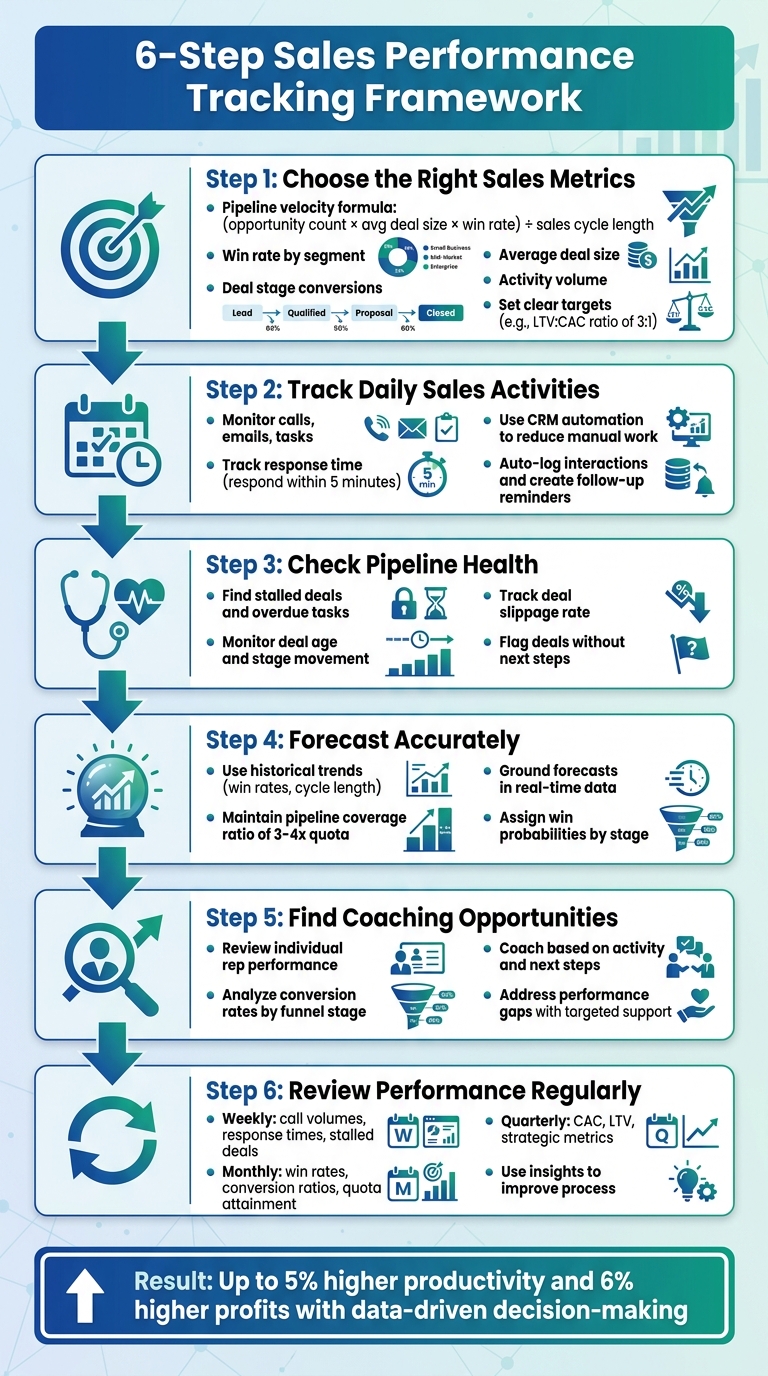
6-Step Sales Performance Tracking Framework for Data-Driven Revenue Growth
Step 1: Choose the Right Sales Metrics to Track
Select Your Core Metrics
To measure sales performance effectively, focus on metrics that truly impact revenue rather than getting distracted by vanity data. Here are some key metrics to prioritize:
- Pipeline velocity: This measures how quickly revenue is generated using the formula:
(opportunity count × average deal size × win rate) ÷ sales cycle length.
It provides a clear view of how efficiently your pipeline converts opportunities into revenue. - Win rate: This is the percentage of opportunities that close successfully. Tracking this metric both overall and by segment (such as by rep, industry, or lead source) can reveal patterns in performance.
- Deal stage conversions: These help identify bottlenecks. For instance, if conversions drop significantly between two stages, it signals an area in your process that needs attention.
- Average deal size: This indicates the typical revenue brought in per closed deal.
- Activity volume: This includes metrics such as calls made, emails sent, and meetings booked, providing insight into the raw effort driving your pipeline.
Metrics can be divided into two categories:
- Leading indicators: Predict future outcomes (e.g., activity volume, lead response time). For example, responding to a lead within five minutes can dramatically improve conversion chances.
- Lagging indicators: Measure past performance (e.g., total revenue, quota attainment).
Once you’ve identified the metrics that matter most, set specific targets to drive meaningful action.
Set Clear Targets for Each Metric
Metrics without targets are just numbers. To make them actionable, define clear benchmarks that align with your goals. For instance, set precise objectives for win rates, sales cycle lengths, or the number of qualified meetings. This ensures your team is focused and accountable.
“Setting clearly defined, reasonable expectations and metrics for your team helps everyone start on the same page and lays a strong foundation you can build upon.” – Robert Morton, Team Lead, Sales, Pipedrive
Defined targets allow you to act quickly when needed. For example, if a team member’s activity levels fall below expectations early in the cycle, you can address the issue immediately rather than waiting until it’s too late. For subscription-based models, tracking metrics like a Magic Number of 0.75 or higher can help assess the efficiency of sales and marketing efforts. Similarly, maintaining a Customer Lifetime Value to Customer Acquisition Cost ratio of 3:1 or higher is crucial for long-term success, and tools like Baremetrics can help you monitor these subscription metrics and revenue recovery in real time.
Involve your team in setting these benchmarks. When sales reps help define their own goals, they’re more motivated to achieve them and can better anticipate potential challenges. Balance short-term targets (e.g., daily or weekly activities) with long-term objectives (e.g., quarterly quota attainment) to keep your team productive without overwhelming them. Tailor metrics to individual roles – for instance:
- Measure SDRs based on outbound activity and lead conversion rates for the qualified meetings they generate.
- Evaluate account executives on pipeline development and closed revenue.
Setting clear, role-specific goals ensures everyone knows what’s expected and how their performance contributes to the bigger picture.
sbb-itb-5772723
I tracked these 7 sales metrics and 2xed our sales!
Step 2: Track Daily Sales Activities
Tracking daily sales activities is essential for turning your core metrics into actionable insights. Think of it as the heartbeat of your sales engine – it reveals whether your pipeline is flowing smoothly or stalling before deals even reach later stages. Without this daily visibility, coaching efforts might miss the mark, and potential bottlenecks in your pipeline could go unnoticed.
Track Calls, Emails, and Tasks
Pay close attention to the volume and quality of calls, emails, meetings, and completed tasks. These activities act as leading indicators of future pipeline health, signaling potential growth long before it shows up in closed deals.
- Outreach volume and engagement depth: It’s not just about making calls or sending emails – it’s about the quality of those interactions. For example, a rep making 50 calls with minimal talk time may need help refining their messaging, while another making 30 calls with deeper conversations is likely progressing deals.
- Follow-up persistence: Deals rarely close on the first attempt. Tracking how consistently reps follow up can highlight who’s keeping opportunities alive and who’s letting them cool off.
- Responsiveness: Speed matters. Reps should respond to leads within five minutes; after that, conversion rates drop dramatically. Monitoring response times ensures your team acts quickly when new opportunities arise.
Use CRM Automation to Reduce Manual Work
Manual data entry can drain productivity and lead to incomplete or inaccurate data. Reps often spend more time updating fields than selling, which hurts adoption and makes reports unreliable. CRM automation eliminates this issue by capturing activity data – calls, emails, meetings – automatically. This ensures your tracking is both accurate and effortless. Clean, automated tracking provides the high-quality Data for AI needed to generate accurate lead scores and predictive insights that drive smarter sales decisions.
With Teamgate, reps can focus on selling while the system handles the admin work. Integration with Gmail and Outlook automatically logs email interactions, linking them to the right deals. Built-in calling through Twilio records call outcomes seamlessly. This automation reduces busywork, allowing reps to concentrate on what matters: moving deals forward.
Additionally, automated task reminders ensure follow-ups are timely and consistent. For example, when a deal advances to a new stage, Teamgate can create a follow-up task or send a reminder to ensure no opportunities slip through the cracks. Alerts for new leads also help reps respond within that critical five-minute window.
This automated approach not only saves time but also provides managers with real-time visibility into team activities. Reps won’t feel micromanaged because the system works in the background, supporting their efforts instead of adding extra work. When the CRM becomes a tool that helps reps sell rather than a chore, adoption happens naturally, and the data you rely on for coaching and forecasting becomes reliable. Teamgate ensures your sales process stays disciplined, insightful, and easy to use.
Step 3: Check Pipeline Health and Find Bottlenecks
Once you’ve got a handle on daily activities, it’s time to ensure your sales pipeline management is moving forward. Deals should progress steadily, tasks need to be completed on schedule, and opportunities shouldn’t sit idle. When these processes falter, revenue can slip away unnoticed. Here’s how to spot and address the warning signs of a struggling pipeline.
Find Stalled Deals and Overdue Tasks
Stalled deals can quietly drain your pipeline. They might look active, but if no action is being taken – no calls, emails, or meetings – they’re at risk of slipping through the cracks. One of the earliest red flags is overdue tasks. If a deal has gone days or even weeks without activity, it’s likely in trouble, even if it hasn’t been marked as lost yet.
Another key metric to watch is your deal slippage rate – the percentage of deals expected to close but get pushed into the next month. A high slippage rate points to unreliable forecasts and deeper pipeline issues. To tackle this, use your CRM’s automated triggers to flag deals that haven’t seen activity for a set number of days or have been stuck in a stage longer than usual. This helps you catch and address neglected opportunities before they deteriorate.
With Teamgate, every opportunity requires a clear next step. If a deal doesn’t have a scheduled task or follow-up, it’s flagged immediately. Managers can run regular reviews of stalled deals, assigning actions to reignite momentum and prevent deals from going cold due to inaction or miscommunication.
Monitor Deal Age and Stage Movement
The age of a deal can tell you a lot about its health. If deals are lingering in your pipeline far beyond your typical sales cycle, it’s a sign they might be decaying. Tracking how quickly deals move through each stage can also pinpoint where bottlenecks occur. For instance, if deals often stall at the proposal stage, it might be due to pricing concerns, changes in key decision-makers, or budget constraints.
To dig deeper, monitor how long deals spend in each stage compared to your historical averages. For example, if most deals move from demo to proposal in seven days but some have been stuck there for three weeks, those cases need immediate attention. Combine this data with feedback from your sales reps to uncover the root causes of delays and adjust your approach accordingly.
Teamgate makes it easy to track deal age and next-step coverage through real-time dashboards. Managers can use this data to coach their teams based on hard evidence rather than guesswork. By identifying deals that lack a next action or are lingering too long in a stage, you can step in before they go stale. This systematic approach helps keep your pipeline healthy and protects your revenue from the hidden costs of inaction.
Step 4: Use Data to Forecast More Accurately
Relying on intuition for sales forecasting often leads to inflated pipelines that fail to deliver. To create reliable forecasts, use a combination of historical data and real-time insights from your pipeline. This method shifts forecasting from guesswork to a structured process driven by actual sales performance. When you combine past trends with live data, your forecasts become more realistic and actionable.
Learn from Historical Trends
Historical data provides a baseline for understanding your team’s typical performance, and is how the best fintech marketing agencies measure current marketing and sales campaigns. Metrics like average win rates, sales cycle lengths, and deal sizes help set realistic expectations for future outcomes. For instance, if your team closes deals at a 25% win rate with an average cycle of 45 days, you can calculate the pipeline coverage needed to meet your next-quarter goals. Research from McKinsey highlights that a pipeline coverage ratio of 3–4x your quota is common, though this can vary: enterprise sales might need 4–5x, while faster SaaS cycles may only require 2–3x.
Break down win rates by categories like industry, lead source, or deal size to refine your forecasts further. Pay attention to deal slippage – the percentage of deals pushed to the next period – as it often signals over-optimism. High slippage rates indicate that your forecasts may rely more on hope than reality. At the end of each sales cycle, compare predicted revenue with actual results to identify and fix any biases in your forecasting models.
“Tracking informs forecasting by providing accurate, up-to-date performance data.” – Arvinda Bharathi, Everstage
Ground Forecasts in Real Pipeline Data
While historical data sets the foundation, real-time pipeline metrics reveal what’s likely to happen. Monitor your pipeline coverage ratio weekly; if it drops below three times your quota, you might not have enough active deals to hit your targets. Measure funnel velocity by tracking how quickly deals move through each stage compared to historical norms. For example, if deals typically progress from demo to proposal within a set timeframe but some are stalling, you should adjust their weight in your forecast accordingly.
Use your CRM to assign win probabilities to deals based on their stage, activity levels, and next-step actions. Deals with clear follow-ups are more likely to close. Review deal health weekly to remove stalled opportunities that could skew your projections. Focus on leading indicators like scheduled demos and proposals sent, rather than relying solely on closed deals, to assess the health of your future pipeline.
Teamgate simplifies evidence-based forecasting by highlighting key metrics like deal age, next-step actions, and activity levels. By ensuring every opportunity includes a clear next step, managers can quickly identify which deals are real and which ones are padding the numbers. This approach minimizes revenue loss and ensures forecasts are rooted in actual pipeline performance.
Step 5: Find Coaching Opportunities in the Data
Once you’ve fine-tuned your tracking and forecasting, the next step is using that data to uncover coaching opportunities. Effective coaching isn’t about broad, one-size-fits-all training sessions – it’s about identifying where each sales rep needs targeted support. Your sales data can reveal performance gaps and patterns that might not be obvious, helping you provide coaching that addresses specific challenges.
Review Individual Rep Performance
Start by analyzing individual metrics to identify outliers. Look at activity levels, conversion rates at each stage of the funnel, and how reps manage deals in the pipeline. For example, a rep making plenty of calls but booking few meetings might need help refining their messaging. On the other hand, a rep conducting multiple demos but struggling to close deals likely needs coaching on handling objections or closing techniques.
Dive deeper into conversion rates by funnel stage to pinpoint where performance dips. For instance:
- If a rep converts leads to opportunities at 15%, while the team average is 25%, they may need coaching on qualification skills.
- If they move opportunities to proposals effectively but close deals at half the team average, focus on improving their closing strategies.
Also, monitor deal age and adherence to next steps. Deals that sit idle in one stage for weeks often signal a rep who either lacks the confidence to advance the conversation or doesn’t know how to move it forward. Use your CRM to identify these stalled deals and address them during one-on-one coaching sessions.
Coach Based on Activity and Next Steps
Once you’ve reviewed performance data, tailor your coaching based on both activity levels and the actions reps take afterward. Activity metrics tell you what happened, but understanding why requires context. For instance:
- A rep making 50 calls but booking no appointments might need help with targeting or improving their pitch.
- A rep making only 10 calls but securing eight appointments is likely effective and just needs to increase their call volume.
Look for discrepancies between effort and results to guide your coaching focus.
“If your data shows certain reps consistently struggling with conversion rates, it’s a signal for targeted coaching.” – Arvinda Bharathi, Everstage
Next-step coverage is another critical coaching indicator. Reps who fail to define clear next steps for their deals often let opportunities go cold. Use your CRM to track which reps consistently maintain next steps and which ones let deals drift. During weekly one-on-ones, review stalled deals and collaborate with reps to define actionable next steps that keep deals moving forward.
Teamgate makes this process easier by tracking deal age, activity levels, and next-step coverage in real time. Managers can quickly identify reps who need help maintaining pipeline discipline versus those who are consistently executing well. By focusing on real performance data, you can transform coaching into a precise and impactful process that directly addresses each rep’s challenges.
Step 6: Review Performance on a Regular Schedule
Taking a structured, consistent approach to performance reviews can make all the difference between staying ahead of challenges and constantly playing catch-up. Regularly scheduled reviews ensure your sales process remains on track and evolves effectively, building on earlier steps like tracking and forecasting.
Schedule Weekly and Monthly Reviews
Set your review schedule to match your sales rhythm. Weekly check-ins are ideal for monitoring immediate activities such as call volumes, response times, and stalled deals. These quick reviews help you make tactical adjustments on the fly. Monthly reviews, on the other hand, should focus on broader metrics like win rates, conversion ratios, and quota attainment. For longer-term insights, quarterly reviews can tackle strategic metrics like Customer Acquisition Cost (CAC) and Lifetime Value (LTV).
Balancing the numbers with context is crucial. Alongside CRM data, dive deeper by conducting deal post-mortems or listening to call recordings to understand what’s driving – or hindering – your progress. Tools like Teamgate’s dashboards offer real-time visibility into deal age, activity levels, and next-step coverage, giving you a clear starting point for these discussions. Use this information to pinpoint areas that require immediate attention and refine your sales approach accordingly.
Use Insights to Improve Your Process
Performance reviews aren’t just about tracking progress – they’re about driving meaningful improvements. Look for patterns in your data. For instance, if high call volumes aren’t translating into appointments, it might be time to rethink your targeting or messaging. If deals frequently stall at the proposal stage, it could signal issues with your late-stage content or pricing strategy.
“Tracking makes you proactive instead of reactive. It turns your sales process from a scramble into a system.” – Arvinda Bharathi, Everstage
Distinguish between strategic challenges and tactical gaps, then act on those insights. Update your playbooks, refine targeting criteria, or adjust your sales stages to better reflect reality. The ultimate goal is not just to measure performance but to learn and adapt. When your team sees that these reviews lead to real improvements, they’ll be more engaged and committed to maintaining a clean pipeline. Over time, this approach transforms tracking from a mundane task into a genuine competitive edge.
Conclusion: Turn Data Into Predictable Revenue
Turning your sales data into a reliable revenue engine starts with disciplined tracking and proactive coaching. Sales performance tracking isn’t about juggling endless spreadsheets – it’s about using actionable insights to drive consistent growth. By combining structured selling, clean pipeline data, and consistent follow-up, you shift from reacting to problems to actively generating revenue. Your data becomes a powerful tool, highlighting stalled deals, identifying reps who need support, and pinpointing effective strategies.
Businesses that rely on performance data for decision-making – backed by disciplined follow-up and a clear pipeline – achieve up to 5% higher productivity and 6% higher profits than their peers. Yet, despite the potential, 84% of sales leaders admit that analytics have fallen short of expectations, often due to unreliable data and unclear processes. The solution isn’t collecting more data – it’s putting dependable data into action.
“Tracking sales performance turns numbers into actions, helping you hit sales targets faster and grow more predictably.” – Arvinda Bharathi
Teamgate CRM is designed to stop revenue from slipping through the cracks. It eliminates the risk of “no next step”, ensures follow-ups are systematic rather than left to chance, and flags aging opportunities before they’re lost. Every deal is anchored in a real stage with a clear next action, creating a pipeline grounded in reality – not guesswork. Sales reps spend less time on admin tasks and more time closing deals, while managers gain actionable insights from real-time activity, deal health, and next-step coverage.
The outcome? A clean, reliable pipeline that makes growth predictable. By following the principles outlined here – accurate data, realistic forecasts, and clear next steps – you safeguard your revenue from the hidden costs of inaction and uncertainty.
FAQs
What sales metrics should I track first?
To keep your sales pipeline healthy and your team on track, start by measuring the metrics that matter most. Pay close attention to deal stages, next steps, activity levels, and deal age – these indicators help you spot potential bottlenecks and keep deals moving forward.
You should also track the number of active deals, scheduled follow-up tasks, and how deals are progressing. These metrics not only highlight overlooked opportunities but also provide valuable insights for coaching your team and ensuring consistent follow-up efforts. By staying on top of these numbers, you can maintain a clean, actionable pipeline and avoid letting deals slip through the cracks.
How do I keep CRM data accurate without extra admin work?
To keep your CRM data accurate without overwhelming your team with admin tasks, prioritize automation and set up clear workflows. Use automation to handle repetitive tasks like data entry, updating records, and syncing information across tools. Schedule regular data audits to identify and fix errors, remove duplicates, and update outdated entries. Train your team on consistent data entry practices and make sure the CRM is easy to use. These strategies help maintain reliable data while keeping administrative work manageable.
How can I spot deal risk early and coach the right reps?
To spot potential deal risks early and coach your team effectively, keep an eye on critical sales metrics such as deal age, activity levels, and next-step coverage. Aging deals, minimal follow-up activity, or deals lacking clear next steps often indicate trouble. By comparing these metrics across your team, you can identify reps who may be struggling. Regularly tracking these indicators helps maintain a healthier pipeline and allows you to focus your coaching efforts where they’ll have the most impact.