Get a free sales audit to uncover hidden revenue opportunities!

In this article, we’ll dive deep into the world of lead nurturing and its significance in converting potential leads into loyal customers. I’ll walk you through the intricacies of lead management, highlighting the importance of understanding your target audience, generating high-quality leads, and the pivotal role of lead nurturing in ensuring a lead’s journey toward conversion.

Key Takeaways:

  • Nearly 80% of leads don’t convert into sales, but optimal lead management can significantly improve this statistic.
  • Lead nurturing is a vital step in lead management, focusing on building trust and relationships with potential clients.
  • Only 35% of companies have an established lead nurturing plan, yet 80% of potential lead opportunities are lost due to a lack of nurturing.
  • Lead nurturing not only helps in acquiring new customers but also in generating revenue from existing ones.
  • Effective lead nurturing strategies for 2022 include understanding your target audience, collecting intel about leads, and prioritizing lead scoring.

Did you know that nearly 80% of leads never convert into sales? The good news is with optimal lead management, you can convert more prospective customers into paying customers.

Lead management is a critical part of any business. If you fail to properly manage, nurture, follow up with and continuously meet your leads’ needs, they will turn cold and eventually leave you with nothing when they escape your sales funnel. A strong sales lead management strategy and planning will help you capture, nurture, and convert your leads into loyal customers. Keep reading to learn about the sales lead management process and what it entails, how to apply the best lead management processes and use the best lead management tools for success, and why lead nurturing is such an essential step of the lead management process.

The Lead Management Process: How Lead Management Works

Lead management is the process of acquiring and managing leads until they make a purchase and become a paying customer.

It’s important to note that lead management and lead nurturing are different. The main difference between the two is that lead nurturing is a specific part of the lead management process that happens towards the end of effective lead management.

Sales lead management is generally made up of four key activities:

  1. Lead identification: The first step in the lead management process helps you determine what types of buyers you’re looking for.
  2. Lead generation and tracking: During lead generationyou capture the decided-upon leads by gathering lead data and intel on their interests, needs, desires, and desires.
  3. Lead processing: Lead scoring and lead qualification are included in lead processing, which focuses on organizing and prioritizing leads by their potential value.
  4. Lead nurturing: During this step, you focus on building relationships with potential clients who may not be ready to pull the trigger on a purchase. The more you nurture leads, the likelier they will eventually trust you and your product or service enough to become paying customers.

Lead nurturing is a critically important step in lead management. It’s all about keeping in touch with opportunities that are not quite ready to convert. When you consider that 73% of leads are not ready to buy when they give you their contact information, it’s easy to see why lead nurturing is so vital.

Lead nurturing keeps you present where your leads are, allowing you to engage with them consistently to prove your value and, ultimately, increase the probability that they will start a business relationship with you.

Did you know that only 35% of companies today have an established lead nurturing plan? When you consider that 80% of potential lead opportunities are lost because of a lack of lead nurturing, that’s a staggering statistic!

The benefits of lead nurturing include the following:

Increased Engagement

We all know how important delivering the right message at the right time is. Lead nurturing helps you stay engaged with your leads and communicate with them on time. When you engage consistently and promptly with your leads, you’ll establish yourself as an industry expert, ranking you higher in your lead’s eyes.

The more personalized your content offerings are, the more likely it is to catch your lead’s attention and have them look forward to engaging with your content repeatedly.

Builds Your Brand’s Reputation

Lead nurturing also leads to higher brand awareness. The content you share as part of your lead nurturing strategy allows you to actively interact with your audience while providing value. This strategy will help you grow your brand’s reputation, positioning you as a high-value brand. The end result allows you to build trust between your company and leads while staying connected at every touchpoint. For a lead to make a purchase, they need to trust that your business is credible and that you provide value, two critical things that lead nurturing helps establish.

63% of consumers that ask for more information about a company may not purchase for at least three months, while 20% will take 12 months or longer. This means that during that time, you must do all you can to nurture your leads by engaging with them and consistently proving your value. This work will pay off when you’re at the top of their mind when they’re finally ready to make a purchase.

Helps Generate Revenue from Existing Customers

Lead nurturing helps you win new customers, builds long-term relationships with existing customers, and leverages cross-selling and upselling opportunities to generate continued revenue. For example, providing discounts for add-ons and upgrades is an excellent way to up-sell to your current customers while continuing to prove your brand’s relevance and value.

Increase Your Click-Through Rates

Lead nurturing also helps boost click-through rates. When you provide valuable content that speaks to your target audience, you’ll encourage them to click through to your website, blog, whitepaper, etc.

When you build trust and credibility with your leads through lead nurturing, you’ll also increase your conversion rates by encouraging your leads to do business with you.

How to Effectively Nurture Leads in 2022

Now that you see how important lead nurturing is, here are some strategies to ensure your leads are nurtured until the point of conversion in 2022 and beyond:

Lead Identification: Understanding Your Target Audience

Lead identification is a critical first step in the lead management process. The first question you need to ask yourself is, ‘who are my potential buyers and what part of the sales process are these buyers in?’

Identifying buyer types and buyer personas is key to helping you identify your ideal leads. You can create buyer personas by identifying the following:

  • Demographics: Where do your ideal customers live? What industry do they work in? How big (or small) is the company they work for? What problems are they facing at work? What are their wants and needs?
  • Behavior: Does your ideal customer get the bulk of their information from online blogs and whitepapers, or do they depend on word of mouth and networking?
  • Source: How do your best leads find you? Is it your website or social media platforms? Do they read thought leadership articles you’ve written?

Finding the answers to the above questions will help you get into the mindset of your leads and give you an idea of how their decision-making process works.

Lead Generation: Collect Intel About Your Leads

Lead generation is the method of attracting and converting strangers into potential customers. It is the first step in the sales cycle and the lead management solution. But, generating leads is an art and science and takes much more planning and consideration than merely Googling and flipping through the white pages. You need to target strong leads that make sense and have a high likelihood of converting so all of your efforts are not wasted. This is known as lead quality.

Most marketing executives agree that lead quality is one of their top priorities. One study found that 61% of marketers believe generating high-quality leads is the most prominent challenge they’re currently facing. Also, according to another report, generating more leads is a significant headache for 63% of marketers. 

So, how can you generate more high-quality leads? There are a few ways, but the crux is offering compelling content or offers in exchange for contact information. For example, some companies may offer whitepapers on topics of great interest to their leads. The leads can access the whitepapers for free if they provide their name, email address, and/or phone number.

Here are some more examples of inbound lead generation strategies that also lead to a high-quality customer experience and increased website visits to your site:

  • Content Marketing: It’s no secret that content is king these days. The fact is that people on the internet crave valuable content that can teach them something, entertain them, evoke emotion, or inspires them to take action. You can offer high-value content through blog posts, email campaigns, social media, whitepapers, ebooks, videos, webinars, case studies, press releases, etc. In addition to offering a value exchange to your leads, high-quality content lets you tell your brand story, establish a brand voice, position yourself with authority in your industry, and lets leads connect with you on a deeper level.
  • SEO: You can offer the best content on the web, but without a strong search engine optimization (SEO) strategy, you’re not going to attract the right eyes. Strong SEO strategies include keyword optimization, backlinking, consistent content, and engagement. Integrating digital PR for boosting online presence can amplify your reach by driving credibility and authority to your site. To dive deeper read more here.
  • Social Media: You cannot thrive — or survive — in 2022 and beyond with a strong social media strategy and presence. In fact, social media has a 100% higher lead-to-close rate than outbound marketing! Social media lets internet users find and learn about your products and services. From LinkedIn and Pinterest to Twitter and Instagram and Facebook and TikTok, there’s no shortage of social media channels to connect with your target audience. Being on social media is key to connecting with consumers and establishing a strong brand voice. Actively participating on social media results in new leads, free publicity, and unwavering support for the brand. We’re not saying you have to amass millions of followers on every social network. But, it’s important to set up a few different accounts and post consistently until you find the one where your content connects with your audience, allowing you to build up a decent following of loyal fans. Take a look at this article that discusses which demographics are on which social network so you can better understand where you’d like to start.

Now let’s take a look at outbound lead generation strategies:

  • Display advertising: Display ads are useful at every sales funnel stage, including lead generation. From programmatic marketing, social media ads, or targeted display advertising, use your objectives and target audience to make an informed decision about where to show up. A big advantage of display advertising networks is they will provide you with key insights in the form of data that will help you fine-tune your messaging and show up in the right place at the right time to reach your target audience.
  • Pay-Per-Click (PPC) ads: PPC advertising will help you draw attention to your latest campaigns and offers. PPC ads can also be highly targeted and lead to high-quality leads.
  • Email marketing: Email is still a strong form of marketing in 2022 and beyond. In fact, 77% of marketers report increasing email engagement over the last year. When combined with marketing automation, emails deliver the best value. What’s more, according to a study, email remains the number one lead generation channel to this day. So don’t miss out on the value and engagement of email marketing.
  • Events: Now that the Covid-19 pandemic is behind us, it’s time to get back to event marketing. Events help brands demonstrate their solutions and establish a strong brand image while connecting with leads intimately, often in person. Events are valuable opportunities to connect with prospects, show off what you’re all about, and make lasting connections — whether you do so by hosting or attending webinars, trade shows, or other types of networking events.

Lead Processing

Statistics show that 45% of qualified sales leads will purchase within one year. While every business is different, this statistic does provide a general benchmark that can help you gain perspective. Will your leads buy from you or the competition? Lead qualification can play a significant role in making sure your leads are more likely to buy from you. Then with some lead nurturing, you can take care of your leads until they feel confident enough in your brand, product, and services to pull the trigger and make a purchase.

Although the definition of a qualified lead is different for every business, the underlying principle stays the same — a qualified sales lead is one that is suitable for you to do business with.

During lead qualification, you review, contact, and qualify your leads before delivering them to the sales team.

While finding people to contact is pretty easy, it’s not wise to simply compile a list of random people and reach out to them with the hopes that someone will take a chance on your company — talk about a waste of time! You must properly qualify your leads by thoroughly vetting them to make sure they’ll be receptive to your sales team to avoid wasting your time, money, energy, and resources chasing down leads that will not result in a sale.

Here are some steps to qualify your leads:

  • Get as specific as possible with your qualifying information. Rather than looking for one broad qualifier, look for a few criteria that may indicate someone would have a genuine interest in working with your business.
  • Focus on asking the right questions to gauge your services’ importance to your leads.
  • Make sure the companies you go after have the budget to support the services you sell.
  • Make sure you educate your leads thoroughly so they can fully understand the value of your products — this is another area where your content plays a pivotal role, especially if they can share it with other members of their team.
  • Focus on the leads that have the potential to lead to long-term relationships rather than those that will be “one and done” purchases.
  • Figure out the decision-making process at each lead’s company. When you find out what’s holding your lead back, whether it’s budget, time, or anything else, you can address their hesitation head-on and help them convince other decision-makers at their company that your solution is worth it. Remember, each decision involves an average of 6.8 people, so your lead may not even be the one who makes the final call. When you empower them with as much information as possible, especially about any areas they’re feeling trepidatious in, they can work to appease their fears and hesitations as well as those of everyone else on their team. When you find out early on who’s part of the decision-making process and focus on hurting your relationships with those people, you’ll increase your chances of winning the sale while also being able to address everyone’s concerns.

Lead Scoring

Lead scoring is a key step in the lead management process to help you understand the lead’s interest in your product or service. You can think of lead scoring as a process in which you rank the sales readiness of each lead using a uniform methodology that looks something like this:

  1. Create buyer personas: We discussed the importance of creating buyer personas earlier in this article. They also play a key role in the lead scoring process to clearly understand your customers.
  2. Determine which data points to score: Once you’ve established your ideal buyer and what they look like, you must decide which attributes you’ll assign a point value to. Lead scoring is broken down into two main categories (as mentioned in the lead identification phase above): behavior and demographic. Some examples of demographic information include:
    1. Location
    2. Age
    3. Industry
    4. Size of Company
    5. Department
  3. Role and seniority
    1. Behavioural criteria refer to actions your leads take when interacting with your company, such as:
    2. Free trial requests
    3. Form submissions
    4. Email open rates
    5. Email Subscription
    6. Web page visits
    7. Content downloads
    8. Social media engagement
    9. Webinar Registration
    10. Event attendance
  4. Assign point values: It’s important to note that each business will weigh each criterion point differently, which is why it’s important to define your goal and assign point values to each trait. You may want to give your blog subscribers two points and people who download your whitepaper 30 points. You can also assign value based on company size. If your best customers tend to come from companies with more than 2,000 employees, give higher scores to leads who come from companies with more than 2,000 employees and lower scores to leads who don’t quite meet that criteria.
  5. Determine the point threshold that qualifies your leads: Once you assign a score to each data point, you’ll total up all of the points each lead racks up, and you’ll get their final lead score. But what score means the lead is qualified? This is something you will have to determine ahead of time to make the lead scoring process as streamlined as possible.
  6. Use marketing automation tools to help: If you like the sound of lead scoring but are feeling a bit overwhelmed thinking about doing the process by hand, don’t worry. Marketing automation tools are extremely helpful in making the time-consuming process way less of a headache and improving its accuracy! The good news is that a good marketing automation tool will automate parts A to Z of the lead scoring process for you. All you’ll have to do is input your scoring criteria, and the automation tool will work on scoring leads as they come in and even update the scores as they change!

The Benefits of Lead Scoring

As you can tell by now, lead scoring has some pretty impressive benefits, including:

More Effective Marketing Campaigns

With lead scoring, you can identify the campaigns and channels most likely result in high-quality leads. Then, you’re able to fine-tune your marketing strategy to generate more qualified leads.

Align Your Sales and Marketing

Neglecting to have an effective lead scoring system in place is the biggest contributor to the misalignment between sales and marketing.

Once you have a distinct rule set for lead scoring, you ensure that each lead you pass on to sales will be qualified. This streamlined process strengthens the relationship between the sales and marketing departments, allowing them to work in harmony while fostering a sense of alignment between the two departments.

Increase in Revenue

A solid lead scoring strategy allows the sales department to prioritize which leads they should follow up with first. When you’re able to reach out to the most qualified leads in a timely manner, your revenue will benefit greatly by:

  • Identifying which marketing efforts are producing the most qualified leads.
  • Segmenting and communicating with leads based on their level of sales readiness.
  • Improving the sales team’s time management.

The Benefits of Lead Management

The most significant benefits of lead management include the following:

Build an Instant Connection Point

Did you know that as many as 50% of all sales go to the salesperson who responded first to a lead’s inquiry? Managing your leads will help you create instant contact that may be enough to convert the lead into a customer. To make sure you keep a continuous flow of leads in your sales pipeline, it’s critically important to give every lead immediate attention. Today’s world moves fast, and leaving these connections to chance or manually replying to inquiries when you “get back in the office” can cost you the sale.

Responding as quickly as possible to leads creates a professional and caring image and shows your leads you are committed to their business and helping them grow.

Once you have established this initial contact, lead management software will help you stay in constant communication with your leads and know the appropriate steps and messaging based on where each lead is in the sales funnel. Software options that automate email campaigns are an excellent tool to help you enhance and qualify your leads fast.

Track, Store, and Access Lead Information

Lead management provides one easy-to-access place to track, store, and access all your lead information. No more misplaced phone numbers or email addresses or losing a sale because you are uninformed on each lead’s needs and place in the sales funnel. When you have all of your lead information in one convenient spot, it’s much easier to plan and prioritize your leads as efficiently as possible.

Access Sharper Insights

It’s vital to keep your finger on the pulse of what your highest-priority leads are doing. Lead management platforms help you do this with advanced tracking capabilities that allow you to follow them on their customer journey while providing sharp insights into their decision-making process.

Improved Team Coordination

Lead management tools provide endless amounts of data to keep you as informed as possible on every campaign. These key insights help your sales and marketing teams work with the same data sets, resulting in a focused sales funnel that fosters increased lead generation and conversion.

When everyone is on the same page, your chances of making mistakes and miscommunicating or double communicating with your leads are much less likely.

How Teamgate Can Help

If you’re looking to automate your CRM process and streamline lead nurturing and management, Teamgate can help. Teamgate produces and delivers one of the top CRM (Customer Relationship Management) systems. The Teamgate system provides a complete means of interaction with your current and future customers, helping you manage every aspect of your connections, sales, and evaluation processes along the way. To see how Teamgate can help you strengthen and simplify your entire sales process, contact us today for a free demo or get started with a free 14 day trial.

Having problems with lead generation tactics?

Lead generation tactics

Wow! I love your new website. Really slick. What kind of visitor numbers are you attracting?

That’s the strange thing, we’re not getting as many hits as we’d hoped for. Everyone keeps telling us how cool the site is, but that’s about it. Our CRM software is telling us that we’re not generating the numbers of leads to match our sales forecasts

Does the above conversation sound familiar? I’ll bet it does to a lot of sales and marketing professionals.

You have a great-looking website, but when it comes to sales lead generation something’s not quite in gear.

But don’t panic just yet. There are a lot of things you can do to change that situation?

From better content creation to attending more face to face meetings, and a host of other neat tricks and hacks in between. And the beautiful part is that they won’t break the bank.

Sales lead generation in 20 easy stages

Firstly.

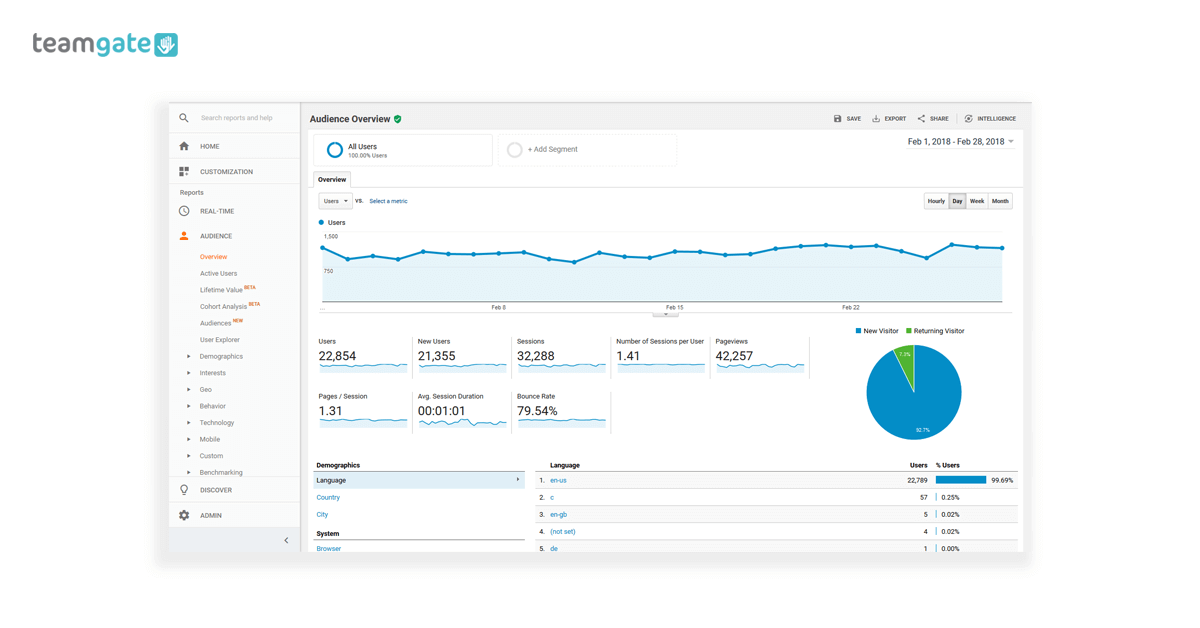
Before you make any changes or implement any new lead generation ideas, make sure you know your current statistics – the number of visitors, sources of visitors, etc. Without knowing exactly where you’re starting from, you’re never going to be able to tell how far you’ve come.

For that, you can simply use Google Analytics.

Lead Gen GA

So what lead generation strategies can help you drive more leads to your website?

#1 Headlines can really do that?

Sales Lead generation

Writing instructors will tell you (over and over again) that you don’t write a story and just expect people to read it, you have to take them by the hand and lead them through the whole process. A really inspiring, and intriguing headline can be the start of that process.

In the world of sales lead generation, your headline is the first piece of content that gets noticed. Make sure it’s a killer and engages your audience enough to make them want to journey with you through to the next line, and the next, and the next, and so on…

Headline writing is guided by ‘the principle of the 4 U’s’.

Make your headlines; Unique, Urgent, Useful, and Ultra-specific – you probably won’t get all four in one sentence, but try to include at least two. Also, remember the rule of length. Headlines with more than 55 characters are just too much for your audience to grasp quickly.

Once you get the viewers to your website you can then make use of landing pages, forms, questionnaires, and other giveaways in exchange for your audience’s contact details. And that’s just the headline.

#2 LinkedIn – Stand out among your peers

Lead Generation LinkedIn Posts

LinkedIn has almost 470 million users around the world. That’s a lot of potential leads, and you need to be getting your share.

Think of LinkedIn as your personal access to multinational publishing.

On LinkedIn try to create and link content related to your blog posts/website on a regular basis – either daily, weekly, or monthly. This can lend you a voice of authority, make you stand out among your peers, and drive traffic to your website where they can engage directly with your business.

#3 Join the social club

It’s already fantastic that you want to know more about lead gen’ and how to drive visitors to your website. Providing engaging and informative content is the first step, but now you have to help your prospective audience to find that great content.

The answer is to get social (and no, we don’t mean going down to your local bar and getting to know everyone in the place – although it might be fun). Social media outlets are a great way to promote your website content, in fact, it even has a name, ‘Social Selling’.

Social media sites like Twitter, Facebook, Instagram, and Pinterest still have a lot to offer. YouTube, in particular, can deliver excellent results through consistent video content. To boost visibility in the early stages, consider the option to buy YouTube views from trusted platforms to gain traction and attract organic interest. Of course, social media isn’t a magic wand on its own. In order to drive prospects to your website you need to promote your website’s content on a regular basis, post at the same time every day/week/month, and engage with those who show an active interest in your posts.

A small thank you, or a reply to their comments can go a long way towards building a loyal and dedicated following.

#4 Money talks, paid-for advertising

In all walks of life, you get what you pay for. Paying to attract visitors to your website is no different. If you just want the numbers, there are a thousand ways you can do that via social media advertising and display advertising. Pay your money and take your chances.

But, if you want visitors to your site who are more likely to convert, a paid-for strategy needs to be a lot more focused. What you’re going to need to do is pay for ‘commercial intent keywords’ – the keywords that buyers use when searching. This can be a costly process but can pay high dividends, if you can afford it.

As with all paid advertising, choose the best strategy to suit your prospective audience and your company’s sales goals. There’s no point having tens of thousands of visitors to your website if none of them are converting. Quality over quantity is paramount to your sales success.

#5 SEO is the way to go

Many people think that SEO (search engine optimization) is some secretive part of the dark arts, steeped in mystery and known only to the chosen few. That’s simply not true.

Even a rudimentary knowledge of SEO content can go a long way towards increasing your page rankings and making your website easier to find.

Of course, the more you know about SEO, including local SEO, the easier it is for your website to be discovered by Google and other page aggregators. If you don’t have the time, or inclination, to deep-dive into the principles behind SEO, there are plenty of professional consultants out there more than willing to guide your efforts.

#6 Do you know your long-tails?

Long-tail keywords (a specific three/four keyword phrase included in your content) are a great way to target niche audiences. Using long-tail keywords in your content tends to attract targeted traffic more likely to convert to high-ranking qualified leads.

Long-tail keywords are targeted at a concentrated group of prospects who may have very specific needs – ‘user-friendly CRM’, for example.

Your choice of long-tails needs to be brainstormed very carefully in order to attract the right traffic to your website. Examples of high-return long-tail keywords could be; ‘cold-calling versus email’, ‘world’s best air conditioning’, ‘how to lose weight’. These are more specific than just, ‘cold-calling’, air-conditioning’, or ‘lose weight’ and reach a far wider, but more targeted audience.

#7 Yes, email is still very important

Technologies like sales CRM software, AI, and automation are a great way to drive visitors to our website. However, we sometimes forget about the old favorite, email. Targeted email campaigns still have the ability to return valuable, and convertible leads without much effort.

Email marketing campaigns – when done right – can boost traffic to your website no end. I emphasized ‘when done right’ on purpose, when ‘done wrong’, (ie. bombarding your prospects with worthless drivel, at inappropriate times) can actually damage your business.

Don’t overlook the power of email, it’s not dead yet, not by a long shot.

#8 Does your website do what it’s told?

Mobile Sales Solution Teamgate CRM

There’s not much point in having lead generating content on your website if it can’t be viewed.

Desktop computers and laptops are no longer the only places where your prospects view websites, – mobiles are fast taking over that role.

But, if your website is buggy, slow to load, and requires too much scrolling to find the desired content, you’re not doing yourself – or your sales potential – any favors.

Spend time – and money – ensuring that your website is quick to load, acts how you want it to act, and is ready to receive visitors from any viewing platform. If your website isn’t responsive – nobody wants to wait half a minute for your site to load – you’re literally driving your customers away from your door.

It doesn’t matter how amazing your content is if your audience can’t be bothered hanging around to view it.

#9 When you are the guest of honor

If you have great content on your website, your audience might not be the only ones who want to read it. Persuading leading websites in your industry to feature your work can really increase traffic flow to your own website, and can also contribute to building your brand’s profile and market influence.

There are a host of influencer websites who are actively seeking guest bloggers and industry experts to write quality content for them. The process of pitching, writing, and submitting can be a long-winded process, but the rewards in terms of page ranking are most definitely worth it.

#10 Returning the compliment

Not only is it worthwhile being a guest blogger on other influencer websites, but another great idea is also to invite industry leaders – and great writers – to contribute content to your site. Your contributors and their followers are likely to appreciate and share the content among their community, which in turn grows your circle of influence and helps drive prospective customers to your home website.

#11 Interview the stars of your industry

Leaders in your industry sector have a lot of advice to offer, and they usually like to share that knowledge. Don’t be afraid to reach out to the leaders in your industry and request an interview to share with your prospective customers.

If they respond positively, publish the interview on your website. This is likely to be shared by your interviewee and will most likely grab the attention of their followers and others in the industry.

Along with being a really super lead generation tactic, an interview with a highly-respected thought leader will increase your company’s respectability and influence among your followers.

#12 Spread the good news

Lead Generation Tactics Quora Posting

There are a lot of websites out there who are happy to publish your best content. News aggregators – like Reddit, and Quora – are a great way of spreading your content and driving prospects to your website. It’s not recommended that you use the aggregators as your sole means of drawing attention to your website’s content, but every now and then should be ok.

Also, answering questions – as an expert – on your specific topic on the relevant Reddit sub-pages can also help boost your credibility and attract interest in your website.

#13 Put yourself on the Webinar stage

If you’ve got some quality information to impart a webinar can be a great place to get noticed. The right content shared with the right people – you can invite people privately by email, or share news of your webinar on social sites such as Twitter – can really help generate an extra feed of interest in your website.

Once your webinar is over its value doesn’t have to end there. Link the recorded webinar to your website or blog and use it as a lure for sales lead generation from you website.

#14 I’m sorry, did you say something?

We all like to have our say. Whether it’s after some sporting event or an annoying post on Facebook, we think our comments offer valuable insight to other readers or listeners.

When you visit the comments sections of popular web or news sites, and you feel inclined to comment, be sure that you are offering value or valuable insight to the topic. Anyone can troll, and you really do not want to be remembered as a troll – not good for your personal reputation, or your business reputation.

Commenting – sensibly – can be another great way to entice readers towards your company’s website. They may appreciate what you have to say, or even the tone of voice you use, and they may want to get more of it. If you really want to be informative and can back it up, be sure to add links to your website where the reader can find out more.

But, be careful. Nobody likes a troll or a spammer, so keep your comments relevant and limited to the topic at hand. Unless something is blatantly wrong or misleading, try to use restraint when calling someone out. It’s possible you may be missing something from the bigger picture and you end up as the bad guy.

#15 Get to know the neighbors

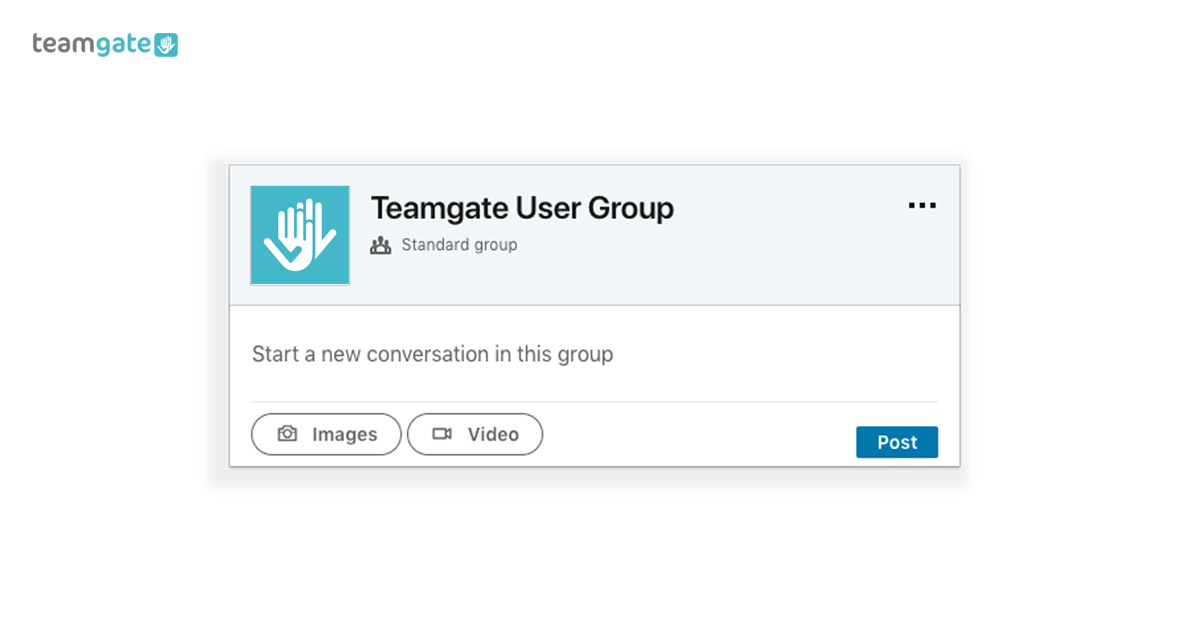
lead Gen Teamgate User Group

Wouldn’t it be great if your website had a community where your visitors could hang out and share their thoughts? A lot of companies have already realized this and use it as a valuable lead generation tactic.

By creating a community of ‘neighbors’ for your website your visitors can feel free to drop by, chat, get some answers, and learn more about varying aspects of your product, your ideas, or business in general.

In fact, it doesn’t even have to be about business. If birdwatching is your CEO’s or your receptionist’s passion, why not include the topic as part of your website and see it as another means of community building and a way to offer the human face of the organization.

#16 And action! Use video to capture their attention

If a picture is worth a thousand words just imagine what video content might do for your website’s lead gen figures.

As much as we think we like to read great content the fact is that humans are basically lazy.

Video content is a great option for taking the hard work out of offering information to your website visitors. According to the Digital Marketing Institute, humans regularly watch up to one billion hours of video content per day. Yep. One Billion!

If you want to take a slice of that time you have to provide quality, informative, and entertaining content.

Regardless of your business or the type of product you provide, there’s nothing that can’t be given the kiss of life with a little video. And, people remember video content a lot more than they remember the written word. That’s got to be enough to keep them coming back, and bringing new fans along with them.

#17 Get the metrics from Google Analytics

Lead Generation Google Analytics Set Up

When you post a topic to your blog, Google Analytics knows more about that content than you could ever imagine.

With that in mind, you need Google Analytics to be your sales lead generation buddy, the one who offers you the answers you need, to tell you what you might be doing right, and what you might be doing wrong.

You can use the information from Google Analytics to show you your best performing blog posts, the number of readers attracted, their geographic location, the times at which they viewed the post, which platform they’re viewing from, how long they stay on your website, and a whole bunch of other useful information.

Being armed with this information is a great way to judge the best topics for your blog, the type of numbers you can expect to get, and the times when your content is viewed most regularly.

Now you have metrics from which to work – the most read topics, how many leads you might expect to generate, and when is the best time to post your content.

For aggressive lead generation, valuable information like this is hugely important when thinking about how to drive more visitors to your website.

#18 Get out and smell the roses

It’s all well and good relying on digital technology to drive leads to your website, but never forget that it’s real live human beings that you’re dealing with.

That’s why it’s good to get out there amongst your prospective leads, to say hello on a one-to-one basis, and to press the flesh at conferences, events, exhibitions, and other networking forums.

Simply having a conversation with your business peers can also be a great way of generating visitors to your website, and for generating content ideas for your website.

Meeting with real live people from your industry should never be regarded as time wasted. Swap cards and website details, promote their content and ask them to do likewise for you. Not only are you reaching a wider audience, but you’re also becoming a valuable member of an even greater community.

#19 Messenger Marketing with chatbots

Messenger marketing offers a huge opportunity for lead generation. It’s the largest active social channel for mobile apps. Facebook messenger messages also convert 3x-5x better than Facebook desktop ads, or even have higher user impressions compared to organic posts.

To step up your messenger marketing game, chatbots are there to automate Q&A, schedule appointments, book flights, notify you about an offer, send reminders, and even send blog posts to your customers.

A chatbot builder like MobileMonkey can do the tasks mentioned above without any coding required.


#20 Stir the marketing pot and try something different

So that’s 19 lead generation tactics which you can use to drive visitors to your website and generate leads which have a far higher chance of converting to deals. However, this is just the tip of the iceberg.

If you can think of alternative ways of drawing attention to your website – without damaging your business or your reputation – why not try it. Something as simple as designing custom tote bags, tshirts and hoodies with your logo using Canva can spark curiosity and keep your brand visible in the real world.

. If painting yourself yellow and screaming at the top of your voice from the top of Empire State Building does the job for you, who’s to say it’s wrong.

What you need to do is to stir the pot that drives leads to your website; use email campaigns in association with your sales CRM software; write great content; invite influential guests to write for you; dot the i’s and cross the t’s of your SEO content; use social media like a slave; go out and meet real people; keep up to date with your analytics results; and never stop testing new ways to attract the right attention.


GET READY TO OWN YOUR WORKDAY

with the most user-friendly CRM on the market.

Start Free 14-Day Trial

Painless setup, no credit card required

In this piece, we’ll guide you through the essentials of lead capturing using a Sales CRM, highlighting its role in efficiently gathering potential lead information. We’ll delve into the benefits of automated lead capturing, the various tools and integrations available, and how they can streamline the sales process for optimal results.

Key Takeaways:

  • Lead capturing is the process of collecting information on potential leads, often through landing pages and website forms.
  • Teamgate Sales CRM offers automated lead capturing, allowing salespeople to start the selling process immediately after obtaining lead information.
  • Integrations like Teamgate/LinkedIn Shuttle and Zapier CRM can further enhance the lead capturing process by importing contacts and automating actions.
  • Automated lead generation saves time by eliminating manual data input, allowing salespeople to focus more on selling.
  • The true value of a CRM lies in its ability to organize and automate tasks, leading to increased efficiency in the sales process.

From lead capture forms to automated importing, one of the most vital functions of your CRM is the role of intuitive lead gathering

What is lead capturing and what problems can it solve? 

At its most basic level lead capture describes the process of gathering information on potential leads.

One of the most popular and rewarding processes for lead capturing, using a Sales CRM, are through the use of landing pages and website forms located on a company capture page.

By gathering information in exchange for free content – such as newsletters or webinar invitations – the sales team can automatically gather lead information; names, email addresses and phone numbers. There is also the possibility to gather more specialised information, such as industry type, company size, title of lead, postal address, etc. However, many sales teams prefer to keep this to a minimum during the first contact, in order not to oversell and scare the lead.

capture page

With Teamgate Sales CRM information on leads gathered is entered automatically into the CRM software ready for the salespeople to commence the selling process immediately and seamlessly.

Specific industries may also be targeted using individually designed landing pages. In conjunction with social media and other online outlets marketing campaigns can be tailor-made with a definitive set of rules and a definitive set of targets.

How to capture new leads

  • Landing Pages – With ready to go landing pages, Teamgate can have you lead capturing in no time. Simply add a landing page to your company website, issue authorisation and watch the leads roll in. With a comprehensive range of purpose-built landing page templates Teamgate also offers you the ability to customise these pages as you see fit.
  • WordPress template forms – With absolutely no knowledge of programming or technical web skills you can automate your lead capture process within Teamgate Sales CRM using WordPress and your company website. Using its direct integration function WordPress/Teamgate lead capture forms can collect and store all visitor data, leading to more leads, contacts and deals. It is an enormously user-friendly function designed with intelligence and simplicity.
lead capturing
Lead Capturing using Teamgate-WordPress Integration
  • Teamgate Shuttle – With the easy-to-use Teamgate/LinkedIn Shuttle you can import LinkedIn contacts straight to your Teamgate Sales CRM. With just one click it is possible to import a contact directly from the hugely popular LinkedIn network, as either a lead or as a person. All of the contact’s available details will be imported, including; name, company, email, position, and even phone number if available.
  • Data import – Data import is the bane of the salesperson’s life. Using the Teamgate data import function can save you valuable time and frustration by quickly adding databases of contacts directly from external sources, such as XLS documents. Plus, Teamgate’s intuitive software will automatically identify duplicates in your contacts/leads database.
  • API (Application Programming Interface) solutions – Open API is the development documentation of Teamgate, allowing it to integrate other useful and automated tools with Teamgate Sales CRM (if required).
  • Zapier CRM integration – Zapier is a simple integration platform which allows you to automate actions between a host of varying web applications such as; creating a Teamgate contact from Google contacts, adding a new Teamgate contact to MailChimp, creating a new Teamgate company directly from Wufoo. These functions may be triggers, actions or searches; triggers may be the adding of a new person, lead, deal, company, or won/lost deal. Actions may be creating a company, deal, lead, person or activity. And, searches may be finding a person, lead, or company.

Value to a customer and how is this value measured?

The real value of automated lead generation is through the elimination of excessive time-consuming information gathering and frustrating manual input. Ultimately, the less time you spend on labour-intensive tasks, the more time you have to do what you do best – selling.

Do you have a CRM that keeps you organised?

The most user-friendly CRM on the market. 14-day free trial.

Start Free Trial

Painless setup, no credit card required

After reading this article, you will learn how a smart CRM like Teamgate can help streamline and enhance your sales lead management process. From lead generation to nurturing and conversion, Teamgate provides a range of tools and features to effectively handle opportunities and improve sales outcomes.

Key Takeaways:

  • Teamgate, a smart CRM, offers intelligent sales lead generation tools and allows for the tracking of email marketing campaign results.
  • With Teamgate, you can streamline lead management by importing leads from various sources and avoiding data duplication.
  • The CRM assists in lead nurturing through scheduling, note-taking, and attachment management.
  • Lead segmentation in Teamgate helps target specific segments and improve lead management efficiency.
  • Lead scoring enables prioritization of leads based on conversion potential.
  • Teamgate’s SmartDialer feature enhances phone-based sales activities.
  • The convert button seamlessly transfers lead information to deal cards, saving time and ensuring data continuity.
  • Integration with OpenStreetMap mapping facilitates face-to-face meetings and visualizes geographic locations of leads and deals.

The aptly named Mark Hunter (Sales Hunter), speaking on the subject of the sales and lead management process had this to say, “It’s not about having the right opportunities. It’s about handling the opportunities right.” – Mark Hunter

This short quote really hits the nail on the head, the key words being, “…handling the opportunities right.” A smart CRM, such as Teamgate, really helps you to handle those opportunities, and the whole lead management process perfectly.

So how can a CRM help your sales lead management process?

In order to have leads to manage you first need to discover those leads. Your Teamgate lead management process gives you a multitude of intelligent sales lead generation tools. Once you’ve launched your email marketing campaign you can track the results and commence your interactions with those whom you’ve managed to engage.

From smartly designed email sales campaigns you can track the results and follow up with targeted communication to any leads captured. It can also help the sales team to manage and import leads garnered from other sources, such as; trade shows, events, advertising campaigns, personal networking, Google Contacts, Excel, and a host of other methods.

Nurture your leads smarter

Your CRM should assist you with the lead nurturing process – the actions you take on the journey from converting a lead to a qualified deal: schedule meetings and meeting reminders, add recurring events, note actions and all communications. Effectively take intuitive control of your diary and activity management.

A sales CRM like Teamgate can automatically attach email communications directly to the lead card, eliminating time wasted in the search for missing documents, information, and attachments.

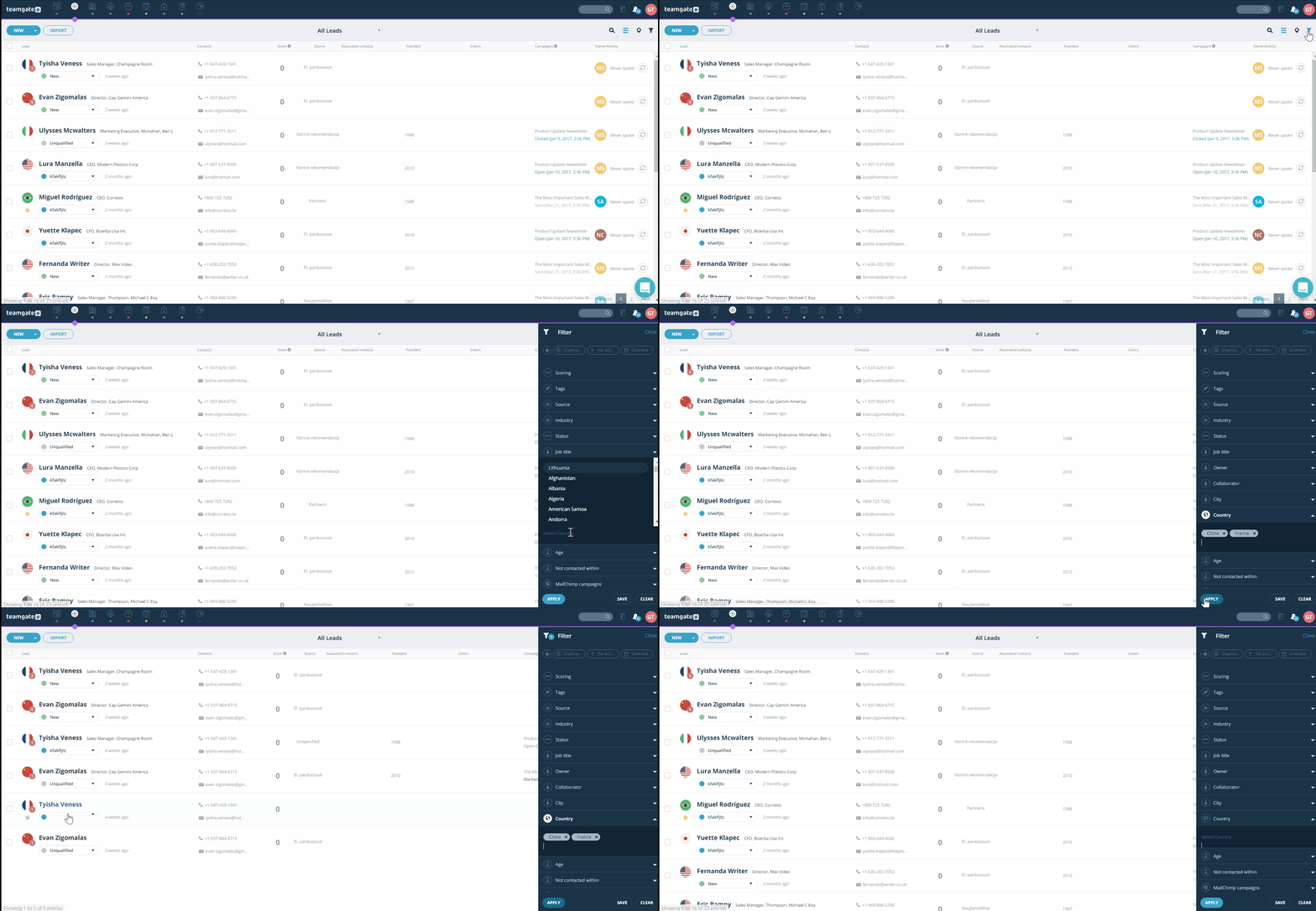
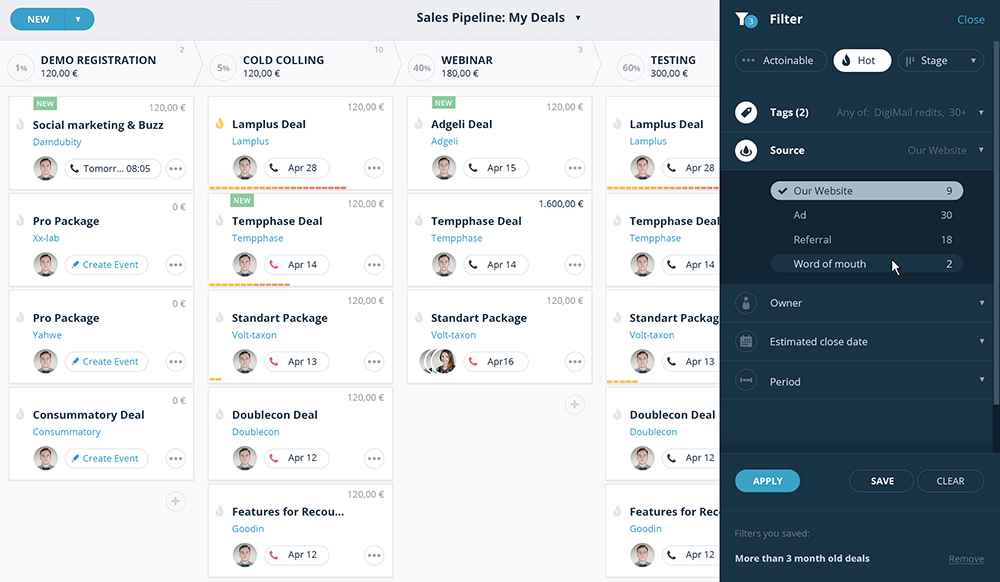
Teamgate further simplifies your lead management process by allowing to you segmentalize your leads under a variety of categories. This eliminates the effort and time-wasting of searching through a mountain of files and allows you to simply target a selected segment. Lead segmentation adds a hugely valuable feature to your whole lead management process.

lead management process

Lead scoring is the process of ranking the value of a prospect as measured against a scale of probability that the prospect will convert to become a deal. In other words, it’s a scale measuring the chances that a prospect is worth spending time on. This allows your sales team to prioritize the most important leads in the pipeline. You are in control of the criteria used when lead scoring, and the criteria you use are usually based on past insights of leads who have converted. Chasing bad leads is a waste of time for sales teams, that’s why having the ability to employ lead scoring in your sales CRM reduces time wasted barking up the wrong trees.

Enhancing your phone as a weapon

Sales teams spend a lot of time on the phone, and that’s a fact. A sales person’s phone is their lifeline and their number one connection tool. With the Teamgate calling feature – SmartDialer – you come armed with an auto-dialer, call-recording, call routing, missed call reminder, and many other useful communication tools. With SmartDialer and Teamgate you’re always available, even when you’re busy and on the go.

The act of changing the status of a lead to that of a deal is just a matter of clicking the ‘convert’ button, which automatically transfers all communication history to the deal’s card with no loss of information or valuable time.

Another feature to assist with your lead management process in Teamgate integration with OpenStreetMap mapping. OpenStreetMap can provide a comprehensive view of your leads’, deal’s and customers’ geographic locations. This facility allows you to manage face to face meetings and to combine meetings within selected geographic locations.

Lead management process in a nutshell

Lead management can be a complicated process if you’re not well organised. Using the assorted combination of tools and functions available in Teamgate, your whole lead management process is both streamlined, and effortlessly handled, right across every stage of the complete sales pipeline.

FAQs: Lead management process

Q: What is a lead management process?

A: The lead management process refers to the systematic approach of capturing, tracking, and nurturing potential sales leads from their initial contact to the point of conversion or becoming qualified deals.


Q: Why is a lead management process important?

A: A lead management process is crucial because it helps businesses effectively manage and organize their leads, ensuring that potential customers receive timely and relevant communication. It improves sales efficiency, increases conversion rates, and maximizes the value of marketing efforts.


Q: How can a CRM like Teamgate help with lead management?

A: A CRM like Teamgate provides valuable tools and features to streamline the lead management process. It offers intelligent lead generation tools, tracks email marketing campaign results, enables lead segmentation, facilitates lead nurturing through scheduling and note-taking, and allows for lead scoring to prioritize valuable leads.


Q: How does lead segmentation benefit the lead management process?

A: Lead segmentation in Teamgate allows businesses to categorize leads based on specific criteria, such as demographics, interests, or behavior. This segmentation helps tailor communication and marketing strategies to different segments, ensuring personalized and targeted interactions, which improves the overall efficiency and effectiveness of lead management.


Q: What is lead scoring, and why is it important in lead management?

A: Lead scoring is the process of evaluating and ranking leads based on their likelihood to convert into deals. It helps sales teams prioritize leads by focusing their efforts on the most valuable prospects. By using predefined criteria and past insights, lead scoring helps save time and resources by avoiding chasing leads with low conversion potential.


Q: How does a CRM assist with lead nurturing?

A: A CRM like Teamgate supports lead nurturing by providing features such as scheduling meetings, tracking communication history, attaching relevant documents to lead records, and facilitating personalized follow-ups. These capabilities help build relationships, stay organized, and guide leads through the sales pipeline more effectively.


Q: Can a CRM help with phone-based sales activities in the lead management process?

A: Yes, a CRM like Teamgate can enhance phone-based sales activities. It offers features like SmartDialer, which includes auto-dialer, call recording, call routing, and missed call reminders. These tools enable sales teams to efficiently manage phone communications, improve productivity, and ensure timely follow-ups.


Q: How does integrating mapping tools benefit the lead management process?

A: Integrating mapping tools, such as OpenStreetMap in Teamgate, allows businesses to visualize the geographic locations of leads, deals, and customers. This feature helps in planning face-to-face meetings, optimizing travel routes, and managing interactions within specific geographic areas, enhancing the overall lead management process.


Q: How can a well-organized lead management process benefit my business?

A: A well-organized lead management process ensures that leads are properly tracked, nurtured, and guided through the sales pipeline. This results in improved conversion rates, increased sales efficiency, better customer relationships, and overall business growth. It helps businesses make the most out of their marketing and sales efforts while maximizing the potential of their leads.

Do you have a CRM that keeps you organised?

The most user-friendly CRM on the market. 14-day free trial.

Start Free Trial

Painless setup, no credit card required

This comprehensive guide dives into the intricate world of lead segmentation, elucidating its importance in enhancing sales and driving business growth. From understanding the types of lead segmentation to exploring effective implementation strategies, benefits, challenges in an all-encompassing view of lead segmentation.

Key Takeaways:

  1. Lead segmentation is the practice of categorizing leads into distinct groups based on shared characteristics, facilitating targeted marketing efforts.
  2. There are four primary types of lead segmentation: demographic, geographic, behavioral, and psychographic.
  3. Effectively implementing lead segmentation involves identifying market segments, gathering and analyzing data, and tailoring marketing strategies to each group.
  4. Lead segmentation offers numerous benefits including enhanced customer understanding, increased marketing efficiency, better customer retention, and increased sales.
  5. While there are challenges in lead segmentation, like data management and ensuring compliance with privacy laws, they can be effectively addressed with advanced tools and strategic practices.

Table of Contents:

  1. Introduction to Lead Segmentation
  2. Understanding Lead Segmentation
  3. Types of Lead Segmentation
  4. How to Implement Lead Segmentation Effectively
  5. Benefits of Lead Segmentation for Your Business
  6. Challenges in Lead Segmentation and How to Overcome Them
  7. Conclusion: Looking Ahead in Lead Segmentation

Introduction to Lead Segmentation

Lead Segmentation, a dynamic practice and critical success factor in contemporary marketing and sales operations, is all about classifying your prospective customers into distinct groups. These segments, defined by shared characteristics like demographics, buying behaviors, or interests, facilitate effective targeting of marketing and sales efforts. The objective? Maximize your return on investment (ROI) by focusing resources on the leads with the highest potential to convert into paying customers.

Understanding the essence of lead segmentation lies in its intrinsic value to businesses. In a market overrun with competition and customer choice, impersonal mass marketing falls short. Lead segmentation counters this by allowing businesses to deliver personalized, relevant content that resonates with individual leads, often enabled by customer engagement tools that support tailored communication across channels. This not only drives engagement but also fosters enduring relationships, facilitating higher customer retention and lifetime value.

Types of Lead Segmentation

Four primary types of lead segmentation cater to different facets of a customer’s profile:

  1. Demographic Segmentation: This most common type segregates leads based on characteristics such as age, gender, income, education, and occupation. For instance, a luxury car company might target leads with high-income levels.
  2. Geographic Segmentation: This method groups leads by location — country, state, city, or even neighborhood. For a restaurant chain, understanding regional taste preferences could influence menu offerings.
  3. Behavioral Segmentation: This form hones in on a lead’s behavior, such as their purchasing history, product usage, online activity, and more. An e-commerce company could leverage this data to personalize product recommendations, thereby enhancing the customer experience.
  4. Psychographic Segmentation: Here, segmentation is based on lifestyles, attitudes, interests, and values. For example, a fitness equipment retailer might target leads who show an interest in healthy living and outdoor activities.

How to Implement Lead Segmentation Effectively

Executing effective lead segmentation is a multi-step process:

  1. Identifying Your Market Segments: Start by defining the parameters of your market segments. These should align with your business goals and the unique selling proposition (USP) of your product or service.
  2. Gathering Data for Segmentation: This involves the collection of comprehensive data about your leads. Sources could include customer relationship management (CRM) systems, website analytics, social media activity, and market research surveys. In practice, many teams rely on audience analysis surveys to capture first-party insights around preferences, intent, motivations, and pain points, strengthening the accuracy and depth of lead segmentation.
  3. Analyzing and Categorizing Your Leads: Next, you’ll need to analyze this data and categorize your leads into distinct segments. Machine learning and AI tools can be of great assistance in this complex task.
  4. Implementing Segmentation in Your Marketing Strategy: Finally, you’ll need to tailor your marketing strategy to address the unique needs and desires of each segment. Remember, personalization is key!

Benefits of Lead Segmentation for Your Business

Implementing a lead segmentation strategy in your business can bring manifold benefits:

  1. Enhanced Customer Understanding: By grouping similar leads, you can better understand customer behaviors, preferences, and needs, thereby crafting more relevant and impactful marketing messages.
  2. Increased Marketing Efficiency: With lead segmentation, you’ll ensure your marketing efforts reach the leads most likely to convert, thereby reducing waste and increasing efficiency.
  3. Better Customer Retention: Personalized marketing can lead to more engaged customers who feel understood and valued — crucial factors in fostering loyalty.
  4. Increased Sales and Revenue: With more targeted marketing leading to higher conversions, your sales and revenue are bound to increase.

Challenges in Lead Segmentation and How to Overcome Them

Lead segmentation isn’t without its challenges, but these can be successfully addressed:

  1. Data Collection and Management: Accurate segmentation relies on comprehensive and reliable data. This can be difficult to collect and manage, but CRM tools and data management platforms can help.
  2. Accurate Segmentation: With vast amounts of data at hand, it can be challenging to create meaningful segments. Advanced analytics tools can assist in identifying patterns and correlations.
  3. Adapting Marketing Strategies for Different Segments: Once segments are identified, tailoring your marketing efforts to each group can be daunting. However, a test-and-learn approach can help identify the most effective strategies for each segment.
  4. Ensuring Compliance with Privacy Laws: Handling personal data comes with the obligation to comply with privacy laws. A clear understanding of these laws and the incorporation of privacy-by-design principles in your data collection and management practices are crucial.

Conclusion: Looking Ahead in Lead Segmentation

The future of lead segmentation is rich with opportunities. As data collection and analytics capabilities continue to evolve, businesses can expect to achieve ever more precise segmentation. Artificial intelligence and machine learning will play an increasingly significant role, providing insights into complex data sets and enabling real-time segmentation and personalization. While challenges persist, the rewards of a well-executed lead segmentation strategy are significant and well worth the effort.

In conclusion, lead segmentation is not just a nice-to-have but a must-have in today’s competitive marketplace. By embracing this approach, you can engage your leads on a deeper level, provide them with the personalized experiences they crave, and ultimately, drive your sales with precision targeting. So gear up, refine your lead segmentation strategy, and get ready to supercharge your sales success.

With Teamgate CRM’s sales insights and cusomization, lead segmentation is made easy. To find out more about how you could be better targeting your ICP, speak to our team for your free trial or system demo.

Frequently Asked Questions

  • What’s the role of technology in lead segmentation?
    • Technology plays a crucial role in lead segmentation. With the vast amount of customer data available, it’s nearly impossible for marketers to manually process and analyze this information. Advanced technologies like AI and machine learning can handle these large data sets, providing insightful patterns and correlations that facilitate precise segmentation. Additionally, CRM systems, data management platforms, and marketing automation tools can assist in effectively implementing lead segmentation strategies.
  • How does lead segmentation relate to personalized marketing?
    • Lead segmentation is the foundation of personalized marketing. By categorizing leads into distinct segments based on shared characteristics, marketers can create tailored messages and campaigns for each group. This personalization makes the content more relevant and engaging for the recipient, increasing the likelihood of conversion.
  • How often should a company review and adjust its lead segmentation strategy?
    • Lead segmentation strategies should be dynamic and adaptable. Markets evolve, customer behaviors shift, and business goals change. Therefore, it’s advisable for businesses to regularly review and adjust their segmentation strategies. The frequency may vary depending on the business and industry, but a quarterly review is a good starting point.
  • Can small businesses benefit from lead segmentation too?
    • Absolutely. Regardless of size, every business can reap the benefits of lead segmentation. For small businesses, in particular, resources are often limited. Lead segmentation ensures that these resources are focused on targeting the most promising leads, enhancing the efficiency of marketing efforts and maximizing ROI.
  • How does lead segmentation influence the customer journey?
    • Lead segmentation allows businesses to deliver content and offers that are relevant to the specific needs, behaviors, and preferences of each segment at different stages of the customer journey. This personalization enhances the customer experience, improves engagement, and fosters a stronger connection between the business and the customer, positively influencing the customer’s journey from awareness to purchase and beyond.
  • How can businesses ensure data privacy while conducting lead segmentation?
    • Businesses must comply with various data privacy laws when handling personal data for lead segmentation. They should obtain explicit consent from leads before collecting their data and make it clear how the data will be used. Additionally, implementing robust data security measures and following privacy-by-design principles can ensure the protection of personal data.
  • How do businesses choose the right segmentation criteria for their leads?
    • Choosing the right segmentation criteria depends on a business’s goals, the nature of its products or services, and its target audience. Key considerations include the characteristics that distinguish the business’s ideal customers, the resources available for marketing efforts, and the data the business has access to. Businesses might also use market research or A/B testing to identify the most effective segmentation criteria.
  • How does lead segmentation affect content creation strategies?
    • Lead segmentation directly impacts content creation strategies by providing insight into what kind of content will resonate with each segment. Based on the characteristics of each group, businesses can tailor their content to meet the unique needs and preferences of their different segments, whether that means creating different types of content, adjusting the tone of the content, or focusing on specific topics.

It doesn’t matter how many leads you can generate if you can’t close a deal. Effective lead follow up is vital to make the most of the leads you attract, and ensure your lead generation efforts are not wasted by low conversion rates.

These 5 tips will help you find and convert your most valuable leads:

1.   Get More Info from Lead Generation

Ensuring your follow up messages are relevant and focused on your lead’s needs right from the first contact gives you the best chance of getting a response. This means you need ways to collect information about your leads before sending the first message:

●     Lead Capture Forms

More than 49% of marketers say that online forms generate the most leads, so it makes sense to avoid wasting these leads by knowing nothing about them.

Give your leads the opportunity to explain their needs and interests when completing your lead capture forms. Making contact forms too long or asking for irrelevant information can reduce their conversion rate, so identify a few key data points that will enable you to make informed decisions about how to follow up with a lead. For example, including checkboxes that can be ticked to indicate areas of interest, or drop-down lists to select their industry and the size of your organization.

For example, Bounce Exchange keeps the information it asks for to a minimum by simply requesting a company URL.

a screenshot of a behavior audit

This ensures little effort is needed from the lead at this stage, but Bounce Exchange will be able to thoroughly research their business anyway. While this approach is more labor-intensive, the form also asks for the lead’s annual revenue so that Bounce Exchange can make an immediate assessment of whether leads are worth the work.

A text box to describe their needs in detail is great for high-value customers interested in premium products and services, but can be too much effort for the average lead, depending on your target audience. They also take more time to process and segment leads using this data without a text analysis app, especially when handling large volumes of leads.

●     Surveys and Questionnaires

Text surveys and questionnaires let you get into a lot more detail about your lead’s needs, enabling highly focused lead follow up later down the line. These can be incorporated into lead generation by offering to help a visitor identify their needs through a survey on your site, and presenting a contact form along with the results.

Boutique productivity consultancy Building 20 uses this technique with their Remote Workspace Assessment tool, which helps leads self-identify issues holding their team back before offering to arrange a follow up.

black image with text and a laptop

This serves the dual purpose of showing leads the problem they need to fix, and ensuring the conversation can begin with a good idea of how Building 20 can help.

Besides giving you a lot of useful information about a lead, providing this help upfront boosts leads’ confidence in your subject area. As a result, providing information and advice to leads makes them almost 3 times more likely to see buying your product as an easy decision.

●     Browsing Behaviour

Analyzing each site visitor’s behavior on your website can tell you a lot about what they need from you. By tracking this data from their first visit, when they decide to get in touch you can base your approach on the content they viewed and the parts of your store they visited, enabling you to open by addressing what they are looking for. Understanding consumer behavior is critical to following up effectively with leads.

2.   Time Your Contacts

The frequency of your lead follow up messages requires a careful balance. Follow up too often and you will annoy your lead, too little and you might lose their interest. This typically takes a lot of optimization based on past performance to get right, as the ideal frequency is different for every audience and also for each contact method. Using a sales CRM to track past performance and automate future follow ups can increase sales by 65%.

Creating SMS and email triggers based on site visitor actions give you the best chance of getting in touch at the right moment. These enable you to send follow up messages based on what your customer is thinking right now. For example, sending a follow up email after a visitor reads a number of blog posts on the same topic, or immediately after they view specific products or services.

Doing this means you will send highly relevant messages at a time you know your customer is online and thinking about your business, increasing the chance they will check out your message.

3.   Continue the Marketing Funnel

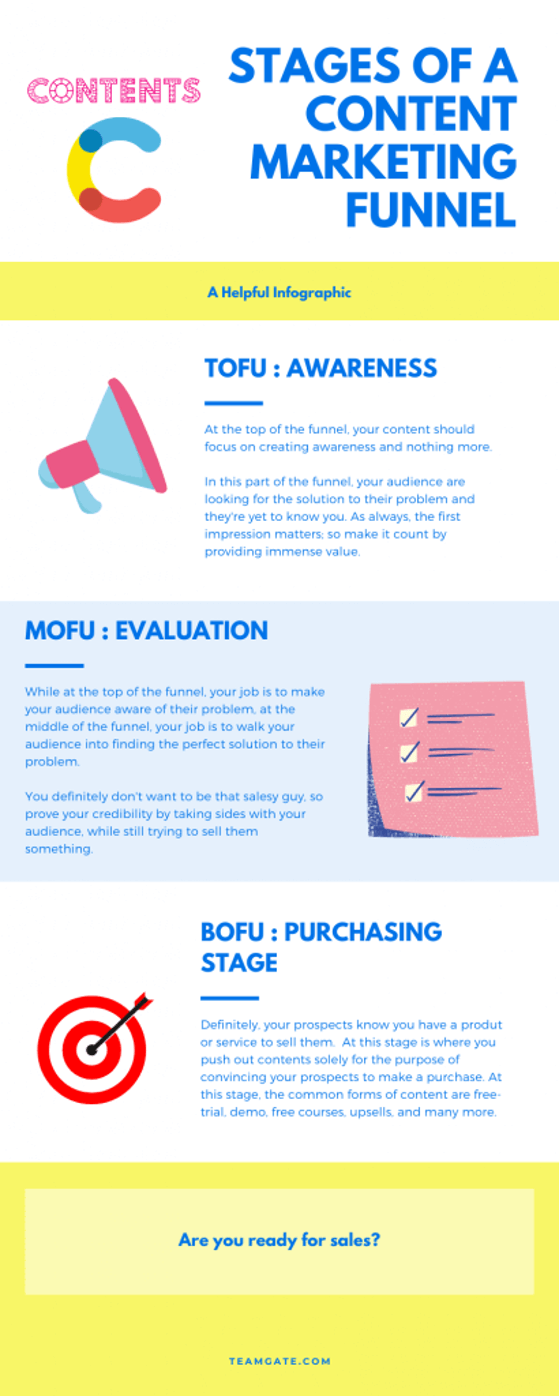
A content marketing funnel ensures that you are sending the right information to leads at the right time for it to have an impact. Following a marketing funnel ensures that you don’t overwhelm new leads with too much detail before they are certain what they need from you. At the same time, it also ensures you won’t lose the interest of engaged and educated leads by sending entry-level information they already know.

a large screenshot of the stages of a content marketing funnel

Marketing funnels can be separated into 3 distinct phases:

  • At the top of the funnel, your follow up messages should help leads identify their problem or need. They can’t decide if they want your product without a clear idea of what they want to do with it.
  • In the middle of the funnel leads are evaluating solutions to this problem. This is the time to discuss solutions to their specific problem, explain how your business would fit into the picture and compare competitors.
  • At the end of the funnel is the purchasing decision (hopefully!). Leads who get this far know they have a problem to solve, and they know you have an ideal solution. Focus on the specific features that can help them, and provide extra incentives to take the final step such as free trials, discounted pricing and onboarding content.

Most leads will independently research your business to some extent before providing their contact details. As a result, not all of your leads will arrive at the same stage of the marketing funnel. In order to immediately engage each contact, you need lead follow up plans that can pick up from every stage of the funnel instead of starting again or skipping straight to the sale. In essence, using the marketing funnel to inform your follow up strategy keeps the conversation focused on what is most important to your lead at each stage of their journey, nurturing your leads instead of pushing them to buy before they are ready.

4.   Score Your Leads

Scoring leads by adding or removing points to their user profile according to their interactions with your business and website helps identify the most important leads to focus on. Scoring leads separately for their interest in each product or service will give you a deeper understanding of the problem they are trying to solve, instead of simply gauging their interest in your business as a whole.

On average, lead scoring leads to a 77% boost to your lead generation ROI.

screenshot of teamgate lead section

Negative scoring is just as useful as positive scoring. Removing points for actions that indicate a visitor is unlikely to buy avoids wasting time on follow up conversations that won’t go anywhere. For example, you can use negative scoring to predict if your business is out of a particular user’s budget, or if they are trying to solve a problem your product doesn’t fix.

5.   Share Content Marketing

Including your content marketing in lead follow up lets you show leads your expertise without the pressure of a sales pitch.

  • Content explaining how your product works or giving industry insights they can benefit from, raising their confidence in the subject. Demonstrating relevant use cases can show leads how your business can help them in a way they immediately understand.
  • A picture paints a thousand words, or so the saying goes. Infographics, videos and other visual content can convey how leads can make use of your business faster and with greater impact than a text-only email or SMS.
  • Automated marketing reporting can tell you exactly what kind of content your audience is looking for online. This enables you to easily identify past content that will be useful to a particular lead, as well as spotting opportunities to tweak old content to appeal to a new audience. As a result, content discovery and using automated marketing reporting lets you create follow up campaigns with an immediate impact instead of relying on trial and error to find the content your leads want.

Conclusion

Effective lead follow up focuses on what your lead needs, not what you want to sell. This starts with understanding their current situation and how they found you in the first place.

You also need to get across what they need to know about your product and business. Without this, it is difficult to have a productive conversation about what you can do for them. From here, you can ensure that you follow up leads by providing them with the help and information they need to feel confident about buying from you.

In today’s world, email is such a central part of the modern working life. And we all know that the one resource which is super expensive for all of us is… time. Here at Teamgate, we are constantly trying to make our tool easier to use. It includes creating new functionalities that help to actually speed up the process and make sales more efficient.

One of our newest addition is Sales Inbox module which gives a possibility to send and receive emails directly from your CRM account. This new feature saves you a tremendous amount of time every day since you don’t have to switch between tools.


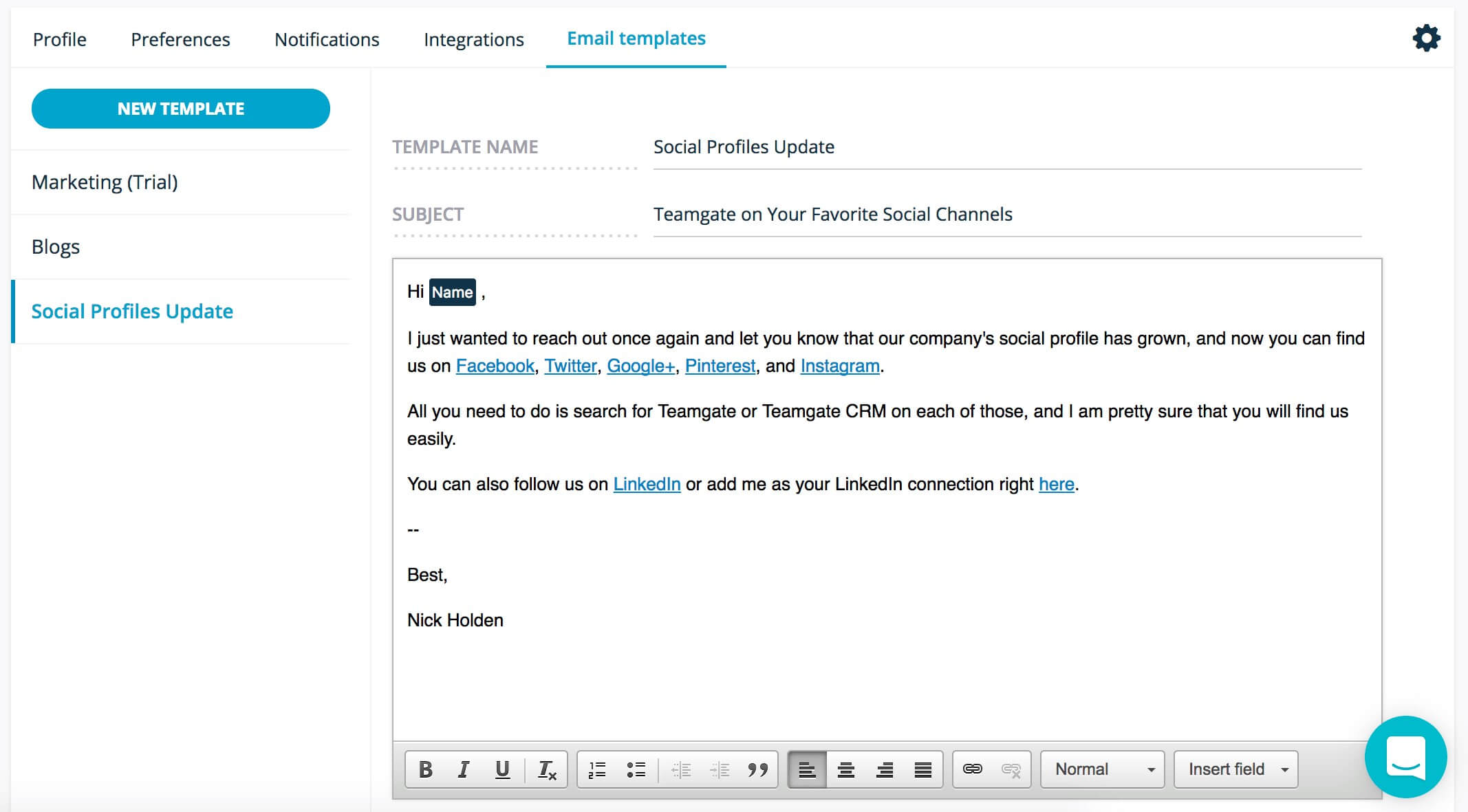
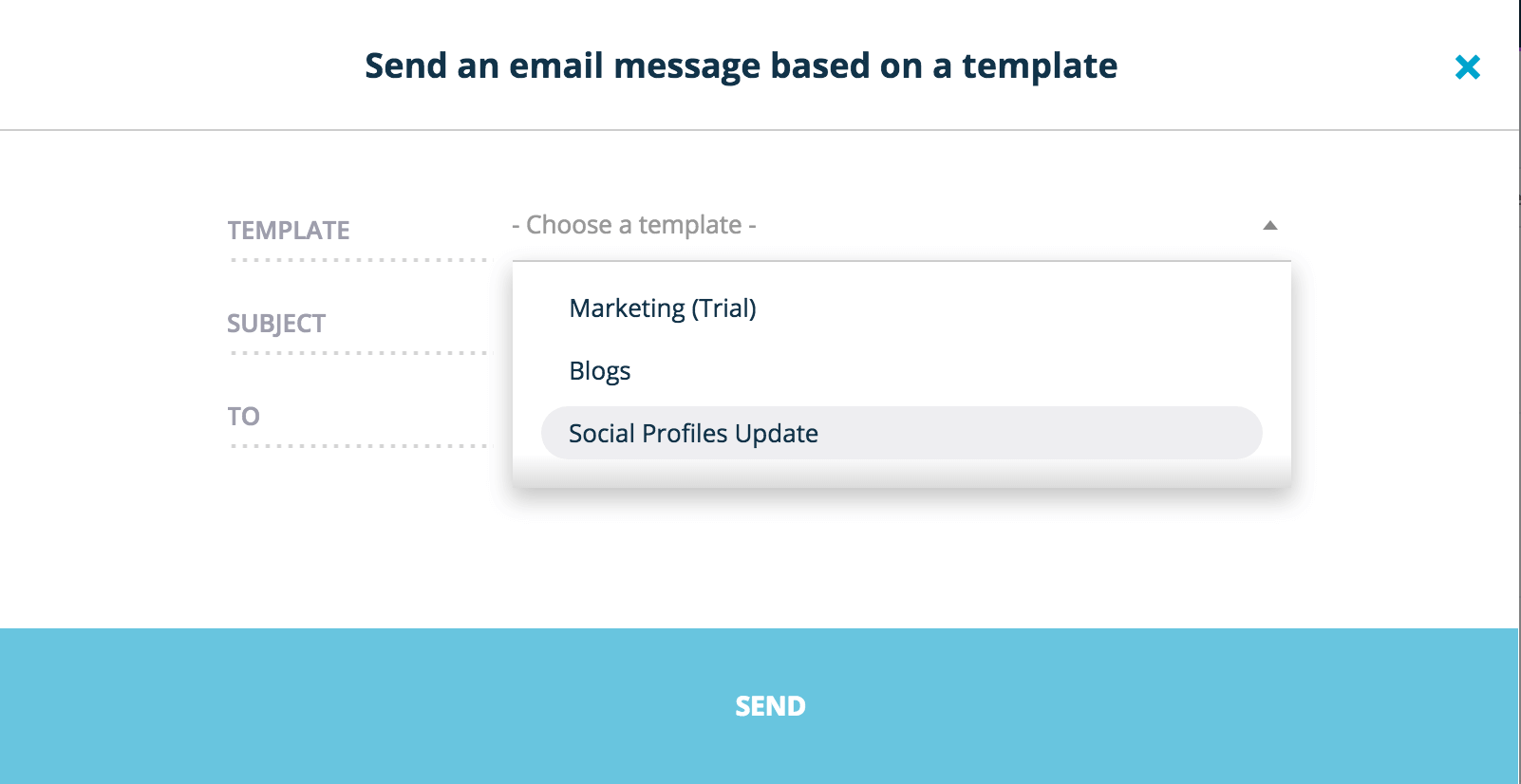
Email Templates Teamgate Social

This powerful integration works with your favorite email service providers – Microsoft Outlook, Gmail or Yahoo.

It syncs your personal mailbox with Teamgate CRM and allows you to have all of your client-related emails in your CRM with no manual work. Sales Inbox comes really handy when passing on client data to your colleagues.

This module allows you to track your conversations by attaching copies of emails you’ve sent or received to any customer’s contact card. Synced emails always keep you well informed of relevant Deals and help you to close them even faster.

If that’s not enough, we added some more value. We have created email templates on Teamgate.

  • What if the user is sending the same email or series of emails to every lead or contact he has in CRM?
  • How can he send an email to introduce his product/service to all (or a part) of his leads?
  • What if the user wants to send a personalized update to the customer?

Do you have a CRM that keeps you organised?

The most user-friendly CRM on the market. 14-day free trial.

Start Free Trial

Painless setup, no credit card required

Everything is now possible with just a couple of clicks using email templates on Teamgate. They are available for all of these sections:

  • Leads
  • Contacts
  • Companies

Send Email Template to a Lead

To send your email template, you just need to go to Leads / Contacts / Companies section, find the right person (or a company), click on an email address entered and select ‘Send template’. You did 2 clicks, what you need to do is another 2 clicks – select one of the templates you have and click SEND!

And you’re all set. Save even more time with Teamgate.

Email Templates Selection

F.A.Q: How to create email templates in Teamgate | How to use and send email templates in Teamgate

If you are working with large amounts of data, every time you need to find some specific information may become a nightmare, right? Even if you have automated sales processes with the help of a CRM, sometimes you may feel overwhelmed by the amount of information. Luckily, Teamgate CRM has powerful filtering and sorting features, which help to keep everything well-organized and improve your productivity. 

Complete Filtering

Basically, you can quickly filter every available list, including leads, contacts, companies, deals, and files. Items in each of the lists can be filtered by predefined and custom fields. Let’s say you need to see a list of every single lead from a specific country; you can do it in just a few clicks by either selecting the country or typing it in. Likewise, you can easily get a list of all won or lost deals, new leads, and much more.

Leads Filtering By Country Teamgate

For your convenience, you can choose which of the custom fields should be added to the list of filters. It is easy to adjust filters considering your business needs. Moreover, not only ‘Standard text’ but also ‘Multi-select’ custom fields can be filtered. 

Clean Filtering

Teamgate filtering solution is user-friendly and neat. Even if you use a lot of information fields, you won’t find filters too overwhelming – they can be expanded or collapsed so you can customize viewing options. To improve your experience, we made it possible both select and enter options manually. The latter helps when there are hundreds of options, e.g. zip codes, and it’s simply too time-consuming to scroll down the drop-down list.

Deals Filter On Teamgate

Besides, Teamgate supports sorting. This feature may help to see a better overview of your lists. For example, you can sort leads by the lead score, and instantly see the hot leads at the top of your list; or sort your deals by value to see the most valuable ones. It may seem like a very simple feature, but it can help to grow your business. 

Add Some Extra Value!

If you want to get the most out of Teamgate filtering solution, it’s entirely up to you, because we also support tagging. You can use the keywords of your choice and re-use this data to make filtering more relevant. Teamgate adds some default tags, but you’re free to create as much custom tags as you need. Maybe you want to remember that a lead is a #CEO or #purchased your product, or maybe some contact is #important? You can easily do this! And remember that tagging is also helpful when you use Teamgate Insights.

So, wait no more and try Teamgate CRM yourself!

If you run a small to medium-sized business, you’ve probably heard of lead scoring. We are sharing a set of lead scoring best practices which will help to improve sales conversion rates of your company. Lead scoring is not something you can set up overnight, but you can get started today with careful thought and evaluation of your customers. It may also be a good idea to invest in a lead scoring software to automate the process. We’ll discuss this in more detail, but let’s start from the beginning. 

How Does Lead Scoring Work

Lead scoring is a methodology used to help sales teams closing more leads. It’s a process that involves both marketing and sales, as each team must decide which leads should be qualified as the ideal ones. Lead scoring is used in conjunction with the inbound marketing tactics, such as building a social media following, blogging or offering free guides, to decide which of your leads are ready to convert.

Instead of pursuing every lead you have, you may rank your leads according to their value for your business and decide which ones to follow up with first. This allows you to prioritize and invest more of your energy into leads that matter most.

Do you have a CRM that keeps you organised?

The most user-friendly CRM on the market. 14-day free trial.

Start Free Trial

Painless setup, no credit card required

Why Would I need Lead Scoring?

It’s all about making your sales process more efficient. If your sales team doesn’t have enough leads yet, then lead scoring is not necessary. Instead, your marketing team needs to put more focus on the lead generation.

However, if there are more than enough leads, rather than following up on each one, simply assign values to your leads. This will help to decide which ones are ready to convert. Set the criteria, then use analytics and lead sign-up forms to collect the relevant data. As a result, you will be able to pursue only those leads that are most likely to convert.

Which Companies Need Lead Scoring?

lead scoring best practices for companies

Every organization is different and some may not require lead scoring at all. The best practice to follow is to identify whether your company is struggling with leads conversion or not. Companies that want to boost their sales conversions, and have more leads than they can pursue, most probably, need lead scoring. 

Setting Up Your Lead Capturing Forms

In order to score your leads, you have to know who they are. So, to start tracking your leads you would need a lead capturing form. This is a form on your website which offers a way for customers to sign up to hear more about you and your products. This data is then captured and funneled into your lead scoring or CRM (customer relationship management) software, where you can begin tracking interactions of your potential customers.

Optimizing Your Lead Capturing Form

Put forms on your landing pages where your prospects can see it. This could be combined as a gateway to some content that your target customers will be interested in engaging with, such as an ebook or a PDF that they can download. In exchange for this content, customers should provide their name, email address and a few details about themselves.

Note: If you ask your leads to fill in too many fields, you may fail to capture them as people may not want to sign up. If you ask for too few details, the quality of your lead data can suffer as well. Make sure you ask for relevant details about your customers by linking the fields you include with your lead score criteria, which we’ll go into next.

Deciding Upon Your Lead Score Criteria

lead scoring best practices criteria

You can find out what sort of characteristics your customers normally possess by analyzing your current customer base. They won’t be identical to the future prospects but they are your best source of inspiration. You can also work with your sales and marketing teams to create descriptions of your ideal customers. It could be that they are a CEO of a mid-sized tech company, or a Marketing Manager of a small health food supplier. You can have more than one type of ideal customer.

There are a number of factors you need to take into account when deciding upon your criteria, but the best practice is to follow a points-based system. You need a) demographic information and b) behavioral intelligence for your leads. First, you will be focusing on the characteristics of your ideal customers who are worth to be pursued as leads. Second, you’ll be looking at how these customers are behaving to see who is ready to be contacted by your sales team.

a) Demographic Information

After you have decided upon the characteristics of your ideal customers, you can start to set up your lead score by assigning multiple values to criteria, such as job title, industry, company size, country, marketing source, links with competitors, and more. Demographic information about a lead can identify personal information, such as job title, company information (e.g. number of employees), relationship to your organization (e.g. past customer), and others.

When considering which demographic information to choose to evaluate your leads, you may want to include some basic criteria which must be met for them to qualify or disqualify as a lead. For example, you may instantly disqualify someone if they are a student.

b) Behavioral Intelligence

After you have decided upon the essential criteria for determining your lead score, include some key behaviors for your leads to engage in, these will also contribute to their score. This is where it is really important to have the appropriate software to track the behavior of your leads. For example, if you send them an email, you need to track whether they’ve received it, opened and clicked on it. Or, if you post some content on social media, you want to know whether they saw it, how long they spent on the page, if they shared it on social media, and so on. You can also decide on behaviors that deserve a negative score, such as if they unsubscribe from your mailing list.

Identifying Leads to Pursue

You need to set up a points-based scoring system when evaluating your lead criteria for each potential customer, typically a scale between 1 and 100. With this in mind, score your leads based on how closely they match your ideal customer profile, based on the demographic information and behavioral intelligence.

lead scoring best practices leads to pursue

For instance, if one of your leads is a CEO of a mid-sized tech company, but they haven’t demonstrated any engagement behaviors, then your lead might score around 50 points. A similar company that fits the demographic criteria and has somewhat engaged with your company can be awarded 75 points, which is a trigger to your sales team to contact them.

There is a number of systems you can use to score how close your leads are to converting, ranging from the letters A, B, C and D, to Hot, Warm or Cold, or in numbers from 1 to 4. Then you may assign each label a range on your scale. Pick a system that feels most natural to your company and easiest to work with.

Other Purposes of Lead Scoring

In your process of scoring leads, some potential customers may not quite qualify, but you can identify and target the leads which need nurturing. If you have the right software, particular lead scores can trigger automation. For example, once a lead passes a certain score, an email is triggered to invite your lead for a demo of your product.

You can also use lead scoring to get to know your potential customers better. Paying so much attention to your target market is always great because you may uncover surprising insights. Test different marketing messaging with your leads to see which ones work best, and optimize your marketing strategy. 

Choosing Your Lead Management Software

Having the right software is key to success with lead scoring. If you lack the capabilities to properly analyze your leads, you won’t get very far. The type of lead scoring software that you need will depend on your company. Compare different options based on price, functionality and size with reviews from trusted sites such as Capterra or Software Advice

lead scoring best practices choosing the right software

Teamgate offers lead scoring as a part of our cloud-based intelligent Sales CRM for small and mid-size teams. With its user-friendly interface, Teamgate is a great sales stack for today’s business that helps you convert more leads. 

The software is changing all the time and becoming more sophisticated, with some solutions beginning to use AI and bots to engage leads. For example, software can determine if your lead is highly engaged or a student doing research. A virtual sales assistant using AI technology to email the leads can interpret their responses and alert your sales team. 

Smarten Up Your Teamwork

Know who your leads are, track when they’re ready to buy, and make your sales team contact them. Lead scoring streamlines this process so you’re only focusing on high-quality leads who are most ready to convert. The key is capturing your data with the right software, optimizing your website with properly prepared content and forms, and integrating your software solutions so your leads don’t fall through the cracks. It is a team effort, but totally worth it for the boost you’ll see in your sales conversions.

If hot leads aren’t converting, then you might need to take a look at the products and services you’re offering. Check whether they’re suitable for your target market and if your pricing is appropriate. Don’t get discouraged, but remember that analyzing your leads and scoring them is the beginning of streamlining your sales process. 

The deepest principle in human nature is the craving to be appreciated” – William James.

Are you looking for new leads or working on retaining current customers? Of course, you are. Customers are such an important part of any business that a big amount of time and money are spent on them. And don’t waste time and money when you get new customers, just to forget about them after they’ve bought your product or service. Keep them interested and loyal to you. Let’s learn how.

In order to generate more leads and, ultimately, convert them to more sales, you should build strong trust and loyalty, both of which are very important.

Build A Strong Company Culture

Let’s take a look at a natural leader, Genghis Khan, and see what we can learn from him. He advocated loyalty to the group first and foremost. This focus on his people’s well-being is what made them so strong as a clan. As it is in business, you should do the same. Focus on the people you work with first and they in turn will treat customers differently. In psychology, it’s called the trickledown effect.

But how do you do this? One way is to give appreciation where it is deserved. As people, one of our most important needs is to feel appreciated. Let an employee know he’s doing a good job. Encourage an atmosphere of positivity and growth instead of one of stagnation. Compliment someone based on their merit and you will have built a strong bond between you and them.

Empathize With Your Customers

Think about your customers first. Think about their needs and wants. In one of my sales jobs, I had attended a company meeting to discuss sales and strategies. One of the most important points I learned was about buyer archetypes.

Given the different variety of customers who walk in to your store, it is important to filter out who will be the most likely to buy and who won’t. The way to do this is to group customers by certain traits, and these traits would be our way of approaching them.

It’s easy to dismiss this when it’s widely taught, but it’s very important because this acts as a cheat sheet to know what the customer wants and their way of thinking. Letting the customer know that you understand them and their priorities is what builds a relationship with the customer. In turn, it builds loyalty and retention. Ultimately, this leads to sales conversion.

business-1370984_1920 (1)

Related: Proven Ways to Utilize LinkedIn to Generate New Sales Leads

Don’t Hold Back The Truth

When you have to tell a customer something unfortunate, tell them. If you do, they will know you’re being honest with them, because who wants to be the bearer of bad news? If you don’t, you run the risk of them finding out later and that leaves a very bad impression.

Another point about telling people the whole truth is they will see you as someone who is looking out for them. Even if they don’t like what they hear, they will feel good knowing you’re not hiding anything from them. This ties back to feeling appreciated, mentioned above.

Always Go The Extra Mile

This applies to everything. Listen to the customer when you’re talking with them. Take down notes on each customer so the interaction becomes personalized. Ask for and say their name once or twice. Ask questions about the customer and try to teach them something new. Give them something of quality whether it is content or product. A good example is to give insight about your competitors or peers. You’ll be seen as an expert in your field and someone everybody can go to for advice.

These things add up, and even if the customer doesn’t know it, they’ll come to trust you. 

Do you have a CRM that keeps you organised?

The most user-friendly CRM on the market. 14-day free trial.

Start Free Trial

Painless setup, no credit card required

Relationships Are More Important Than The Sale

Remember, relationships come first and then the sale. Always build the bond between you and the customer. Do this by following up with them over the phone or email. Another way can be mentioning something that was previously brought up in conversation. Like I’ve mentioned before, all these details add up.

This does two things:

  1. It allows the customer to feel important. The more important they feel, the higher they’ll hold you in similar regard.
  2. It builds repetitiveness in their mind each time you connect with them. Repetition allows you to stay on their mind. The customer will likely remember you after you’ve chatted with them on an ongoing basis.

Do this at least two or three times. How do you know when you’ve built a trusted relationship? A good indicator is when they ask you for advice on their problems. But when you have this trust, be very careful not to break it.

When broken, it is extremely difficult to get back.

Conclusion

You must start from within and build a sense of community focused on loyalty and wellness. Then you can focus on your customers and getting to understand them. Next, you be honest with customers and never hide details from them. At the same time, you do what you can to go above and beyond! Lastly, follow up! Let them know you value the relationship between you and them more than the sale. Do this and you will see your customer base and sales increase!

In today’s competitive markets, any company delivering services or products needs to constantly market in a bid to try and reach more people. As your sales team works tirelessly looking for new leads daily, it may get harder and frustrating over time. This is where CRM comes in. Every company who sells something, whether items or services, needs CRM. A CRM tool is a necessity because:

1. It lets you register your contacts and leads

2. It is possible to track customer interactions and build networks

3. It helps you manage and store your customer data

When it comes to capturing new sales leads particularly, this can be one of the hardest tasks for any sales team. Previously, it involved a lot of hands on work on the company website, events and use of advertisements. However, with social media platforms like LinkedIn, reaching a greater number of potential clients has been made so much easier. The only issue now becomes management of the sites and integration with the company systems. This is where Social CRM comes in.

Related: The Digital Future of Sales Management

Deeper into Social CRM

This CRM feature, simply involves using technology and particularly social media to interact with customers and build networks. This is as a result one of the major business growth tools for any serious company. Taking the importance of social media platforms like LinkedIn, Facebook, Twitter and many others in marketing today, it is necessary that CRM systems integrate social media sites. Especially with younger generations as a target, companies use social media to bring attention to their services, products, or brands, in order to build up customer relationships and increase the overall demand.

By having platforms like LinkedIn on the database, companies can communicate with customers to get and also track feedback like opinions, complaints and experiences. With such information, a company can get more insight into how they are perceived and know how to improve. CRM software platforms can also combine these social media trends and the internal survey data to make a comprehensive report. Thus, you as a company can make better decisions and improve their brand, products or service.

Networking and Capturing_Blog pic

Related: 5 Ways to Boost Your Leads and Sales

Social CRM and LinkedIn

LinkedIn is great for looking for new opportunities and sales leads. Moreover, on LinkedIn, through use of customer communities, clients can directly post reviews and interact with you and fellow customers in real time.

By use of referrals and follows, a company can therefore capture new leads and easily reach new markets. Through such interactions, finding new potential customers and building relationships should be a much easier task! Therefore, it is easier for sales teams to go through the whole sales pipeline where they can easily find leads, work effortlessly to turn them into opportunities, and finally complete with a sale.

Do you have a CRM that keeps you organised?

The most user-friendly CRM on the market. 14-day free trial.

Start Free Trial

Painless setup, no credit card required

This is not forgetting Mobile CRM which refers to CRM apps for tablets and smartphones. This makes work more mobile for marketing professionals and sales representatives using GPS and the LinkedIn mobile app. That way, they can easily offer quality services while on the go.  Best of all, now there are some software tools which allow you to easily import data to your CRM tool directly from your LinkedIn profile, such as name, company name, title, email address and telephone number, if provided.

To conclude, companies nowadays should consider using these CRM tools that can offer some social integrations, creating value for every company to capture new leads faster and with less effort.

Related: Proven Ways to Utilize LinkedIn to Generate New Sales Leads

In an interview with the NY Times, Evernote’s CEO Phil Libin was asked the following question: What is unusual about your workplace?
His answer was very interesting:

We got rid of phones in the office. Just on a whim, I thought that at every company we start, and this is the third one, we’re going to eliminate one piece of unnecessary technology. So this time it was phoned. We thought, why do you really need a phone? If you have a phone at your desk, it’s just sitting there and you’re kind of encouraging people to talk on it. Everyone’s got a cellphone”

Are traditional landline phones “unnecessary technology” as Phil Libin puts it? Possibly, and Phone Integration is the likely contender to replace them.

Let’s find out how it can trump office phone landlines:

Unified Communication

Untitled design

Consider the following exchange:

Q: Did you call Customer Smith to follow-up on them?

A: I don’t think so; I thought you were supposed to call them?

Q: It’s ok; I’ll give them another call.


It is a time-consuming situation that is equally frustrating for customers as it is for co-workers. To avoid this scenario, we resort to manual data entry which can be even more time-consuming.

More hindering is the fact that traditional office phone conversations are impossible to integrate with any of the modern solutions businesses use. Ideally, you want to build a customized ecosystem of apps that communicate with each other. But what you end up with, using office phones, is an important component (communication) that is completely disconnected from your app ecosystem.

Cloud Hosted Phone Integration is the solution to this problem. Unified communication refers to centralizing and integrating features like Emails, calls, CRMs, and other business tools.

For example:

  • Set a Teamgate CRM reminder to call a customer.
  • Receive the reminder by SMS or Email.
  • Make the call through Teamgate.
  • Logit and archive it.
  • Notify teammates of the call.
  • Access your history to track the number of calls.
  • Monitor their success.
  • Why not forward your voicemail recordings to your email?

These tasks – all of which rely on cloud-hosted apps—are not restricted by the presence of a physical office phone and a nearby notepad. This perk is especially attractive to field workers like traveling salespeople looking for ways to avoid workflow disruptions. Moreover, the availability of call data can foster transparency and open communication within any team.

Related: 4 Crucial Sales Trends You Cannot Afford to Ignore in 2016

Cost and Scalability

The costs of maintaining multiple landlines, in addition to the initial installation fees, can add up quickly. This is why small businesses that switch to cloud-hosted Phone integrations “reduce the cost of their local costs by up to 40%, and save up to 90% on international call”, according to tech.co.
Seamless scalability also favors Telephony Integration apps since many cloud-hosted plans offer per-minute pricing. This guarantees that resources will be allocated according to your everyday business needs. Under-used landlines and phone plans are a significant resource sink. With Telephony Integration, the bearer setup requires nothing more than a headset.

Analytics

calls (1)

The popular quote “What can be measured can be improved” holds especially true for phone integration.
When combined with CRM, phone data is an invaluable tool for data lovers. Not only can you extract key information like duration of calls, a number of calls-per-customer, response rates, and conversion rates but you can also monitor how your sales team or customer service department, for example, is progressing towards meeting their pre-set goals.

goals (1)


Not to forget that this acquired data provides a rich stream of inputs that can make your CRM forecasts and visualizations more accurate, thus making future decisions more informed.

Teamgate and Phone Integration

True Story
Yes, I just logged a call with Mark Zuckerburg.


Teamgate CRM supports integration with Nexmo, an API for phone services. We are also launching soon our very own Teamgate SmartDial, relying on the Twilio API.

Besides offering the features you can currently use with Nexmo integration like Browser Calls and SMS notifications, Teamgate SmartDial will include the following additions:

– Calls directly through Teamgate’s CRM.
– Missed calls will be listed and recorded on each customer’s profile.
– Unlimited storage for call records and history.
– Record call-specific notes on the customer’s profile.
– Share call notes with teammates.
– Track the number and effectiveness of calls made.

Stay tuned for Teamgate SmartDial Launch. In the meantime, why not take Teamgate for a test drive?

Try Teamgate today for free!