Get a free sales audit to uncover hidden revenue opportunities!

Are you struggling to reach your sales targets? Do you feel like you’re constantly spinning your wheels, without making any real progress towards your sales goals? Setting the right sales goals can make all the difference. In this guide, we’ll walk you through the process of setting, tracking and achieving your sales goals.

Importance of Sales Goals

In today’s highly competitive business environment, setting sales goals is essential for the success of any organization. Sales goals help to align your team’s efforts with the larger objectives of your business, provide direction and focus, and ultimately lead to improved performance and results. To gain a strategic edge, many businesses explore advanced techniques that can enhance their goal-setting processes.

Setting sales goals that are aligned with the overall objectives of your business is critical for ensuring that your team’s efforts are focused on the right priorities. By aligning your sales goals with your business objectives, you can ensure that everyone is working towards the same outcomes, and that the resources you allocate to your sales efforts are being used effectively.

When you set specific targets for your sales team, you give them a clear direction to work towards. This helps to increase motivation and focus, and can ultimately lead to improved performance and results. When your team knows exactly what they are working towards, they are more likely to stay on track and be productive, even in the face of challenges and setbacks.

Setting sales goals also allows you to track your progress towards achieving your objectives. By regularly measuring your sales performance against your goals, you can identify areas where you are succeeding, as well as areas where you need to make improvements. This helps you to stay on track and make adjustments as needed, so that you can continue to make progress towards your larger objectives.

Ultimately, the most important reason for setting sales goals is to improve your performance and achieve better results. By setting specific targets and measuring your progress towards achieving them, you can identify areas where you need to improve, and make adjustments to your sales strategies to ensure that you are maximizing your sales potential.

Setting Sales Goals

The first step in setting effective sales goals is to define your targets. This means identifying the specific objectives that you want your sales team to achieve. Your sales targets should be specific, measurable, and aligned with your larger business objectives. For example, if your business goal is to increase revenue by 20% this year, you might set a sales target of increasing sales by 15%.

When defining your sales targets, it’s important to be realistic. While it’s important to challenge your team, setting unrealistic targets can be demotivating and ultimately undermine your efforts. By taking a deep dive into your businesses historical sales performance and data, market trends, and other relevant factors you can ensure that your targets are attainable whilst also achieving growth.

Once you’ve defined your sales targets, it’s time to set specific and measurable goals. Specific goals are clear and well-defined, while measurable goals can be tracked and quantified. For example, if your sales target is to increase sales by 15%, a specific and measurable goal might be to increase the number of qualified leads by 20% over the next quarter.

By setting specific and measurable goals, you give your team a clear direction to work towards. This helps to increase motivation and focus, and can ultimately lead to improved performance and results.

To set effective sales goals, it’s important to understand your sales cycle. This means identifying the stages that your customers go through before making a purchase, and the key activities and metrics that are associated with each stage.

For example, if you sell software, your sales cycle might involve the following stages:

  1. Lead generation: Attracting potential customers to your website or sales team.
  2. Lead qualification: Identifying the potential customers who are most likely to purchase your software.
  3. Sales presentation: Demonstrating the value of your software to potential customers.
  4. Closing the sale: Converting potential customers into paying customers.
  5. Follow-up: Providing ongoing support and nurturing relationships with customers to encourage repeat purchases.

By understanding your sales cycle, you can identify the key activities and metrics that are associated with each stage, and set goals that are aligned with your larger business objectives.

Once you’ve defined your sales targets, set specific and measurable goals, and identified your sales cycle, it’s time to identify your key performance indicators (KPIs). KPIs are metrics that help you track progress towards your sales goals.

Some common KPIs for sales include:

  • Number of qualified leads
  • Conversion rate
  • Average deal size
  • Sales cycle length
  • Customer acquisition cost
  • By focusing on the KPIs that are most closely linked to your sales targets, you can ensure that your efforts are aligned with your larger business objectives.

Measuring Progress Towards Sales Goals

As mentioned earlier, setting sales goals is essential for any business looking to achieve growth and success. However, simply setting sales goals is not enough. In order to truly make progress and achieve those goals, it’s important to regularly measure and analyze your progress. This means tracking your results, adjusting your strategies, and staying focused on your objectives.

Measuring progress towards sales goals is important for several reasons. First, it helps you to stay focused on your objectives. By regularly tracking your progress, you can identify areas where you may be falling short, and adjust your strategies accordingly.

Second, measuring progress can help you to stay motivated. Seeing positive results and progress towards your goals can be incredibly encouraging, and can help you to stay focused on the bigger picture.

Finally, measuring progress can help you to identify areas where you may need additional support or resources. For example, if you’re consistently falling short in a particular area, it may be a sign that you need to invest more time or resources into that area to see improvement.

But can you effectively measure progress towards your sales goals?

As discussed in the previous steps, by setting specific targets, goals and KPIs you are well on your way. But here are some additional tips in achieving and tracking progress towards your overall objectives:

  • Regularly Analyze Results: To stay on track towards your sales goals, it’s important to regularly analyze your results. This means reviewing your metrics on a regular basis (e.g. weekly, monthly, quarterly), and comparing your actual results to your targets.
  • Adjust Strategies as Needed: If you’re not making progress towards your sales goals, it may be a sign that you need to adjust your strategies. This may involve experimenting with different sales tactics, targeting different customer segments, sales forecasting or reallocating resources to areas where you’re seeing the best results.
  • Celebrate Successes: Finally, it’s important to celebrate your successes along the way. Recognizing the progress that you’ve made towards your sales goals can help to keep your team motivated and focused on achieving even better results in the future.

Measuring progress towards sales goals is essential for staying on track and achieving success. By setting specific targets, using KPIs, regularly analyzing results, adjusting strategies, and celebrating successes, you can ensure that you’re making progress towards your objectives, and staying focused on the bigger picture. Remember, setting sales goals is just the first step – it’s measuring progress and making adjustments along the way that will ultimately lead to success.

Tips for Achieving Sales Goals

Achieving sales goals requires a combination of effective sales strategies, strong leadership, and a focus on continuous improvement. By understanding your target customers, developing effective sales strategies, prioritizing tasks, motivating your sales team, and analyzing your results, you can increase your chances of reaching your sales targets and driving revenue growth. In addition to setting and tracking goals, sales managers and business leadership should be continually looking for additional areas to improve. This could include:

  • Understand Your Target Customers. The first step in achieving sales goals is to understand your target customers. By understanding their needs, pain points, and preferences, you can develop more effective sales strategies. Take the time to research and analyze your target customers, and tailor your messaging and offers to better resonate with their needs. This can help you build stronger relationships with your customers and ultimately drive more sales.
  • Develop Effective Sales Strategies. Once you have a solid understanding of your target customers, it’s time to develop effective sales strategies. This may involve identifying the most effective channels for reaching your customers, such as social media, email, or direct mail. It may also involve tailoring your messaging and offers to better resonate with their needs. By developing effective sales strategies, you can increase your chances of reaching your sales targets.
  • Prioritize Tasks and Manage Time Effectively. To achieve your sales goals, it’s important to prioritize tasks and manage your time effectively. This means identifying the tasks that are most important for driving sales and allocating your time and resources accordingly. By focusing on the most important tasks, you can maximize your productivity and increase your chances of reaching your sales targets.
  • Motivate Your Sales Team. Motivating your sales team is essential for achieving your sales goals. This may involve recognizing and rewarding top performers, providing ongoing training and support, and creating a positive and supportive team culture. By motivating your sales team, you can increase their productivity and ultimately drive more sales.

Common Mistakes to Avoid

There are a few common mistakes that can prevent you from achieving your sales goals.

This blog has covered a number of tactics and best practices for setting Sales goals, however it is equally important to avoid common mistakes that can prevent you from reaching those goals. Some common mistakes to avoid include:

  • Setting Unrealistic Goals. One of the biggest mistakes that businesses make when setting sales goals is to set unrealistic targets that are difficult or impossible to achieve. While it’s important to aim high, setting goals that are unattainable can lead to frustration and demotivation among your sales team. Instead, set realistic goals that challenge your team but are still achievable with hard work and dedication.
  • Focusing Solely on Short-Term Results. While achieving quick wins is important, focusing solely on short-term results can prevent you from achieving sustainable, long-term growth. It’s important to keep your larger objectives in mind and to focus on strategies that will drive consistent results over time. This may involve investing in long-term marketing campaigns or developing long-term relationships with key clients.
  • Neglecting to Track Progress. Tracking your progress towards your sales goals is essential for staying on track and making adjustments as needed. Without regular analysis and adjustment, it’s difficult to know whether you’re making progress towards your objectives, and whether your sales strategies are working effectively. Make sure to regularly analyze your results and adjust your approach as necessary to ensure that you’re making progress towards your targets.
  • Failing to Adjust Strategy. Another common mistake is failing to adjust your strategy as needed. It’s important to regularly analyze your results and adjust your approach as necessary to ensure that you’re making progress towards your sales goals. This may involve shifting your focus to different products or services, targeting different customer segments, or adjusting your pricing strategy.
  • Not Providing Adequate Support to Your Sales Team. Your sales team is the backbone of your business, and it’s essential to provide them with the support they need to achieve their goals. This may involve providing ongoing training and development opportunities, offering incentives and rewards for top performers, or creating a positive and supportive team culture. Failing to provide adequate support can lead to high turnover and a lack of motivation among your sales team.

Final Thoughts

In conclusion, setting and achieving effective sales goals is crucial for the success of your business. Sales goals help to align your team’s efforts with the larger objectives of your business, and provide clear direction for your sales team to work towards. In order to set effective sales goals, it’s important to define your sales targets, set specific and measurable goals, understand your sales cycle, and identify key performance indicators. Tracking your progress towards your sales goals is essential for staying on track and making adjustments as needed. By implementing effective sales strategies, prioritizing tasks, managing your time effectively, and motivating your sales team, you can increase your chances of achieving your sales goals. Finally, it’s important to avoid common mistakes such as setting unrealistic goals, focusing solely on short-term results, neglecting progress tracking, and failing to adjust your strategy as needed. We encourage you to implement the strategies discussed in this guide, and to continue to focus on setting and achieving effective sales goals for the success of your business.

For assistance in setting and tracking your sales goals within your CRM, book a call with our expert team today. Or get started yourself with a free 14 day Teamgate CRM trial!
How would you describe your sales CRM?

  • Easy to use?
  • Insightful?
  • A great time saver?

Probably not, right?

The fact is that most CRMs are a pain to use.  They suck valuable time from your day-to-day and are rarely kept up to date.

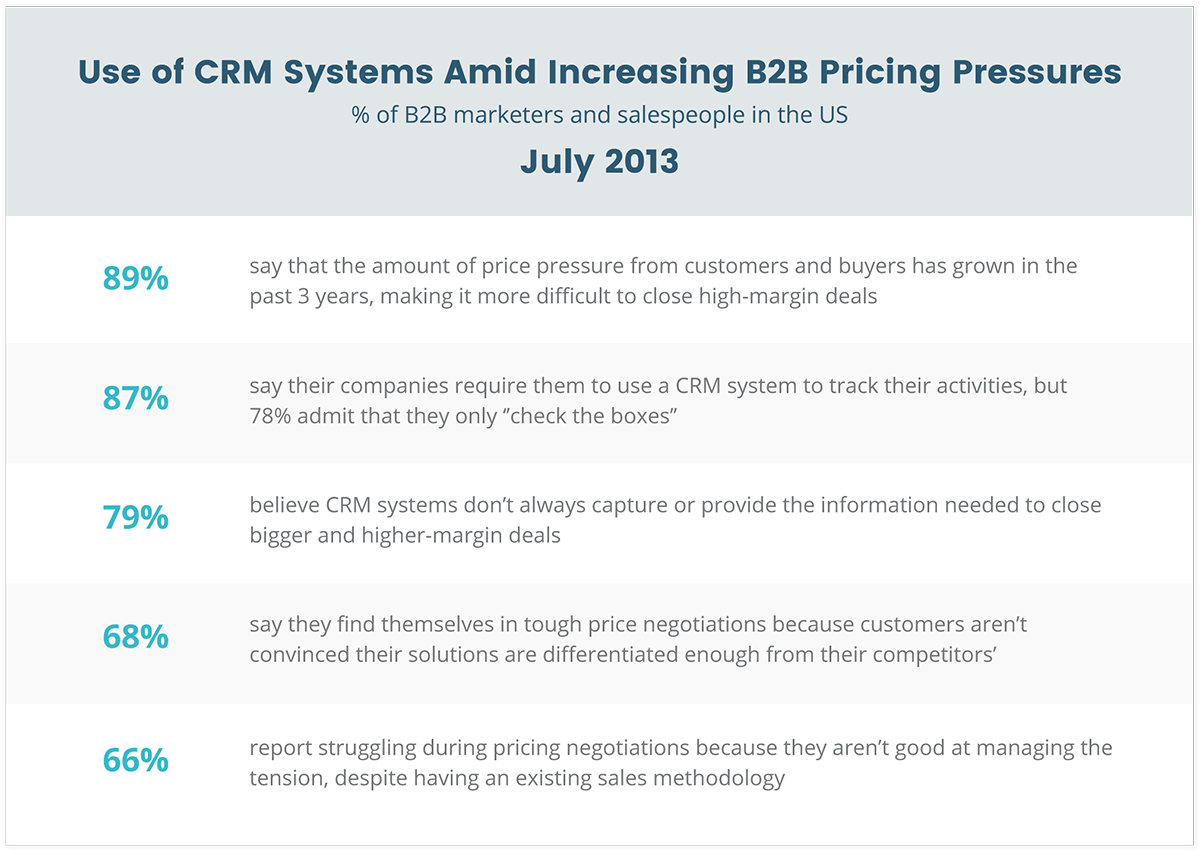
In fact, 87% of salespeople believe the reason they’re forced to update their CRM is so that their manager can police their activities.

This often results in salespeople just checking boxes, and doing the bare minimum to pass off as having completed their “obligatory CRM update”.

use-of-crm-systems-amid-increasing-b2b-pricing-pressures

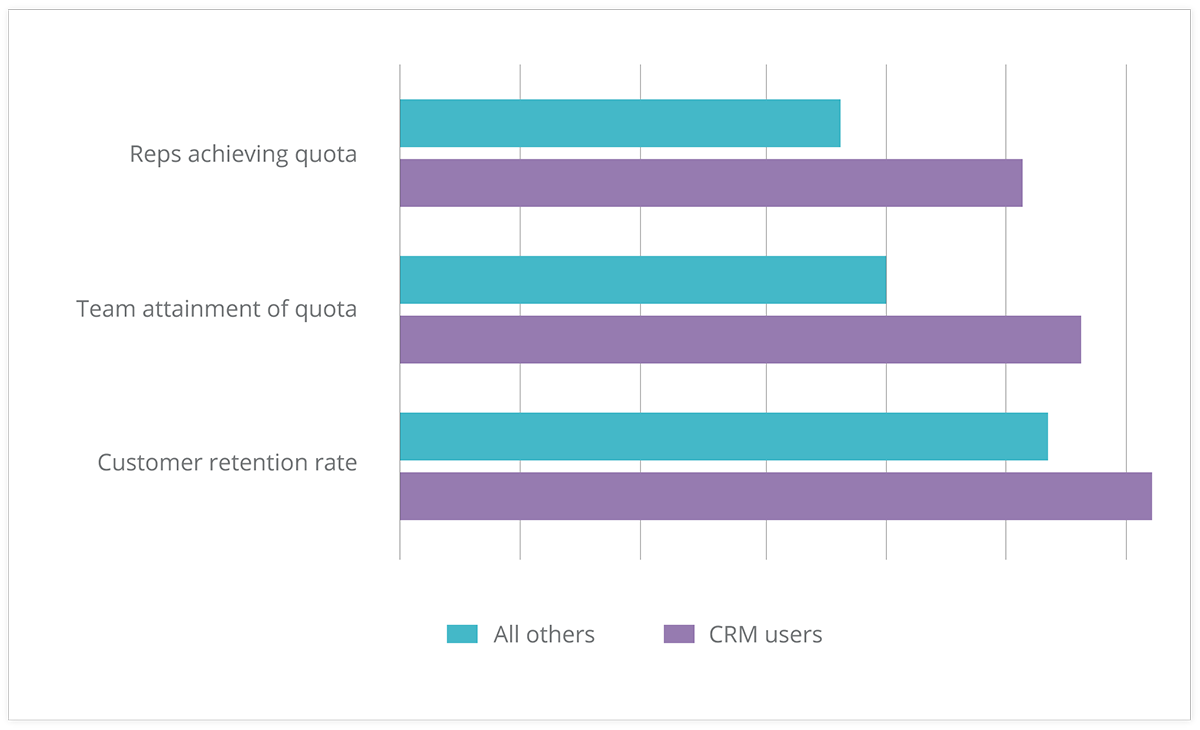
However, companies who adopt a Sales CRM as a tool for Sales Enablement achieve some pretty impressive results…
Check this out:

crm-results

These results from Aberdeen Research prove that by having the right mindset to use a CRM effectively, impressive results can be achieved… and consistently!

Sadly though, an estimated 25-60% of CRM projects fail to meet expectations.

But fear not…

In this article, I’m going to share seven CRM best practices for 2017.  After reading all the way to the end, you’ll be able to identify the right sales solution to guarantee 2017 as your best year yet.

So let’s get into it:

#1 – Clean, Reliable, and Up-To-Date Data

clean-reliable-and-up-to-date-data

Having clean, reliable, and up-to-date information in the CRM is essential for team collaboration.

But let’s be honest… do you really want to spend your time checking through last month’s data, and cleaning it up?

Of course not…

This is why it’s essential you choose a CRM that does this automatically.  Some beneficial features that’ll save you time and keep things in check automagically include:

  • Duplication Prevention
  • Lead Age Indicators
  • Deal Movement Tracking – more on this later.

Unless you enjoy data entry, I urge you to check whether your CRM is capable of all of the above.  It’s 2017 and it’s about time your CRM acted like it!

Related: CRM Segmentation: Knowing Your Customers Better and Preventing Data Clutter

#2 – Company Wide Snapshot

company-wide-snapshot

Another CRM best practice for 2017: Clarity.

“Clarity affords focus.” – Thomas Leonard.

Your CRM dashboard needs to be the first thing you see every day.  It’s the central control and pulse of the company.

At one glimpse you should be able to achieve full clarity over your company’s most important metrics.

As a salesperson this may include:

  • Your sales goals
  • Current leads you’re working
  • How those leads are responding to communications you sent the prior day

As a sales manager you need to be able to see:

  • Your team’s goals
  • Lead sources and their conversion rates for accurate forecasting
  • Top loss reasons so you can support your team in areas of weakness

Ultimately having this kind of clarity and visibility over the company’s performance brings everyone that much closer together, and highlights areas of weakness that you can focus on improving for the most impactful uplifts in performance.

Without it, you’re simply lost at sea.

Related: Sourcing Data from All Angles for Valuable Market Insight and Your Rally Road Book Is Your Sales Forecast.

#3 – Segmentation

Segmentation is the first step towards personalization.  But taking a step back, lead segmentation is about organizing your data so that relevant contact information is never more than a click away.

A CRM best practice for 2017 involves the automation of lead segmentation.

What do I mean exactly?

Let’s say you’ve just finished an initial Online Meeting with a new prospect.

You’ve spent 15 minutes on the call via your CRM’s SmartDialler, and have managed to successfully qualify them into the next stage.

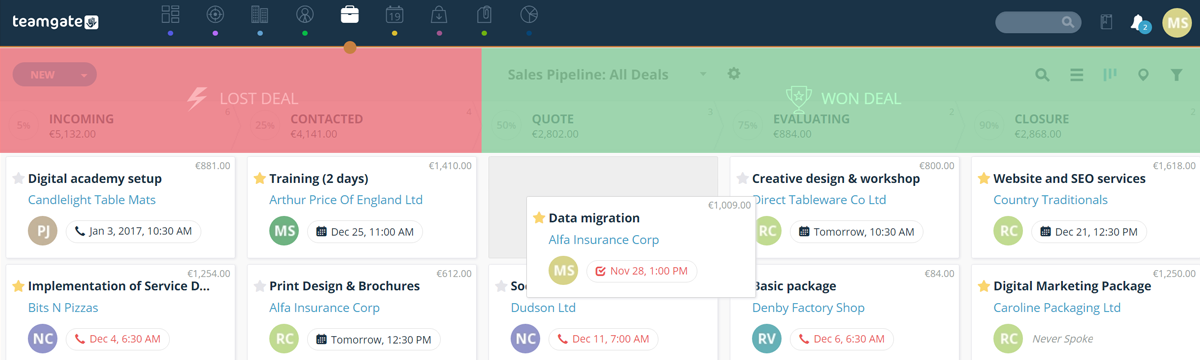
As such, you simply drag and drop the prospect from the “Online Meeting” column to the “Push Column”.

Segmentation

The lead gets automatically tagged, a follow-up task is created, and an email is triggered thanking the prospect for their time on the call.

Automagical.  This is 2017.

Related: Make and Receive Calls Without Leaving Your CRM: Introducing Teamgate SmartDialer and Beyond Sales: How To Make CRM Work For Any Profession

#4 – Source Tracking

This is by FAR the latest and greatest CRM best practice for 2017!

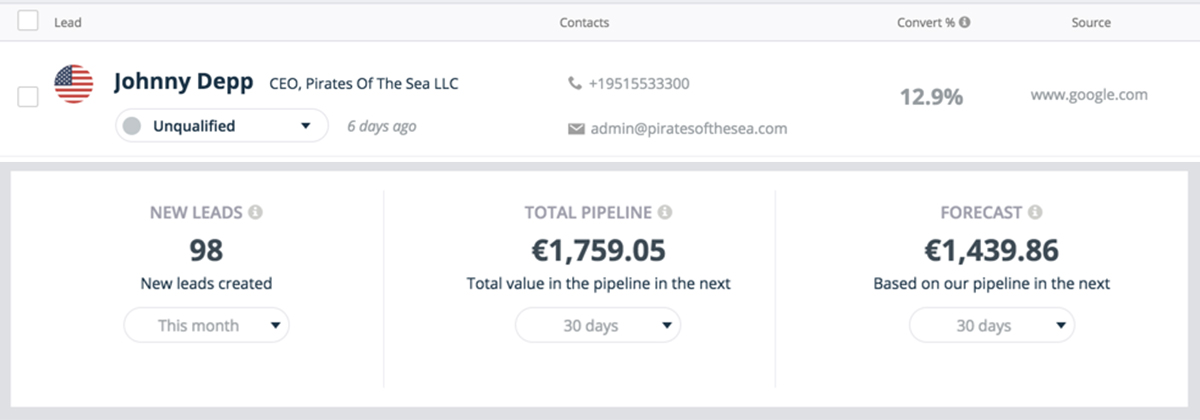
Source Tracking is a great way of accurately predicting sales forecasts based on where a new prospect has entered your CRM from.

For example:

  • Facebook
  • Google
  • LinkedIn
  • Bob’s DIY Podcast

….you get the idea.

source-tracking

At Teamgate we’re huge advocates of the Inbound Sales process.  This means we typically generate the majority of our new leads via web forms.

(By the way, you should be too!)

Now, based on where that lead has come from, we want to know the likelihood of that lead converting to a sale.

Fortunately for you and me, it’s 2017 and the top CRMs will track this automatically for you.

I can’t stress enough the importance of making sure your CRM has this capability.

It’ll highlight the lead sources that are most lucrative for your business so that you can invest more in what’s working, and less in what’s not.

Deal? Good.

Related: Networking and Capturing of New Leads with CRM

#5 – Deal Movement Tracking

Ever had a deal slip through the cracks?

Look, I know – we’re busy salesmen and it happens all the time, but there are measures we can take to ensure it doesn’t happen to you and me.

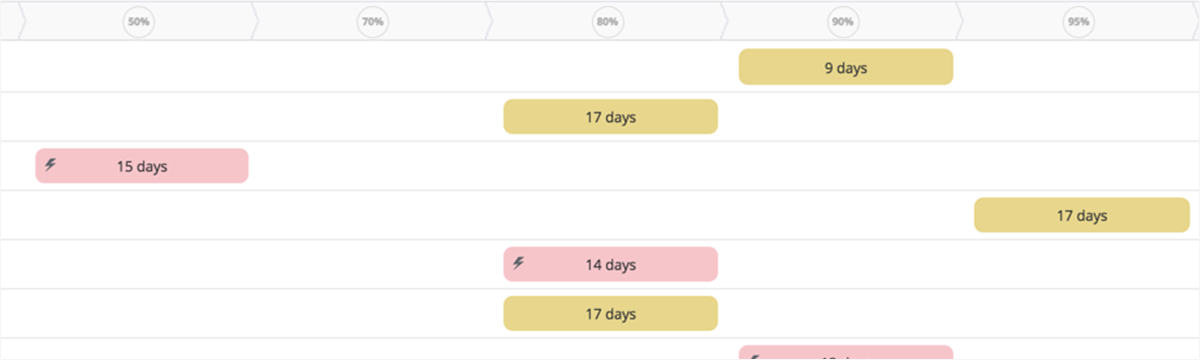
Deal movement tracking is brand new for 2017 and essentially allows salespeople to see the active movement a deal has gone through from stage to stage.

deal-movement-tracking

Why is this important?

With a quick look at your CRM’s Deal Movement board, you’ll be able to see in an instant which deals haven’t moved an inch.  Allowing you to jump right on them and move them forward.

No more deal slippage!

In fact, Deal Movement Tracking is a real timesaver if you return from a vacation, and want to see what’s happened whilst you’ve been away.

Simply fire up the Deal Movement Board and see all the progress that’s happened whilst you’ve been away – obviously great for sales managers, and highly motivating for salespeople!

Related: How to Stop Being the Second Best in Sales?

Do you have a CRM that keeps you organised?

The most user-friendly CRM on the market. 14-day free trial.

Start Free Trial

Painless setup, no credit card required

#6 – Geographical Insights

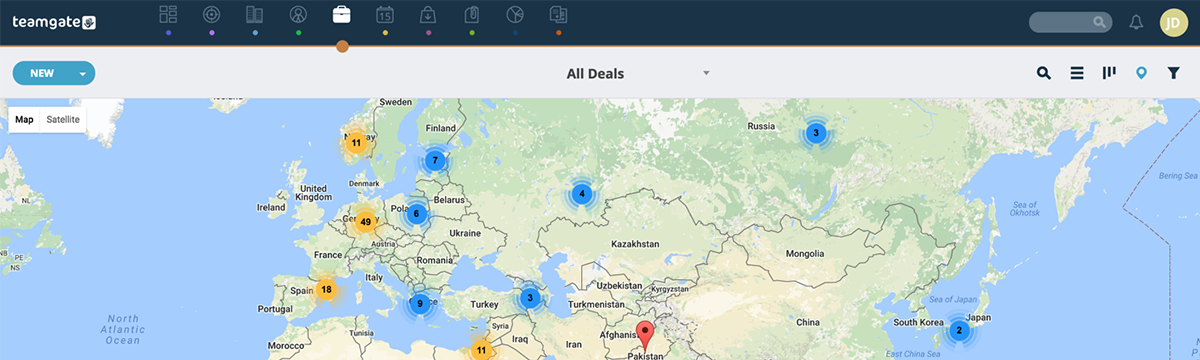
Does your current CRM allow you to see where all of your contacts are based on a map inside your deals view?

Ok, so this one may not be relevant to all businesses.  However, if you’re an international company it’s a great way of quickly visualizing which countries are performing best for you.

Not an essential one in my opinion, but a great insights tool that requires no additional input on your part.

Seriously though, it’s very cool.  Just take a look at this example taken from Teamgate:

geographical-insights

#7 – Personalisation

Lastly, and probably one of the most important features of our CRM, as we move into 2017, is the ability to get personal.

As salespeople, we sometimes fall guilty about making our prospects feel like a number in a system.  Cold callers (yes, some businesses still sell like it’s 1982) have probably a lot to answer for on this front.

However, 2017 is the year to pay extra attention to personalization.

Why?

It makes our prospects feel like we care because we take the time to care about what’s important to them.

This is a quote I like to use a lot when talking about influential sales tactics.

“People don’t buy when they understand.  They buy when they feel understood.”

Like that?  It’s so true though, right?

So how can your CRM best support this in 2017?

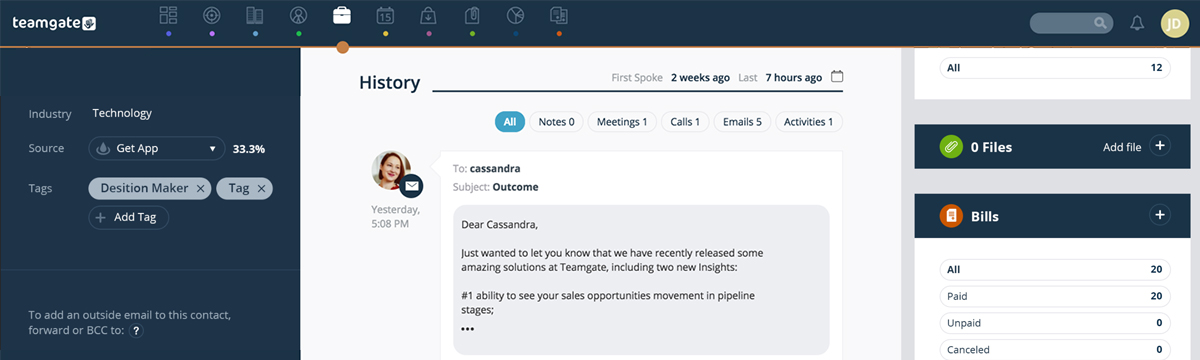
Your CRM should have a contact timeline where all calls, emails, website, and link clicking actions are recorded automatically.

personalisation


This means anytime you communicate with a prospect you can see the specific user journey they’ve been on all right there in front of you.  And as such, you can speak to them in a way that fits the experience you know they’ve had so far.

Conclusion

Like anything, there are two types of people in regards to Sales CRMs.

  1. Those who blame it for their inability to perform to their highest level.
  2. Those who embrace is it as a Sales Enablement tool.

Hopefully, these CRM best practices for 2017 have got you thinking about all the things you could be leveraging from a modern-day sales tool in your own sales team or business.

In summary, our top performers are going to be capitalizing on all of the following:

  1. Clean, Reliable, and Up-To-Date Data
  2. Company-Wide Snapshot for instant Clarity
  3. Contact Segmentation
  4. Deal Source Tracking
  5. Deal Movement Tracking
  6. Geographical Insights
  7. Personalization

Let’s make 2017 your best year yet!

Just what is a sales dashboard, and why do you need it?

As Peter Druker – the father of modern business management – so famously proposed, ‘If you can’t measure it, you can’t improve it’. 

A sales dashboard is a visual representation of your sales data, allowing you to easily track key metrics and identify areas for improvement whilst providing a wealth of information, including:

Sales targets and progress towards them
Sales by region, product, and salesperson
Lead generation and conversion rates
Average deal size and win rate
And much more.

By having all this information at your fingertips, you can quickly identify trends and patterns in your sales data, and make data-driven decisions to improve your sales performance.

But a sales dashboard is not just for sales managers. Sales reps can also benefit from having access to a dashboard, as it allows them to track their own performance and see how they compare to their peers.

In addition to providing valuable insights, a sales dashboard can also help to streamline your sales process. Many sales dashboards come with built-in CRM functionality, allowing you to manage leads, track customer interactions, and close deals more efficiently.

Why Teamgate CRM Dashboards?

The all-in-one Teamgate dashboard solution was created specifically for Sales Leaders, Sales VPs, and Heads of Sales – who need on-demand access to the health of their sales pipeline. Teamgate CRM sales dashboard displays every one of the measurements needed to analyse, understand, and improve the entire sales process, and more importantly – it can be created in seconds.

Teamgate gives you the dual option of both ‘Real-Time’ and ‘Historical Data’ dashboards.

Real-time dashboards give you an up-to-date view of the peaks and troughs of your current live sales pipeline. This gives you the power to react to any urgent situation which may require tweaking or complete overhaul.

Among the different dashboard types, historical data dashboards are precisely what they claim to be, offering overviews of all past activities over selected time periods. With the historical data dashboard, you have to select the metrics you wish to view and use the results to both compare and predict future sales trends.

You Get Solutions

No confusion, no jargon, and no unnecessary information, Teamgate Sales Dashboard gives a clear and graphic representation of the sales pipeline, at any given point in the process.

The sales dashboard – as a vital component of your CRM – gathers all the most relevant information gathered by your sales team, and presents the results in an easily digestible manner.

If you can measure it, you can improve it – so let’s find out how.

Sales Dashboard Teamgate CRM Alt

Teamgate Dashboards: The How

Inside your Teamgate CRM software, there’s a lot of things going on across your sales pipeline. Your sales team are nurturing leads, converting them to deals, closing those deals and recording all the information that it takes to navigate through each stage of the sales process.

Teamgate sales dashboard gathers all this information and returns it neatly packaged in easily understandable bit-sized reports.

These combined reports give sales leaders detailed knowledge of what’s happening in every stage of the pipeline, and they also graphically illustrate of any issues requiring immediate attention – like blockages occurring in the pipeline, or targets not being met.

Other CRMs allow the user to customise their dashboards, at Teamgate we don’t allow that to happen, and for a very good reason.

Teamgate believes that we’re the experts in this field, we really understand what you need to see, and how you need to see it. That’s no arrogant boast, it’s just a fact. We’ve focused a lot of energy on making our CRM software the most results-orientated and user-friendly on the market.

We went a long way to create the ultimate sales dashboard, and then we went even further. We created the ultimate business dashboard, the ultimate sales KPI dashboard, the ultimate sales metric dashboard, the ultimate sales report dashboard, and so much more.

We understand, 100%, that being able to measure means being able to improve.

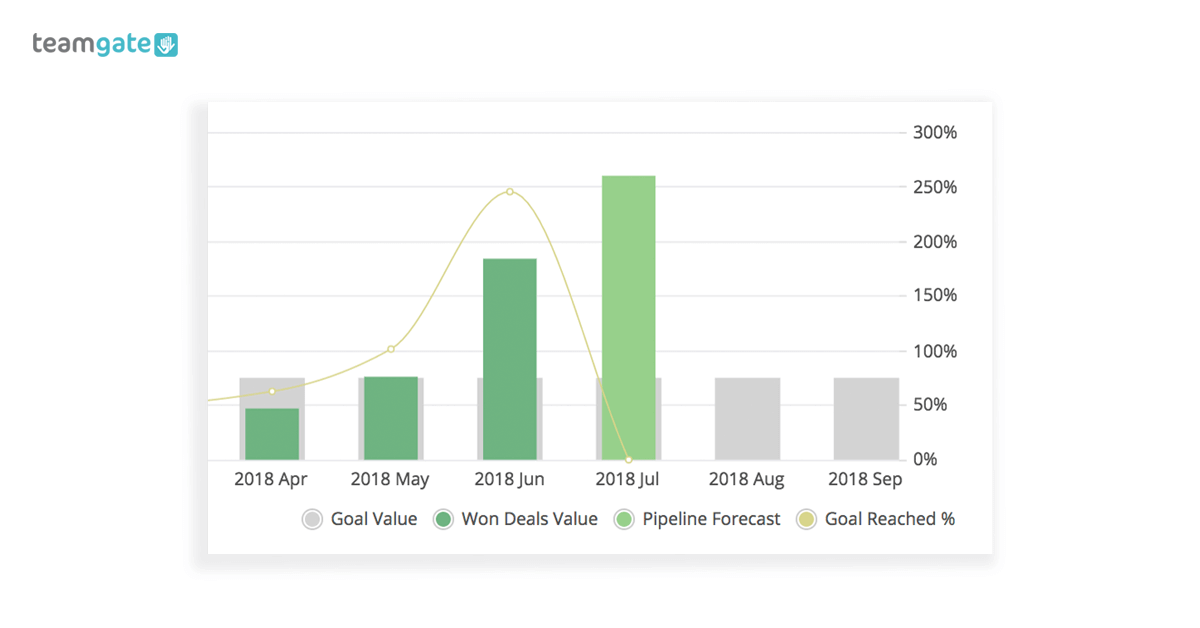
#1 Goal Management

Business Dashboard Sales Goals

Sales leaders need to be able to set goals and to manage those goals. Your Teamgate CRM lets you create sales goals directly within the sales pipeline and by means of one simple graph – and three simple metrics – to analyse if your sales results have matched those goals, and to illustrate exactly how much those results are worth. It’s not just a sales dashboard, it’s a complete business dashboard.

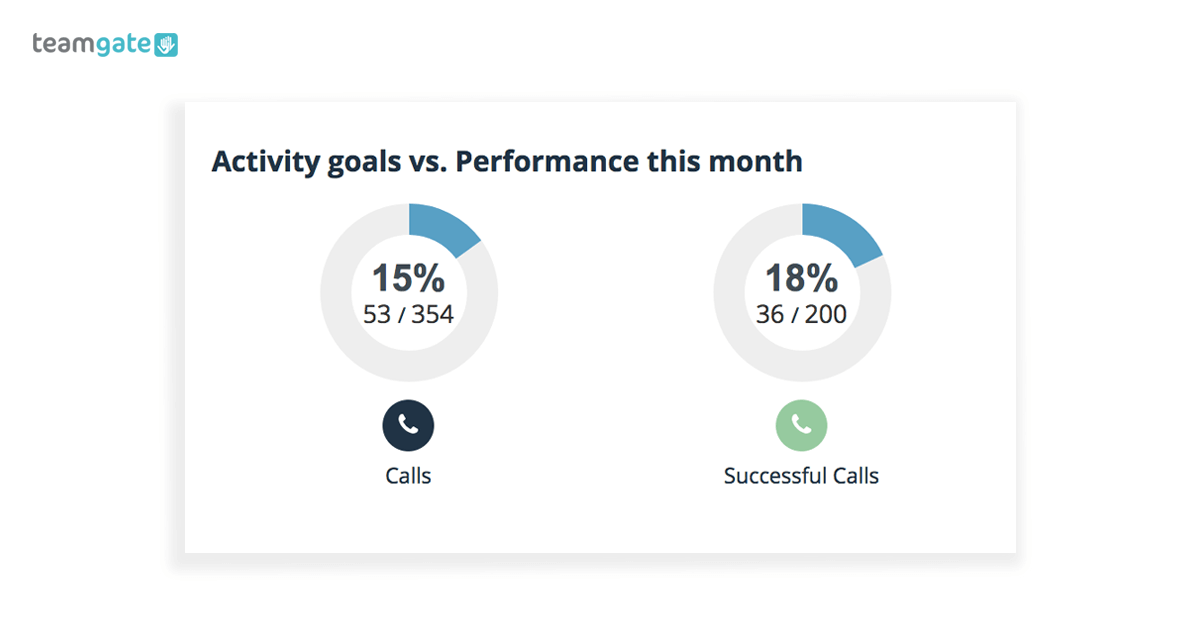
#2 Sales team performance

Business Dashboard Activity Goals

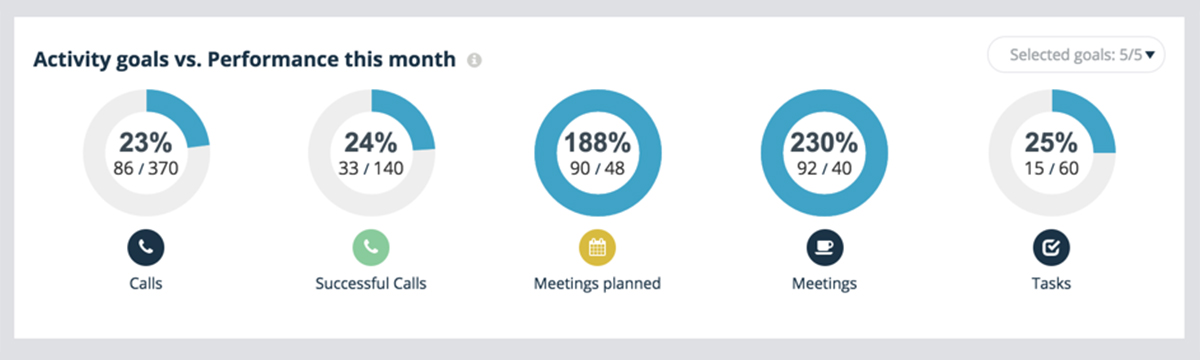
Want to see what your sales team are up to, and set goals for them to reach? That’s no problem with your Teamgate dashboard.

Your sales KPI dashboard gives you a detailed overview of all of your sales team’s activities – calls made, meetings attended, deals won/lost, closed deal ratios, and a whole lot more. From here you can set goals for individual sales reps, and continuously track the progress towards those goals.

These metrics can be used to identify individuals who may be struggling to reach their goals and the reasons behind this. Measured against the success of your top performers the dashboard can be used, as part of a results-centred incentive, to help nurture individual rep’s selling skills.

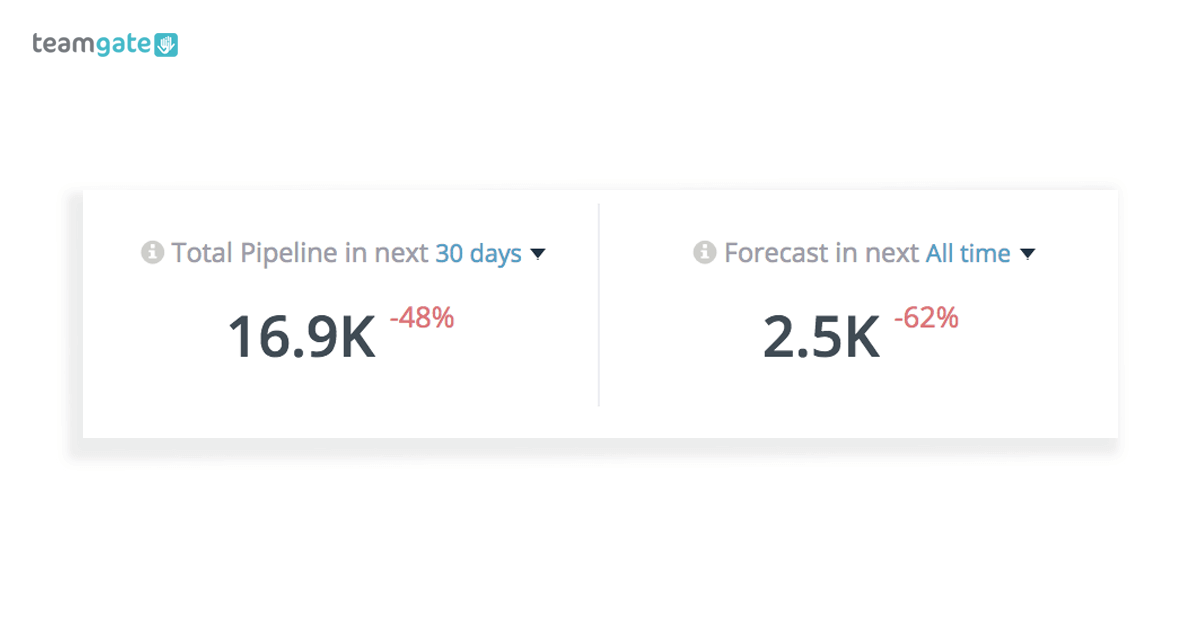
#3 Sales forecasting

Sales KPI Dashboard Forecasting

Sales forecasting is at the centre of growing your business. Using the benefits of past sales data, your Teamgate CRM’s sales metrics dashboard gives you a simple visualisation of your sales forecast for the next 7 to 90 days.

If targets are not being reached as expected, the dashboard helps highlight stages of the pipeline where you may need to deep-dive and take the steps needed to relieve blockages.

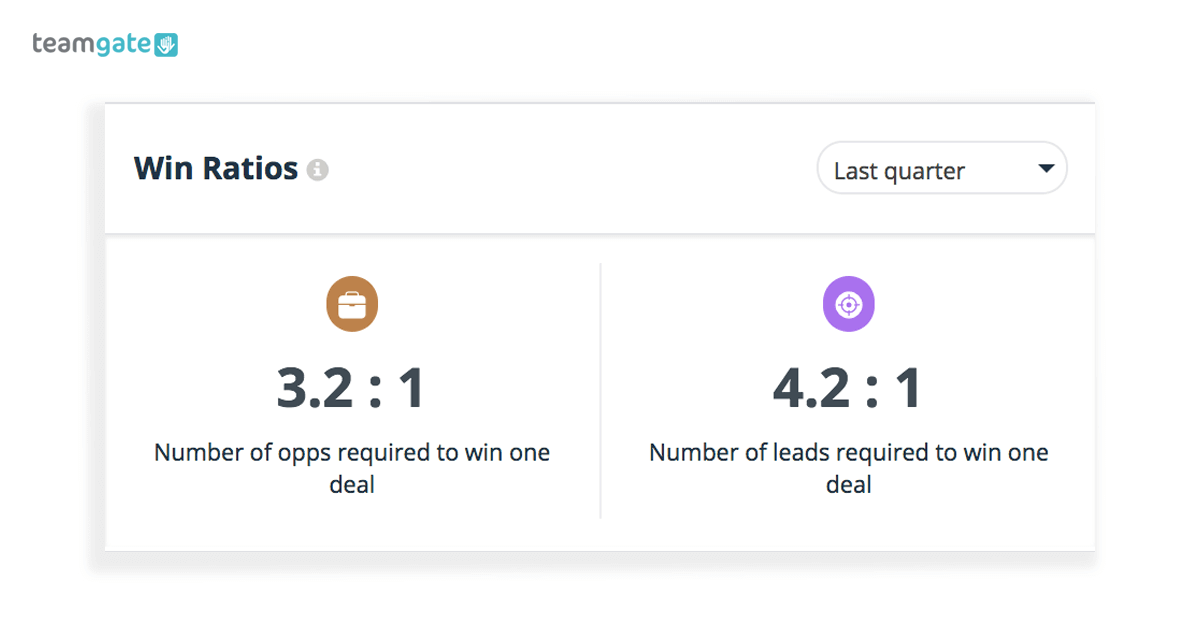
#4 Win Ratios

Sales KPI Dashboard Win Ratios

This simple Teamgate dashboard breakdown helps you to identify and correct actions which need to be taken in order to close a deal successfully.

Armed with the knowledge of your win ratios at each stage of the sales process you can then take the necessary steps to rectify and improve the stages which are not living up to their promise.

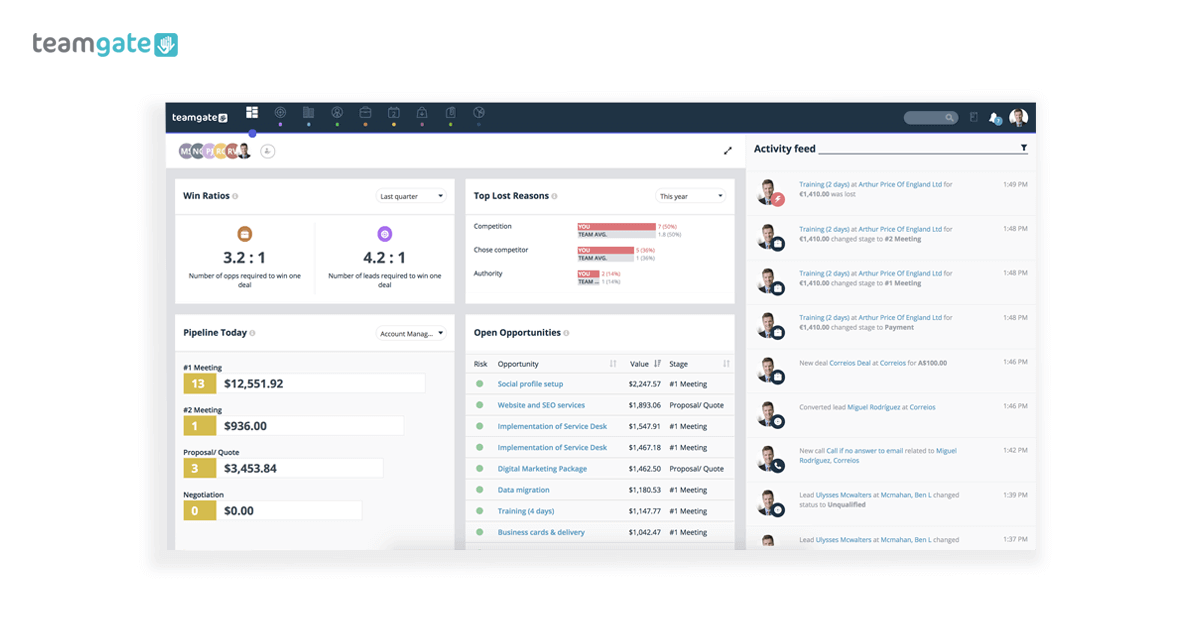
Using the Teamgate dashboard the process couldn’t be simpler. Select a period of time you wish to analyse and instantly receive a metric outlining the movement of all won and lost deals throughout the pipeline. See the number of opportunities you need to win one deal, plus the number of leads you need to win one deal. One of the most important metrics in your whole sales process.

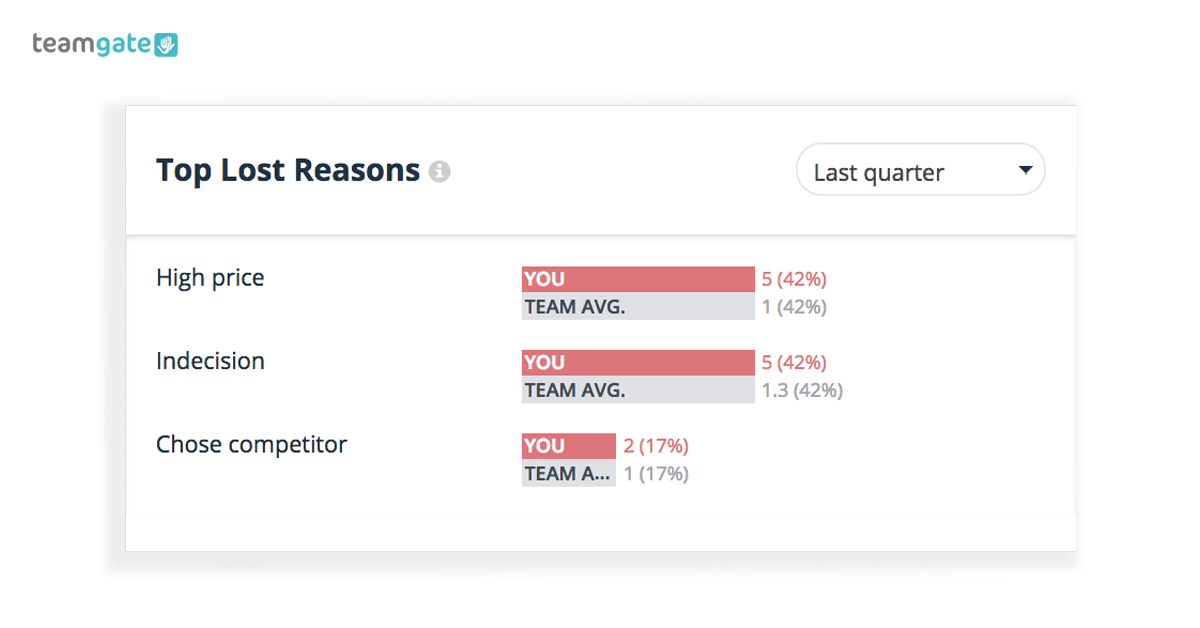
#5 Top Loss Reasons

Sales metrics dashboard Loss Reasons

Not closing deals can be the most frustrating part of the sales process. If your deals are not closing, you’re going to want to know exactly why.

Thanks to your Teamgate dashboard you get an easy-to-interpret overview of the most common reasons why deals are being lost in your pipeline.

When sales reps are entering loss reasons into your CRM software it all combines to create an overall picture of all won and lost deals and guides you towards taking corrective action, instantly.

If you have an issue with dissatisfaction in your product, pricing concerns, more persuasive competitors, or any other regularly occurring reason for a loss, your dashboard analysis lets you move swiftly to counter the problem.

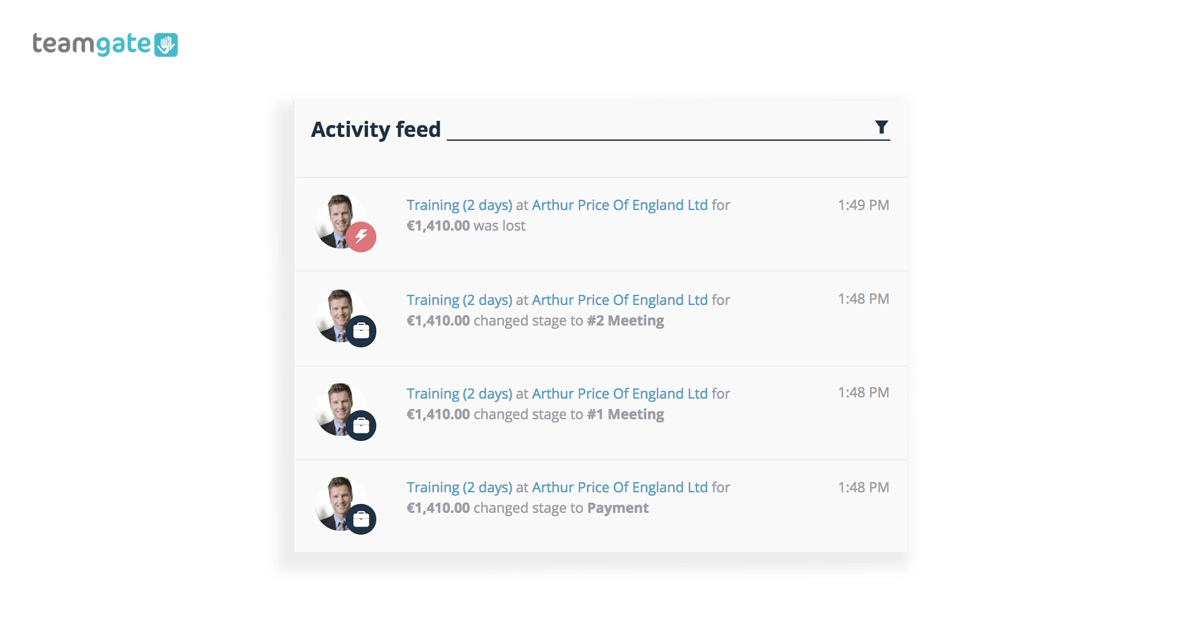
#6 Activity Feed

Sales metrics dashboard Activity Feed

Think of your Teamgate dashboard activity feed as the crystal ball that lets you see inside the heart of your entire sales process.

See, and understand every activity, action, and movement within the pipeline and complete the bigger picture using all of the components and metrics that you have at your disposal.

Using the information that you have in front of you in your dashboard, you can join easily join the dots between all actions and their reactions. You can also quickly identify your top personnel across different markets, in different geographic locations, and across various time frames.

And most importantly for any sales leader, you quickly get to understand if sales targets are being met, and if not, why not.

Teamgate Dashboards: The Why

Teamgate dashboard is the simple, and understandable visual expression of all the information in your CRM. This information is compiled in layouts you can instantly ‘read’ and ‘understand’. A vital array of tools for sales leaders to fully understand the complete sales model on a moment-by-moment basis. Gathering all the information needed to make a presentable, accurate, up-to-date, and actionable sales report is no easy task, and takes a lot of time – time you could be spending selling.

So if you’re ready to elevate your sales performance with the most comprehensive, yet easy to use dashboard solution, contact Teamgate today for your free trial.

GET READY TO OWN YOUR WORKDAY

with the most user-friendly CRM on the market.

Start Free 14-Day Trial

Painless setup, no credit card required

Every company looks for the different ways to increase its revenues. How are you planning to edge past your competitors?

The amount of revenue you generate depends on upon different factors, including the strategies used, the product you’re selling, as well as your marketing efforts. It’s the sales team and the sales marketing strategies that you use that can make a considerable difference at the end.

Understanding Sales Metrics – Making Informed Decisions

As a business, you would see your sales increase and decrease at times. If things aren’t going the way it should be, it’s important to identify the problem.

And that’s exactly where your sales metrics can help. Understand how you could improve the parameters to boost your sales. Here, we have listed some of the most important sales metrics that will help you in analyzing your performance.

1. Optimum Time Utilization

Your customers wouldn’t wait for you. You need a marketing team, which can reach out to your customers and close in on the deal as soon as possible. The lower the time, the better.

Monitor the time spent by the sales representative (rep) on the deals. If the rep successfully closes the deal, analyze the time needed for it.

Check the number of opportunities handled by a rep in an interval. This will help you in allotting more leads to the sales rep.

The response time for a query is equally important. According to a survey, if you answer the query within an hour, it increases chances of converting lead by seven times. The more time you take to respond, the lesser are the chances for a conversion.

Do you have a CRM that keeps you organised?

The most user-friendly CRM on the market. 14-day free trial.

Start Free Trial

Painless setup, no credit card required

2. Sales Cycle

It is directly proportional to the time taken to close the deal. You can analyze different deals. Some deals will take more time to close while others will take less time – check on the parameters responsible for the deal to close.

Your aim is to close the deal sooner than later. When you analyze a sale cycle, you will know the number of leads to send a sales rep to help them perform to their best.

Related: Could The Traditional Sales Model Really Be Hurting Small Businesses?

3. Analyzing Results

The results help us to take decisions regarding the future deals. Some deals are easier to close while others can be more difficult. Understand the common problems so that you can address them.

This includes understanding the strengths. Remember, different deals require a different amount of time investment. Consider working on the opportunities according to the time requirements.

Some of the sale reps are better with certain types of deals, and take less time. Some sales reps perform better with small deals while some are good at bigger deals.

Analyzing the types of deals a sales rep closes quicker will help you to assign similar deals to them, to enable faster conversions.

Allot deals according to the ability of the sales rep. In addition, identify the weaknesses, and work on them. It will strengthen your team, directly or indirectly, for the future dealings.

Teamgate has a perfect insight tools for all the most important metrics your business needs.

Related: Your Rally Road Book Is Your Sales Forecast

Teamgate Insights

4. The Deal Size and Amount

If you find that the majority of deals are smaller amount deals, it’s important to identify the problem. You need to work to bag in bigger deals. That’s where Teamgate can also help you – with the most important deals view, you can see a clear picture of deals you need to focus on the most.

While the deal size is important, the other question is the number of deals you have in queue. You don’t want too many to avoid missing deadlines – but you do need some to keep your employees engaged.

As a manager, work hard to attract as many deals as possible. If you’ve too many deals in queue, it’s a happy problem that you can deal with and increase your team size.

5. Cost to Revenue Ratio

Don’t just look at generating revenues – instead, look at the cost to revenue ratio as well.

Calculate the costs of your inputs like salaries, expenses, marketing costs, commission rates, and the total revenue you earned from all the deals. This will provide an insight on how to manage your investments.

Optimize your investments – it will help in boosting the efficiency of your team and garnering maximum productivity.

Doing More by Looking At the Sales Metrics Data

The aim is to be able to harness the power of your sales representatives. You can achieve this by managing your time efficiently, allotting opportunities according to rep’s capability, boosting the morale of your sales team, and maximizing net revenue.

There are other factors as well including the lead response time. The quality of leads will always matter and the marketing team can help you get the perfect leads who are interested in your products. You can even keep a track of the number or percentage of opportunities you are winning. For every ten opportunities that you are getting, how many have you been able to successfully convert? Aim to improve the opportunity win rate.

No matter what business you’re in, focusing on these metrics will surely yield better results and help improve overall performance.

Related: How CRM Helps Companies in Logistics Industry to Improve

In the words of the great American business and leadership influencer, Dale Carnegie: 

To win a customer you need to create a relationship. To influence a customer you need to make him feel important.

Nice, but what’s that got to do with CRM? You might ask.

Believe it or not, the answer is probably, ‘everything’.

In his iconic 20th century book, ‘How to win friends and influence people’, Carnegie listed six simple traits which he believed go a long way towards making people like you:

  1. Become genuinely interested in other people.
  2. Smile.
  3. Remember that a person’s name is, to that person, the sweetest and most important sound in any language.
  4. Be a good listener. Encourage others to talk about themselves.
  5. Talk in terms of the other person’s interest.
  6. Make the other person feel important – and do it sincerely.

These six tenets of relationship-building might sound obvious, and even over simplistic, but the real meaning behind these words are the foundations and cornerstones on which all great modern CRM software is built. Teamgate is one such CRM company, solidly founded on this doctrine of stability, nurturing, and growth.

What is CRM?

So, let’s discover just what is a CRM system? – its definition, importance, benefits, its place in the world of the modern sales process, who is it for, how does it work, are there any downsides, does it take long to onboard, and can it grow as a company grows?

CRM, in case you weren’t aware, stands for Customer Relationship Management – you see, the pieces are coming together already.

When we talk about CRM meaning – whether we’re talking about software, hardware, or even the principle behind how you relate with your customers – CRM is the manner in which you manage and nurture interactions with past, current, and prospective customers.

Traditional CRM; regardless of whether it was the original process of knowing your customers’ first names, their family background, or any other snippets of information which developed from a well-nurtured relationship, are the basis of all modern CRMs.

But just what is CRM software? CRM software has modernised Carnegie’s tenets for relationship building; the principles are the same – be nice, listen, and make the other person feel important – but the methodology has significantly improved.

Why might YOU need CRM software?

A company thinking about using a CRM has faced one or more of the following questions:

  • Is your sales team being overstretched and losing sales through missed calls and leads?
  • Do you feel that your sales process needs to be trackable, offering valuable insights into its daily running?
  • Does your sales team need access to all customer information even when on the go?

What is CRM Software

Great CRM software, like Teamgate, give sales teams the ability and the time to really focus on the relationship with their customers. It helps them to concentrate on listening closely to the client, evaluating their needs, and providing the exact solution which the client demands. Great customer relationship management puts the customer to the fore, and makes them feel important, and valued.

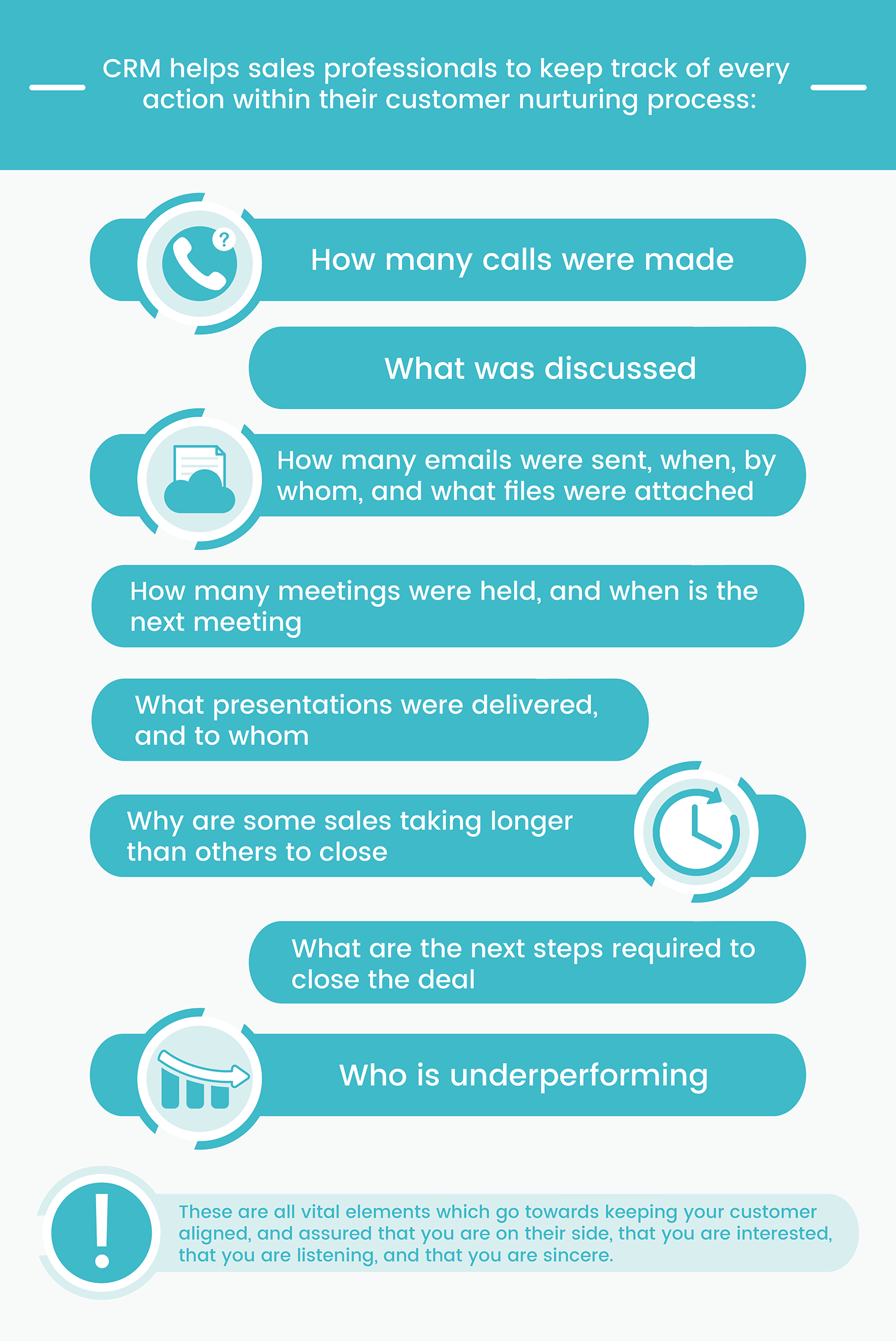
Now, more than ever, sales professionals need to keep track of every action within their customer nurturing process. They need to have all the information to hand, such as:

  • How many calls were made
  • What was discussed
  • How many emails were sent, when, by whom, and what files were attached
  • How many meetings were held, and when is the next meeting
  • What presentations were delivered, and to whom
  • Why are we losing so many sales
  • Why are some sales taking longer than others to close
  • What are the next steps required to close the deal
  • Who is underperforming

These are all vital elements which go towards keeping your customer aligned, and assured that you are on their side, that you are interested, that you are listening, and that you are sincere.

Everything in one place

Teamgate CRM ensures that you have all the information you need to hand, when you need it, even while mobile.

Leads, which have been sourced through CRM integrations – such as, MailChimp, Forms for WordPress, and the Teamgate-LinkedIn Shuttle – are automatically stored in your CRM. You can then ‘score’ those leads for priority attention, enabling sales teams to work on deals most likely to close.

As your contact with the lead is developed and nurtured, the lead may be qualified and moved through the sales pipeline as a deal, by means of a simple drag and drop process. Using your CRM nothing gets lost, all information is easily viewable instantly. Plus, sales managers have access to the health of the sales pipeline at any given moment, enabling them to pinpoint successes or possible pain points.

The benefits of a CRM – A virtual handshake

Knowing your customer – To go back to Carnegie once again, the purpose of the whole sales process is to develop a lasting relationship with the customer. The ease by which a salesperson can capture all the relevant customer information is the very thing which allows them the luxury of time spent on listening to the customer, in an attempt to understand their pain-points and solve their problems.

Never miss a trick – There can be a lot of data generated during this nurturing process, and it’s vital that this information is managed minutely. With the help of your CRM, you can be sure the meetings, appointments, or follow-up calls never get missed or overlooked. It is the virtual handshake that assures your customer that you have their interests at heart.

Managing performance – Teamgate CRM also allows sales managers to compare sales individuals’ performance levels, set against a set time frame.

  • Are goals being achieved
  • Do leads remain for too long in certain stages of the pipeline
  • What are the main sources of won deals
  • For what reasons are deals being lost?

These are all questions that can be answered simply using Teamgate CRM insights, reports, and analytics. They give sales manager the tools to plan and predict for the future.

And don’t forget your past customers – Your CRM helps you stay involved with closed deals by offering them product updates, relevant news, inspirational stories, and informative guides, ensuring that you and your business are remembered long after the last handshake has faded.

Will my CRM still love me tomorrow? – A good CRM needs to be scalable, it needs to be able to grow as your company grows, and continue to seamlessly provide solutions in the manner that you’ve grown accustomed to.

Teamgate offers such scalability, whether you are a burgeoning startup, or a multi-national, the solutions are there and come with the ability to grow regardless of how big your operation may become.

Does a CRM have downsides?

Everything has a downside, and CRMs are no exception.

However, it’s unlikely that the CRM itself has a downside, it’s more likely to be the people who use the CRM or those who mistakenly believe that a CRM will change mud to gold overnight.

When choosing CRM software it’s important to know exactly what problems you want to solve. You need to have identified your sales process and exactly how your CRM will align with that process. Failing to do that, and you’re sure to be throwing money down the drain.

Some employees may be resistant to the onboarding of a CRM for any one of a hundred reasons; the old ways are the best; CRMs are too expensive; new technology is too difficult to learn; it’s a way of spying on your employees; etc.

This is not the fault of the CRM, but the fault of the management wishing to implement a CRM into their workspace.

With change comes fear, and that fear must be handled and managed using the correct methods. Thankfully, Teamgate can help companies right through the initial decision-making and onboarding process, by listening to their real needs, by offering practical advice and solutions, by being honest and open, and by offering detailed online training and support, as long as it may be needed.

Now you know what CRM is, isn’t it time to act?

The more successful your business becomes, the more likely it is that you’re going to lose focus – after all, you can’t be everything to everyone.

Customers who have been loyal from the outset may get overlooked, or even neglected completely. New leads may be lost. Appointments may be missed, and vital communications go unanswered. Sales opportunities are getting stuck in the pipeline. Your business has grown so far beyond what you initially understood that you can no longer make accurate sales predictions.

This could spell disaster.

Thankfully, Teamgate is a sales CRM that has been designed by the very people who use it on a daily basis. It has grown as the company has grown. It has learned intuitively from inherent mistakes. And, it continues to evolve and become even more scalable, and more capable of coping with the needs of every sales team, regardless of size.

The tenets of Carnegie have been lessons well learned. At Teamgate we fully realise that to win customers we need to create a relationship and keep those relationships strong. Gathering information smartly is one thing, using that information wisely is another.

Knowledge isn’t power until it is applied (Dale Carnegie)

GET READY TO OWN YOUR WORKDAY

with the most user-friendly CRM on the market.

Start Free 14-Day Trial

Painless setup, no credit card required


As a sales leader or manager, you’re aware of how the landscape has shifted in terms of how we grow accounts and boost sales opportunities. In today’s environment, buyers are less patient than they were, so it’s important for sellers to impress them right away and throughout the process. If not, the buyer will move on quickly. 

To succeed in this landscape, you have to plan your strategy and focus on properly managing your sales opportunities. Companies who do this right are the ones that direct most of their energy on the most important opportunities and have a specific strategy for each. If you want to increase your success, ask yourself these 10 essential questions.

1. Does the planning stage involve the whole team?

It’s normal that sellers work on their own opportunity plans by themselves. This can actually be a problem. Sellers, like any other people, can be really good at one thing but not so good at another. When you work alone, you’re going to miss certain things or make mistakes that would not happen if you were collaborating. The best decisions and ideas happen when all the top players work together to create a sales opportunity strategy.  

2. Does your sales team use all the resources and people available?

Because sellers typically work alone, they can often fail to use all the resources and people available to them. Instead, think about your biggest sales and how you could improve these opportunities by leveraging people with industry experience, important connections, strength in negotiations, inside information, and much more. In terms of resources, consider referring to case studies, presentation material, buyer interaction possibilities, sales messaging resources, and so on. 

3. Are the most important sales opportunities chased down with maximum energy?

As explained by Belinda Darcy, a sales expert at Boomessays and UKWritings, “your sales team needs to build a sales opportunity plan and use their maximum energy to pursue each sale. Brainstorm with your team to come up with the best ideas, plans, and strategies to achieve your sales opportunities.” 

4. Do opportunities have a seller-assigned intensity rating?

You probably can’t dedicate maximum time and effort to each opportunity due to limited resources. Have your sales teams take a step back and rate each opportunity on a scale of importance to decide which opportunities require your time and energy. If you do that analytically, you’ll be able to better allocate your resources and maximize your opportunities. You can then focus completely on the more important opportunities, which should maximise profits for your company.

5. Are your sales opportunity plans designed to get the sale?

Sellers don’t often enjoy building their sales opportunity plans. However, it’s important to create the plan properly to maximize your chances. Plans should be detailed and compelling, especially for the most important sales, because once it’s written the seller becomes more likely to follow it. Writing it down also gives other sellers or sales leaders the opportunity to improve it or discuss it. 

6. Does the sales team simplify agreement in the buying team to progress?

When a seller is facing a buyer group, especially a larger one, it can be difficult to move forward. An excellent seller will identify and motivate an influential buyer within the group to take a stand and push for the sale.

7. Is the sales process as good as it can be?

It can be hard to have a successful sales process when the seller doesn’t understand the process and struggles to move the buyer through the stages, or the process simply isn’t good. It shouldn’t surprise you to learn that the companies whose sales processes are more mature tend to have a greater revenue growth, offer fewer discounts, and have better win rates. 

As said previously, your sales team needs to have your best, most experienced people on it.

8. Do your sellers satisfy multiple buyers’ criteria?

The reality is that many sellers in the B2B environment will be selling to teams of multiple people. The sellers who are the most successful with these groups facilitate buyer agreement and they identify and categorize the buyers into five decision roles. You may wish to review your approaches to selling to multiple buyers. 

9. Do sellers plan their insights in advance?

To be a great seller, you need to be able to educate or inspire buyers with fresh ideas and perspectives, what’s known as insight selling. It’s actually very important to plan these insights in advance to become a top seller. You could monitor which products are selling well all year, then focus on those next year, or set up a survey to see what potential customers may want.

10. Is your process for managing sales opportunities all about the customer?

As much as companies like to think they’re customer-centric, in reality, they often aren’t. Many companies use opportunity plans that are focused on sales missions, sales objectives, seller approaches, and more. If that seems familiar to you, it’s time to rethink your opportunity management process to make it more customer-focused. It’ll be impossible to focus your organization on customers when your tools and strategies are all about the sellers. 

A product that is personalised to the customer, even marginally, is substantially more likely to sell.


Is CRM product management the new kid on the sales block?

Without the benefit of detailed CRM product management you’ve already put yourself at a disadvantage. At least that’s what’s being said, and here at Teamgate we’ve got ears on the ground.

The word on the streets is that being product management savvy is the new silver bullet for smarter selling. If that’s true, then Teamgate already has your back.

You see, we listened to what our customers have been telling us (we’re smart like that). About their needs, about what helps them keep their sales rolling in the right direction, and about what they’d like to see in their armoury to keep them at the top.

With that in mind, we went to great lengths to make sure that Teamgate CRM is tooled up with all the bells and whistles of product management you might ever need to move your sales even faster, and more smoothly through the pipeline.

But like all new things to hit the streets, you’re bound to have questions.

For example:

  • Do you know your best selling products?
  • Or how about products that should be moving, but just don’t seem to have the momentum?
  • Which salespeople are selling which products?
  • And, which products are showing the most profitability?

Teamgate sales CRM product management features can deliver those answers, and quickly – keeping you ahead of the posse.

Products Catalog

Not every business model needs a product management solution, but for those that do CRM product management is fast becoming a game-changer for sales professionals with an eye on the ball.

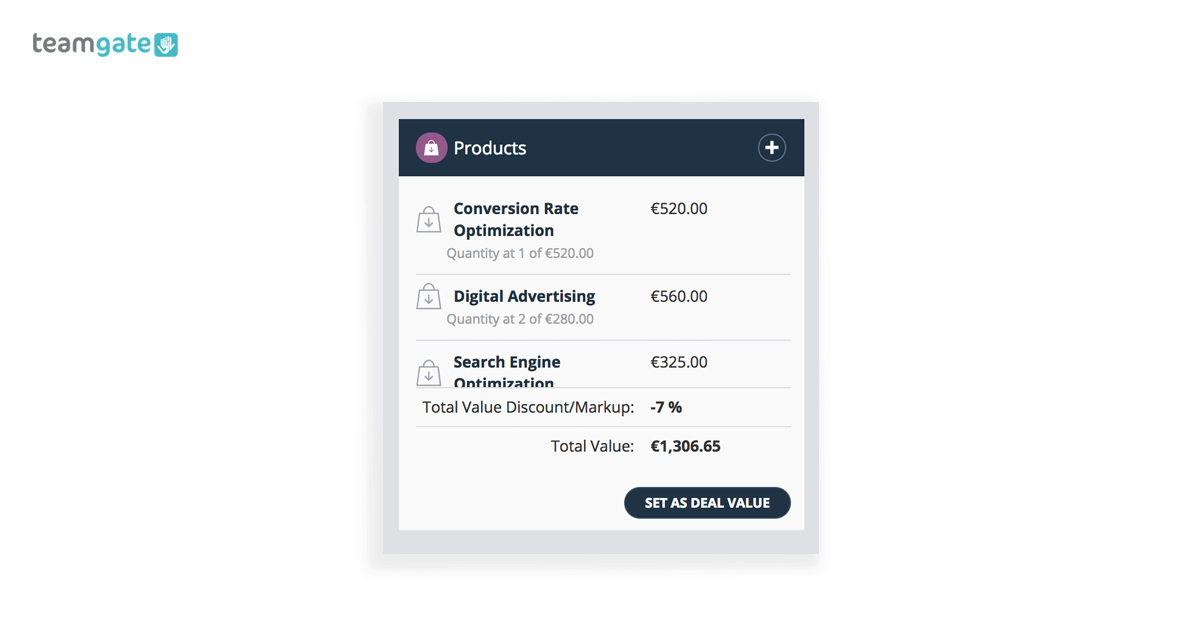
Along with actively combining to manage your sales pipeline, Teamgate gives you the advantage of a CRM product catalogue directly within your CRM software. The product catalogue gives your sales team access to every single product on your inventory – it doesn’t matter how many products you have – and all directly from within your Teamgate CRM software

Having direct access to your product catalogue, along with knowledge of the products preferred by your customers – directly in your CRM deals card – gives you a distinct advantage when attempting to maximise your sales volume.

Plus, sales managers need to be able to understand in an instant, who’s selling what product to whom, and for how much.

Teamgate analytics and smart reports give you the power to produce detailed information on all the sales statistics you need when you need them.

Does keeping track of your products slow you down?

Products and services come in many shapes and sizes. In the past keeping track of a large inventory of company products was both confusing and time-consuming.

Not knowing which customers bought what, when, and for how much often meant redoubling of sales efforts in the wrong areas; wasting time, effort, and money.

If your sales business is product heavy – offering many similar lines, with a multitude of variations, e.g. small engineering or electrical components – not knowing your customers’ buying history can be fraught with time-wasting communications as you attempt to clarify matters.

Sales managers need answers, and they usually need them fast.

In the past, manually compiling product management reports was a slow and laborious task – and the results weren’t always accurate. Going through reams of sales invoices and contracts, physically counting quantities of items sold, calculating their sales value, and the margin of profitability – it all took time.

Eliminating these time-consuming tasks aids your success and the profitability of your business.

But how can CRM product management help you regain that time, and help drive your business towards greater profitability?

Teamgate product catalogue features

product management features

Teamgate sales CRM product catalogue gives you a toolbox full of time-saving product management tools and features.

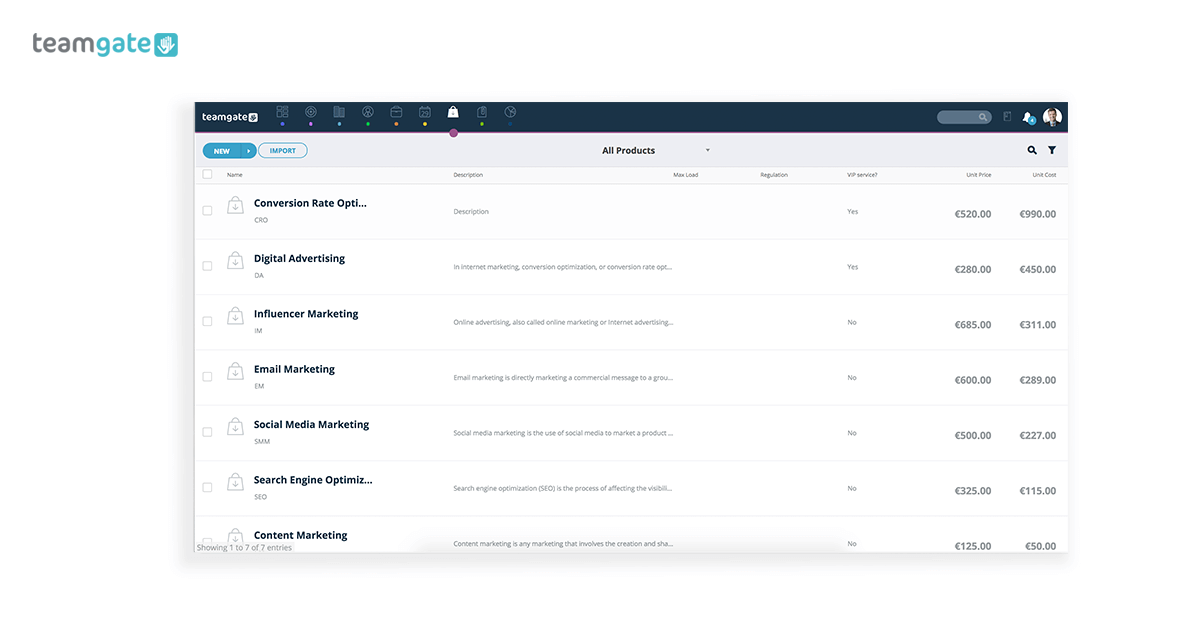
The product catalogue gives you a visual account of the products or services which you have to offer your customers, all displayed neatly within your deals cards.

The product catalogue helps you keep track of all the products associated with active deals in your sales pipeline.

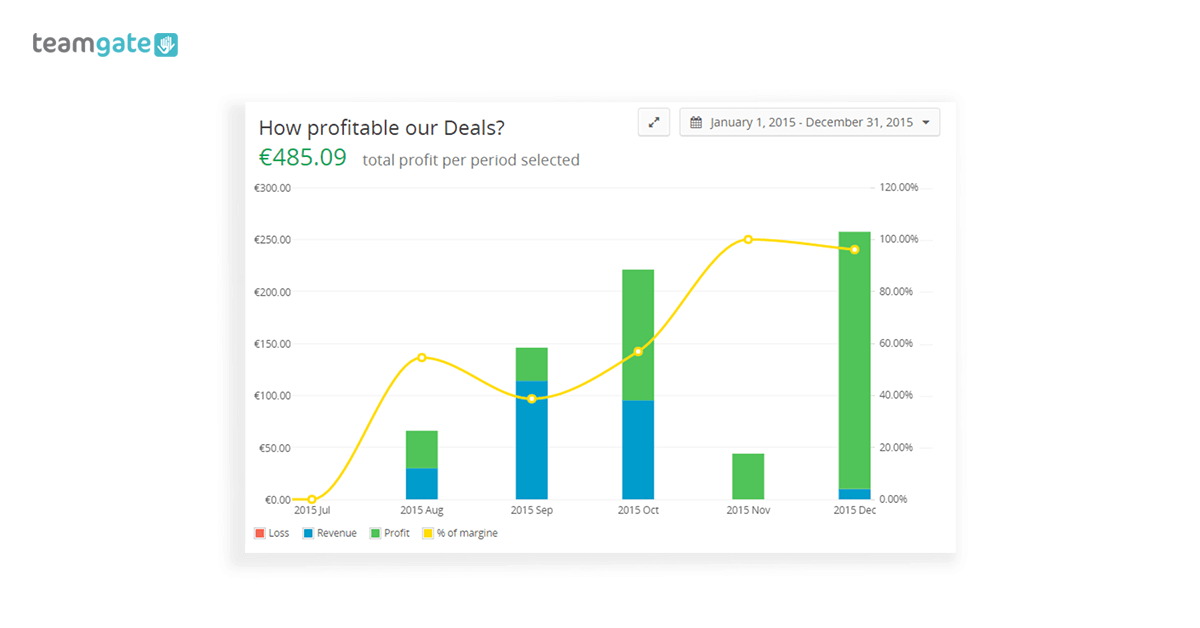
This really powerful CRM product management feature is easy to understand and gives you all the metrics on the product in question; the value of deals, profitability of deals, cost and selling price analysis, product classification, and customisable fields to help you filter your searches more easily.

Here are some of the main advantages:

  • Time-saving – It lets your sales teams use their time more creatively by intuitively tracking products and deals in one easily manageable location.
  • Know your products – See your full range of products instantly, including unit prices and profitability.
  • Clever analysis – Products can feature additional information – unit cost and unit price – making further analysis and forecasting smarter and easier.
  • Smart reporting – Create all the detailed reports and analysis necessary for quick and concise product management and sales forecasting.
  • Collaboration and ownership – By showing ownership and responsibility for products, sales managers can easily check which products are more successful for each of their sales team. Plus allowing collaboration on products – and deals – can allow reps to seamlessly coordinate their efforts.
  • Neglected products – Analyse which products are being neglected and need to be retargeted.
  • Know your profit margins – Calculate sales revenue and profit margins on products at a glance.
  • Product groups – Create ‘product groups’ in order to organise and manage your products better.
  • In-stock products – Set ‘In-Stock’ notifications to monitor the availability of products.
  • Filter your products – Filter large amounts of bulky products into sub-sections using custom fields.
  • Avoid manual input – Import products or services directly from your e-store, eliminating tedious, and time-stealing manual data entry.
  • Products and people – See which products are linked with which sales personnel.
  • Goal setting – Create and set weekly, monthly, or yearly goals for individual products.

It’s easy to start using your Teamgate product catalogue

Just like all of Teamgate’s integral features, getting up and running with your Teamgate product catalogue is a straightforward process. Don’t forget, we’re Number 1 CRM for ease-of-use on the market.

Simply open the products section of your CRM and you’re ready to start.

You can begin by creating a new product in the product catalogue, this can be done manually or by importing existing products from your e-shop (This can be done from CSV or XSLX format documents).

If you want to create a new product, simply enter its name, its SKU (if relevant), the category of product (if applicable), product description, unit cost and unit price. You may then assign an owner/s to this product.

Next, you can start assigning the relevant products to the relevant opportunities in your sales pipeline. Once that’s been done, and your sales team gets to work, you can start tracking the product via the CRM product catalogue analysis tools.

CRM product catalog

Congratulations. Now, sit back and see how much time you’ve saved.

Teamgate CRM product management features get you selling smarter

Every single tool or feature which helps you to get to know your customer better, and what they want, is an integral part of your sales process. Teamgate product management features are an integral part of this process.

Freeing your sales team’s time is only one step of the process, but it’s a valuable step.

Knowing what your past customers want, and what they don’t want will help you target your leads with more accuracy, focus your attention on products that sell rather than products that don’t sell, and helps you understand sales team performance and profitability in a more detailed manner.

Assigning certain products to certain sales team members further helps with analysis of performance and allows alterations to be made quickly.

Product management is fast becoming an integral part of your whole customer relationship management strategy. Isn’t it time you realised the potential of the Teamgate CRM product catalogue?

Take a test drive today. 

GET READY TO OWN YOUR WORKDAY

with the most user-friendly CRM on the market.

Start Free 14-Day Trial

Painless setup, no credit card required

If you’re involved in sales you don’t need me to tell you that salespeople have taken a bad rap over the years.

They’ve been branded with all manner of monikers; shysters, charlatans, hucksters, snake-oil peddlers, swindlers, con-men, phoneys, crooks, scoundrels, robbers, sharks, tricksters, and a hell of a lot more. Hardly flattering to an entire profession and extremely difficult to get rid of

So, how did that happen?

The answer is, probably pretty easy. Someone somewhere had their trust in another human being completely destroyed.

Trust is the cornerstone of all great sales relationships

Sales CRM Sell trust

It’s no secret, trust is the cornerstone on which all lasting sales relationships are built. Ask yourself, would you buy anything from a person you don’t trust? That’s what I thought.

Literally speaking, trust is defined as; ‘To believe that someone is good and honest and will not harm you, or that something is safe and reliable’.

Trust is the radar which our brain beams out to bounce off the world around us, just to make sure that it’s not about to do something it might later regret. Like when a stranger asks you to wear a suit made from raw meat and take a walk through a pride of lions while imploring you to believe him that the lions are not only tame, but they’re also vegetarians.

In essence, trust is vital for our well-being, and for our survival, especially in sales.

From the moment we are born, trust comes in to play. Every child depends entirely on those around them to answer all of their needs; food, warmth, security, love. If these needs are not met, the seeds of distrust are planted early.

As we grow we gather more and more information about the world around us, every interaction we have with the world adds, or subtracts, to our understanding of the notion of trust.

Can we trust our trustworthiness?

But there’s a problem with these interactions, and it’s this. People are fallible; we are capable of making mistakes and errors of judgment, we can even misinterpret the signals which we receive from our inbuilt trust radar. Our trust instinct can become blurred and confused.

In order to get us back on track, we look for other clues to guide our judgment. We ask questions, search for visual pointers, seek references and source similar scenarios from our own past, and from the pasts of others.

But regardless of who we are, every one of us arrives at adulthood with a notion of trust which has been kissed, kicked, battered and coddled, molded and sculpted, until all we are left with is the bare bones with which to form our opinions. Hardly an ideal situation for doing business, but as mere humans, it’s all we have.

In response, the majority of us have come to realize that we need to form strong relationships – in all sectors of our lives, including sales – in order to nurture success.

Has the value of trust changed?

Sales Trust CRM

Customers won’t buy from people they don’t trust. If your goal is to sell more, you’ve got to be trusted more.

But, times have changed, and sales patterns have changed.

Customers are far more informed. They know what they want, the problems that need to be solved, and they know where to look for those solutions.

It’s highly likely that whatever it is that you happen to be selling, so are a thousand of your competitors. So what makes you stand out from the noise?

The answer should be, as it always has been, trust.

Employing the tools of trust

From the very first moment a prospective customer lands on your company’s website, the message has to be, ‘It’s cool, I know what I’m talking about, plus, you can trust me’.

In the same way that a jilted lover needs a shoulder to cry on, a customer with a pain-point needs someone they can really trust to relieve that pain.

Never forget for an instant that humans evolved by being social animals, by needing, and receiving the support of other members of the group, by being aware of the social responsibility, and by the preeminent need for social trust. This need hasn’t changed.

By way of emphasizing that idea, a study of chimpanzees by J.M. Englemann & E. Herrmann – Chimpanzees trust their friends’ – says, ‘Trust is… inherently uncertain as it involves the risk of exploitation by cheaters who fail to prove trustworthy. One solution to this problem is the formation and maintenance of close and long-term social relationships…’ Trust goes back a long way.

What sales professionals need is a trust mantra. A series of definitive principles regarding the notion of trust and how it should be enshrined and grounded throughout the complete sales process.

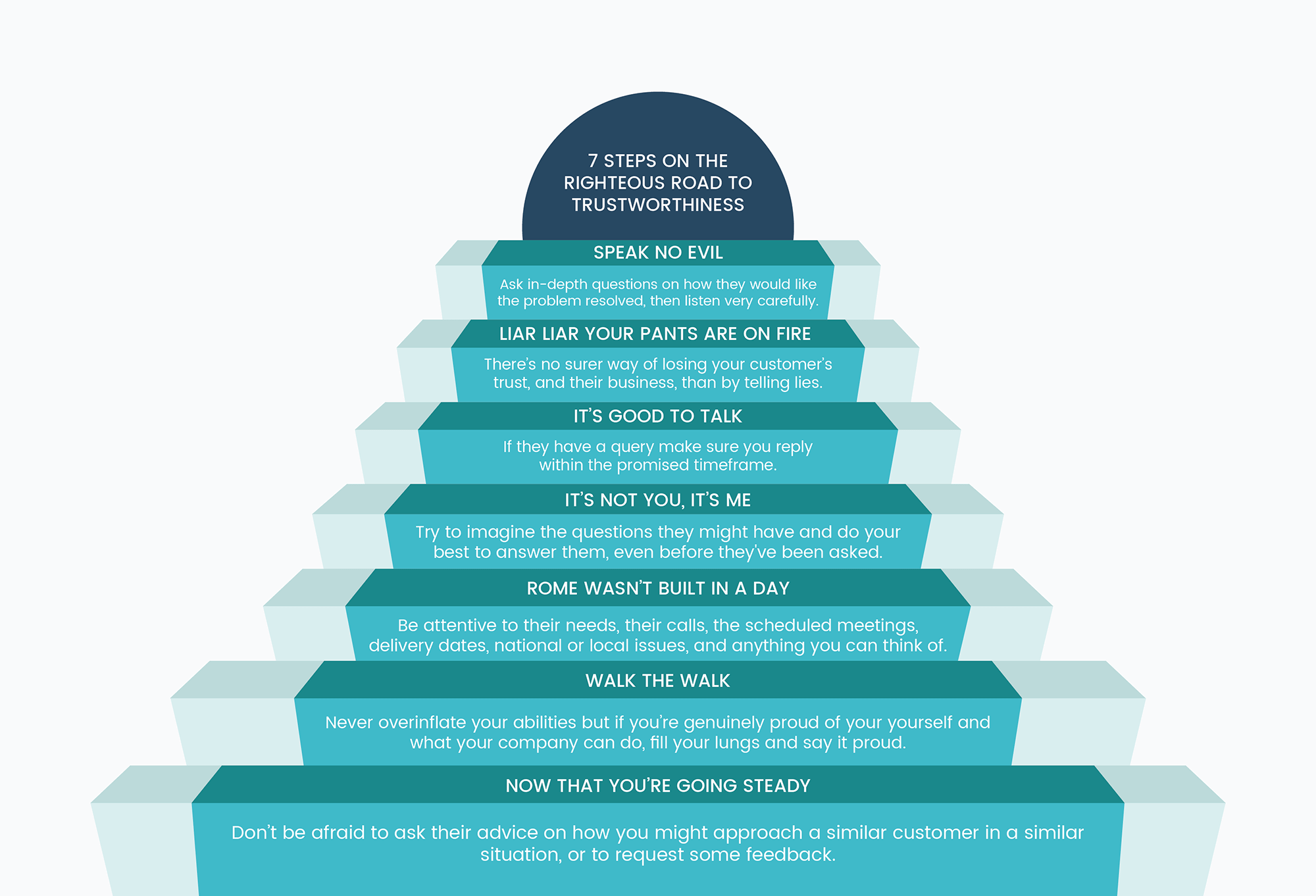
7 steps on the righteous road to trustworthiness

 Speak no evil – You’ve got two ears and one mouth for a very good reason – to listen twice as much as you speak. Show your customers that you really care by listening to what they have to say. If they have a problem that needs to be resolved, ask in-depth questions on how they would like the problem resolved, then listen very carefully. If you spent the time nurturing the customer through effective listening, they’re far more likely to build a trusting relationship – regardless of whether you close a deal or not.

And it’s not just business talk you need to be listening to. You might not want to hear about your customer’s bellyache, but sometimes, for the sake of trust, you just have to take one for the team.

Liar liar your pants are on fire – Whatever else you might be in life, build a reputation for being honest. There’s no surer way of losing your customer’s trust, and their business, than by telling lies. Remember, a little white lie might get you across the sales finishing line, but it may also come back to haunt you forever. In the long-term clients are more likely to respect your willingness to tell the truth, regardless of the outcome.

It’s good to talk – Stay on top of the game with your customer. If they have a query make sure you reply within the promised timeframe. Even if you can’t find an answer, get back and let them know that you’re working on a solution. Be in contact and stay in contact during all stages of the sales process, and even after the deal’s been done. There’s nothing says more about your trustworthiness than a customer-care call long after a deal has been closed, and the product has been delivered

It’s not you, it’s me – Think of your customer in the same way as you would like others to think about you. Really try to imagine the questions they might have and do your best to answer them, even before they’ve been asked. This ability will see your trust rankings soar through the roof. If you think they may be a little upset about some aspect of the deal, ask them straight up. Analyze your own performance and ask for your customer’s feedback, maybe there’s something extra you could be doing. Is there some way you can offer extra value to the customer? Try to think as they might think, you’ll be surprised by the dividends it can pay.

Rome wasn’t built in a day – Give your customers the time they deserve. Remember, people aren’t just waiting to offer you their trust, you have to earn it, and that takes time. Be attentive to their needs, their calls, the scheduled meetings, delivery dates, national or local issues, and anything you can think of. The more you know about your customer – that’s where ‘it’s good to talk’ comes in – the bigger the overall picture of their life you can build, and the easier it becomes to anticipate their needs. If you can reach out in the right way, at just the right time, you’re on their Christmas card list for life.

Walk the walk – Be confident in yourself and your product. Never overinflate your abilities but if you’re genuinely proud of your yourself and what your company can do, fill your lungs and say it proud. Customers will recognize this for what it is and not bravado. And what’s more, they’ll like it and trust you for it too.

Now that you’re going steady – Let a satisfied customer know that you’ve really enjoyed building your relationship. Don’t be afraid to ask their advice on how you might approach a similar customer in a similar situation. Request feedback, and feature their recommendations on your website. Invite them to seminars or meetings that might be of interest to them. It doesn’t even have to cost, sending them some of the latest industry information may be enough to show how much you value the relationship. And, when the time comes for upselling, let them know, personally, about how new products, advances in technology, or improvements might benefit their particular needs.

The technology to boost your trust factor

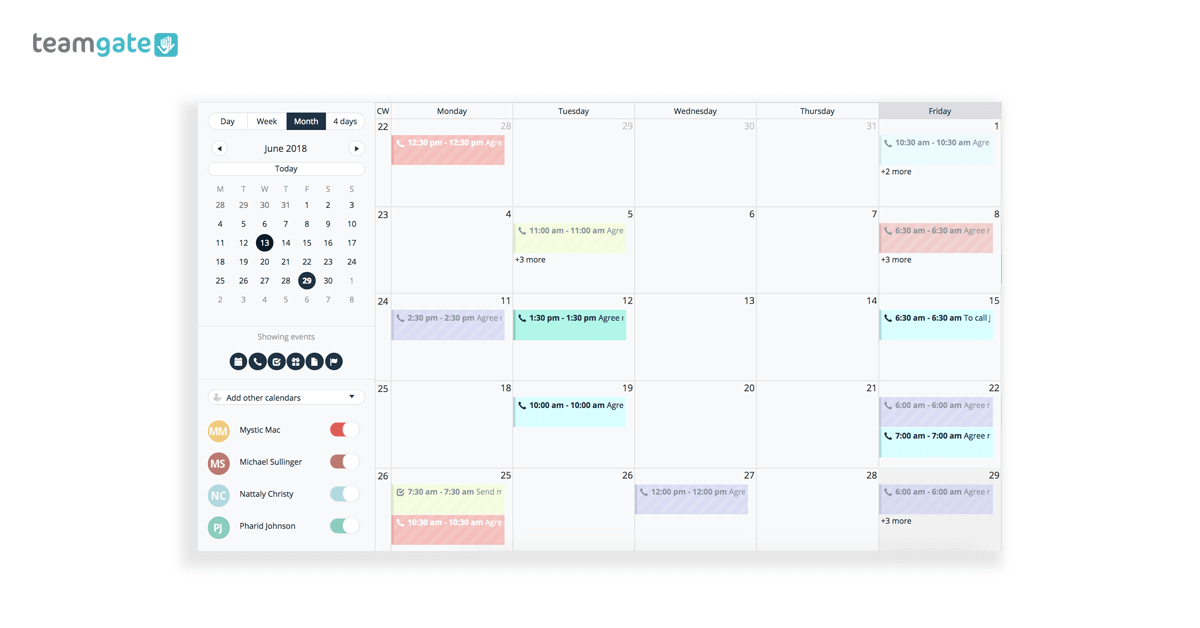
CRM Software Calendar Teamgate

Hey, you might say, look at my sales records, look at my company rankings, my customers love me and trust me. And it might be true. But is there nothing you can do to keep that trust and grow it even further?

In fact, there is. With the advancement of the digital age, a host of new sales technologies have come to the fore. One, in particular, is the ever-evolving sales CRM software sector. Intelligent CRM software lets salespeople work smarter and with less effort by automating the processes. This gives you more time for your customers.

From automatically sourcing the right leads, to scheduling calls, meetings, and follow-ons, CRM sales software has done more for creating an aura of trust than when the inventor of the guillotine offered to demonstrate the device on himself in order to prove its worth.

Thankfully, there’s no need for you to go that far. Modern CRM technology gives salespeople a full range of automated tools, features, and ARIs with which to build a long-lasting, and profitable relationship, steeped in the principles of mutual trust. 

GET READY TO OWN YOUR WORKDAY

with the most user-friendly CRM on the market.

Start Free 14-Day Trial

Painless setup, no credit card required

Whether you’re graduating from staples to paper clips, double espressos to decaf, or sales spreadsheets to CRM software, the mere act of changing can be more disruptive to your personal wellbeing than those around you will ever realize.

Some people don’t just dislike change, they absolutely fear change.

Fear as an emotion is not abnormal, and it’s most certainly not a sign of weakness. Fear is a necessary part of the human psyche, it’s what kept our ancestors alive.

Your fear of change may not be crippling, but the anxiety itself may be big enough distraction and distort your thinking process. To put it simply, you become prone to making mistakes.

When choosing a new CRM, or migrating from an existing CRM, your thoughts need to be completely focused. And, believe it or not, in this situation, a certain degree of fear can be a very healthy thing.

So what are you afraid of?

Sales CRM Switch Onboarding

Everyone is telling you – your investors, your customers, your financial advisors, and the pages of every business magazine you open – that without the best sales CRM software you’re dead in the water.

But you like the way things are getting done at the moment. So, what’s the point in changing?

OK, in the back of your mind you know that what everyone is telling you is right. But, somewhere in the pith of your stomach, fear is doing its job, asking a lot of very annoying ‘What If?’ questions. You get scared just by imagining what could go wrong – it’s called anticipatory fear.

That’s understandable, but believe it or not, that fear will go a long way towards making sure that you ask the right questions from your new CRM supplier.

With a good dose of healthy fear to keep you on your toes, the questions you’ll need to ask might just sound a little like this:

  • Why do I need to change?
  • What kind of system will I change to?
  • If I do change will it threaten my employees’ security?
  • Will a long onboarding process disturb my sales process?
  • What if my sales team don’t like the new CRM software?
  • Is my data going to be secure?
  • But I know nothing about new technology, is that a problem?
  • Can I afford new sales CRM software?
  • Who’s going to help me if things go wrong?

You see, a little fear is healthy. Without that highly tuned alertness, you might never ask the right questions.

A little fear is good, embrace it

Now that you’ve managed to tame your fear, and turn it from being a rabid wolf into an affable sheepdog, whose sole objective is to guard your flock, you’re on the right road.

It’s time to confront your CRM provider and get the answers you need.

At Teamgate we didn’t want to sit back and wait for our customers to tell us their fears, their pain-points, and their KPIs, so we went and asked them.

Armed with the information gathered from prospective Teamgate sales CRM users, we built up a clearer picture of what it is that new CRM user wants. And more importantly, how Teamgate can deliver on those demands.

Why do you need to change?

You can’t change the direction of the wind, but you can change your sails to reach your destination.

In business, the wind is always changing. Whether it’s the recruitment or manufacturing processes, marketing or PR tactics, or how sales professionals nurture and interact with leads and customers, nothing ever stays the same.

Your competitors have already gone down the CRM software route and if you want to stay abreast of the pack, it’s time to change.

Or, if you already have an outdated CRM process in place, you might be discovering that technology has already outstripped its functionality and you’re being left in the dark ages.

Teamgate has vast experience in taking first-time CRM users, and sales teams who wish to migrate to a new CRM, through the whole process. With Teamgate you’ll get first-hand knowledge from the real experts. We know our product intimately because we use our product to reach out to you.

What kind of CRM do you need?

If you’re a startup or an SME, a SaaS CRM system like Teamgate is probably what’s going to work best for you.

With Teamgate sales CRM software, you don’t have to be a technical wizard to get your CRM up and running as quickly as possible. Everything happens invisibly in the background and is taken care of by us.

Plus, your CRM is mobile, taking your sales process to wherever you want to go. When you’re on the road, you have instant access to every scrap of information you could possibly need; contact information, past sales, length of time in the pipeline, all communication history, lead score – ranking the lead’s priority, and a host of other vital information.

Just ask us, and we’ll be happy to talk you through the whole process.

Will a CRM jeopardize my staff’s future?

No. A really great CRM like Teamgate is designed to work hand-in-hand with your sales professionals, their expertize coupled with an ever-growing array of tools, features, integrations, and APIs, are perfectly aligned to boost your sales process.

Once-laborious and time-wasting tasks are now simplified or even fully automated. This frees up your sales reps’ time to deal directly with leads and build a lasting relationship. It’s a two-way street that leads to productivity, profitability, and growth.

Will a drawn-out onboarding process affect the sales process?

Yes, a drawn-out onboarding process will affect your sales process. But thankfully that’s NOT the case with Teamgate.

Fast, simple, and fully supportive, the Teamgate onboarding process is designed to have a minimal effect on your day-to-day sales process.

Teamgate customer support professionals are there to walk you through the whole journey. And what’s more, we’ve done it thousands of times so we know what we’re talking about.

What if my sales team don’t like the new CRM software?

CRM Software Fear

If your sales team don’t like or are unwilling to onboard your CRM you have a big problem on your hands.

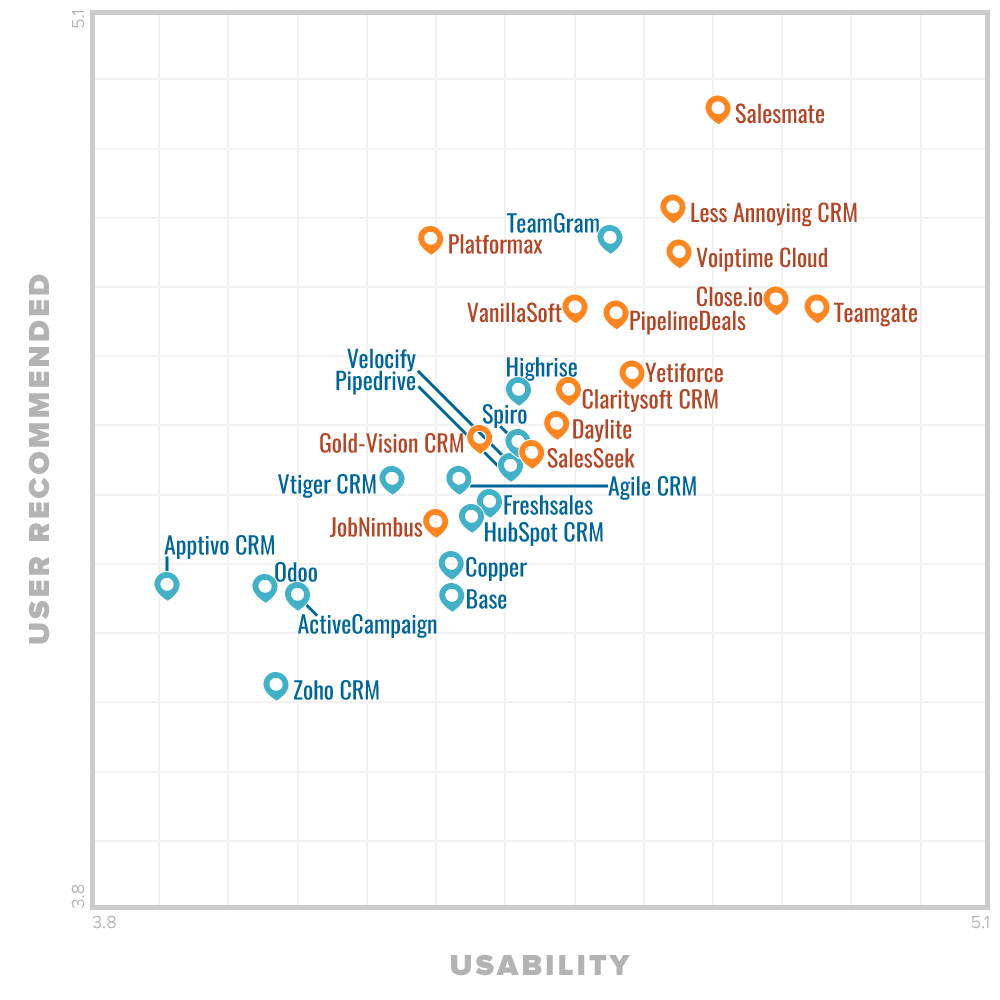
That’s why Teamgate sales advisors are there to define EXACTLY the right CRM solution that aligns with your sales process and your sales professionals’ priorities. Plus, Teamgate been ranked by Capterra – the leading software evaluation company – as the No. 1 most-user friendly CRM software on the market.

It’s important for you to know the questions you want the Teamgate CRM to answer. To do that you need to really drill down and discover the reasons why a CRM is right for you. Once you know the questions, pain-points, and KPIs you need to address, we can directly address all your concerns.

Teamgate doesn’t just do this in order to make a sale, we really want to be sure we are offering the solution that suits your needs exactly. Remember, it’s in our interest to ensure that you’re 100% happy with your CRM software and its ability to drive your sales to the next level.

Another great way to ensure that your sales professionals are going to be happy with the Teamgate CRM is to have them involved in the process from the very start. After all, they’re the ones who are going to be using it day after day.

What about data security?

Let’s answer this one quickly.

If we can’t be sure that your data is secure, we may as well close our doors now and shut up shop.

Your data security is the foundation which Teamgate is built on. And we intend to keep it that way, using the most modern and most secure methods possible. Here’s some more on Teamgate’s security

Will lack of technical knowledge be an issue?

Because Teamgate is a SaaS CRM, you don’t have to worry about any technical issues. We have the very best people employed to make sure that everything stays running smoothly, and remotely, without you having to even think about it.

From the moment you’ve signed up, you’re ready to go, and that’s it.

In case of any queries that you might have, our customer experience team are on-hand to do whatever needs to be done. And fast.

All this sounds expensive

Teamgate CRM Pricing

Teamgate CRM is designed to be fully scalable and grow as your company grows. That means that when the day comes and your business moves to the next level, you don’t have to shell out on a new CRM solution.

With a range of price plans to suit every size business and every size wallet, Teamgate gives you as much, or as little as you need to keep your sales pipeline flowing smoothly and productively.

You can be assured that we’re never going to try to sell you something you don’t need. It wouldn’t be good for us, and it wouldn’t be good for you.

What happens if something goes wrong?

Even with a very slim chance of something going wrong, it’s good to know exactly what to do.

Once you sign up as a Teamgate sales CRM customer you can be sure that we’ve got your back covered.

If you need help with a problem, a little extra knowledge on how to use a particular feature, questions about upgrading your software, or you just want to tell us something nice, the Teamgate customer experience team are waiting for you.

Our aim is to reply to every individual query as quickly as humanly possible. If you read our reviews you’ll see for yourself just how nice they are.

Teamgate have got your back

Now that we’ve run through some possible concerns you might have when thinking about onboarding a new sales CRM, you can see that there’s really no need for fear. A little anxiety yes, but not fear.

Like we said earlier, fear is a natural, and necessary, part of your make up. Without it, we’d get into all kinds of stupid fixes.

Thankfully, choosing Teamgate as your sales CRM solution isn’t going to be one of those stupid fixes.

Call our people today and you’ll soon realize that there really was nothing to worry about. 

GET READY TO OWN YOUR WORKDAY

with the most user-friendly CRM on the market.

Start Free 14-Day Trial

Painless setup, no credit card required

Inbound organizations are 4 times as likely to rate their marketing strategy as effective. (HubSpot)

Inbound lead generation is the holy grail of marketing. No business can survive without leads and almost every business struggles with keeping their sales funnel full and happy. Why is that?

Mostly because there’s no one-size-fits-all strategy that can guide marketers through the process of attracting, connecting and converting prospects into paying customers. That would be too easy. 

There is, however, a skeleton of the most effective ideas that can be used to drive sales for any type of business. So, if you’re like any of the passionate marketers who find themselves in deep waters when leads dry up, take out your ideas book because you’re about to get inspired. 

#1 Develop and automate your sales funnel

Mapping inbound lead generation to your sales funnel will enable you to effectively target prospects in every stage of the buying journey by producing relevant and engaging content in the form of blogs, guides, videos, infographics and more. Inbound lead generation is only effective when it’s targeted to specific segments and optimized to progress prospects towards a conversion and ultimately, a sale. It will help you to address and overcome common objections, attract qualified leads that have a genuine interest in your product and prioritize higher value prospects.

Once you develop your sales funnel, you will immediately spot the drop-off points that indicate optimization opportunities and get a deeper insight into your customers’ mindset — what’s driving their actions, what problems they’re trying to solve and how close to a purchase/conversion they are. Marketing automation will give you the means to automatically send the right content to the right customers at the right time, resulting in reduced sales cycle complexity and conversion time. According to Pardot, 77% of buyers want different content at each stage of their research. What’s more, studies show that nurtured leads produce, on average, a 20% increase in sales opportunities versus non-nurtured leads.

Good news is that almost every marketing effort can be automated, especially when teams use digital adoption to ensure automation tools are adopted and used correctly. For instance, Buffer lets you schedule your social media content in advance, Zapier makes it easy to connect different apps in order to automate workflows, while IFTTT brings the apps and devices you use every day together, streamlining your experiences. Email automation is also a crucial part of inbound lead generation strategy, so ensure it’s implemented with your sales funnel in mind and creates maximum value for prospects. 

#2  Make data-driven decisions

Effective inbound lead generation campaigns are highly reliant on customer and market data. Acting on a hunch in the marketing world can be a really costly mistake. If you produce content that’s irrelevant to your target audience or is undiscoverable due to low-quality keywords, you will not only waste your time and energy, but also clog your sales funnel with unqualified leads.

Inbound lead generation often focuses on feeding the top of the sales funnel, which represents the awareness stage and deals with prospects that have no knowledge of your brand or don’t even know (yet) that they need your product. The only way to get in front of this crowd is to aim broad, targeting various angles and pain points that could grab their attention. Before you begin crafting your inbound lead generation strategy and producing educational content, use tools like Google’s Keyword Planner or Semrush to establish the most valuable keywords with high search volume and conversion potential. For example, creating content around generic, popular keywords like ‘blogging’ or ‘sales tips’ will put you in direct competition with thousands of other content creators who are exploring this subject. But if you dig deeper and discover narrower, longtail keywords that concern a specific, niche topic, your chances of getting to the top of the search results and staying top of mind increase significantly.

Do you have a CRM that keeps you organised?

The most user-friendly CRM on the market. 14-day free trial.

Start Free Trial

Painless setup, no credit card required

A rich list of target keywords will help you generate ideas for your content campaigns and tools like Buzzsumo will help you identify what type of content performs well for any topic or competitor. Making well-informed decisions is a stepping stone to inbound lead generation campaigns — your content must solve a problem for your customers, not fill a gap in your editorial calendar.

#3 Sharpen your copy to tap into emotions

Lots of people take copywriting for granted. Just because you can put a sentence together, doesn’t mean you’re a copywriter. Crafting highly converting copy is a skill that takes a lot of honing and can lead to significantly higher conversions when done right. In turn, a bad copy is a surefire way to lose prospects immediately after they land on your website or your landing page. Copy that’s too vague, salesy or misleading can even hurt your brand and earn you some bad karma.

Focusing on benefits rather than features is one of the most important rules of good copywriting. What’s the difference between the two? Benefits-focused copy strives to answer the question “what value will my customer get out of using this?”. Features-focused copy, on the other hand, tackles the more technical questions, such as “what part of my product lets the customer get that value?”.

Unless you’re targeting a very niche, technical audience, your prospects won’t care much about the specifics — you’ll need to connect with them on a deeper level and evoke emotions to prompt them to take the desired action. Packing your copy with action verbs and focusing on storytelling rather than plain selling is guaranteed to lead to better engagement and higher conversions. 

Remember that writing for the masses will weaken your copy. You should focus on trying to convert a smaller number of better-suited people rather than trying to please every visitor. Ensuring your copy is peppered with the right amount of attention-grabbing CTAs will help you generate more leads through the content you create.

#4 Use natural imagery and avoid stock photos

inbound lead generation with natural imagery

Image credit: Stocksy

Finally, someone has stopped the awful, cheesy stock photography from infecting every blog and website on the planet. It’s been proven, time after time, that human brain processes and engages with visual information much better and faster than any other medium. Inbound lead generation campaigns often involve highly visual content, such as videos and infographics, in an effort to lock people’s attention and generate enough interest to influence their decisions. 

Thanks to the rise of the new generation free stock images libraries, such as Unsplash, DepositPhotos or Stocksy, embellishing your content with high-quality, natural imagery is easier than ever before. Great-looking images can have a massive impact on lead generation efforts if they’re purposefully woven into the rest of the content, adding an additional motivation for consumers to click through, share or buy.

However, keep in mind that the images you use should follow your brand guidelines (more about this later) and contribute to your brand identity. If you illustrate your content with random photos that look great but add little to no value, you’ll risk losing consumer’s interest as soon as they realize the content doesn’t match the visual they chose to click on. 

#5 Design smart opt-ins

Imagine walking up to a stranger at a grocery store and asking for their email address because you’d like to send them something you think they’ll love. Would you be more surprised if they happily shared their personal contact details with you or if they gave you a finger? The same rule applies to online communication, especially when it comes to the buying/selling relationship between a business and its customers.

Inbound lead generation campaigns often focus on capturing email addresses – whether you’re inviting people to register for your webinar or download a free ebook, the ultimate goal is to get into their inbox and send personalized follow-ups in order to bring them back to your site and ultimately, convert.

In the digital age, email address is a powerful currency whose value grows over time. It takes more than a boring signup form to convince people to exchange their email address in return for something particularly valuable to them. Tools like Sumo and OptinMonster will make email list building feel like a walk in the park — you can create beautiful pop-ups that appear on clicks, timers and before visitors exit your site, add sliding bars or sidebar forms and watch your traffic and mailing list thrive. 

#6 Make your lead generation forms friendlier

People are growing really impatient with long, poorly designed lead capturing forms. The immediate gratification that all online users seek is an extremely powerful factor when it comes to lead generation forms. People want what they want and they want it fast. The form is a hot spot for turning visitors into leads for your business, so making sure it’s optimized to cause as little frustration as possible is key.

If you’re not having much luck with getting visitors to fill in your forms, try reducing the friction by removing unnecessary form fields and cutting down on the number of required fields. Adding a prominent call-to-action button, placing the form above the fold and reassuring visitors that their personal details are in safe hands should also contribute to boosting your conversion rate. Make your forms look less like forms by using non-standard user interface elements, such as clickable images or toggle sliders, and use conditional logic to get more information from your users and be able to target specific audience segments. 

#7 A/B test everything

inbound lead generation using ab testing

Image credit: mobileseopros

Crafting a stellar landing page from scratch can require serious design and copywriting know-how. You will make mistakes, and that’s fine. What’s not fine is to think that once a campaign or a landing page is launched, you should hurl yourself at building the next one. Wrong.  

Sometimes, a tiny, seemingly insignificant tweak, such as changing the color of a CTA button, can skyrocket your conversions. A good rule of thumb for any business that’s experimenting with online marketing techniques is to A/B test everything. Running targeted experiments will give you unprecedented insight into your customer base, their preferences, and habits. It’s the only way to ensure you’re always running the best performing version of your website or campaign.

Visual Website Optimizer (VWO) is one of the best A/B testing tools for marketers. It lets users tweak, optimize and personalize their website with minimal IT help and takes the guesswork out of conversion optimization. You can also use Google Analytics (GA) to track and measure the impact of changes that you make, but bear in mind that it’s only a basic feature, so your findings will be limited.

#8 Provide value and overdeliver

“Promise an atlas, deliver the world” is a killer advice for those seeking to take their inbound lead generation to a higher level. The only way to earn your customers’ trust is to continuously provide value without asking for anything in return. In a similar way that online retailers run merchandising campaigns to entice their shoppers to come back and spend money with them, businesses invest in educational inbound lead generation campaigns to deliver value-packed content in the form of free ebooks, video courses, cheat sheets, workbooks, and more, to nurture the leads that aren’t ready to make a purchase yet.

Giving top quality content away for free is a reliable way to build rapport with your visitors and position yourself as an expert in the field. If you keep releasing genuinely useful content on regular basis, you will be able to build a loyal and engaged customer base as well as attract more top-of-the-funnel traffic. 

And if your content hits a sweet spot with your customers, chances are they’ll share it with their social networks, giving you extra exposure and potentially driving more traffic to the site. Long-form content is also an excellent way to build links and get some SEO juice, so if you do it right, the benefits of over delivering are crystal clear.

#9 Establish brand guidelines and stay consistent

You may have spent hours crafting the perfect logo, spent a lot of money on a copywriter who crafted the perfect tagline and even printed a ton of beautifully designed business cards – but none of this will stay consistent if you have not established your brand’s guidelines. A brand guideline is a set of tools and design rules on how to use your brand’s elements. The brand’s guideline usually comes in a book or PDF format, laying out how your brand works and how different design elements come together to form your brand’s identity. The brand’s guideline is used by anyone working on your brand – a designer, a copywriter or anyone else creating marketing material for your brand. 

The elements in the brand’s guidelines will differ from business to business, but every guideline should have the following: 

  • Color palette – a set of colors used throughout all your brand’s graphics
  • Tone of voice –  are you funny, persuasive, informative?
  • Typography – a typeface for headings and body of text associated with your brand (you may create your own typeface)
  • Different versions of the brand’s logo – video, social media, print
  • Content style – is your content image-heavy? Longform? Bite-sized?

It may be tempting to adjust the color of your logo for a certain marketing piece, but the change may be unrecognizable to your audience or client and so it will not generate any leads. The guideline will put in place a set of rules, which will ensure your brand’s elements are used consistently and effectively.  

Luckily, you can easily create your guideline yourself. Fortify and Canva both offer free templates to get you started right away or create your own original templates, Hemingway app will help you write impactful and consistent content and Adobe Spark will provide you with all the tools you need to create your logo and other graphics.

#10 Use analytics

inbound lead generation using google analytics

Analyzing your data will allow you to better understand your consumers and how to reach them. Invest time and effort in getting to know your users’ journeys through your site, which will help you to benchmark marketing campaigns that are not working. Among many analytical tools, FullStory offers the unique opportunity to not only get to know your consumers on a deep level by tracking their engagement with a new feature or analyzing campaign conversion rates, it also allows you to see (in video format) their journey on your website – where they went, what issues they encountered and what prompted them to make a purchase or drop off. These insights are made available across your whole team, which will help you to make executive decisions how to best use your resources. 

Analytical tools may also be a key to generating a significant amount of new leads. For example, use tools, such as Hotjar, to identify the hotspots of lead generation on your website. Hotjar offers click and scroll heatmaps (among many other great features) to measure the most engaging and capturing content. The data may reveal that certain keywords are generating a large number of leads, as a result, you can focus on those keywords when writing content for your site or marketing campaigns in order to generate more leads. 

Use Google Analytics (GA) to measure and increase your ROI and drive more traffic to your site. GA is a very robust tool and provides you with an enormous amount of data on your social media traffic referral, page visits and average time per page. Use the tools provided to identify content your consumers enjoy and which channel reaches them best, and produce more to generate new leads. 

#11 Optimize your content for search engine optimization (SEO) and social media optimization (SMO)

The foundation of your inbound lead generation efforts is the content you produce. Produce valuable and relevant content to attract and engage your target audience. Ensure your content is impactful and drives your audience to share it. High-quality content will help you break through the noise and generate more leads.

Content with value is important in increasing your SEO, because search engines equate high-quality content with a high-quality website. Keep track of your content and conduct a content audit to see how much of your content falls into the following categories – informative or promotional. Ensure that you produce a good mix of content, including visuals, and start sharing it on social media. Identify the keywords you want your website to be associated with in search engines and use tools such as Google Keywords to increase your SEO. The more popular your content is on social media, the more Google considers it to be of high value, so it boosts your SEO rankings.

Increasing your SMO will automatically increase your SEO, so it is important you optimize your content for that. Since SMO is all about your presence on social media, start by engaging with your audience. You must comment, like and share your own, as well as others’ posts. Include a CTA button at the end of your posts and encourage people to share, comment and like. Become a leader and provide well researched, high-quality content, which will add value to your readers’ lives. Make it easy for your followers to share your content by providing share buttons, ensure all your social icons are clearly visible on your site and provide subscription options (email, newsletter, RSS).

#12 Use social proof and testimonials to build credibility

In order to successfully generate more inbound leads, you must produce content that your followers will trust. One way of building credibility is using social proof. It can be anything from a recommendation from a friend to an expert’s review. If you can get an expert from your field to recommend your product, make sure you make it loud and clear on your website – people always seek for advice and reviews before making a purchase. Having a well-known figure backing you can be a great way to secure those inbound leads. 

Don’t forget to include and ask for testimonials from your clients. Testimonials are among the most persuasive forms of social proof, as those are the words of a consumer and not an expert and so are perceived as more relatable/trustworthy. Allow the newcomers to make decisions based on what others like them have experienced. Include a high-quality photo to accompany each testimonial, as recent research has shown it makes the testimonials more believable.

Another way to increase your credibility is by increasing the engagement on your content. The volume of engagement (likes, shares, comments) indicates the value of your content. If your post receives a thousand retweets it is more likely that more people will click and read your content. This will also help you increase your SEO and your audience reach, which can generate new inbound leads.

#13 Employ urgency

Last but not least, inducing the sense of urgency is a great way of generating new inbound leads or nudging an undecided consumer to make a purchase. One way of employing urgency is by creating a deadline and using time-sensitive language in an email or a newsletter. Use language such as ‘Limited time only’ or ‘ends tomorrow’ to urge traffic to your site to make a purchase. Include a countdown clock in your newsletter and across your social media, to remind your followers of the urgency. You may wish to send a last minute email for a more dramatic effect. 

Create demand and need with scarcity. Urge your followers with ‘only 3 left’  and ‘while stocks last’ products and offers. The rapidly dwindling supplies can convert the unsure followers into inbound leads. However, ensure that you are honest about the quantities of stock, your followers will find out if you’re lying and they won’t be happy. Invest time and effort into your headline and keep your body of text concise and brief. You want your followers to feel the pressure of the scarcity of your product – you do not want them to get lost in your newsletter.

Finally, use a clear Call-To-Action button. All your efforts will be wasted if you do not tell your followers what you want them to do with the information provided. Make your CTA a highly visible link or a button with action-orientated wording. You can also use Fomo, a tool which showcases recent consumer actions to increase conversion on your site and helps you generate more leads.

Increase-Your-Sales-Leads-Productivity-Without-Breaking-Down_DONE

Takeaways

According to Hubspot, 65% of marketers admit that generating traffic and leads is their top marketing challenge. One way to think about the inbound lead generation is to imagine it like a spiderweb — every campaign is a silk thread; the more threads you have, the bigger is your web, the higher are your chances of catching something. It takes time and skill to spin a wide enough web but it will last you a long time, too. Without leads, your business will perish.  

A diverse inbound lead generation strategy will most certainly lead to a boost in sales. But the main takeaways to consider include:

  • Map inbound lead generation to your sales funnel to be able to effectively target prospects in every stage of the buying journey.
  • Use data to drive your decisions: research keywords and trending content to start from a strong place.
  • Get serious about copy — focus on communicating the benefits of your product rather than features, keep it actionable and tap into human emotions.
  • Take advantage of free high-quality natural stock images — there can never be too many images.
  • Use tools available to you to streamline the process of building a mailing list and driving traffic.
  • Make sure your lead generation forms are asking for essential information only and are simple and convenient to fill in.
  • Spend time A/B testing changes to your website, email or content campaigns to launch with confidence and improve your conversions.
  • Create skyscraper educational content to educate and engage your visitors.
  • Establish your brand guidelines early on, so that you can align all of your marketing efforts.
  • Use analytics to better understand your customer’s journey through the site.
  • Ensure you’re producing the right mix of content, including visuals to optimize your site’s SEO and SMO.  
  • Boost your credibility through social proof.
  • Induce a sense of urgency to prompt your buyers to make a snap buying decision.

Lead generation starts with understanding your customers, so always ask yourself “what’s in it for my customer?”

Andrejs Juščenko is a vastly experienced professional with over 20 years marketing, sales, and business development practice in leading IT and Telco companies, such as; Microsoft; Nokia; and Lattelecom, transforming business in 24 countries of Central and Eastern Europe. Regarded as a thought leader with a vast knowledge of modern business practices; from change management experience, Go-To-Market strategies, channel development, and digital marketing, to marketing governance and execution in cross-country setup, Juščenko is admired and revered as a highly capable leader able to translate complex business problems into simple, understandable terms.

1. Can you share with us your hacks on how to manage stress?

I think probably I would be one of the happiest people on the planet if I would be able to manage my stress extremely well, but I think I’m on the way towards that goal.

I do exercises like; breathing, meditation, and many other things. What I can suggest, is to follow a very simple rule: try to stay in the present – at the moment where you are. Do not worry about what happened in the past and what will happen in the future. Actually, it doesn’t make any sense; why worry about the things that you can’t change. Things in the past had already happened, while things in the future have not happened yet, and they might never happen.

If you follow this simple rule, you’ll definitely have less stress. Also, simple things like walking, spending more time in fresh air, drinking less coffee, and enjoying a healthy sleep. This is especially relevant for our generation, which spends so much time using PCs and smartphones, especially before going to sleep. It’s not good. I have an established daily routine: I try to go to bed at 10 p.m. and wake up at 6 am. It’s a pretty common practice for me.

I practice morning yoga because it’s quiet, and your mind is more open. But it also good before you go to sleep. Take a seat and have a deep breathing exercise. Something very simple like inhale-exhale, and so on. Try to concentrate on yourself, even 2 minutes will help. If you can prolong it, it’s even better. You’ll see that your mind will become more calm and relaxed, and then you can go to sleep. Because when you go to bed, accompanied by a smartphone or PC, you can spend even more time looking into a screen, ensuring that even during sleep your mind is still working.   

2. How do you educate yourself on business development and entrepreneurship? Which online and offline resources do you use?

On daily basis I follow industry trends, influencers, blogs, articles from Harvard Business Review – there are so many of them!

I use Feedly. It’s an app, and also on the web. You can sign up for different sources, and it’s aggregated just for you. Very convenient. When I have time – like during breaks or when I’m waiting – I like to look through this and read the topics. If I’m looking for any specific knowledge, I can always find it on the internet.

LinkedIn is a good source of highly-crafted courses on very different topics, and they are short – you don’t need to spend weeks learning these topics. You know, it’s a very easy way how to digest the particular knowledge you’re after.

What I’ve learned to be effective is that you need to spend more time with your customers. Whether you’re already a mature company or a very young company, if you don’t spend time talking to your existing or potential customers you can lose all sense of reality.

Similarly, you can spend more time in the whole ecosystem, especially if there are some industry events or communities, and not even physically. Just talking to your competitors and being in a good relationship with them, understanding what they do, and how they live all helps. Of course, it can be a sensitive thing, but it’s also very helpful.

I think everyone should find their own sources that work best for them.

3. You’re a mentor at Startup Wise Guys, a European B2B startup accelerator. What is your advice for startups on how to find a mentor and how to grab their interest?

Generally, people from startups don’t hesitate to approach other people. If you need somebody to help you and to share some insights or coach you on some topic or other, just ask. Either on Linkedin, or somewhere else – wherever the opportunity is possible. You’ll see that people are more willing to help than you might think.

From the moment you approach somebody, I recommend you to be really prepared and clear about what you are actually looking for, what help you need at that particular moment, what you want to achieve, and then, if that person is able to help you in a particular area – well, in my case I’m usually opened for that – be ready to take what is given, because sometimes people give you different things than you initially imagined.

Appreciate everything that is given. You never know where and when it might be helpful to you. Also, I’d recommend to young (and not so young) entrepreneurs to be persistent, do not give up. Just go ahead and do what you need to do.

There are 2 sides to the coin. From your side, when you’re asking, you need to have clear motivation why you are asking for help. A mentor also has a motivation, because they want to share such experiences, or maybe they want to develop their own skills working with other people, coaching other people, etc. That’s why I always say – just ask! Maybe not the 1st time, but on the 2nd or 3rd the person will agree. If not, find somebody else to ask.

4. Do you practice a flexible work schedule? If yes, how is it possible to build a successful work schedule within a team with flexible working hours?

As you know, I spent more than 11 years in Microsoft, and Microsoft is a very supportive company. I used to use a flexible working system. We were never asked to spend a certain amount of time in the office, it was more about delivering results – whatever it is that you have to deliver. Therefore I’m very positive, it’s a good thing to have.

Of course, there are downsides. Now there is a new trend, and people are saying that it’s not good to work remotely anymore. I think that the truth is somewhere in the middle. It’s important that everyone understands what flexible working means. Does it mean that we’re working from 9 to 6 and we’re free to work from different places, or we’re working 24/7? For me, the point of this type of work is true for both managers and employees. You have to have people whom you trust. If there’s no trust it’s hard to stay flexible. At the same time, there should be accountability. If you agree on something, you should keep that accountability and deliver what you have agreed or promised.

The practice shows that people are different, it also requires adaptability, and that you can accept different ways of working when it comes to working remotely. But, there should be some common rules to follow. You should definitely have some regular face-to-face meetings, 1 per week if possible. If it’s not possible and you need to work remotely, you need to establish some regular reasons to meet, like morning coffee. For example Monday morning, everyone calls remotely during a coffee break and we have a quick chat about last week and the further plans we have. Of course, many different practices are available, but it’s important to stay connected.

5. Which skills will be most relevant for sales managers in the next 10 years, and why?

In general, the need to move forward will be required. To develop leadership capabilities, I’m talking about everyone, not only about managers.

Taking responsibility, being proactive, that is something that always has been and always will be needed. Nowadays things are very different and much more turbulent, for managers it is important for them to help their teams to feel a sense of stability and safety, so you need to bring clarity, even you don’t know what is going to happen – your task is to explain and to make sure that everyone understands where we’re going.

Bring positive energy! Help your people to stay energetic. Understand their routines, and concerns. Nurture adaptability, empathy, and focus on employees and customers as well. Especially in sales, go beyond your product, technology, sales targets, what you need to understand is what your customer cares about, what their business is going to be in future, changes which are happening or are going to happen, and help them to overcome all of this. Do this and the sales will come naturally.

6. You often talk about Digital Sales Engine as a tool and process for international business growth. What type of industries does it suit best?

We always start with the statement that the way people buy today has changed, and this is regardless of the industry. It’s in every industry. It’s not only how people buy, but also how they engage with any other company. Therefore, in order to stay relevant and connected with your future customers, especially when you think about scaling, every company should truly leverage the power of Digital sales engine, inbound marketing, and sales practice. Especially startups!

Digital Sales Engine

The challenge which startups usually face is that they have a great idea, even a prototype of their product, and perhaps maybe even a product. To my experience, startups are usually technology-focused, in terms of their internal competencies, they are engineers and software developers, but they are lacking the sales and marketing capacity. If they are not going to leverage those digital possibilities it will be super hard to develop the business, because the competition is so high. If you’re not aligned to help people buy today, the possibility for you to scale and to be successful will prove very difficult in the future.

7. With an engineering background, you built your career in business administration and sales. Do you think young entrepreneurs need to get a degree nowadays, and why?

My first education was in engineering, and I wanted to, and almost started working in the technical field. But, as it turned out I spent almost the whole of my career involved in sales and the digital market.

I believe that education is essential. If you really want to achieve something you have to learn. The ways in which you gain your knowledge can be very different. There are so many opportunities available today.

The traditional education system is able to set a basis, to give you the basic information you need, and then you still have to keep on learning for your whole life.

The prediction for the future is that people will change the profession several times in a lifespan. That is very unusual for older generations. My recommendation is definitely to get an education, but you’re free to choose the manner in which you get it.

Even if I was to turn time back, I would still tell you that technical education is a very valuable thing. Moving forward, it will be more valuable, as technology is becoming a commodity and you have to know how to deal with that. But, back at that time, there were other nice professions too, that have nothing to do with technology. With hindsight, probably, I wouldn’t change my educational experiences.

8. Based on your experience at Microsoft and Nokia, which practical guidelines can you offer on how to execute product evangelism, and why product evangelism is important?

If you create a product, you need to create a mindset about that product.

An example: 6 years back, when I was leading a Microsoft office division, the cloud story popped up. We were entering a market with a completely new service and a completely new business model. That was especially true for companies that rely on a partner ecosystem, where you need to convince others about making a change, because of that, you really need to know what you are doing.

Whether it’s a product or something else, you need to get people to believe in what you do. And, when you create some critical mass for your followers it becomes dramatically scalable, letting you reach a much broader market with your message, product, or service.

Product evangelism also includes PR. It depends on whom you want to evangelize. Nowadays in technology decision making there are many people involved: both technical and business people – who are also becoming more technologically savvy.  

They think they understand technology, they think they can make technology decisions on their own. You need to be relevant to all of these audiences. You need to approach technical people with their own language, show them competence and provide them value. And you also have to talk about the benefits to business people, their scenarios, objectives, and how that will help.

How you do it is different: either physical events, PR, blog, communities, webinars, etc. It comes down to the Digital sales engine. Nowadays, with the help of digital marketing technologies, you can do incredible things for evangelizing your product and service. What’s vitally important is creating a pool of loyal followers, not necessary customers for now, but at some point in time, they may become your customers.

9. Tell us more about Go-To-Market (GTM) strategy and development. What steps does it include, and tell us about a few successful business cases you have accomplished.

When you think of GTM strategy, there are a few components.

First, you need to understand how you position yourself in the market. It’s super important that you create a unique value proposition. How do you differentiate from others? Why somebody should buy from you, and not from your competitors? From my experience, very often this is a missing component. In order to define your position, you need to understand who are your customers, who are the buyers, and how do they make their decisions. Armed with all that information, you can create your positioning, and it’s your strategic decision whether you position yourself for a specific industry, scenario, or something else that the customer will appreciate, and that you can use as a differentiator.

It’s also important that the process is repetitive. Not something that you complete once and can then forget about – the market is changing, your competition is changing, your customers are changing, their priorities and technologies are changing, and you need to revise your positioning from time to time, and adjust accordingly.

There is a UAV factory which produces very expensive cameras for drones. On the one hand, there are many other vendors on the market who have similar solutions. But in their case, in order to position their product, we made the differentiation on the capabilities of their technology and on ways how people can enjoy the greatest experience with this product.

In this case, positioning was determined as one of the top brands in the industry. First of all, we found what competitors did, and more importantly, what they didn’t do. In this manner, you can overcome and outperform them in all ways. Do they do video reviews? Do they have blogs? Do they provide valuable content?  This is the type of experience that you can create for your potential customers.

The second important thing is understanding what people who tend to buy care about when selecting the solution. What are their concerns, what do they need to learn, to understand, and to communicate to others in order to make a final decision. After you understand that, you can create content that will help and guide them toward the key phase of the decision process. If you support them with all of that, they are likely to be very grateful and tend to become more loyal to you for your efforts.

The product grew from almost nothing to 2,000,000 EUR in revenue in 1.5 years. This strategy should be executed properly. The thing is, many companies have the strategy, but how many of them really follow it in their daily activities? Plus, how many adjust, and/or review the strategy on a regular basis?      

10. Which tools may help best in the daily routine of sales executives, and which features in CRM are the most relevant for them?

There are many tools that help you to automate things, including communication with customers and various task management functions. I use One Note (Microsoft) – a note-taking tool – when I talk to somebody. It really is super helpful, as you can put notes and tasks all in one place. A tool like Teams (Microsoft), is also super helpful. We rarely use email. Instead, we use Teams for our organization, because it’s far simpler, chat-based, and content-based. For customer communication, I use meeting-scheduling tools, where you can publish your calendar and the customer may then choose a convenient time to talk. On an ongoing basis, we’re trying different tools for that function.

CRM is a mindset, it’s not a tool thing. If the organization doesn’t understand the value of using CRM – it’s a really big issue. On an individual level, you can keep track of everything that is happening with your accounts and your customers, and you never lose sight of anything.

For sales executes, CRM helps them to stay on top of things – their goals, what they want to achieve, their sales pipeline, and more. You can predict if you achieve these goals or not, and you can define if you need extra investment or extra people to help you.

It is also helpful for good relationships with your customers, as it gives an overview of everything that has happened in the pipeline. From a company perspective, it gives you predictability in your business. If you have trustworthy information in the CRM, you can manage your business and predict for the future more accurately. This can be a great benefit and can give you a huge competitive advantage.

Lead scoring is vastly important because you want to know how your leads are developing. Warm leads need to be passed to sales and immediately acted on towards converting them.  We need to consider what both sales and marketing are doing to build the marketing and sales pipeline. Because too often it is only considered as being the sales pipeline.

Have more questions for Andrejs? Feel free to connect with him on LinkedIn or visit IBD Consulting to sign-up for free strategy briefing.

GET READY TO OWN YOUR WORKDAY

with the most user-friendly CRM on the market.

Start Free 14-Day Trial

Painless setup, no credit card required

There’s an elephant in the sales room, and nobody wants to talk about him.

workplace stress Teamgate fix

Sure, everyone on the team knows he’s there. They can all see him. He even treads on people’s toes from time to time. But hey, that big old elephant just keeps on getting ignored.

He’s there, snuffling by your desk when you hang up after another unsuccessful sales call. He’s there, looking over your shoulder when you tear a page from the calendar and realise that you’ve just missed another sales target. And sometimes – but it’s getting more frequent lately – he even follows you home, watching silently from the corner of the bedroom, as you struggle with sleep, for the umpteenth night in a row.

The elephant even has a name, and his name is Stress.

Why is selling so stressful?

But sometimes, Stress – the sales office elephant – can be useful.

He can remind you to stay on your toes, to focus on your targets and goals, to keep track of meetings and calls, and sometimes he can even give you a gentle nudge forward, just when you think that all is lost. When Stress is good, he’s good.

But – and here lies a warning – like all big elephants, Stress can turn rogue. And that’s when someone can get hurt.

Workplace stress is a habitual factor in the lives of sales professionals, and what’s more, it’s a dangerous one.

The list of common – and recurring – stress-related sales worries seems endless:

  • A workload that never gets smaller
  • Fear of not making targets
  • Dealing with irate customers
  • Making repeated cold calls
  • Getting bad leads that go nowhere
  • Missing meetings and calls
  • Not knowing why sales are being lost
  • Long hours and late nights
  • An ever-recurring sales cycle

It makes you wonder why anyone would work in sales in the first place.

The numerous causes of stress in sales can affect both your mental and physical health. It’s been medically proven that stress can raise your blood pressure, cause heart attacks and strokes, destroy personal relationships, play havoc with sleeping patterns, lead to substance abuse, and may even be the primary cause of numerous suicides.

Workplace stress can become a vicious circle. For example, you miss a sales target and become stressed, in turn, that stress causes you to lose focus and miss the next target. Before you know it, that circle of stress has gotten bigger and bigger and eventually blocks out even the tiniest glimpse of sunlight.

Not pleasant reading I’m sure you’ll agree.

Your prescription for stress-free sales

Firstly, I’m not a doctor. (I know a little about elephants, but that doesn’t make me a vet either).

But if I was a doctor I would write every stressed and overworked sales professional a prescription. That prescription would simply read, ‘Take one CRM and come see me in six months time’.

CRM software is designed to simplify the whole selling process – just what every stressed sales professional needs.

Modern, and insightful sales CRM software, like Teamgate, is equipped with a massive range of tools and features designed to actively help every sales person to handle their daily tasks, and achieve their goals in a more time-effective, and in a more results-oriented way. You get the results, stress stays away.

Think of Teamgate as a stress-buster. Handling the tasks that eat away at your time, reminding you of calls and meetings and freeing your mind to concentrate on more important matters. Teamgate helps you to prioritise, organise, and understand the whole sales environment around you, making it easier for you to get on with the real deal – selling.

Teamgate CRM making sales stress a thing of the past

stress in sales fix

Once you immerse yourself in the easy-to-learn software (no stress there – in fact, Teamgate has been voted the most user-friendly CRM on the market) you’ll instantly reap the rewards.

Countless tasks, that once ate into your time – and your soul – are now completed in an instant, if not automatically. In fact, Teamgate and its many futuristic integrations can pretty much automate almost every stage of the sales pipeline – except perhaps talk to your customers for you.

Here’s a breakdown of how Teamgate can finally banish that workplace stress, and give you back the life you need, and deserve.

Importing contacts

Manually importing mile-long lists of contacts can make you lose your will to live.

Import all external contacts, leads and data files automatically to your CRM software. With Teamgate you can directly import .CSV files, .XSLX files, Google and Apple contact lists. And here’s a real winner, with the autonomous Teamgate shuttle extension you can import targeted contact details directly from the world’s number one business networking site, LinkedIn.

“Great, but I don’t want duplicates. Duplicates ruin my day”.

Don’t worry, Teamgate will ensure that you’ll have no duplicates.

Now go spend some time with your family.

Gather the RIGHT leads with website landing pages

stress in sales landing pages

Spending time on the phone to leads that have no hope of going anywhere would raise anyone’s blood pressure.

But, how about this. By linking your website to Teamgate you can create landing pages that capture exactly the leads you’re after. You don’t need any technical knowledge (no stress there either), and the landing pages automatically capture your site visitors’ data and import them to your CRM software.

Did you save enough time for a long-weekend away yet?

Managing your contacts’ details

You just come off the phone with a lead and discover that they’ve changed all their contact info. Great, now you have to sit in the office updating all this new information.

With Teamgate there’s no complicated updating process. Just go to your contact’s card and click edit and update their status in an instant.

Here’s the super part. When you update a contact’s details in your CRM, the contact’s details are also – conveniently saving you a lot of time – updated wherever they might occur in the system; whether that’s in the leads, deals, and/or companies section. This great function ensures that your contact details are kept clean, neat, and up-to-date at all times.

Plan your time smarter for greater flexibility

CRM Software Calendar Teamgate

Plan all of your activities and events, share information with your leads and contacts and stay up to date with your complete sales environment. You can create activities and events in an instant directly from your sales CRM; leads’, contacts’, and companies’ cards, and set reminders for yourself so as you never miss anything again.

Plus, your Teamgate ‘to-do’ list gives you the bigger picture of your whole schedule. With a simple and uncluttered view, your Teamgate calendar gives you an overview of tasks due today, for the entire week, and for tasks that may have somehow slipped past.

The entire sales pipeline at a glance

workplace stress Sales Pipeline

Having the ability to take a holistic view of your entire sales pipeline can be a really great way to avoid stress in sales. Teamgate lets you see your pipeline in detail or as an overall picture. This helps you to spot any glaring gaps, opportunities, or issues to be dealt with instantly.

You don’t have to wake up in the middle of the night wondering if you’ve missed something, it’s all there in your sales CRM software, clearly laid out, and so easy to interpret. Sweet dreams!

Remove the frustration of long searches

Everyone knows that searching through mounds of information can drive you around the bend. And, it can get in the way of doing the really important stuff.

Teamgate filters and saved searches cuts through all that time-wasting effort. Using smart filters you can find exactly what you want when you want it. Whether it’s files, attachments, telephone numbers, or details of the last communication with a lead, filters let you find everything, smarter. You even get the choice of saving filters you use regularly, so can you find what you want far quicker than ever before.

And another thing, Teamgate global smart search lets you further refine your searches using keywords, or even fragments of keywords and file-formats – .PDF, .JPG, .Doc, etc. – from anywhere in your database.

Bring the office on the road with you

Even when you’re far from the office, your Teamgate CRM software is fully mobile and lets you take your office wherever you go. No more telling a client that you’ll share a document, or check your diary for an available meeting slot once you get back to the office. There’s no need, as long as you have your office in your pocket wherever you go.

Take one CRM and come see me in six months

Unlike when a doctor prescribes a pill and tells you to come back in six months time, with Teamgate you don’t need to come back in six months. You’ll see the improvement in your sales process, your results, and your health in no time.

Stress for salespeople is a very real and ever-present danger, but not one that’s irreversible,  you’ll be glad to hear. Along with a sensible diet, keeping a healthy mind, exercising regularly, and promoting a more positive and balanced outlook, Teamgate sales CRM gives you the time and the freedom to promote this change.

Sales stress should no longer be seen as a side-effect of sales, at least not when you have Teamgate on your side.

Sign up today for a free trial, and start your journey from here.

GET READY TO OWN YOUR WORKDAY

with the most user-friendly CRM on the market.

Start Free 14-Day Trial

Painless setup, no credit card required

Running any business can be like taking a journey through unknown territory. Getting lost is a very real possibility.

That’s why the accolades we receive here at Teamgate are the signposts reminding us that at least we’re going in the right direction.

The latest of these welcome signposts comes from the software industry review leader – Software Advice – who have placed Teamgate CRM firmly in their FrontRunners Quadrant for 2018.

To put it simply, this means that they – the Experts – are convinced that Teamgate is one of the top products in the worldwide CRM market. 

With a Capability score of 4.85 out of 5 and a User-recommended score of 4.65 out of 5, Teamgate landed #2 on the small vendors’ quadrant. 

Teamgate FrontRunners Quadrant

Making a success of your business is a tough journey. But, when industry peers like Software Advice think you’re doing something right, you can afford to sit back, take a moment, and realise the value of the whole team’s efforts that get you to this point on the road.

At Teamgate we’re lucky to have such a team who are collectively committed to the journey we’re undertaking.

As Liudas Šumskas,Teamgate CTO puts it:

“Nothing happens on it’s own here at Teamgate. From every line of code created, to every closed deal, it’s a collective mission towards a collective goal”.

Gartner’s quadrant FrontRunners for CRMs

The FrontRunners quadrant, powered by Gartner Methodology, provides a data-driven assessment of products in a particular software category to determine which ones offer the best capability and value for businesses. It helps business leaders to make the right decision when choosing which software to buy.

To create this quadrant, Software Advice evaluated over 315 Customer Relationship Management Management products. Only ones with the top scores for their capability and user-recommended made the quadrant.

All products that qualify as FrontRunners are top performing products in their market. The FrontRunners methodology assesses and calculates a score for products on two primary dimensions: Usability on the x-axis and User Recommended on the y-axis.

The Usability score is a weighted average of user ratings including: 

  • End-user ratings of one to five stars on the product’s ease of use.
  • End-user ratings of one to five stars on the product’s functionality.

The User Recommended score is an overall weighted average of scores including:

  • End-user ratings of one to five stars on how valuable users consider the product to be relative to its price.
  • End-user ratings of one to five stars on how likely they are to recommend the product to others.

There are up to two FrontRunners graphics for each market, one Small Vendors and one Enterprise Vendors graphic. The Small Vendors graphic highlights qualifiers from smaller (by employee size) vendors, while the Enterprise Vendors graphic displays qualifiers for larger (by employee size) vendors.

Perhaps you want to take a look at the full Software Advice report for yourself. Or better still, why not take a commitment-free Teamgate trial today – what have you got to lose?

***

FrontRunners constitute the subjective opinions of individual end-user reviews, ratings, and data applied against a documented methodology; they neither represent the views of, nor constitute an endorsement by, Software Advice or its affiliates.

GET READY TO OWN YOUR WORKDAY

with the most user-friendly CRM on the market.

Start Free 14-Day Trial

Painless setup, no credit card required

Why you need SharpSpring

Sales are flowing in and business is booming – all is good with the world. But, isn’t it time to raise the bar, and bring your marketing strategy to new heights? You need to engage with your customers at an even closer level, at an even more personal level. Plus, you need to generate and nurture your valuable leads in a seamless and fluid manner. No bumps, and no hiccups. What you really need is a full-feature marketing platform that does exactly what you need it to do, when you need it.

Welcome to the Teamgate sales CRM integration with the number one marketing automation platform, SharpSpring. Let’s see what it can do for you.

SharpSpring explained

SharpSpring is the fully-automated marketing platform designed to connect you with your clients and deliver all the vital information you need to engage them more successfully, time after time.

With affordable monthly contracts, great lead generation tools, amazing analytics, and a host of other game-changing features, SharpSpring has grabbed the attention of marketing agencies around the globe.

Tired of wasted mass communication campaigns? With the Teamgate-SharpSpring smart integration, you can now personalise and simplify all of your marketing strategies to bring your results,  – and your returns – to the next level. Working with the tools you already use you can take advantage of truly smart CRM management software, working hand-in-hand with next-generation automated marketing.

The future of ‘Smarketing’ is here and now.

With this integration, you can create or update SharpSpring contact records based on customer updates in Teamgate CRM. 

Teamgate SharpSpring - Sales Pipeline

How Does SharpSpring Integrate With Teamgate?

Essentially, SharpSpring’s all-in-one platform lets you automate and target your marketing to the specific needs of your customers. You can create triggers based on customer behaviour, then target your marketing to customers’ needs, interests, and their user journey.

Additionally, lead tracking with SharpSpring lets you build customer relationships based on specific, actionable information.

SharpSpring Teamgate Integrations List

Where Can I Learn More and How Do I Get Started?

Head over to  SharpSpring’s website to learn more about marketing automation and SharpSpring’s features. Be sure to schedule a demo to see it in action. Contracts are month-to-month so you won’t get locked into a long-term deal. From there, it’s incredibly simple to connect SharpSpring to your Teamgate CRM account via Zapier.

Here’s how:

Find SharpSpring in Zapier and then start by selecting a Teamgate trigger. 

SharpSpring Teamgate Zapier 1

Then select your Teamgate account to connect.

SharpSpring Teamgate Zapier 2

You need to add an authentication key from your Teamgate profile.

Now, you need to decide what will trigger an action – whether it’s a New Lead, New Deal or another specific event connected to the Teamgate user journey.

Now, you’ll need to choose a SharpSpring action.

SharpSpring Teamgate Zapier 3

Connect your SharpSpring account to Zapier and fill in your credentials in the pop-up window. 

SharpSpring Teamgate Zapier 4

And from there you can follow the on-screen prompts to start supercharging your marketing with SharpSpring! Happy selling! 

SharpSpring Teamgate Zapier 5

Now you are ready to use all the benefits of marketing automation and CRM in one place. 

How free is your free CRM?

Sure, you’ve got free-will, but using it to choose free CRM software may not be the best business decision you’ll ever make.

“Why?” I hear you say, “What’s wrong with free CRM software?”

If you value your business, if you value your clients, and if you value the integral security of your data, free CRM software might not do anything to increase that value. In fact, it might just have the opposite effect – Ouch!

But let’s start at the beginning.

Perhaps you want to choose a new, first-time CRM for your business. Or, perhaps you’re planning on migrating from an existing sales software and you’ve decided you’d like to save some money in the process.

There’s nothing wrong with wanting to save money. But saving money on one of the most valuable components of your whole sales process – your CRM software – could be your downfall. It’s like buying cheap tires for your car when you really need them, they might just let you down. Disastrously.

What are the issues with a free CRM?

One of the big problems with free CRM software is that it might promise the sun, moon and stars, but you soon realise that the really helpful features – and usually the essential features – cost a little or even a lot extra.

Also, with free CRM software you can find yourself and your business, relying on software where even the security of your data might be at risk; you have no control over the look and feel of the interface; the integrations which you need to manage your customers’ experience don’t exist, or are too expensive; and customer support is non-existent. Hardly ideal for running a successful business.

Without backup and support to help you onboard your new free CRM system, you might just lose the enthusiasm of your sales team before they even get to use the new tools. Losing the confidence and participation of your sales team at this early stage can prove very costly in the long run through lost sales opportunities.

You get what you pay for

Free CRM software

A free CRM system may sound like a great way to save money, but trust us, it’s not.

As we told you earlier, CRM is vital for the careful nurturing of your leads and customers. It’s also a vital component of how your sales teams interact and communicate with those customers. Plus, it offers you great insights and analysis of where your business is getting stuck, sales team performance levels, and future sales predictions.

Can you really trust an inferior product with so much responsibility? We didn’t think so.

What you get with a FREE CRM:

  • No reliability
  • Lack of mobility
  • Limited features and integrations
  • Non-existent customer service and support
  • Poor ease-of-use
  • Concerns about data security
  • Poor contacts management
  • Limited if any customisation
  • Secret pricing
  • No scalability

What you get with a Paid-For CRM:

Reliability – If technology is not your thing, it’s best to leave all the background stuff to the professionals. The best sales CRM software providers will keep your software up-and-running at all times, invisibly, and in the background. You don’t need programming skills, or any advanced knowledge to enjoy the benefits of a great CRM. What’s more, should any technological issue arise you can be sure that your interests are being served by a highly qualified, and dedicated technical support team.

Mobility – This is one of the great qualities of a paid-for CRM, the ability to go anywhere with a Wi-Fi connection, and take your complete office with you. Carry all the information you need in your pocket, ready to access when you need it, where you need it. Many free CRM packages don’t offer this functionality, and if they do it can be patchy at best. Be aware.

Features and integrations – You’re probably not going to get a champagne cooler as standard in a regular family car, in the same way, free CRM software probably won’t offer you everything you need to guide your customers effortlessly through your sales pipeline. Sometimes, with a free CRM all you’re really getting is the basics, and sometimes nothing more than a glorified address book.

Customer service and support – This is that one feature of a paid-for CRM that you need to sit up and really take notice of. With free sales software if you encounter a problem – technical, or just to get some answers – we’ve got news for you; you’re On Your Own!

When you choose a paid-for sales CRM – especially a quality CRM like Teamgate – you have the peace-of-mind of knowing that you’re never alone. The Teamgate customer experience team are on hand to help you through any issues or concerns you might have. You’re not alone.

Ease of use – An easy to learn and use CRM is bound to engage your sales teams a lot easier, and a lot quicker. Onboarding your salespeople to a new CRM is vital, the quicker that can happen, the better it is for everyone – especially your profits. Plus, navigating around your CRM dashboard is so easy and offers you instant insights into the health of your sales process at any given point in time.

Data security – Quality CRM providers have the sensitivity and security of your data as a core priority. With a trusted CRM you can have the personal peace-of-mind knowing that your data is constantly backed up, and stored in multiple high-security remote data centres. Plus, any downtime – should it occur – will be kept to an absolute minimum to reduce any inconvenience to your business.

Contacts management – When it comes to managing your contacts the system you use should be neat, organised, functional, searchable, and easy to interact with. Free CRMs don’t offer this kind of functionality. In fact, most free CRM software is little more than a basic address book. A quality CRM should allow you to easily manage your contacts database and all the information that goes with it, from one central location, and without fuss. Your contacts are the people you deal with on a day-to-day basis and are the main component of your sales process, they should be treated with that respect.

Customisation – Being able to customise various fields in your CRM can greatly help the way you organise your whole sales process. Each stage of the sales process can be broken down into further segments which suit your needs. Your contacts can be assigned various ‘tags’ making them easier to search, or easier to group into categories. The more customisation available with a quality CRM, the easier it will be for sales teams to organise their sales data even better; files can be hidden, or shared among various sales team members creating greater continuity in the sales process.

Secret pricing – With ‘free’ CRM software the costs are usually hidden. While the basic software may be free, the tools, features and other add-ons you really need for functionality come with hidden pricing. With quality CRM software, you should know what you’re paying for from the outset. Many of the best paid-for CRMs come with multiple price plans, designed to suit various sized businesses, and varying budgets.

Scalability – One of the big questions for a small business or startup when choosing a CRM, is whether the CRM is fully scalable? A CRM that needs to be replaced, or is no longer functional after the business has reached a certain size, is a waste of time, and money. A quality CRM like Teamgate comes in a variety of formats and price-ranges, each one designed to take a growing business to the next level. The CRM is constantly evolving, with a continuous supply of new features and integrations, designed to make your CRM as sophisticated or as simple as you need it to be, now and in the years to come.

They’re right, there ain’t no such thing as a free lunch

Free is always tempting. But in the back of our mind, we know that we should be cautious. That’s especially true when choosing free CRM software.

The purpose of a CRM is to help your sales team, and your sales process to flow as smoothly as it was designed to do. Anything that upsets that flow of sales is bad for your business health.

A free CRM could be very bad for your business health, and the bad news is that there’s no easy cure.

The fact is simple, if you want quality you have to pay. If you want support, and the features to grow your business you have to pay. If you want the power of insights and analysis to help your business forecasting, you have to pay. If you want to nurture your customers with every interaction, you have to pay.

But think of it as money wisely invested in your growth. Take your time, find the CRM that’s right for you, ask a lot of questions, and most of all don’t rush into any hasty decisions. Free CRM software might sound like a bargain, but you can be sure it’ll cost you dearly in the long run.

As they say, choose in haste, worry at leisure.

GET READY TO OWN YOUR WORKDAY

with the most user-friendly CRM on the market.

Start Free 14-Day Trial

Painless setup, no credit card required