Get a free sales audit to uncover hidden revenue opportunities!

In this piece, we’ll guide you through the essentials of lead capturing using a Sales CRM, highlighting its role in efficiently gathering potential lead information. We’ll delve into the benefits of automated lead capturing, the various tools and integrations available, and how they can streamline the sales process for optimal results.

Key Takeaways:

  • Lead capturing is the process of collecting information on potential leads, often through landing pages and website forms.
  • Teamgate Sales CRM offers automated lead capturing, allowing salespeople to start the selling process immediately after obtaining lead information.
  • Integrations like Teamgate/LinkedIn Shuttle and Zapier CRM can further enhance the lead capturing process by importing contacts and automating actions.
  • Automated lead generation saves time by eliminating manual data input, allowing salespeople to focus more on selling.
  • The true value of a CRM lies in its ability to organize and automate tasks, leading to increased efficiency in the sales process.

From lead capture forms to automated importing, one of the most vital functions of your CRM is the role of intuitive lead gathering

What is lead capturing and what problems can it solve? 

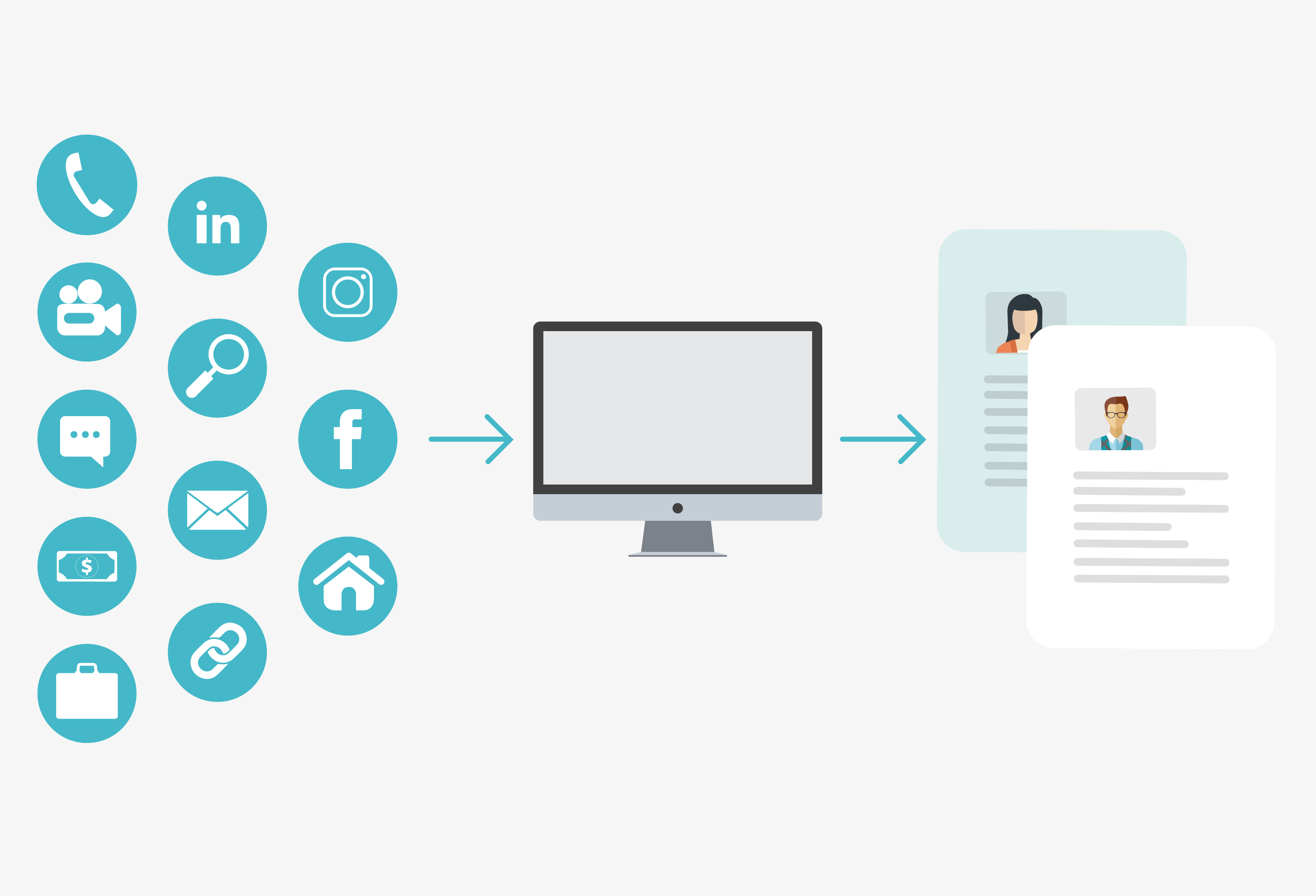
At its most basic level lead capture describes the process of gathering information on potential leads.

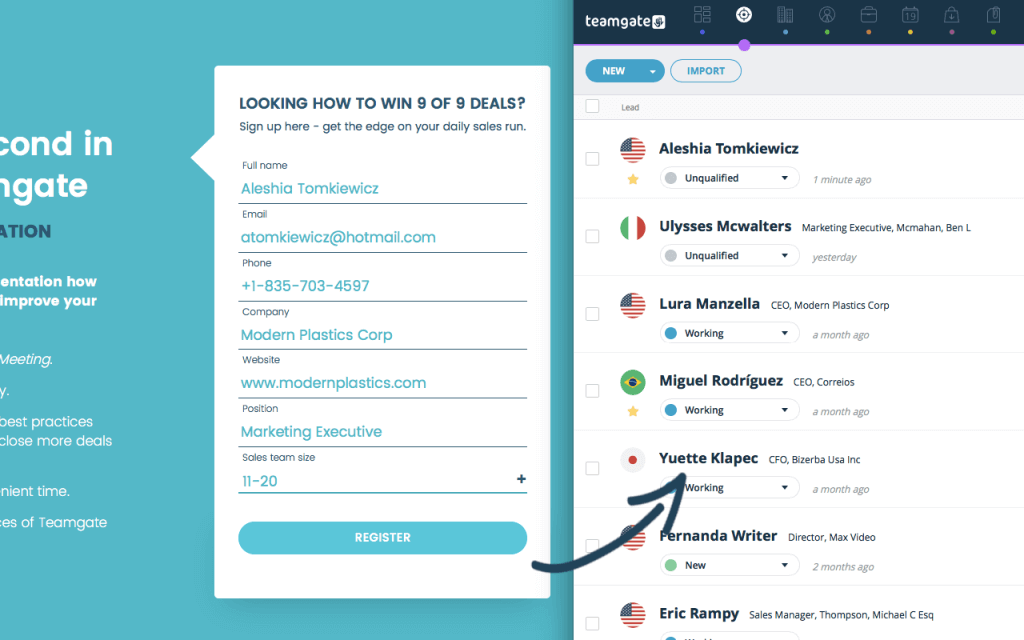
One of the most popular and rewarding processes for lead capturing, using a Sales CRM, are through the use of landing pages and website forms located on a company capture page.

By gathering information in exchange for free content – such as newsletters or webinar invitations – the sales team can automatically gather lead information; names, email addresses and phone numbers. There is also the possibility to gather more specialised information, such as industry type, company size, title of lead, postal address, etc. However, many sales teams prefer to keep this to a minimum during the first contact, in order not to oversell and scare the lead.

capture page

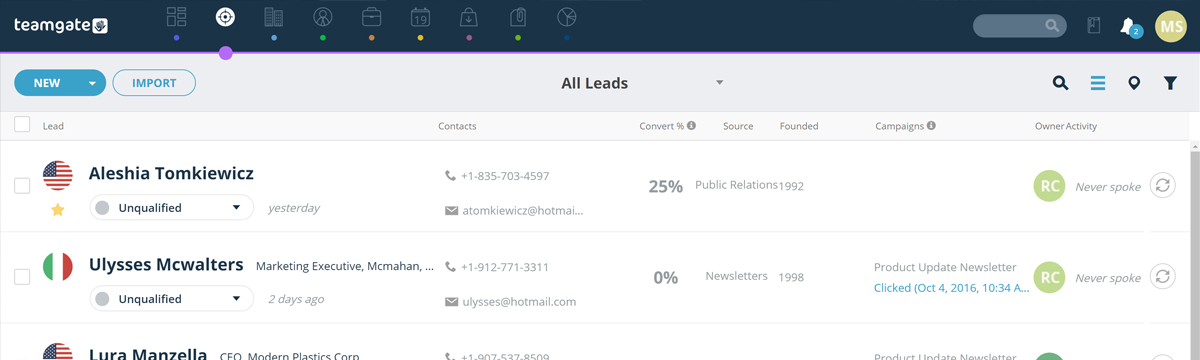
With Teamgate Sales CRM information on leads gathered is entered automatically into the CRM software ready for the salespeople to commence the selling process immediately and seamlessly.

Specific industries may also be targeted using individually designed landing pages. In conjunction with social media and other online outlets marketing campaigns can be tailor-made with a definitive set of rules and a definitive set of targets.

How to capture new leads

  • Landing Pages – With ready to go landing pages, Teamgate can have you lead capturing in no time. Simply add a landing page to your company website, issue authorisation and watch the leads roll in. With a comprehensive range of purpose-built landing page templates Teamgate also offers you the ability to customise these pages as you see fit.
  • WordPress template forms – With absolutely no knowledge of programming or technical web skills you can automate your lead capture process within Teamgate Sales CRM using WordPress and your company website. Using its direct integration function WordPress/Teamgate lead capture forms can collect and store all visitor data, leading to more leads, contacts and deals. It is an enormously user-friendly function designed with intelligence and simplicity.
lead capturing
Lead Capturing using Teamgate-WordPress Integration
  • Teamgate Shuttle – With the easy-to-use Teamgate/LinkedIn Shuttle you can import LinkedIn contacts straight to your Teamgate Sales CRM. With just one click it is possible to import a contact directly from the hugely popular LinkedIn network, as either a lead or as a person. All of the contact’s available details will be imported, including; name, company, email, position, and even phone number if available.
  • Data import – Data import is the bane of the salesperson’s life. Using the Teamgate data import function can save you valuable time and frustration by quickly adding databases of contacts directly from external sources, such as XLS documents. Plus, Teamgate’s intuitive software will automatically identify duplicates in your contacts/leads database.
  • API (Application Programming Interface) solutions – Open API is the development documentation of Teamgate, allowing it to integrate other useful and automated tools with Teamgate Sales CRM (if required).
  • Zapier CRM integration – Zapier is a simple integration platform which allows you to automate actions between a host of varying web applications such as; creating a Teamgate contact from Google contacts, adding a new Teamgate contact to MailChimp, creating a new Teamgate company directly from Wufoo. These functions may be triggers, actions or searches; triggers may be the adding of a new person, lead, deal, company, or won/lost deal. Actions may be creating a company, deal, lead, person or activity. And, searches may be finding a person, lead, or company.

Value to a customer and how is this value measured?

The real value of automated lead generation is through the elimination of excessive time-consuming information gathering and frustrating manual input. Ultimately, the less time you spend on labour-intensive tasks, the more time you have to do what you do best – selling.

Do you have a CRM that keeps you organised?

The most user-friendly CRM on the market. 14-day free trial.

Start Free Trial

Painless setup, no credit card required

In this article, you’ll discover why sales leads get lost, the significant impact this has on your business, and practical solutions to prevent leads from slipping through the cracks. By understanding the common pitfalls in lead management and employing strategies to remedy them, you can optimize your sales process and improve conversions.

Key Takeaways:

  • Losing valuable sales leads due to reasons such as slow response times, lack of lead scoring, poor understanding of lead needs, and inadequately trained staff can greatly affect a company’s profitability.
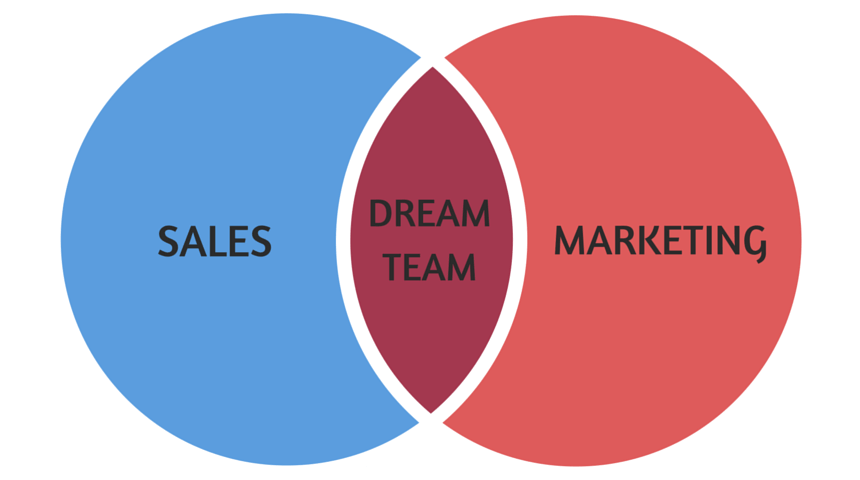
  • Inefficient lead management isn’t solely a sales problem; it often stems from misalignment between sales and marketing departments.
  • Solutions to prevent losing leads include optimizing landing pages, improving response times, properly segmenting and scoring leads, understanding leads’ needs, and investing in a robust CRM system.
  • Regular assessments of sales and marketing alignment, coupled with the right tools and strategies, can significantly reduce lost leads and increase sales success.
  • Effective training of front-line personnel dealing with leads is vital for preventing lead loss and improving overall profitability.

You know that feeling you get when you manage to lose something that was really hard to come by? It sucks, right?

Whether it was a front-row ticket for a show you’d been waiting forever to see, or a fifty dollar bill you’d sweated your butt off to earn, the levels of suckery are pretty similar, exactly because it was so hard to come by.

But get this!

Salespeople – and marketing people too – are doing the same thing with sales leads day in and day out. And for the most part, they’re not even aware of how much these lost sales opportunities are costing their company.

Quality leads, with a real chance of converting to a sales opportunity, are pretty hard to come by. They take time, effort, and targeted collaboration between sales and marketing teams to get them on the sales bus and start them on their journey through the pipeline.

Anything that allows, or contributes to these leads being lost along the way, needs to be remedied, and fast.

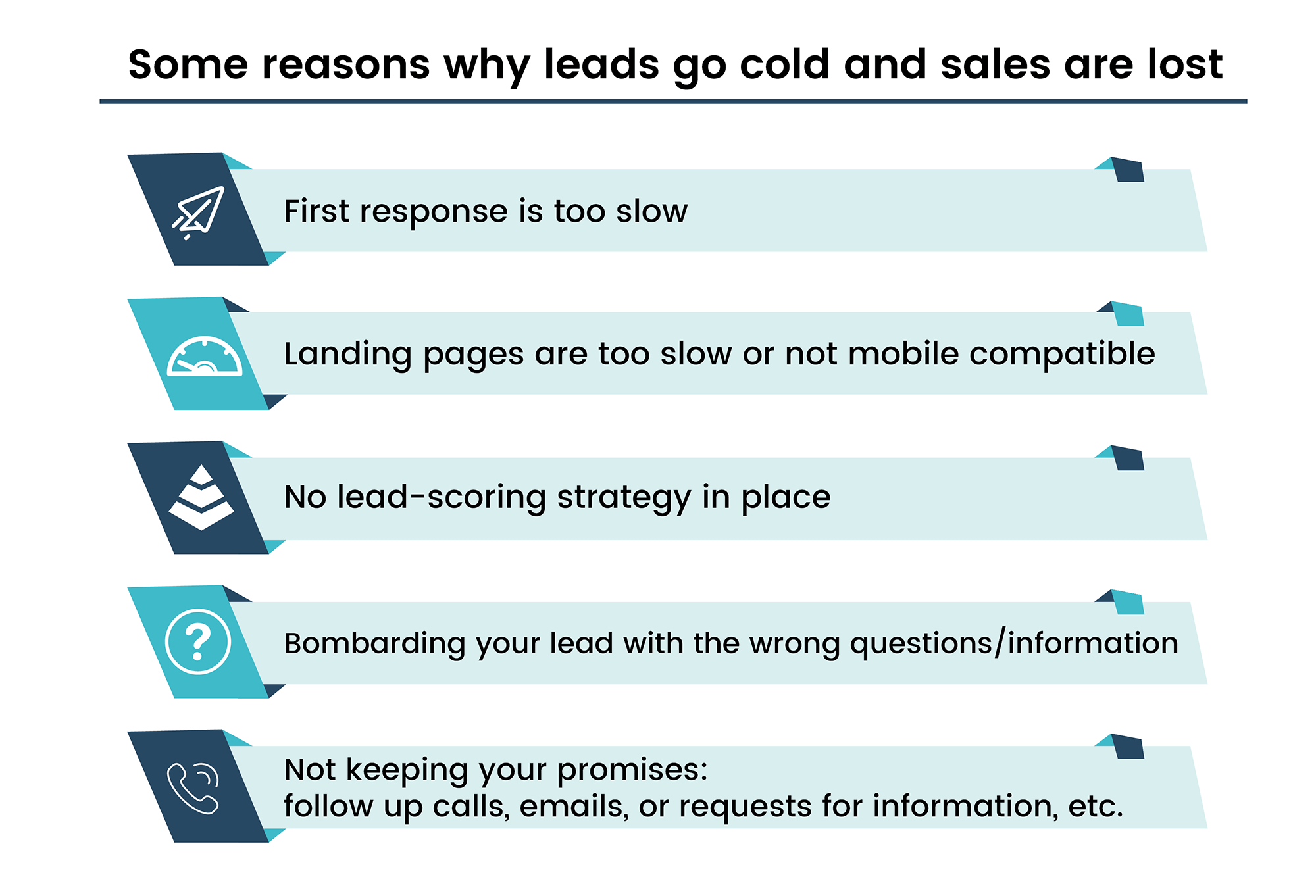
Top reasons why leads get lost

Loss of Sales Reasons by Teamgate

Finding quality leads is difficult, losing them is easy!

Leads go cold and sales are lost for a variety of reasons:

  • The first response is too slow
  • Landing pages are too slow or not mobile compatible
  • Not filtering leads properly – sending generic information
  • No lead-scoring strategy in place
  • Wasting time on the wrong leads
  • Not understanding the lead’s needs
  • Bombarding your lead with the wrong questions/information
  • Not keeping your promises – follow-up calls, emails, requests for information, etc.
  • Allotting too much or too little time for lead conversion
  • Poorly trained sales staff

All it takes is one of the above reasons for a valuable lead to fall between the cracks. The resulting loss of sales does little for the company’s profitability and for a responsible salesperson’s morale.

Losing leads is not only a sales problem

Lost sales opportunities might not be the fault of the salesperson alone. Leads may have been badly targeted and sourced by external means; either from in-house marketing teams or outside contractors.

  • The content promised from search engine results may not match the actual content provided. This can affect your company’s trust rating.
  • The targeted landing page may be slow to load, or may not be optimized for mobile users.
  • Presenting the wrong information at the wrong stage of the pipeline – for example: offering product demonstration videos during first contact.
  • Not marketing presents relevant information where the lead regularly frequents – using Instagram instead of LinkedIn, or vice-versa.
  • The lead’s interaction with your company on Social Media goes unresponded.
  • There are no visible endorsements from satisfied customers.
  • Landing page forms are too long and too complicated or ask the wrong questions.

The resulting lack of alignment between sales and marketing departments can mean only one thing – lost sales!

Sometimes you don’t even know that you’ve lost a lead. A potential customer with a question in their mind visits your website and then disappears never to be heard from again. They slip silently through the cracks and you’re left with another lost sales opportunity.

That’s why the sales and marketing departments need to be singing from the same sheet at all times.

Each department needs to keep each other aware of the strategies being employed, the changes being made, the reasons behind the decision-making process, and any other actions which are likely to affect the outcome of the lead sourcing and nurturing process. 

How to fix the problem of lost leads

Let’s work from the list of how sales leads get lost and see how the situation might be reversed.

Slow landing pages – A prospect is searching for an answer to a question and it appears that your company website has the answer.

However, when they arrive at your website the information takes far too long to load, and your lead is gone without you knowing. Test your website regularly and be sure that every new upload is optimized to work both fast and mobile.

Slow response times – When a prospective lead makes contact, either directly or indirectly, a positive first-contact is essential. By making sure that the right personnel or the right technological response is in place – via automated tasks in your sales CRM – prospective leads are always made aware that their attention is valued.

Filtering/Segmenting leads – A lead has submitted his contact details and is ready to engage in conversation.

Firstly, it’s vital that you research this lead carefully and build up as much background information as you can on the lead, the company, and the possible problems they might be experiencing. All of this information can be gathered in the pre-qualification stage with a series of non-invasive and low-pressure questions.

With this knowledge, you can now segment the lead into the right funnel, allocate them to the right sales rep, and be sure that they only receive the information targeted towards their specific needs.

No lead-scoring strategy – Knowing the priority of leads goes a long way to ensuring that time is never wasted on leads with a low percentage chance of converting to a deal.

Lead scoring uses past experience and other criteria such as the lead’s source to ‘rank’ the probability of a successful conversion. This allows sales reps to spend the necessary time on leads that have been ranked higher and are more likely to convert to a deal.

Not understanding a lead’s needs – There’s no surer way of guaranteeing a loss of sales than through not understanding what your lead is really looking for and what problem they need to resolve.

Listen before you speak and when you do speak make sure that every question elicits an answer which makes your lead feel secure that ‘someone is finally listening’, and that you fully understand their needs.

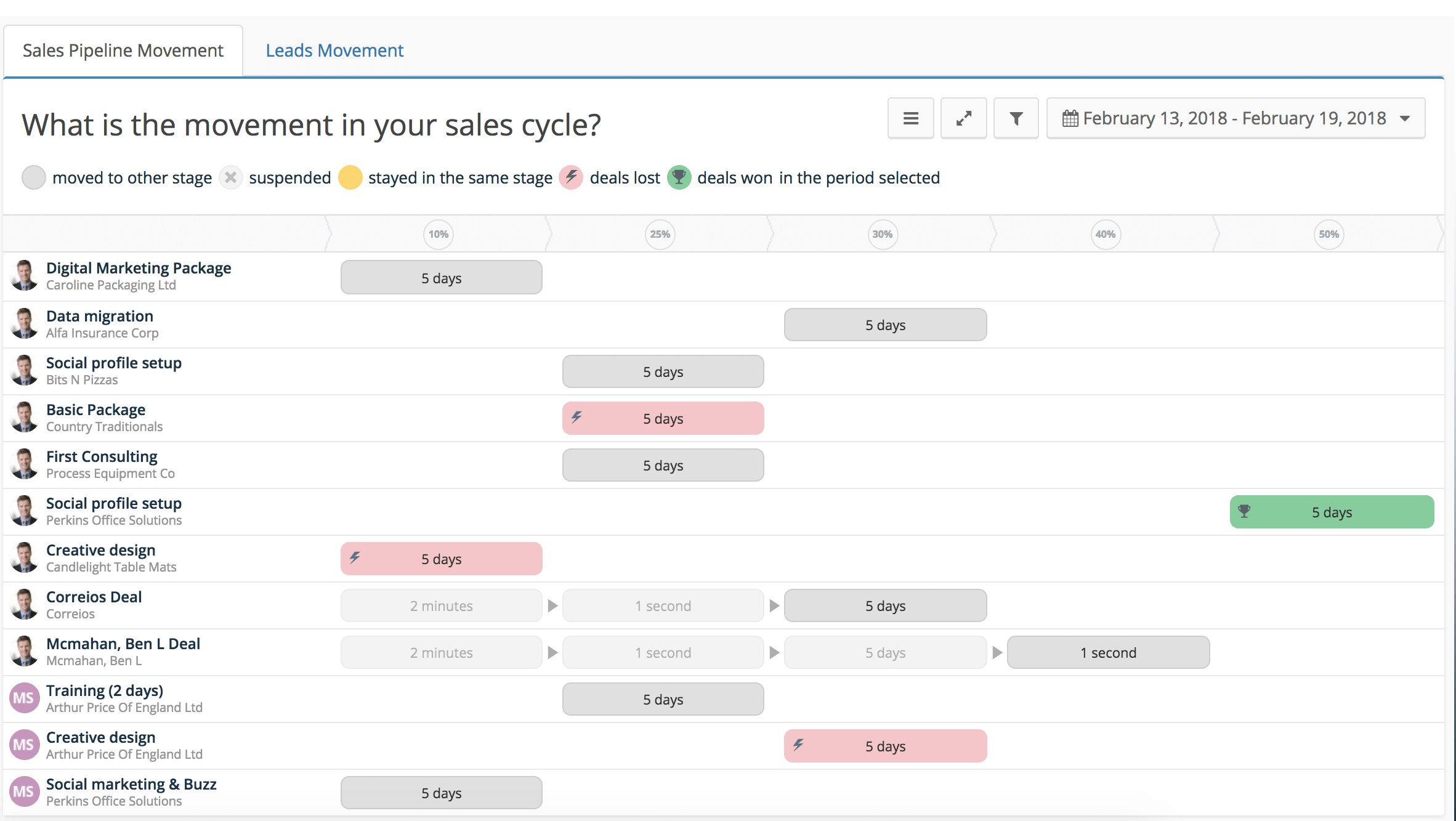
Lost Sales Can Be Treated

Information overload – Bombarding your lead again and again with too many questions, at the wrong times, or offering the wrong information is a big no-no. One way to avoid this is with intelligent sales CRM software. A really good CRM will keep you reminded and up to date with all the information you need to ensure that all contacts with your lead are timely, and offer only the most relevant information.

Not keeping your promises – Saying you’re going to do something and then not doing it sends a really bad signal to your leads. A promise to follow up on a call or email, or provide the information requested in a timely manner should be treated with the utmost respect. CRM software can help you stay on top of all events, meetings, calls, and reminders, and more importantly, it demonstrates to your prospects that you, and your company, are trustworthy and reliable.

How much time is enough? – Allocating too much or too little time for a lead to convert can be a recipe for lost sales. Using experience, lead scoring, segmenting, and a process that allows you to dictate how much time to allocate to a lead, can go a long way toward making sure that your sales pipeline never suffers blockages. Teamgate CRM comes with mechanisms to help you estimate sales turnaround times and offers timely reminders as to when the lead needs to be contacted or removed from the pipeline.

People are the key – If customer sales reps, receptionists, first-contact personnel, or anyone else on the frontline of dealing with your leads and prospects is poorly trained it can reflect badly on the whole team and your profitability. The right CRM software can help you to constantly appraise staff performance and highlight areas where leads are getting lost in the pipeline, and react accordingly.

Sealing the cracks

Leads are getting lost, whether you know it or not. But you NEED to know it.

A smart sales CRM – armed with an array of smart technical tools, features, integrations, and automation – will help you to identify and permanently seal every single one of the cracks that are swallowing your valuable leads, and resulting in the loss of sales.

Also, constant reviews of how closely marketing and sales departments are aligned and committed to reducing lost leads are paramount to your sales success. There is rarely one reason why leads don’t convert.

But, at least if you’re armed with the right knowledge and the right tools you can make sure that those cracks in your sales process, and their causes, don’t become the reason for your business crumbling to ruins. 

FAQs: How to stop losing sales

Q: What are the top reasons for lost sales?
A: The top reasons for lost sales often include slow first responses, unoptimized landing pages, failure to properly filter leads, absence of a lead-scoring strategy, spending time on the wrong leads, and lack of understanding of the lead’s needs. Poorly trained sales staff and failure to keep promises can also contribute to lost sales.

Q: How does a slow first response contribute to lost sales?
A: A slow first response can lead to lost sales because it can make a potential customer feel undervalued. In today’s fast-paced world, consumers expect quick and timely responses. If they don’t get them, they may move on to another company that can respond more quickly.

Q: How does not understanding the lead’s needs lead to lost sales?
A: Not understanding a lead’s needs can result in lost sales because it makes it difficult to offer them the right solutions. If a sales rep doesn’t fully understand what a lead is looking for or what problem they need to resolve, they may end up offering irrelevant solutions, causing the lead to lose interest.

Q: How can a poorly trained sales staff result in lost sales?
A: Poorly trained sales staff can lead to lost sales by not handling leads effectively. They may lack essential skills, such as how to quickly respond, effectively communicate, and thoroughly understand a lead’s needs. Additionally, they may not be equipped to use lead nurturing tools effectively, leading to lost opportunities.

Q: How does failing to keep promises contribute to lost sales?
A: Failing to keep promises, such as following up on calls or providing requested information, can lead to lost sales by eroding trust. When a company doesn’t follow through on its commitments, it can send a signal to leads that the company is unreliable, causing them to take their business elsewhere.

GET READY TO OWN YOUR WORKDAY

with the most user-friendly CRM on the market.

Start Free 14-Day Trial

Painless setup, no credit card required

In this article, you’ll learn how to increase your chances of having your sales emails read and responded to positively. By understanding the behavior of your prospective customers and crafting your emails smartly, you can swing the odds in your favor. We’ll provide you with practical guidelines, share the importance of using an intelligent CRM like Teamgate, and walk you through the four key steps to writing engaging sales emails that attract attention and prompt action.

Key Takeaways:

  1. The subject line of your email is crucial for sparking interest and attracting attention.
  2. Starting your email on a personal note can help you establish a human connection with the recipient.
  3. The content of the email should be relevant, addressing a need that the prospect might have.
  4. Your call-to-action should be clear and instructive, guiding the recipient on what to do next.
  5. Utilizing a CRM like Teamgate can significantly enhance your email campaigns, making them more organized, trackable, and effective.

Wouldn’t it be great if you could write sales emails that get read every time? And wouldn’t it be even better if you could write sales emails that not only get read but provoke a positive response every time?

It sounds like a dream.

With over 125 billion business sales emails sent every day, the likelihood of the above happening with every email you send… Well, it’s pretty slim.

But, if you’re smart, and you really understand the behaviour of your prospective customer, you can swing the odds and increase the chances of your prospects opening, and responding to your sales emails more frequently than your competitors.

Knowing how to write sales emails that work is the first step. And it’s not as difficult as you might think. A few simple easy-to-follow guidelines, a little common sense, and an intelligent CRM like Teamgate, will go a long way.

Once you know how to create those killer sales emails, your Teamgate CRM is ready and waiting to help you take the next step and begin the whole sales nurturing process.

Teamgate lets you connect your email account directly to the CRM software, to help you effectively track, schedule, automate and report on all your email communications, and marketing campaigns. Plus, with the Teamgate MailChimp integration, you get to see who’s actually reading your emails.

The 4 steps to writing sales emails that grab the attention

Writing a cold email can be a daunting task. But it doesn’t have to be. There are a simple set of rules to follow when writing every effective sales email.

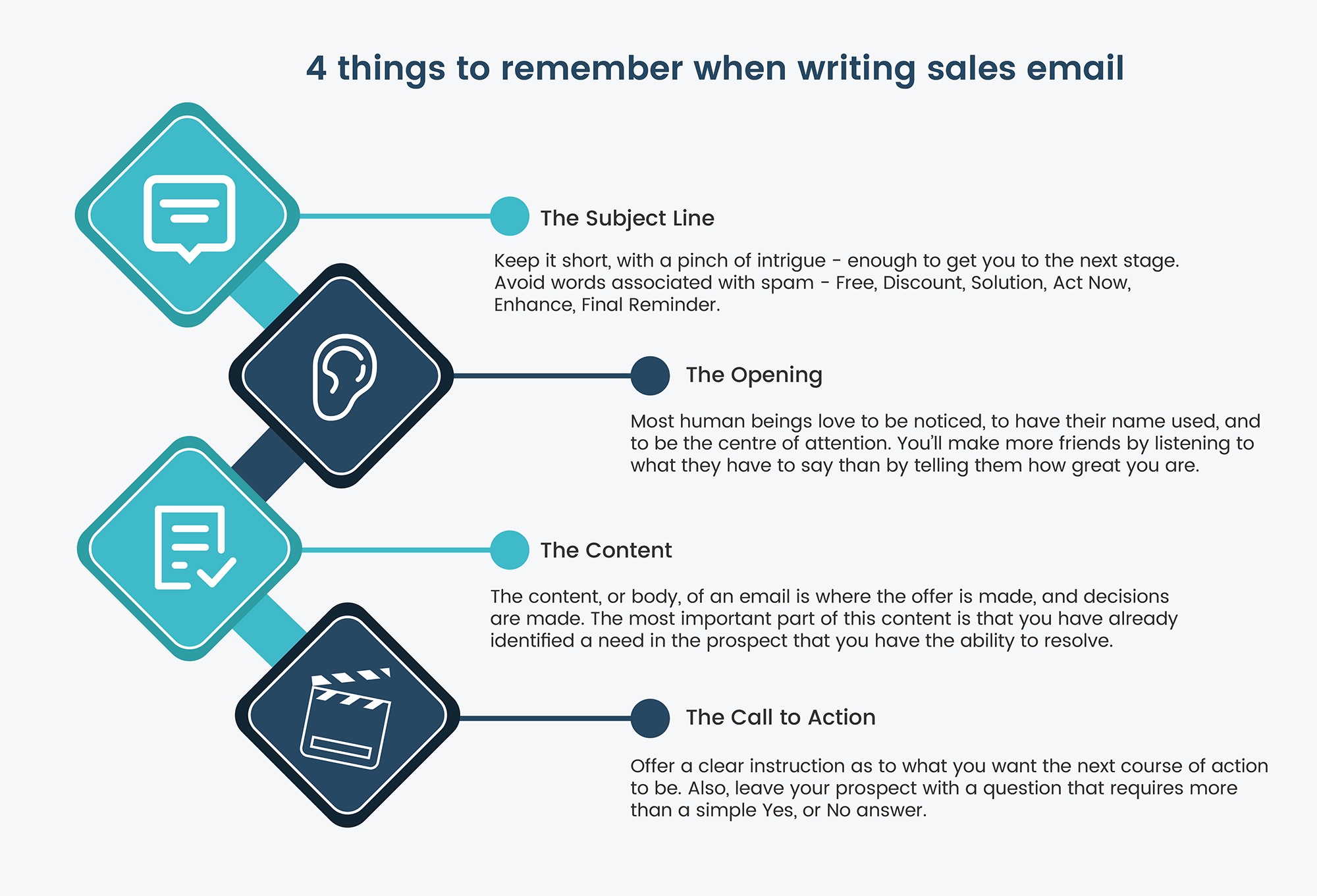
Sales Email Writing Tips Teamgate

#1 The Subject Line

If your email never gets opened – no matter how great the content is – it hasn’t done its job. That’s where great subject lines come in, especially with sales introduction sales emails.

The objective of the subject line is to create interest and attract attention. Try to keep in mind how many sales emails busy business people get every day.

Give them a reason why yours should be the one they choose to open.

Keep it short, with a pinch of intrigue – enough to get you to the next stage. Avoid words associated with spam – Free, Discount, Solution, Act Now, Enhance, Final Reminder. (A good tip is to check your own spam folder and see what’s lurking in there)

Good Examples:

  • Marianne, our mutual friend Lynn recommended I contact you
  • Alan, I have a suggestion you might like
  • Lisa, you might find this [white-paper/video/report] useful
  • Have you thought about [idea/pain-point/recommendation]?
  • Did you ever consider [solution to their problem]?
  • Live CRM solutions webinar Friday 17th
  • Our sales game-changer is ready for launch
  • Be first to read – 10 killer sales tips for 2019

Subject lines can also come under a variety of diverse topics – urgent, personal, listicles, how-to guides, trending, and many more – but the basic principles remain the same. Offer something of interest, something to grab their attention, and never let your subject line be a mere afterthought. To have a complete picture of how to compose attractive subject lines, take a look at Sales Handy latest article

A/B testing is a great way to see if your subject line is working. Send out the same content, with two different subject lines to a group of prospects, then measure and compare the actual open rate using your Teamgate-MailChimp integration (but more of that later).

#2 The Opening

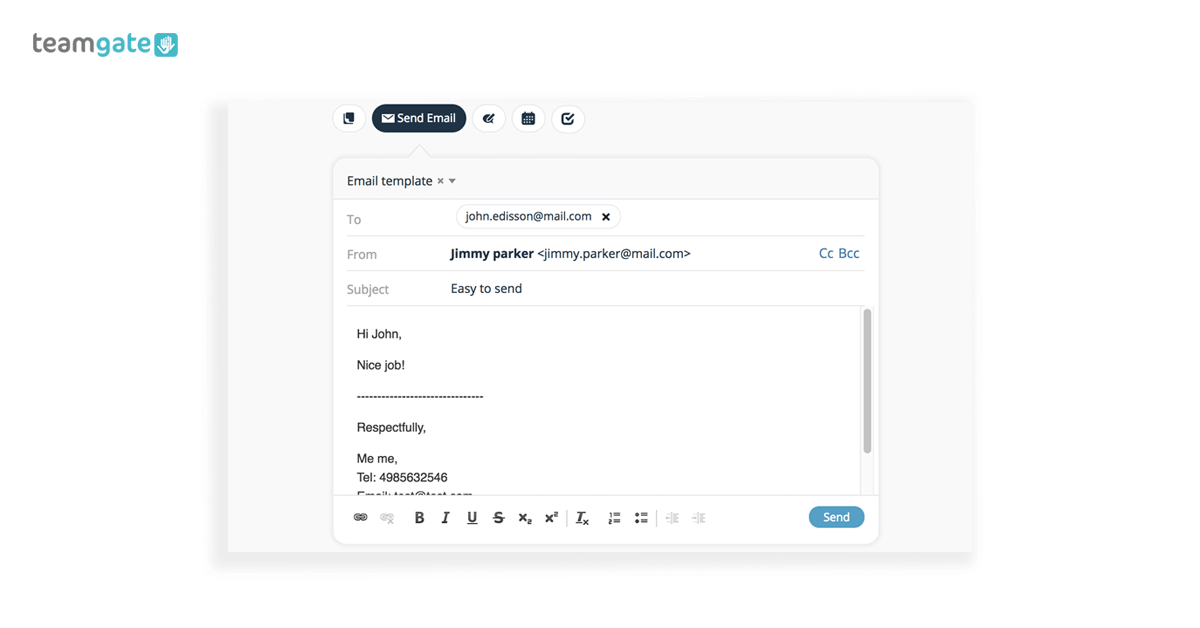
Cold Email in Teamgate CRM

If you start your email with ‘Hi, my name is_______’, you’re probably wasting your time.

We’re all human, just trying to do some business and live our lives, so use that humanity when you reach out to others. Most human beings love to be noticed, to have their name used, and to be the centre of attention. You’ll make more friends by listening to what they have to say than by telling them how great you are.

  • Dear Marianne,
    I just saw news of your companies great win at the European Business Awards over on LinkedIn. What a great achievement and really well done.’

It’s no longer a cold email, you’ve created human contact, and the recipient most likely wants to read on.

#3 The Content

The content, or body, of an email, is where the offer is made, and decisions are made. But, you don’t have a lot of time to accomplish that.

If you’ve already created that human connection with your opening, now’s your chance to introduce the business of your email.

  • ‘As you’re such a progressive company you might have some questions about [whatever your subject may be]’.

or

  • ‘It seems that you and your company are constantly striving for the best. That got me thinking that perhaps our [name solution or proposition] might be of real value to you and your goals’.

The most important part of this content is that you have already identified a need in the prospect that you have the ability to resolve. Using your CRM’s landing pages you have identified the precise issue that the prospect was investigating. The emailed prospect quickly realizes that this is not some random cold email, but a real connection – that even if not useful at present – may be of use in the future.

#4 The Call to Action

The call to action (CTA) is the real business end of any sales introduction email – or even cold email – it’s the real reason why you’re here in the first place.

If you’ve created a great email and the reader is still with you at this point, it would be a shame to mess up here. Be sure you don’t mess up, offer clear instruction as to what you want the next course of action to be.

If you’ve identified that this is the person you need to talk to, in order to get a result, be firm with your proposal. The amazing Teamgate-LinkedIn shuttle lets you target specific leads from LinkedIn and import all of their contact details directly into your CRM, with just one click.

  • ‘It would be great if you could let me know if [solution or proposition] is on your agenda at present, or if it’s something you may give thought to in the future?

Like a good journalist, leave your prospect with a question that requires more than a simple Yes, or No answer.

  • ‘Would it make sense for us to talk further? If not, could you direct me to the right person to talk with?

Or

  • ‘I understand how busy you must be and want to respect that. Perhaps you have time to take a ten-minute call on [date/time]. I’m sure I can answer quickly any questions you might have?

You’ve written the perfect sales emails now let Teamgate make them work

Teamgate, as a powerful and modern CRM, is perfectly designed to work in conjunction with email campaigns and to manage all email communications.

You no longer have to spend hours trying to track who has answered or reacted to your sales emails. With Teamgate you have instant access to all your sent emails – and other communications – directly from your contacts’ cards. Plus, there are a host of other ways Teamgate CRM software can smartly manage all aspects of your email campaigns.

Here’s how Teamgate can manage your emailing smarter

Connect your email with Teamgate

  • Connect your business email provider with Teamgate CRM and be certain that your entire email process is under control. Teamgate email integration lets you keep track of all communications by storing copies of all sent and received sales emails directly in your contacts’ cards. With an advanced filter and search facility, you know where everything is and stay email organised at all times.

MailChimp/Teamgate Integration

Cold Email in Teamgate

Teamgate’s integration with the leading email automation platform, MailChimp, manages every stage of your email marketing and lead-generation campaigns.

  • Personalize the message – Send personalized, targeted emails to specific groups of prospects, or leads. Using your contacts in Teamgate, pick the groups you want to target, write your killer email, and schedule the time for automatic sending (Your Teamgate/MailChimp integration will help you determine which is the best time for your business).
  • See the reaction to your email – Again, using your Teamgate MailChimp integration you have instant access to the actions taken by email recipients; were they opened, subscribed, unsubscribed, or clicked on? All valuable information to help you determine your next course of action.
  • Integrated communications – The integration also simplifies tracking every marketing or lead-sourcing email. Each email is updated to your contacts card and includes the status of campaigns, dates, and all other important data. Know the status and result of every email, instantly, using the integration.

Directly from Teamgate

  • Use Teamgate to manage lead capture campaigns directly from your CRM
  • Track actions from all email campaigns directly within your leads cards
  • Store all your sales emails where they’re mostly easy to access – in your contacts’ cards
  • Send emails directly from your CRM, even while mobile
  • Receive and organize all inbound email communications in one place

See who’s opening your sales emails

Now that you know how to create the type of effective sales email that your prospects are more likely to open and respond to, take your entire emailing strategy to the next level.

Teamgate CRM software can greatly increase the effectiveness of all sales email and communications strategies.

No more sitting and wondering if a prospect saw your email, or how they responded. Use your Teamgate CRM to take control NOW of what happens next in your marketing and sales process.

Teamgate sales CRM gives you that power. Why not try it today, and see who’s opening your sales emails, and when. 

FAQs: Writing sales emails

Q: How can I write sales emails that get read?
A: First, write an intriguing subject line to spark interest. Make your opening line personal, creating a human connection with the recipient. Ensure the content of the email is relevant and addresses a need that the recipient might have. Lastly, include a clear call-to-action that guides the recipient on what to do next.

Q: What role does the subject line play in sales emails that get read?
A: The subject line is crucial for grabbing the recipient’s attention. It should create interest and give them a reason to open your email. Keeping it short and adding a pinch of intrigue can increase the chances of your email being read.

Q: How can I personalize my sales emails to ensure they get read?
A: Personalizing your sales email starts from the opening line. Make sure to use the recipient’s name and mention something relevant to them, like a recent achievement or shared interest. This establishes a human connection and makes the recipient more likely to read on.

Q: How can the content of my sales email increase the likelihood it gets read?
A: The content should be relevant and address a need that the recipient has. It should demonstrate that the email isn’t just a random cold message, but a real connection that could be beneficial for them, now or in the future.

Q: How does a CRM like Teamgate help in writing sales emails that get read?
A: Teamgate CRM allows you to track, schedule, automate, and report on all your email communications. With its integration with MailChimp, you can also see who’s reading your emails, allowing you to tweak your approach as necessary and improve the effectiveness of your email campaigns.

GET READY TO OWN YOUR WORKDAY

with the most user-friendly CRM on the market.

Start Free 14-Day Trial

Painless setup, no credit card required

In this comprehensive article, you’ll unlock the secrets to crafting effective sales emails that elicit responses from prospects. Learn how to write engaging subject lines, connect with your audience on a personal level, leverage social proof, and create compelling calls to action that move your audience toward the next steps in your sales process.

Key Takeaways:

  • The significance of research in crafting personalized, response-driven sales emails cannot be overstated.
  • The art of creating catchy subject lines can drastically affect the open rates of your cold emails.
  • Always keep your emails simple, concise, and focused more on the benefits than the features of your product or service.
  • Leverage social proof to enhance credibility and make a persuasive case for your product or service.
  • Never forget to include a clear and concise call to action to guide prospects on the next steps.

Confession time: I have recently signed up to Unroll.Me.

It was a decision driven by desperation mostly — I was getting buried under unsolicited emails and irrelevant pitches. There were moments when I was really aghast at the lack of imagination and flair of the people who kept barraging me with thoughtless, generic emails.

When it comes to interpreting cold email responses, silence usually means no. And that got me thinking — what makes a stellar cold email? Is there a secret hack to writing a sales email that gets a response?

It appears now that there is more than one hack to crafting an inbox-busting cold email campaign. 

#1 Do your homework

A mischievous cat from ‘Alice in Wonderland’ once said that “if you don’t know where you’re going, it doesn’t matter which road you take”. It’s okay if you don’t want to take advice from a fictional character, but talk to any self-respecting inbound sales rep and they’ll tell you that the single most important aspect of their job is research.

Effective marketing and sales campaigns are based on connecting with prospects on an emotional level. What seems like a pretty simple box to tick, invoking emotions can actually be excruciatingly difficult. Not only do you need to know your lead’s pain points to be able to push the right buttons, but you also need to choose the right method to approach them and the right vocabulary to make them take the desired action.

Most inbound marketers will agree that if you don’t know who you’re targeting, your emails will stink.

Whether you’re reaching out to just a handful of leads or a database of 1000+, crafting a highly personalized sales email is the only reliable way to generate decent response rates. If your mailing list exceeds a reasonable number of people, consider a few basic tips for improving your chances of hitting the bullseye:

  1. Create a meaningful buyer persona that captures and summarizes the most important information about your target market, including their pain points and motivations. When you get to crafting the actual sales email copy, write for that particular person as if you were talking to them face to face.
  2. Use LinkedIn to get a better understanding of your list. Select just a few names at random to research their profiles, and see what language they’re using to describe themselves, what skills they’re highlighting, their recommendations, and so on. This will give you direction as to what style, tone, and messaging they’re most likely to respond to.

Anyone who’s ever tried to write a killer sales email knows that defining the buyer persona early can significantly shorten the writing and redrafting process as well as help you choose the right keywords and tone. A CMO will not respond to the same messaging as a CTO, so blindly shooting emails left and right in the hopes of winning some of the leads will waste your list and earn you a spammer’s badge.

Do you have a CRM that keeps you organised?

The most user-friendly CRM on the market. 14-day free trial.

Start Free Trial

Painless setup, no credit card required

At this stage, having the right tools in place can help you cut the research time in half, so make sure your prospecting process is well thought through. You will most likely need a few different tools and extensions to create, track and optimize your email campaigns. Here are some of the most popular email prospecting tools that you should explore.

Tools and Resources

Teamgate – helps to connect, research, present, and close their inbound leads. It also allows sending emails directly to your leads and clients from your CRM account.

Crystalknows – helps you write better emails and connect with prospects based on their unique personality and communication style.

Clara – an auto-scheduling plugin with a human feel that handles all your meetings calendar.  

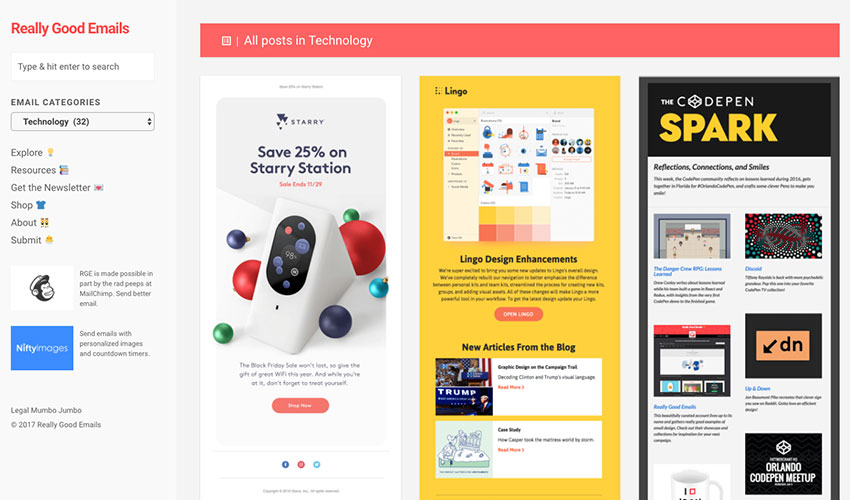
Really Good Emails – a database of the best email designs and copy. Find your inspiration!

Sales Email

Image source: Really Good Emails

Gmail extensions

Rapportive – pull up your prospect’s LinkedIn info right into your inbox.

Boomerang – a Gmail plugin that lets you schedule emails to be sent at any time.  

Clearbit – find any sales email right from your Gmail inbox.

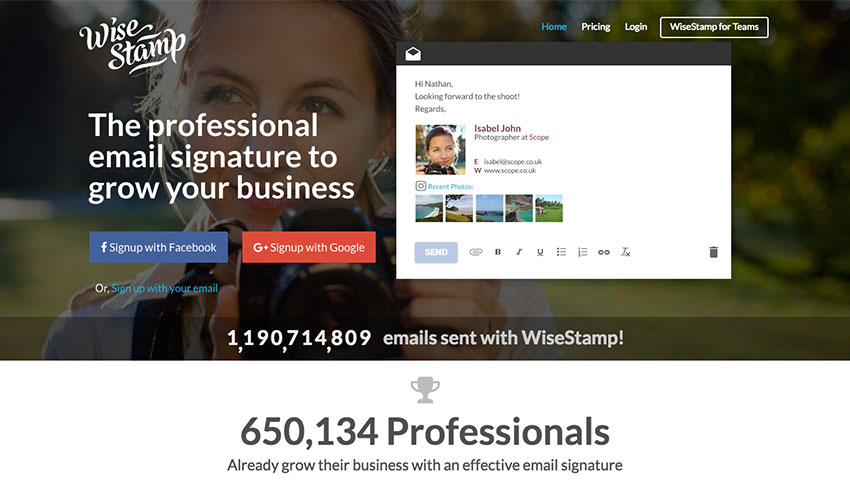
WiseStamp – enables you to create a professional email signature for free. 

Grammarly – boost your credibility with this grammar and spelling checker.

#2 Craft and test various subject lines

When you’re sending cold emails, the subject line can virtually be a door opener. But make a mistake and you’ll land in the spam folder with no chance of making it out of there. And I have the statistics to back this up: 35% of email recipients decide whether to open an email based solely on the subject line, while 69% of people report email as “Spam” based entirely on the subject line. 

Subject lines matter.

Besides getting you through the door, a strong, compelling subject line will also earn you a few extra seconds after a prospect opens the email. But how can you pimp your subject lines to really grab their attention? Marketing pros recommend:

  • Keep it short. And it’s not even because people have the attention span of a goldfish. You have only about six to eight words to transfix your mind, as a typical inbox reveals about 60 characters of an email’s subject line. If your prospects are checking their email on a mobile screen, you’ve only got 25 to 30 characters to seal the deal.
  • Start with the most important information. 55% of all email opens occur on smartphones. A long subject line will get cut off, putting the success of your entire campaign at risk. If it’s not skimmable, it’s not good enough.
  • Personalize your subject lines. Who doesn’t love the sound of their own name? Using personalization tokens, like name or location will help you break through the initial barrier and build rapport. Showing your prospects that you know more about them than just their email address is an effective tactic to get that email opened.
  • Avoid clickbait. Look, you’re already a stranger in someone’s personal inbox — don’t push it. Making false promises or telling half-truths to get your emails opened won’t get you far. If you want to build a relationship based on trust and respect, keep your subject lines honest.

Sales Email

Once you nail a few teaser subject lines, don’t rely on your gut to figure out which one achieves better open rates. The best way to see how your audience responds to different styles and subject line formulas is by implementing a smart A/B testing strategy. Most of the email marketing tools like MailChimp, GetResponse or Yesware will run the tests for you, giving you a detailed report of opens and clicks at the end. The most important lesson here is to let the data guide you.

#3 Keep it short and to the point

Cut the fluff. Everyone is busy and living by the “time is money” rule. Getting into someone’s inbox is one thing, making a connection with a prospect and getting a response is quite another. It’s not particularly helpful when you hear the “keep it short and simple” mantra but it’s the best advice you can get.

One of the easiest ways how to keep things simple is to write as you talk. An email written in a straightforward, casual style sets the right tone for future communications — you come across as more relatable, personable, and approachable. When you finish drafting the email, read it out loud and see whether it rolls off your tongue nicely or sounds like an excerpt from an essay. Don’t make your cold email sound cold, write like a human.

#4 Make it about them and talk about benefits over features

Whatever you’re selling, don’t go for a hard sell in the first email.

If you’ve done your homework and carried out thorough research, you’re starting from the position of strength. Addressing your prospects by their name and talking about their most pressing problems makes your intrusion a little less annoying and shifts their attention from you to their pain points.

The only important truth in sales is that you don’t sell products or services, apps, or tools. You sell dreams and aspirations and offer people a better version of themselves. Benefits over features is a classic example of how much buying decisions are driven by psychological cues. You will have a better chance of converting your leads by vividly painting the picture of what they can achieve if they get on board with your offer, rather than blowing your own trumpet and talking about the amazing features.

[optin-monster-shortcode id=”cvfuxuhchvywm9wl2q6w”]

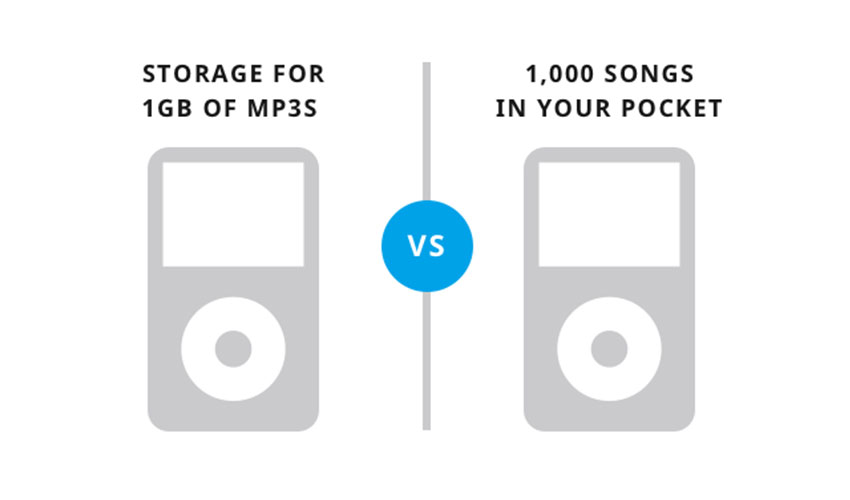
Apple nailed the feature-selling technique when they launched the iPod. When crafting your email copy, keep the Apple example in mind, avoid the awful “me me me” attitude, and focus on the prospect. If you keep on asking yourself “So what?” after every sentence you write, you’re bound to reach a version of your email that will get you a “yes”.

Sales Email

Image source: Help Scout

#5 Use social proof

7 out of 10 Americans seek out opinions before making a purchase, so adding a little social proof can go a long way. It’s one of the few big guns under an inbound sales rep’s belt that can make it easier for a prospect to say “yes” as well as foster trust. Name-dropping and using high-level stats to add a little oomph to your pitch can be an effective way to demonstrate the value that your product creates and increase the response rate.

Although it’s important to weave some case studies, numbers, or client testimonials into your cold email copy, it’s also worth remembering that it needs to stay sharp and concise. You need to find a way how to make the social proof a part of your story instead of throwing dry facts and numbers at your prospects and expecting them to be impressed. Yet, the allure of proven success is incredibly powerful:

Studies have shown that people tend to value the opinions of those that resemble them in some way. If you nail your buyer persona and pick the right case studies or testimonials for your emails, social proof can be your lucky ticket.

#6 Make sure to include a clear CTA

It goes without saying that a strong CTA is the linchpin of any promotional campaign. Chances are, your prospects will skim through your email and jump straight to the bottom of it to quickly figure out what you want. If your closing line is too long, your CTA will lose its punch and might even get lost.

A good rule of thumb is to limit your CTA to one or two sentences, ensuring it directs the prospects to the next step. When they open your email, the first question they’ll have will be “What do you want from me?”. Ensure that your CTA or your closing text clearly states the desired action and next steps.

#7 Include an email signature

It’s okay to end your email with “Best wishes” and “Kind regards” if you want to, but make sure your email signature is a little more creative. WiseStamp will prove to be a particularly handy tool if you decide to give it a shot. A great-looking signature will send the right message to your prospects, help you improve email engagement, and garner trust. Besides that, using an email signature generator to create a professional email signature is a powerful tactic to establish credibility and put a face on a cold email. By adding relevant content, connecting your social media profiles, and keeping your email signature up-to-date you will easily differentiate your emails and engage with your prospects in a unique way.

sales email

Image source: WiseStamp

#8 Writing techniques for inspiration  

You have probably deleted quite a few cold emails yourself, without ever giving them a chance to charm you into some sort of action. Most people open cold emails already irritated, so failing to find the right copy formula to really seize your prospect’s attention can have disastrous effects on the entire campaign. There are many different schools of thought and a myriad of clever writing techniques that can come to your rescue if you feel particularly drained and uninspired. The following three are particularly liked among professional copywriters:

  • Military precision. Let’s just say that military professionals take their email communications as seriously as their job. Efficiency and speed are at the core of everything they do. A US Navy veteran has recently shared a few unique tips on how to format emails with military precision.
    Optimize the subject line: military personnel uses email subject to state the purpose of the email and to indicate the action that needs to be taken. They place special keywords, such as ACTION or REQUEST, at the beginning of the subject to get their emails noticed quickly.
    The five W’s: Another rule they have is to lead their emails with very brief statements, otherwise known as BLUF (Bottom Line Up Front). The ultimate goal of this procedure is to help the reader quickly digest the announcement or decision, without diving deeper into the background information. The statements are based on the five W’s technique and need to answer who, what, where, when, and why.
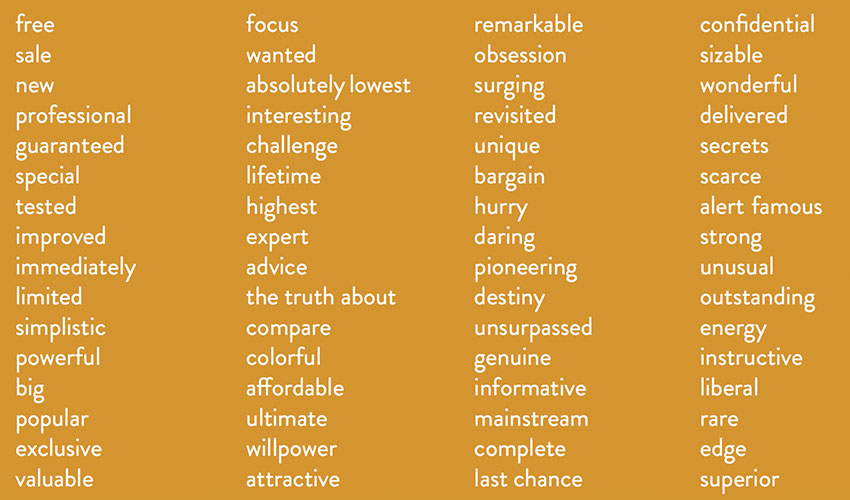
  • Use power words. There’s a lot to gain from combining active voice with power words. Putting nouns ahead of verbs and charging your writing with action-oriented, powerful words will help you sound more persuasive. Unsure about what power words are? Here’s a list of 317 of them.

sales email

Image source: dlvr.it

  • The essentials of business writing. Business writing is all about clarity and persuasion. It teaches us to cut out unnecessary words and inject a little bit of humor. One of the main takeaways from the business writing technique is to write short sentences and to avoid mixing multiple thoughts in one sentence.

#9 Follow up and follow up your follow-ups

Have you ever wondered how many follow-up emails you should send and how often? (See, I’m not even asking whether you think follow-up emails are important — they are key to any cold email campaign.) The number of follow-up messages will largely depend on the kind of relationship you have with the prospect. Yet, for a cold email outreach campaign, it’s not advisable to go beyond 2 follow-ups. Bombarding your prospects with unsolicited emails at this stage will only cause anger and tarnish your brand.

Keeping tabs on all the emails you send and remembering when the follow-ups should go out would be a nightmare without email automation and scheduling tools. The market is awash with smart email automation platforms, so choosing the right software might take as long as crafting the copy. Start with the best-known brands like Marketo, Pardot, or Yesware and work your way backward to find the most cost-effective solution for your needs.

If your initial campaign flopped or generated weaker results than you hoped for, here’s an interesting thought for you:

  • 44% of salespeople stop trying after one follow-up;
  • 80% of sales require five follow-ups.

If these few numbers shock you, take a look at the latest statistics on Email Marketing, the team of Sleek Note has gathered.

Quick takeaways

Crafting a winning cold email campaign takes practice and patience. Even with all these hacks and techniques at your fingertips, the most important factor determining your work’s success will be research. 

  • Research is the stepping stone to the success of cold email campaigns. Before you sit down to write anything, develop a buyer persona and gather as much information about your target segment as possible. Then turn that information into a story.
  • Spend time perfecting your subject lines because they can make or break your entire campaign.
  • The KISS (keep it simple, stupid) principle is one of the best rules you can follow to keep your prospects engaged.
  • Focus on the idea that you’re selling emotions, not products or services. Stressing benefits over features will help you capture the interest of a much wider base of people.
  • Use social proof to quickly build trust and credibility.  
  • Supercharge your emails with clear and simple CTAs that are a maximum of two sentences long.
  • Add a professional email signature with your contact and social media details to encourage your prospects to look you up and connect on other channels.
  • Take advantage of proven writing techniques to sharpen your copy and conquer your prospect’s inbox.
  • Follow up the first cold email at least twice.

Write to win prospects over, not to spam your way into their inbox.

FAQs: How to write a sales email

Q: How do I start writing a sales email?

A: The first step is to do your homework. Research your prospect thoroughly and create a meaningful buyer persona. This will help you understand their needs, pain points, and motivations, thereby allowing you to craft a highly personalized sales email that speaks directly to them.

Q: What is the importance of a subject line in a sales email?

A: Subject lines are crucial as they can greatly influence whether your email gets opened or not. Statistics show that 35% of recipients open an email based solely on the subject line. It should be short, start with the most important information, be personalized, and avoid clickbait.

Q: How should the body of a sales email be written?

A: The body of your sales email should be concise and to the point. Keep it short, use a straightforward, casual style, and make it about the recipient. Talk about their problems and how your product or service can offer a solution. Emphasize benefits over features to create a more compelling argument.

Q: How do I conclude a sales email?

A: Conclude your sales email with a strong and clear call to action (CTA). This tells the recipient exactly what you want them to do next. The CTA should be limited to one or two sentences. Also, include a professional email signature with your contact and social media details.

Q: How important are follow-ups in sales email strategy?

A: Follow-ups are crucial in a sales email strategy. Often, sales require multiple follow-ups. The right email automation and scheduling tools can help you manage your follow-ups effectively. Remember not to bombard your prospects with too many follow-ups, as it may tarnish your brand’s image.

In this comprehensive guide, you’ll learn to master sales management strategies that can propel your business to new heights. From understanding key sales management terms to formulating precise sales tasks, acquiring sales talent, and analyzing sales performance, this guide provides the knowledge and tools you need to streamline your sales operations, boost team performance, and enhance overall productivity.

Key Takeaways:

  • Sales management involves crucial aspects such as strategy planning, operations, and analysis, similar to coaching a sports team.
  • The sales management process requires precise definition of sales tasks, effective acquisition and training of sales talent, and strategic motivation of the sales team.
  • Sales performance forecasting can be performed manually or automatically, aiding in efficient planning and decision-making.
  • Effective sales team management involves nurturing top talent, treating every member uniquely, and creating a conducive environment for growth and success.
  • Regular measurement and analysis of sales performance data are critical to making informed, data-driven decisions and improvements in sales strategies.

Excellent sales management can elevate your company to the next level. It does not matter if you represent a young start-up or have been in the field for years, you must acknowledge that sales are the single most important thing at the end of the day.

Whatever your current business situation is, it is important to remember that great sales managers always try do their best with what they have. This sales management guide is designed to help you do exactly that.

What is sales management? 

Sales management refers to all activities, processes, and decisions involved in managing sales function within a business.

However, for a sales manager, it only means one thing: coordinating and developing a successful sales team.

Like every management cycle, it is built on continuous observation, coaching, decision making, forecasting and making adjustments.

Essentially, we can break down sales management into three key areas:

  • Sales strategy
  • Sales operations
  • Sales analysis and reporting

Sales management is a lot like coaching a sports team. You have a roster of players that must be turned into a championship team.

The cycle starts by acknowledging your current situation. Sales are a practical extension of marketing strategy. So to start on the right foot, you have to know everything about:

  • What products do we sell?
  • Who are we targeting?
  • What is our unique selling proposition?

After you become familiar with the company’s marketing plan, it is time to get real with the sales strategy. Sales managers primary function is to convert marketing objectives into a specific and measurable sales task and supervise its execution. In other words, come up with a game plan and stick with it. Just like a coach does.

In the following parts of this guide, we will walk you through the next steps and issues that typically arise during the sales management process:

  1. Key terms
  2. Defining the sales task
  3. Acquiring sales talent
  4. Conducting sales training
  5. Motivate sales team
  6. Defining a sales force structure
  7. Forecasting sales performance
  8. Creating sales territories
  9. Setting sales quotas
  10. Managing sales team
  11. Designing sales compensation
  12. Communication sales compensation
  13. Managing underperforming reps
  14. Measuring sales performance

Key Terms

Account A regular, paying client.

Buyer persona – fictional, generalized profile of an ideal customer with specified age, job, gender or other relevant demographics.

CRM – Customer Relationship Management. It typically includes CRM software that helps to manage customer data or sales pipeline.

Client relationship management system – Customer relationship management software that helps an organization determine the preferences and needs of their customers by tracking, recording, organizing and managing all customer interactions.

Closing – Convincing a prospect to make a definitive buying decision.

Cold Calling – The process of approaching potential customers for the first time, without prior introduction, relationship or contact.

Conversion – Turning a prospect into a customer.

Deal – An agreement on something with a client or prospect

Decision-maker – A person who is in charge of making buying decisions.

Demo – Demonstration of your product or service.

Demographic – Characteristics of the population or particular groups in it, such as age, gender, hobbies or lifestyle choices, etc.

Filtering – A step between lead generation and lead qualification where new lead information is filtered for validity.

Funnel – Also called sales funnel or sales pipeline. A designed systematic process that customers go through on their way to closing.

Gate keepers – People who screen your attempts to approach a decision-maker.

Inbound calls – Business calls initiated by the clients. It includes most of the customer support calls.

Inbound marketing – Marketing approach focused on attracting leads through relevant and helpful content.

Key Account –  A client with a large budget that makes up a large portion of purchases and is significant for the business.

Lead – A potential client that could be interested in doing business with you, usually with little information about you or your business.

Lead generating – Initiation of consumer interest in business products or services via advertising media.

Lead management – A process designed to generate new leads via various marketing campaigns or programs.

Lead management software – A computer program designed to streamline lead management process. It can be integrated as a feature in a CRM software.

Lead qualification – A screening process to figure out whether a lead has a motive and ample buying power to become a prospect and later an opportunity.

Opportunity – A qualified prospect that has shown interest in your products and has presented his needs and requirements for you.  

Prospect – A qualified lead that is interested to know more about your products and services.

Quota – Monthly, quarterly or yearly sales targets used to measure sales success.

Sales analysis – Measuring, analyzing, reporting and making decisions based on sales results.

Sales operations – Building and maintaining the sales team.

Sales enablement – The process of ensuring that sales representatives have all the tools, skills and information needed to sell.

Sales force – People responsible for selling products and services.

Sales forecasting – Estimating future sales volume to predict company’s performance in the future or to make better, information based decisions.

Sales management – A comprehensive set of activities to create and manage a sales team.

Sales management planning – Organising a plan to achieve the established sales objectives.

Sales management strategy – Defining the sales process and finding the best way to approach it.

Sales manager – A person responsible for leading, managing and coaching a sales team and supervising the sales process.

Sales pipelineSystematic and visual representation of your sales process.

Sales process – a Systematic approach that enables sales force to map out and track interaction with prospects from the point of engagement to a close.

Sales representative – Or simply sales rep. Your sales team member who is responsible for specific accounts or territories.

Sales target – Objectives that business or individual sales rep expect to meet per sales period.

Sales tracking – Keeping tabs on, recording and detailing all aspects of your sales process and activities.

Sales tools –  All means that help you to improve your sales management process, such as CRM software, lead generation instruments, sales pipeline, funnel and others.

Sales Velocity – simply put, sales velocity is a marketing and sales metric used to measure the speed at which opportunities and leads turn into revenue, month over month.

Targeting – Reaching out to the segments and groups of the population that are similar to the buyer persona.

Territory – The area which is sales representatives responsibility.

Warm calling – Opposite of cold calling. Approaching customers with whom you have an already established relationship and experience.

Whale – A massive new lead that is at least ten times larger than your average sale.

Defining the Sales Task

A sales task formulation is first and the most important step in the sales management process as it sets a direction for your team.  Here you establish your sales goal and describe how are you going to achieve it. A well-defined sales task includes a definition of your product, target audience, selling tactics and how are you going to communicate with your team.

A clear and measurable sales task helps your team to work more efficiently, reduces anxiety and increases overall team’s motivation. The more precise your sales task is, the better. The clarity of your sales task can significantly improve if you:

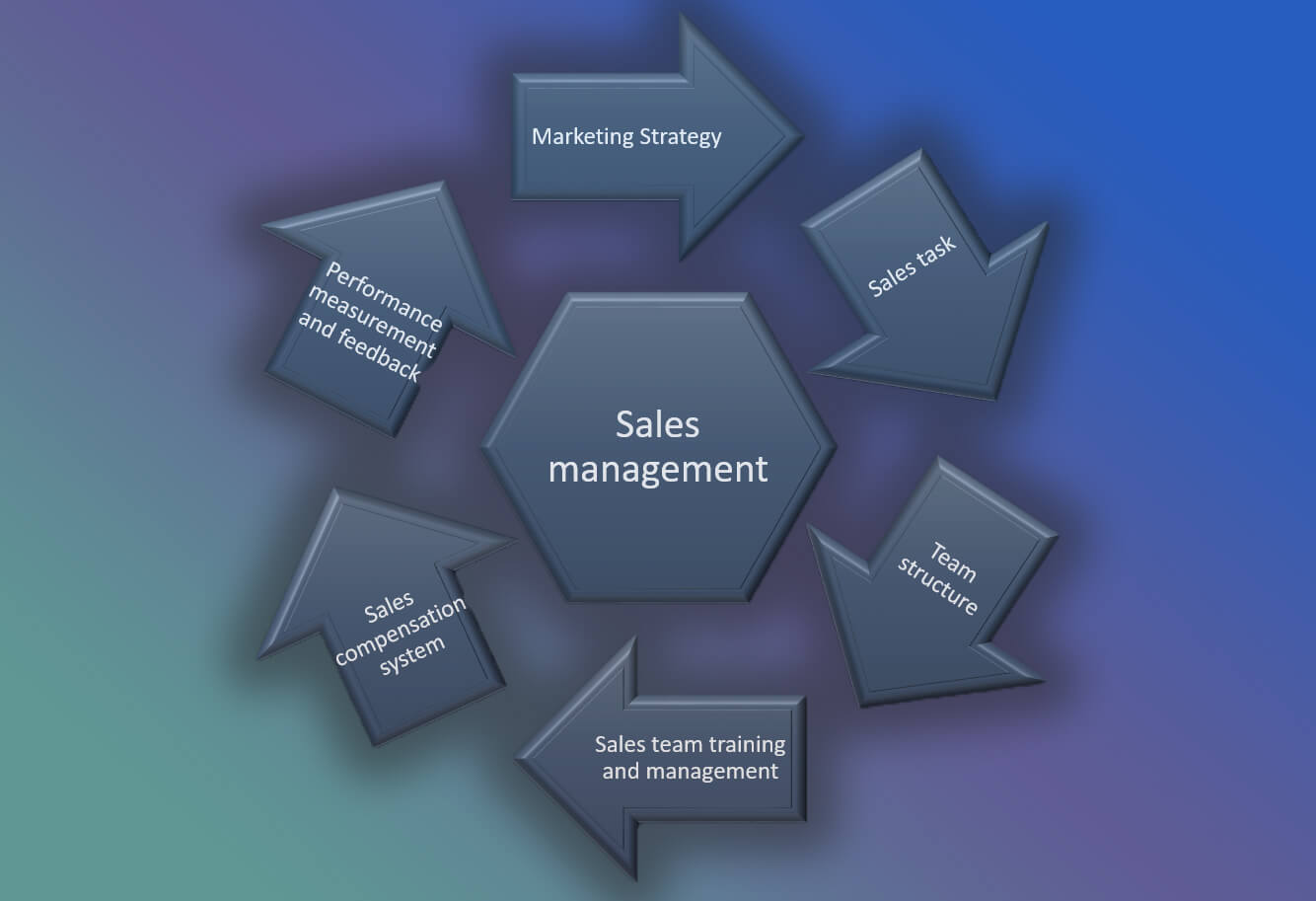
Sales Management Cycle

  • Assign a particular number of accounts for each rep. Sometimes geographical allocation can be ambiguous and unclear. The more accurate the account coverage is, the easier it is to act on them.
  • Set precise and attainable account management goals. It includes personal sales targets, activity goals, different quotas for different products, etc.
  • Use trustworthy information system. A poor system may distort sellers perception of input and results, all while simultaneously skewing accuracy of feedback.
  • Assess and correct field sales on the go. Make use of field sales management tools, such as management by objectives, scheduling field time or monthly feedback sessions. Your team will perform better if you deliver consistent coaching and guidance.

Acquiring Sales Talent

When you know what and how are you going to achieve, it is time to assess your team and, if necessary, make changes. Every sales manager needs people who are the best at carrying out the sales task.

To fill your all star roster with the best players, make sure to:

  • Look for the best talent amongst your competitors and establish a relationship with them.
  • Find good candidates where best workers usually go: industry conventions, conferences, and meetings.
  • Scan for the in-house talent: people who already know your enterprise and product.
  • Create a profile and work closely with your human resources staff.
  • Even when all the positions are filled, make sure to have a few extra candidates ready in case of unforeseen circumstances.
  • Maintain a good reputation, offer an excellent compensation package and if necessary, engage senior management in the process. Best sales people know how valuable they are and they love to be appreciated.

Conducting Sales Training

“Train people well enough so they can leave, treat them well enough, so they don’t want to.” Richard Branson

No matter how impressive your team members might be, they still need to be on the same page when selling your product.

First, outline your sales process – funnel. Emphasize how long your sales cycle should take. Then, recognize the skills needed to manage it effectively.

As a sales manager, your job is to enable your representatives to sell. As a coach, you also have to guide them through your sales funnel. Your team consists of different people, so sometimes, formal training is not enough. Make use of metrics to identify individual struggles and develop your players.

Best sales managers usually lead by example, but you may not always be able to teach the necessary skills or expertise yourself. Consider hiring a professional sales trainer, expert speaker, or author. Other alternatives, including cube alternatives, include sharing good books, online courses, or attending live events.

Whatever training strategy suits you and your team best, put time and effort to make it something out of the ordinary. Don’t make it just a routine in the office, make it stick.

Most importantly, training is an ongoing process. Learned skills need to be constantly refreshed and built on, especially during this time of changes.

Motivating Sales Team

Even in such an exciting field as sales, employee motivation can be an issue. However, being a decent manager as you are, you can tackle it in numerous ways:

  • Build trust with your team. Trust is a cornerstone of motivation and the best way to create trust between you and your subordinates is by being transparent. Share your stories, failures, and disappointments and build on the real experience.
  • Encourage your team to follow a balanced and healthy lifestyle. Show them that you care not only about their sales stats but also about their general well-being.
  • Ask individuals how they would like to be managed. While it may sound comfortable, it is known that one size does not fit all and adjusting to the individual needs can go a long way.
  • Distinguish between their personal and professional goals. Provide them with solutions that truly make a difference by identifying what is truly important for your employees.
  • Hand out great rewards. Awesome rewards inspire people, and we are not talking about the money here. As part of an effective employee rewards system, do something personal for your employees. Modified sentence: organize a contest, invite them to the BBQ, give them canvas photo prints & wall art, bring them food to work, or go to see movies together. Manage creatively and remember, that great management is more about earning respect and having fun instead of just trying to buy it off with a better salary.

Defining a Sales Force Structure

In this step of sales management process, you decide how many sales reps you need. There are two methods that you can use.

A top down approach:

1) Divide total annual revenue by the average sale sum per client. That gives you a rough idea of how many customers you need.
2) Then, figure out how many calls per customer you need to close a deal and multiply it by the number of clients (1). That helps you to estimate the number of calls required to meet your yearly target.
3)  How many calls is a single rep capable of making per year? Divide (2) by this number and you will have your estimated number of employees.

A bottom up approach:

  1. Lookup the total number of accounts you have in your area.
  2. Decide how many calls you need per account to generate a sale. Multiply it by the number of accounts to get the yearly number of calls needed.
  3. Calculate how many calls a representative can make per year and divide it by the total number of calls required per year (2).

That should help you to estimate how many team members you need.

Sales Management Guide

Forecasting Sales Performance

These days sales performance forecasting can be done in two ways: manually and automatically.

The manual approach includes analyzing the market potential and sales potential.

Market potential is the size of the market. In other words, how much demand there is for you and your competitor’s product in your area? How much you and your competitors can expect to earn?

Forecasting sales potential is about claiming your share of the market. How much of the market potential can you win?

You can base both of these metrics by looking at either objective or subjective data. Objective data is based on past metrics and data. Subjective data stands for industry experts forecasts and opinions.

Automatic sales performance forecasting is based on external systems and services. That is the most attractive solution for businesses today. To make more objective sales decisions, you can make use of such tools as Teamgate.

Creating Sales Territories (Optional)

Sales territories are about allocating initial prospects. The main question here is who will sell where.

As mentioned previously, it is very important to point out as many details about the accounts as possible.

Another tip in assigning territories is to make them equal in sales potential, not physical size. If it is possible, make use of geographical boundaries, but be sure that they same similar numbers of customers.

Lastly, be ready to change and improve your territories constantly. The number of customers and the abilities of your salespeople tend to change over time.

Setting Sales Quotas

Every rep in every area should have an annual sales goal for the year. Quotas are a key metric to evaluate how well a salesperson did in his area. When setting sales quotas, it is important to remember, that data driven approach always guarantees more precision.

In contrast, inaccurate or unattainable sales quotas create a negative view of the managers, cause frustration, unfairness and can hurt you other ways.

The best technique to set sales quotas is the bottoms-up approach. It is based on real reps capabilities and historical team results. The key questions here are:

  • What are the stages of our sales funnel?
  • What are our conversion rates before each stage?
  • How do our conversion rates look like per territory?

To help you with the bottoms-up approach you can make use of Yesware’s quota calculator.

If you have a variety of products, you should create a different quota for all of them.  And most importantly, keep track of them and address issues on the go. Even if the quota is annual, good managers break them down to smaller periods. As a result, they enjoy better insights.

Managing Sales Teams

Great teams have great coaches and great sales teams have excellent sales managers. There are many books with tips and tricks on how to handle the teams and it would be impossible to fit them all in one paragraph. However, several important things you should know about sales teams management are:

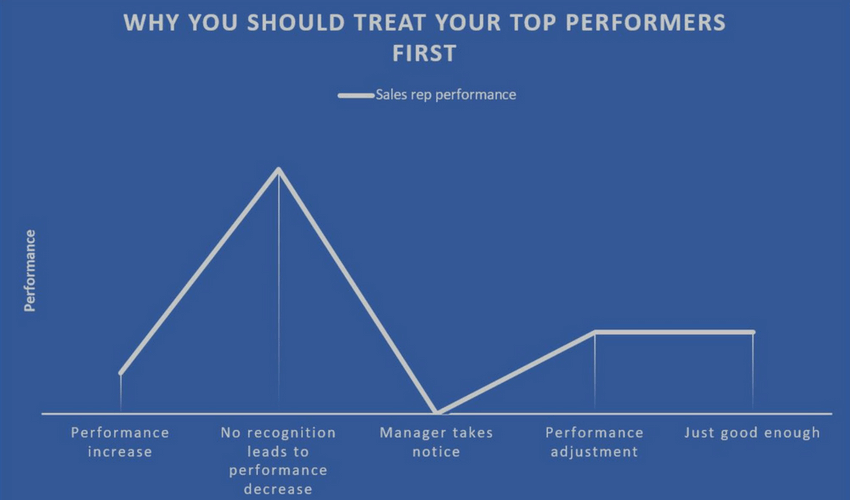
  • Take care of your top talent first. Many managers tend to take their eye off top performers and focus on the lesser ones. It only seems logical to help others. But in reality, top talent strives for attention and recognition, so you should consider dedicating even more attention to them along with some perks.
  • Treat everyone fairly but not the same. There is a big difference between discrimination and unfair treatment. Every one of your employees is a different person and what works for some will not function with the others.
  • Create winning environment. Encourage your team. Challenge them. Surround your subordinates with the best people and information available. Create an environment where they can do their best.
  • Give your salespeople all the attention they deserve.
  • Empower your people to grow. Growth is an essential element of job satisfaction. Make sure that your people feel like they are learning something new every day.

Sales Management Top Performers Chart

Designing Sales Compensation System

Another critical area of management is rewards. In other words, how much do you value your team members?

In general, there are two ways to design compensation plan: flat salary plans and variable commission programs.

Flat salary is fixed so your rep will get agreed amount no matter what.

Variable commission payment is linked with the number of generated sales and offers no limits. However, nothing is guaranteed as well.

The best approach in sales is to use the combination of both. Establish a competitive base salary and on top of it offer some bonuses for the reps or teams that achieve their target levels or quotas.

Communicating Sales Compensation

Great managers make sure that their reps are getting paid enough. Implementing sales compensation system consists of three steps:

  1. Communicate. Your reps want to know how they are getting paid. Consider creating a document that explains everything about how the plan works.
  2. Administer. Share the plan with HR or financial department, since they will have to process it, too.
  3. Measure. Observe how your plan operates and receive continuous feedback. There is nothing worse than figuring out that your plan was not working at the end of the period.

Managing Underperforming Reps

Your superstars are getting the best rewards, but what about underperformers?

There can be a million reasons why a sales representative struggles.

However, like in every other management issue, you should start by searching for the root cause of the problem. The 5 Why’s model can you to discover it.

Amongst the most popular reasons for lagging performance are the following:

  • An employee lacks specific tools or skills.
  • An employee is unmotivated.
  • An employee is not the right fit.

There are many ways to stimulate underperforming reps once you identify the right reason. Possible options include leading by example, accepting responsibility for the problems or creating a culture of motivation.

In the worst-case scenario, you have to fire someone, which is never easy. However, it is the only viable option if the employee continues to perform way below the standards.

Measuring Sales Performance

No matter what kind of coach, planner, or analyst you are, data-driven decisions are the most reliable ones. Therefore, performance tracking and measurement are sales managers’ best friends.

To measure well, you have to measure right things. For a sales rep, the most important number is conversions. Of course, to see the bigger picture, there are many other numbers that you should take into account, such as total revenue, gross margin, the number of initial prospects or won accounts. Also, mind that raw numbers can be deceiving, so take advantage of the ratios.

Data analysis can consume a lot of your time, but smart managers know how to free up their time. Make use of intelligent data management systems designed to help your decision-making. After all, numbers are just indicators and you need to be out there for your team.

At the end of the sales management cycle, you should report the results back to your reps, senior management, and marketing department. Good sales managers know how important insights are for the business and their team. From here, it is time to repeat the cycle again. Good luck!

FAQs: Sales management

Q: What is sales management and why is it important?
A: Sales management refers to all the activities, processes, and decisions involved in managing the sales function within a business. It’s crucial as it helps streamline sales operations, boost team performance, enhance productivity, and propel a business to new heights.

Q: What are the key areas of sales management?
A: The key areas of sales management are sales strategy planning, sales operations, and sales analysis and reporting. These areas are crucial for coordinating and developing a successful sales team.

Q: How can sales performance forecasting aid in sales management?
A: Sales performance forecasting, either done manually or automatically (via sales forecasting tools including cube alternatives), provides valuable data for efficient planning and decision-making in sales management. It estimates future sales volumes to predict a company’s performance and aids in making informed, data-driven decisions. 

Q: What strategies are effective for motivating a sales team?
A: Effective strategies for motivating a sales team include building trust, encouraging a balanced and healthy lifestyle, asking individuals how they would like to be managed, distinguishing between personal and professional goals, and offering great rewards.

Q: How is sales performance measured in sales management?
A: Sales performance in sales management is measured by tracking and analyzing various key metrics such as total revenue, gross margin, the number of initial prospects, won accounts, and conversion rates. Regular measurement and analysis of sales performance data are critical to making informed, data-driven decisions and improvements in sales strategies.

Q: What role does sales training play in sales management?
A: Sales training is vital in sales management as it ensures that all team members are on the same page when selling a product or service. It helps to equip sales representatives with the necessary skills and information to sell effectively and also identifies individual struggles to aid in personal development.

Q: How can the sales management process impact a business?
A: The sales management process, when done effectively, can greatly impact a business by improving sales operations, boosting team performance, and enhancing overall productivity. It can also assist in defining precise sales tasks, acquiring and training sales talent, and strategically motivating the sales team.

Measuring and tracking the performance of sales teams is imperative for the overall well-being of any company. How do CEOs and sales leaders go about this task?

In this article, you will delve into the world of sales team performance tracking, understanding its importance and impact on your company’s success. You will discover the role of goal setting, CRM software solutions, and both long- and short-term targets in effectively monitoring and improving sales performance.

Key Takeaways:

  • Comprehensive knowledge of your sales metrics and sales KPIs is essential in painting a complete picture of your sales team’s performance.
  • Effective goal setting and use of CRM software solutions, like Teamgate, can significantly enhance the visibility and control of your sales process.
  • Balancing short-term and long-term goals provides a comprehensive approach towards fostering a more productive work ethic within sales teams.
  • Tracking metrics such as activities completed, communications, deals won and lost, and future forecasts can offer a holistic view of your sales process.
  • Personal conversations and meetings that provide valuable insights derived from performance metrics can greatly improve the performance of individual salespeople.

One of the main talents great sales leaders possess is the ability to see and understand the overall picture clearly. This vision and knowledge of sales performance metrics are the core of a company’s success.

But, what happens if those with overall responsibility don’t have the complete picture? The answer is not good.

This incomplete picture is built from not being armed with the following disciplines:

  • Not tracking the sales team’s collective performance
  • Inadequate appreciation of both long- and short-term goals
  • Viewing sections of the pipeline and not the whole picture
  • Lack of streamlining ability
  • Not managing individuals

By possessing full knowledge of your sales metrics and sales KPIs, account owners can regain control of that full picture. A smart, and intuitive sales CRM software – such as the multi-award winning Teamgate – can greatly improve clarity, by intuitively tracking and measuring your sales team’s performance.

CRM and sales performance remedies

Goal setting as standard

Setting achievable goals for sales teams is imperative. Setting unjustifiable goals can stifle their abilities. Goals should be set in unison between your sales team, and results gleaned from your CRM software solution.

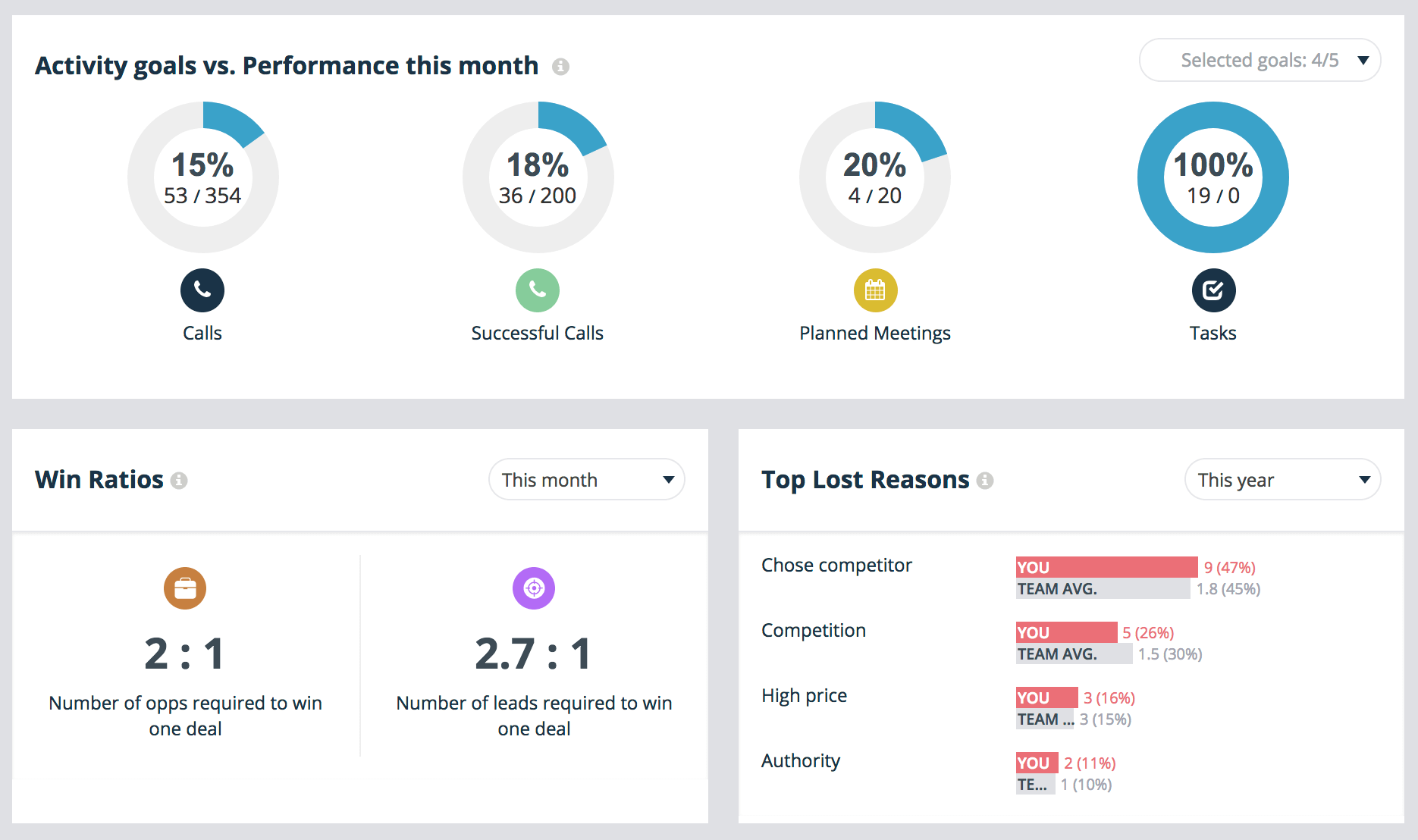
A CRM like Teamgate allows you to analyse past performance, and to set actionable goals. The CRMs results can offer insights that help evaluate any improvements required.

Sales performance
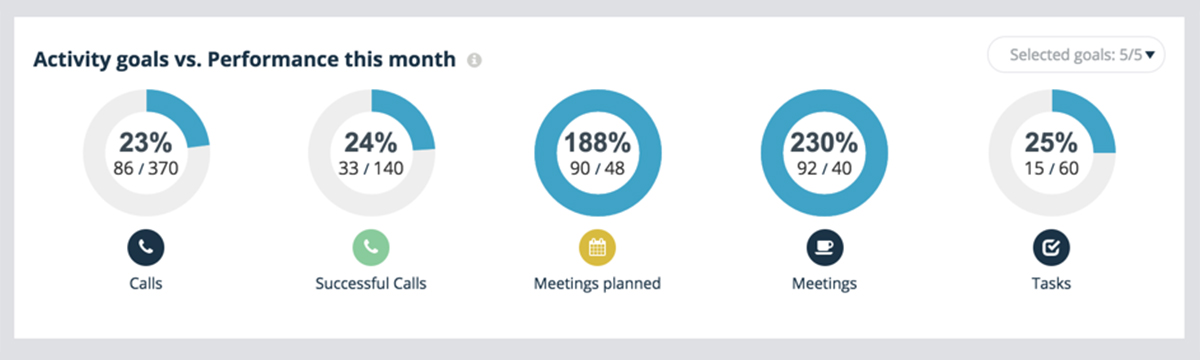
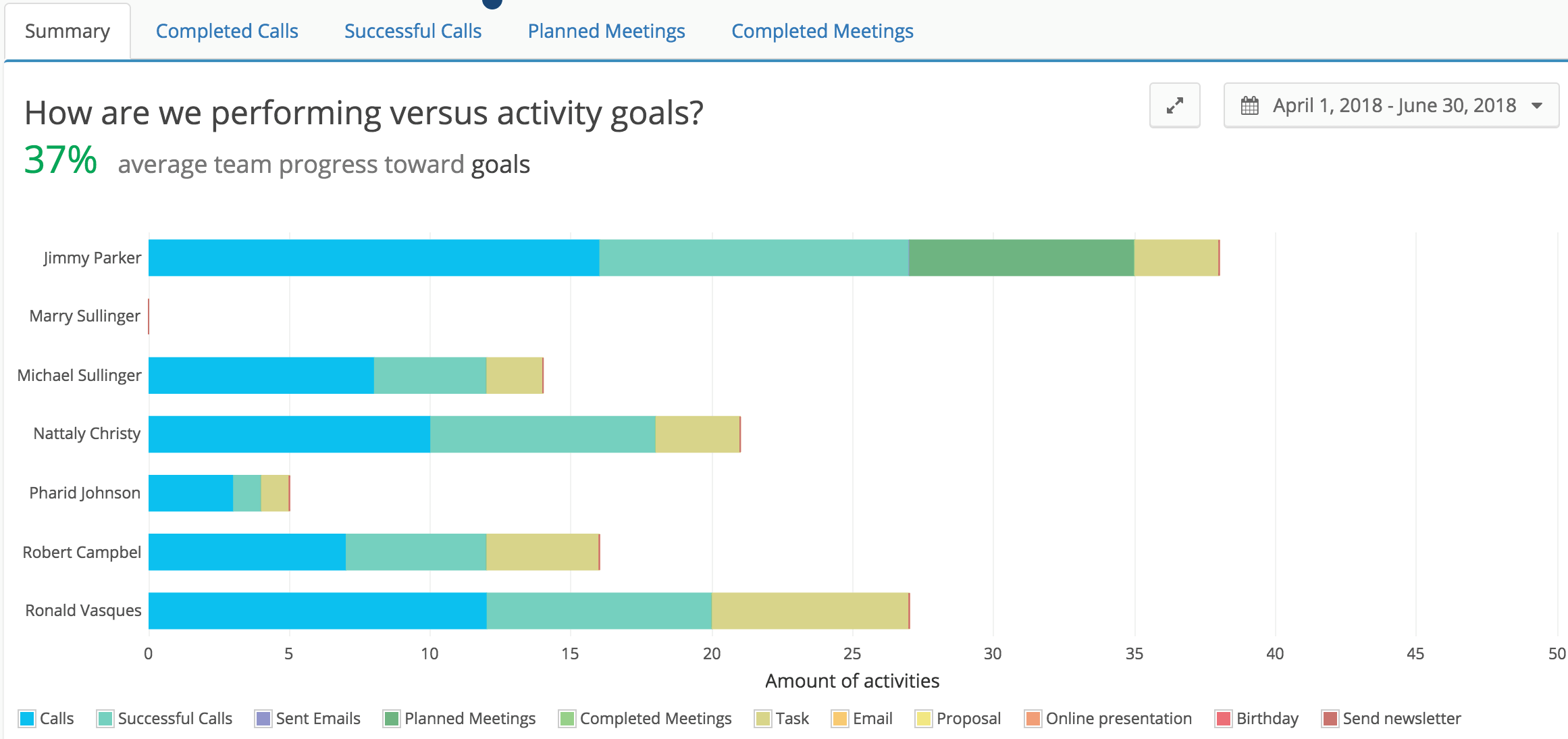
Activity Goals insight on Teamgate CRM

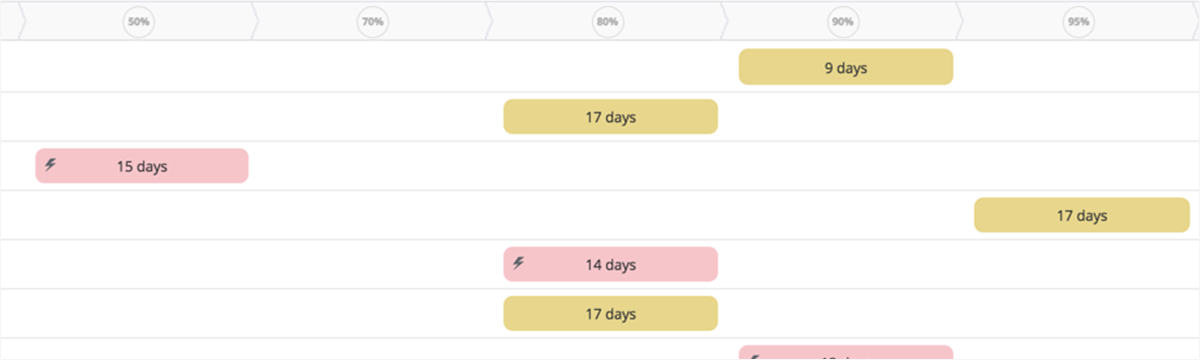
Sales which take too long to close steal time. Your CRM can offer valuable advice on optimum time-framing – how long a sale can be held in any particular stage of the sales process, or in the complete pipeline.

The long and the short of it

Sometimes it can be overlooked, but both long- and short-term goals have their individual merits. To sales teams and individuals, short-term goals can be fraught with frustration – inevitably there will be bad days and weeks.

For this reason, setting long-term goals can offer more incentive, and a realistic outlook, while helping facilitate a more productive work ethic.

Some sales teams like to set these goals in reverse; if you have a monthly target multiply it by 12, giving you an easier to manage – and less stressful – long-term target. Keep this target in mind, and things won’t feel so depressing at the start of each new weekly, or monthly sales cycle.

As with all sales metrics and goal setting, a capable sales CRM can analyse many factors across the sales process in order to determine the most achievable long- and short-term goals.

The bigger picture

A clearly defined sales pipeline offers managers the visibility needed to instantly analyse the complete sales process. Teamgate CRMs user-friendly interface offers access to the metrics which the ability to measure productivity minutely.

Sales performance
Sales Pipeline Movement on Teamgate CRM

Your CRM should offer the customisable ability to conduct tracking of metrics such as; activities completed; communications; deals won and lost; and future forecasts. All of these individual metrics go towards making up the overall picture.

Keep it running smoothly

Teamgate is a highly intuitive sales CRM which hands sales managers the benefit of automating time-consuming tasks and permitting them to focus on the metrics required for constant assessment, and tweaking of sales performance.

Fully customisable analytics, make all aspects of tracking and measuring the various segments of the sales process, quicker and more productive. Teamgate offers instant access to reports and sales KPIs which once stole much of a manager’s time resources.

Every aspect of your sales team’s KPIs can be automated and measured instantly – new leads, sales volume, client acquisition, stage lengths, communication targets, etc.

How to measure sales team performance
Dashboard on Teamgate CRM

The human factor

Meetings which offer no real insight or value, are a waste of time to all salespeople. Your CRM measures and tracks so many components of your sales performance metrics, it would be a shame to waste such findings.

Meetings which offer valuable information, garnered from measuring and tracking your sales teams performance, can offer not just the team, but the individual salesperson rewarding feedback. They can learn from their strengths and weakness in easily understandable charts and illustrations provided by your CRM.

There may be factors involving the individual which lie outside the metrics, these factors can best be resolved and discussed in one-to-one meetings and the presentation of the analytical data.

The best governance for tracking and measuring the success of your sales team can be achieved by the following:

  1. Use your CRMs reports wisely, but use your people just as wisely. Don’t forget to have those conversations with the individual.
  2. Setting goals is a collaborative process, involving a connection between your CRM and your people on the ground.
  3. Don’t forget the human aspect – your salespeople are the eyes and ears of your company, but be sure to keep them engaged in conversation, and involved in all stages of the sales process.

Measuring and tracking sales performance metrics gained from your CRM can help you monitor the health of your sales process anytime and anyplace, and instantly resolve any occurring bottlenecks.

FAQs: Tracking sales performance

Q: What is the significance of tracking sales performance in business success?
A: Tracking sales performance provides insights into how well your sales team is performing, which directly affects your business’s success. Understanding these metrics can help you make data-driven decisions, enhance productivity, and streamline your sales process.

Q: How can CRM software help in tracking sales performance?
A: CRM software, such as Teamgate, offers features that automate the tracking and measuring of various sales metrics. This includes activities completed, communications, deals won and lost, and future sales forecasts. It offers a detailed and accessible view of your sales process, enabling efficient monitoring and management.

Q: What role does goal setting play in tracking sales performance?
A: Goal setting is crucial in tracking sales performance as it provides a benchmark for what your sales team needs to achieve. A CRM can help analyze past performance and set actionable goals, offering insights to evaluate necessary improvements. Balancing short-term and long-term goals also aids in managing productivity and creating realistic outlooks for the team.

Q: How can tracking sales performance benefit individual salespeople?
A: Tracking sales performance can provide valuable feedback to individual salespeople about their strengths and weaknesses. This can be presented through charts and illustrations provided by your CRM, aiding in personal growth and performance improvement.

Q: What are some best practices for tracking sales performance?
A: Best practices for tracking sales performance include using CRM reports wisely, setting collaborative goals using your CRM and sales team input, considering the human aspect in the sales process, and continuously monitoring the health of your sales process to resolve any bottlenecks promptly.

Do you have a CRM that keeps you organised?

The most user-friendly CRM on the market. 14-day free trial.

Start Free Trial

Painless setup, no credit card required

After reading this article, you will learn about the importance of customer happiness for businesses, the characteristics of happy and good customers, the risks of unhappy customers, and strategies to ensure customer satisfaction and prevent customer churn. You will also discover best practices for customer relationship management and how to build trust with customers.

Key Takeaways:

  • Happy customers can be powerful brand ambassadors and positively impact your business’s reputation.
  • Good customers are those who pay on time, show mutual respect, provide feedback, and have a beneficial relationship with your business.
  • Unhappy customers can drain resources, harm your reputation, and deter potential clients.
  • A good customer can become unhappy due to poor customer service or unmet expectations.
  • Monitoring customer satisfaction, using surveys, and addressing customer concerns can help prevent churn.
  • Providing excellent ongoing support, keeping customers informed, and maintaining genuine conversations with customers are key practices for customer relationship management.


A happy customer is your brand ambassador. That same happy customer will promote and expound the qualities of your product or service, and what’s more important, they’ll raise the profile of your brand without you even having to ask. Customer happiness is a secret weapon waiting to rediscovered by many businesses who want to grow their profitability.

But, sadly, the mathematics of having and keeping happy customers is not a straightforward metric. There are good customers and there are bad customers. However, there are also levels of satisfaction amongst those customers; there are happy customers who become unhappy, and unhappy customers who in turn may become, not just disgruntled but major liabilities to your business and the perception of its professionality.

The question is, just how do you deal with these differing levels of satisfaction? And what can you do to harvest, and profit from the potential of a truly happy customer?

Let’s go explore.

Who is a happy customer?

“The single most important thing is to make people happy. If you are making people happy, as a side effect, they will be happy to open up their wallets and pay you.” ~ Derek Sivers, Founder of CD Baby

A happy customer is a paying customer, but you already know that. Cultivating strong and happy relationships with your customers is a crucial factor in growing a successful business with a significant competitive edge. In the age of automation, preserving the human element in your customer experience is more important than ever.

Why? Because your customers are just as connected as you are. Because they are people, and they care about themselves and about how they are treated and perceived by others. One misstep or bad experience with you or your support team, and they’ll be shouting about it to their followers right across every nook and cranny of social media. Bad word of mouth can tarnish a brand’s reputation for a long time, and, in some cases, forever.

In essence, a happy customer is someone who is actively using your product and is completely satisfied with the interaction and the outcome. They receive appropriate support, if and when needed, and they know how to use the product to pursue and achieve their desired outcome, and because of this, they will happily recommend your solution to anyone who’s prepared to listen. That’s a happy customer; the best friend your business can have.

Who is a good customer?

This is a question many business owners rarely, if ever, ask themselves. It also happens to be a very tricky question to answer. You would think that a customer who is ready to pay for your product or services is, by default, a good customer. But that is not the whole truth. The correct question to ask yourself is this; “what makes a good customer for my business?”

Although every business will have their own definition of a good customer, some aspects of this definition will apply to any company in any industry. These include payment, mutual respect, relationship, and reciprocity. Let’s take a closer look at each of these traits.

Payment. Chasing invoices and getting your clients to pay can be a huge drain on your business – and your time. The truth is, if you partner with bad customers you might just end up wasting your resources on tasks that shouldn’t even exist. For a small business, it can be almost impossible to say no to a potential customer who is willing and happy to hand over their money to you, but, it is also just as important to assess whether someone is a good payer before engaging with them. Imagine if a third of your client base were late to pay their invoices; a situation like that has the possibility to tip your business into the financial abyss.

Mutual respect. A good customer is someone who treats you and your staff with respect. It is important to allow a dissatisfied client to air their complaints; however, customers who lash out at you or your support agents, and those who use a hostile tone, even for the slightest of reasons, will have a negative impact on your team and its atmosphere. A business relationship must be beneficial – and respectful – to all parties involved, so if you feel that a customer is more demanding than they’re worth, or having a negative impact on your business, do not be afraid to walk away.

Reciprocity. Customers who take the time to give you honest feedback in order to help you improve the customer experience you provide are customers you really want to keep. Having an open line of communication with key clients is a true source of knowledge for any business. While you won’t act on every comment or complaint, you will quickly learn to prioritize and innovate in the most effective way. And besides that, customers who feel that they’re getting extra value for their money will recommend your business to others. Word of mouth is still the most powerful marketing tool in the mix.

Relationship. While it is probably not the most important factor, actually liking and respecting your customers as people can help forge substantially stronger relationships. A good customer is someone you wouldn’t mind having lunch with or chatting over a coffee. The importance of cultural fit can often be overlooked in a business environment, yet it is one of the key pillars of building smooth and seamless operations. If your customers have similar views and beliefs, the onboarding process will be simple and frictionless.

Who is an unhappy customer?

If you subscribe to the desperate entrepreneur’s mantra that “a customer is a customer – good or bad” you are putting your company in danger. Not every customer will be a good fit for your business, simply because you can’t be everything to everyone. Also, we are not talking about demanding customers here; some of your clients will prove to be difficult to please, but whom you know how to handle. What your business should not tolerate are unhappy customers.

One unhappy customer can impact your ability to support other customers, drain your resources and even drive other, potential clients away. If they start speaking negatively about your brand, it can harm your reputation and deter interested leads from working with you.

how to improve customer satisfaction

An unhappy customer is typically someone who is totally dissatisfied with your product and service and raises issues that you cannot solve. If there is nothing you can do to accommodate the client and help them achieve their goal, then it’s always best to simply part ways and end the relationship before it causes even more damage to your business. Again, the simple truth is that your product is not suitable for everyone. No matter how hard you try to onboard and support unhappy clients, they will never just turn around and fall in love with your solution. A customer that is not a good fit for your business is like a ticking bomb, just waiting to explode. Assess the situation and your options, work through all possible solutions to give the client what they want, and if that doesn’t work, move on.

Can a good customer be unhappy?

Absolutely. A good customer can be unhappy, and that’s typically caused by a subpar customer service experience or a failed promise. Nothing hurts a brand’s relationship with their loyal customers more than failing to deliver on the brand promise. Once a customer completely puts their trust in your brand, they are more likely to overlook any small missteps and mistakes which might occur. If they’re truly satisfied with the service, they won’t even make a fuss if your prices increase, they may even elevate their custom to premium features or new add-ons. But fail to meet their core expectations, and you’ll face the possibility of a major calamity.

A good customer can also be unhappy for other reasons. To uncover them, you must refer to your unique definition of what a good customer means for your business and start looking for the less obvious indicators. Could the unhappiness stem from something less apparent; like a change of copy in your late payment email, or your inability to act on important customer feedback?

The bottom line is that a good customer can be unhappy, but if you catch that sour mood in time you have the power to restore the situation.

How to see this in advance?

The best way to prevent customer depreciation is by measuring customer satisfaction. A telltale sign signaling potential problems in the customer experience is your churn rate – how quickly clients are turning away from your business. Unhappy customers churn, simple as that. To avoid cancellations, complaints, and general customer unhappiness, you need to monitor how satisfied they are at every step of the user journey. If a customer decides to leave, your goal is to understand the reasons behind such a decision and make adjustments to prevent other clients from following suit, now or in the future. The CSat and NPS surveys are the most effective tools which can enable any business to keep a pulse on their overall customer satisfaction and fix to unexpected hiccups without drawing too much attention.

How to change the situation: best practices

If you take away one lesson today, let it be this: “Always do more than is required of you” (George S. Patton).

customer satisfaction survey
Image Source: McKinsey

There’s no denying that your customer happiness team is also performing a critical marketing function. A happy customer is a walking advertisement. If you want to benefit from the enormous power of the word of mouth and reduce customer churn, you must take customer satisfaction seriously and put the right mechanisms in place to monitor it at significant touch points of their journey experience.

These are the best practices of customer relationship management that we stand by and recommend to other business:

#1 Provide excellent ongoing support and extras

I don’t mean to be repetitive, but it’s critical to embrace the “sale doesn’t end after the customer pays” philosophy to achieve customer happiness. Ensure your support agents respond quickly and enthusiastically, treat customers with utmost respect and show empathy. Your customer happiness agents should also have a special extra ‘something’ up their sleeve in order to tackle difficult situations with grace. If you’re lucky, a special discount or offer can lead to an upsell or upgrade.

#2 Build trust by keeping your customers in the loop

Did you know that it takes 12 positive experiences to make up for one unresolved negative experience? Let your customer down once, and you will feel the ripples of your mistake for a long time to come. One of the easiest ways to avoid customer backlash is to inform them about significant changes, good and bad, well in advance, allowing them time to adjust and provide feedback. If you treat your customers like trusted partners, they’ll return the favor by staying loyal and recommending your product to others.

#3 Have a genuine conversation with your customers

Responding in a timely manner is key, but keeping the interaction genuine and personable is just as important. Make sure your responses are friendly and clear, avoid industry jargon, and always sign the message with your name or initials rather than using the company name. Customers need to know they’re interacting with a human being, not an automated bot. If the situation allows, try to address the customer by their name to establish, or reestablish that personal connection.

The Importance of Prioritizing Customer Happiness

Prioritizing customer happiness is vital for the success of any business. Happy customers not only become loyal brand advocates but also contribute to positive word-of-mouth and business growth.
By implementing effective customer relationship management strategies and utilizing tools like Teamgate CRM, you can streamline your customer interactions, track satisfaction levels, and deliver personalized experiences.
Take action today and empower your team with the right tools to foster customer happiness, strengthen relationships, and drive long-term success for your business. Visit Teamgate CRM’s website to explore how their platform can help you enhance your customer relationships.

FAQ: How to make a customer happy

Q: How to make a customer happy?

A: Making a customer happy involves various strategies and practices. Here are some key steps to consider:

  1. Provide excellent customer service: Respond promptly, treat customers with respect, and show empathy towards their needs and concerns.
  2. Deliver a quality product or service: Ensure that your product or service meets or exceeds customer expectations in terms of functionality, performance, and value.
  3. Personalize the customer experience: Tailor your interactions and offerings to match individual customer preferences and needs. Make customers feel valued and understood.
  4. Communicate effectively: Keep customers informed about updates, changes, and any relevant information related to your product or service. Transparency and proactive communication build trust.
  5. Offer continuous support: Be available to assist customers throughout their journey, providing guidance, troubleshooting, and addressing their queries or issues promptly.
  6. Go the extra mile: Exceed customer expectations by providing additional benefits, perks, or surprises. Offer exclusive discounts, loyalty programs, or personalized recommendations.
  7. Act on customer feedback: Regularly gather feedback and actively use it to improve your product, service, and overall customer experience. Let customers know that their opinions are valued and acted upon.


Q: How can I measure customer happiness?

A: Measuring customer happiness is crucial to understanding and improving their experience. Here are two common methods for gauging customer satisfaction:

  1. Customer Satisfaction (CSat) surveys: Send post-interaction surveys to customers, asking them to rate their satisfaction with specific aspects of your product, service, or support. Use rating scales or open-ended questions to gather feedback. Analyze the responses to identify trends and areas for improvement.
  2. Net Promoter Score (NPS): Implement NPS surveys to assess customer loyalty and likelihood to recommend your business. Customers rate their likelihood of recommending your product or service on a scale of 0 to 10. Based on their responses, classify customers into Promoters, Passives, or Detractors. Calculating the NPS score gives you an overall measure of customer satisfaction and loyalty.


Q: What should I do if a customer is unhappy?

A: Handling unhappy customers requires a proactive and empathetic approach. Here are some steps to follow:

  1. Listen attentively: Allow the customer to express their concerns fully. Show empathy, patience, and understanding. Avoid interrupting or becoming defensive.
  2. Apologize sincerely: Take responsibility for any mistakes or shortcomings. Apologize genuinely for the inconvenience or dissatisfaction caused, regardless of fault.
  3. Resolve the issue promptly: Work towards finding a solution that satisfies the customer. If possible, offer alternatives or compensation to rectify the situation and regain their trust.
  4. Follow up: After resolving the issue, reach out to the customer to ensure their satisfaction. This demonstrates your commitment to their happiness and helps maintain a positive relationship.
  5. Learn from the experience: Analyze the root cause of the issue and identify areas for improvement. Use customer feedback as an opportunity to refine your processes and prevent similar situations in the future.

In this article, we will explain the concept of CRM sales forecasting and its importance in business planning. You will learn how accurate sales forecasting can help you manage finances, make strategic decisions, and seize opportunities for growth. By utilizing a modern CRM like Teamgate, you can effectively forecast sales and gain valuable insights to drive your business forward.

Key Takeaways:

  • CRM sales forecasting provides insights that help manage finances, plan for the future, and make strategic decisions.
  • Accurate forecasting aids in managing stock levels, understanding cash flow, and predicting future economic trends.
  • Utilizing sales funnel forecasting and scoring methods in a CRM enables more precise sales predictions.
  • Regression analysis, though complex, offers the most accurate forecasting results when data is clean and accurate.
  • Implementing effective sales forecasting processes and educating the sales team on data collection can drive business growth.
  • Teamgate sales CRM simplifies data gathering and automates the process, enabling accurate and informed sales forecasting.

What is CRM sales forecasting?

When it comes to CRM sales forecasting the rule of thumb is this – the more accurate the information you have, the more you can prepare and plan for the future.

However, understanding the past to predict the future is an inexact science. Having access to the correct data is one thing, applying the right methods to extract the correct conclusions is another matter.

Using a modern and effective CRM, like Teamgate, can assist in providing you with an accurate, and well-engineered sales forecast. This, in turn, can help you avoid major, and costly mistakes when it comes to planning marketing campaigns, lead gathering strategies, stock control, hiring practices, and the overall management of the entire sales process, and it gives you the ability to correct off-course sales directions faster than your competitors.

Why you need a sales crystal ball

What happens when you don’t have the ability to forecast for future sales? The answer is simple – bad things happen!

Without the in-depth insights which come with CRM sales forecasting your business is wide open to all kinds of catastrophic scenarios.

Managing the money – Being able to forecast future sales helps you manage for the future. Will you be in a position to invest further in your business, or is the time coming to tighten the purse-strings. It will also help you to understand better your cash flow situation, and to plan for any future financial shortcomings.

Purchase power – Managing stock levels can greatly depend on your ability to create accurate sales forecasts. Creating a CRM forecast will offer you a better insight regarding strategic investment, additional stock purchasing, or increased marketing spend. For online retailers, ecommerce inventory forecasting is essential to balance stock across channels, handle seasonal demand, and avoid fulfillment issues. By combining sales forecasting with real-time inventory data, businesses can prevent stockouts, reduce overstocking, and maintain healthy cash flow while meeting peak demand. Plus, CRM sales forecasting can help you picture future economic trends and plan in accordance.

Sales forecasting and forward budgeting go hand in hand.

Future thinking – Uncertainty in the future restricts your ability to take advantage of changing situations and act faster than your competitors. It can also rob you of the opportunity to expand at just the right time – an opportunity that doesn’t come around too often.

The sales forecasting process using a CRM

We’ve already said it, and we’ll say it again, sales forecasting is not easy.

In order to predict trends accurately CRM sales forecasting tools should be part of your business armoury. But, in order to engage in accurate sales forecasting, your sales leads needs to be scored using a common ‘criteria’. These scores can then be used to evaluate the likelihood that a lead or a deal will close within the desired time-frame.

There are several main methods of sales forecasting using your sales CRM

Forecasting by Sales Funnel

sales forecast sales funnel chart

In order to use your sales funnel as an accurate means of sales forecasting, it’s imperative to have a clearly defined sales process, with clearly defined stages. If you don’t have that clearly defined process in place, using your sales CRM for accurate forecasting is almost impossible.

Without a set sales process in place, you lose the opportunity to create a scoring system which can forecast sales accurately.

The main idea behind sales funnel forecasting is allocating a percentage to each stage of the sales pipeline. This percentage will represent how likely it is for a deal to convert to a sale at each stage of the pipeline. Obviously, the percentage will increase the further the deal journeys through the sales pipeline. For example, pipeline stages could be ranked in the following manner:

  • New leads – 10% potential win rate
  • Qualified leads – 25% potential win rate
  • Proposal – 50% potential win rate
  • Negotiation/Bargaining – 75% potential win rate
  • Deal Closing – 90% potential win rate

A quality CRM like Teamgate lets you easily appoint percentages to stages directly within the pipeline, making it easy to understand at a glance where every deal sits in the process, and the overall likelihood of conversion.

Advantages

All new data entered into your sales CRM software goes towards future forecasting. The more information you gather, the more accurate your sales forecasting will be.

Disadvantages

Without having a clearly defined sales process in place, using your sales pipeline to forecast future sales can prove almost impossible.

Forecasting by Score

crm sales forecasting lead scoring

In order to understand the likelihood of a deal closing, you need to have a reliable scoring system in place. One of the best methods of sales forecasting is by allocating scores to the source of your leads.

The lead score will reflect past sales performance when compared to similarly sourced leads. Past results will offer insights into how much time a lead took to convert to a deal, plus, how long the deal took to close.

For example, deals which came from the following sources may be scored in the following manner:

  • Referral – 8.1
  • Email campaign – 7.2
  • Landing pages – 6.5
  • Social media – 5.4
  • Cold calling – 3.6

Referral is placed higher than social media on the list, due to the fact that historically the sales team have closed more deals from referral sources, than from social media sources.

If you use source, plus a number of other criteria – ie. company size, number of employees, etc. – you can create an even more accurate method of identifying deals which are more than likely to close, and are therefore more entitled to your time.

Advantages

Forecasting by sources removes any emotional involvement in the sales forecasting process. All forecasts calculated in your CRM are based on hard facts and reputable data in order to bolster results.

Disadvantages

If salespeople don’t complete all of the requested data in their sales CRM the results will be inaccurate and only measure certain attributes of the sales process.

Forecasting by Regression Analysis

crm forecast sales forecast chart

By far the most difficult method of sales forecasting, but the method which garners the most accurate information. CRM forecasts using regression analysis uses strict mathematical theories and equations to measure covariance and correlation between variables.

As complicated as this may sound, accurate record keeping and stringent data entry in your sales CRM is imperative for regression analysis to be really effective. But, once that data has been gathered correctly and entered into your CRM simple mathematical equations can use this data for concise sales forecasting.

Most companies can only dream of sales forecasting using this method, however, data collected in your CRM can go a long way towards making this a possibility.

Advantages

As the forecasting equation is based on a strict mathematical formula, results tend to give more accurate, and more actionable results.

Disadvantages

The data collected in your CRM needs to be clean, concise, and accurate to formulate accurate results.

Accurate forecasting will drive your sales forward

As with all statistical analysis, the results are only as good as the data entered.

As Laurynas Gružinskas, Head of Product at Coresignal, a leading B2B data provider, explains: “Most AI agents don’t fail from bad algorithms, they fail from bad inputs. In high-stakes tasks like lead gen, market research, or candidate scoring, performance jumps when agents tap into continuously refreshed, structured data from diverse public sources. It’s not about having more data – it’s about feeding the AI the most relevant, recent, and usable signals. Without that, even the smartest AI agent lacks context and starts guessing.

Sales forecasting is a complicated process, but a vital one to keep your business moving forward, for allowing you to see opportunities for further investment, and for identifying possible difficulties ahead. An accurate sales forecast process lets you make faster, more targeted business decisions.

In order to have the most effective forecasting process possible, attempt to educate your entire sales team in the task of regular, and accurate data collection and update. The more accurate the information you have, the easier it is to future-proof your business.

Teamgate sales CRM goes a long way towards allowing you to easily gather the information you need – even automatically – in order to create sales forecasts which can really help you understand your business more intimately.

And remember always – forewarned, is forearmed. 

FAQs: CRM Forecasting

Q: What is CRM sales forecasting?

A: CRM sales forecasting is the process of using a CRM (Customer Relationship Management) system to analyze data and predict future sales performance. It helps businesses make informed decisions, plan strategies, and manage resources effectively.


Q: Why is CRM sales forecasting important?

A: CRM sales forecasting is crucial because it enables businesses to anticipate future sales trends, manage finances, make strategic investments, and identify potential challenges. It provides insights that aid in decision-making and helps businesses stay ahead of the competition.


Q: How does CRM sales forecasting work?

A: CRM sales forecasting works by analyzing historical sales data, customer information, and market trends. The CRM system uses algorithms and statistical models to predict future sales based on this data. It takes into account factors such as lead scoring, sales funnel stages, and regression analysis to generate accurate forecasts.


Q: What are the benefits of using CRM for sales forecasting?

A: Using CRM for sales forecasting offers several benefits, including:

  • Accurate predictions: CRM systems leverage data analytics to generate reliable sales forecasts.
  • Strategic planning: Forecasting helps businesses plan marketing campaigns, resource allocation, and budgeting.
  • Risk management: It allows businesses to identify potential risks and take proactive measures to mitigate them.
  • Performance evaluation: Sales forecasting helps assess the effectiveness of sales strategies and identify areas for improvement.


Q: What methods can be used for CRM sales forecasting?

A: There are different methods for CRM sales forecasting, including:

  • Sales funnel forecasting: Allocating percentages to each stage of the sales pipeline to predict conversion rates.
  • Forecasting by score: Assigning scores to leads based on past performance and lead source to determine likelihood of conversion.
  • Regression analysis: Using mathematical equations to analyze covariance and correlation between variables for more accurate forecasts.


Q: Can CRM sales forecasting be automated?

A: Yes, CRM sales forecasting can be automated with the help of advanced CRM systems. These systems can automatically collect and analyze data, generate forecasts, and provide real-time insights. Automation saves time and ensures more accurate and up-to-date forecasting results.


Q: How can Teamgate CRM assist with sales forecasting?

A: Teamgate CRM provides robust sales forecasting capabilities. It allows businesses to track and analyze sales data, create customized sales pipelines, assign lead scores, and generate accurate forecasts. With its automation features and intuitive interface, Teamgate CRM simplifies the sales forecasting process and helps businesses make data-driven decisions.


Q: What should businesses consider when implementing CRM sales forecasting?

A: To ensure successful CRM sales forecasting, businesses should:

  • Define clear sales processes and stages in the CRM system.
  • Ensure accurate and comprehensive data entry by the sales team.
  • Regularly update and clean the CRM data for reliable forecasting results.
  • Provide proper training and support to the sales team on using the CRM system effectively for forecasting purposes.

GET READY TO OWN YOUR WORKDAY

with the most user-friendly CRM on the market.

Start Free 14-Day Trial

Painless setup, no credit card required

After reading this article, you will learn about the main challenges faced when using a new CRM and how to overcome them. We cover concerns such as resistance to change, data importing, integrations, special requirements, management decisions, and other related concerns. The article provides resolutions to each challenge and highlights the importance of choosing the right CRM software to address specific pain points and achieve desired results.

Key Takeaways:

  • Resistance to change can be addressed by emphasizing the benefits of CRM and its partnership with salespeople’s experience.
  • Smooth data importing is ensured by choosing a CRM with intuitive and secure data import functionality.
  • Integrations are crucial for transforming a CRM into a powerful sales tool and should be based on the design of your sales process.
  • Special requirements can be met by selecting a CRM that prioritizes simplicity, functionality, and user experience, and provides training and support.
  • Management buy-in is essential, and CRM providers offer consultation processes to provide relevant information and address doubts.
  • Identifying pain points and selecting a CRM that aligns with your concerns and future goals is key to achieving desired results.

Challenges of Using A New CRM Software 

Choosing CRM, or migrating from your existing software, poses many challenges for modern customer-focused sales teams. So, what are these problems, and how are they solved?

For whatever reason, you have decided to choose a new sales CRM. After initial reluctance, you may finally have realized that the implementation of new CRM software is the way forward. Or, you may already be using CRM software, but, are unhappy with the results you’re getting. So, regardless of background considerations, you are sure to be faced with numerous concerns. And, you are right to be concerned – choosing the correct CRM software can be a matter of success, or failure.

CRM Migration

In an attempt to align with potential customers’ concerns, Teamgate contacted over 1,000 potential users of their sales CRM across a variety of industries and sought their feedback.

From sole traders to multinationals, the information Teamgate collated tended to reflect a similar set of concerns; regardless of location; business structure; or size of organization. While many respondents offered only positives regarding their CRM software experiences, others – albeit a minority – were less positive. Let’s take a look at some of the findings.

The major concerns of implementing a new CRM

The most common concerns noted, related to the following subjects:

  • Changing old habits
  • Data importing
  • Integrations
  • Special requirements
  • Management decisions – the unwillingness to onboard
  • Others – Expecting too much too soon; lack of adequate budget; CRM management champion; bad vendor experiences; security concerns; integrations concerns; Infrastructure concerns; technology and constant updating.

Let’s try to briefly understand these concerns and take a glimpse at how an intuitive sales CRM can overcome apprehensions associated with onboarding a new CRM.

#1 Old habits die hard

Problem

Some people embrace change, others don’t. First-time onboarding of a sales CRM, or the decision to migrate from an existing one, will leave even the most loyal of camps divided.

A commonly expressed concern is the perceived threat to livelihood – ‘Will it take my job?’ A concern is one which has surrounded the advent of every new change in work practices.

Then, there are concerns from those who worry about their lack of ability to onboard new technologies. Other employees will see new CRM practices as beneficial only to top management alone. And, some will fear that a technology-based CRM philosophy will lose the human connection, and the ability to sell more effectively.

Resolution

Many people avoid change. They like the way things are thing and don’t want to upset the status quo. However, smart salespeople are sales-driven and are usually willing to adapt to any enhancement allowing them to perform their job better. Salespeople have opened their eyes to the benefits of association with a top-quality sales CRM software.

They also realize that their vast experience, in partnership with technology, is an invaluable resource. Really smart companies realize that the implementation of an intuitive CRM, together with an experienced sales team, is a formidable weapon.

There may, of course, be initial onboarding concerns, but if decision-makers have chosen wisely, support will be provided by the vendor, ensuring an easy learning curve.

Employing a proactive sales CRM only serves to enhance a salesperson’s productivity.

#2 Importing data

Problem

Data is both the raw material and the main tool of the majority of modern salespeople. Any data loss could spell disaster for a company’s complete sales process. The possibility of loss is a major fear for sales teams considering onboarding or migration. Another grave concern is that the integrity of imported data may be compromised, resulting in time-consuming, and expensive data scrubbing.

Resolution

Onboarding or migrating to a new sales CRM means the transfer, and/or gathering of vast amounts of data. Using a CRM like Teamgate, data transfer is not only effortless but intuitive and secure. Teamgate’s native data import functionality, allows you to import data, with just a couple of clicks. Along with sourcing, importing, and appropriately filing data, it also instinctively avoids duplication of information. It also helps avoid the manual entry of data.

Data import, within a quality sales CRM, is flexible and allows lead importing options from multiple sources, such as; Excel, LinkedIn, Google, and iCloud, without loss of integrity. It also allows users to choose the exact destination location of the imported data, within either the leads, people, or companies sections of the sales CRM software. Another helpful feature is the ability to inspect the information import history, showing from where, when, and by whom the information was imported. All information, imported from whatever source, is capable of being filed correctly, conveniently, and relevant to the salesperson’s needs.

#3 Integrations

Problem

While many would-be CRM users are aware of its benefits, others worry that there may be gaps in the system. They worry that the CRM won’t provide the integrated functionality they require, creating these gaps; collaboration with marketing; lead gathering; communication management; ticketing; internal communication; and a host of other important sales, and auxiliary functions.

Resolution

CRM Implementation Plan

Whether you are implementing a first-time CRM, or in the process of migrating, well-chosen CRM integration offers your salespeople an ever-expanding toolbox of productivity. These integrations transform your CRM from basic functionality, into a resourceful, and extremely powerful sales tool.

Deciding which CRM integrations are best for you are, depends entirely on the design of your sales process. For example, a united, and seamless integration between sales and marketing may be your priority; in which case integrations such as MailChimp, Zapier CRM, and WordPress will be high on your list.

For others, communication integrations may be their priority, and the ability to contact prospects and leads instantly, via multiple modes of communication, while offering the ability to record, store, and analyze such communications. For this, the salesperson may choose from integrations like; Twilio, Voximplant, Nexmo, and Intercom, all purposefully designed to manage advanced communications.

Additional integrations include geographic mapping; enabling you to locate client locations; accountants and finance integrations such as; Xero CRM, and Quickbooks; plus storage and time-management functionality from Google Calendar, and Google Drive. The list of integrations continues to grow.

#4 Special requirements

Problem

Some salespeople worry that CRM implementation will be commandeered by their IT department, rather than being ‘owned and managed’ by the sales team, resulting in it becoming far too technically challenging.

Another worry is that the new CRMs learning process will be too complicated and without the necessary support features.

Then, there are the additional worries of expense, and pricing; CRM mobility; long run-in time for implementation and integration; vendor reliability; security; the expense of upgrades; and the ability to handle and store all communications. The list is comprised of as many individual concerns as there are individual companies.

Resolution

As with most modern software solutions, the user demands simplicity, functionality, and a positive user experience. Sales CRM software is no different. There should be no requirement for technical wizardry to benefit from the full functionality of the software. Teamgate, as a market leader, have designed their dashboard with the customer in mind. Teamgate’s design philosophy is customer-led, and to that end comes as a highly mobile, intuitive, smart, and strong sales solution. With such simplistic, yet powerful capabilities, there is no IT team required for its implementation. It’s simplistic features allow instant usability, without fuss or a drawn-out learning curve.

In fact, quality CRMs, like Teamgate, come with full training and backup, as requested. With free trial periods, personalized online demonstrations, and a customer champion desk only a call away, choosing the Teamgate CRM as a first-time user is as easy as it gets.

Whether you are a sole trader or a multinational, the best CRM providers offer a price plan to suit your budget. They also offer expertly trained customer service individuals who will guide you through the whole decision process, and cater to your individual concerns. Plus, CRM providers like Teamgate ensure – via its dedicated knowledge and training function – that users get up to speed and are familiar with the software, quickly, and easily. This ensures that there is no drawn-out implementation process, and is solidly supported by the company’s dedicated customer care experts.

#5 Management decisions

Problem

There would be no CRM buy-in, or migration without management approval. However, the initiative for implementation may not originate at the top, but from the sales department. If this is the case there may be the prospect of management fight-back, or reluctance to engage. Or, management may have financial concerns over pricing and other worries, ranging from lack of belief in CRM capability to their own fear of embracing new technologies.

They may also be unaware of the sales team’s problems or have not been briefed on the full benefits of a CRM. They may be unwilling to appoint a CRM champion to take the project through every stage. There may also be plans for changes down the line, and a new CRM may not be part of those plans, at present.

Resolution

Management needs to be completely on board with any decision to implement new sales CRM software or migrate from an existing solution. Management, in tandem with sales teams, are required to be the ones charged with identifying the organization’s unique problems, which are in need of being resolved successfully. It is also management who must be the ones to engage in the CRM design process, to outline its specific functionality, and to ensure the correct questions are addressed.

If management is not in full agreement, they may experience fight-back from certain quarters.Effective board management practices, like those highlighted in Diligent’s board management guides, can enhance decision-making efficiency and foster alignment across all levels. In order to overcome such problems, quality CRM providers offer a full, and resourceful consultation process, designed towards providing prospective users with all the relevant information required to make the right decision and remove doubt as to the CRMs value.

#6 Other concerns

Problem

Among the list of other concerns brought to the fore, were; lack of cash flow; unreal expectations of results and time-frames; failure to identify problems; unwillingness to adopt a CRM champion; bad vendor experiences; security concerns, infrastructure concerns; technology obsolescence and updating.

Resolution

CRM onboarding or migration concerns are resolvable through consultation with your provider. If finance is a concern, the provider may be able to advise on a range of suitable, and scalable price plans.

It would be naive to think that a CRM is a quick fix to an organisation’s concerns. Identification of pain points is essential to resolving these concerns in a timely and effective manner. If the problems have been expertly identified, a quality CRM, such as Teamgate, in consultation with the provider’s expertise can ultimately save time during the onboarding process, allowing teams to avail of its full, and powerful functionality quicker. Companies are also better served by nominating a CRM champion, a go-to person who will be responsible for all aspects of the process. In turn, this product champion will be the one charged with answering all concerns regarding security, infrastructure, technology obsolescence or updating. With one individual charged with this responsibility, communication between the provider and the user is streamlined and without ambiguity.

Fully understand what you want to do

While pricing may be a concern when choosing a CRM software solution, it is advisable to remember, as in all walks of life, the cheaper solution is usually the worst value in the long run. Your CRM needs to be designed with specific pain points, concerns that need to be resolved, and future goals in mind. Only then can you be certain that the quality sales CRM software you employ will lead to your desired results. If a CRM doesn’t address your concerns, then it’s the wrong one for you. If in doubt, reach out to a quality provider such as Teamgate who are always willing to offer advice on all aspects of your CRM implementation or migration.

FAQs: New CRM Challenges 

Q: What are the main challenges of using a new CRM?

A: The main challenges include resistance to change, concerns about data importing and integrity, integration gaps, special requirements, management buy-in, and other concerns such as unrealistic expectations, security concerns, and technology obsolescence.

Q: How can I overcome resistance to change when implementing a new CRM?

A: It’s important to emphasize the benefits of the CRM to salespeople, highlighting how it can enhance their productivity and work in partnership with their experience. Choosing an intuitive CRM with vendor support can also ensure an easy learning curve and provide assistance during the onboarding process.

Q: How can I ensure smooth data importing when migrating to a new CRM?

A: Choose a CRM with native data import functionality that allows for effortless and secure data transfer. Look for features that avoid duplication of information, allow importing from multiple sources, and provide a history of imported data. This ensures data is filed correctly and conveniently.

Q: What can I do to address integration gaps with a new CRM?

A: A well-chosen CRM with a range of integrations can transform basic functionality into a powerful sales tool. Identify the specific integrations you need based on your sales process, such as sales and marketing collaboration, communication management, or geographic mapping. Look for CRM providers that offer a growing list of integration options.

Q: How can I ensure a smooth implementation and address special requirements?

A: Choose a CRM that prioritizes simplicity, functionality, and positive user experience. The CRM should not require technical wizardry and should offer full training and backup support. Look for providers that offer personalized online demonstrations, free trial periods, and expertly trained customer service individuals. They can guide you through the decision process and address your individual concerns.

Q: How can I get management buy-in for implementing a new CRM?

A: Management needs to be fully onboard and engaged in the decision to implement a new CRM. They should identify the organization’s unique problems, participate in the CRM design process, and ensure the correct questions are addressed. Quality CRM providers offer consultation processes to provide all the relevant information and remove doubt about the CRM’s value.

Do you have a CRM that keeps you organised?

The most user-friendly CRM on the market. 14-day free trial.

Start Free Trial

Painless setup, no credit card required

This article provides five easy steps to achieve a clean and well-organized sales pipeline. It emphasizes the importance of a clean pipeline for sales success and offers practical tips on stage management, keeping things moving, effective communication, making success a habit, and avoiding stagnation.

Key Takeaways:

  • A clean sales pipeline is crucial for sales success as it provides clear insights, removes unproductive deals, and allows for efficient tracking of communications.
  • Five key steps to maintain a clean sales pipeline include ensuring the stages of the pipeline address the necessary problems, using sales software to keep the process moving and eliminate stagnant leads, engaging in clear and productive communication with prospects, making organizing the pipeline a habit, and aligning the pipeline with prospect expectations to avoid stagnation.
  • Regularly organizing and updating the sales pipeline in a CRM system is essential for maintaining a clean and efficient pipeline.
  • Stagnation in the sales pipeline can hinder the sales process, so it’s important to align the pipeline with prospect expectations and keep the pipeline moving to avoid blockages and delays.

Tips for Maintaining Good Sales Pipeline Hygiene 

Cleanliness is next to Godliness, isn’t that what they say? OK, that might be a bit much in the world of sales, but a clean sales pipeline is definitely next to your success.

A very astute sales professional I once knew carried with him the following mantra, “Doing business without making a profit is like eating soup with a fork – sure, you’ll be busy, but you’re going to stay hungry.

In the world of sales, ensuring that you keep a clean and well-organised sales pipeline removes the fork from the equation and rewards you with a very deep spoon with which to enjoy your meal.

But what is a clean pipeline? To put it succinctly, a clean pipeline is one that is well organised, uncluttered with deals going nowhere, offering clear insights into your present and future projections, and one which is keeping a concise and detailed track of all communications, ready to offer a clear overview at a moment’s notice.

sales management

So how do we go about ensuring that our pipeline is clean and well organised? The following are five quick tips that might just help you to eliminate the fork from the meal:

Stage Management

Be sure that the stages of your pipeline clearly solve the problems which you need to address. Sales pipelines – and by the same end – sales cycles rarely run smoothly. The funnel can get clogged with pointless deals which are in a hurry going nowhere, deals which waste valuable sales time and money.

For that reason, it’s vital to thoroughly inspect your sales management CRM at least once a week – and even more regularly if possible – in order to identify existing or potential bottlenecks. If a lead has the appearance of going nowhere, then you’re most likely right, it probably is going nowhere and needs to be sorted and stored where it really belongs – in the bin, or at the very most, on a callback list for the future.

Critical analysis as to the real prospect of a lead needs to be undertaken. Will they buy or not? If you think the answer is no, then you’re back at the fork and soup feast and the lead needs to be dumped. Be 100% sure that the design of your sales stages are the correct ones for you, and that they can manage your sales activities in the correct manner; every time.

Keep things moving

Use your sales software to keep the process moving. Schedule follow-up connections, be they calls, emails or personal visits – using an intelligent Sales CRM such as Teamgate this whole process is fully automatable.

sales pipeline
Sales Pipeline Movement insight on Teamgate CRM

You can also set your CRM to ensure that any potential leads which have been a hogging a berth in your sales pipeline for too long are dealt with in the correct manner – binned or coaxed further towards the sale. Not only does this process save time, it also stops good leads from being swept under the carpet and becoming lost in the pipeline.

It’s good to talk

To fully understand the chances of qualifying a lead to a deal depends on the sales person fully understanding the needs of the lead, and the time it may take to qualification. To do this really effectively you need to communicate in a clear and productive manner.

You need to ask the right questions, at the right time; the key elements of healthy sales management. The better the conversation with your prospect the better you will understand the reality of their needs and the legitimate chance of progressing the lead through the stages of your pipeline.

To do this more easily the best salespeople tend to have a more organised and cleaner pipeline, with clearly set goals managed by effective planning and concise diary keeping.

If you think that your prospects may exceed the period of time which you’ve allocated for your normal sales cycle, a healthy conversation may be able to clear this up and shift the process along. At the very worst you will know exactly where you stand in real time.

Make success a habit

If you do something on a regular basis, it becomes the norm, and as a result becomes easier. That’s why cleaning up your sales pipeline and being an effective sales manager gives you the habit of being successful. A habit worth keeping, I think you’ll agree.

Schedule time – daily or weekly, whatever works best for you – to organise the pipeline in your Sales CRM. It’s easy to say, but sometimes more difficult to do, however, we all know it’s true, if you’re prepared for success then success is prepared for you.

It’s advised that you pencil-in at least 20 to 30 minutes per day to organise your CRM with tasks such as checking future appointments, backfilling information, recording thoughts and sales ideas and staying ahead of the posse. It’s a habit worth sticking to, and ultimately makes your sales life more productive, and may even offer you extra free time in your private life. Now that’s worth being organised for.

Take time to ask yourself the following questions:

  • Are all my notes logged in the correct place?
  • Is my Sales CRM fully up to date?
  • Are my follow-up calls and meetings correctly logged?
  • Are my stages up-to-date, clear, and easily readable in the system?

If you’re having trouble keeping up to date with your pipeline, don’t overlook the possibility that your whole pipeline may need to be rethought, rebuilt and modernised to suit any changes in your current sales process.

If it’s not moving it’s dead

sales cycle

Stagnation is the mortal enemy of a sales pipeline. For this reason, it’s in everyone’s interest to match your pipeline with the needs and expectations of your prospects and leads.

If you know what your prospects expect to be the next stage in the pipeline it becomes far easier to avoid any choking blockages which can stall the whole sales process. It’s up to you to know exactly each step required to make the deal possible.

If you have any doubts, ask your lead what they expect to happen next in the process, and keep tabs on these steps for the next time. It makes sense to know that Mrs. A has passed stage W, and now requires X to follow Y in Z space of time.

A stagnant sales pipeline is nothing more than an address book sitting on a desk and doing nothing to help you sell. Keep it clean, and keep it moving and you’ll reap the rewards. After all, who wants to eat soup with a fork?

FAQs: Sales Pipeline Hygiene

Q: What is a clean sales pipeline?

A: A clean sales pipeline refers to a well-organized and uncluttered pipeline that offers clear insights into your present and future projections. It is a pipeline that effectively tracks all communications and deals, allowing for a clear overview at any given moment.


Q: How can I ensure that my sales pipeline is clean and well-organized?

A: Here are five quick tips to help you maintain a clean sales pipeline:

  1. Stage Management: Ensure that your pipeline stages align with the problems you need to address, and regularly inspect your sales management CRM to identify potential bottlenecks and remove deals that are not progressing.
  2. Keep things moving: Use sales software or CRM to schedule follow-up connections and prevent leads from staying in the pipeline for too long. This saves time and prevents valuable leads from getting lost.
  3. Effective communication: Engage in clear and productive communication with your leads to understand their needs and qualify them for potential deals. Ask the right questions at the right time to progress them through the pipeline.
  4. Make it a habit: Schedule a regular time to organize your pipeline in your Sales CRM. Spend 20 to 30 minutes daily or weekly to stay on top of appointments, record information, and keep your pipeline up to date.
  5. Avoid stagnation: Match your pipeline with the needs and expectations of your prospects and leads. Understand each step required to progress a deal and ensure the pipeline keeps moving forward.


Q: What should I do if I’m having trouble keeping up with my sales pipeline?

A: If you’re struggling to keep up with your sales pipeline, it’s important to consider rethinking and modernizing your entire pipeline to better align with changes in your sales process. Don’t hesitate to rebuild and revamp your pipeline to ensure it remains effective and efficient.


Q: Why is stagnation a problem for a sales pipeline?

A: Stagnation is detrimental to a sales pipeline because it can stall the entire sales process. By matching your pipeline with the needs and expectations of your prospects and leads, you can avoid blockages and ensure continuous progress. A stagnant sales pipeline is unproductive and hinders your ability to make sales.


Q: How does maintaining a clean sales pipeline benefit me?

A: Maintaining a clean sales pipeline ensures organization, clarity, and efficiency in your sales process. It helps you save time, focus on qualified leads, and avoid wasting resources on deals that are going nowhere. A clean pipeline sets you up for success and maximizes your chances of closing deals.

Do you have a CRM that keeps you organised?

The most user-friendly CRM on the market. 14-day free trial.

Start Free Trial

Painless setup, no credit card required

This article explores the importance of collaboration between sales and marketing departments in businesses. It highlights the pitfalls that can hinder effective alignment between the two teams and provides insights into how to overcome these challenges. By emphasizing the benefits of collaboration and offering practical solutions, the article aims to help readers improve sales and marketing coordination for greater success.

Key Takeaways:

  • Collaboration between sales and marketing teams is crucial for business success.
  • Poor alignment between sales and marketing can result in reduced revenue and missed opportunities.
  • Effective collaboration can lead to higher sales win-rates, increased customer retention, improved deal-closing, and higher annual growth.
  • There are seven common pitfalls to avoid when trying to align sales and marketing teams: admitting the problem, relying on shortcuts, lack of a middleman in collaboration, overlooking the human aspect, prioritizing technology over people, onboarding executives, and expecting instant fixes.
  • Successful collaboration takes time, patience, and a company-wide cooperative spirit.
  • By embracing change, investing in sales training, improving communication, and fostering collaboration, businesses can unlock the full potential of their sales and marketing departments.

The evolution of marketing

In most small businesses, the line between sales and marketing is blurred. Initially, there is no designated marketing team, with commercial ideas coming from managers, external agencies or the sales team.

As the business grows, players need to focus on their primary tasks, and the first marketing personnel are hired. These newcomers are charged with market research, promotional activities, assisting the sales team attract prospects, finding and qualifying leads, and closing deals. Marketing’s role is to supplement the sales team, while the sales team’s function remains the same – selling.

As marketing integrates closer ties with planning, product development, and finance departments, tensions tend to rise. Both sales and marketing lose traction due to overlapping tasks, and budget competition.

Sales and marketing dream team

Therefore, it’s important to realise that marketing departments are constantly evolving, as the situation demands, while the sales team’s function remains reasonably stable.

Sales versus marketing in figures

It’s never good when two driving forces behind your business have differing game plans. The inability to focus sales and marketing departments on the same goals can trim your annual revenue by up to 10%, according to LinkedIn research.

Below are some other sales and marketing alignment statistics which might make you think:

  1. Only 8% of businesses claim to have a well-aligned marketing and salesforce. (Forrester Research)
  2. Cohesive sales and marketing alignment can spike sales win-rates by as much as 38%. (MarketingProfs).
  3. Companies with well-aligned sales and marketing teams have up to 36% higher customer retention. (MarketingProfs)
  4. (Marketo) states that marketing and sales regulation improves deal-closing by as much as 67%.
  5. Aligned sales and marketing departments boost annual growth by 20%. (Aberdeen Research Group)
  6. 65% of sales teams can’t source suitably enticing content. (Kapost)
  7. 47% of large conversions are the result of nurtured leads. (The Annuitas Group)
  8. 70% of B2B content wasted due to unsuitability towards target audience (Content Marketing Institute).
  9. 50% of marketing leads are ignored or neglected by salespeople. (ReachForce)
  10. 50% of salesforce time is spent on unproductive account prospecting. (ReachForce).

And old but gold rule is this; collaborating teams solve problems, but a lack of collaboration only manages to create them.

7 reasons why sales and marketing alignment may fail

According to Australian collaboration expert and author Peter Strohkorb, there are 7 reasons why sales and marketing teams struggle to align effectively. 

1. Admitting the problem

The first step towards any problem solving is accepting that there is a problem. Not only is burying your head in the sand useless, it may even magnify any existing issues.

However, it seems that it’s marketing people who ignore problems most. Typically, members of the sales team admit that closer collaboration with their colleagues in marketing would be beneficial.

sales marketing collaboration
Image credit: HomeBusiness Mag

Whatever the situation may be at your company, it is important to stop finger-pointing and engage in problem-solving. The sooner parties admit that things can get better, the faster the situation improves.  With cooperation between marketing and sales there are no losers, recognise problems and face them.

To better understand your sales and marketing teams’ interaction, try to assess their relationship. Philip Kotler defines four examples:

  •       Undefined relationship. Until there’s a conflict, both parties are heedless of each other’s actions. Joint meetings are dedicated only to problem-solving with little emphasis on cooperation.
  •       Defined relationship. Here, both teams collaborate via an established ‘playbook’. There is a clear distinction between roles. To prevent potential conflicts, marketers and salespeople have regular meetings to reflect on and solve common issues.
  •       Aligned relationship. Sales and Marketing sectors have clear distinctions, but their relationship is flexible. Marketers confer with the sales force on big accounts, and salespeople have an understanding of marketing philosophy such as ‘brand image’ or ‘unique value proposition’.

      Integrated relationship. Integrated sales/marketing activities share the same systems, structures, and rewards. The teams develop common metrics and share terminology, there is less friction, and budgeting becomes more flexible.

2. Relying on shortcuts

With sales quotas to fill, monthly targets to meet, and quarterly reports to write, quick fixes become convenient, but most of these fixes are rarely effective, especially when they revolve around sales and marketing collaboration. Some popular, but ineffective fixes include extra sales training, hiring more sales reps, and generating more leads.

More sales training

Sales training should be constant, both internally and externally. Seminars work well when based on existing knowledge and skills. However, these lead to downtime for sales teams and the redoubling of efforts. Also, if newly-acquired skills are not reinforced within 30 days they are likely to be lost. Finally, the principles of change management state that things tend to get worse before they get better.

New skills require trial and error, losing time and sales volume, much to the annoyance of sales managers who may wish to revert to previous practices.

Increase the sales force

Another popular workplace myth is that more sales reps will lift sales volume. While that sounds logical, bringing in more new faces into a flawed sales and marketing workspace does not solve the core problem. It is the process that needs fixing, not the quantity of staff.

Generating more leads

When challenged some organisations concentrate on lead generation. But, again it is better cooperation between marketing and sales that will lead to better results.

Unless sales and marketing work together and manage to generate, nurture, hand over, close, and report on leads generating extra leads is wasteful. Presenting the right content, in the right context is a far more sound approach. And, for that to happen, sales and marketing need to cooperate fully.

3. No middleman in collaboration

Communication can be expensive; eating up time and prolonging decision-making. However, it is necessary to have a clear and reliable communication channel enabling sales and marketing to work closer. Frequently there is no one to connect between sales and marketing. People from both sides get frustrated by searching for assistance in all the wrong places. Having a middleman can be beneficial for both parties, this intermediary should not be related to either department and have a full-time role in this position. Both marketers and sales teams should know exactly who to contact, regarding all issues affecting both parties.

4. Don’t overlook the human aspect

Good collaboration can boil down to interpersonal relationships, so, having a human-first mindset is beneficial. Sales and marketing departments think differently, often with divisive results. Marketing people tend to rely on calculated and structured sales funnels and guide prospects through the process. Sales tend not to be so rational, basing much of their success on intuition, networking, and experience.

sales marketing teamwork
Image source: DataBox

This can be like two worlds colliding, resulting in conflict. Sales believing that they are the ones who butter the bread, while marketing believe that they are the ones who bake the bread.

The first step towards better collaboration is the realisation that working together benefits all stakeholders. Both sides coming together to implement the design of a process which will see their cooperation run smoothly, effectively, and successfully. Only then can those two worlds cohabitate in harmony.

5. When technology comes before people

The key to successful collaboration is to make sure that people are talking.  However, the correct technology can add value to good communication. But it must be remembered, without the willingness to embrace new technologies, and the readiness to onboard, the technology is useless. An intuitive and easy to onboard Sales CRM can greatly enhance the communication value between sales and marketing. Plus, with features such as a sales leaderboard your CRM can pinpoint the best performers, who is hitting their targets consistently, and which areas of the sales pipeline are causing the most bottlenecks.

A feature such as Smart dialer, technology can give your sales team the edge and the visible confidence to embrace new ways of doing business. Another technological advance is through email CRM integration, employing Gmail, Outlook and other software ensuring simpler and continuous communication pipelines. With technological advantages, such as a CRM LinkedIn integration, you can collect contact data easily and directly from Linkedin, saving you valuable time on direct data-input.

In reality, it is the end-users who have to deliver, and it is only by ensuring a company-wide cooperative spirit that results will be demonstrated. Without people, and their communication, technology is just technology.

6. Onboarding the executive

Company direction tends to flow downwards like water and it is the senior executives who must lead by example. Individuals who try to deliver change without the support of management are doomed to failure. Onboarding an executive to your idea can make all the difference, especially to proposals helping your sales and marketing departments work together more closely. Just be sure they fully understand the advantages such cooperation will bring to all parties.

7. There are no instant fixes

Once better collaboration has been established, impatience may set in. In reality, all change takes time to establish itself. And so it is with sales and marketing alignment; it’s all well and good saying that a thing has changed, but it is the people who must absorb the change and be the difference. It’s at this point that the patience of management and all involved is a real virtue. According to Peter Strohkorb, it takes at least 3 months before the first team collaboration results can be seen.

They will appear in three different stages:

  1.     Stage one. Managers will discover more about the organisation and its people. It will become clear who are the main stakeholders, what they think, and what their sentiments are.
  2.     Stage two. Insights on how the company should present itself on the market will become evident. Questions like “how do we look at our customers” or “what can we do to address them more successfully”, will arise.
  3.     Stage three. The first financial results appear.

It takes time to align sales and marketing teams, but if the right effort is there, it will happen.

Sales and marketing collaboration is the foundation of success

Executives often accuse sales and marketing departments of under-communicating, underperforming and over criticising one another. But, every organisation is different, with it’s own set of parameters and expectations. It’s, for this reason, that time should be wisely spent evaluating, assessing, and considering how to improve the situation.

Hopefully, this article has demonstrated that sales and marketing departments who are willing to collaborate demonstrate greater rates of success and satisfaction. In addition, newly introduced technology gets used wisely, and change is accepted more easily. With the adoption of the mindset of change, sales training, communication, and collaboration become the norm; as are the unexpected windfalls which come with that newfound mentality.

It’s fair to say that changes involving collaboration are difficult to adjust to, that is, until people learn to appreciate, trust and work positively with others. ‘Together we can be better’ should be the motto of a carefully aligned strategy aimed at bringing out the best from sales and marketing departments and allowing them to unleash their real power. 

Start maximizing the potential of your sales and marketing collaboration with Teamgate CRM – the tool that empowers teams, enhances communication, and drives exceptional results. Request a demo today!

FAQs: Sales and Marketing Collaboration

Q: Why is collaboration between sales and marketing important?

A: Collaboration between sales and marketing is important because it aligns the two key departments in a business towards common goals. It leads to increased revenue, higher sales win-rates, improved customer retention, and overall business growth.


Q: What are the consequences of poor sales and marketing alignment?

A: Poor alignment between sales and marketing can result in a loss of annual revenue by up to 10%. It can also lead to missed opportunities, decreased customer retention, and inefficiencies in closing deals. The lack of collaboration hinders overall business success.


Q: What are some common pitfalls to avoid in sales and marketing alignment?

A: The article highlights seven common pitfalls to avoid in sales and marketing alignment. These include ignoring problems, relying on shortcuts such as extra sales training or hiring more sales reps, lacking a middleman in collaboration, overlooking the human aspect, prioritizing technology over people, not onboarding executives, and expecting instant fixes.


Q: How can communication be improved between sales and marketing?

A: To improve communication between sales and marketing, it is important to establish a clear and reliable communication channel. Having a designated middleman who is not related to either department can facilitate effective communication. Emphasizing a human-first mindset and understanding the different perspectives of sales and marketing teams can also contribute to better collaboration.


Q: How long does it take to see results from improved sales and marketing collaboration?

A: According to Peter Strohkorb, it typically takes at least three months to see the first results of improved sales and marketing collaboration. The results appear in stages, starting with a better understanding of the organization and its stakeholders, followed by insights on how to address customers more successfully, and finally, the first financial results.


Q: What are the benefits of sales and marketing collaboration?

A: Sales and marketing collaboration brings numerous benefits, including increased success rates, improved efficiency, better customer retention, and higher overall business growth. It also allows for the effective utilization of technology and fosters a cooperative spirit within the organization.

In this article, we’ll explore how Teamgate elevated its customer satisfaction rate from 95.1% in 2015 to 97.2% in 2017. The piece dissects the importance of customer satisfaction, various methods, and best practices for measuring it, and effective strategies for dealing with difficult customers. It offers insights into the tools that can help monitor and improve customer satisfaction, making it a valuable resource for businesses striving for growth and enhanced customer experience.

Key Takeaways:

  • Customer satisfaction is crucial for business growth and can significantly increase profits with even a slight increase in customer retention rates.
  • Teamgate successfully enhanced its customer satisfaction by thoroughly analyzing and rectifying mistakes in customer support requests and prioritizing a human touch in customer interactions.
  • Measuring customer satisfaction involves carefully crafted CSat surveys and the utilization of various tools like web surveys, post-service surveys, and email surveys.
  • Managing difficult customers effectively requires excellent listening skills, patience, and maintaining professionalism in high-tension situations.

Customer satisfaction is the third most important growth engine in any modern business, trumped only by new customer acquisition and marketing. The importance of customer satisfaction can never be overlooked.

If you’re interested in keeping your customers, you will want to monitor how satisfied they are with the service or products you provide, along with providing insights into why they may be leaving. 

We have spent many long hours honing our approach to customer support, but it paid off in the end – having gained 97% customer satisfaction. We were constantly striving for new ideas and methods of how to improve customer satisfaction. If you’re curious about how we did, it’s all here.

What is customer satisfaction?

Customer satisfaction is a metric which measures how well a company, or more accurately, its product or service, meets customers’ expectations. The importance of customer satisfaction cannot be overstated. Establishing and maintaining excellent relationships with customers is the only effective, long-term strategy for businesses that strive to achieve high growth. Help Scout has found that 81% of companies providing superior customer experience outperform their competition.

Happy customers can be equated to loyal customers. Once a customer places their trust in you and is happy with the service you’re delivering, they will not only continue to do business with you but will also be more likely to upgrade or try other services and products you may supply. At the risk of overstating a point successful companies never overestimate the importance of customer satisfaction.

According to Harvard Business Review, acquiring a new customer can be anywhere from five to 25 times more expensive than keeping an existing one. So, focusing on customer happiness is not just some new trend that modern businesses are obsessing over, it is a viable profit-driven strategy. A study conducted by Frederick Reichheld, the inventor of the net promoter score, has shown that increasing customer retention rates by a mere 5% increases profits by 25% to 95%.

Why is customer satisfaction important? 

The significance of customer satisfaction extends far beyond just the ‘feel-good’ factor for businesses. It plays a fundamental role in the growth and success of an organization, holding a strategic position right next to new customer acquisition and marketing in importance.

If you’re determined to retain your customers, monitoring their satisfaction level with the products or services you provide becomes essential. In addition, gaining insights into why customers might be leaving is invaluable. To achieve high customer satisfaction rates, many businesses, like us, invest significant time and effort in refining their customer support approach. And this investment pays off, as evidenced by our 97% customer satisfaction rate.

Why is this so significant, you might ask? Well, research indicates that acquiring a new customer can be anywhere from five to 25 times more expensive than retaining an existing one. Furthermore, a study conducted by Frederick Reichheld, the inventor of the net promoter score, has shown that increasing customer retention rates by just 5% can boost profits by 25% to 95%.

There’s more – satisfied customers are more likely to stay loyal and try other services or products you may offer, translating into more business for you. According to Harvard Business Review, companies that provide superior customer experience outperform their competition by 81%.

In short, prioritizing customer satisfaction isn’t merely a trend that modern businesses are adopting, but a profit-driven strategy that contributes significantly to business growth. Thus, underestimating the importance of customer satisfaction is not an option for successful companies.

In the following sections, we delve into how customer satisfaction is measured and offer insights into how we achieved a 97% customer satisfaction rate.

How to measure customer satisfaction?

Customer satisfaction can be challenging to measure, but first, you should thoroughly understand the exact meaning of just what is customer satisfaction. It is typically based on a short survey – populated with appropriate customer satisfaction survey questions – which a customer completes after fulfilling an action on the site, chatting with a support representative, or once their ticket is resolved. The CSat survey can be presented in many forms, but it’s usually a single question concerning a specific experience. For instance, you might be asked “How would you rate your shopping experience with us today?” and prompted to either leave a star rating or choose from a couple of simple options, such as excellent, good, or bad. You will be surprised by just what you can learn from a well-thought-out customer satisfaction questionnaire. 

Companies often try to make their customer satisfaction survey as lightweight and ubiquitous as possible; for example, by embedding it in the signature of an email or sending it automatically after a support ticket is closed.

However, failing to measure CSat can be expensive. 91% of unhappy customers who are non-complainers simply leave and 85% of customer churn due to poor service which was preventable. If you don’t measure your CSat, you will never know of these customers’ existence.

The Net Promoter Score, or NPS, is also a popular method of gauging customer satisfaction. It is calculated using the answer to one key question and a 0-10 scale. That one important question gives an unprecedented insight into customer experience and satisfaction – “How likely are you to recommend us to your friend or colleague?


Customer Satisfaction Chart
Source: Retently

Service organizations are able to create loyal customers by teaching them how to solve their problems quickly and easily without having to use a support agent, rather than by delighting them in service interactions. These types of organizations often rely on the Customer Effort Score (CES), which measures how much effort a customer invested into a certain interaction with the company. The two versions of the CES survey question that are currently used by different businesses include “How much effort did you personally have to invest to handle your request?” (a 5-point scale) and “The organisation made it easy for me to handle my issue” (an agree/disagree type of question).

How are we measuring customer satisfaction?

It is vitally important that you know just how to measure customer satisfaction. “You can’t expect your clients to be completely happy with your product if you do not offer great customer support,” says Vitalija Golceva, Head of Customer Success at Teamgate.

The customer happiness team at Teamgate has come a long way since 2015 when they started seriously measuring customer satisfaction. According to Zendesk, which Teamgate employ to handle email tickets, the average customer satisfaction rate is 94%. However, due to a consistent and diligent approach to measuring customer satisfaction after each resolved ticket, Teamgate’s customer success team managed to increase the satisfaction rate from 95.1% in 2015 to 97.2% in 2017.

But just what was it that made our customers more satisfied with the support they were receiving? A couple of things, really. First of all, we began analysing customer support requests which were repeatedly receiving poor reviews. This allowed us to identify and solve our mistakes, and never make them again.

The second important factor which helped us improve our overall performance was adding the human touch. Of course, to save time and work more efficiently, we had to automate some of the most common messages, but we made it a priority to give each of our clients the individual and personal support they needed.

Vitalija, Head of Customer Success at Teamgate, comments, “At the end of the day, a kind word from a client makes every customer support specialist feel great.” So, as you can see it is worth the time and effort of understanding exactly how to improve customer satisfaction with Zendesk CRM.

Best methods and practices

Successful companies will have understood and embedded their own brand’s customer satisfaction definition. “The methods you choose to apply in your organisation can be somewhat influenced by the nature of your business, or your industry,” says Vitalija. “However, many of the core practices ring true in most cases. To ensure your customers are happy with the support you deliver, try to incorporate these timeless tips into your performance.”

Customer Satisfaction Improvement

Positive customer satisfaction examples can be achieved as follows:

  • Address your customer by name. Ask your customer if you can call them by their first name to strike a more personal relationship and establish trust. Communicating on first name basis helps to humanise the conversation and create a friendlier interaction. 
  • Always give the customer your name. By introducing yourself and giving the customer your name, you will reassure them that they’re talking to a real person, not some chatbot. 
  • Show empathy. A simple phrase like “That doesn’t sound good…” or “I can see why you’re upset” shows the customer that you empathize with their issue and understand how they’re feeling. It is one of the primary elements of successful social customer interaction and should never be overlooked.

When it comes to measuring customer satisfaction, there are a number of best practices you should take into account when crafting CSat surveys.

  • Focus on one goal. If you’re asking your customers to help you improve your service or product, respect their time by limiting your survey to one specific goal and keep it short.
  • Monitor the length. Again, you’re asking your customers to carve out time for you in their busy schedules, so, ensure that all questions included in the survey have a purpose. Aim for 5-10 survey questions relating to areas, such as overall satisfaction, service delivery, or customer experience. 
  • Don’t use jargon. Never assume how much or how little your customers know about the industry you’re operating in. Keeping your surveys free of jargon and easy to understand, for even the least knowledgeable customer, will increase your chances of soliciting more responses.
  • Personalize and brand it. To help customers understand what they are participating in, and which company is asking for feedback, make sure the survey is branded and personalised. It’s also best to send the survey within 5 days of the customer’s interaction with your business.
Customer Satisfaction Tools To Use
Source: SurveyAnyplace

What tools should you use and why?

To pinpoint the biggest issues in your service and prevent unhappy customers from churning, you might find some of the following tools useful.

Web surveys

This survey method has a high response rate because it is immediate and straightforward. You can prompt customers who are browsing your website to answer a few short questions while they are in the moment. What you’re doing is simply asking their opinion about your product, service or brand while they are actually engaging with it; hence its effectiveness.  

Some of the most popular tools used for web surveys include SurveyGizmo, FluidSurveys, SurveyMonkey, and getfeedback.

Post-service surveys

These surveys need to be dispatched immediately after you provide a service to measure how happy your customers’ experience has been. Real-time interactions are what makes post-service surveys such a powerful tool.

Tools you might want to look into include ClientHeartbeat, Wootric, and CustomerSure.   

Email surveys

If you want to pick your customers’ brains and gain a more insightful view into the health of your customer service, sending longer email surveys with multiple questions can be an option. However, be aware that these surveys have a low response – typically, 10 to 15%.

The best tools for email surveys include Surveypal, Typeform, SurveyMonkey, and Zoho Survey.

How to handle difficult customers

Customer Satisfaction Measurement

Working in customer support almost inevitably means occasional interaction with difficult customers. It’s also possible you have to do a little more often that, however, the more experience you get with handling complaints, the better you improve at it when it becomes necessary. According to Vitalija, “turning an unhappy customer around is actually not that difficult if you know what to do and how to do it. Here are a few rules that we go by at Teamgate.”

Rule #1: listen to your customer. If you ever try to talk to an angry customer, you’ll end up in a very sour situation. Allow the client to speak their mind and get the bad stuff off their chest, regardless of whether they’re right or not. One of the key skills of a good listener is to recognize the real issue at heart, having asked the correct questions to uncover them successfully. The best thing you can do to manage the customer’s emotions is to allow them to complain until they are ready to engage in a conversation.

Rule #2: imagine you’re in front of a crowd. Sometimes you might get sucked into the dark place, from which the unhappy customer is coming. You might be tempted to be rude and unhelpful towards them because they’re treating you unfairly and the customer isn’t always right. But if you take a step back and think about it; it really isn’t worth it. When dealing with particularly troublesome customers, try to imagine that your conversation is being listened to and watched by a hundred other clients. This should make it easier to stay professional, even in high-tension situations.

Bringing it all together

Customer happiness leads to customer retention, which in turn leads to customer acquisition; as satisfied clients will tell at least 6 people about a good experience or interaction they have had with a brand. Putting the right measures in place to monitor, and continuously improve customer support, is a high-priority task for all growth-oriented businesses. Positive customer service examples should also be collected, analysed and employed for future interaction experiences.

FAQ: Customer Satisfaction 

Q: What is customer satisfaction?

A: Customer satisfaction is a metric that measures how well a company, or more accurately, its product or service, meets customers’ expectations. This includes maintaining excellent relationships with customers and meeting or exceeding their expectations in terms of product quality and service.


Q: Why is customer satisfaction important?

A: Customer satisfaction is crucial as it leads to customer retention and loyalty, which often result in increased profitability. Satisfied customers are more likely to upgrade or try other services and products a company may offer. It’s also cheaper to retain an existing customer than to acquire a new one.


Q: How to improve customer satisfaction?

A: Customer satisfaction can be improved through several methods, such as monitoring customer feedback, personalizing customer interactions, showing empathy during customer interactions, and ensuring quality in product/service delivery. Companies should also make an effort to promptly solve any problems a customer might encounter and measure customer satisfaction regularly to identify areas of improvement.


Q: How do companies measure customer satisfaction?

A: Companies often measure customer satisfaction using various methods such as CSat surveys, Net Promoter Score (NPS), and the Customer Effort Score (CES). Surveys typically ask questions related to the customer’s experience and satisfaction with the product or service. NPS measures the likelihood of a customer recommending a company’s product or service, while CES gauges the amount of effort a customer had to invest during an interaction with the company.


Q: What tools are useful for measuring customer satisfaction?

A: There are several tools that companies can use to measure customer satisfaction, such as web surveys (SurveyGizmo, FluidSurveys, SurveyMonkey), post-service surveys (ClientHeartbeat, Wootric, CustomerSure), and email surveys (Surveypal, Typeform, SurveyMonkey, Zoho Survey).


Q: How can companies handle difficult customers?

A: Companies can manage difficult customers by allowing them to express their concerns or frustrations, empathizing with them, and providing solutions to their problems. It’s important to maintain professionalism and treat each customer interaction as if it’s being witnessed by other potential customers.


Q: Why is it important to personalize and brand customer satisfaction surveys?

A: Personalizing and branding surveys can help customers understand what they are participating in and which company is asking for their feedback. This also helps establish a stronger connection between the customer and the company, which can improve the likelihood of the customer providing their honest feedback.


Q: What practices should be avoided in customer satisfaction surveys?

A: Companies should avoid using jargon in their surveys, asking unnecessary questions, and having lengthy surveys. Surveys should be clear, concise, and focused on one specific goal to respect the customer’s time and increase the chances of them completing it.


Q: Why does adding a human touch matter in customer service?

A: Adding a human touch to customer service can significantly improve customer satisfaction. It ensures that clients feel valued and understood, which fosters a stronger relationship between them and the company.


Q: How does customer satisfaction lead to customer acquisition?

A: Satisfied customers are more likely to recommend a company’s product or service to others, thereby leading to new customer acquisition. It’s found that happy clients tend to share their positive experiences with at least six other people.

This article explores the concept of sales qualification and its significance in the sales process. The reader will learn about the importance of effectively qualifying leads, asking the right questions, disqualifying leads when necessary, developing an ideal customer profile, different qualification frameworks, effective questioning techniques, utilizing CRM for lead qualification, and identifying red flags in the qualification process.

Key Takeaways:

  • Sales qualification is crucial for determining the suitability of leads and prioritizing those with genuine sales potential.
  • Asking the right questions is essential to understand prospects’ needs, pain points, and motivations.
  • Promptly disqualifying leads that don’t meet the criteria helps optimize resources and focus on high-quality opportunities.
  • Developing an ideal customer profile aids in targeting the right prospects and customizing the sales approach.
  • Different qualification frameworks, such as BANT, CHAMP, MEDDIC, ANUM, and FAINT, provide structured methods for qualifying leads.
  • Mastering questioning techniques, including open-ended and closed questions, enables effective information gathering from prospects.
  • Leveraging CRM software streamlines lead qualification, supports lead nurturing, provides valuable analytics, and centralizes customer data.
  • Recognizing red flags, such as a reluctance to engage, unrealistic demands, or avoidance of budget discussions, helps identify poor-quality leads and avoid wasted efforts.

Differentiating Between Prospects and Leads in Sales Qualification

Think about qualifying as dating.

Before you put a ring on it, you want to make sure you’re hanging out with the right person. There is probably a dozen of things that you want to ask and understand about the potential mate, and there’s that inexplicable yearning for trust and harmony before you settle down for the foreseeable future. That’s exactly what happens during sales qualification. You engage in a sort of courtship to determine whether a lead is worth pursuing further.

Not every lead is worth your time, energy and money because not every lead is a good fit for your product or service. The process of sales qualification allows you to quickly differentiate between prospects with a mere interest in your business and actual leads that represent a real sales opportunity. Knowing which leads have the potential to become paying customers will help you better inform your decisions, allocate your resources appropriately and often shorten the sales cycle.

Time and time again we are reminded about the importance of talking to the right kind of people. Once a lead completes the qualifying process, a sales rep can predict the closing timeline and forecast his sales revenue more confidently and accurately. By focusing on the leads that are worthy of your attention, you are making the most of your time and resources, which leads to higher productivity and ultimately, a higher return on investment.

But like dating, qualifying is a process that requires a thoughtful and strategic approach. Through years of practice and experimentation, salespeople have constructed and now religiously follow a clear-cut qualification process. Want in on the industry secrets? Then read on, because we’ve got them for you.

The Art of Asking the Right Questions in Sales Qualification

The door-opening power of asking the right questions

Image Source: Unsplash

You don’t ask someone to marry you on the first date (at least we hope you don’t), so you must see the point in choosing your words carefully when the relationship is just unfolding. Asking the right questions is probably the most important element of sales qualification. A good sales rep is first and foremost a skilled listener. Only by getting the customer to engage in an open conversation can you figure out their pain points, challenges, and motivations quickly and determine whether they’re a good fit for your product or service.

Do you have a CRM that keeps you organised?

The most user-friendly CRM on the market. 14-day free trial.

Start Free Trial

Painless setup, no credit card required

Ultimately, the sales qualification process comes down to two simple questions: Can you help them? And can they help you? What seems like a pretty simple task can quickly turn into a nightmarish experience if you fail to drive the conversation in the right direction. Qualifying questions must elicit information that helps you nudge the lead down the funnel and highlight those features of your product or service that promise to solve their problem. Needless to say, you’ll use different questions to qualify leads at various stages and provoke relevant conversations. There is no one simple script to follow here, but we have a list of conversation-starting questions that will give you a good taste of what counts as appropriate.

  • What is the problem or challenge you’re trying to solve? What has triggered your search for the right solution?
  • Why are you acting now? How long have you had this problem?
  • How will it affect your business if the problem is not solved? How quickly do you need to find a solution?
  • Have you tried to solve this problem in the past? Why didn’t it work?
  • Who, besides yourself, is involved in the decision-making process?
  • Do you have a budget allocated for this solution? What is the budget signoff process like?
  • Have you thought about a deadline for this project? When would you like to have a solution in place?
  • Are you evaluating any other similar solutions?
  • Based on what you’ve seen so far, do you feel that our product/service can solve your problem?

Discovering your prospect’s challenges and identifying their needs is the most important step in this process. The moment you have the answers you’re looking for, you’ll be able to put the other questions in order and tailor your pitch accordingly.

The Importance of Qualifying Leads: Don’t Waste Time on Non-Opportunities

Because winning business is so damn hard, we tend to linger over poor opportunities in hopes of converting at least a portion of them. Sadly, that (almost) never happens. The great efforts are usually met with “Thank you, we will come back to you” type of response. So instead of wasting your time on working cold leads, implement a robust qualifying process to eliminate non-opportunities as soon as possible. This will help you to ensure you’re pursuing leads that have potential and have a clearer picture of your sales pipeline.

It’s okay to disqualify leads quickly, really. However, if you notice that your pipeline is mostly filled with poor quality leads and that by the time you’re done asking questions, there is barely anything left to work with, take it as a red flag. Don’t subscribe to the outdated “a bigger pipeline is always better” kind of thinking. It’s not. A tighter pipeline with better quality leads is by far more effective than overinflated but essentially empty one. If most of your leads are coming up cold, then you have a problem in your lead generation process. Understand how and why your product sells, and you won’t need to waste another minute on a non-opportunity.

Develop your Ideal Customer Profile (ICP)

Develop your Ideal Customer Profile (ICP)

Image Source: Unsplash

Unlike an ideal partner, an ideal customer actually exists. In fact, every business that wants to optimize its sales process should develop an ideal customer profile. It is the one and only way to ensure you’re focusing your efforts on generating high-quality leads. There are three main elements that make up an ideal customer profile.

An ICP is a description of an imaginary person or company that gains great value from using your product and, in return, also provides value to your business. Let’s examine these elements a little closer.

How does this imaginary person or company provide value to you?

The most important point to mention is that they have a need for and are willing to pay for your product or service. But they can also help your company flourish by referring your service to a friend, becoming an evangelist for your company, providing you valuable insights into new opportunities, or giving you access to resources to grow your business. Ideal customers are typically pleasant to deal with and don’t require too much support. They know what they want and are happy to pay for it.

How does this imaginary person or company benefit from using your product or service?

The answer to this question is key to a fruitful sales process. Knowing what drives your buyers to convert can help you to hone in your pitch and fine-tune your lead sourcing efforts. Buyer motivations vary, but the most important ones are:

  • To earn more money
  • To reduce expenses
  • To increase productivity
  • To solve a pain point
  • To raise morale
  • To improve customer service and experience
  • To become more successful

How real is this imaginary person or company?

Just because it’s imaginary, doesn’t mean it should be plucked out of thin air. The ICP should be based on solid facts and data gathered over time. This means you need to look at your best customers very closely and identify shared traits and characteristics. The customers that have experienced great success or improvement when using your product or service will most likely have something in common – whether that’s their industry, their company size, their goals,  challenges, or something else – it will give you a better idea of where to look for similar leads.

Learn the difference between BANT vs CHAMP vs MEDDIC vs ANUM vs FAINT

Salespeople use qualification frameworks to determine how likely a prospect is to become a paying customer. Although every deal and every customer is unique, all closed-won opportunities have something in common. Methodologies for qualifying sales leads, such as BANT or FAINT, help sales reps to distill the shared characteristics into general traits and use them to qualify leads more efficiently.

Let’s look at the most popular qualification frameworks and how they differ from one another.

BANT

Most sales professionals are familiar with the BANT framework, which has originally been developed by IBM. It focuses on four elements:

  • Budget: does the prospect have the right budget?
  • Authority: is the contact in charge of signing off on the deal? If not, who is?
  • Need: does the prospect have a need for your product?
  • Timing: when is the prospect planning to buy?

The fundamental flaw of the BANT methodology is that “Budget” comes before “Need”. In fact, “Need” is only in the third place here, while, in reality, the pain point is the first thing a sales rep must identify and qualify.

CHAMP

CHAMP is a more modern lead qualification acronym that focuses on uncovering the prospect’s challenges before progressing any further into the conversation.

  • CHallenges: what’s the biggest challenge the prospect is facing right now?
  • Authority: who is involved in the decision-making process?
  • Money: does the prospect have a budget allocated for this?
  • Prioritization: how important/urgent is this solution?

Using the CHAMP methodology is a great way to add structure to your lead qualification process, but it’s not enough to merely go through the motions – they key to qualifying your opportunities is to ask questions with genuine interest and actively listen.

MEDDIC

The MEDDIC qualification process is best suited for companies whose average sales price is very high. It is particularly valued for its impact on improving forecasting accuracy.

  • Metrics: what economic impact will the solution have on the prospect’s business?
  • Economic buyer: who has profit and loss responsibility for this?
  • Decision criteria: what is the prospect’s technical, vendor, and financial criteria?
  • Decision process: what is the signoff process like?
  • Identify pain: what are the primary business objectives?
  • Champion: is there an internal champion who can sell your product?

ANUM

ANUM is an updated version of BANT and works in pretty much the same way. The most important thing for the sales rep to find out is whether they’re speaking to the right person.

  • Authority: are you speaking to a decision-maker?
  • Need: is it a good fit for your product/service?
  • Urgency: how high up the priority list is this challenge?
  • Money: Does the prospect have enough money to purchase the solution?

FAINT

The FAINT framework recognizes that unplanned purchases don’t have an allocated budget and better focuses on determining whether the prospect is financially capable of making a purchase.

  • Funds: Does the prospect have the capacity to buy?
  • Authority: are you speaking to a decision maker?
  • Interest: does the prospect show genuine interest in your product?
  • Need: have you established a need for your product?
  • Timing: does the prospect have a deadline?

Mastering the Art of Questioning: Open-Ended Questions for Deep Engagement

Sales Qualification

Image Source: Pexels

Unless you ask the right questions, you won’t know what pains to address. It is vital to learn how to gauge information and prompt your prospects to share their goals, concerns, and objections. However, it’s not enough to cover certain topics to elicit information. There’s a kind of art to asking questions, and you must pay attention to it.

Open questions

Encourage the prospect to elaborate on certain topics by asking open-ended questions. To avoid getting a mere yes or no answer, use the five W’s principle, which uses interrogative words – what, who, where, when, why – to get a full picture.

For example, “What prompted you to look for a solution now?”

Closed questions

Closed questions are often used to follow up open-ended questions and qualify the responses. They can be exceptionally helpful if you’re trying to increase your alignment with your prospects.

A good example of a closed question can be, “From what you’ve learned so far, does it look like the right solution for you?”

Impact, effect, and risk questions

To gather more information about these areas, you must avoid close-ended questions and focus on the outcomes. A simple example can include, “How important is this solution to your business?”

Conditional questions

Conditional questions are powerful stuff and can cut through the fluff very quickly. They are typically used to leverage deals, as you’re offering on the condition of acceptance, which gives you a certain degree of protection. If you decide to use conditional questions during negotiations, it’s important that you lead with the benefit to the consumer because it becomes the focus of the negotiation. That’s the way the brain picks up and processes information. If you lead with the commitment you’re asking for, it will most likely spook and turn the customer away.

An example of a conditional question could be something like, “If I extend a 20% discount for you, can we get the deal signed off today?”

Learn how to identify red flags

The lead qualification process can get messy if you fail to notice warning signs. Not all leads are going to convert, we know that already, but if you get yourself involved with lukewarm leads, they’re going to suck you dry and walk away. There are a few red flags you should always look out for.

  • They don’t want to talk to you. Not everyone enjoys talking on the phone, especially with a sales rep, but if a prospect refuses to jump on a 5-minute phone call, you can get suspicious. The discovery call is extremely important and is your only way to confirm product fit, so if you can’t get the prospect to tell you what they need, you most likely won’t be able to make them pay either.
  • They want all the features in the world. Understanding your prospect’s needs and challenges is key, but if you’re getting a sense that the prospect doesn’t really know what they need or they need everything (“just in case”), it is very likely the deal will go cold because of lack of motivation on their side. Educating your prospects about the available solutions is a great way to build a relationship, but it won’t help you hit your targets.
  • You can’t get your prospect to talk about money. Yes, the budget is always an awkward question that no one wants to deal with. However, if the prospect is serious about making a purchase and you have reached the point in your conversation when it’s appropriate to discuss it, the topic should not be avoided. If they refuse to disclose their budget or try to avoid the question, take it as a red flag. They might be window shopping or gathering data rather than looking to buy.

Every deal is different, so you can’t rely on a template to help you spot warning signs. The most important part of selling is listening — pay attention to what and how your prospect is communicating, and you’ll quickly read into the situation.

Utilize CRM to help you qualify leads easier

It’s not news that lead qualification can be executed more easily and effectively with the help of a CRM tool. Among the various benefits that come with using a CRM, the most notable ones include better lead nurturing, insightful lead analytics, centralized customer data, relationship building, and reduced churn. These are some serious benefits that can have a tremendous impact on your qualification process and eventually, your bottom line.

Let’s look at them more closely.

Better lead nurturing

A modern CRM is much more expansive, smarter, and more powerful than in earlier days and can be easily hooked up to other tools, such as email or smart forms on your website. By connecting to other technologies, a CRM can channel and consolidate all lead data allowing you to automate lead nurturing and ensure that the right communication messages go out to the right people at the right time.

Insightful lead analytics

The data analytics capabilities of modern CRMs are fairly impressive. Marketers can immerse themselves in data to search for behavioral patterns and triggers that indicate pivotal points in the buyer’s journey, such as disengagement. The ability to slice dice such a wealth of information gives marketers and sales teams a much better contextual understanding of their funnel and the entire customer base. Since the algorithms are getting more and more clever and the lead scoring becomes automated, you can easily place leads into smaller groups and have more granular control over how you qualify and disqualify them.

Centralized customer data

Having all customer data in one place and easily accessible makes reporting and decision making so much easier. Anyone in your company can quickly pull up the information they need to measure the effectiveness of their campaigns, address weak points in the sales cycle or identify new opportunities. Since most of today’s CRMs have apps, it’s easy for people to access all this data and metrics on the go via their smartphones or tablets, reducing the time and human effort required to get everyone on the same page.

Relationship building

Personalization is everything, and with such a wealth of data at their fingertips, marketing and sales teams have a fantastic context for every engagement they have with their leads. It’s easy to gauge the sentiment and preferences and learn about the lead’s previous experiences with the brand before reaching a new offer or message. Making the communication more targeted and more human increases the likelihood of leads responding positively.

Reduced churn

Because you have a clever algorithm recording data about your customers, continuing to engage the leads that have converted to become customers becomes more manageable. Long-term relationships have the best ROI, so it’s just as (if not more) important to look after closed-won opportunities as it is to generate and nurture new leads. Keeping an open line of communication will help you steer your product in the right direction, collect feedback about new features and identify potential updates that customers would like to see in the system.

There’s a serious data overload that’s bogging down most sales and marketing teams. A CRM is a tool you can use to make sense of all the bits of information scattered across different channels and systems. Getting a realistic view of your pipeline and understanding your funnel better will lead to improved conversion rates and higher return on investment.

FAQ: Sales Qualification 

Q: What is sales qualification?

A: Sales qualification is the process of determining whether a lead or prospect is a good fit for your product or service and has the potential to become a paying customer. It helps you differentiate between prospects with a mere interest in your business and actual leads that represent a real sales opportunity.


Q: Why is sales qualification important?

A: Sales qualification is important because it allows you to allocate your time, energy, and resources effectively. By focusing on leads that have the potential to become paying customers, you can make informed decisions, shorten the sales cycle, and achieve a higher return on investment (ROI).


Q: How does sales qualification relate to dating?

A: The analogy of dating is used to highlight the importance of getting to know and understand a potential mate before committing to a long-term relationship. Similarly, sales qualification involves engaging in a sort of courtship to determine whether a lead is worth pursuing further.


Q: What are some key questions to ask during sales qualification?

A: Some key questions to ask during sales qualification include:

  • What is the problem or challenge you’re trying to solve? What has triggered your search for the right solution?
  • Why are you acting now? How long have you had this problem?
  • How will it affect your business if the problem is not solved? How quickly do you need to find a solution?
  • Have you tried to solve this problem in the past? Why didn’t it work?
  • Who, besides yourself, is involved in the decision-making process?
  • Do you have a budget allocated for this solution? What is the budget signoff process like?
  • Have you thought about a deadline for this project? When would you like to have a solution in place?
  • Are you evaluating any other similar solutions?
  • Based on what you’ve seen so far, do you feel that our product/service can solve your problem?


Q: How can CRM help with sales qualification?

A: A CRM (Customer Relationship Management) tool can assist in sales qualification by providing better lead nurturing, insightful lead analytics, centralized customer data, relationship building, and reduced churn. It helps streamline the qualification process, automate lead nurturing, analyze customer data, and enhance communication with leads and customers.


Q: What are some red flags to watch out for during sales qualification?

A: Some red flags to watch out for during sales qualification include:

  • Prospects who are unwilling to engage in a conversation or discovery call.
  • Prospects who express a need for all possible features without a clear understanding of their specific requirements.
  • Difficulty in discussing the budget or prospects avoiding the topic altogether.
  • Lack of motivation or commitment from the prospect.


This article explores the concept of sales cycle length and its importance in sales forecasting and revenue growth. It discusses different methods of tracking the sales cycle and offers tactics to decrease its length, ultimately increasing revenue. Readers will gain insights into the various approaches to measuring sales cycle length and strategies to optimize their sales process.

Key Takeaways:

  • A sales cycle refers to the step-by-step process of closing a deal, and its length can vary across industries and companies.
  • Different methods of tracking the sales cycle include starting from lead creation date, opportunity creation date, or conversion start date.
  • Shortening the sales cycle can lead to increased revenue, and strategies such as better lead qualification, lead nurturing, and disqualifying unlikely prospects can help achieve this.
  • Effective communication with decision-makers and aligning with their objectives can also expedite the sales process.
  • Analyzing sales cycle data provides insights into inefficiencies and opportunities for improvement.

What is a sales cycle?

There are many variations of the sales cycle definition, but not a single one of them pertains to all industries. That’s mainly because every company has different steps and actions in their sales cycle that determine how they define it.

In general, a sales cycle refers to a step-by-step process of closing a deal. It can be described as a series of events that take place from the initial contact with a prospect up to the moment when the sale is closed. Others define sales cycle as the time it takes to convert a qualified lead to a won deal.

The average length of a sales cycle is a hugely important sales metric and it is closely related to the Sales Velocity Formula. It can help you make your sales forecasting more predictable. By looking at a number of leads you have in the pipeline, you can confidently project weekly, monthly and even quarterly sales figures. High-growth companies often set themselves a KPI to reduce the Average Sales Cycle Length to accelerate sales and consequently their revenue growth.

Sales Cycle Guidance

Lead creation date

One of the most obvious ways to track the sales cycle is to start from the moment a lead is created in your CRM, and end when the sale is closed. It’s a well-liked method of many sales operations managers because it gives them a clear and structured view of a customer’s buying journey – from the first touchpoint to the final ‘yes’. Pinpointing areas in a sales cycle where leads slow down and even drop off or identifying the stages where the process speeds up, allows sales teams to learn, iterate and shorten the sales cycle to achieve sales faster.

However, this method is not without its shortcomings. The biggest issue is that a lead can be created at any time, but it can stay dormant in your CRM for weeks, months or even years. It usually happens with companies that want potential customers to be well-educated about their solution before a sales rep gets in touch. They can buy leads and use content marketing or other lead nurturing techniques to prep them for the sale. Once leads start engaging with the company (download an ebook, sign up for a webinar, request a trial, etc.), duplicate leads may start popping up in the CRM at every new touchpoint. It greatly complicates how the sales cycle length is measured. With several leads attached to one opportunity, how can you decide where the “real start” of the sales cycle is?

Sales Cycle Fully Explained

To make sure the analysis is not skewed and the sales cycle length is accurate, sales operations managers need to keep a close eye on the CRM, constantly checking in with their sales reps to ensure there are no duplicate leads and to clean the CRM when needed.

Opportunity creation date

To avoid having to deal with inaccurate data and unreliable analysis, some companies choose to consider the beginning of a sales cycle as the moment when a lead is converted into an opportunity.

The trouble with this method is that it completely ignores the entire top of the funnel. For established companies that have strong marketing and sales processes in place, it doesn’t make much of a difference. However, for businesses that are still trying to figure out and constantly iterate their sales cycle to create the most efficient buying journey, the touch points that bring a lead to when it is converted into an opportunity can be truly illuminating.

Another struggle that comes with this method is the need for strict rules defining when a lead should be converted into an opportunity. It’s not uncommon for leads to be converted into sales opportunities right before the sale is closed, which throws off the data and makes it almost impossible to make accurate sales forecasts.  

Conversion start date

The last method is probably the most laborious. It allows companies to measure the sales cycle length from the moment when an opportunity is converted into a deal. This requires sales reps to manually update the CRM for every email and call leading up to a sale, even those leads that get qualified out. It often takes several emails and calls before a sales rep decides that a lead is an opportunity, and the data for those leads that are lost is largely irrelevant. However, for the deals that get closed, the data recorded in the CRM is the most accurate way to gauge the actual sales cycle length.  

How to decrease your sales cycle length?

Shortening the length of your sales cycle is one of the most straightforward tactics you can use to increase your revenue. The faster leads come in and out of your pipeline, the more sales you can make. Driven by the desire to find the most effective method for shortening the sales cycle, sales teams have discovered a number of methods, ranging from better lead qualification, to lead nurturing, to faster follow-ups.

Here are a few ideas that can get the ball rolling:

  • Execute lead qualification better. Many businesses have opted for automated lead scoring and grading to ensure that only top-quality leads are passed on to sales reps. If sales and marketing can work together to define what a qualified lead means to their business and set a threshold score, sales reps can really focus on closing instead of wasting their time on leads who aren’t good matches for the product.
  • Implement lead nurturing. CRMs enable marketers to craft “drip campaigns” that automate lead nurturing and ensure every prospect is being engaged with content that’s timely and relevant to their place in the sales cycle. It’s a surefire way to help prospects complete their research and reach the sales-ready stage much faster. When sales reps take over, the leads are much easier to work. 
Sales Cycle Teamgate Sales Movement
Shorten your Sales Cycle with “Sales Movement” by Teamgate
  • Disqualify prospects that are unlikely to close. The more your sales team is obsessed with the health of your pipeline, the easier it will be to shorten the sales cycle. The biggest favor you can do for your business is to closely examine all won, lost and “no decision” opportunities to learn to recognize their specific characteristics as early in the deal as possible. Once you master the art of telling apart a winner from a time-waster, your sales team will be able to breeze through dead leads and focus on closing winners instead, thereby decreasing the length of your sales cycle.

  • Communicate with all decision-makers. What was once the responsibility of a manager or the business owner, is now a decision reached through a consensus process. Today buying decisions involve all stakeholders – from departmental heads to implementers, to users. For sales reps, it means their ability to communicate the right benefits to the right people in the right language is a crucial factor of success. A smart sales rep will keep the process upbeat and moving forward by providing everything a prospect might need to make the decision – from relevant data to case studies. Ensuring your prospects are spending their time and energy on deliberating the decision, not gathering data that you can provide, is an effective tactic to close deals faster. 
  • Align with their objectives, not your solutions. The popular belief is that selling solutions to problems is the best way to make people commit. But there is another school of thought that claims prospects are much more inclined to buy if the product is aligned with their key objectives. Essentially, it’s a matter of framing the pitch to fuel the prospect’s desire to achieve their goals, instead of addressing their pain points. The risk of focusing on a problem is that the prospect might not be aware of it or does not think solving that problem is a priority. Aligning with their objectives and enabling them to achieve the objectives faster, easier or using fewer resources, will require less vigor and time on your side to close the deal.

Conclusion

Shortening your sales cycle allows you to bring in more revenue, hit your goals and even spot the inefficiencies of your sales process that are stalling your growth. The best thing about this metric is that it is completely in your control. If you decide to overhaul your sales process to enable your sales reps to close deals faster, you can dig deeper and analyze the data by sales stage, for individual reps, and by Won-Lost deals. This will give you a complete, 360 view of your sales cycle.

To learn more about how Teamgate can help shorten your sales cycle length, request a demo today, or get started with a 14-day free trial.  

FAQs: Sales Cycle Length

Q: What is sales cycle length?

A: Sales cycle length refers to the time it takes for a lead to progress through the sales process and convert it into a closed deal. It measures the duration from initial contact with a prospect to the final sale.


Q: Why is sales cycle length important?

A: Sales cycle length is important because it affects sales forecasting and revenue growth. By understanding the average length of your sales cycle, you can make more accurate sales projections and identify opportunities to shorten the cycle, leading to increased revenue.


Q: How can I track the length of my sales cycle?

A: There are different methods to track the length of your sales cycle. You can start from the lead creation date, the opportunity creation date, or the conversion start date. Each method has its own considerations and advantages, depending on your specific sales process.


Q: What are some strategies to decrease the length of the sales cycle?

A: There are several strategies you can employ to shorten your sales cycle. Better lead qualification, implementing lead nurturing campaigns, and disqualifying prospects that are unlikely to close can help streamline the process. Additionally, effective communication with decision-makers and alignment with their objectives can accelerate the sales cycle.


Q: How can analyzing sales cycle data help improve my sales process?

A: Analyzing sales cycle data provides valuable insights into inefficiencies and bottlenecks in your sales process. By examining the data by sales stage, individual reps, and won-lost deals, you can identify areas for improvement, refine your strategies, and optimize the sales cycle for better results.


Q: Can shortening the sales cycle lead to increased revenue?

A: Yes, shortening the sales cycle can lead to increased revenue. When the sales cycle is shorter, more deals can be closed in a given time period, resulting in higher revenue. It allows you to capitalize on opportunities faster and achieve sales goals more efficiently.


Master the art of sales pipeline management with our comprehensive CRM Sales Forecasting Guide. Discover the essentials of organizing, optimizing, and leveraging technology to enhance your sales process and drive growth.

Key Takeaways:

  • Understand the stages and key metrics of the sales pipeline
  • Organize your pipeline using segmentation and CRM tools
  • Improve efficiency through lead qualification and nurturing
  • Accurately forecast sales and revenue based on pipeline data
  • Measure and optimize sales pipeline performance with KPIs

Table of Contents:

  • Introduction
  • Understanding Sales Pipeline
  • Organizing Your Sales Pipeline
  • Improving Sales Pipeline Efficiency
  • Forecasting Sales and Revenue
  • Measuring Sales Pipeline Performance
  • Optimizing Your Sales Process
  • Leveraging Technology for Sales Pipeline Management
  • Conclusion

Introduction

In today’s competitive business landscape, managing your sales pipeline effectively is crucial for sustainable growth. A well-managed sales pipeline enables you to identify bottlenecks, optimize conversion rates, and make data-driven decisions. This guide will provide you with an in-depth understanding of sales pipeline management and the role of CRM software in streamlining your sales process.

Understanding Sales Pipeline

A sales pipeline refers to the series of stages that a prospect goes through from initial contact to a closed deal. These stages typically include:

  1. Lead generation
  2. Lead qualification
  3. Lead nurturing
  4. Sales presentation
  5. Objection handling
  6. Closing the deal
  7. Post-sale follow-up

Key metrics for tracking pipeline health include the number of leads in each stage, conversion rates between stages, and average deal size.

Organizing Your Sales Pipeline

An organized sales pipeline is essential for accurately forecasting sales and identifying opportunities for improvement. Tools and techniques for sales pipeline organization include:

  • Using a CRM system to track leads and deals
  • Categorizing leads based on their source, industry, or other relevant criteria
  • Assigning leads to sales reps based on territory or specialization

Improving Sales Pipeline Efficiency

To improve the efficiency of your sales pipeline, you must focus on lead qualification, nurturing, and minimizing lead leakage. Best practices include:

  • Developing a clear set of qualification criteria for your leads
  • Implementing personalized lead nurturing campaigns
  • Regularly following up with leads to maintain engagement and prevent leakage

Forecasting Sales and Revenue

Accurate sales forecasting is essential for effective pipeline management. Techniques for sales forecasting include:

  • Analyzing historical sales data to identify trends and patterns
  • Using weighted averages based on the probability of closing deals in each stage
  • Regularly updating forecasts to account for changes in the pipeline

Measuring Sales Pipeline Performance

To measure the performance of your sales pipeline, you must track key performance indicators (KPIs), such as:

  • Average deal size
  • Sales cycle length
  • Conversion rates between stages
  • Win rates

These KPIs enable you to evaluate pipeline health and make data-driven decisions to improve performance.

Optimizing Your Sales Process

Continuous improvement is essential for effective sales pipeline management. Techniques for identifying bottlenecks and optimizing conversion rates include:

  • Conducting regular pipeline reviews to identify areas for improvement
  • Implementing A/B testing to optimize sales messaging and strategies
  • Providing ongoing training and support for your sales team

Leveraging Technology for Sales Pipeline Management

CRM tools play a critical role in sales pipeline management by providing a centralized platform for tracking leads, deals, and customer interactions. Benefits of using CRM software include:

  • Improved organization and visibility of sales data
  • Automation of repetitive tasks, freeing up time for sales reps to focus on selling
  • Enhanced reporting and analytics capabilities

When choosing a CRM for your business, consider factors such as ease of use, scalability, and integration with your existing systems.

Conclusion

In conclusion, managing your sales pipeline effectively is key to achieving sustainable growth and success in your business. By implementing the strategies discussed in this guide, you can optimize your sales process, improve pipeline efficiency, and make more informed decisions. If you’re looking for a CRM solution to help you achieve these goals, consider Teamgate CRM. With its user-friendly interface, powerful features, and dedicated support, Teamgate CRM can help you take your sales pipeline management to the next level.


Frequently Asked Questions

How can I optimize my sales pipeline for better results?

To optimize your sales pipeline for better results, you should:

  1. Regularly review and analyze your pipeline to identify bottlenecks and areas for improvement.
  2. Implement a clear set of lead qualification criteria to ensure your sales team focuses on high-quality leads.
  3. Develop personalized lead nurturing campaigns to engage prospects and maintain their interest throughout the sales process.
  4. Provide ongoing training and support for your sales team to improve their skills and techniques.
  5. Utilize a CRM system to streamline lead tracking, automate repetitive tasks, and gain insights from analytics.

What are the key stages in a sales pipeline?

The key stages in a sales pipeline typically include:

  1. Lead generation
  2. Lead qualification
  3. Lead nurturing
  4. Sales presentation
  5. Objection handling
  6. Closing the deal
  7. Post-sale follow-up

How can I effectively manage my sales pipeline?

To effectively manage your sales pipeline, you should:

  1. Organize your pipeline using a CRM system and segment leads based on relevant criteria.
  2. Monitor key performance indicators (KPIs) to evaluate pipeline health and make data-driven decisions.
  3. Implement best practices for lead qualification, nurturing, and follow-up.
  4. Continuously optimize your sales process by identifying bottlenecks and implementing improvements.
  5. Accurately forecast sales and revenue based on historical data and pipeline trends.

What tools can help me manage my sales pipeline more efficiently?

Tools that can help you manage your sales pipeline more efficiently include:

  1. CRM software, which provides a centralized platform for tracking leads, deals, and customer interactions.
  2. Marketing automation platforms, which can streamline lead nurturing and follow-up processes.
  3. Sales analytics tools, which can provide insights into pipeline performance and identify areas for improvement.
  4. Project management tools, which can help you coordinate and collaborate with your sales team on deals and tasks.

How do I measure the performance of my sales pipeline?

To measure the performance of your sales pipeline, you should track key performance indicators (KPIs) such as:

  1. Average deal size
  2. Sales cycle length
  3. Conversion rates between stages
  4. Win rates

These KPIs enable you to evaluate pipeline health, identify areas for improvement, and make data-driven decisions to optimize your sales process.